

Original Photograph Album of an Evacuated Bank's Business Activities During WWII

- [Luton]: n.p. [Hambros Bank], 1939
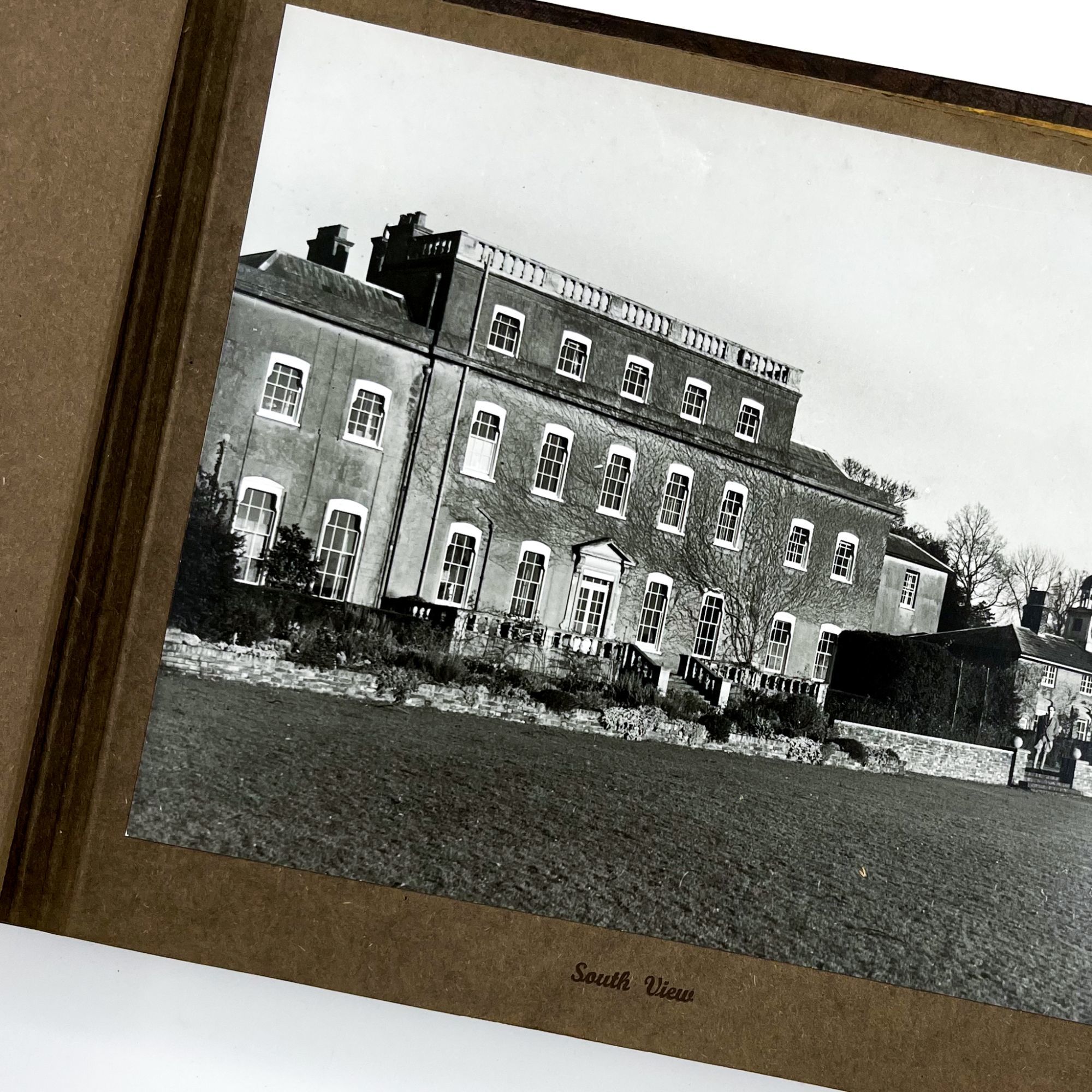
[Luton]: n.p. [Hambros Bank], 1939. Very good plus.. Album of photographs chronicling the activity of the Hambros Bank after it was evacuated to an estate at the start of WWII — once owned by a Hambros employee and likely produced by them for workers. As Hitler launched his air offensive against Britain in 1939, critical financial operations were evacuated away from population centers and into the English countryside. One evacuated business was Hambros Bank, an unassuming but influential institution started by a Danish Jewish immigrant in 1839. One of the important merchant banks of London known as "The Princes of the City," Hambros financed international interests including the Scandinavian timber industry. They were the first bank "to help continental diamond cutters fleeing Nazism," sowing the seeds for "a hefty business in London's diamond center" (TIME). The imminent threat of bombing led the bank's owner, Jack Hambro, to offer up his substantial family estate at The Hyde on the outskirts of Luton as an evacuation center for the bank's employees, ranging from messenger boys to the upper management.
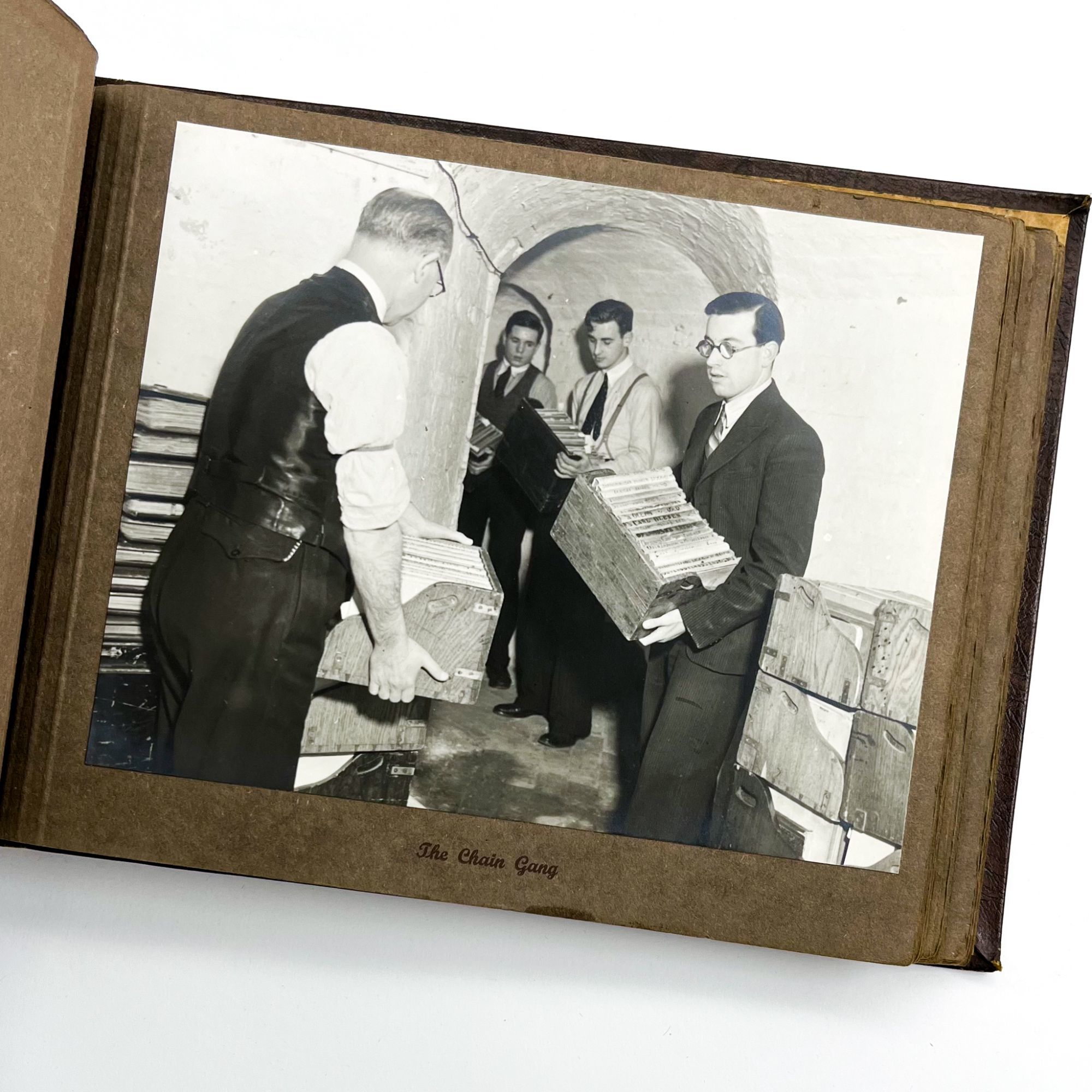
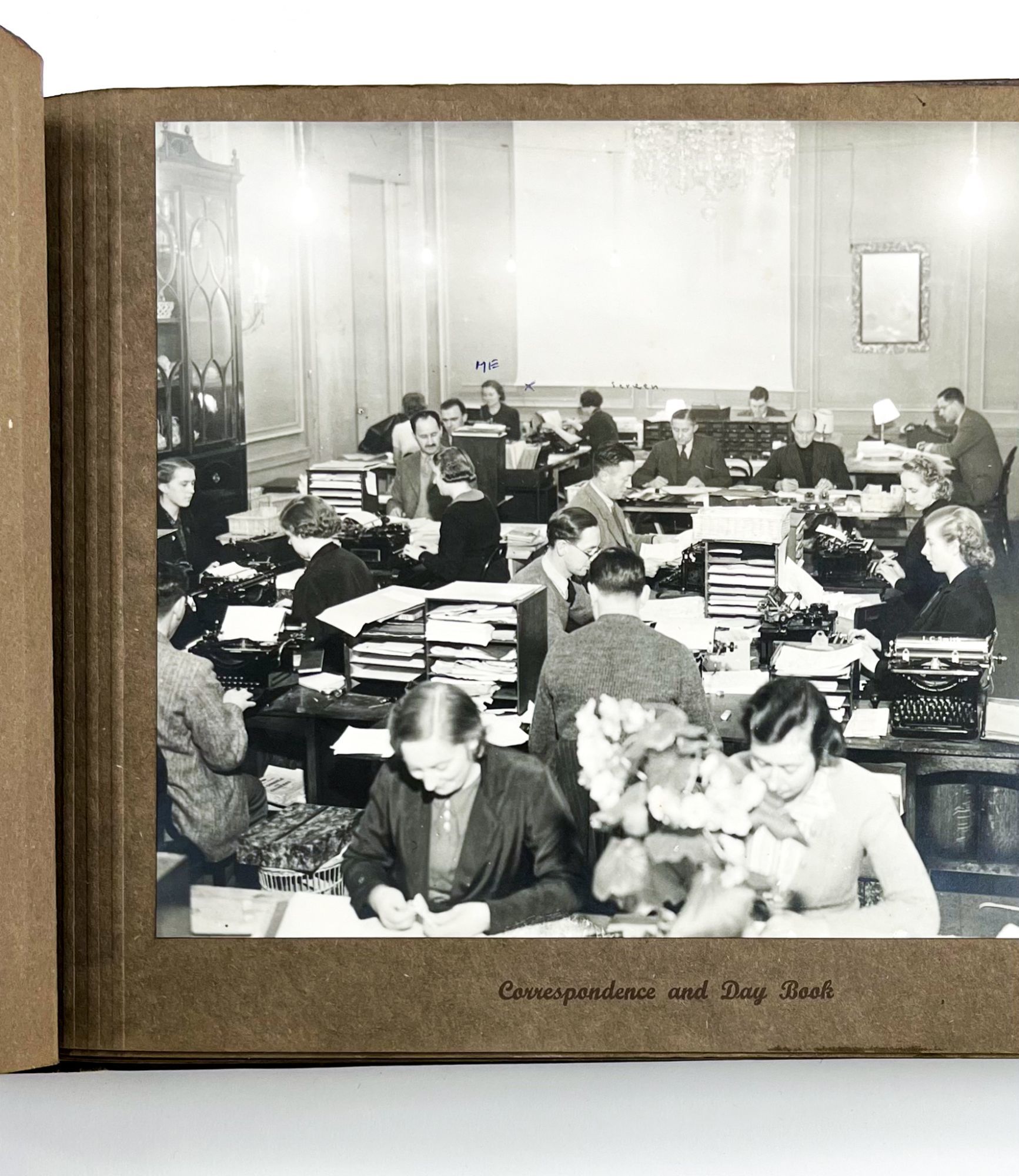
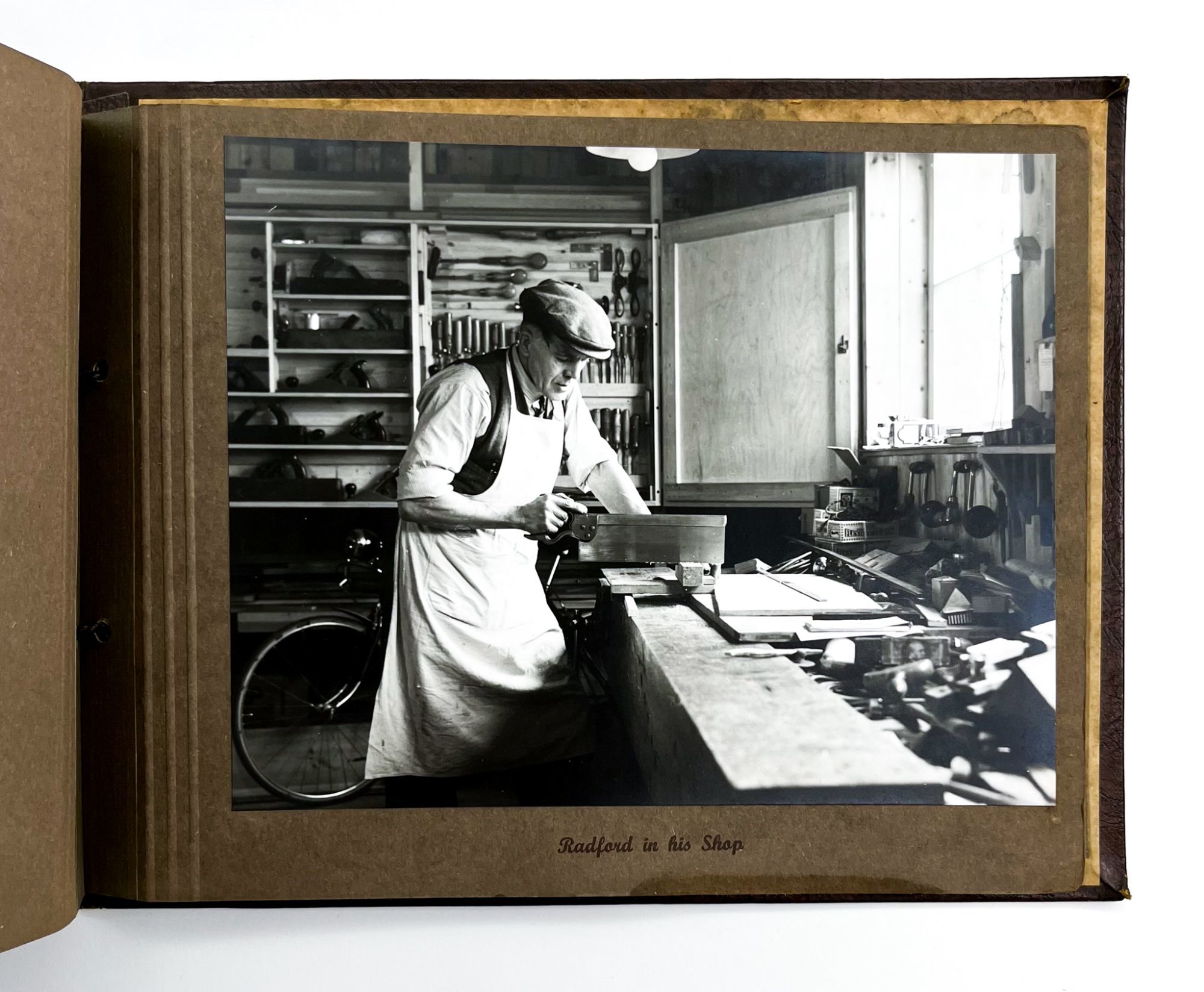
This album was likely produced by Hambros as a souvenir of sorts and distributed to the employees who took up residence at The Hyde. Huts were built on the grounds for the men employees, documented in this album – the Spartan accommodations were only slightly improved for the women employees who had rooms within the house, but the same saggy cots as the men. Among the more "business as usual" images – the management reviewing documents at a well-appointed desk, the correspondence department working away on typewriters surrounded by piles of paper with a crystal chandelier above – are striking images that remind the viewer of the chaos caused by frequent Luftwaffe air raids. A photo labeled "The Chain Gang" features men hefting boxes of records into the depths of a stone basement for safekeeping; sandbags are stacked high inside the walls behind two women playing ping pong in their off hours. Though the bank's history indicates that these fortifications were thankfully never put to the test, they were well warranted: Vauxhall tank and truck factory in nearby Luton was bombed in August 1940, less than a year after these photographs were taken, killing 39.
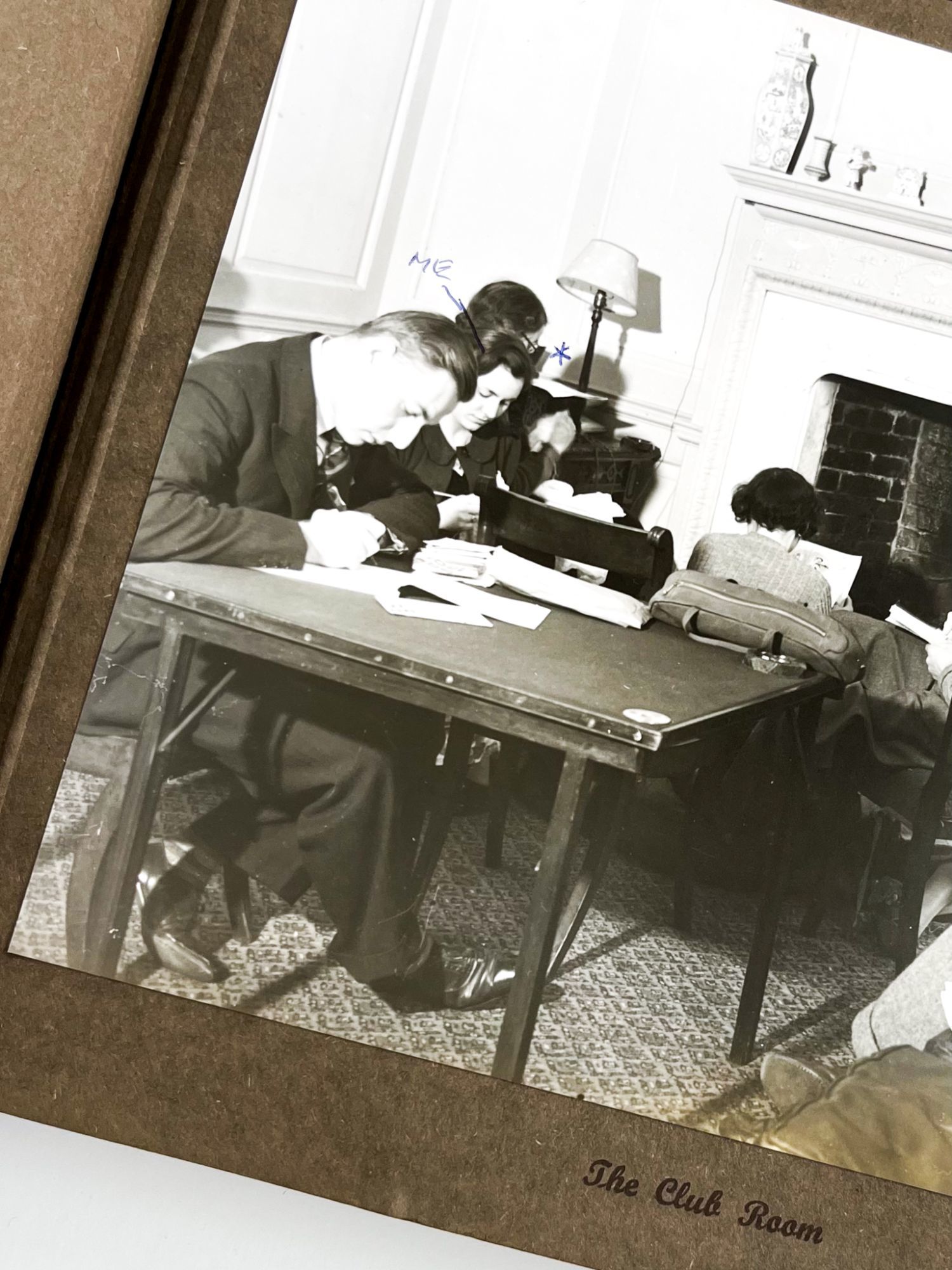
This copy was owned by one of the women employees – the eighth photo, showing the "Correspondence and Day Book" department, features a woman in the back marked with an x and labeled "Me." She also is in "The Club Room" photograph again marked "Me" and concentrating on a knitting project. She has sprinkled pencil notes throughout the album, pointing out the screen hanging in the Bay room "for films" and identifying young men in line for a meal as "the comediens [sic] for the club concerts." She also names all of the kitchen staff in the "Preparing for Lunch" photo, and the young messengers in "Messengers at Lunch."
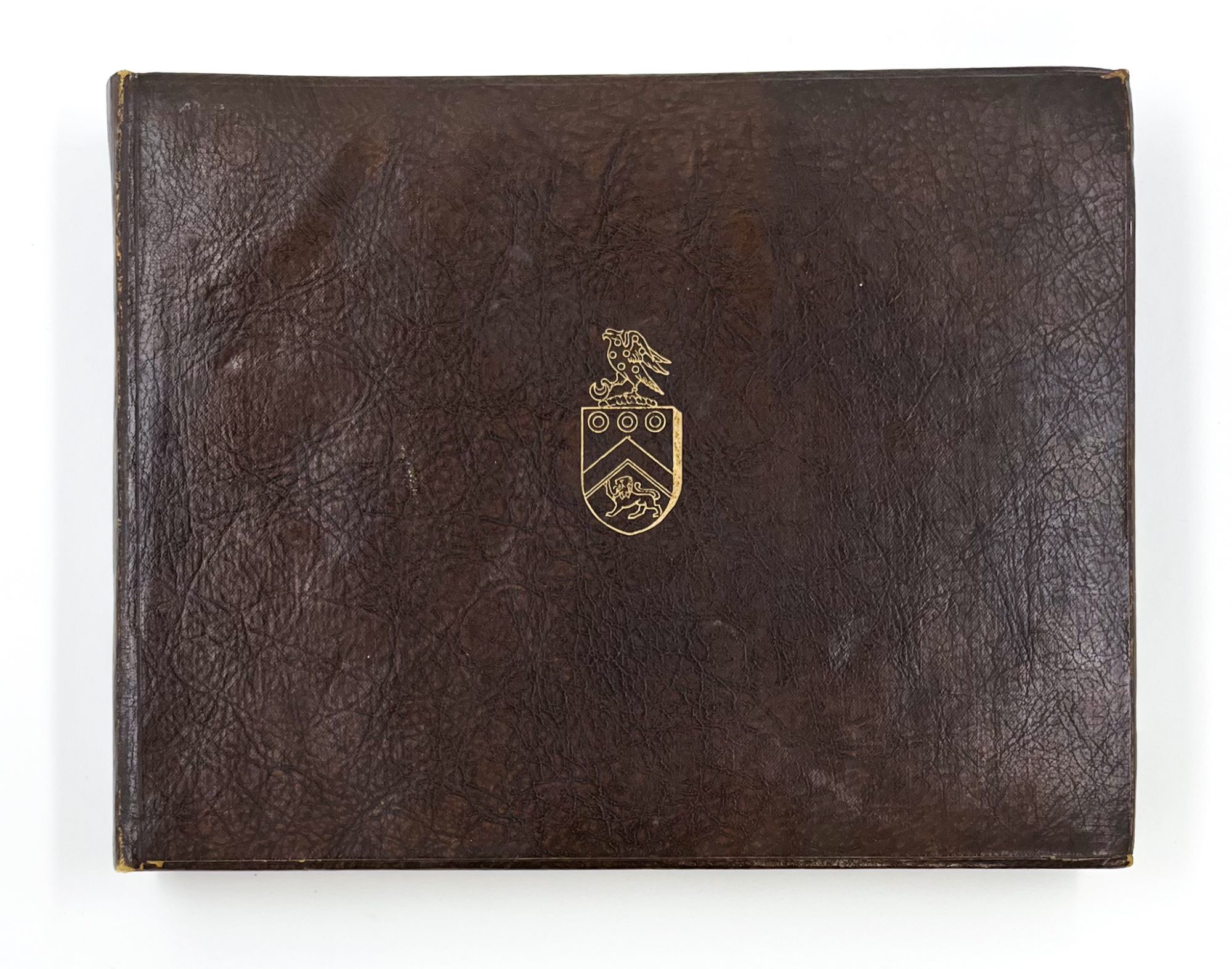
A revealing and personal illustration of the upheaval of early WWII, and a perfect encapsulation of the "keep calm and carry on" attitude. 9.25'' x 10.75'' (leaves); 8'' x 10.25'' (photographs). Original faux leather cloth binding with gilt armorial stamp of the Hambros Bank, string-bound. 30 gelatin silver prints mounted to leaves one side only, each with printed captions. [31] leaves of thick brown paper. Scattered pencil annotations and two pen labels identifying the owner of the album. Binding with light edgewear, a touch of rubbing; a little shaken. Leaves with mild edgewear, a bit of soil to far bottom margins. Sound.
This album was likely produced by Hambros as a souvenir of sorts and distributed to the employees who took up residence at The Hyde. Huts were built on the grounds for the men employees, documented in this album – the Spartan accommodations were only slightly improved for the women employees who had rooms within the house, but the same saggy cots as the men. Among the more "business as usual" images – the management reviewing documents at a well-appointed desk, the correspondence department working away on typewriters surrounded by piles of paper with a crystal chandelier above – are striking images that remind the viewer of the chaos caused by frequent Luftwaffe air raids. A photo labeled "The Chain Gang" features men hefting boxes of records into the depths of a stone basement for safekeeping; sandbags are stacked high inside the walls behind two women playing ping pong in their off hours. Though the bank's history indicates that these fortifications were thankfully never put to the test, they were well warranted: Vauxhall tank and truck factory in nearby Luton was bombed in August 1940, less than a year after these photographs were taken, killing 39.
This copy was owned by one of the women employees – the eighth photo, showing the "Correspondence and Day Book" department, features a woman in the back marked with an x and labeled "Me." She also is in "The Club Room" photograph again marked "Me" and concentrating on a knitting project. She has sprinkled pencil notes throughout the album, pointing out the screen hanging in the Bay room "for films" and identifying young men in line for a meal as "the comediens [sic] for the club concerts." She also names all of the kitchen staff in the "Preparing for Lunch" photo, and the young messengers in "Messengers at Lunch."
A revealing and personal illustration of the upheaval of early WWII, and a perfect encapsulation of the "keep calm and carry on" attitude. 9.25'' x 10.75'' (leaves); 8'' x 10.25'' (photographs). Original faux leather cloth binding with gilt armorial stamp of the Hambros Bank, string-bound. 30 gelatin silver prints mounted to leaves one side only, each with printed captions. [31] leaves of thick brown paper. Scattered pencil annotations and two pen labels identifying the owner of the album. Binding with light edgewear, a touch of rubbing; a little shaken. Leaves with mild edgewear, a bit of soil to far bottom margins. Sound.