

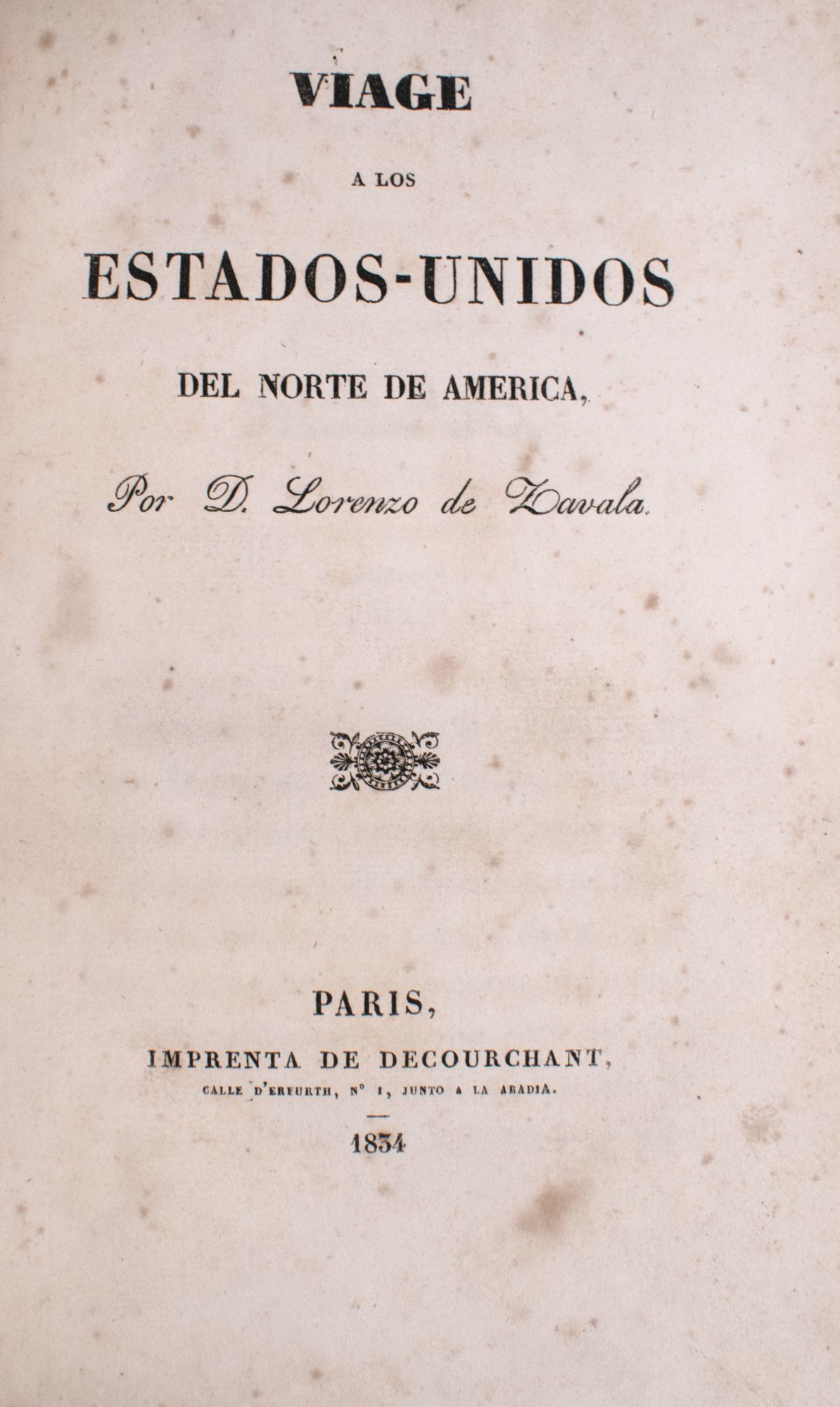
Viage a los Estados-Unidos del Norte de America
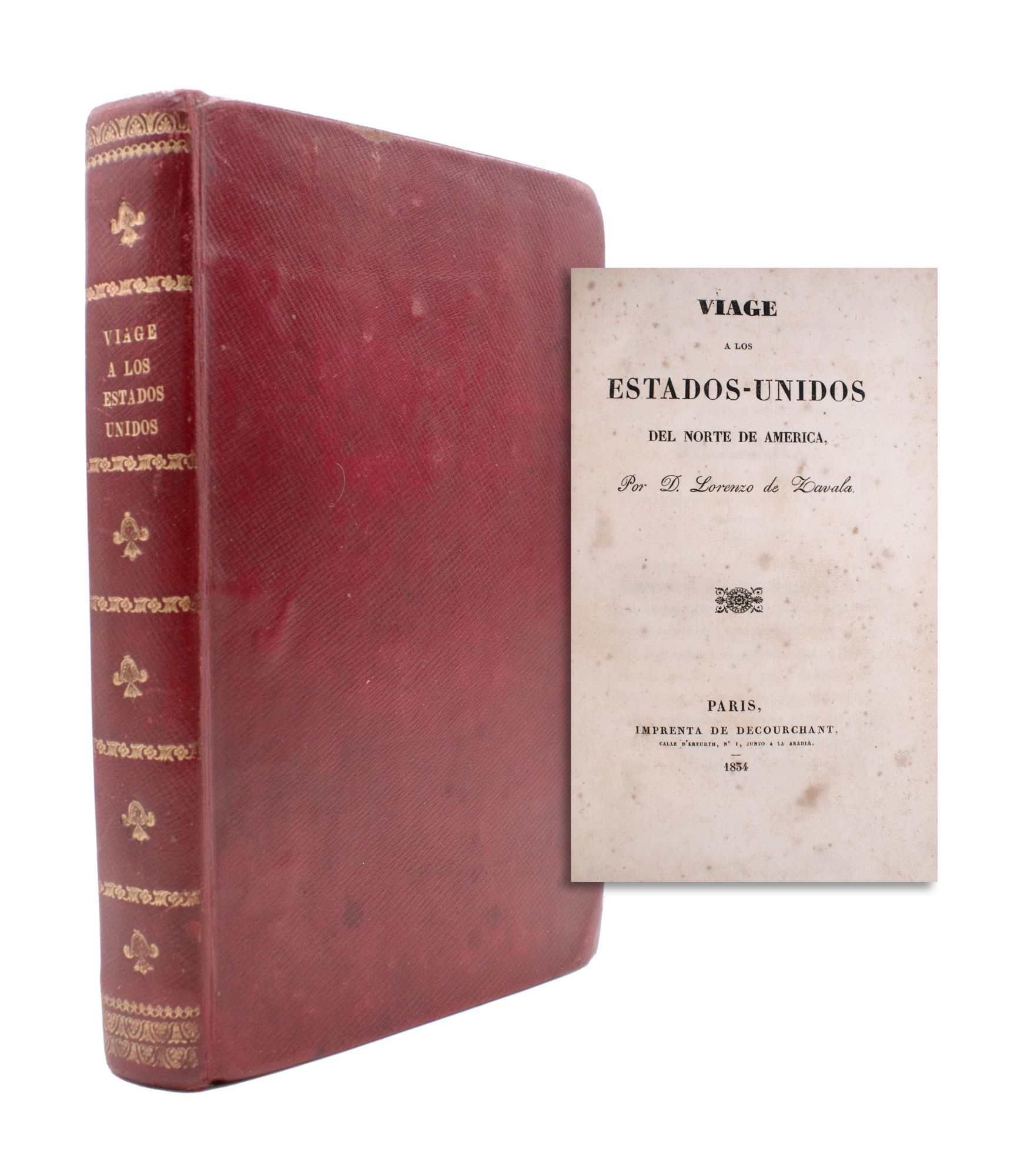
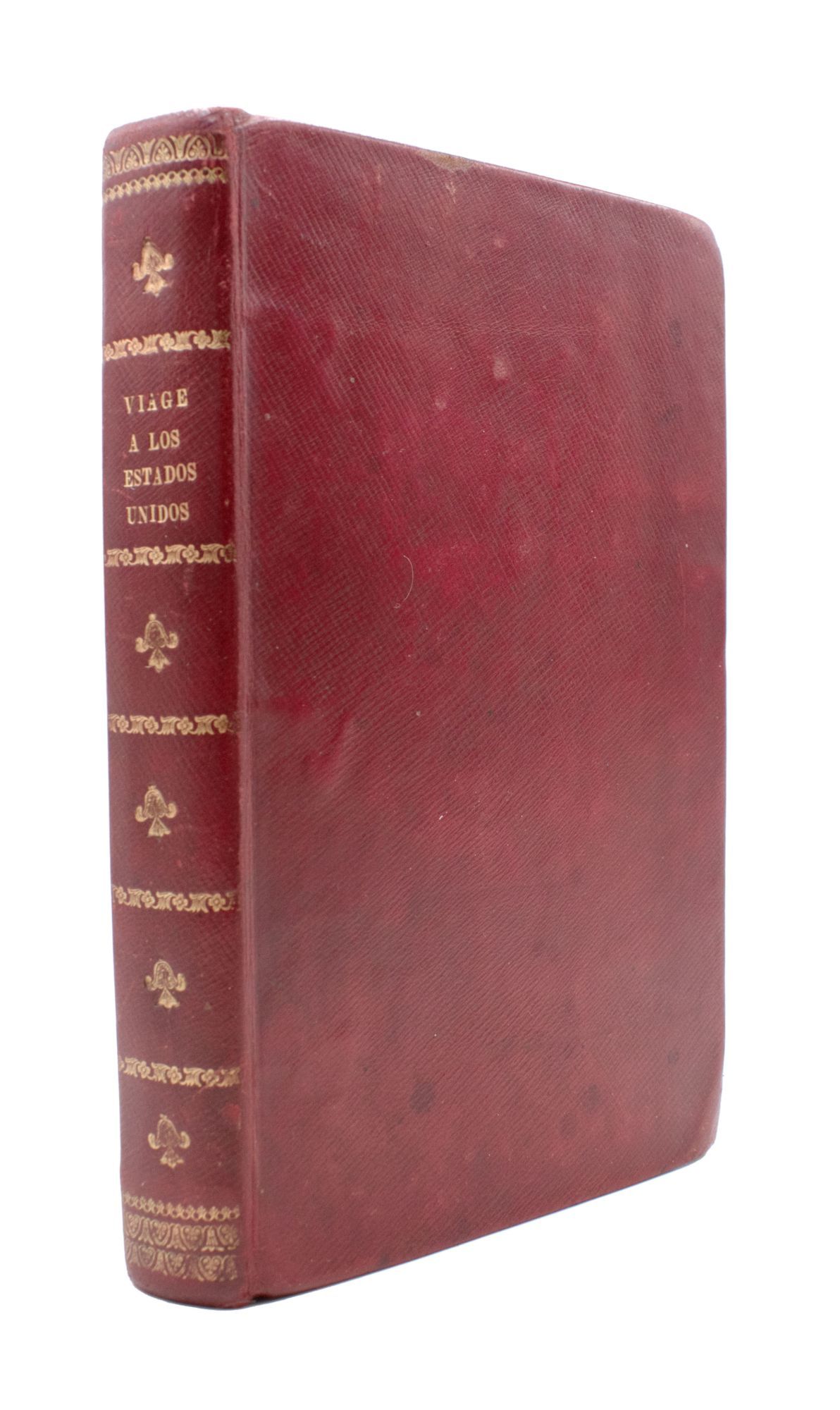
- SIGNED vii, 374pp. Scattered annotations. 12mo
- Paris: Imprenta De Decourchant, 1834
Paris: Imprenta De Decourchant, 1834. First edition. vii, 374pp. Scattered annotations. 12mo. Contemporary red morocco, marbled endpapers. Minor foxing and toning. First edition. vii, 374pp. Scattered annotations. 12mo. Exiled from Mexico in 1830, Zavala came to New York to seek colonization for his empresario grants in southeastern Texas, transferring his interests to the Galveston Bay and Texas Land Company. "From December 1832 until October 1833 he again served as governor of the state of Mexico, before returning to the Congress as a deputy for his native state of Yucatán. Named by President Antonio López de Santa Anna in October 1833 to serve as the first minister plenipotentiary of the Mexican legation in Paris, he reported to that post in the spring of 1834. When he learned that Santa Anna had assumed dictatorial powers in April of that year, Zavala denounced his former ally and resigned from his diplomatic assignment. Disregarding Santa Anna's orders to return to Mexico City, he traveled to New York and then to Texas, where he arrived in July 1835. From the day of his arrival, he was drawn into the political caldron of Texas politics. Although he first advocated the cause of Mexican Federalism, within a few weeks he became an active supporter of the independence movement; he served in the Permanent Council and later as the representative of Harrisburg in the Consultation and the Convention of 1836. At the convention he signed the Texas Declaration of Independence, along with Jose Francisco Ruiz, Jose Antonio Navarro, and fifty-six other delegates" (Handbook of Texas).
The present work described his journey and impressions of the United States during his visit from 1830-1831 and was published while stationed in Paris in 1834. Raines praises the work as “One of the few books of travel in the U.S. worth reading. A fine picture of American manners, customs, and institutions, by a Mexican republican, with some notice of Austin’s colonization in Texas ... A true patriot and uncompromising lover of liberty” (Raines).
The work is further noted as “an incredibly important, although little known…meticulously written narrative about the democratic culture and institutions of the United States. Zavala’s narrative not only stands as a major document of early Mexican-American letters, but also as one of the first theoretical and ethnographic examinations of democracy as a political and cultural institution. Thus, Zavala’s book challenges the widespread acceptance by American scholars that Alexis de Toqueville’s Democracy in America (1835) is the first book to take United States democracy as a focus of political and cultural study ... Zavala’s story of democratic peoplehood will no doubt, in time, be read as one of the founding political texts of U.S. and Mexican democratic culture” (John-Michael Rivera in the introduction of the 2005 English translation of the present work, published by Arte Público Press, University of Houston, 2005). Clark, Old South III:118; Howes Z3; Palau 378349; Raines, p. 224; Sabin 106280; Streeter Texas 1156
The present work described his journey and impressions of the United States during his visit from 1830-1831 and was published while stationed in Paris in 1834. Raines praises the work as “One of the few books of travel in the U.S. worth reading. A fine picture of American manners, customs, and institutions, by a Mexican republican, with some notice of Austin’s colonization in Texas ... A true patriot and uncompromising lover of liberty” (Raines).
The work is further noted as “an incredibly important, although little known…meticulously written narrative about the democratic culture and institutions of the United States. Zavala’s narrative not only stands as a major document of early Mexican-American letters, but also as one of the first theoretical and ethnographic examinations of democracy as a political and cultural institution. Thus, Zavala’s book challenges the widespread acceptance by American scholars that Alexis de Toqueville’s Democracy in America (1835) is the first book to take United States democracy as a focus of political and cultural study ... Zavala’s story of democratic peoplehood will no doubt, in time, be read as one of the founding political texts of U.S. and Mexican democratic culture” (John-Michael Rivera in the introduction of the 2005 English translation of the present work, published by Arte Público Press, University of Houston, 2005). Clark, Old South III:118; Howes Z3; Palau 378349; Raines, p. 224; Sabin 106280; Streeter Texas 1156