

Médard de Paris: Aquarelle et bois de Frans Masereel (First Edition, inscribed by René Arcos)


- SIGNED
- Paris: Éditions du Sablier, 1928
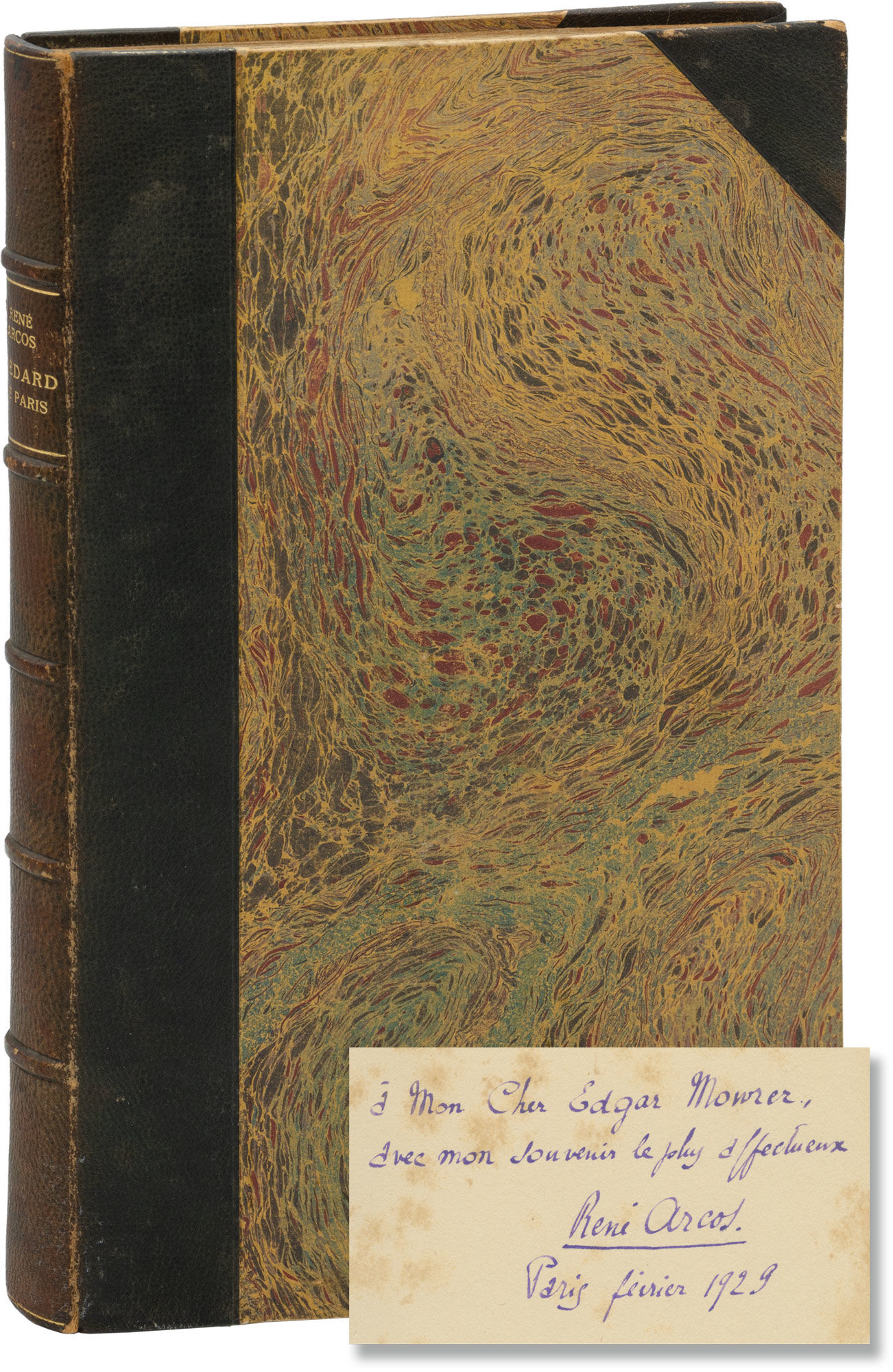
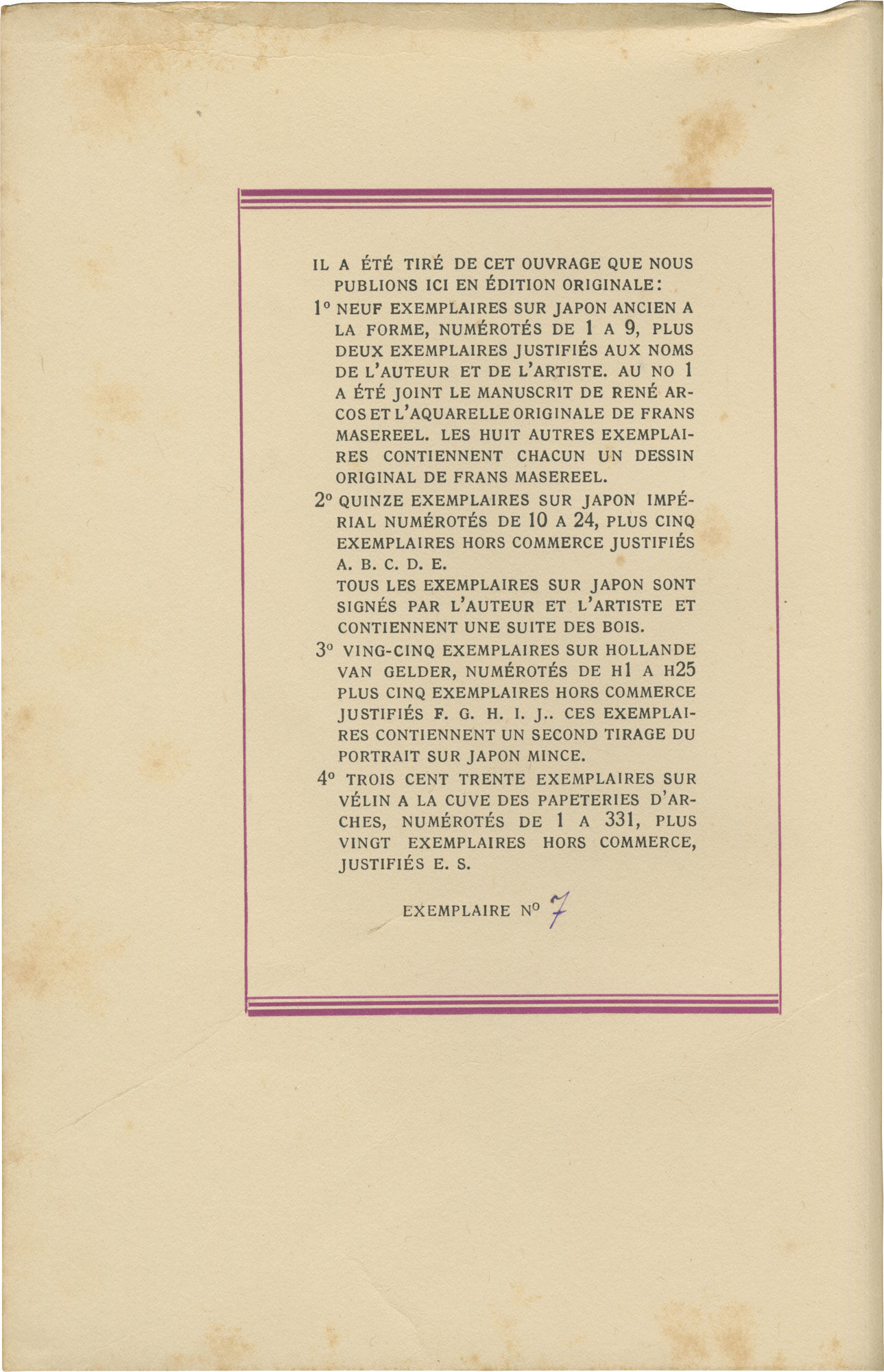
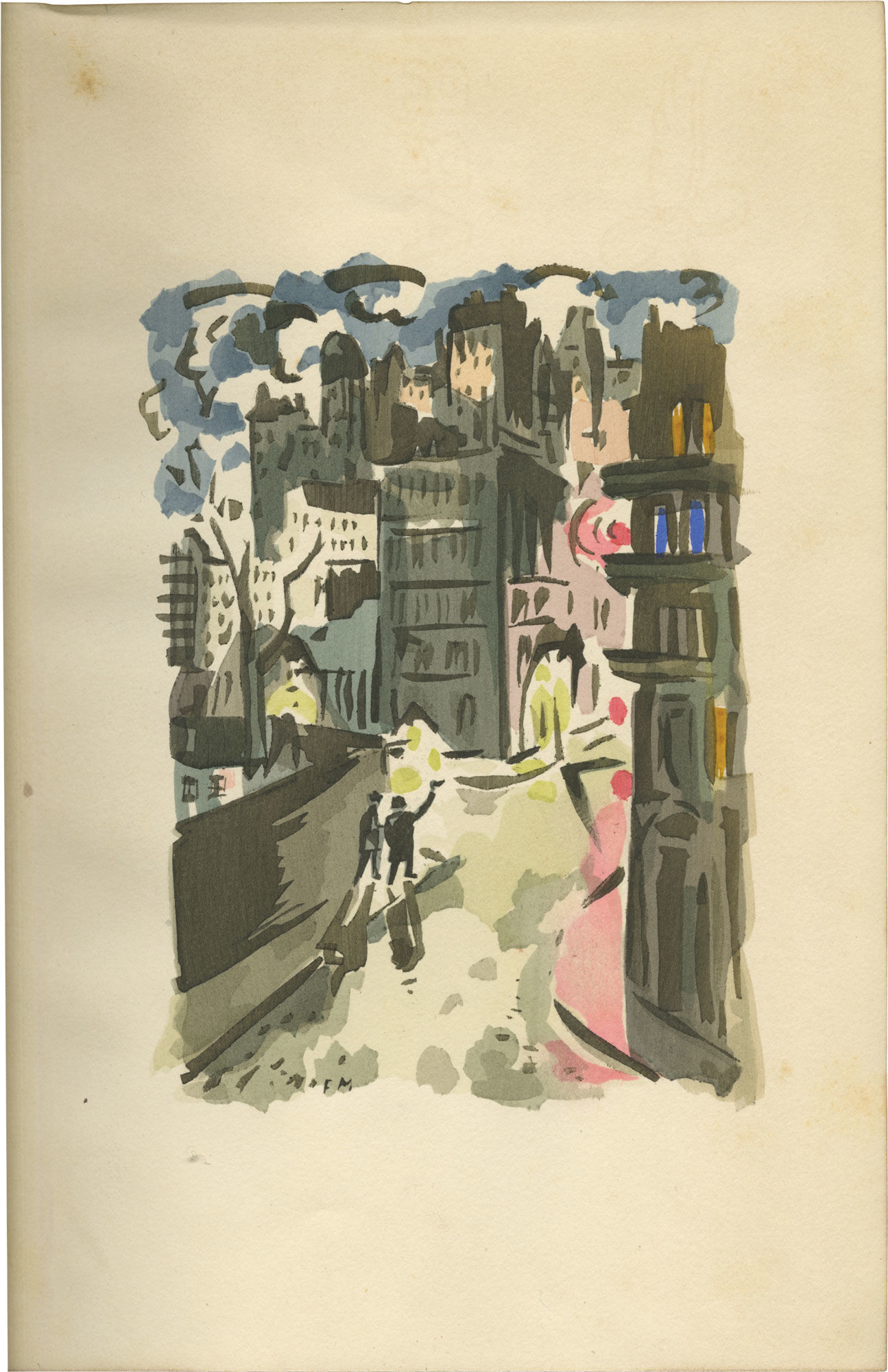
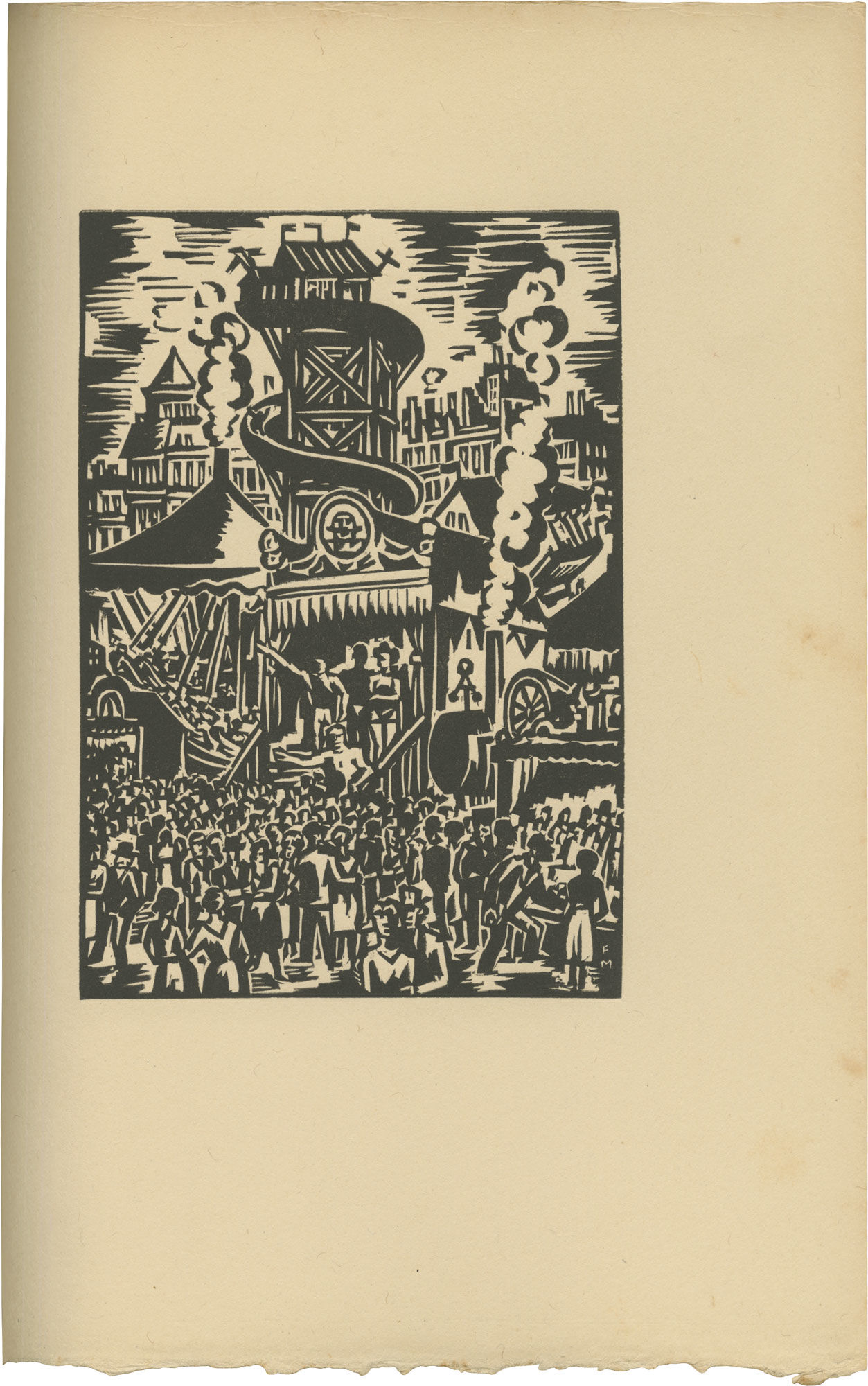
Paris: Éditions du Sablier, 1928. Limited Edition, one of nine hand-numbered copies (this being No. 7) on handmade paper, with a watercolor design by Frans Masereel. INSCRIBED in the year after publication by the author to American journalist Edgar Mowrer on the front endpaper: "À mon Cher Edgar Mowrer / avec mon souvenir le plus affectueux / René Arcos / Paris Février 1929" ("To my dear Edgar Mowrer / with my fondest remembrances / René Arcos / Paris February 1929"). Text and titles in French.
Laid in with the book is a single manuscript leaf of prose in Arcos' hand, dated "Aôut 1928" ("August 1928") and noted as being "A Charles Vildrac" ("To Charles Vildrac"). As with much of Arcos' work, the text largely deals with pacifist themes.
Arcos and fellow poet Charles Vildrac were co-founders of L'Abbaye, a utopian artistic community, or phalanstère, in October, 1906. Drawing inspiration from François Rabelais' fictional Abbaye de Thélème, the community aimed to create a space for complete artistic freedom and creativity informed by social ideas. Living together in a house in Créteil, the group gained infamy, attracting many visiting artists and poets. Although the group founded a publishing house in 1907 in the hopes of generating some revenue, the venture was ultimately unsuccessful, forcing L'Abbaye to close in January, 1908. Arcos would go on to found Sablier publishing house with Frans Masereel in Switzerland in 1919.
Considered by many to be "the dean of American foreign correspondents," Edgar Mowrer was born in Bloomington in 1892. He began working as a reporter in France in 1914, having been pressed into service alongside his brother, then working for the "Chicago Daily News." Perceiving the growing power of the Nazi Party, Mowrer began reporting on the rise of Adolf Hitler, publishing day-by-day dispatches from Berlin that would win him a Pulitzer Prize in 1933. Viewed as a serious threat to Nazi power, Mowrer became the first American correspondent to be driven from Germany, taking a post in Paris, where he remained until France's defeat by German forces in 1940. An outspoken antifascist, Mowrer returned to the US and gave lectures about the dangers of Nazi Germany and the failures of American foreign policy. He continued to work as a reporter until his death in 1977.
Very Good plus, bound in contemporary black quarter-leather with marbled boards, with light foxing throughout, and lightly rubbed boards.
Laid in with the book is a single manuscript leaf of prose in Arcos' hand, dated "Aôut 1928" ("August 1928") and noted as being "A Charles Vildrac" ("To Charles Vildrac"). As with much of Arcos' work, the text largely deals with pacifist themes.
Arcos and fellow poet Charles Vildrac were co-founders of L'Abbaye, a utopian artistic community, or phalanstère, in October, 1906. Drawing inspiration from François Rabelais' fictional Abbaye de Thélème, the community aimed to create a space for complete artistic freedom and creativity informed by social ideas. Living together in a house in Créteil, the group gained infamy, attracting many visiting artists and poets. Although the group founded a publishing house in 1907 in the hopes of generating some revenue, the venture was ultimately unsuccessful, forcing L'Abbaye to close in January, 1908. Arcos would go on to found Sablier publishing house with Frans Masereel in Switzerland in 1919.
Considered by many to be "the dean of American foreign correspondents," Edgar Mowrer was born in Bloomington in 1892. He began working as a reporter in France in 1914, having been pressed into service alongside his brother, then working for the "Chicago Daily News." Perceiving the growing power of the Nazi Party, Mowrer began reporting on the rise of Adolf Hitler, publishing day-by-day dispatches from Berlin that would win him a Pulitzer Prize in 1933. Viewed as a serious threat to Nazi power, Mowrer became the first American correspondent to be driven from Germany, taking a post in Paris, where he remained until France's defeat by German forces in 1940. An outspoken antifascist, Mowrer returned to the US and gave lectures about the dangers of Nazi Germany and the failures of American foreign policy. He continued to work as a reporter until his death in 1977.
Very Good plus, bound in contemporary black quarter-leather with marbled boards, with light foxing throughout, and lightly rubbed boards.