

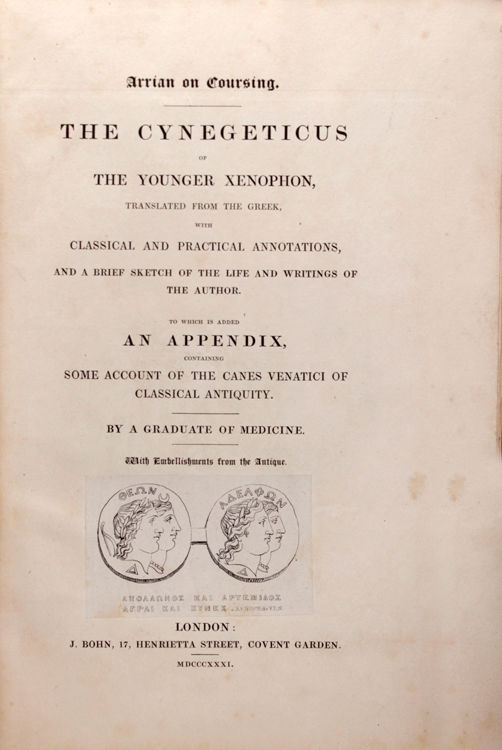
Arrian on Coursing. The Cynegeticus of the Younger Xenophon, Translated from the Greek, with classical and practical annotations, and a brief sketch of the life and writings of the author. To which is added an appendix, containing some account of the canes venatici of antiquity. By a Graduate of Medecine [i.e. William Dansey]. With embellishments from the antique
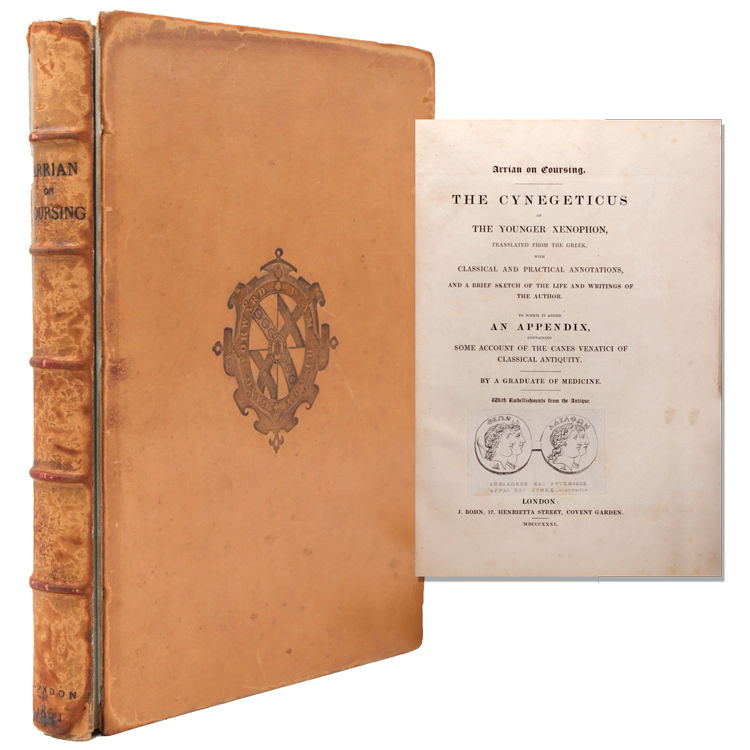
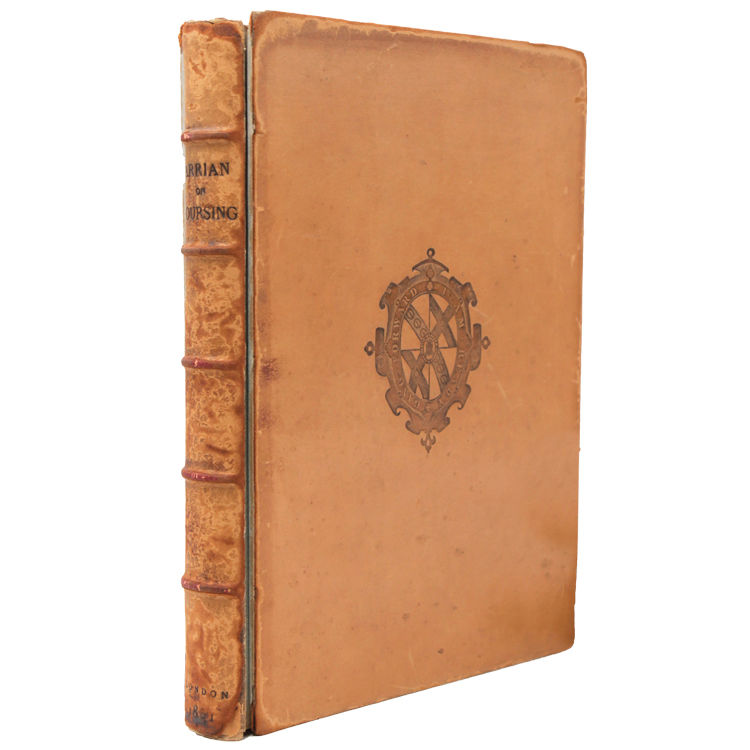
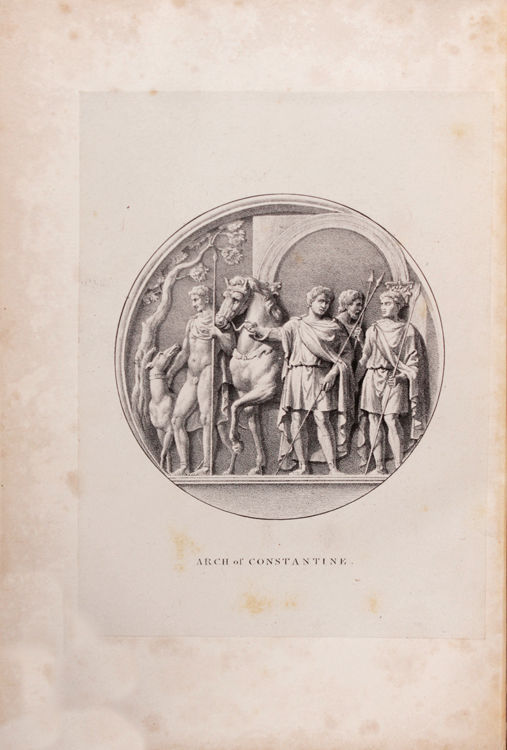
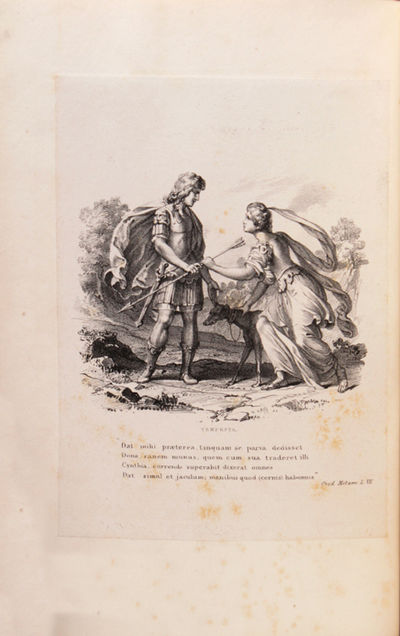
- Tipped-in plates. 314 , [2] pp. 1 vols. 4to (9-1/2 x 6-3/4 inches)
- London: J. Bohn, 17, Henrietta Street, Covent Garden, 1831
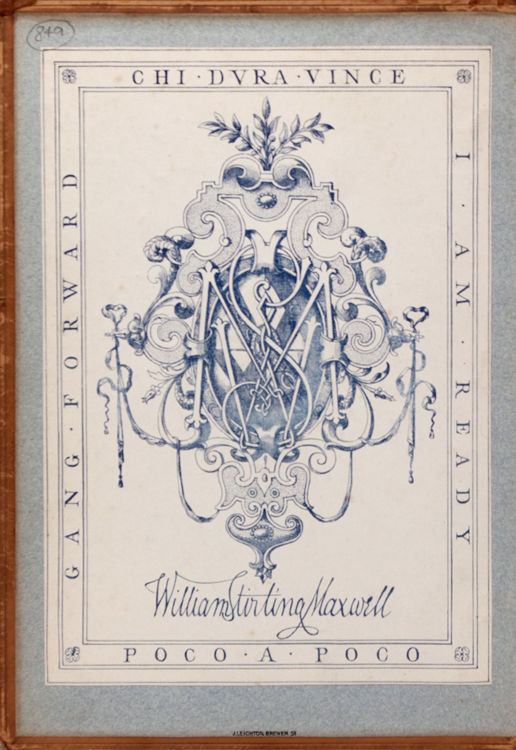
London: J. Bohn, 17, Henrietta Street, Covent Garden, 1831. First Edition thus. One of 250 copies printed. Ex Æedibus Valpianus. Tipped-in plates. 314 , [2] pp. 1 vols. 4to (9-1/2 x 6-3/4 inches). Old calf. Large bookplate of William Stirling Maxwell. Boards detached, internally clean. First Edition thus. One of 250 copies printed. Ex Æedibus Valpianus. Tipped-in plates. 314 , [2] pp. 1 vols. 4to (9-1/2 x 6-3/4 inches). Lucius Flavius Arrianus 'Xenophon' (c. 92 -c. 175), known in English as Arrian, and Arrian of Nicomedia, was a Greek historian and philosopher of the Roman period. As with other authors of the Second Sophistic Arrian wrote primarily in Attic. His works preserve the philosophy of Epictetus, and include an important account of Alexander the Great, the Anabasis of Alexander, as well as a description of Nearchus' voyage from India following Alexander's conquest, the Indica. He is not to be confused with the Athenian military leader and author, Xenophon from the 4th century BC, whose best-known work was also titled Anabasis.