

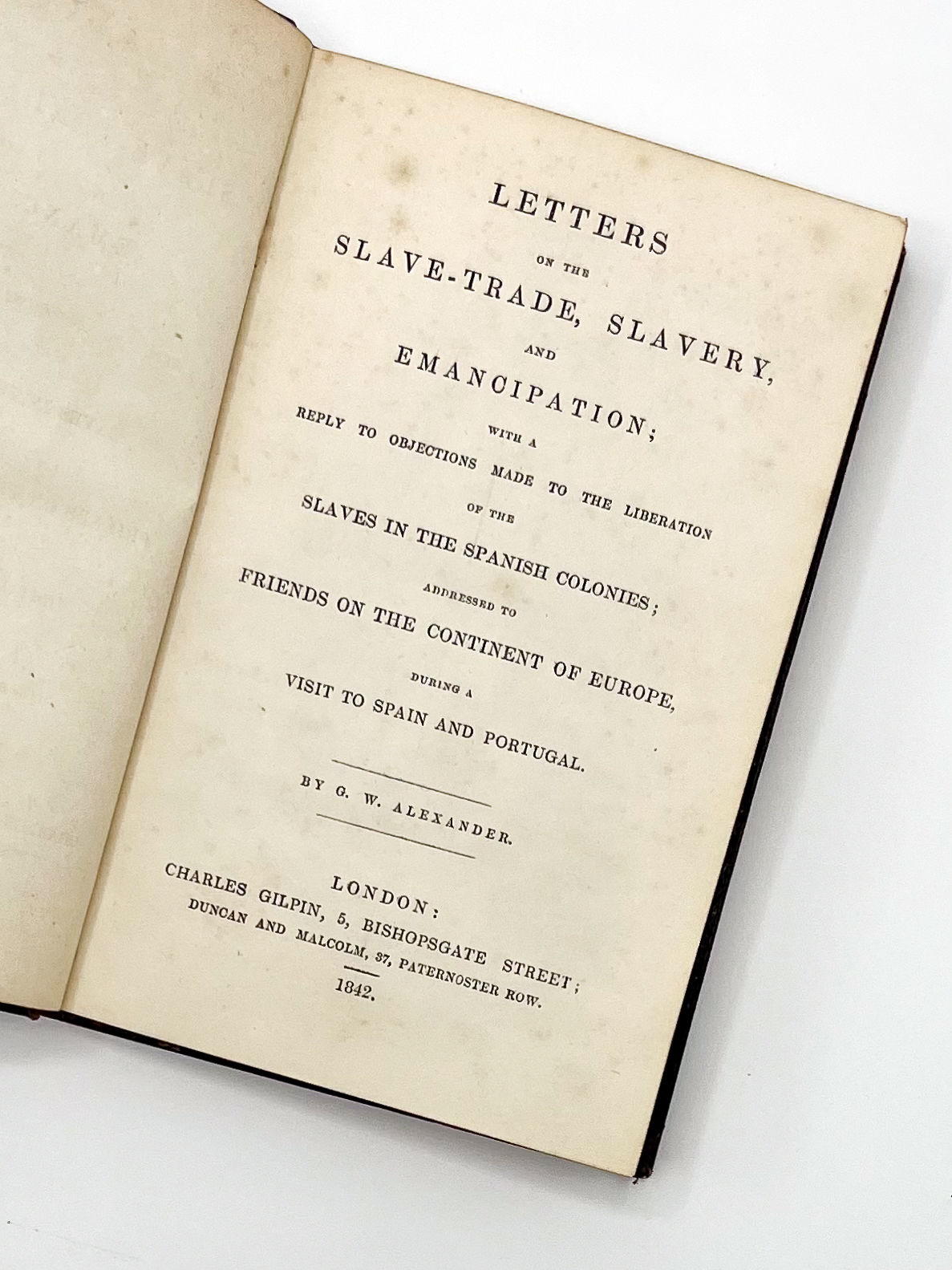
LETTERS ON THE SLAVE-TRADE, SLAVERY, AND EMANCIPATION
- SIGNED
- London: Charles Gilpin, 1842
London: Charles Gilpin, 1842. Near fine.. First edition of these essays presenting arguments for the international abolition of the slavery by the Treasurer of the British and Foreign Anti-Slavery Society, specially bound for presentation and inscribed by the author. After the victories of the triumphant generation of British abolitionists such as William Wilberforce, Thomas Clarkson, and Ottobah Cugoano, whose efforts led to the outlawing of the slave trade in 1807 and legal eradication of slavery in the British Empire in 1833, anti-slavery advocates in Britain did not remain complacent. In 1839 a new generation of abolitionists founded the British and Foreign Anti-Slavery Society (BFASS), through which the wealthy merchant and Quaker George William Alexander "emerged [...] as a leader in the British Abolitionist movement" (Rodriguez, 16). In his role as Treasurer he donated vast amounts of his own money to the Society, which sought not only the end of slavery internationally but stricter enforcement of abolitionist laws already in place.
Alexander made frequent abolitionist lectures; Frederick Douglass recorded hearing him speak in MY BONDAGE AND MY FREEDOM, adding that Alexander "has spent more than an American fortune in promoting the anti-slavery cause in different sections of the world" (378). Douglass also noted approvingly in an 1846 letter to William Lloyd Garrison that Alexander, one of the wealthiest donors to other reform causes such as the temperance movement, refused to donate to any temperance meetings where enslavers participated (Douglass, 130).
Reflecting the transnational aims of the BFASS, Alexander traveled for the cause to the West Indies, France, Spain, Sweden, the Netherlands, and more. In addition to connecting with anti-slavery movements in various countries, Alexander was following the footsteps of Clarkson: many of his journeys were fact-finding missions in order to produce the hard data that backed arguments such as those presented in this volume. The pieces here were first composed to support the efforts of anti-slavery advocates in France and Spain. Slavery was abolished in French colonies a few years later in 1848; in Spanish-occupied Cuba it was not abolished until 1886.
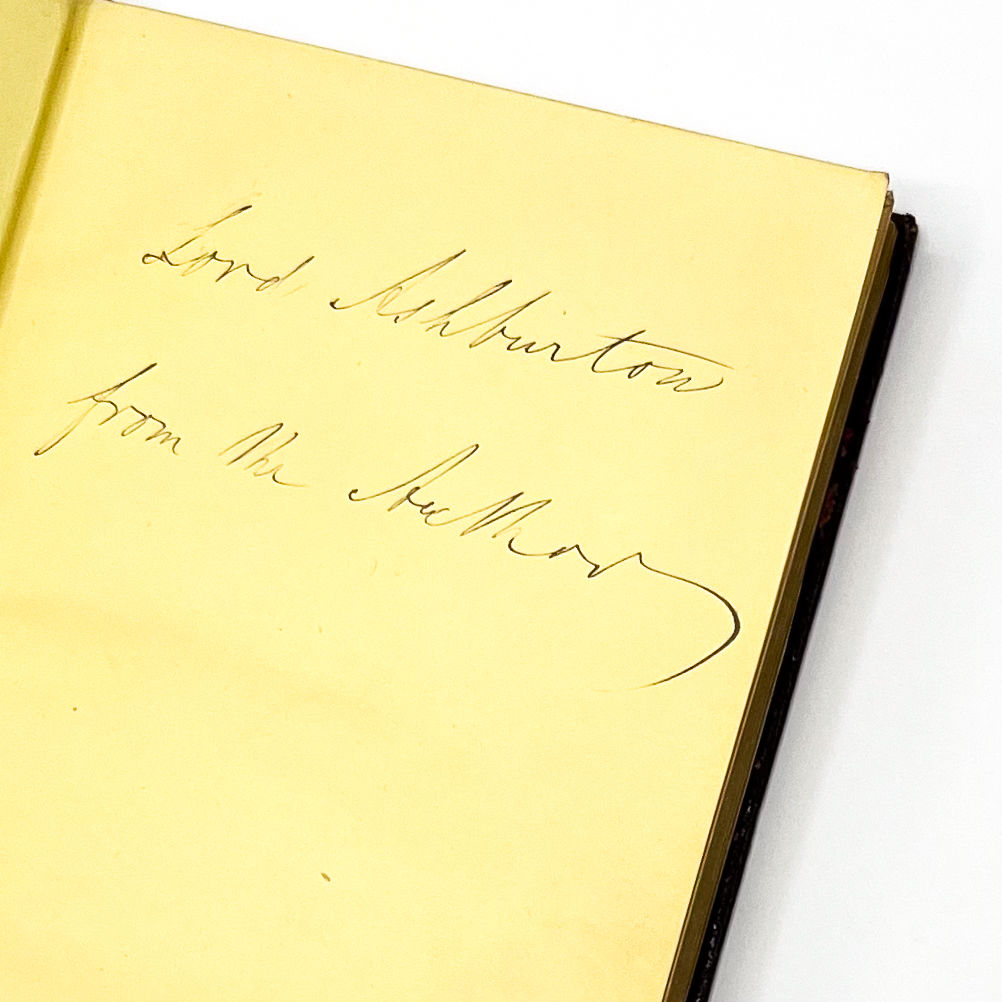
This copy was specially bound and presented by the author to Alexander Baring, 1st Baron Ashburton. The association is a complex one with notable implications. Lord Ashburton was once an enslaver; upon the legal eradication of slavery in the British Empire, he and his partners were compensated nearly ten thousand pounds for the manumission of hundreds of people they had enslaved. Just over a decade later — in the year this book was published — Lord Ashburton was the diplomat who negotiated the Webster-Ashburton Treaty with the US that included an agreement to enforce more strictly the laws ending the trans-Atlantic slave trade. Lord Ashburton was not himself a member of Alexander's BFASS, yet this was one of the Society's primary goals, and his negotiations formalized slavery-suppression activities transnationally.
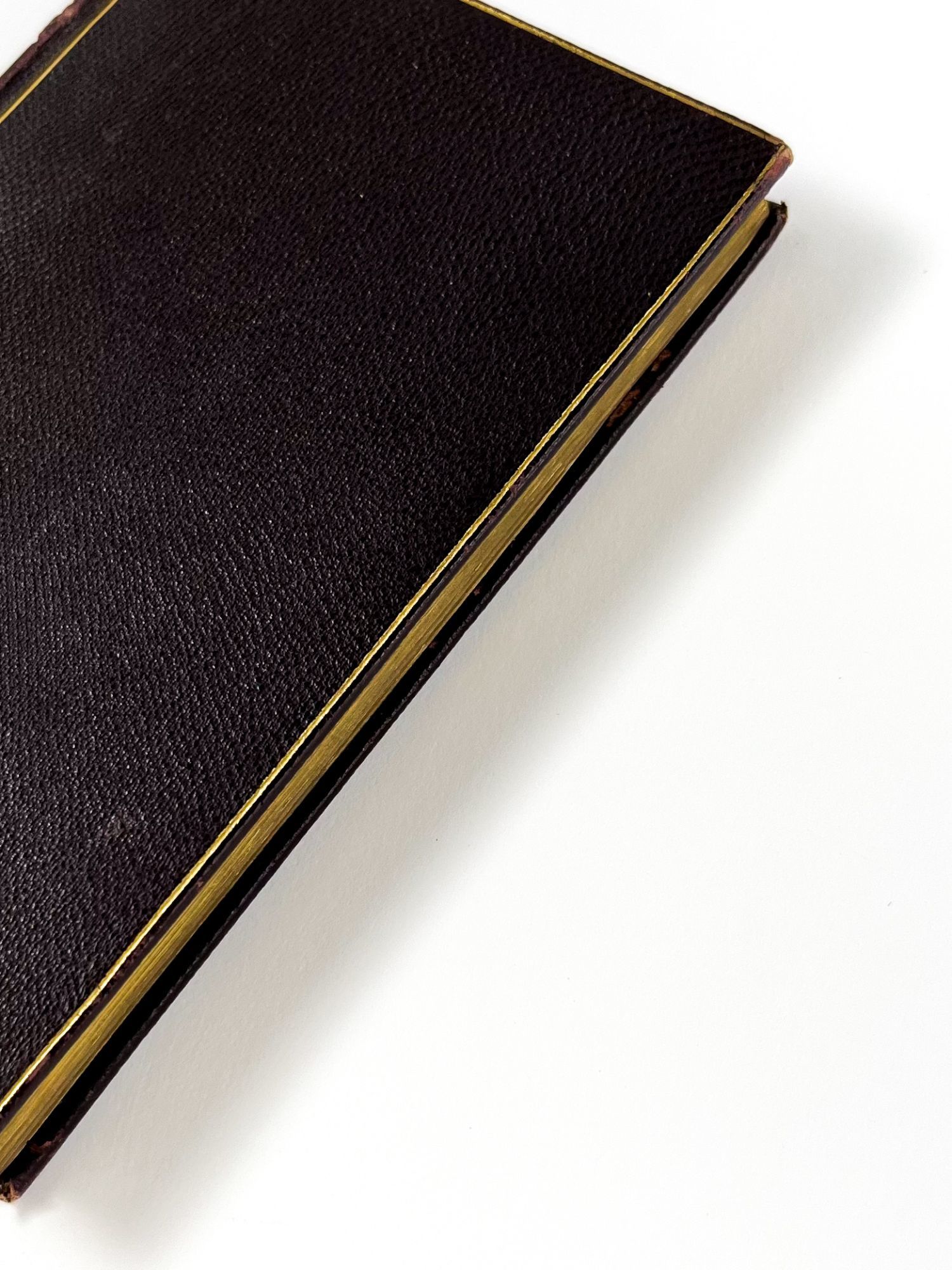
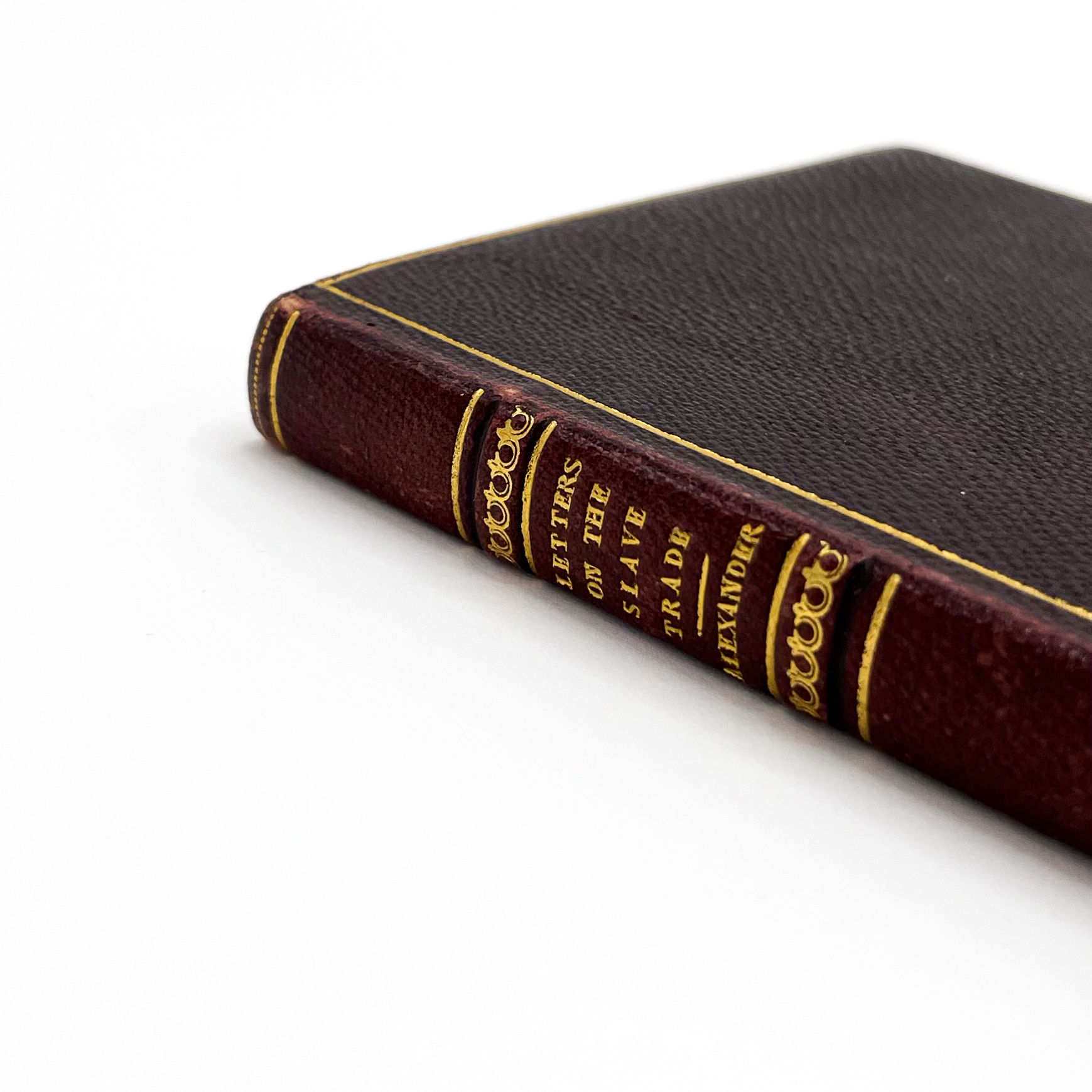
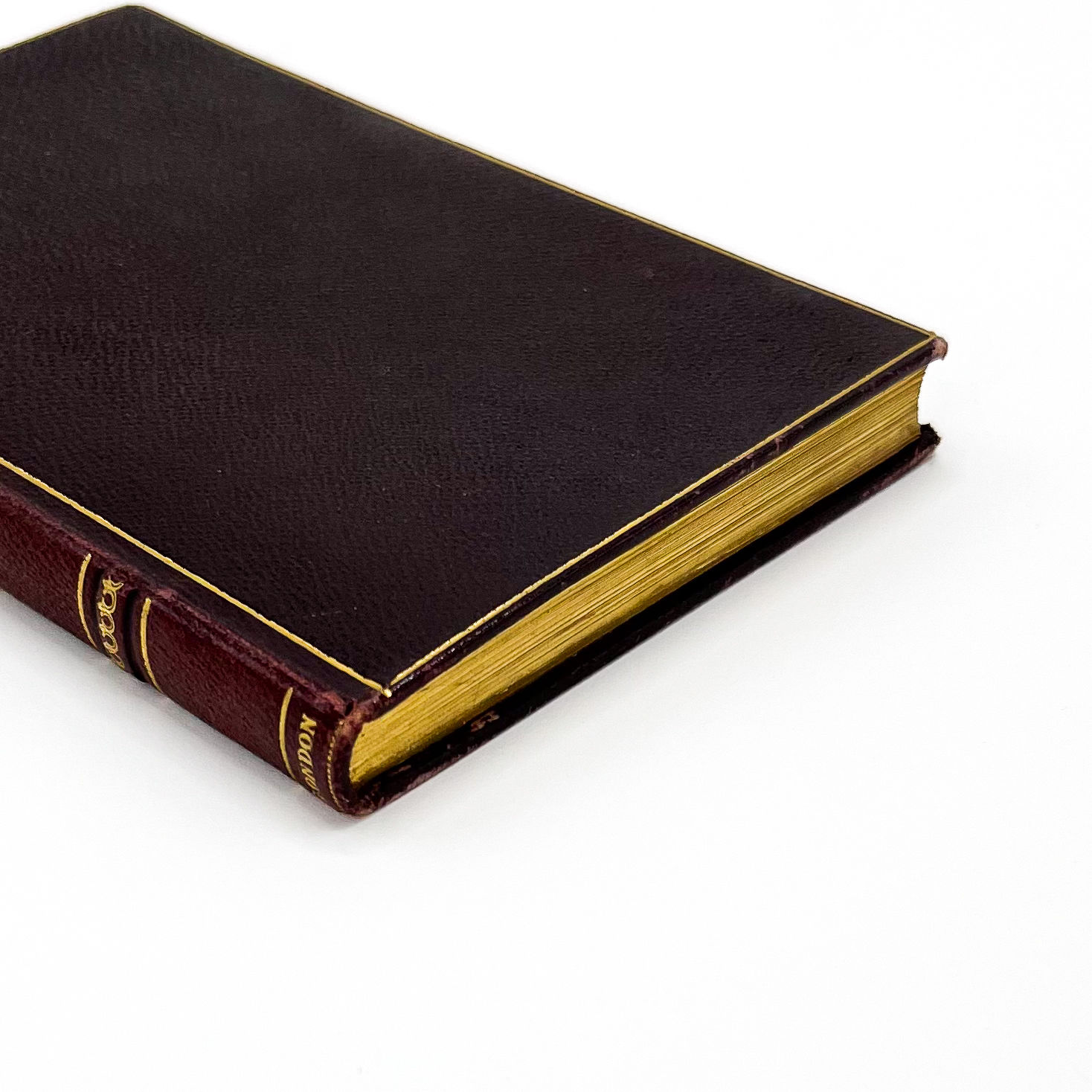
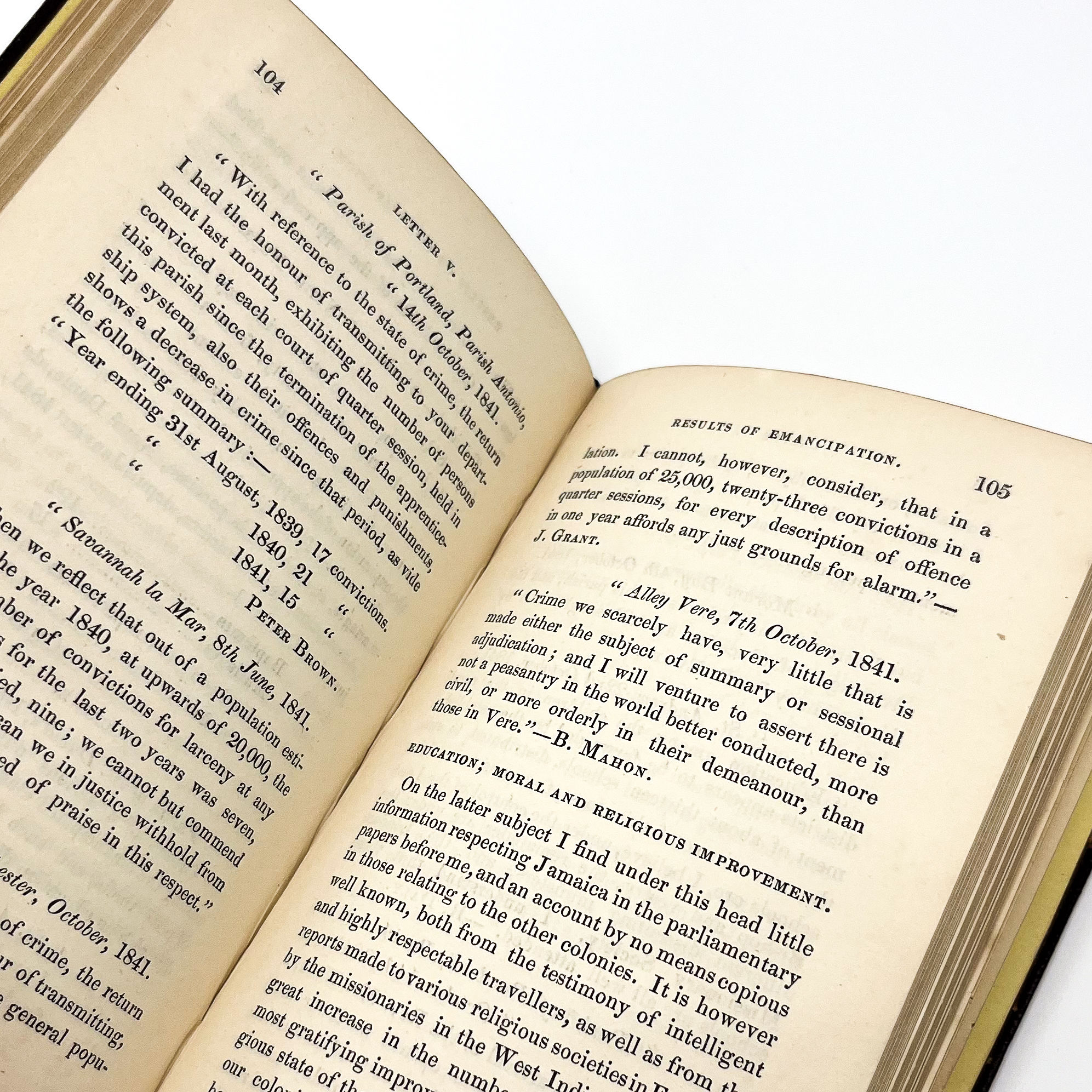
An exceptional copy with a meaningful association. 16mo, 6.25'' x 4''. Full contemporary maroon goatskin, spine stamped in gilt, raised bands, gilt rules to boards. All edges gilt, yellow coated endpapers, blue silk ribbon marker. xvi, 176 pages. Inscribed by Alexander, "Lord Ashburton / from the Author" on front free endpaper. Spine gently sunned, light rubbing to extremities. Bright.
Alexander made frequent abolitionist lectures; Frederick Douglass recorded hearing him speak in MY BONDAGE AND MY FREEDOM, adding that Alexander "has spent more than an American fortune in promoting the anti-slavery cause in different sections of the world" (378). Douglass also noted approvingly in an 1846 letter to William Lloyd Garrison that Alexander, one of the wealthiest donors to other reform causes such as the temperance movement, refused to donate to any temperance meetings where enslavers participated (Douglass, 130).
Reflecting the transnational aims of the BFASS, Alexander traveled for the cause to the West Indies, France, Spain, Sweden, the Netherlands, and more. In addition to connecting with anti-slavery movements in various countries, Alexander was following the footsteps of Clarkson: many of his journeys were fact-finding missions in order to produce the hard data that backed arguments such as those presented in this volume. The pieces here were first composed to support the efforts of anti-slavery advocates in France and Spain. Slavery was abolished in French colonies a few years later in 1848; in Spanish-occupied Cuba it was not abolished until 1886.
This copy was specially bound and presented by the author to Alexander Baring, 1st Baron Ashburton. The association is a complex one with notable implications. Lord Ashburton was once an enslaver; upon the legal eradication of slavery in the British Empire, he and his partners were compensated nearly ten thousand pounds for the manumission of hundreds of people they had enslaved. Just over a decade later — in the year this book was published — Lord Ashburton was the diplomat who negotiated the Webster-Ashburton Treaty with the US that included an agreement to enforce more strictly the laws ending the trans-Atlantic slave trade. Lord Ashburton was not himself a member of Alexander's BFASS, yet this was one of the Society's primary goals, and his negotiations formalized slavery-suppression activities transnationally.
An exceptional copy with a meaningful association. 16mo, 6.25'' x 4''. Full contemporary maroon goatskin, spine stamped in gilt, raised bands, gilt rules to boards. All edges gilt, yellow coated endpapers, blue silk ribbon marker. xvi, 176 pages. Inscribed by Alexander, "Lord Ashburton / from the Author" on front free endpaper. Spine gently sunned, light rubbing to extremities. Bright.