

The Velveteen Rabbit or How Toys Become Real

- New York: George H. Doran Company, 1922
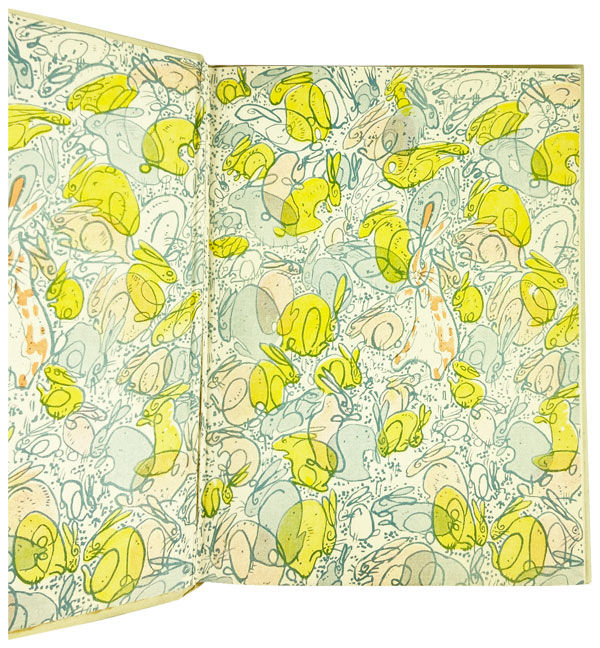
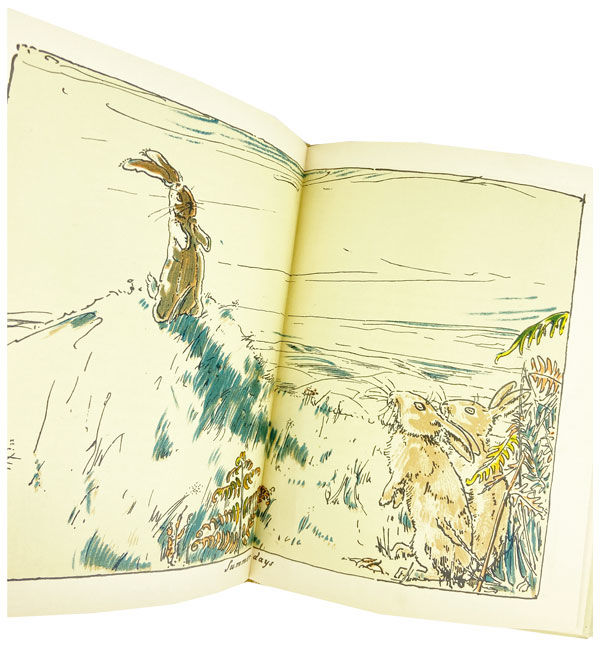
New York: George H. Doran Company, 1922. Very Good/Very Good +. New York: George H. Doran Company, n.d. but before 1927. Early American Printing, issued before Doubleday and Doran's 1927 merger. Small, slim quarto (21cm.); publisher's pictorial paper-covered boards in matching dust jacket, pictorial endpapers; 33,[1]pp.; seven color lithographic plates, three of them double-paged. Boards gently scuffed, a few tiny closed tears to jacket extremities, margins very slightly toned, orange jacket spine titling lightly faded, else a Very Good or better copy.
A superlative and early American printing of one of the most enduring children's books in the English language which just celebrated its hundredth anniversary last year. Harper's Bazaar first commissioned the story in 1921 from Margery Williams Bianco, at the time a stalled author of adult fiction who hadn't published a work in eight years. What Williams Bianco produced was unlike anything she had written before, the story of a boy and his Velveteen Rabbit whose fate from beloved toy to real rabbit serves as an allegory for the difficult passage of childhood to adulthood (minus being thrown in a rubbish sack).
Fittingly, Williams Bianco's daughter the child prodigy Pamela Bianco provided the illustrations for the Harper's Bazaar appearance, though the first published appearance of the story in book form made use of illustrations by the more established and renowned painter and printmaker William Nicholson.
Early printings in such fine condition exceedingly hard to come by, this one as splendid as a velveteen rabbit on Christmas morning.
A superlative and early American printing of one of the most enduring children's books in the English language which just celebrated its hundredth anniversary last year. Harper's Bazaar first commissioned the story in 1921 from Margery Williams Bianco, at the time a stalled author of adult fiction who hadn't published a work in eight years. What Williams Bianco produced was unlike anything she had written before, the story of a boy and his Velveteen Rabbit whose fate from beloved toy to real rabbit serves as an allegory for the difficult passage of childhood to adulthood (minus being thrown in a rubbish sack).
Fittingly, Williams Bianco's daughter the child prodigy Pamela Bianco provided the illustrations for the Harper's Bazaar appearance, though the first published appearance of the story in book form made use of illustrations by the more established and renowned painter and printmaker William Nicholson.
Early printings in such fine condition exceedingly hard to come by, this one as splendid as a velveteen rabbit on Christmas morning.