

The Pink Egg (First Edition, inscribed by the author in the year of publication)
- SIGNED
- Truro, MA: Pamet Press, 1942
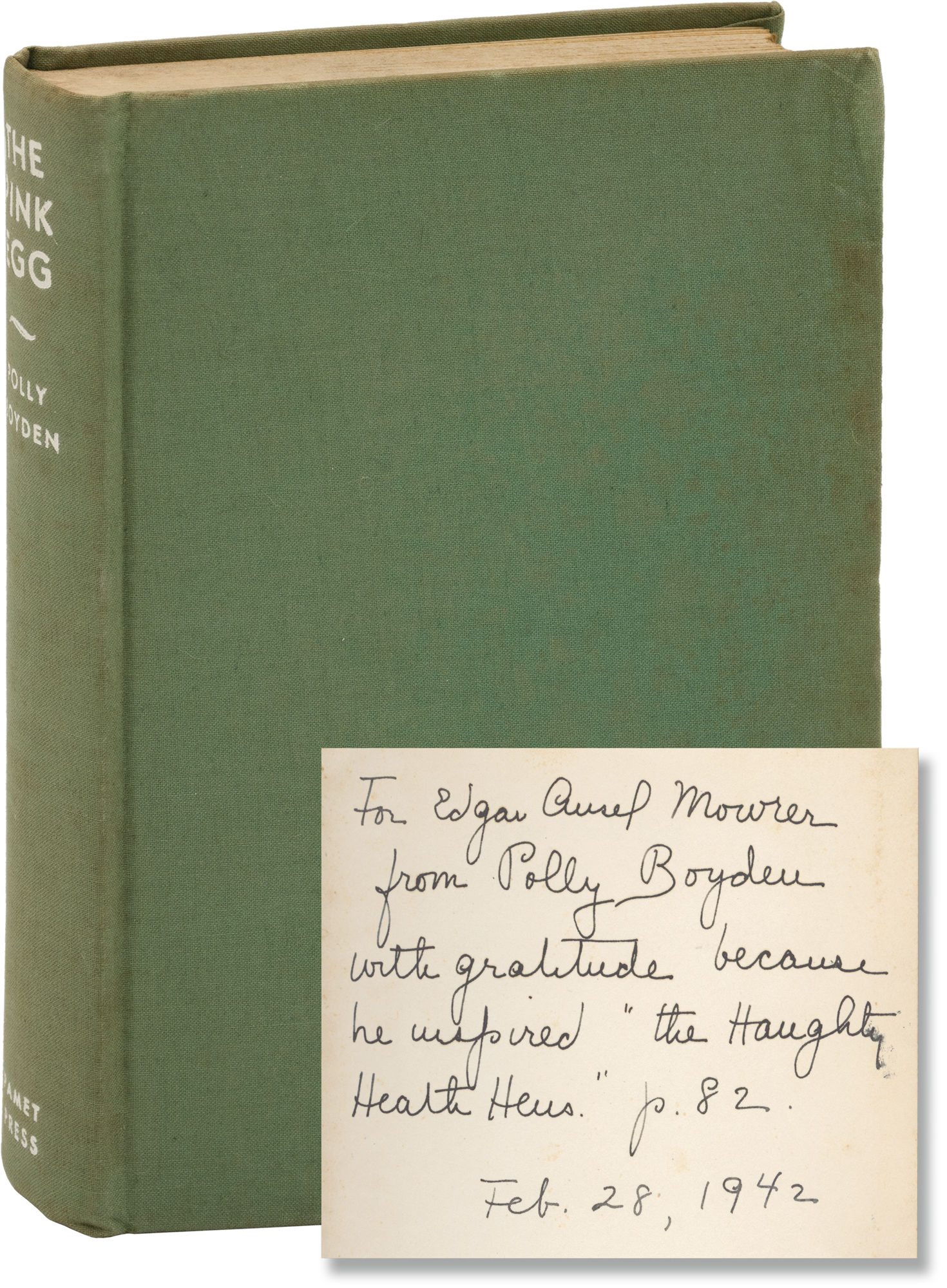
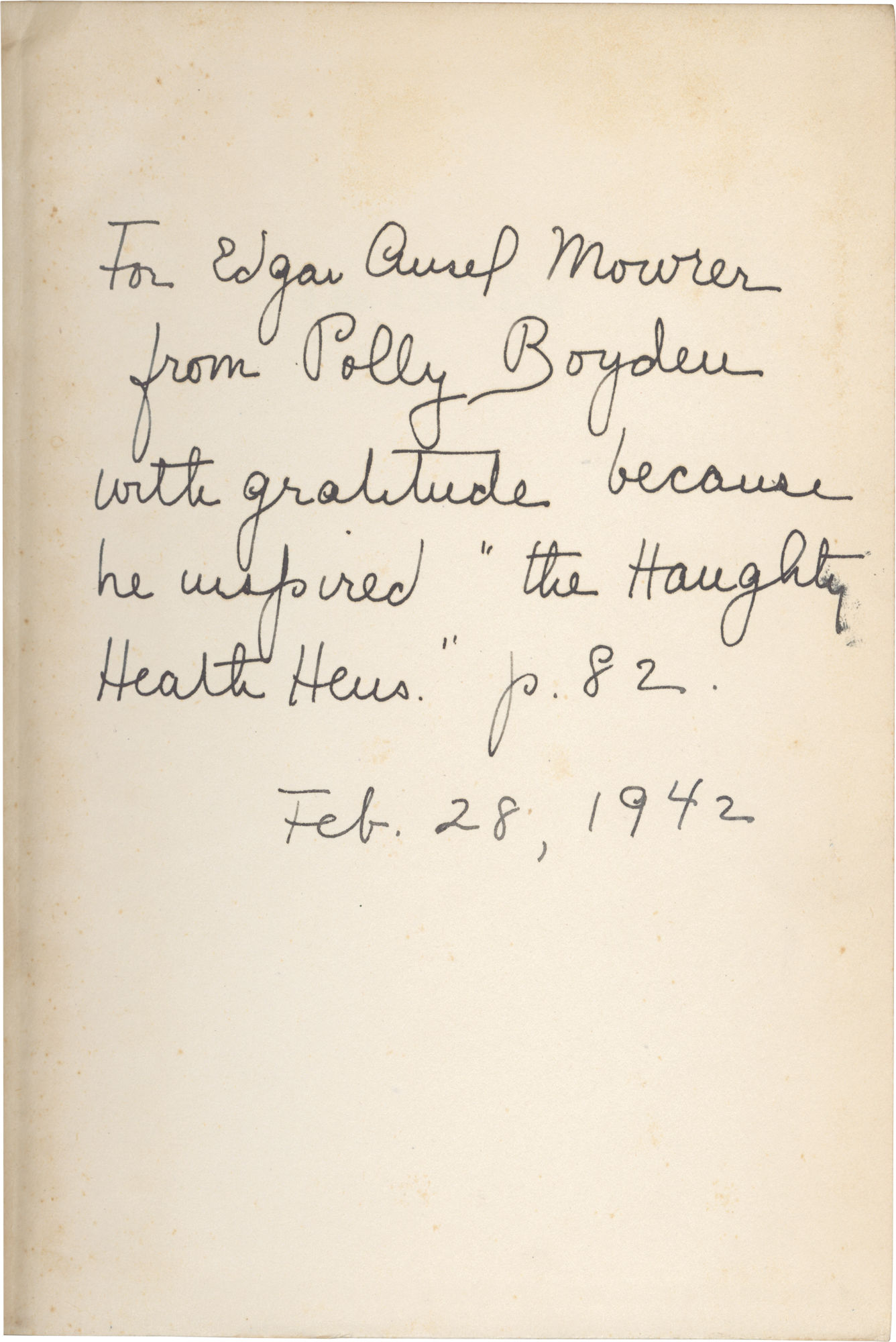
Truro, MA: Pamet Press, 1942. First Edition. First Edition. INSCRIBED by the author on the front endpaper in the year of publication to American journalist Edgar Mowrer: "For Edgar Ansel Mowrer / from Polly Boyden / with gratitude because he inspired "the Haughty Heath Hens" p. 82 / Feb. 28, 1942."
An unusual, bird-centric, left-wing allegory in the vein of "Animal Farm," about a young robin who gains class consciousness and departs from his bourgeois upbringing, deciding to stand instead with the proletariat (sparrows).
Considered by many to be "the dean of American foreign correspondents," Edgar Mowrer was born in Bloomington in 1892. He began working as a reporter in France in 1914, having been pressed into service alongside his brother, the first journalist to receive a Pulitzer Prize for Correspondence in 1929. Perceiving the growing power of the Nazi Party, Mowrer began reporting on the rise of Adolf Hitler, publishing day-by-day dispatches from Berlin that would win him a Pulitzer Prize in 1933. Viewed as a serious threat to Nazi power, Mowrer became the first American correspondent to be driven from Germany, taking a post in Paris, where he remained until France's defeat by German forces in 1940. An outspoken antifascist, Mowrer returned to the US and gave lectures about the dangers of Nazi Germany and the failures of American foreign policy. He continued to work as a reporter until his death in 1977.
Very Good plus, lacking the dust jacket. Top page edges and rear board lightly foxed, with small dampstains on the top right board corners.
An unusual, bird-centric, left-wing allegory in the vein of "Animal Farm," about a young robin who gains class consciousness and departs from his bourgeois upbringing, deciding to stand instead with the proletariat (sparrows).
Considered by many to be "the dean of American foreign correspondents," Edgar Mowrer was born in Bloomington in 1892. He began working as a reporter in France in 1914, having been pressed into service alongside his brother, the first journalist to receive a Pulitzer Prize for Correspondence in 1929. Perceiving the growing power of the Nazi Party, Mowrer began reporting on the rise of Adolf Hitler, publishing day-by-day dispatches from Berlin that would win him a Pulitzer Prize in 1933. Viewed as a serious threat to Nazi power, Mowrer became the first American correspondent to be driven from Germany, taking a post in Paris, where he remained until France's defeat by German forces in 1940. An outspoken antifascist, Mowrer returned to the US and gave lectures about the dangers of Nazi Germany and the failures of American foreign policy. He continued to work as a reporter until his death in 1977.
Very Good plus, lacking the dust jacket. Top page edges and rear board lightly foxed, with small dampstains on the top right board corners.