

New Bedford Textile School Pattern and Lecture Books
- New Bedford, Massachusetts: New Bedford Textile School, 1929
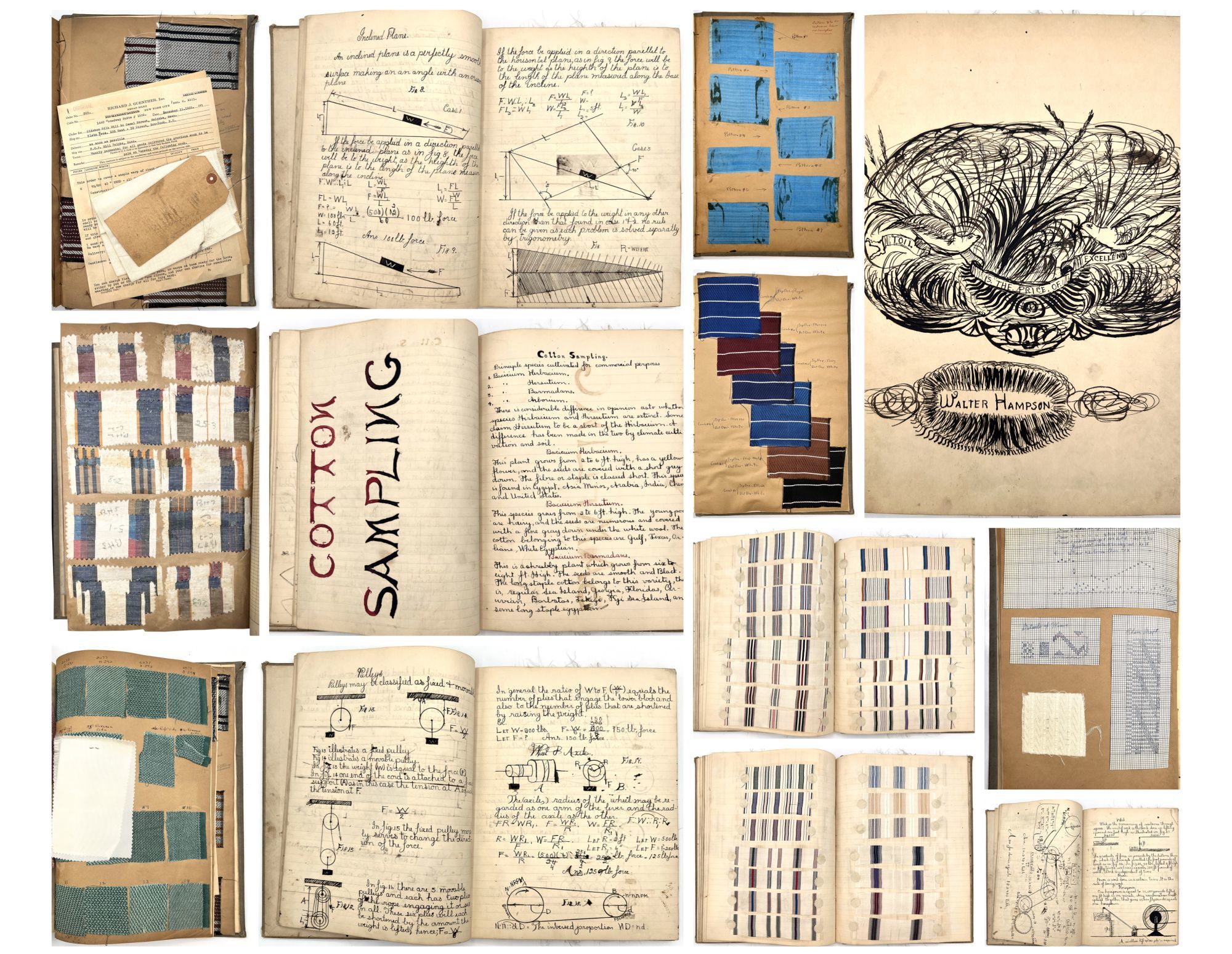
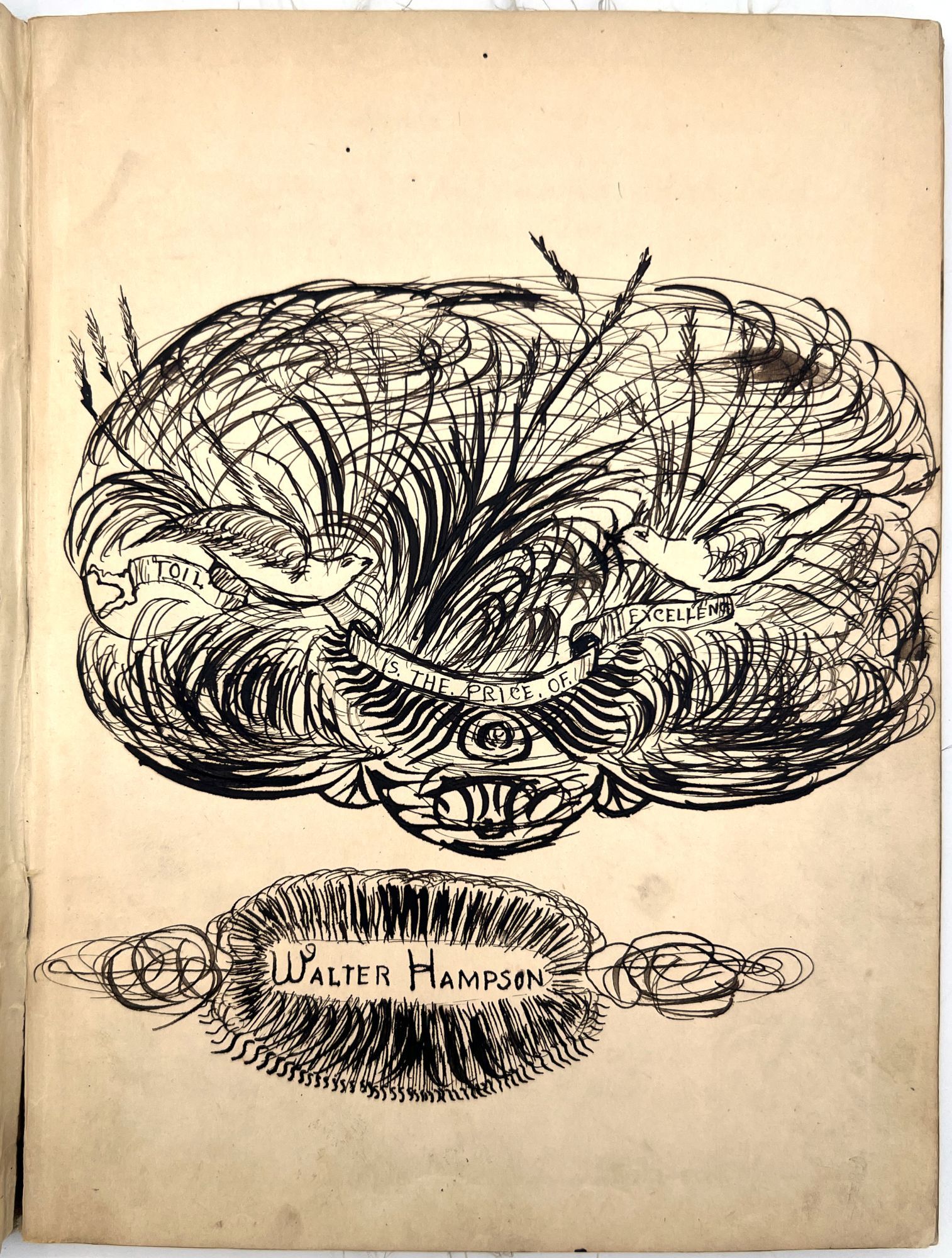
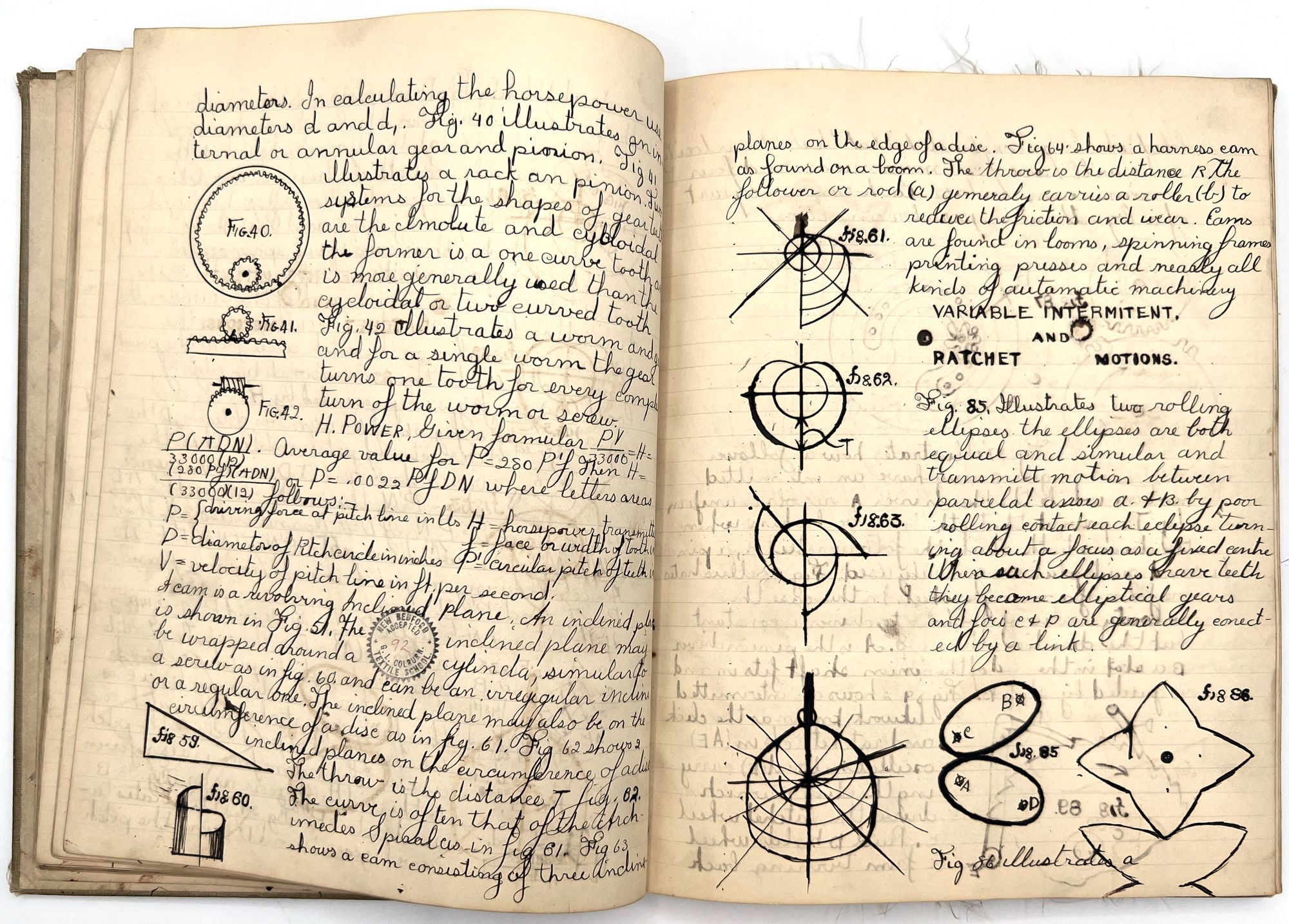
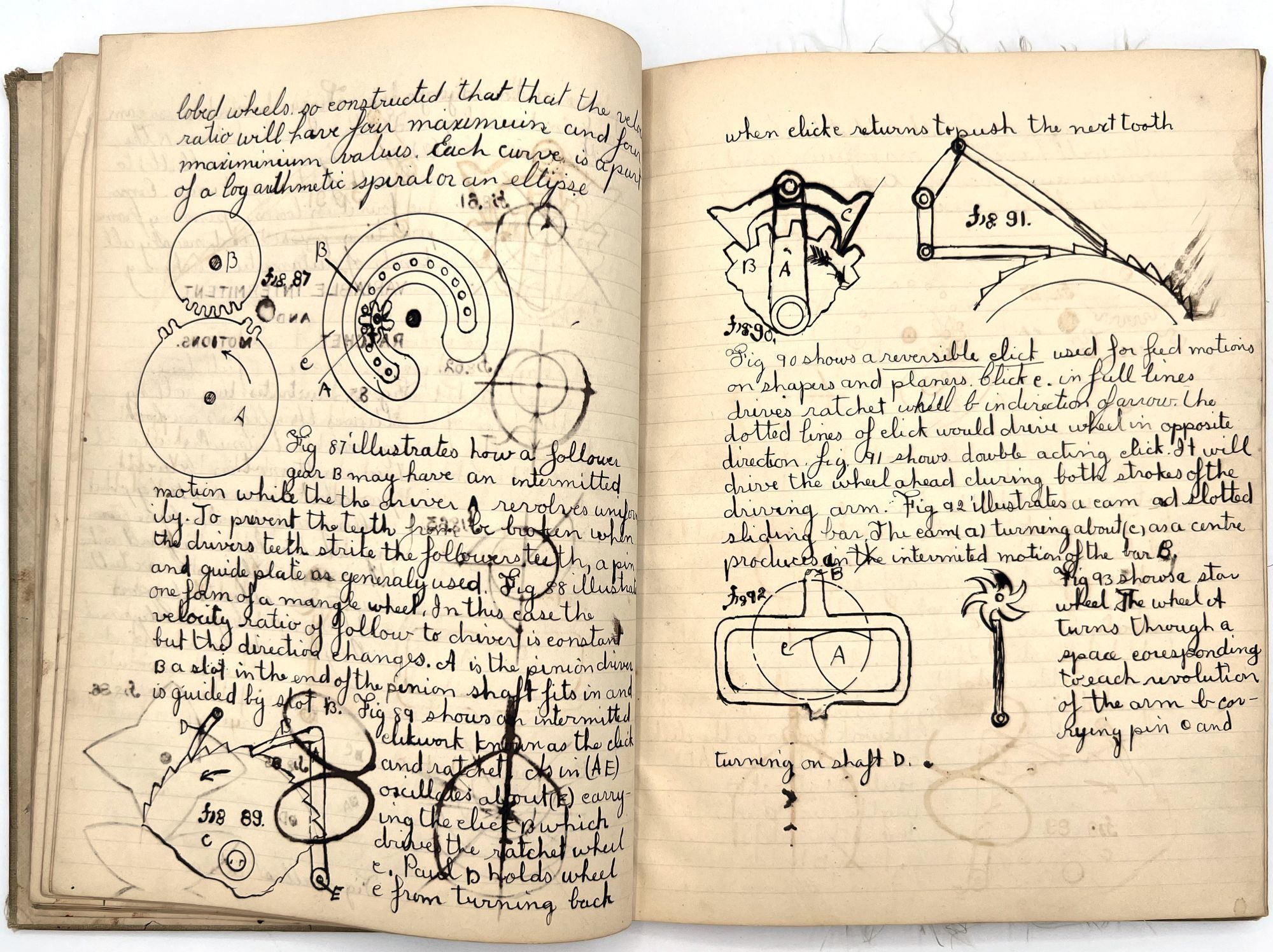
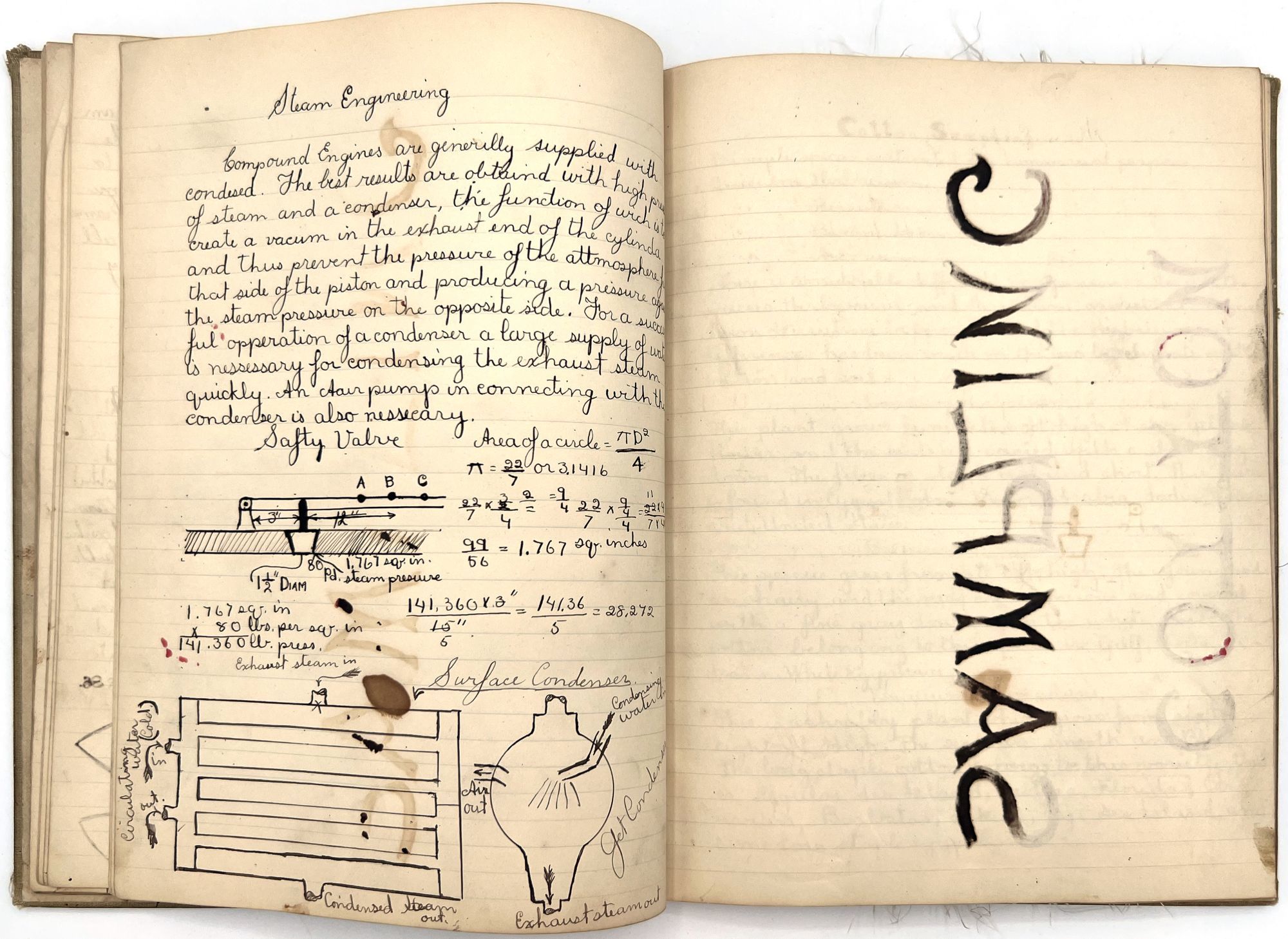
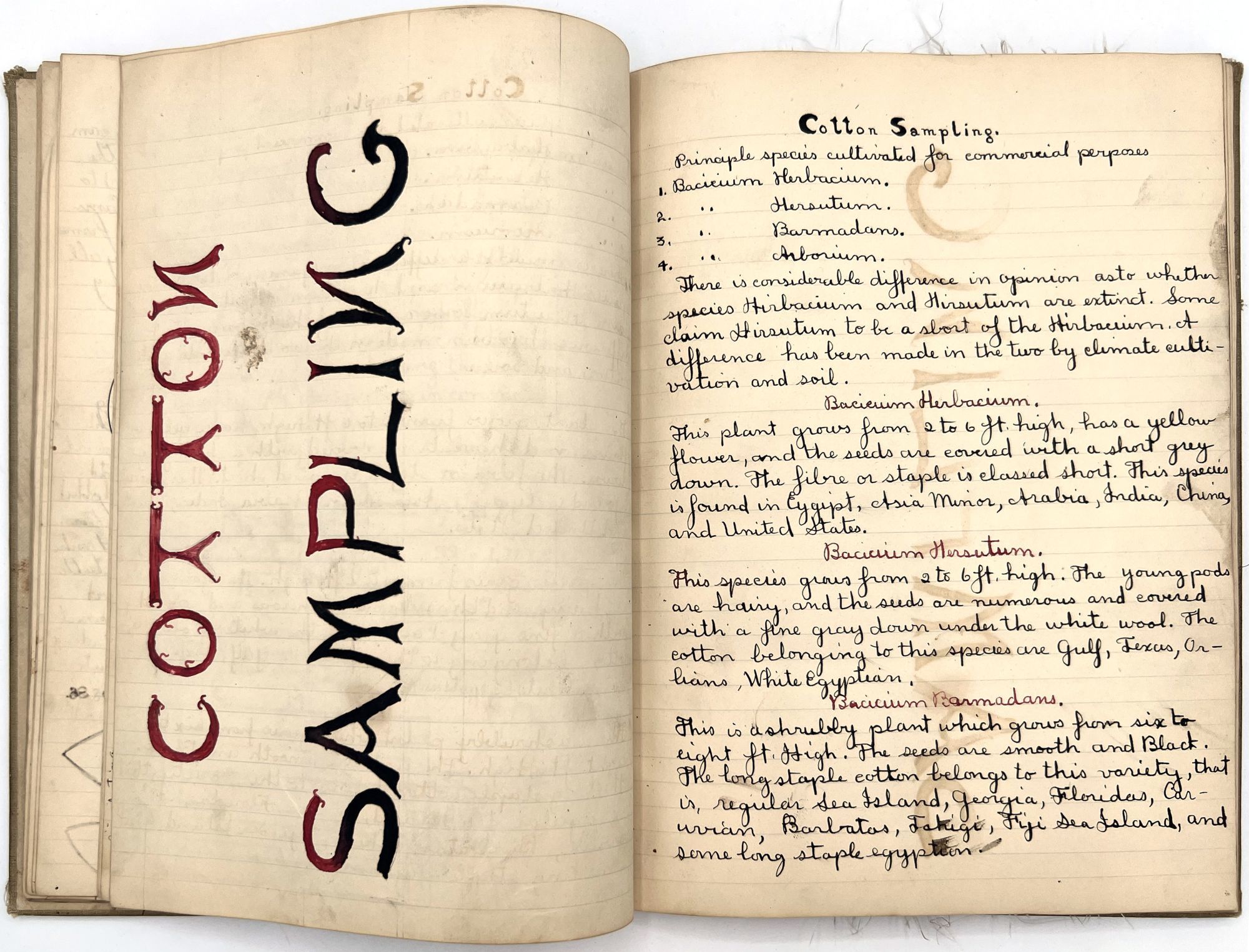
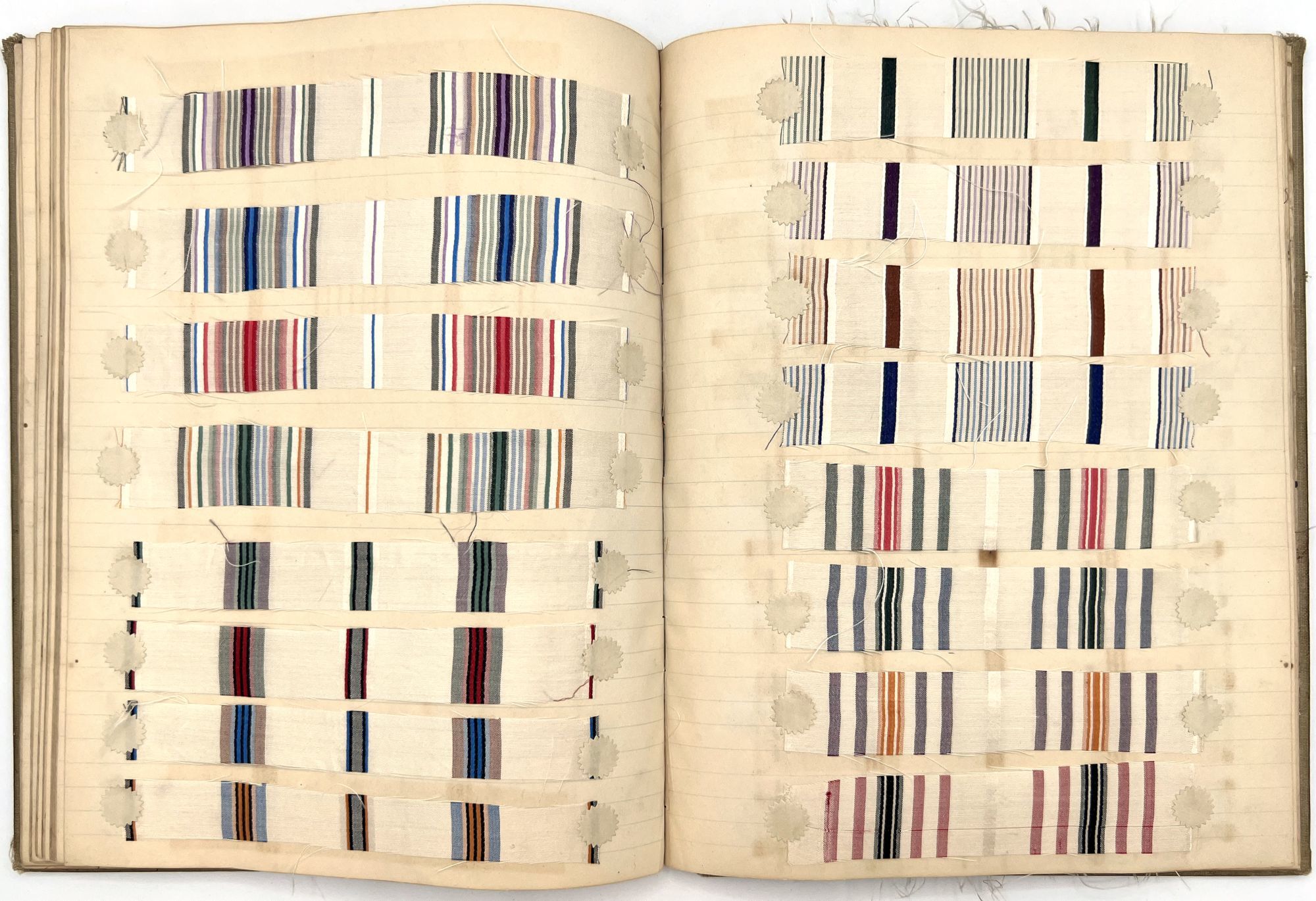
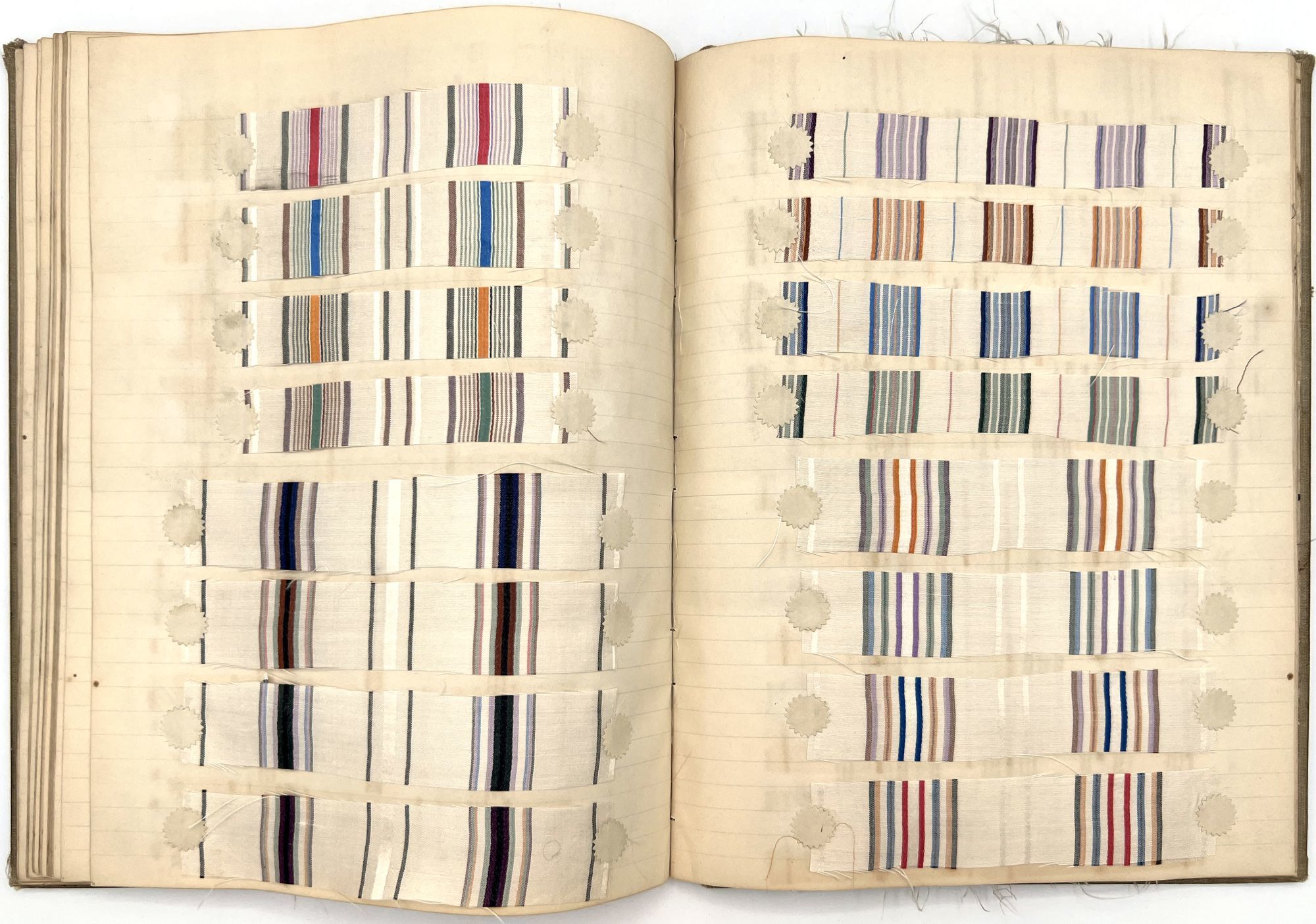
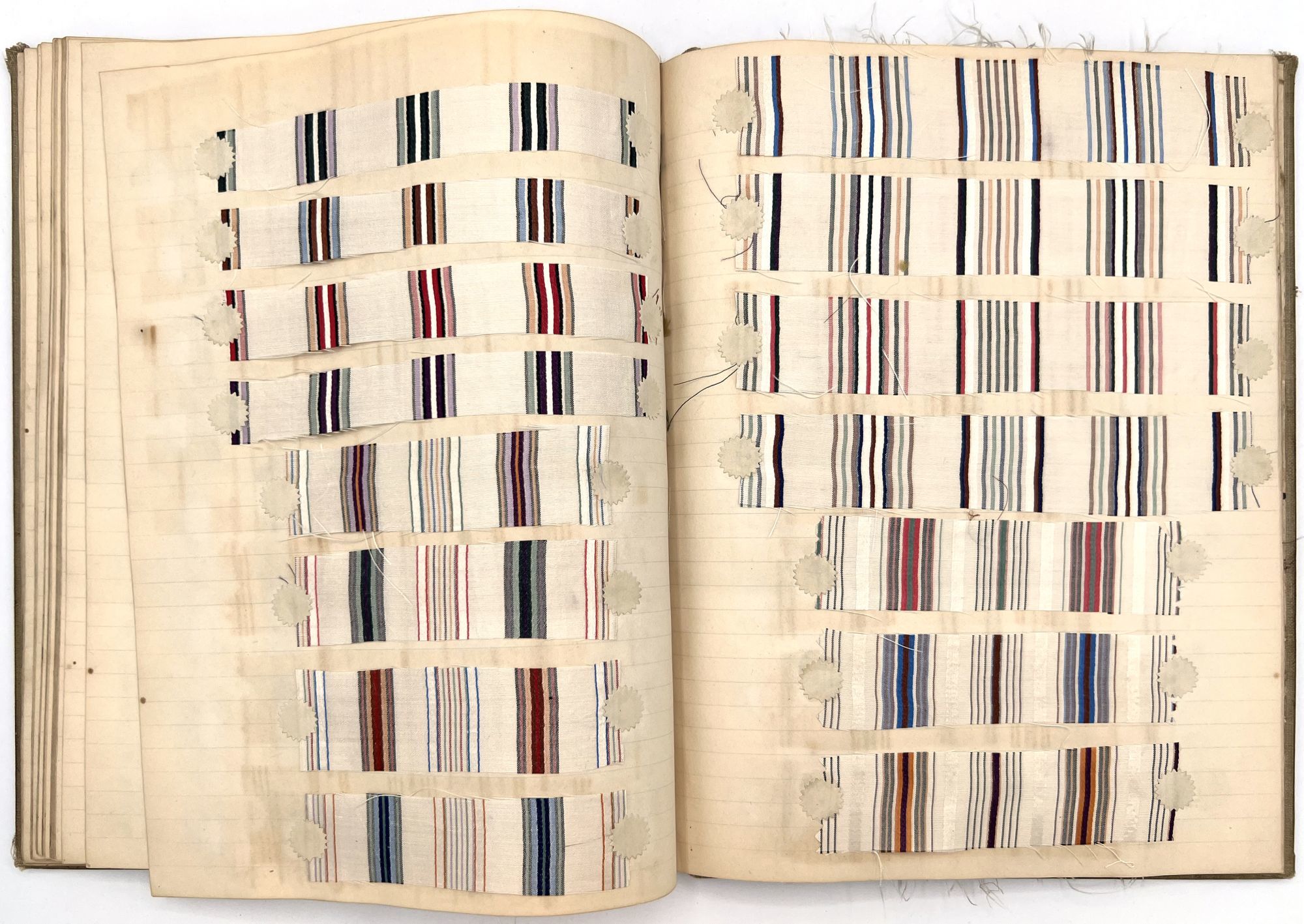
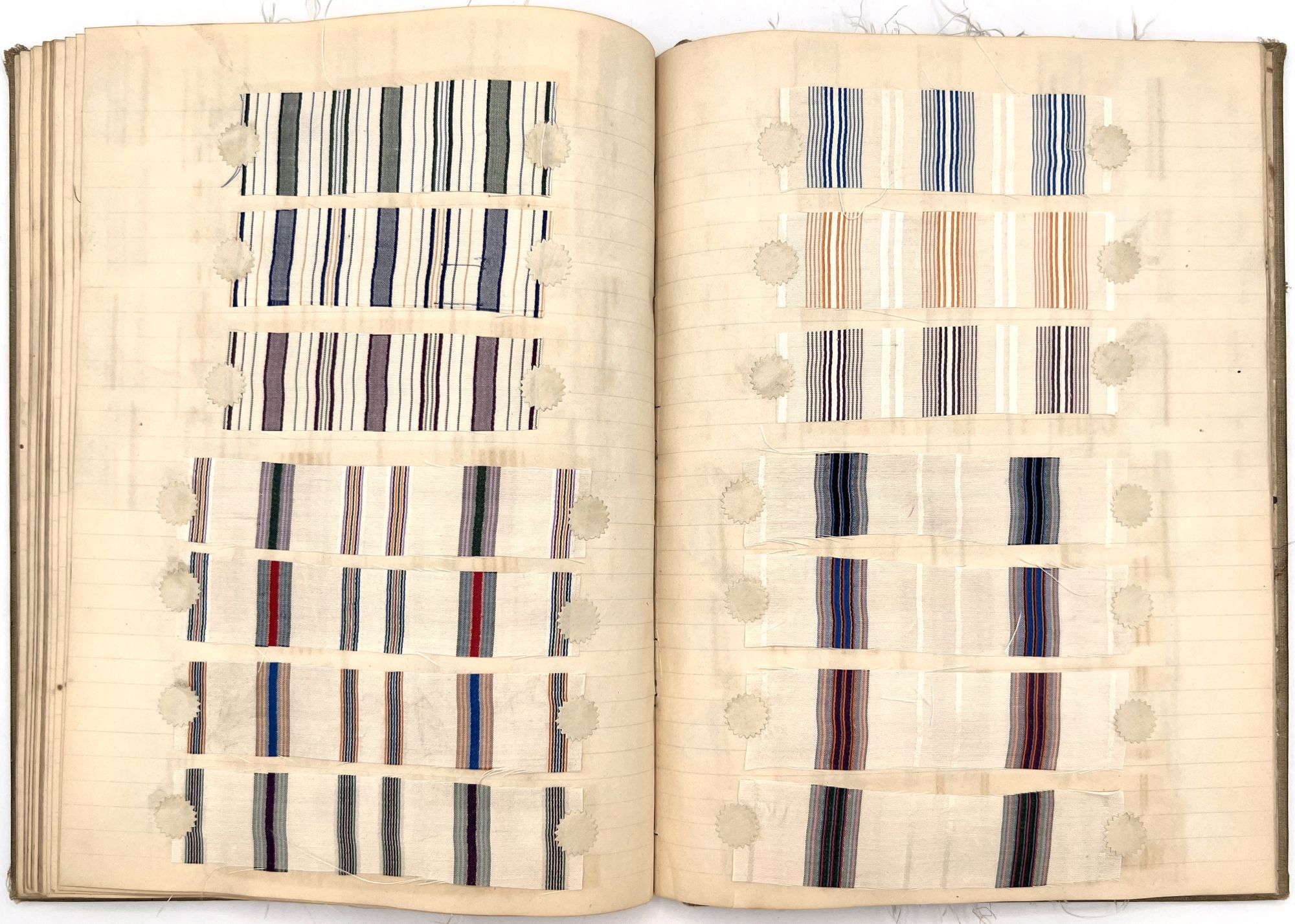
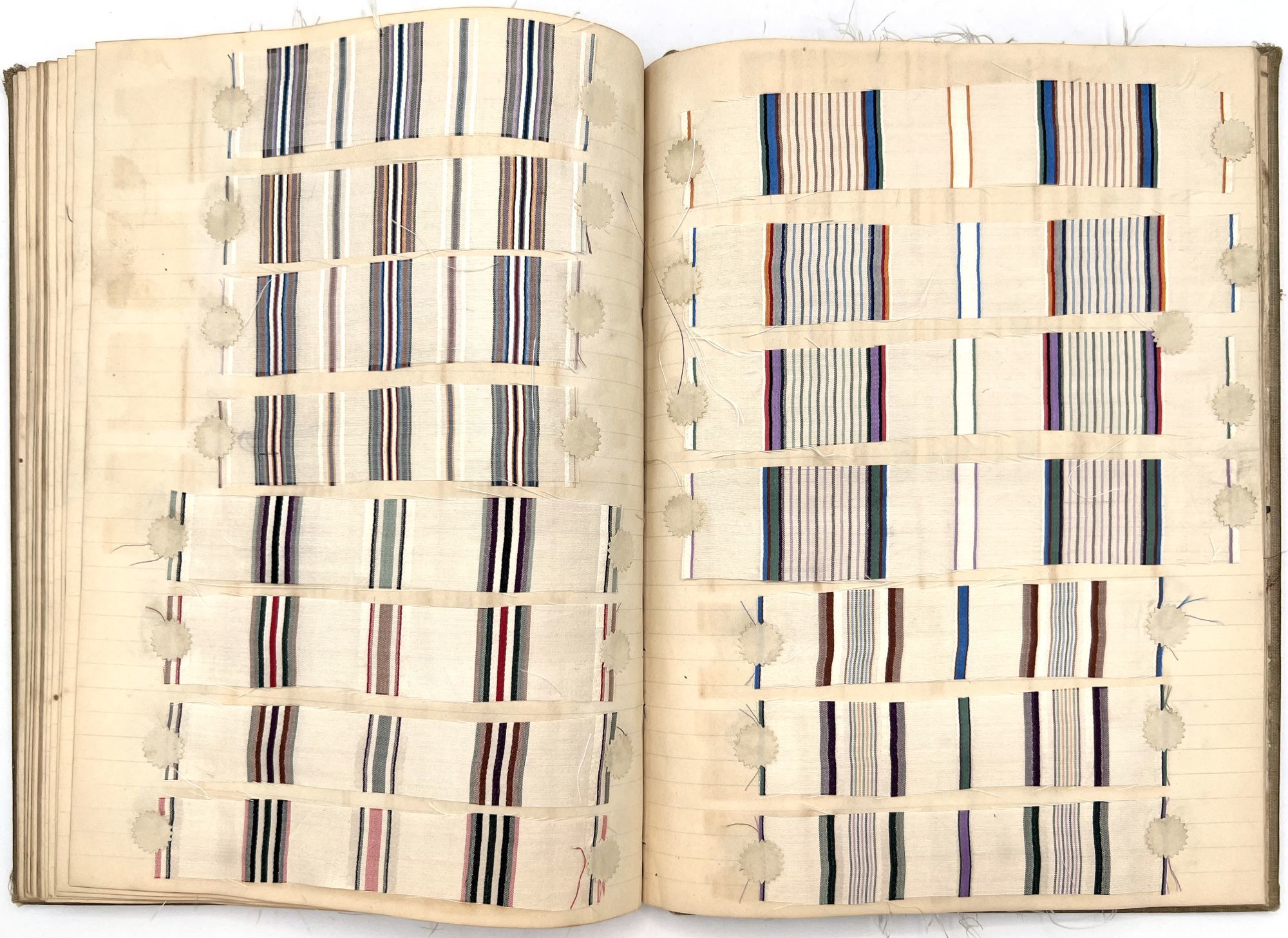
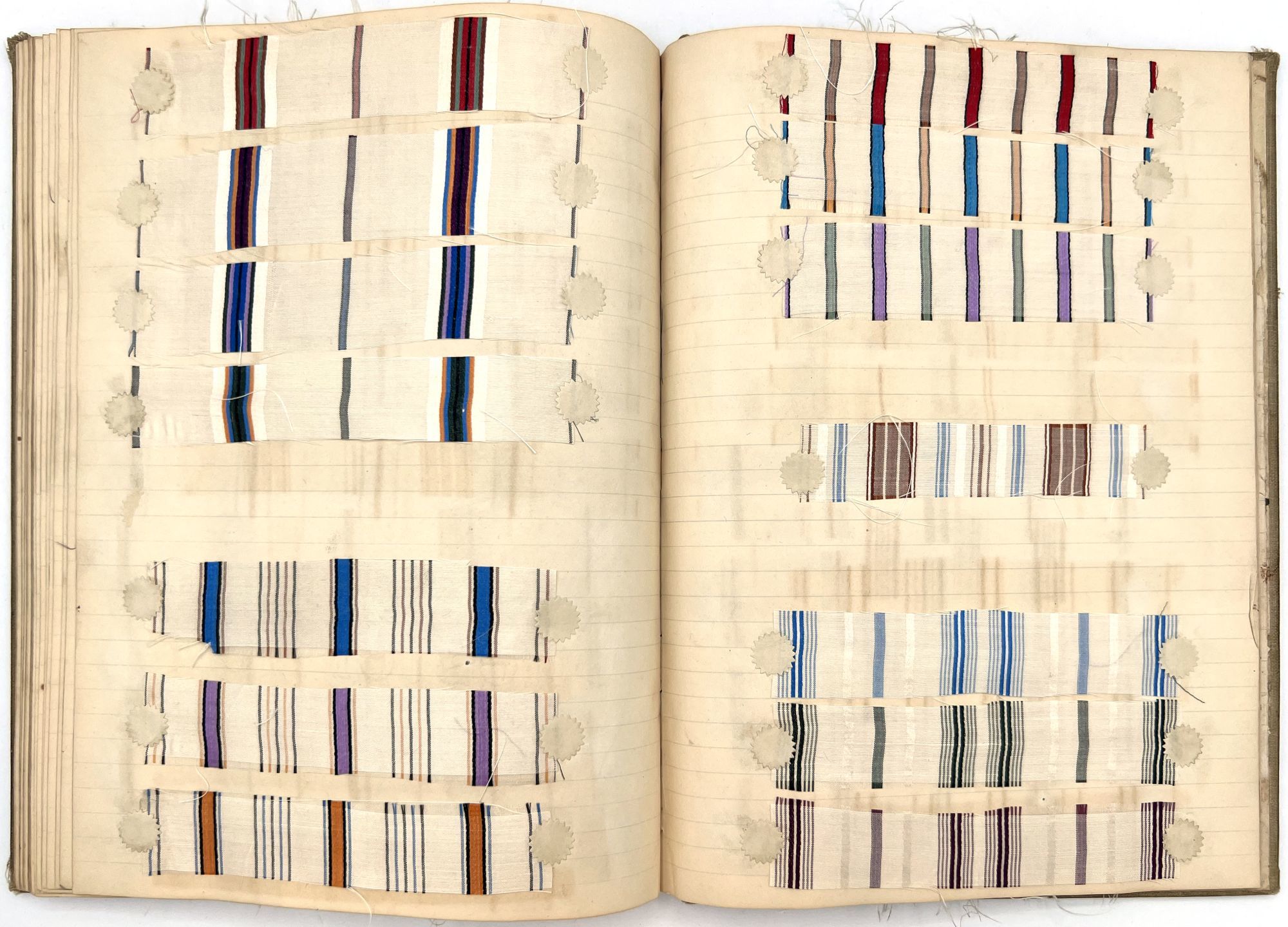
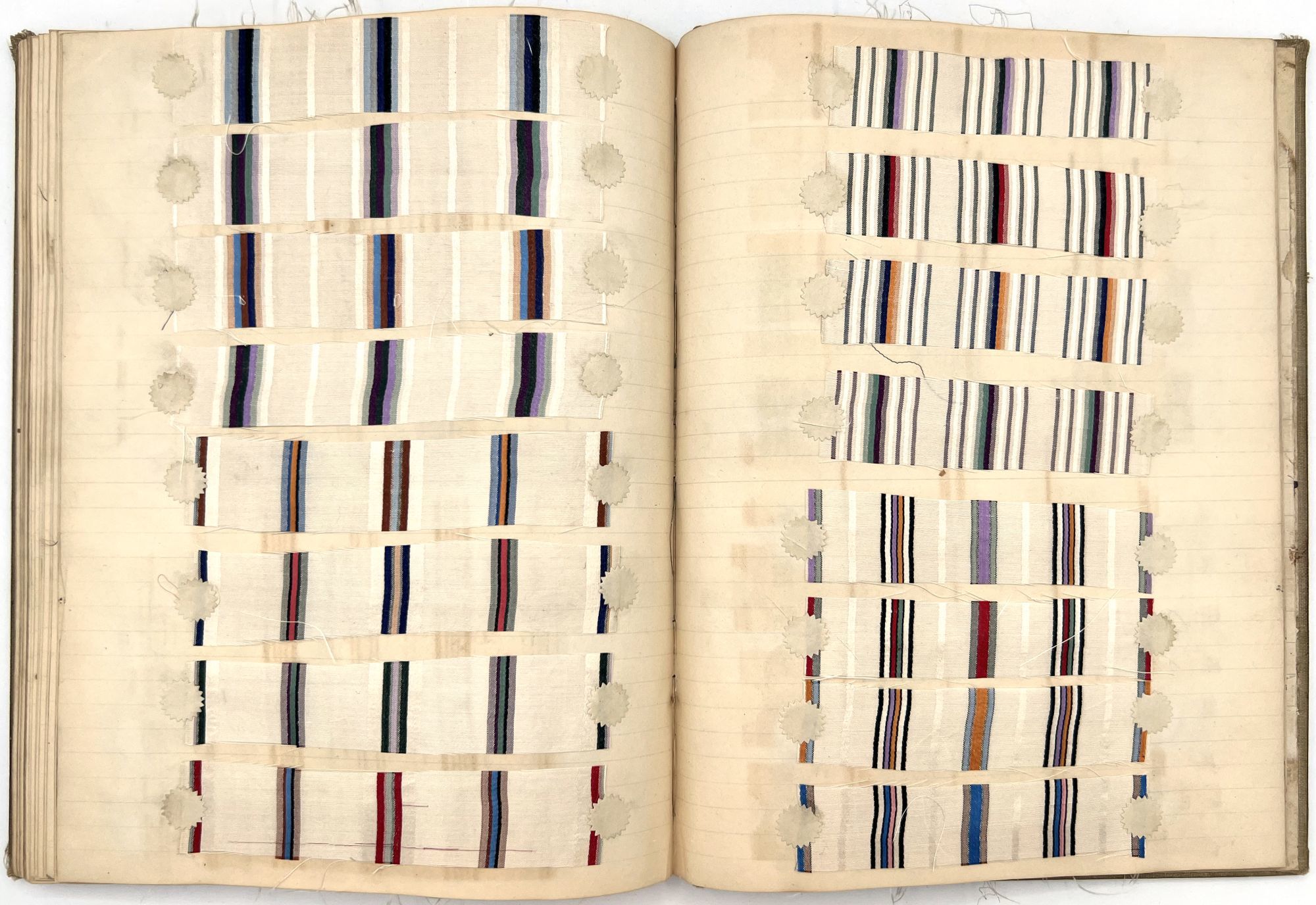
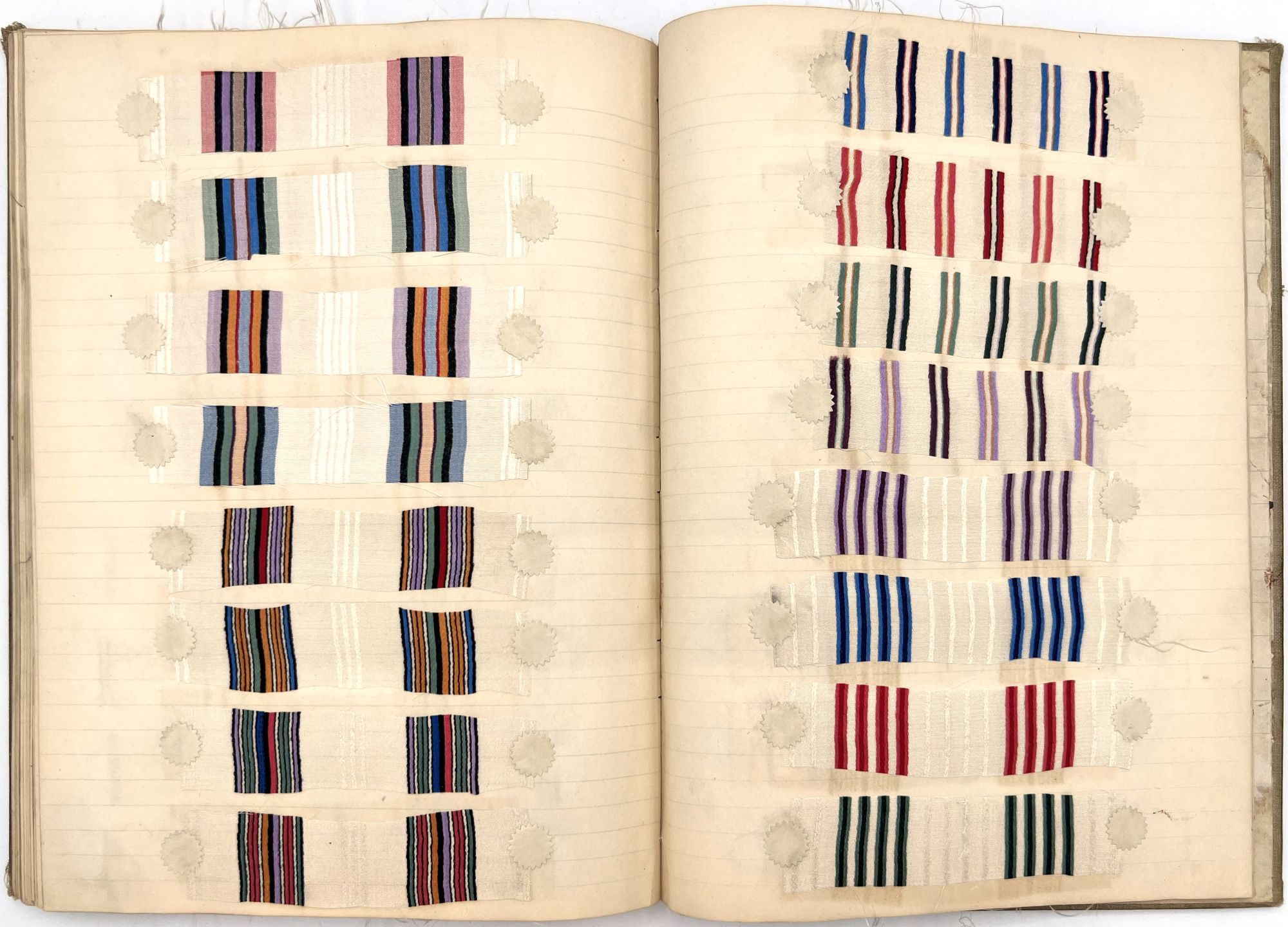
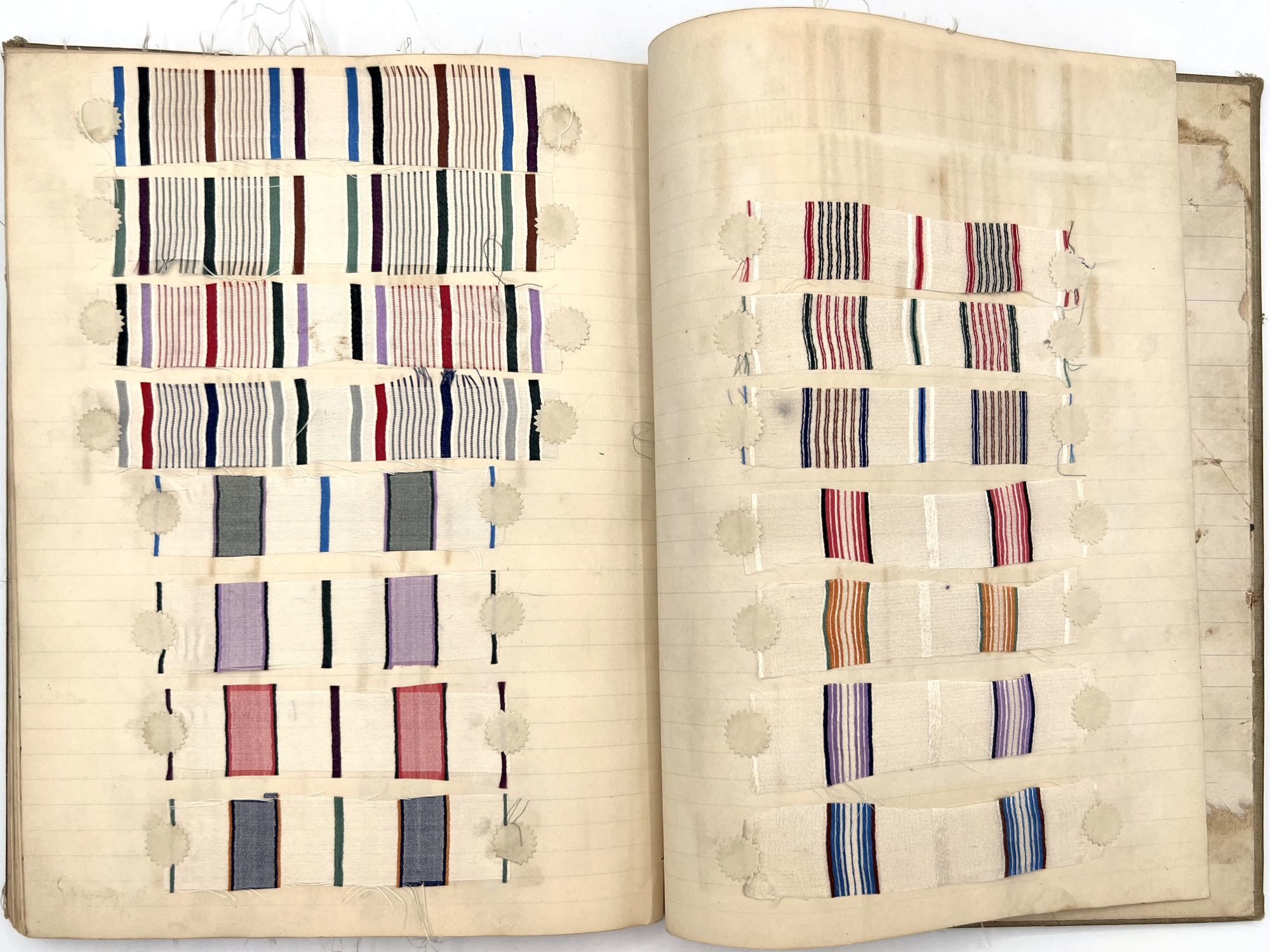
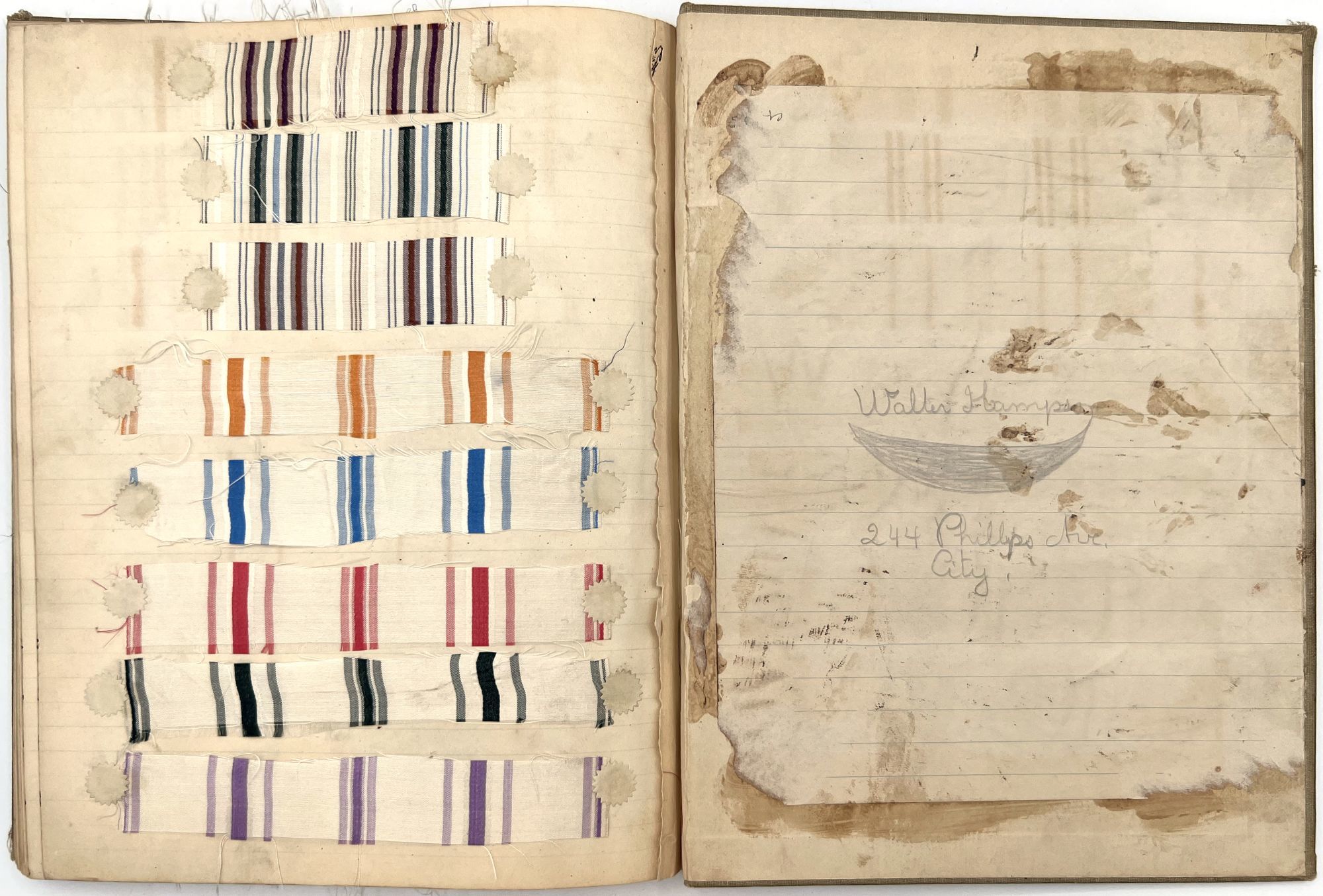
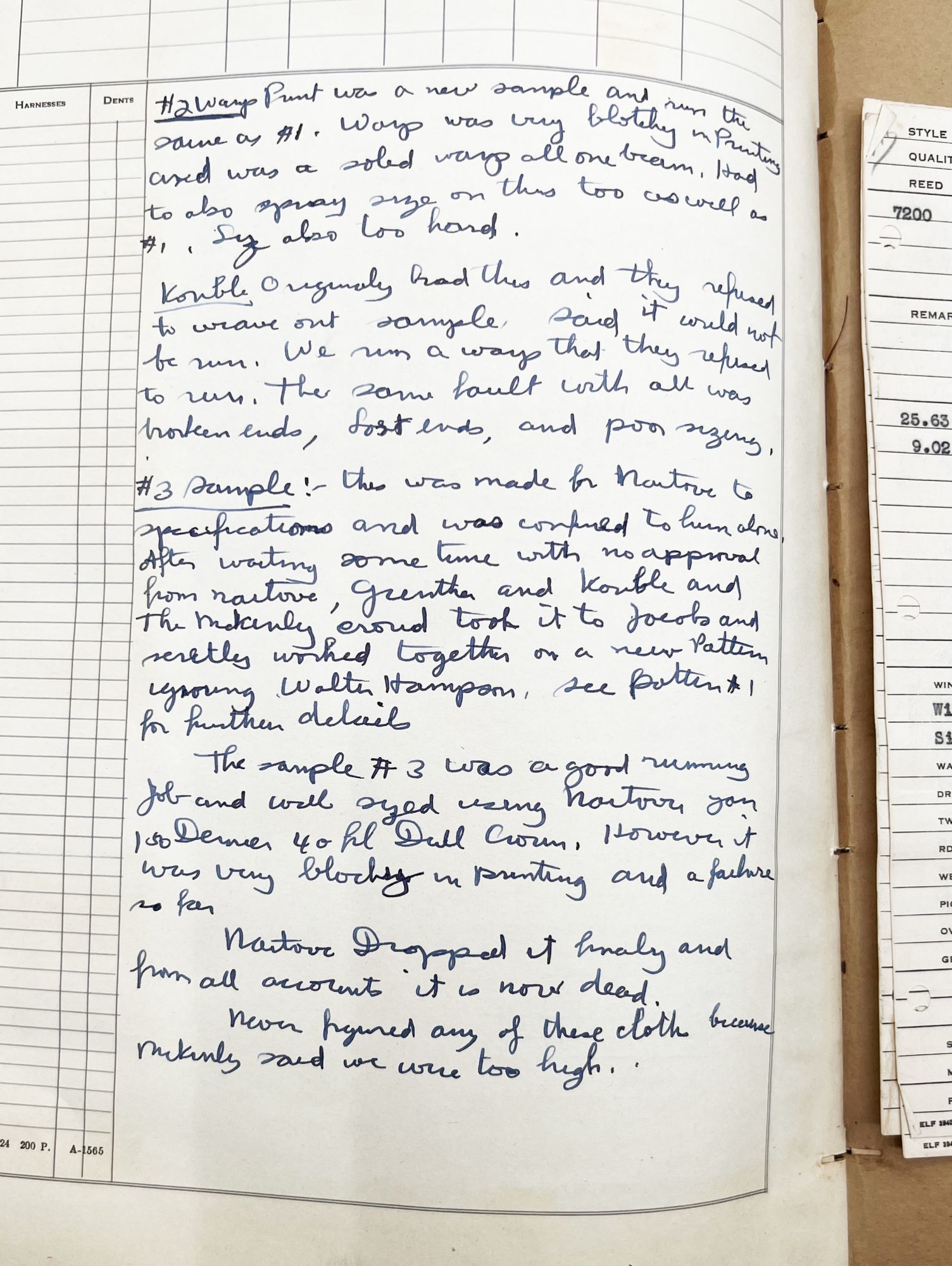
New Bedford, Massachusetts: New Bedford Textile School, 1929. Good to very good.. A collection of hundreds of textile samples, weave pattern charts, and highly technical handwritten notes on the textile manufacturing process, all contained within two books belonging to Walter Hampson (dates unknown), a student at the New Bedford Textile School in Massachusetts. Together, the two books provide a remarkably comprehensive look into the industry at the time, textile education c.1929, and into Hampson's exceptional grasp on physics and manufacturing. He appears to have been not only proficient in technical drawing, but also in calligraphic drawing; his original artwork decorates the first leaf of the Lecture Note Book with an elaborate calligraphic motto design ("Toil is the Price of Excellence"). A nice meeting of "art" and "industry".
The two books are as follows:
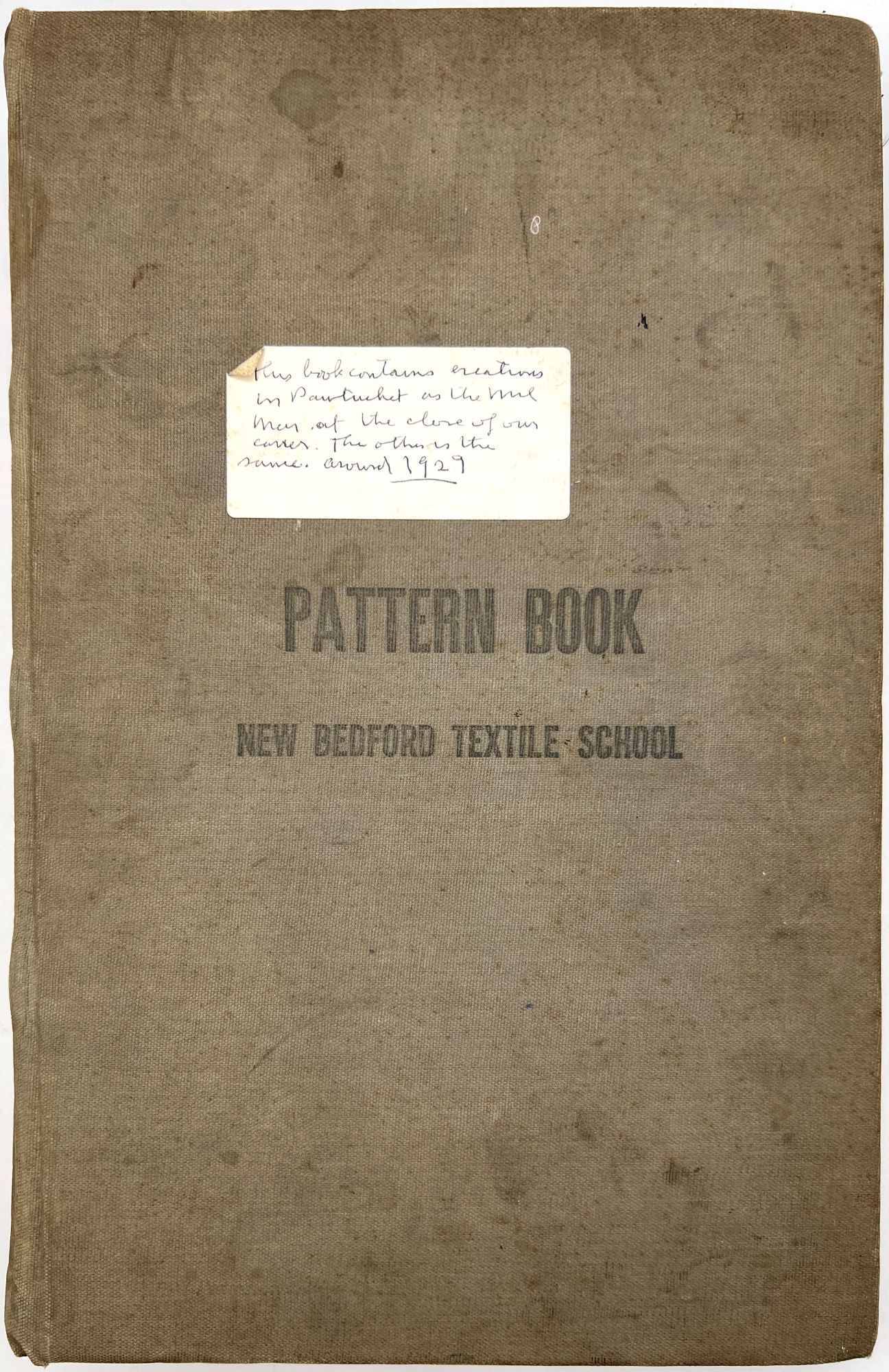
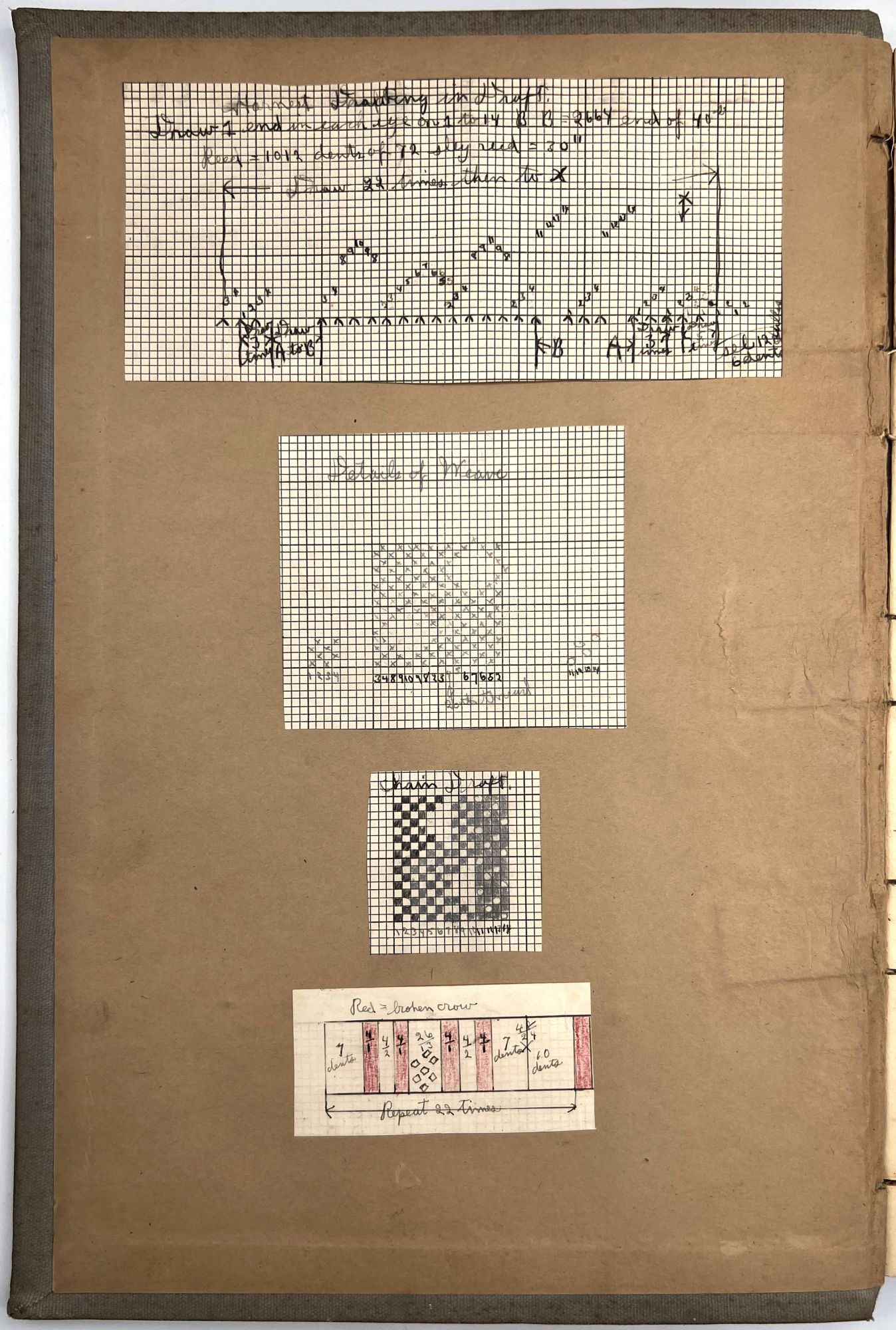
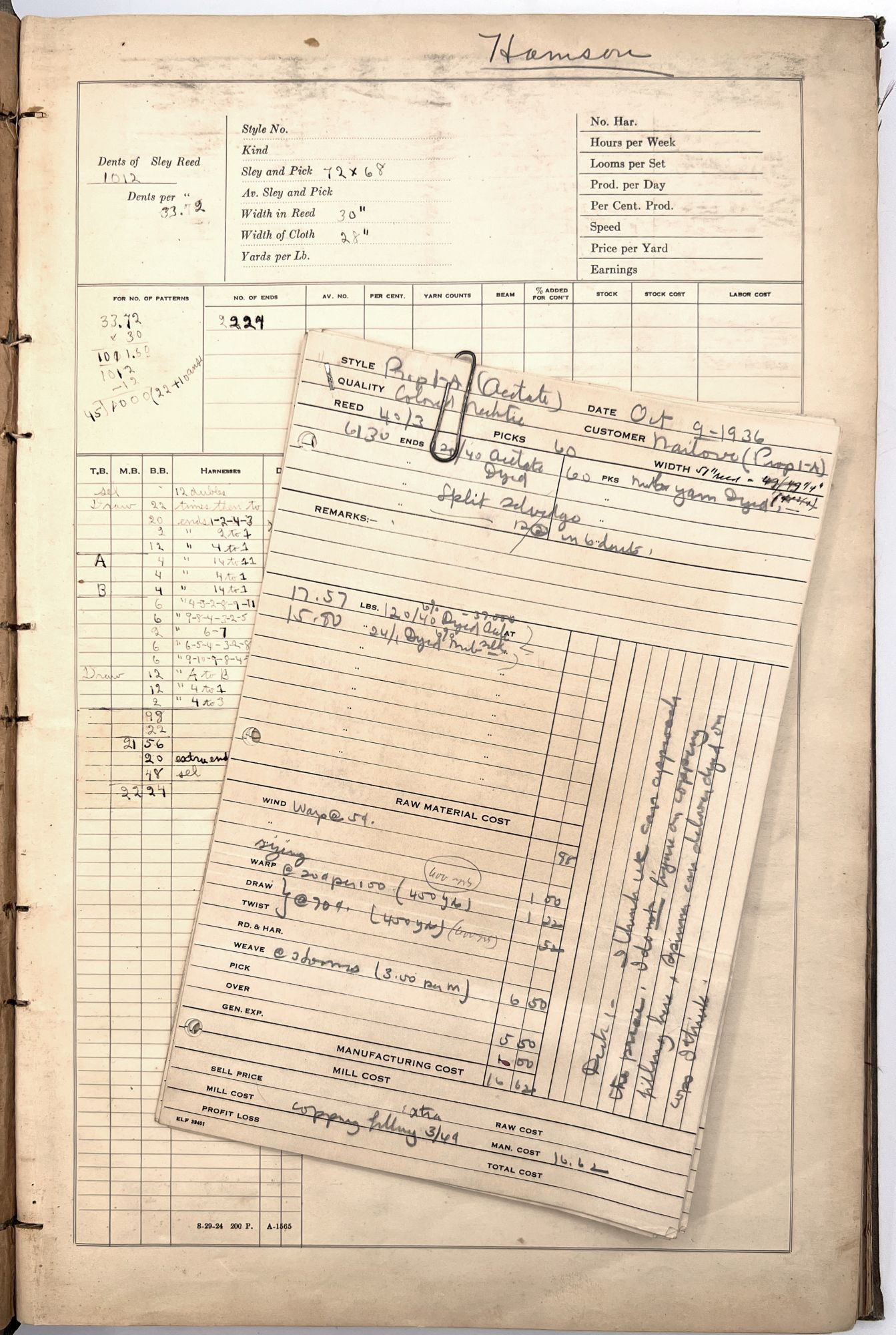
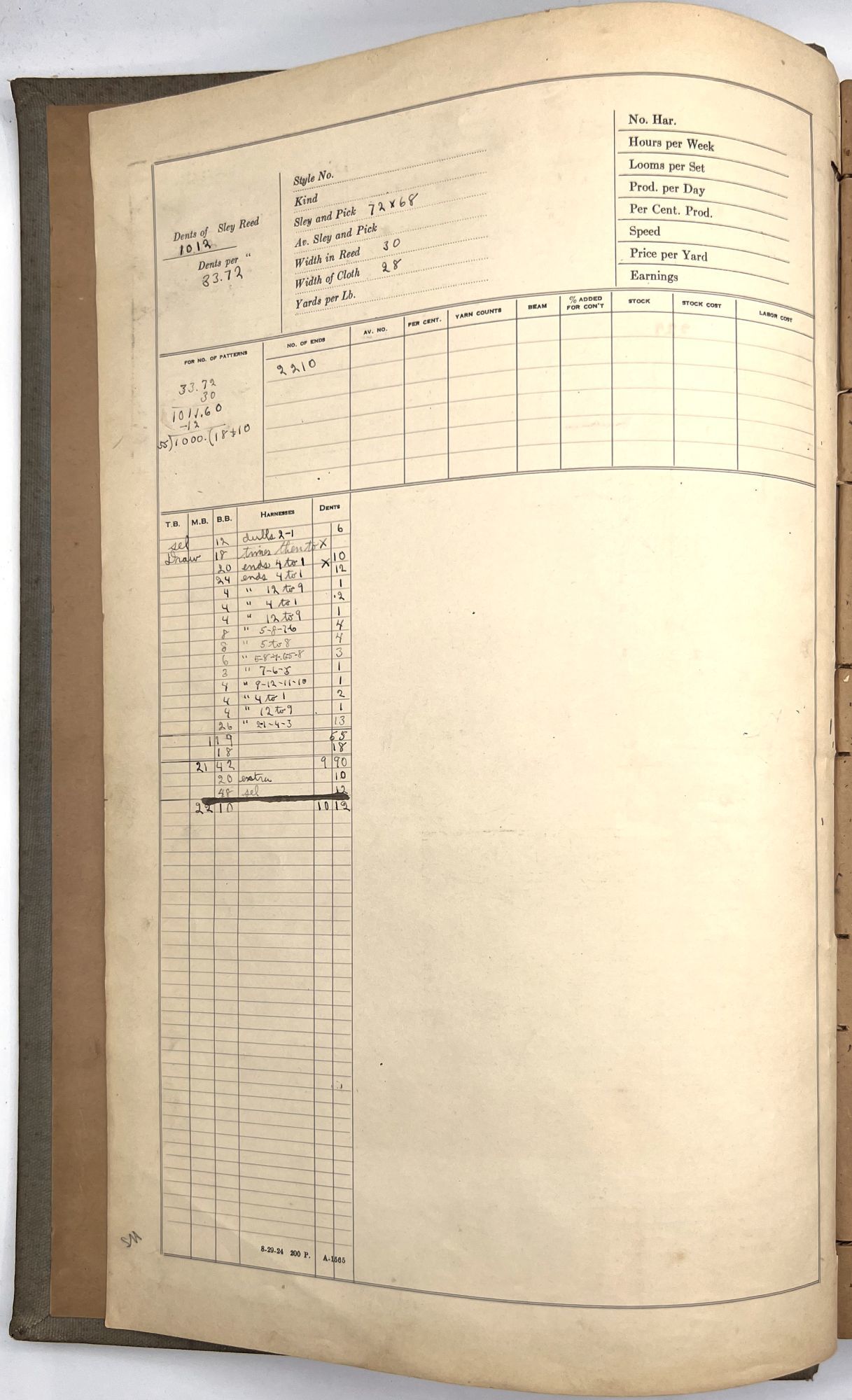
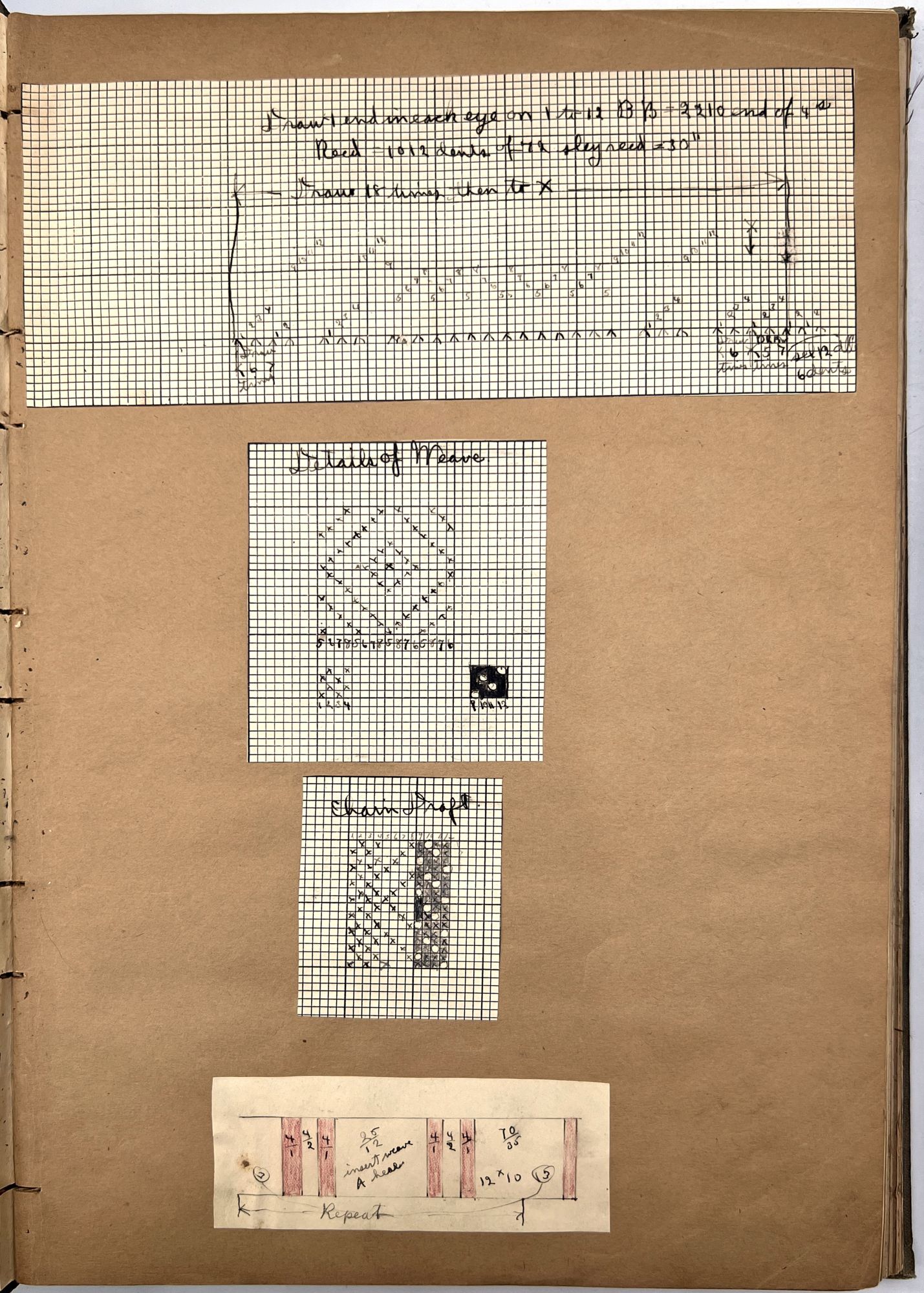
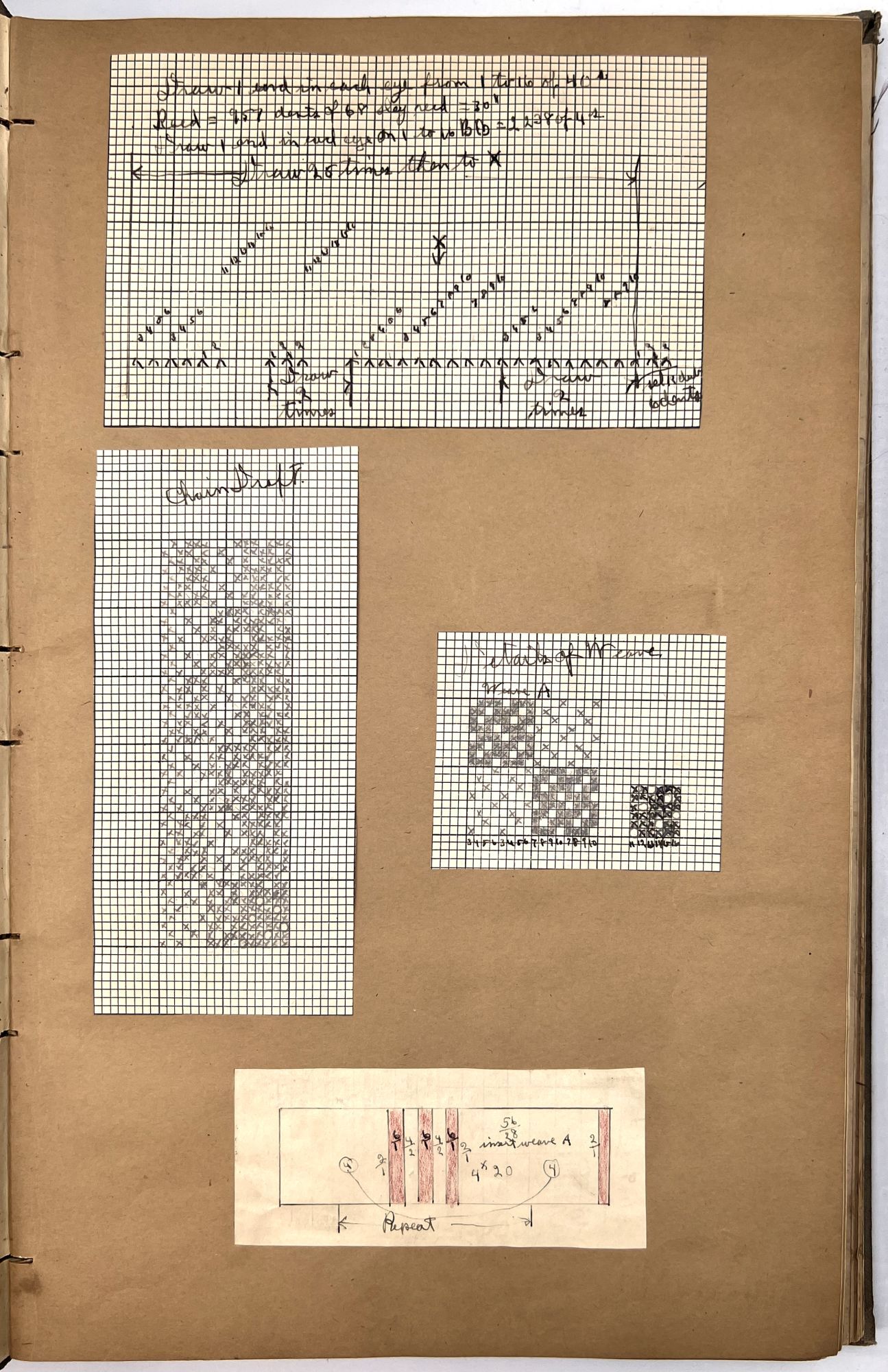
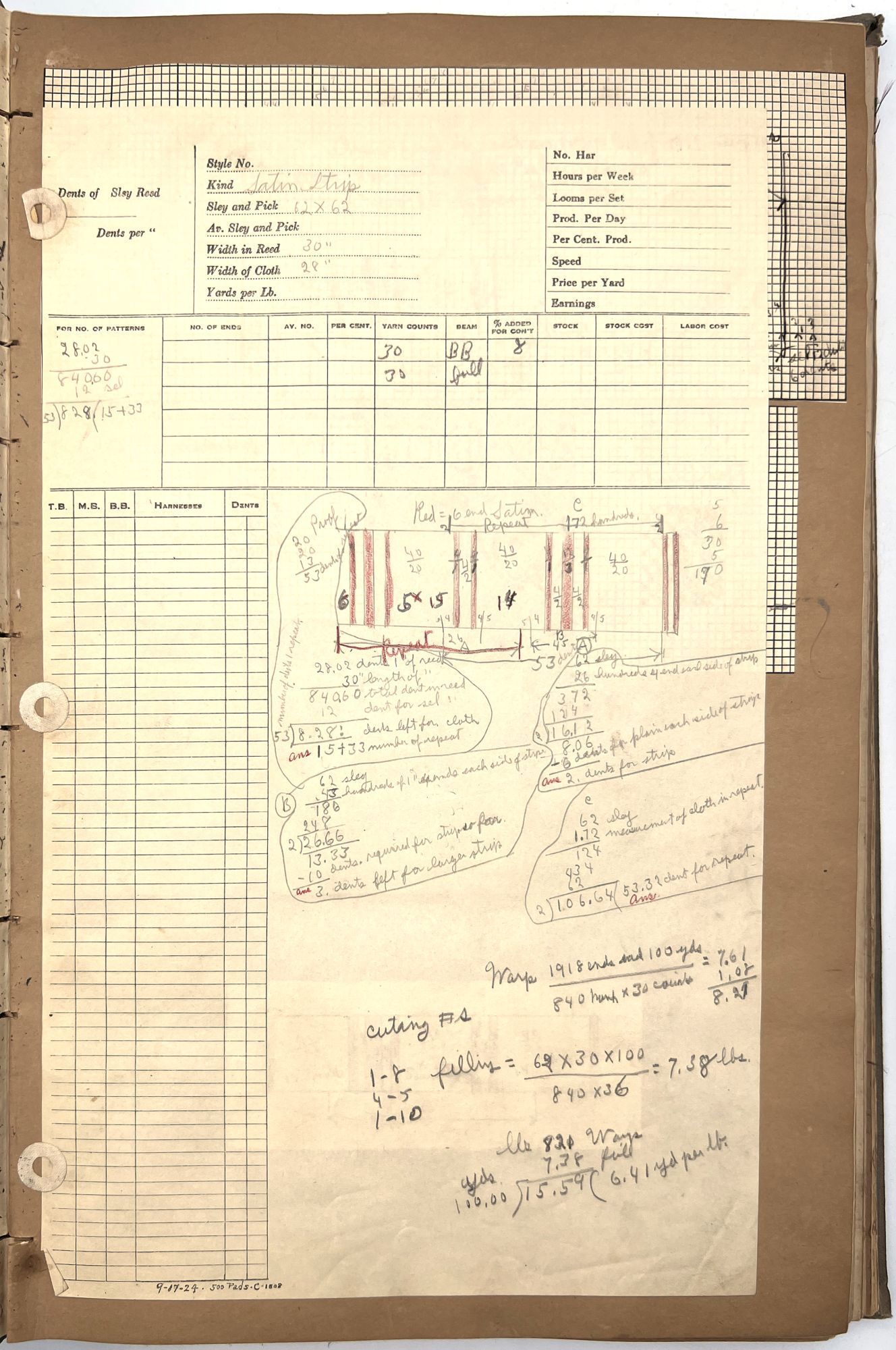
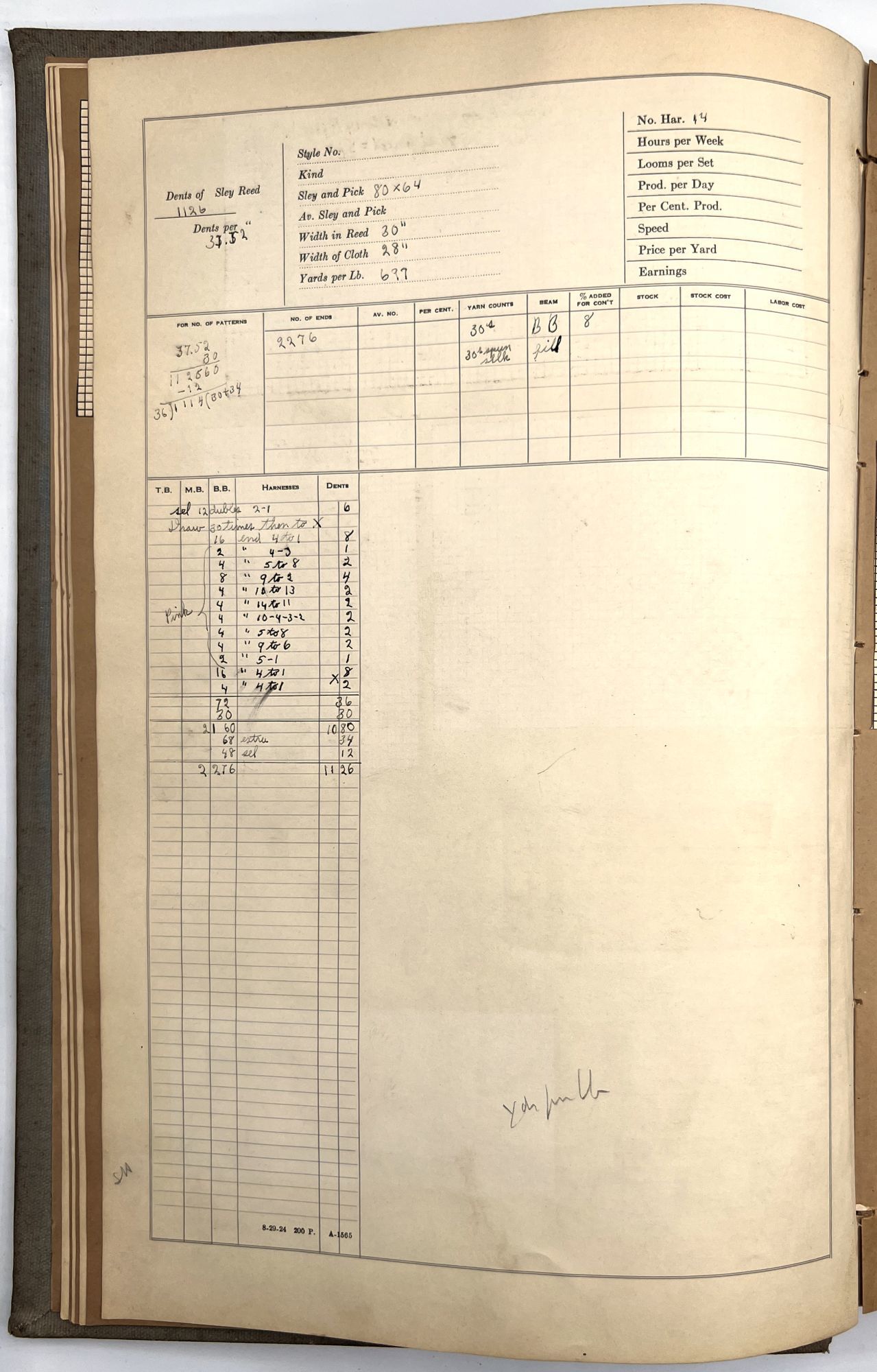
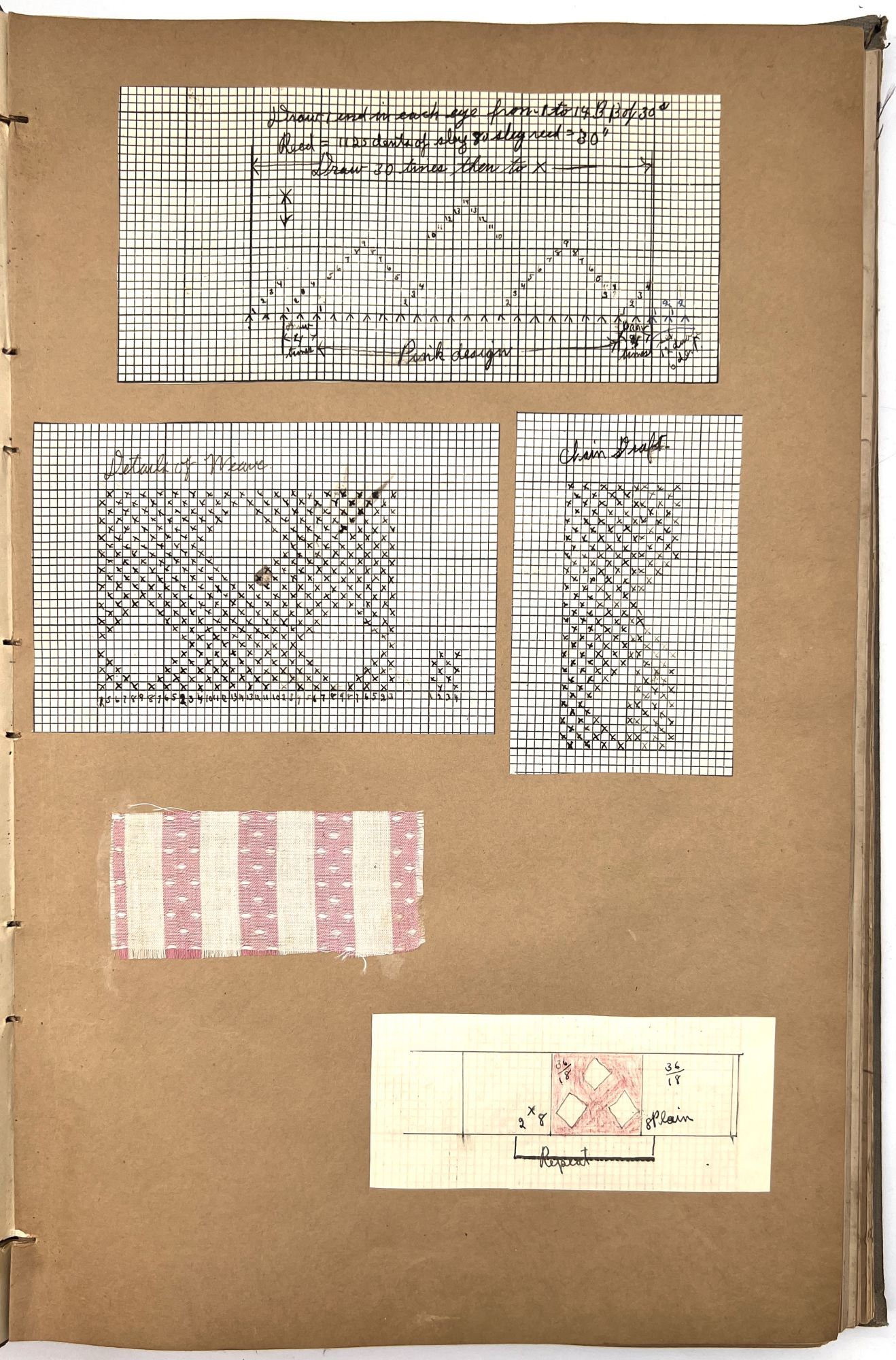
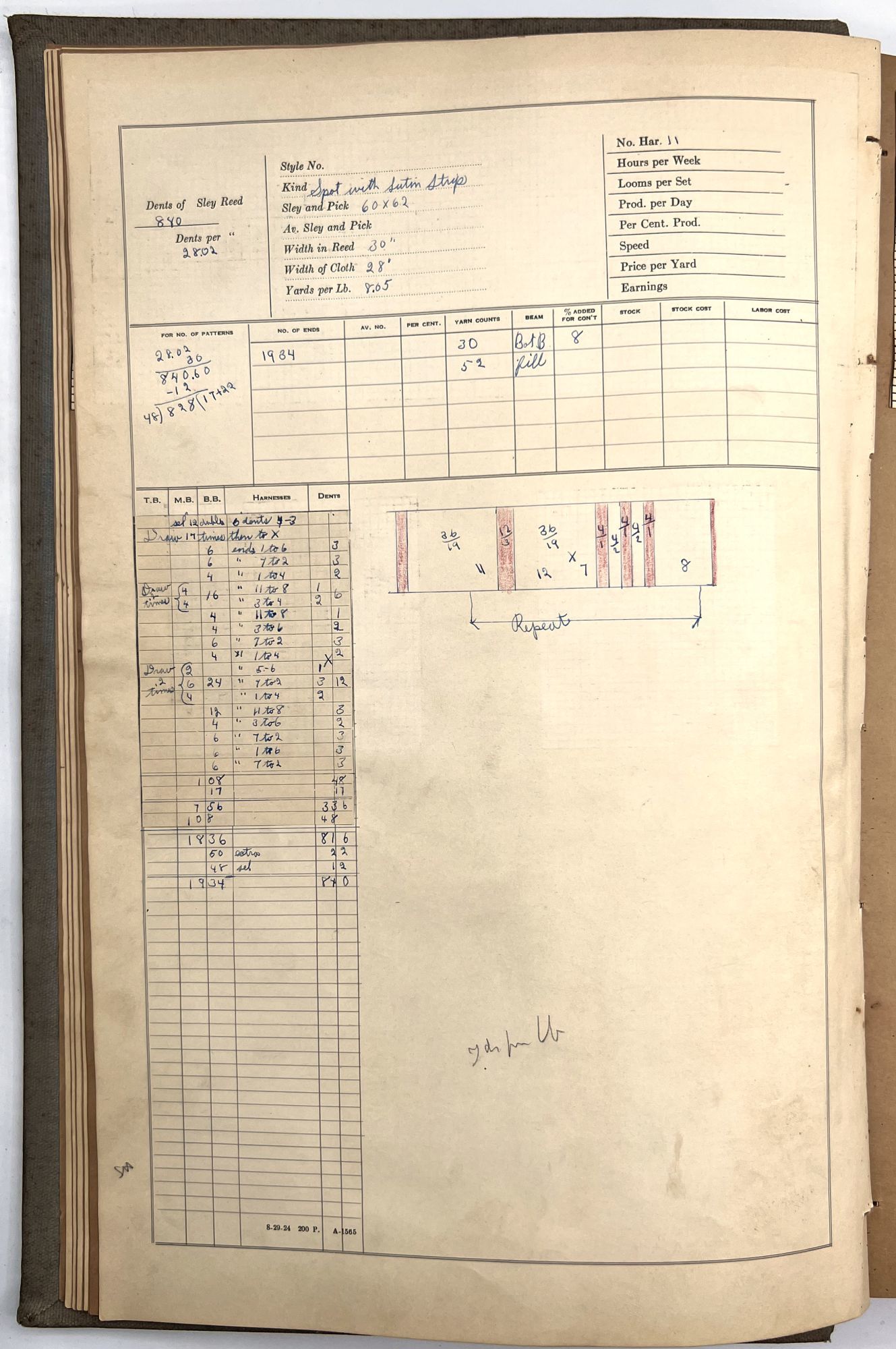
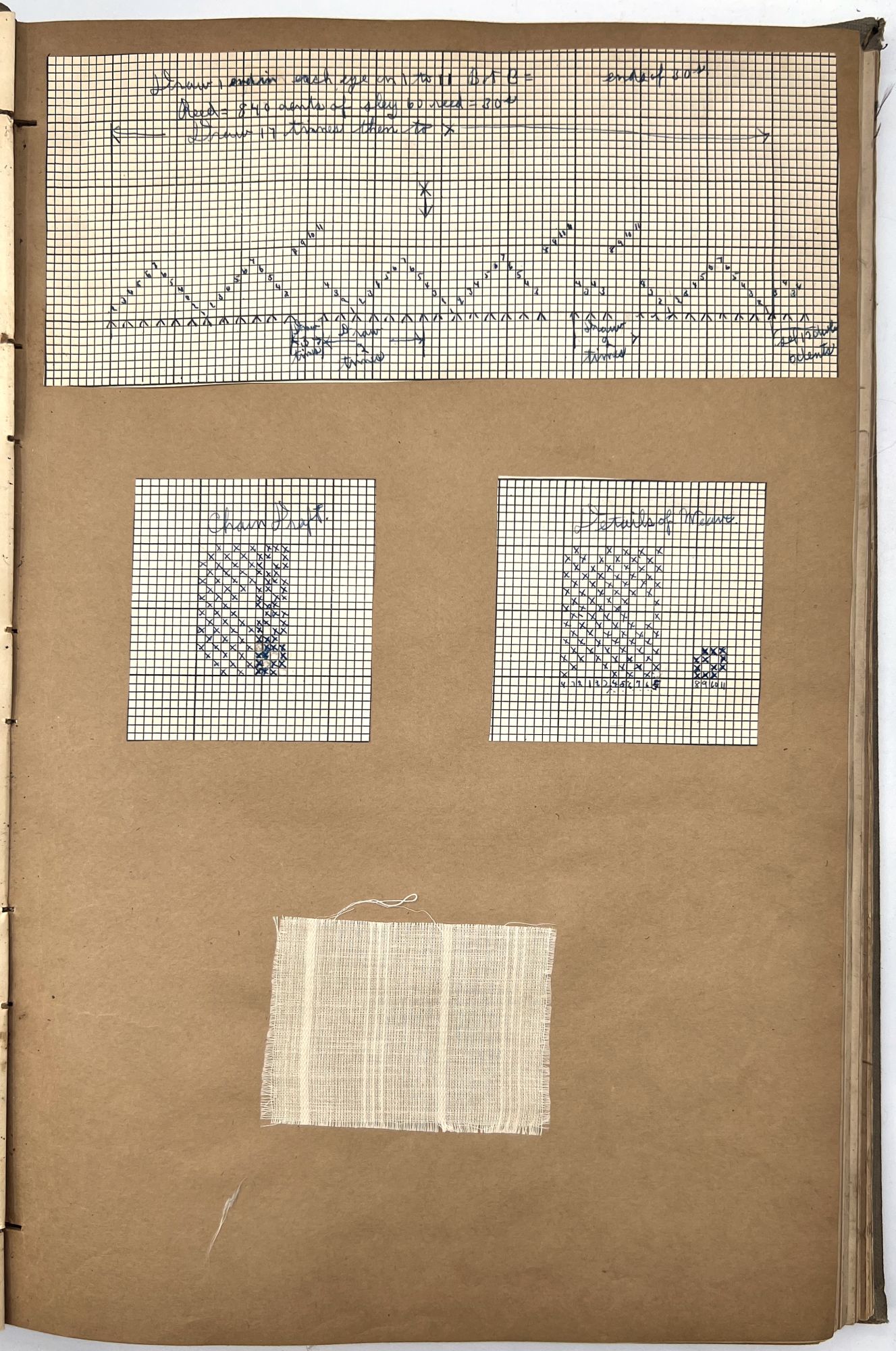
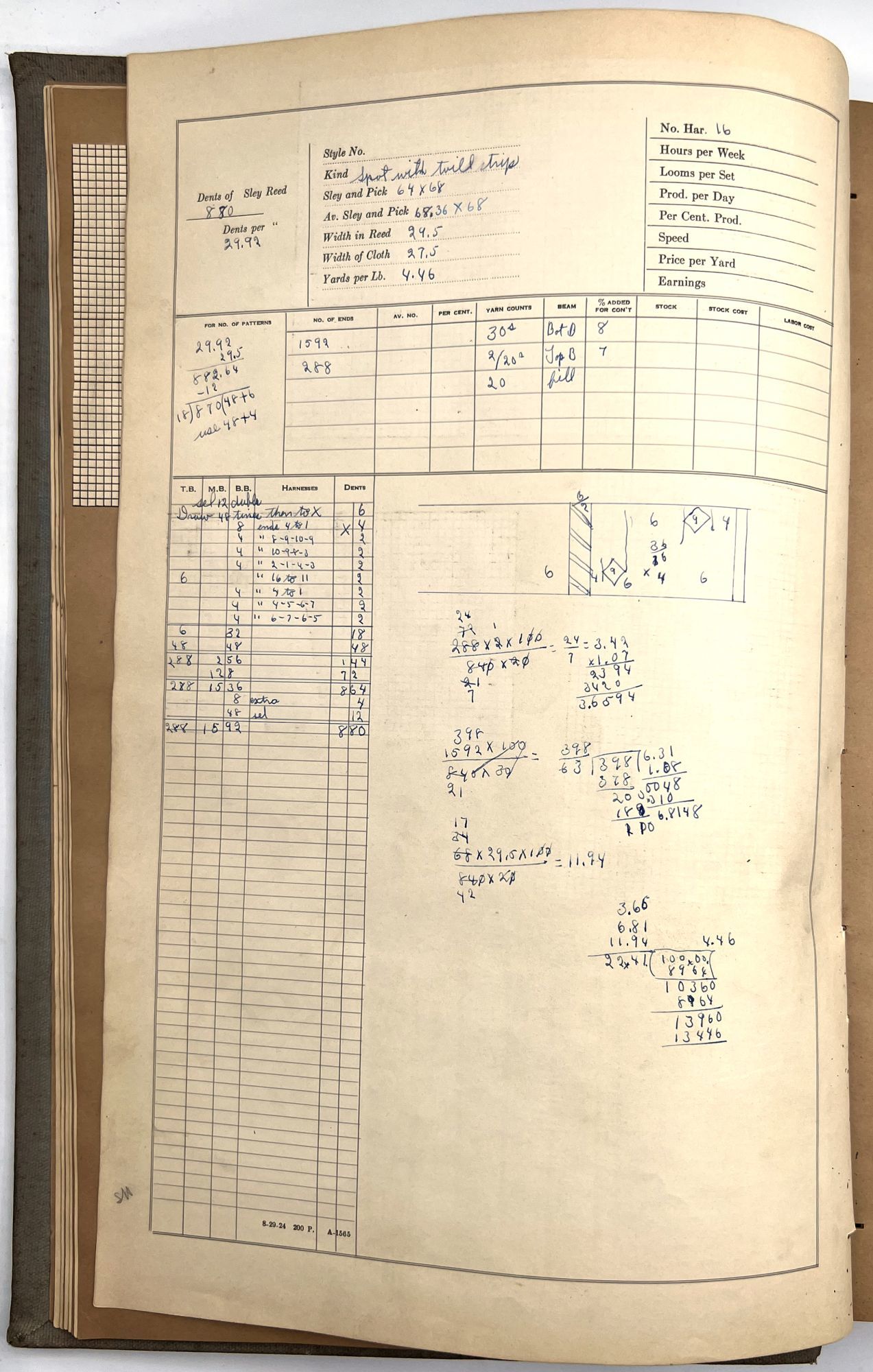
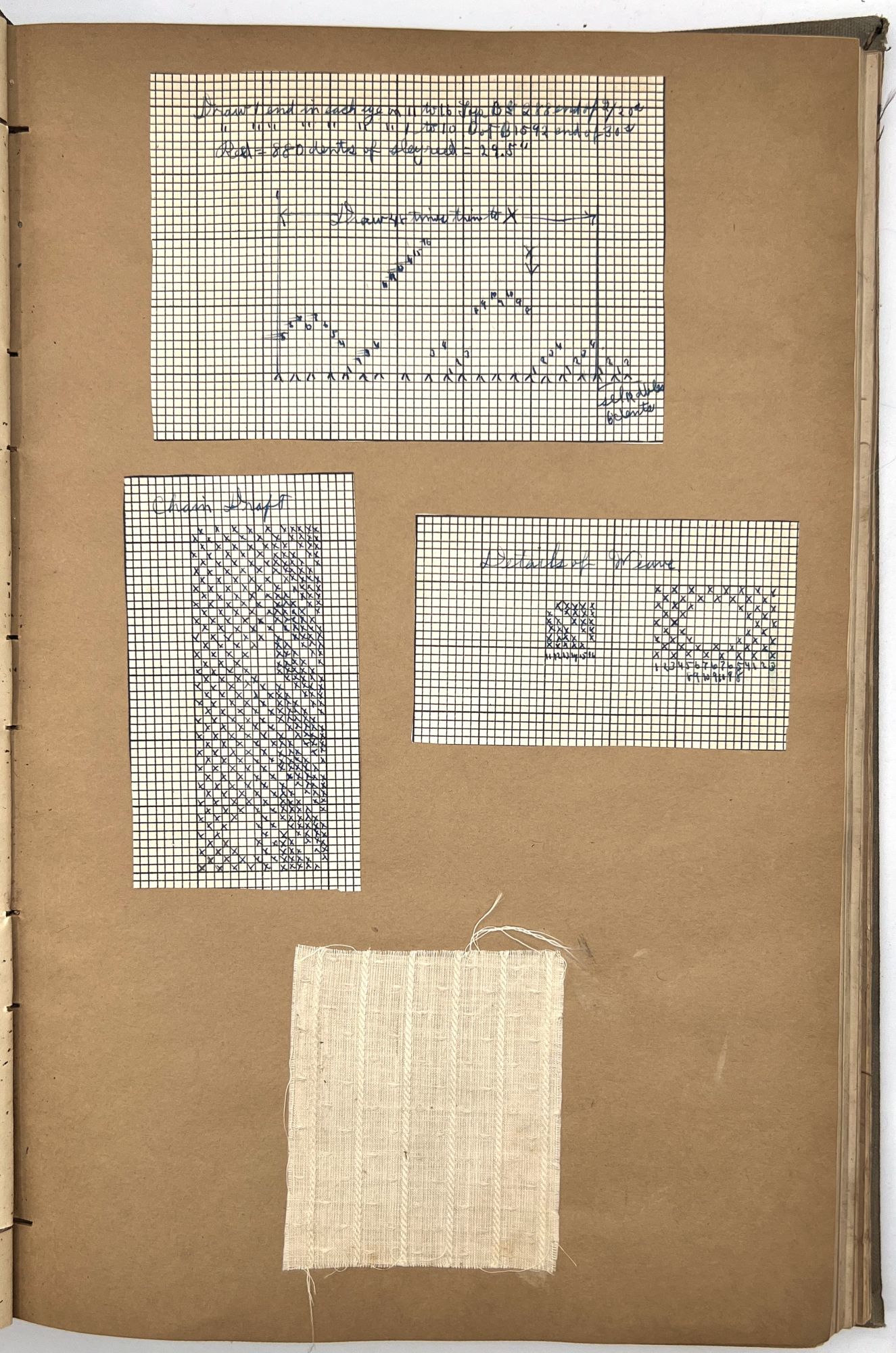
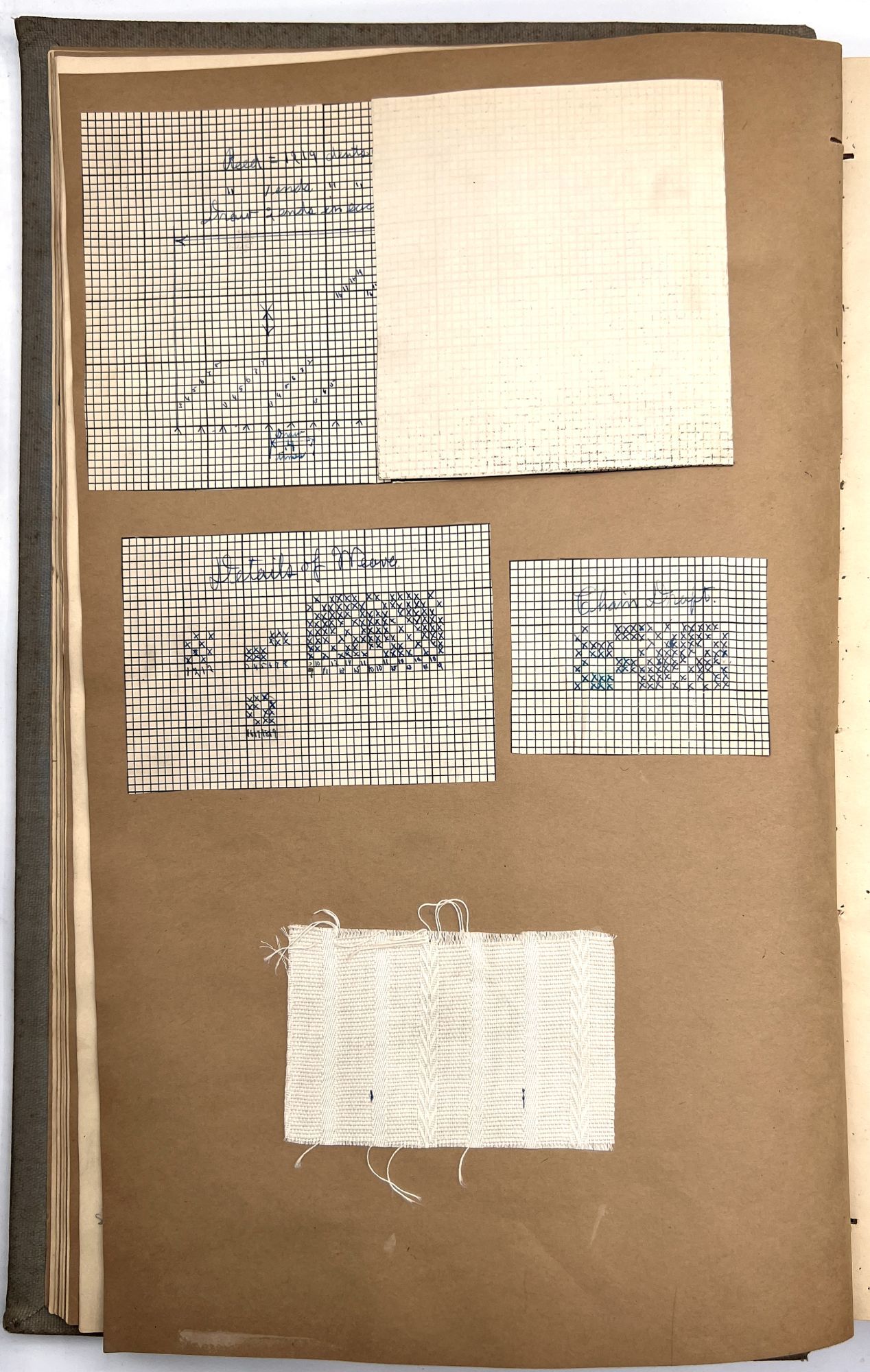
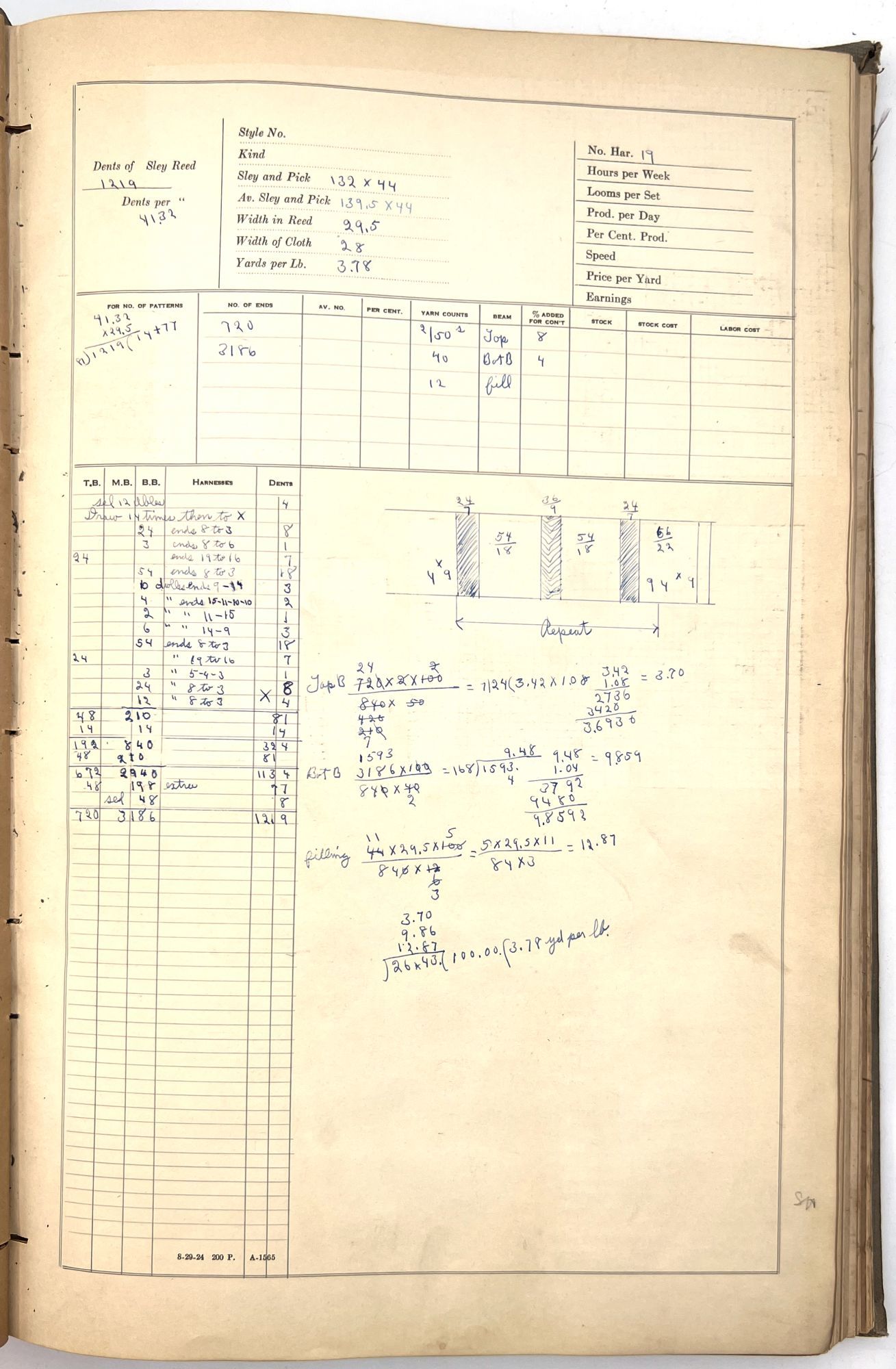
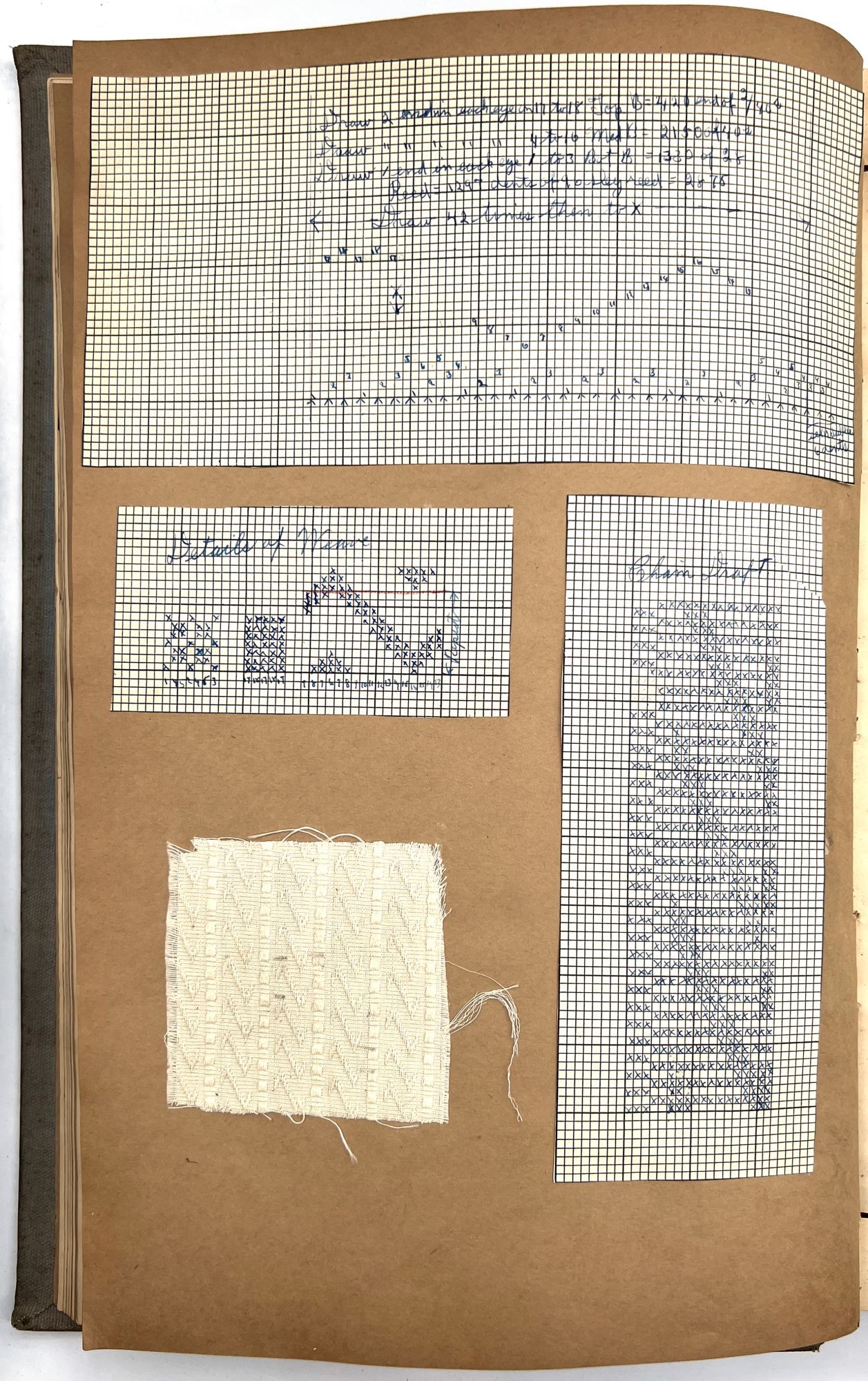
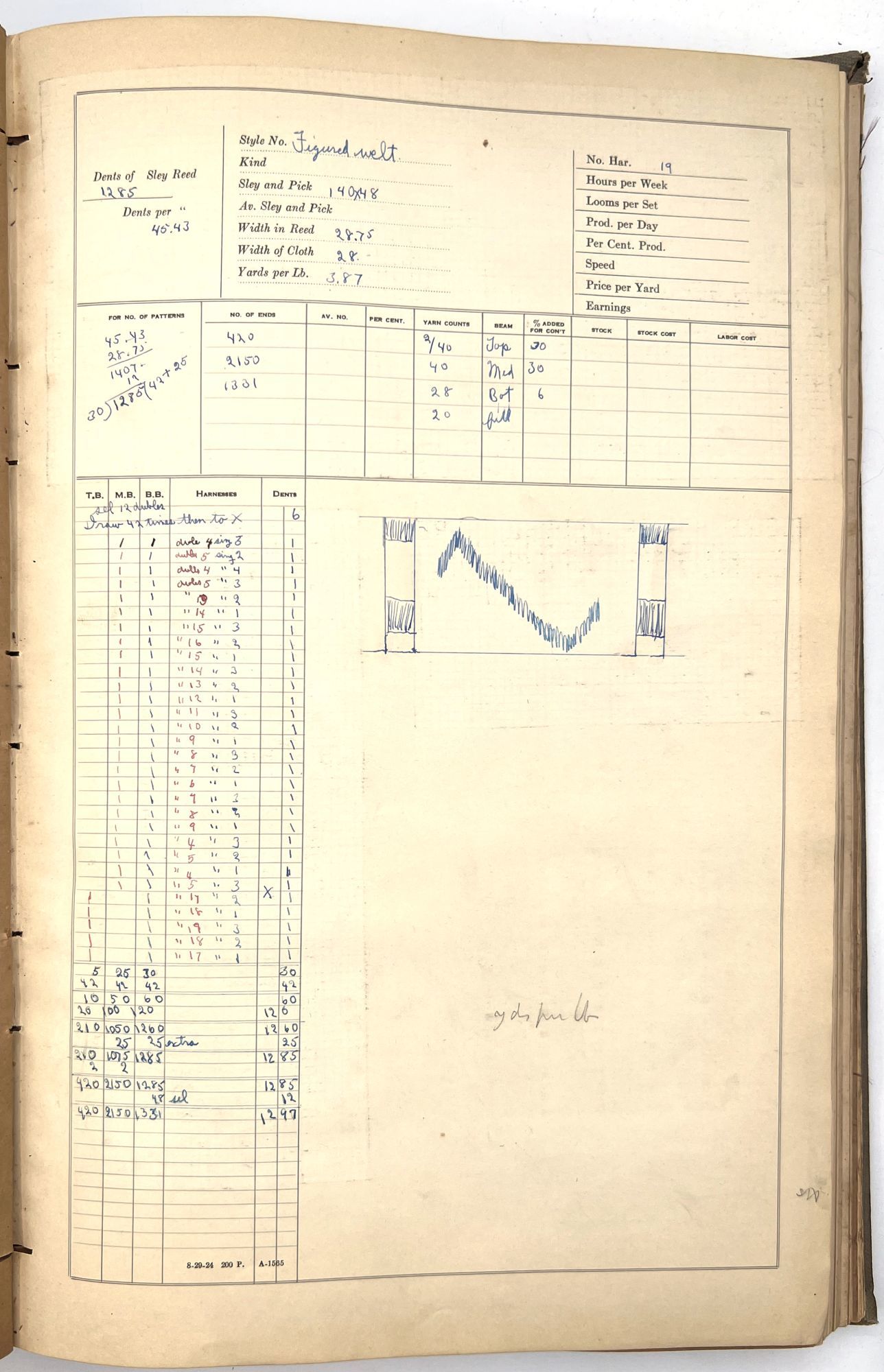
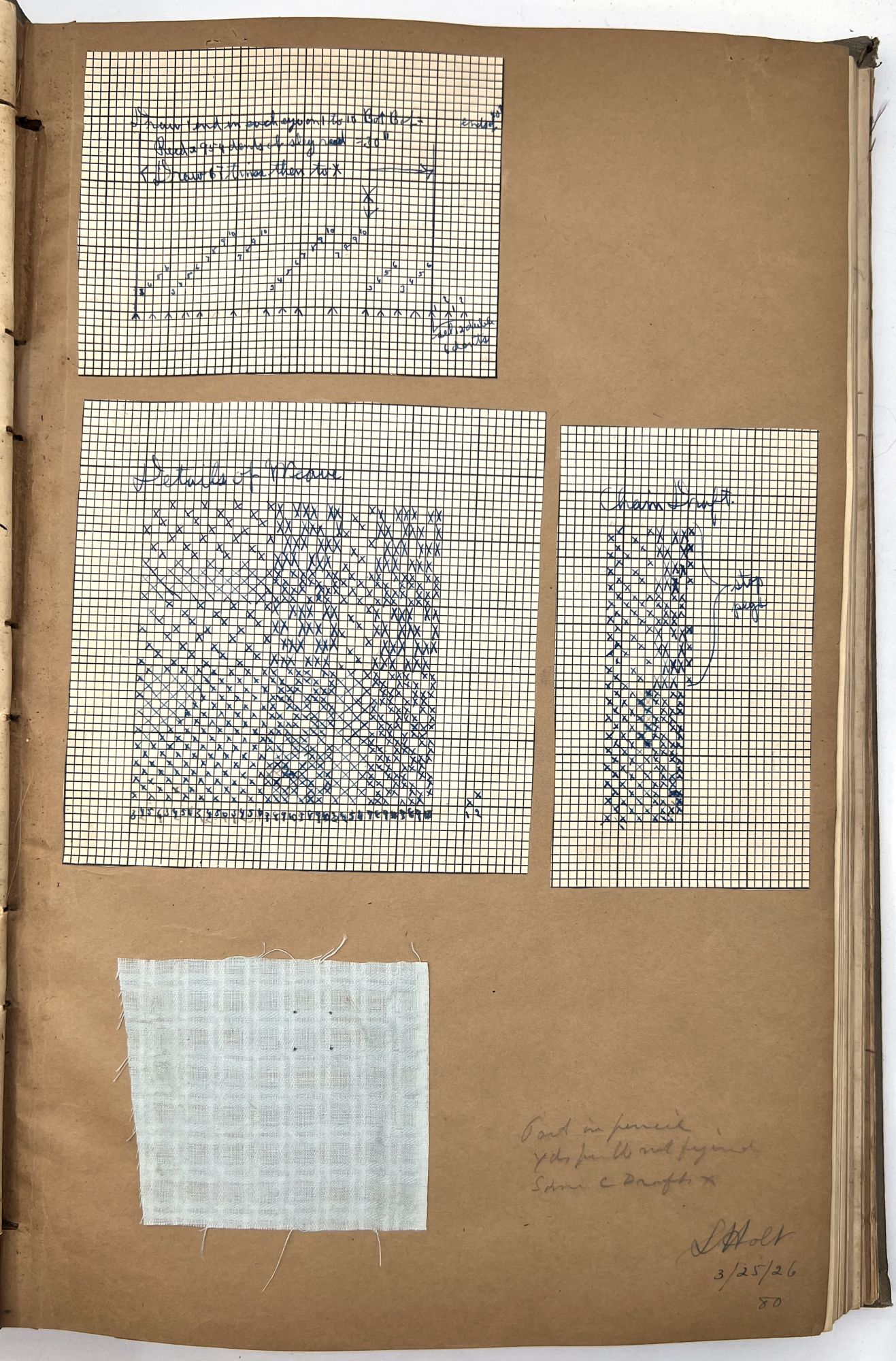
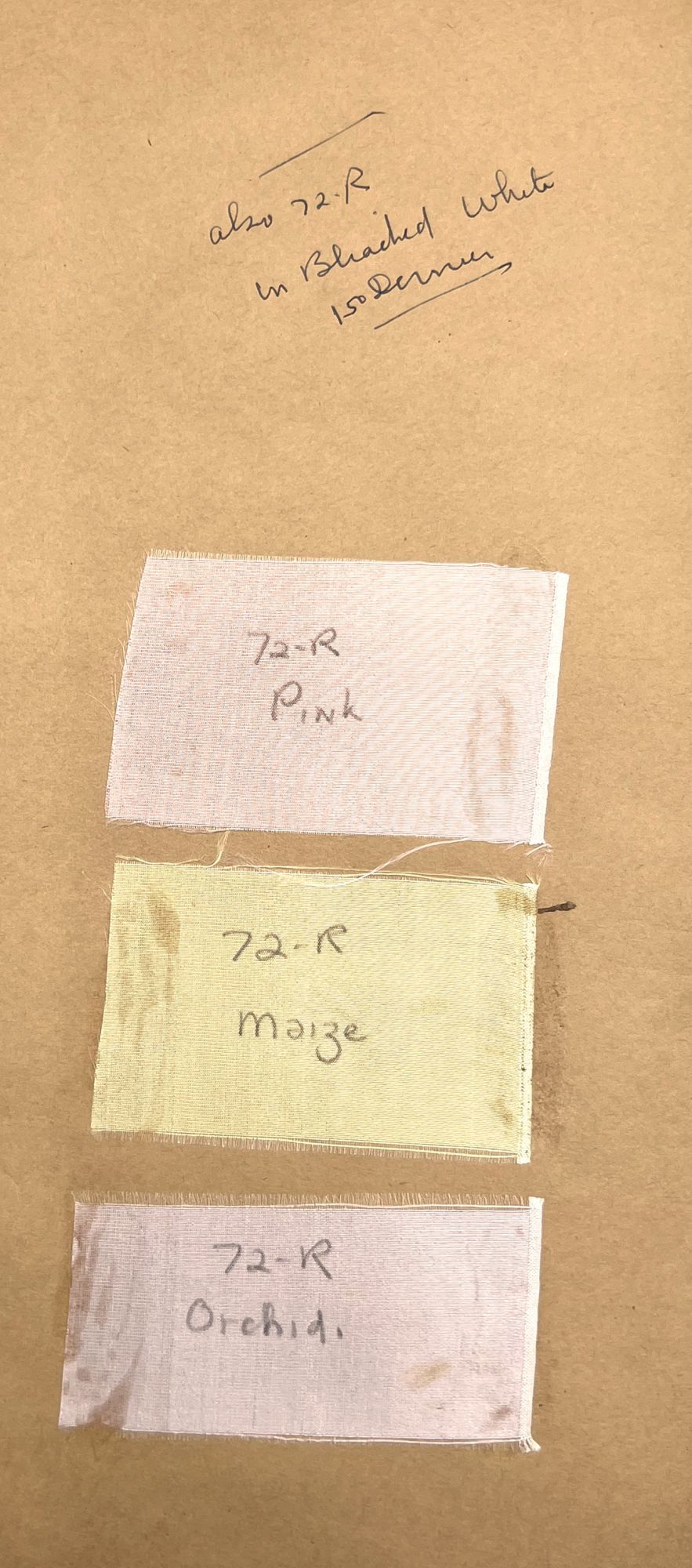
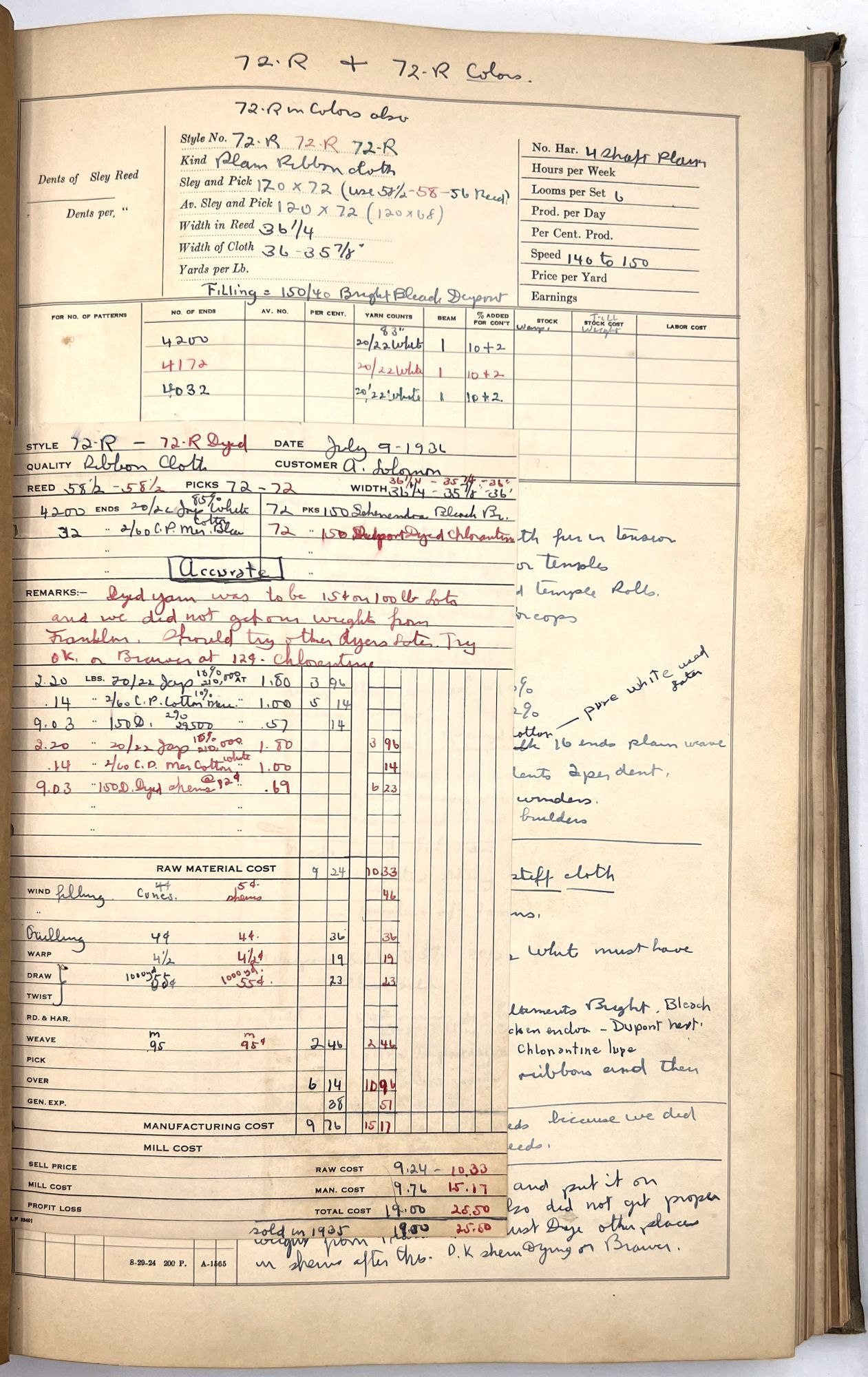
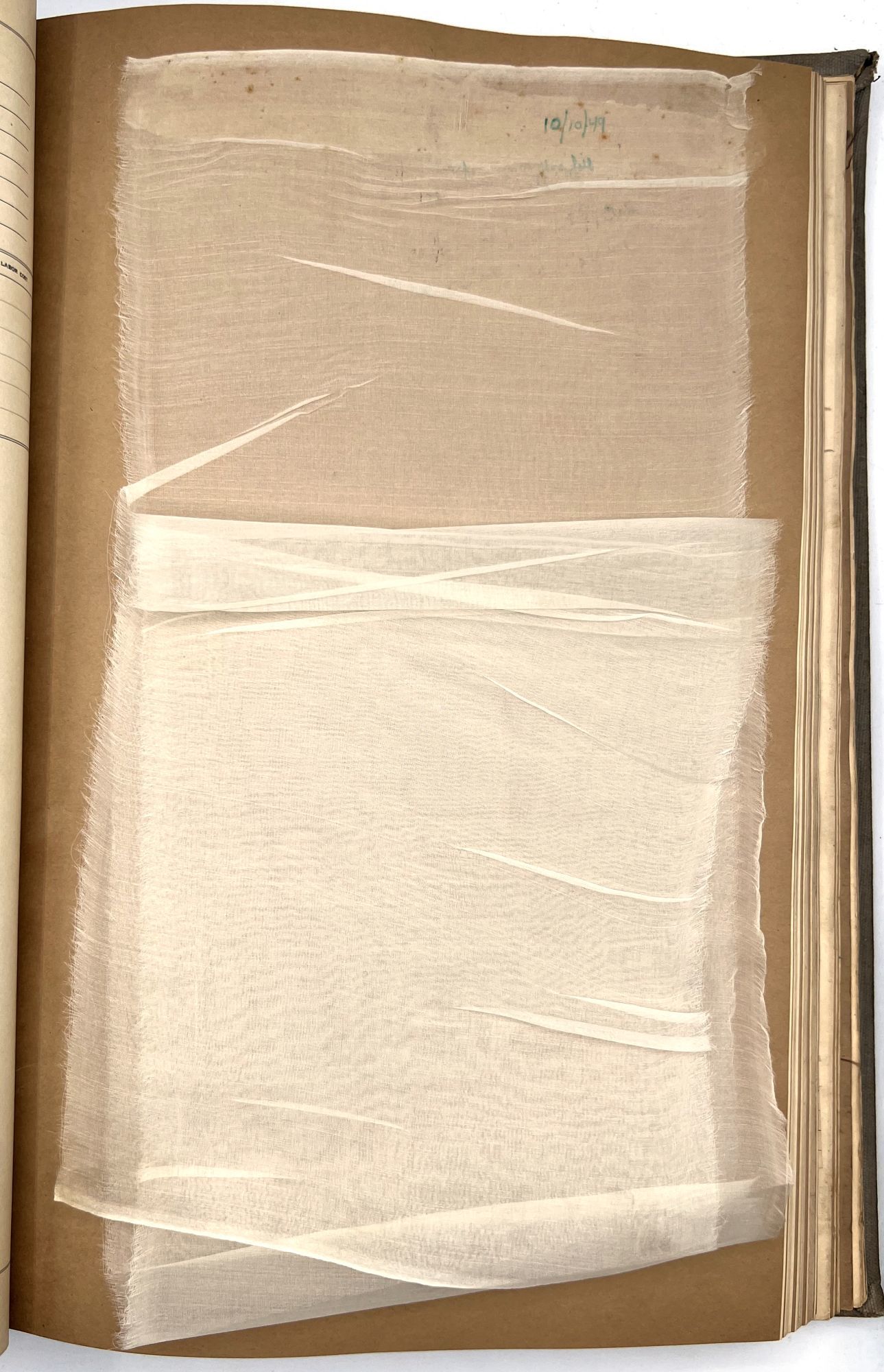
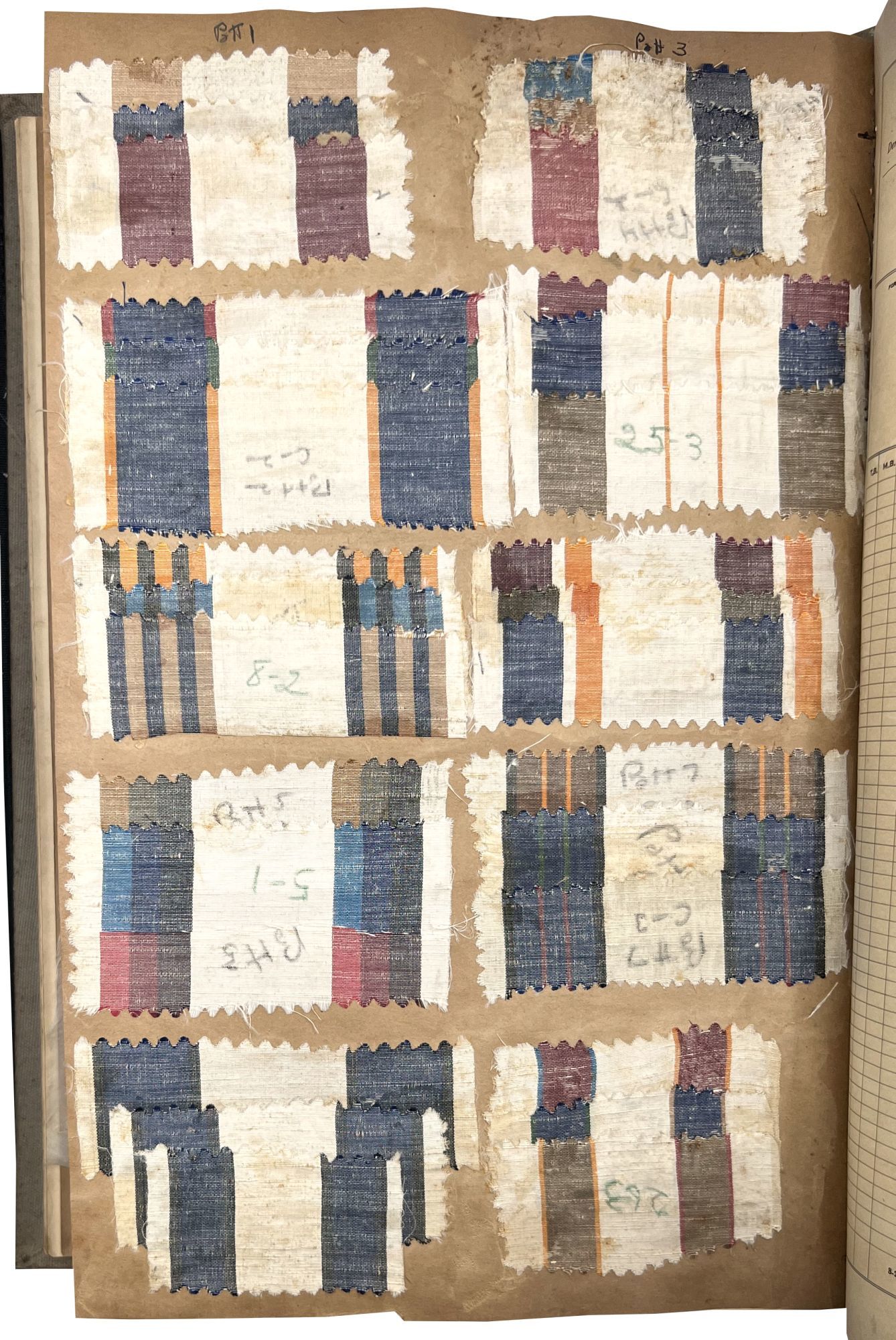
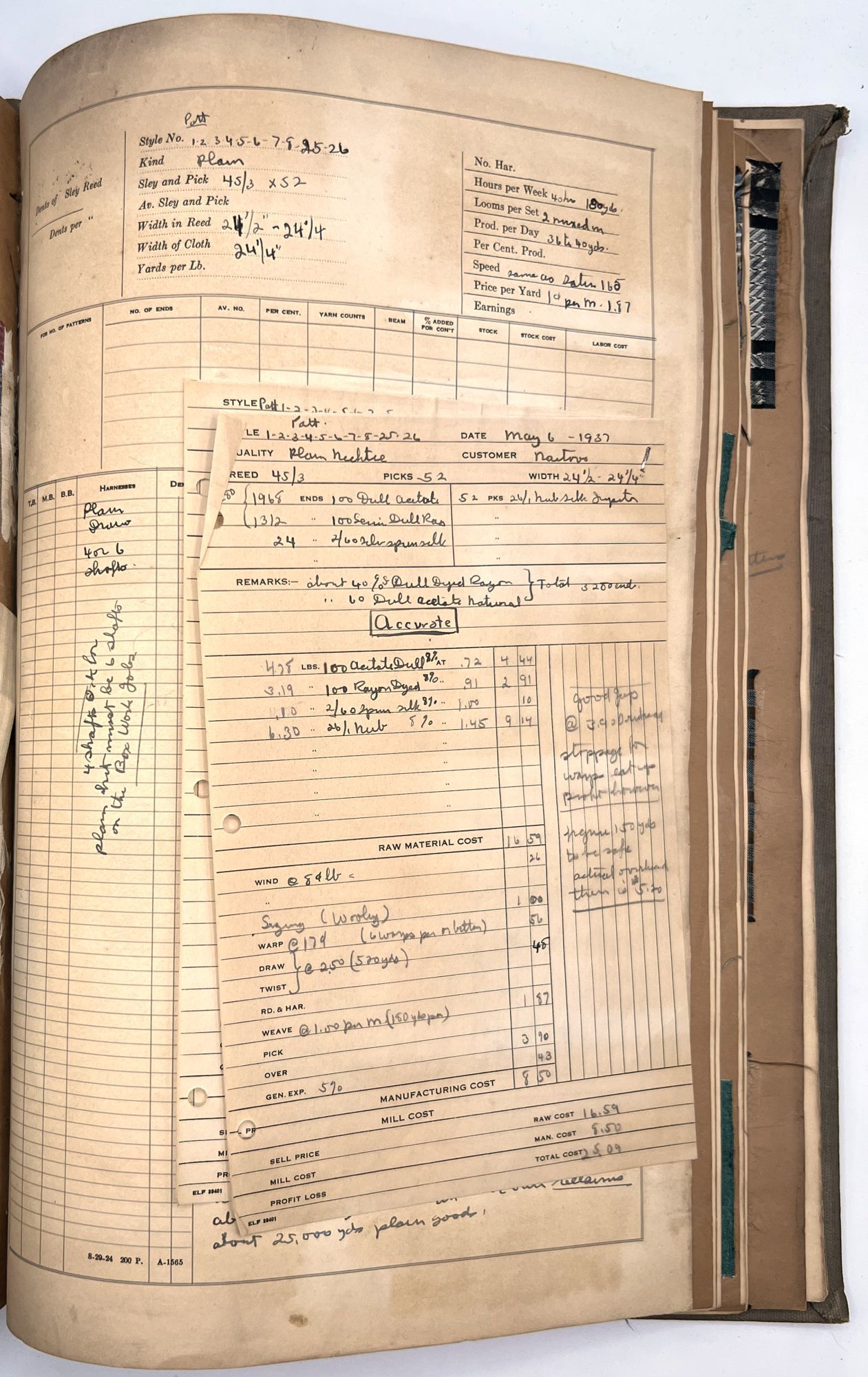
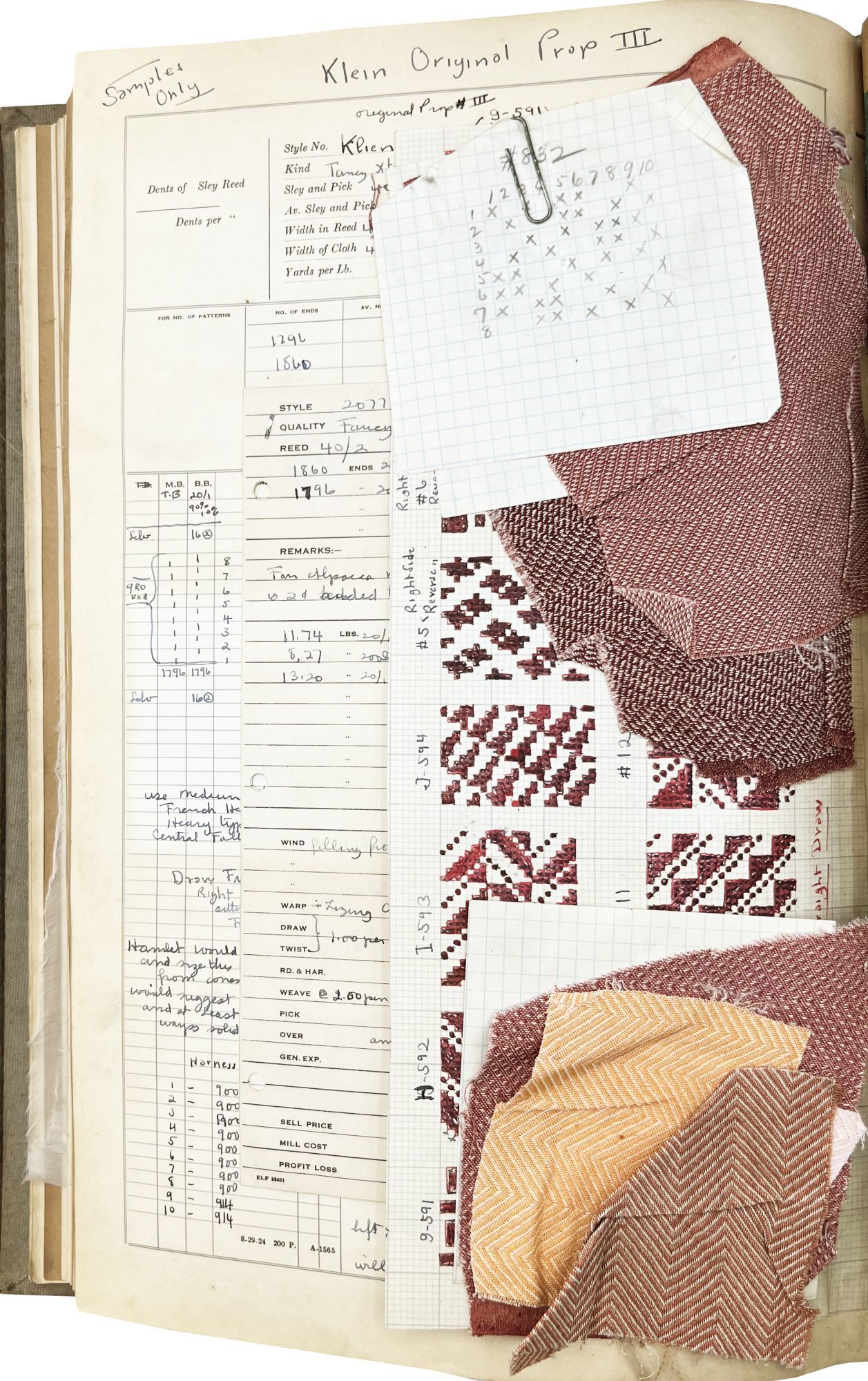
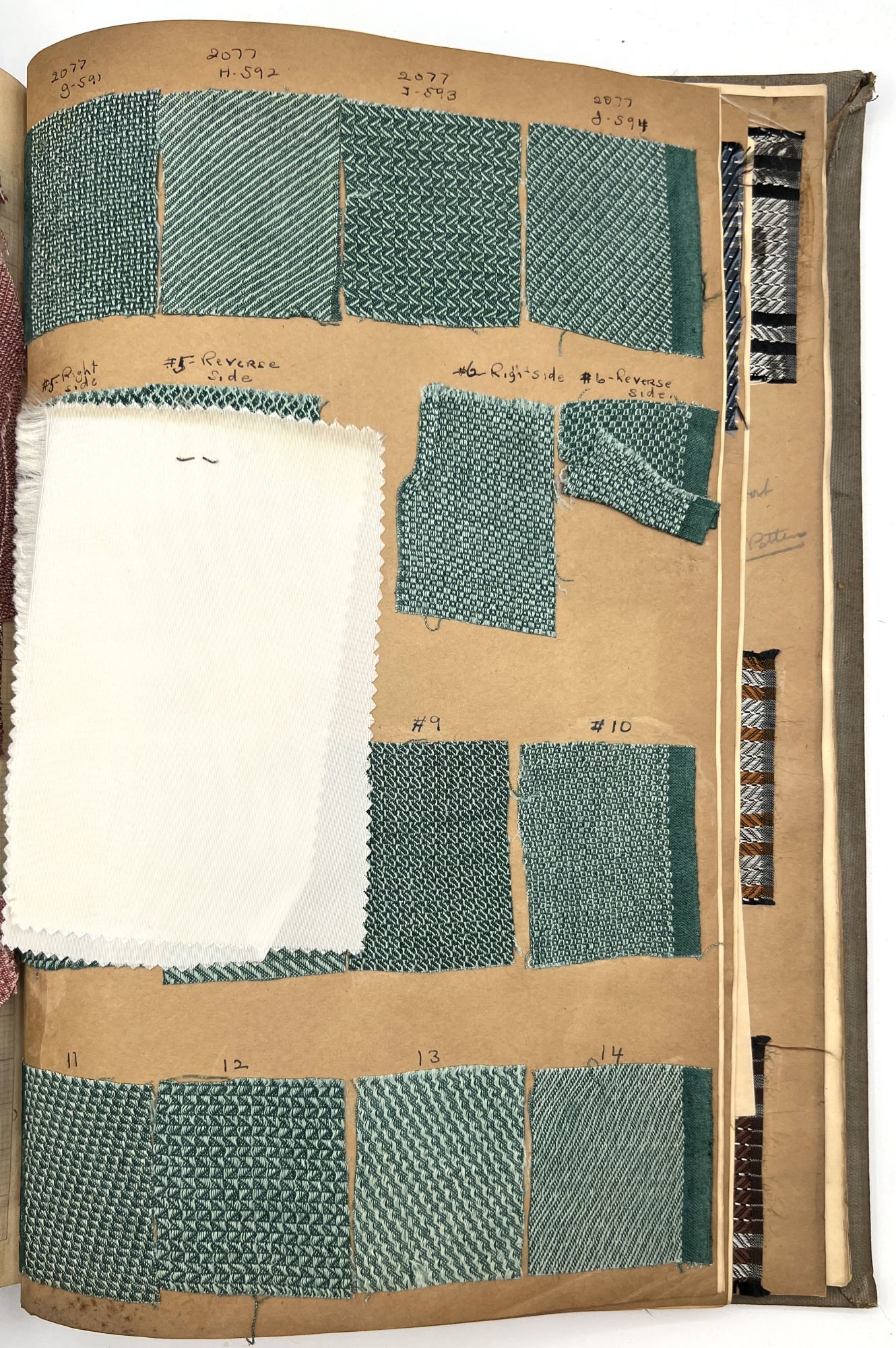
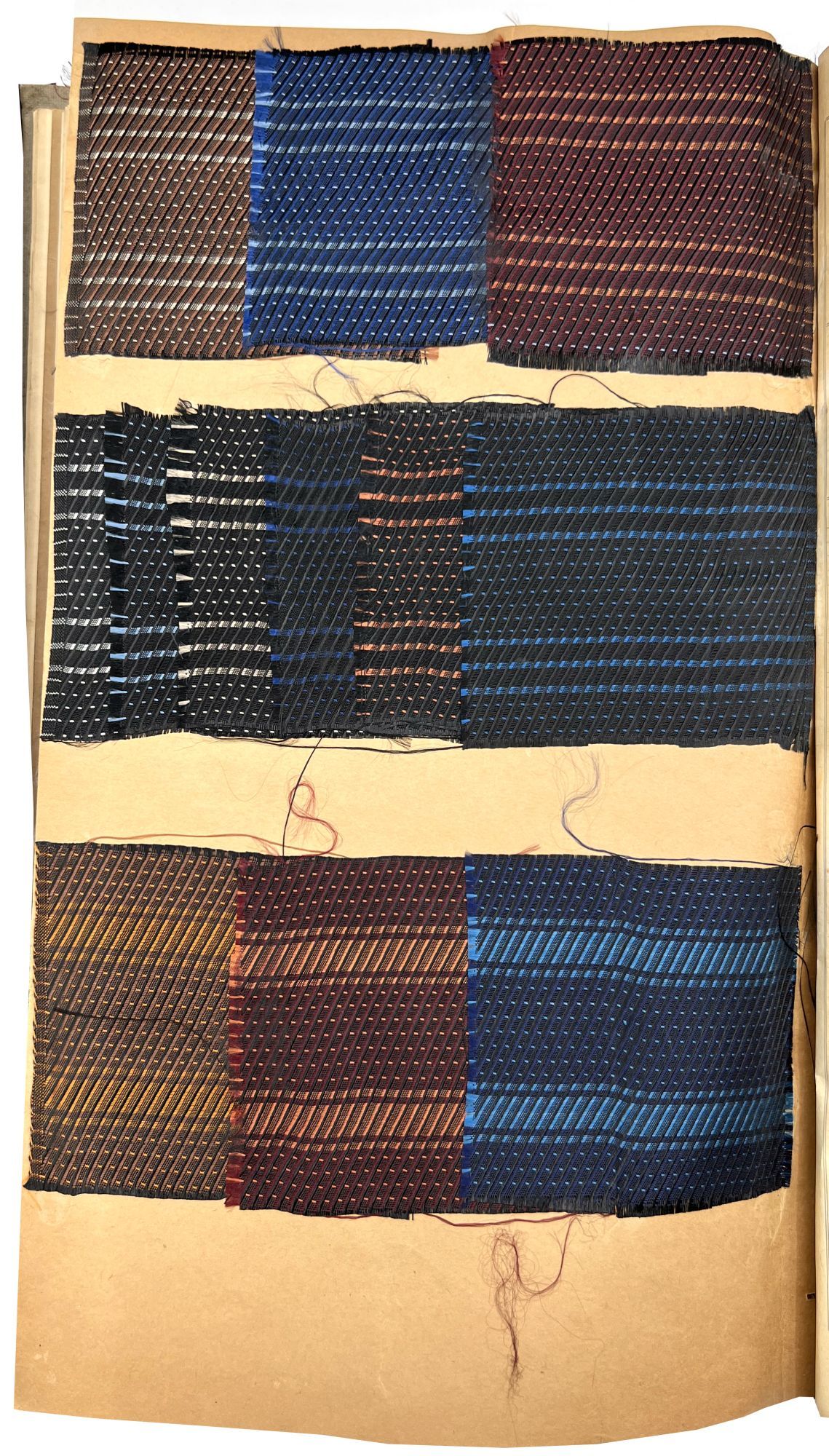
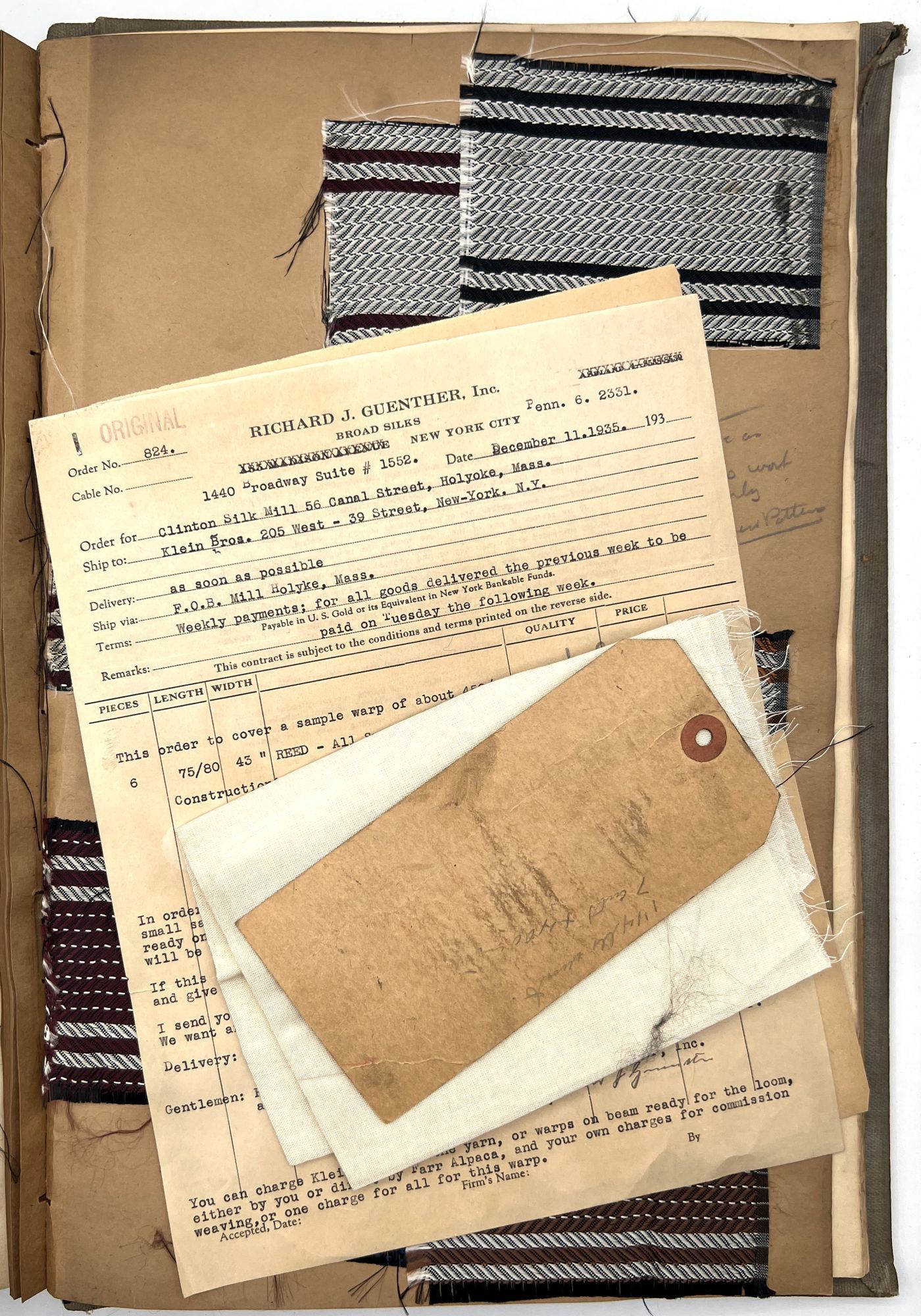
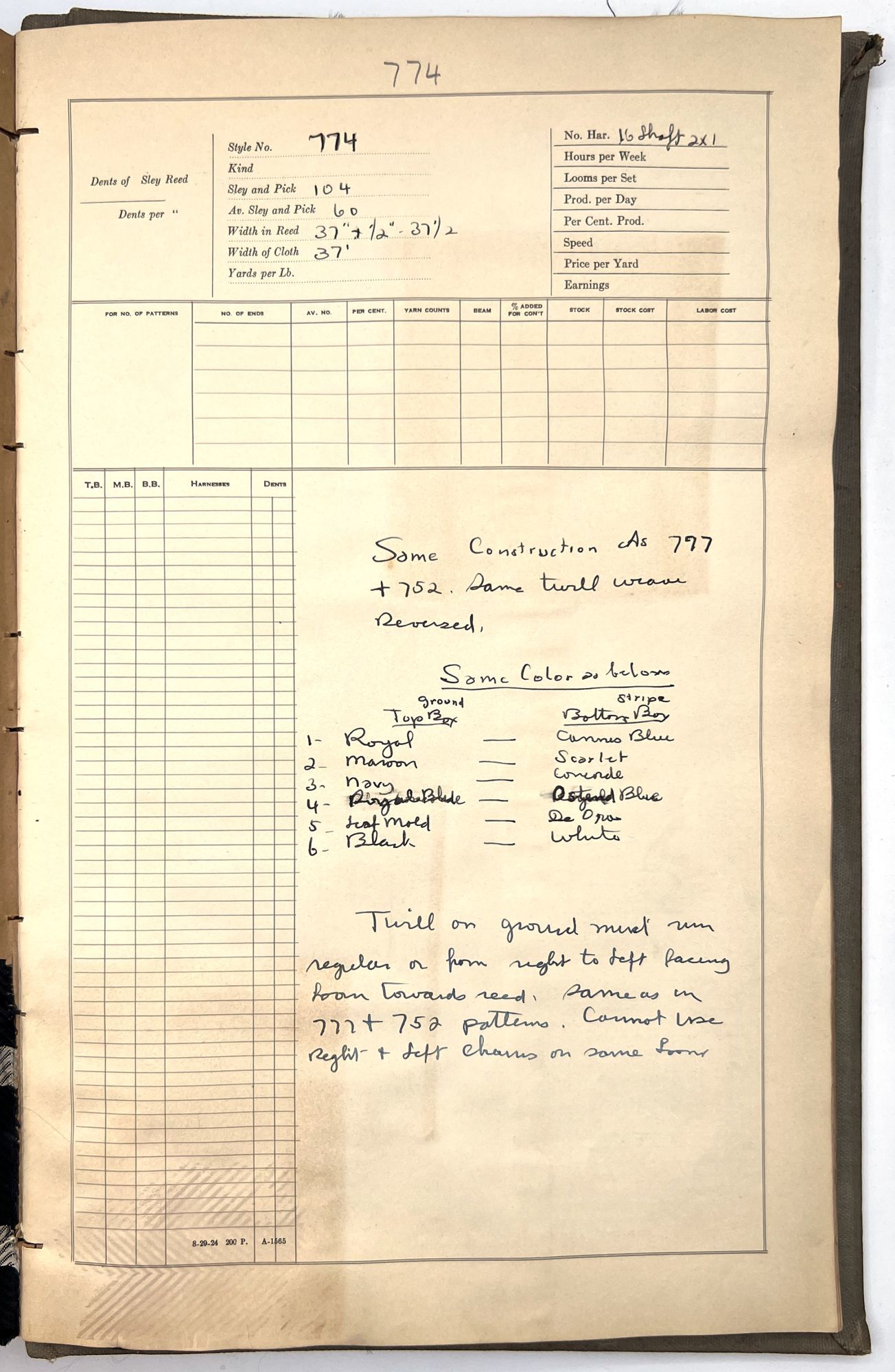
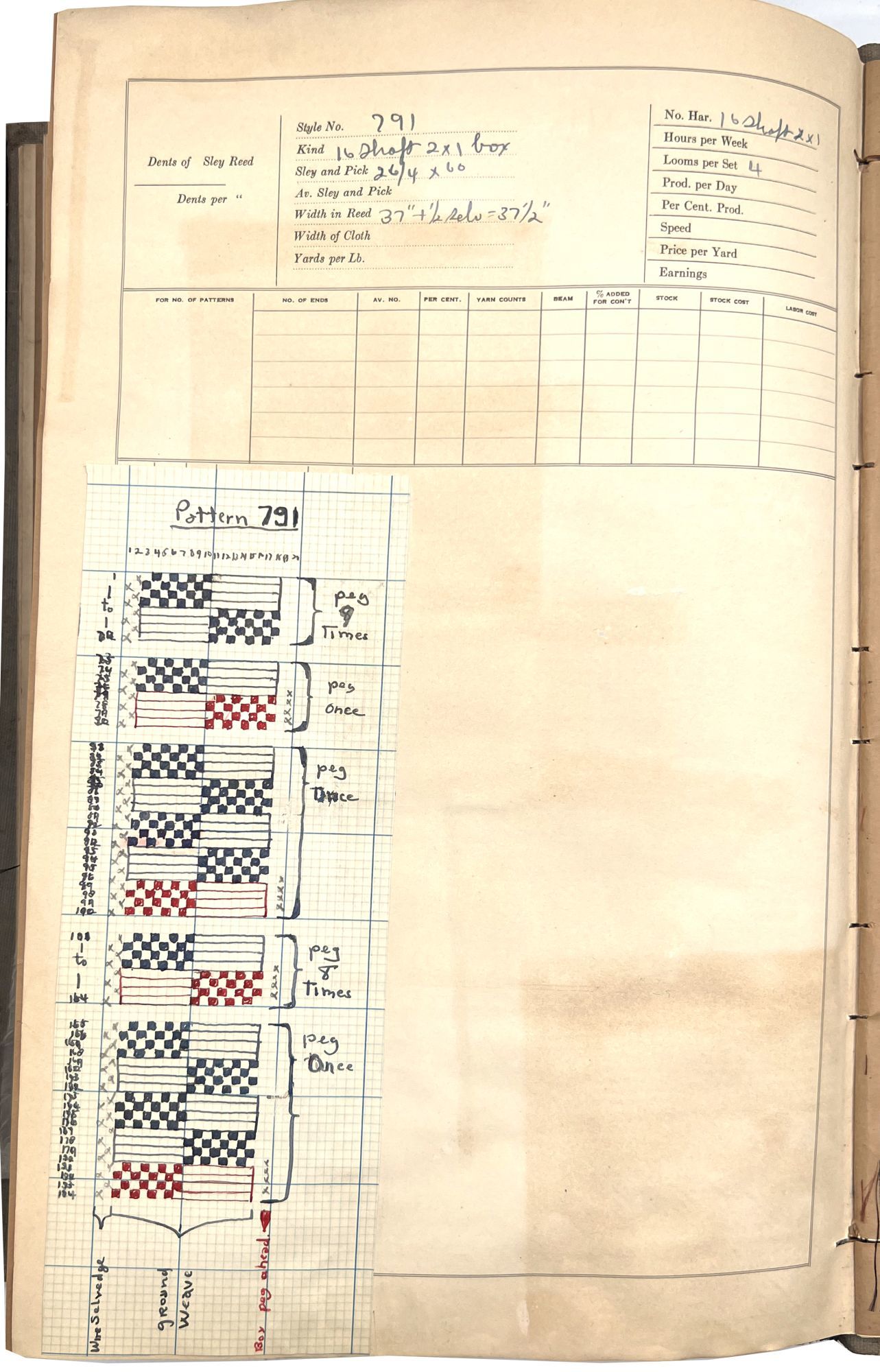
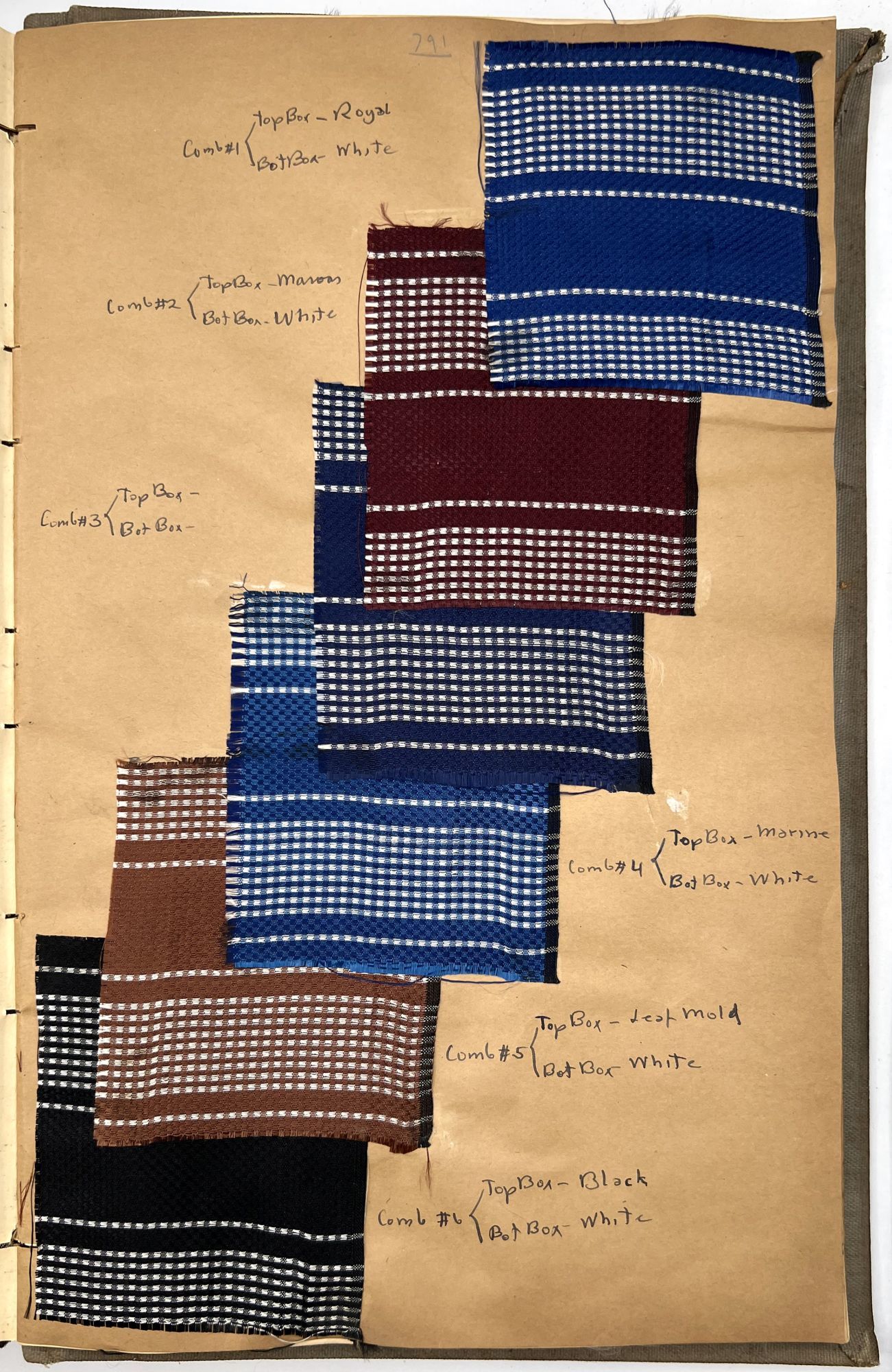
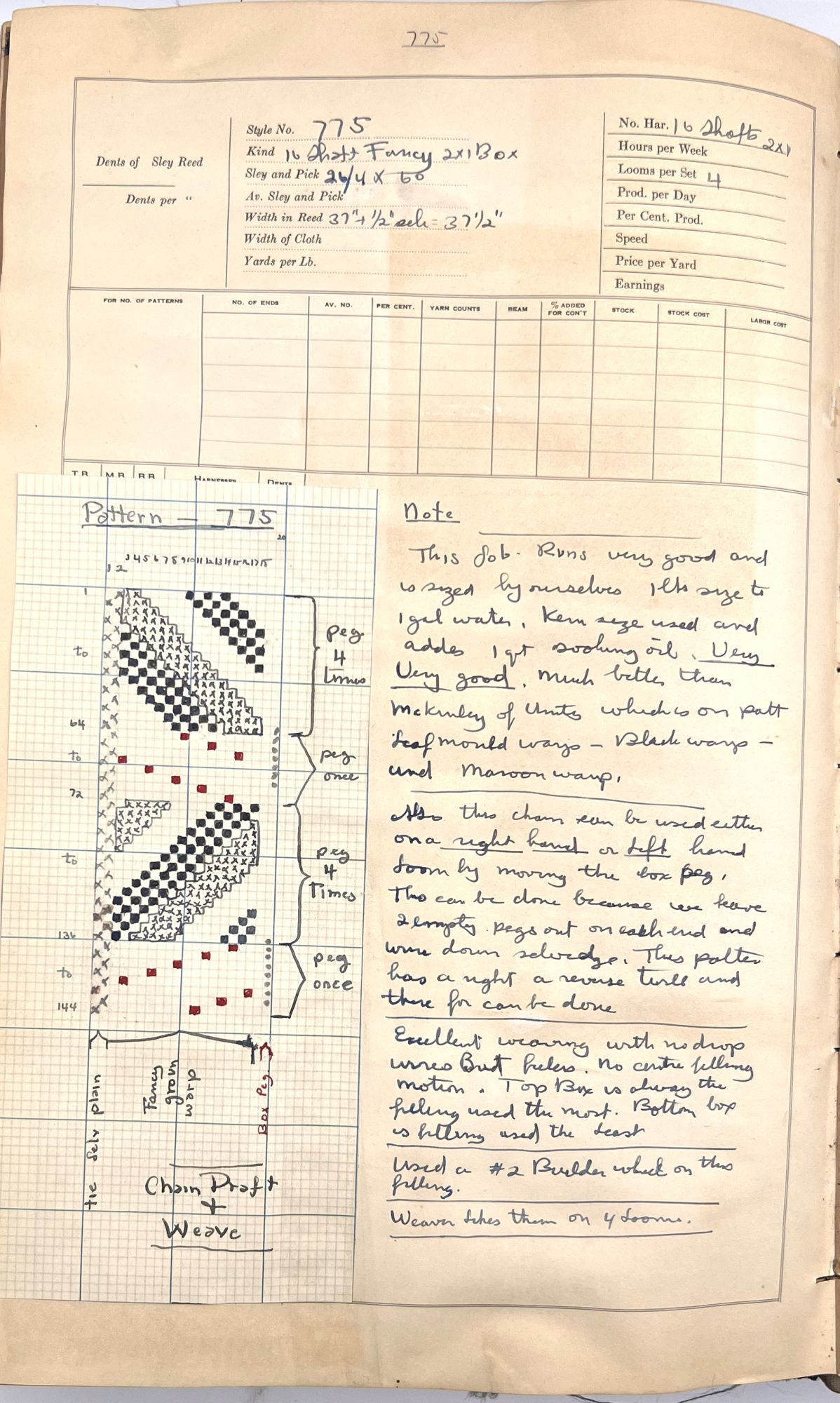
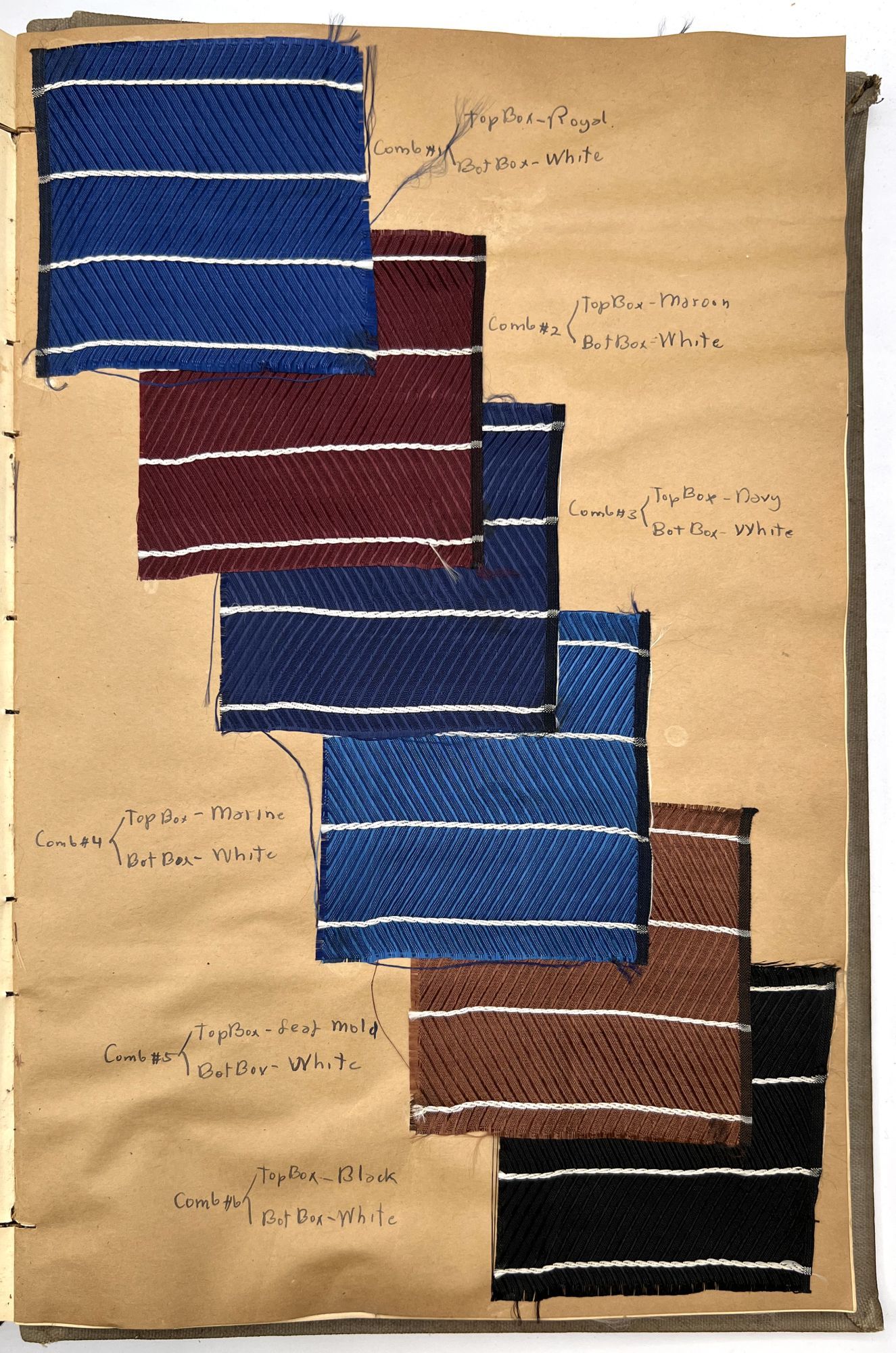
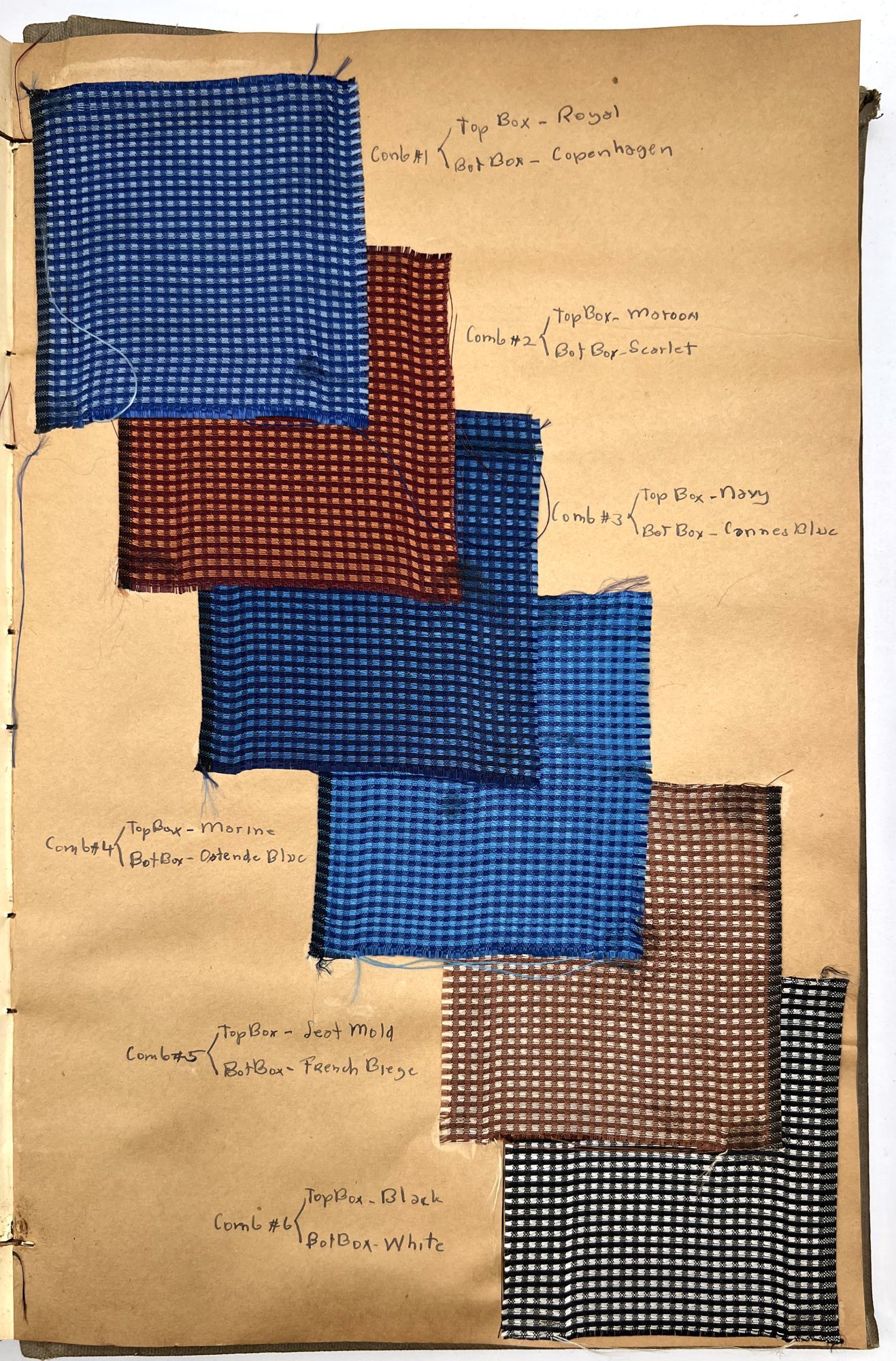
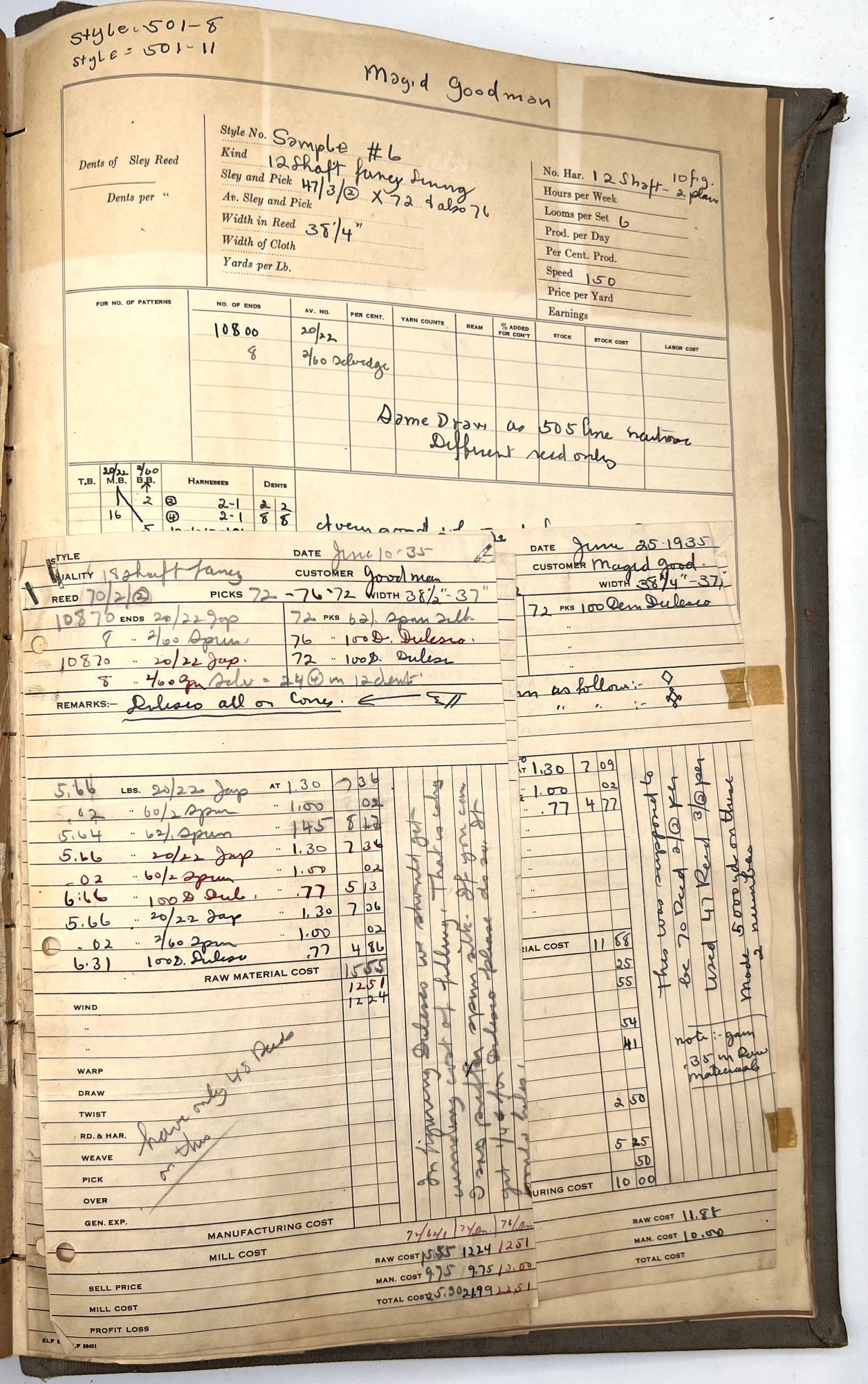
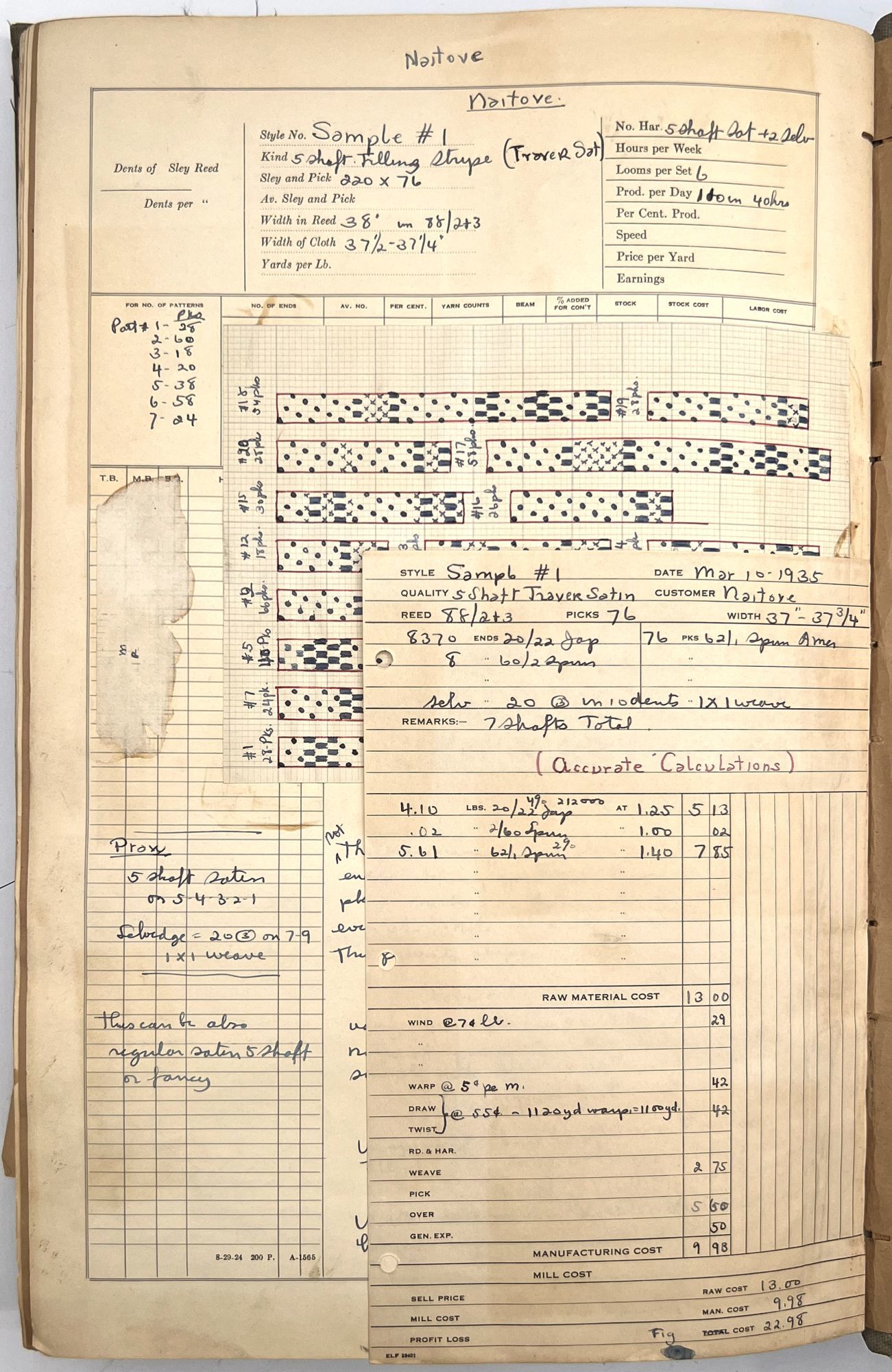
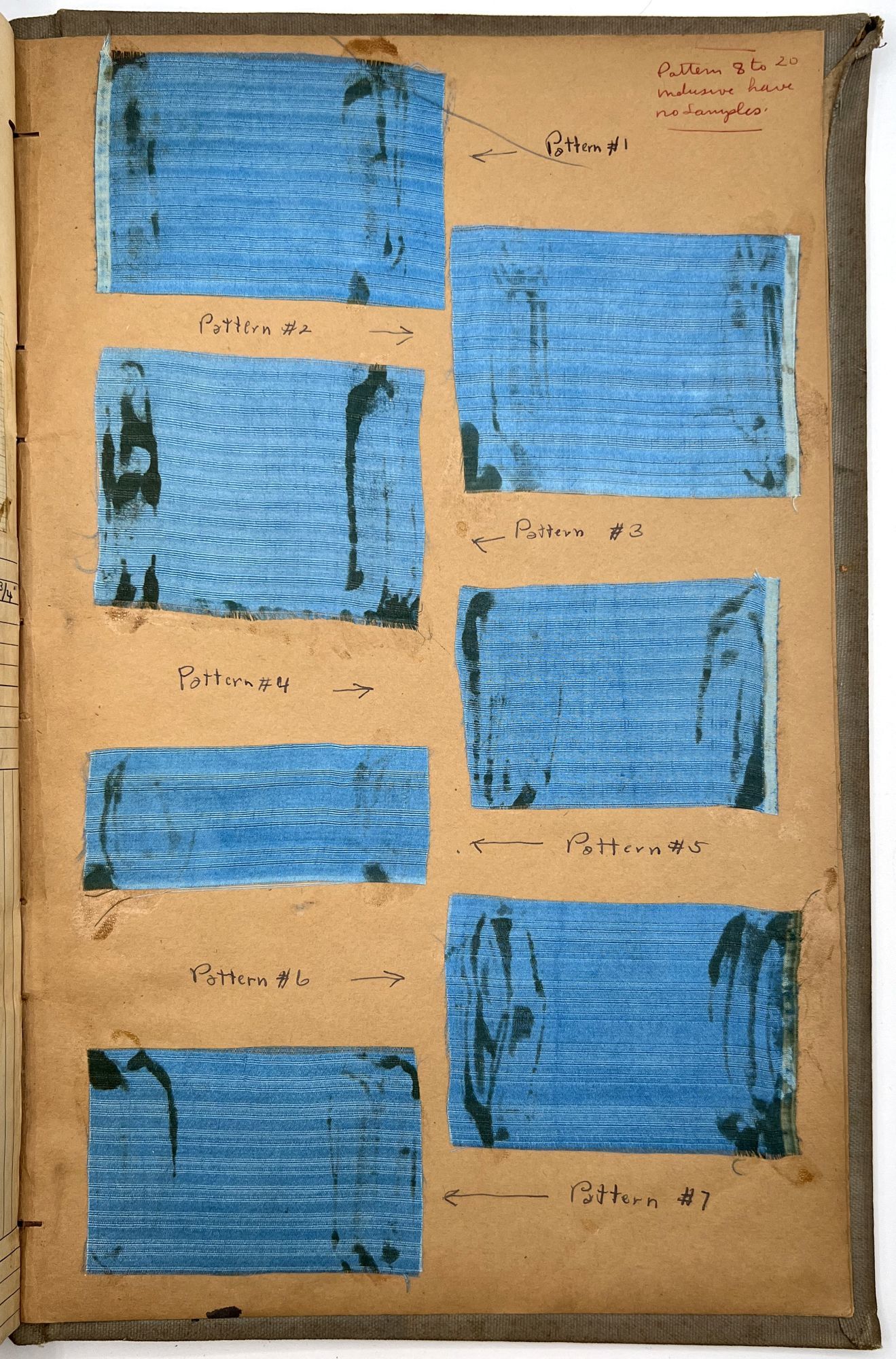
"Pattern Book". [New Bedford: New Bedford Textile School, c.1929]. Single vol. (16" by 10.5"), approx. 48 leaves of printed textile manufacturing forms interleaved with a further 48 leaves of brown paper, bound in original cloth board stamped on upper cover. Contains at least 50 fabric samples (cotton, silk), loose order forms detailing information such as raw material cost and mill cost, and many scraps of paper with grids and charts for visualizing weave patterns. Given to each student, the New Bedford pattern books provided a space where students could design patterns and work out exactly how to translate conceptual patterns into practice, and formulas for the weaving machines.
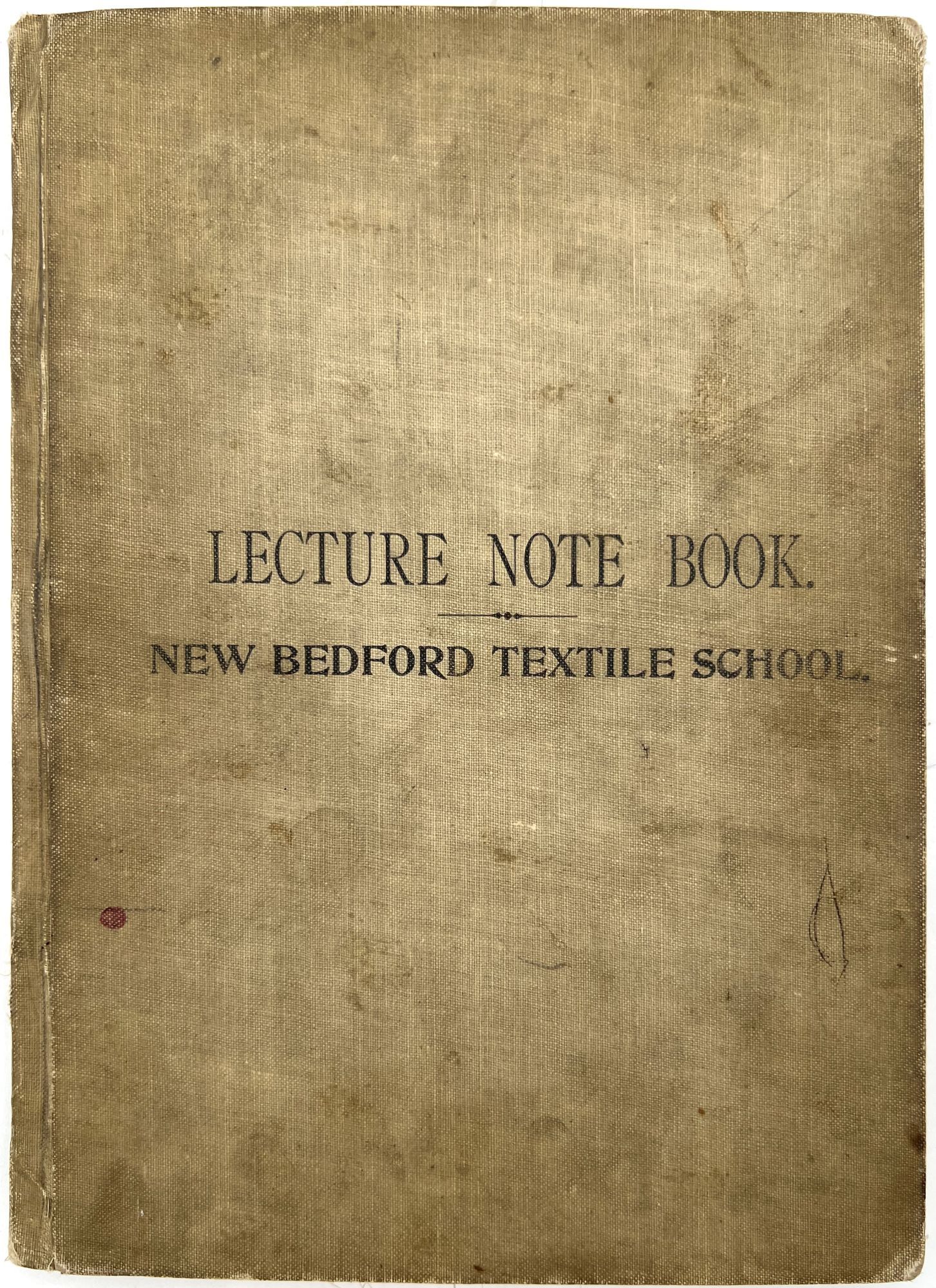
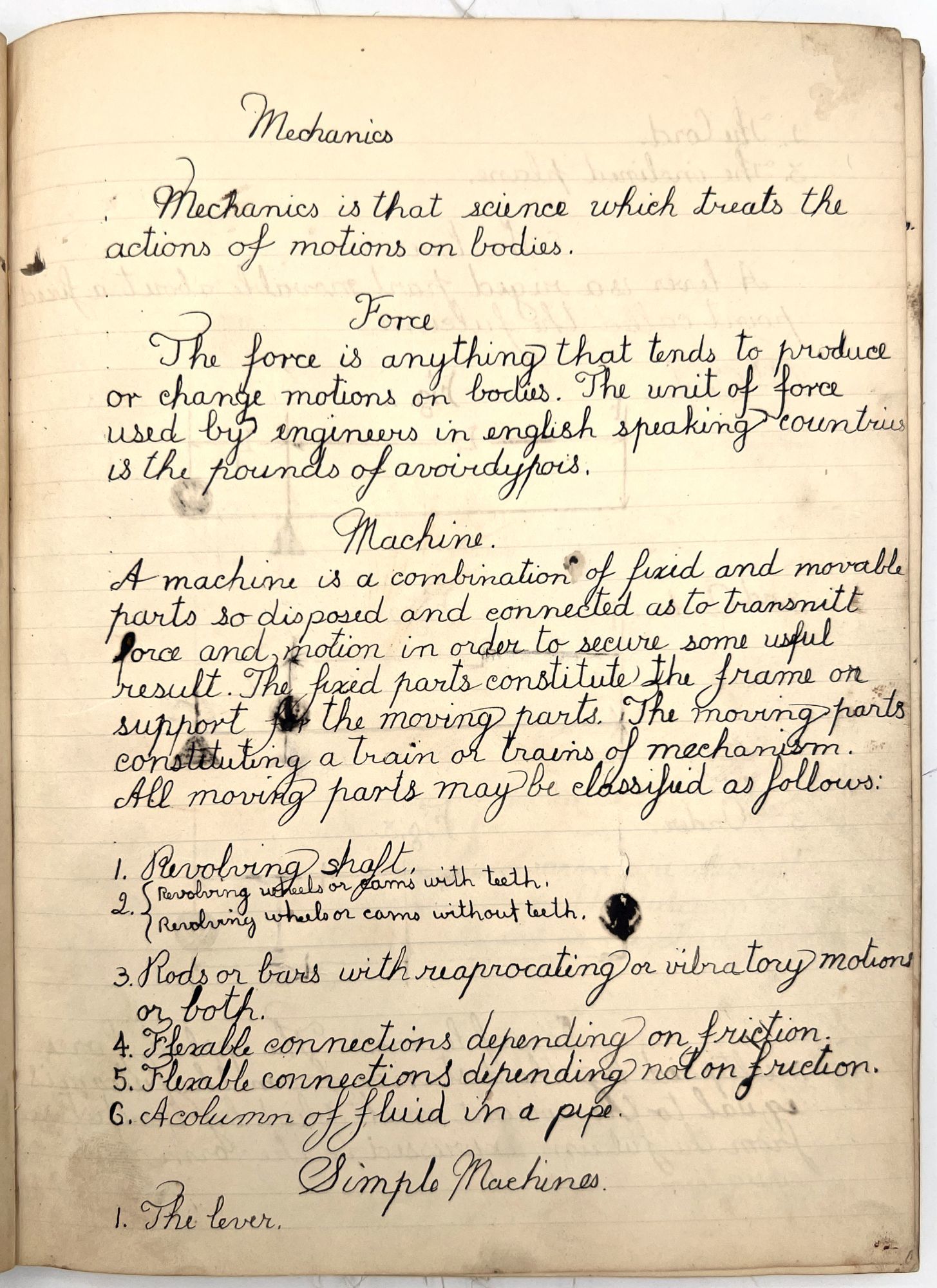
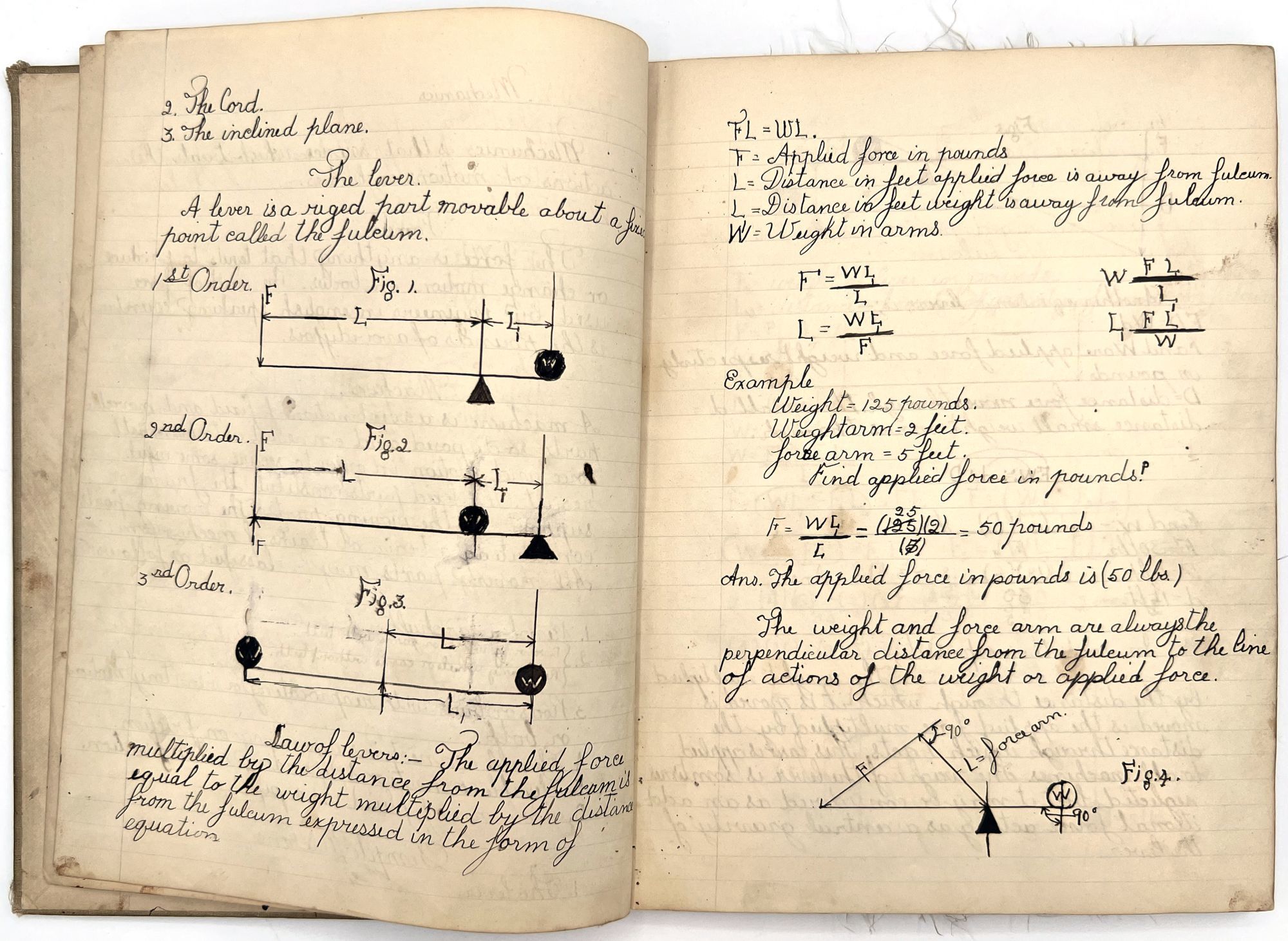
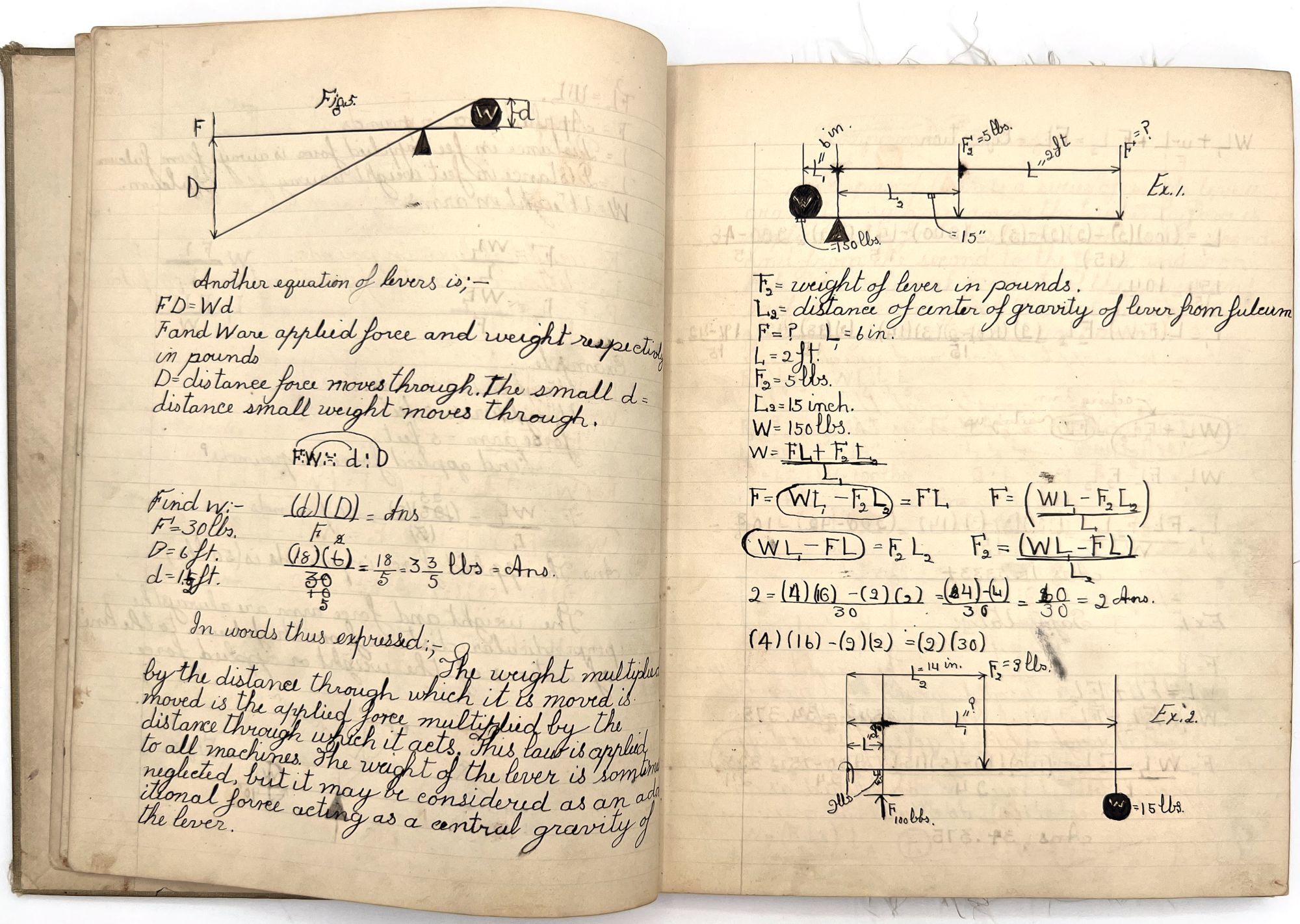
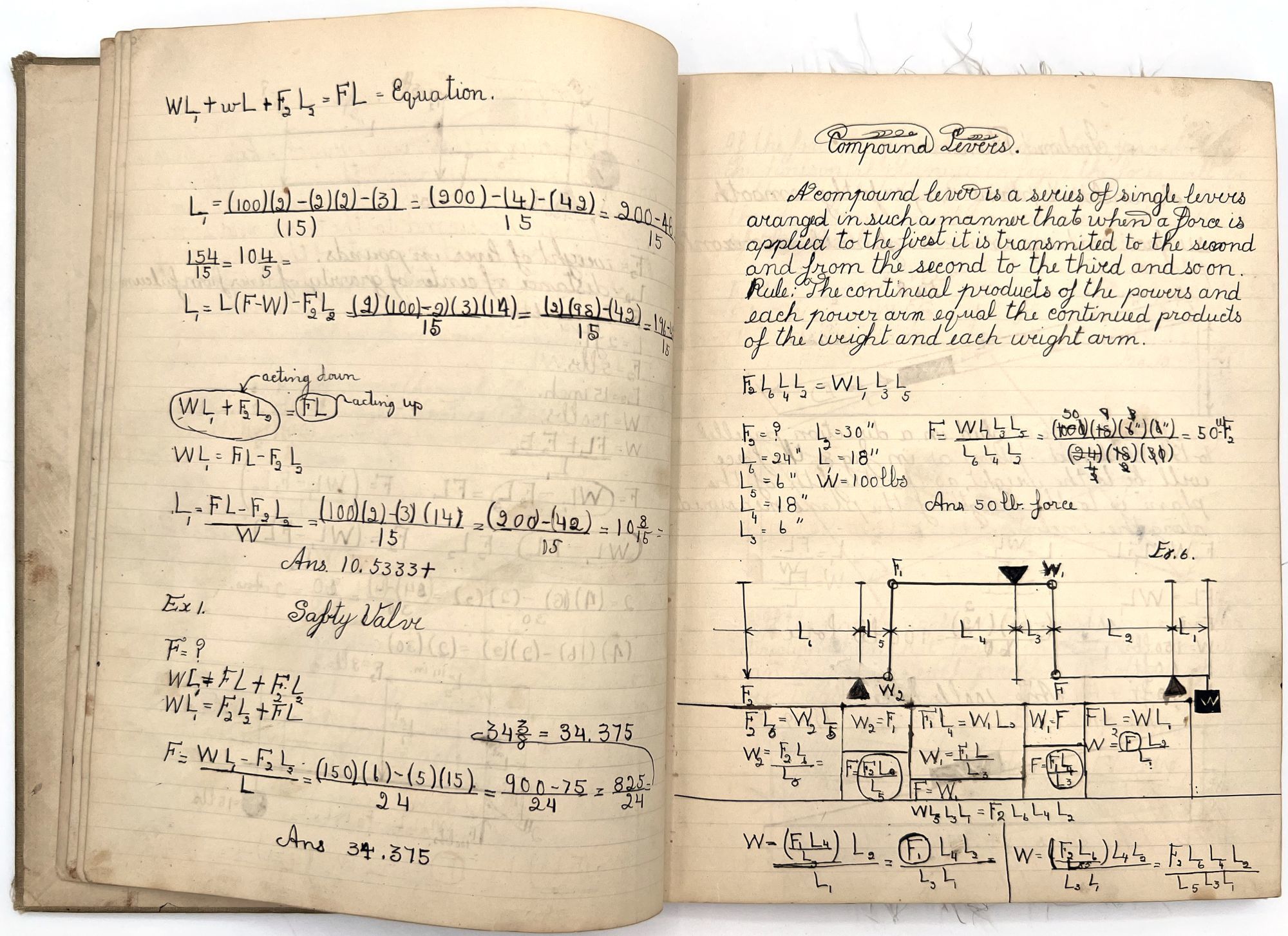
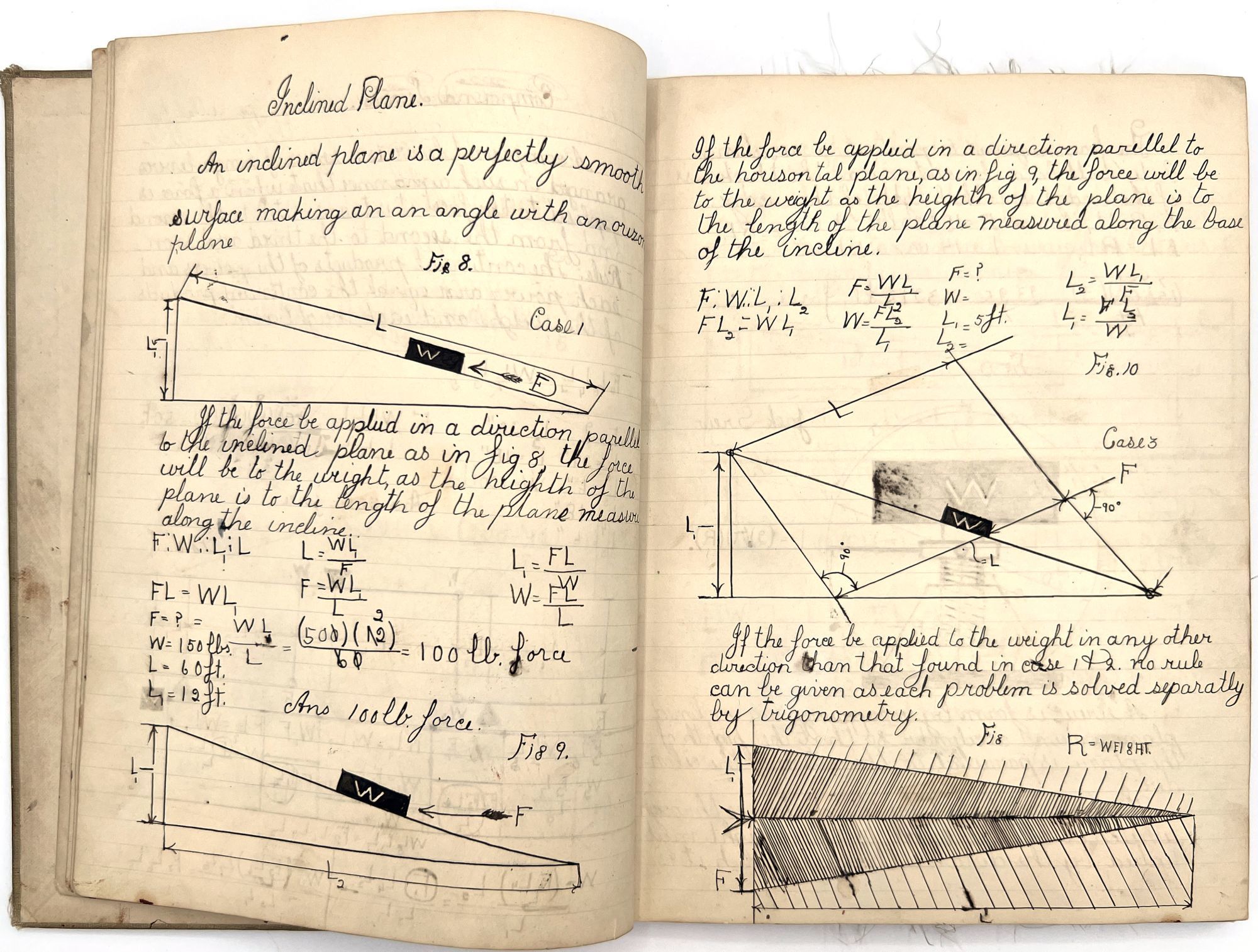
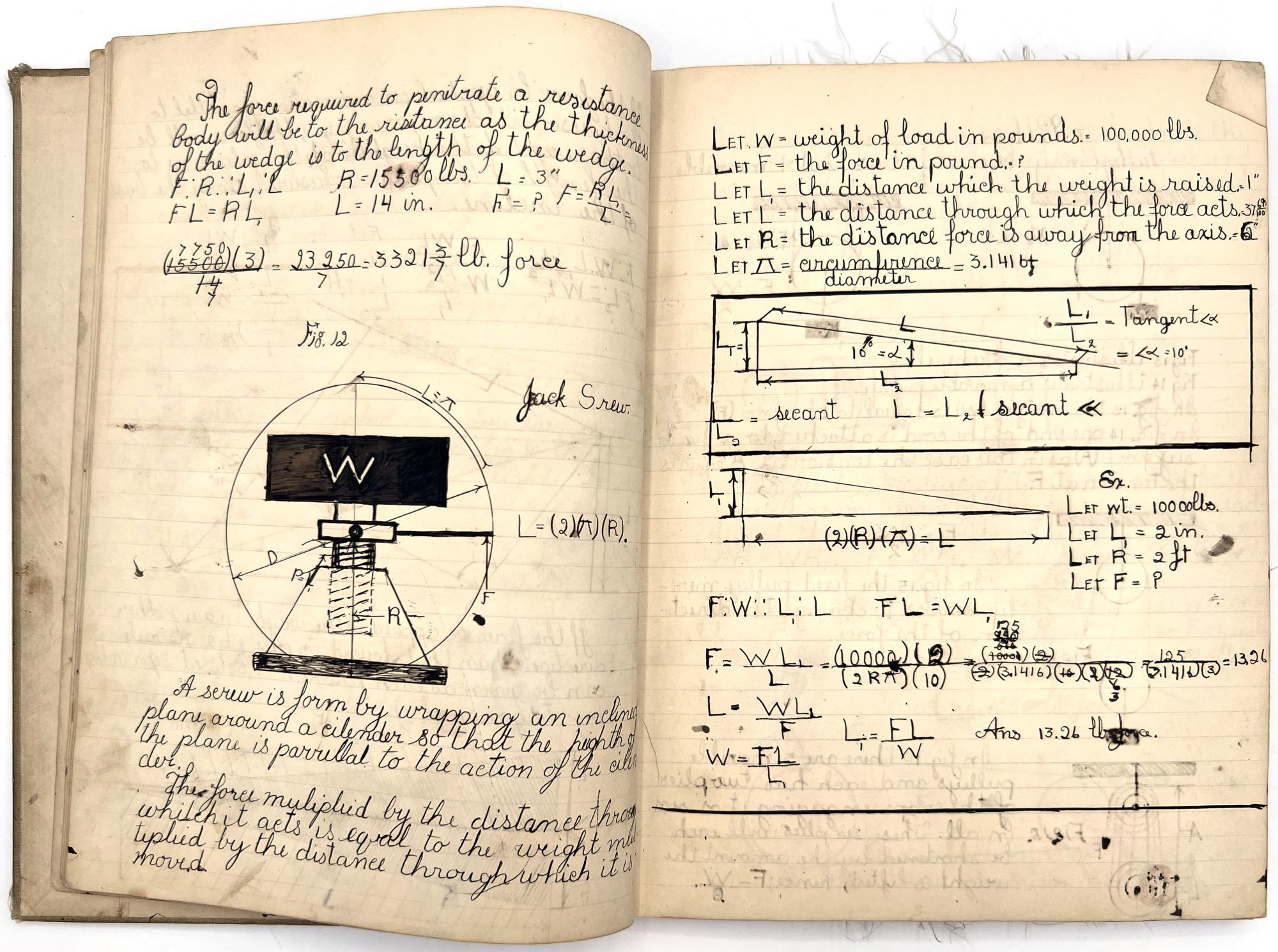
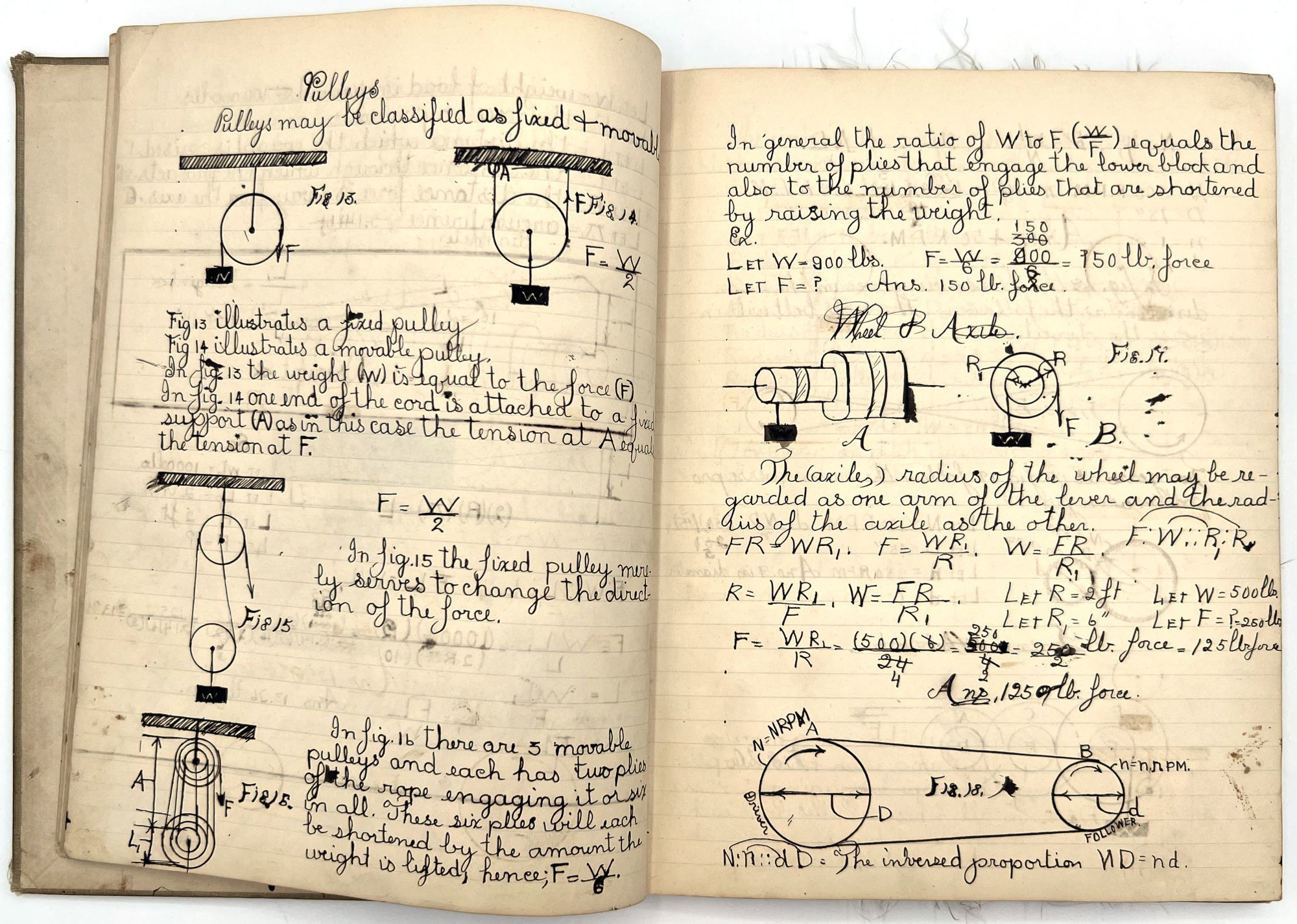
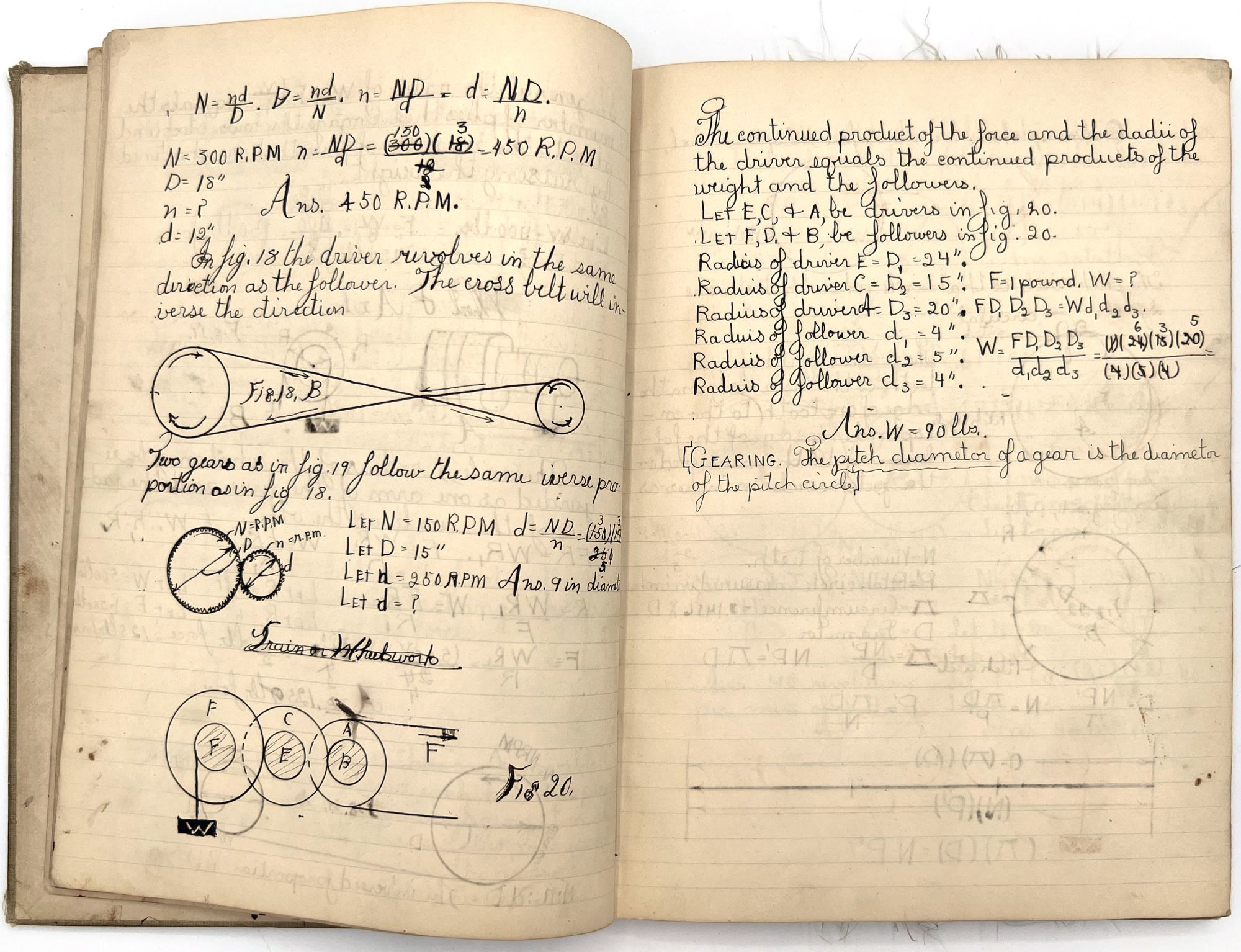
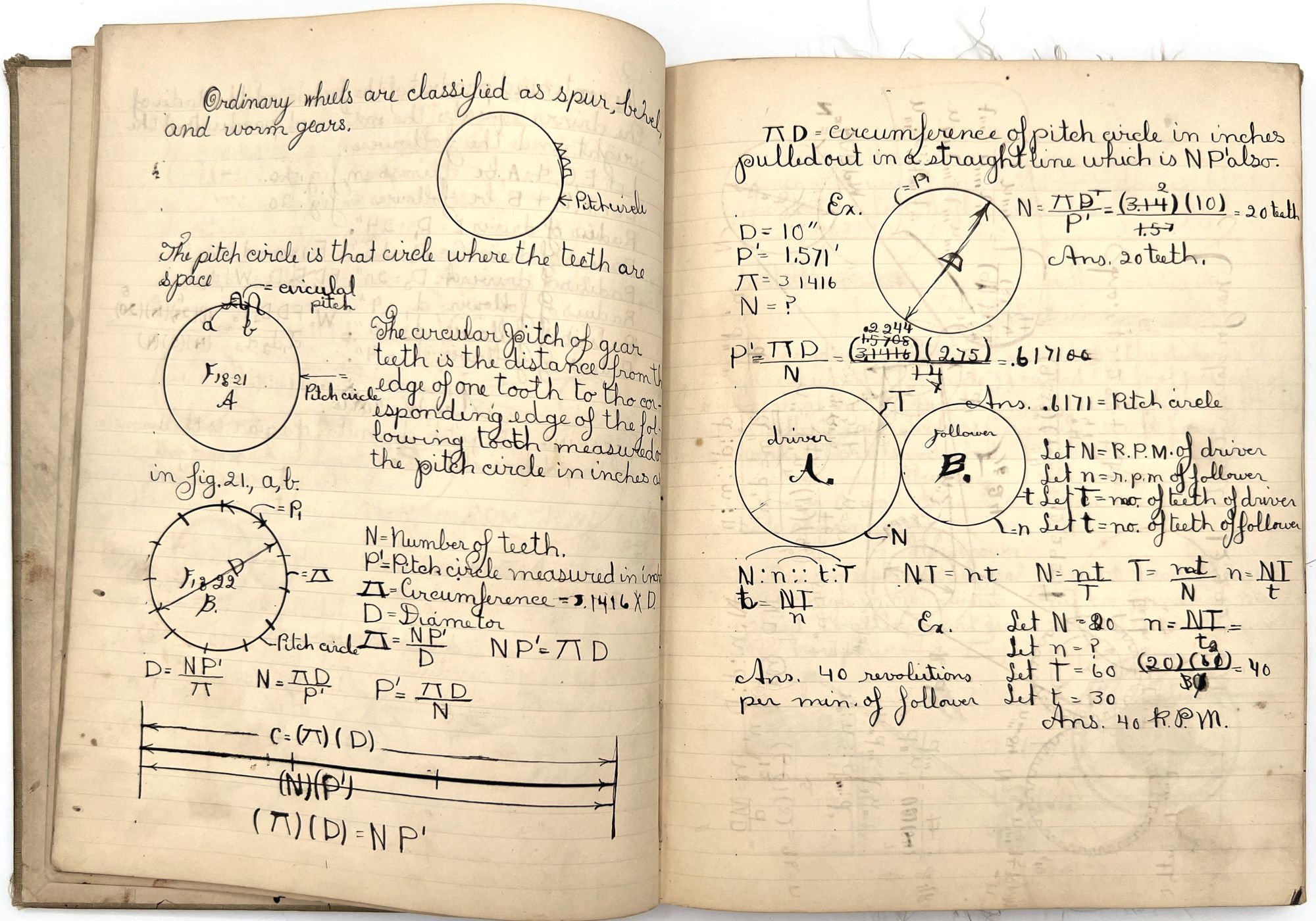
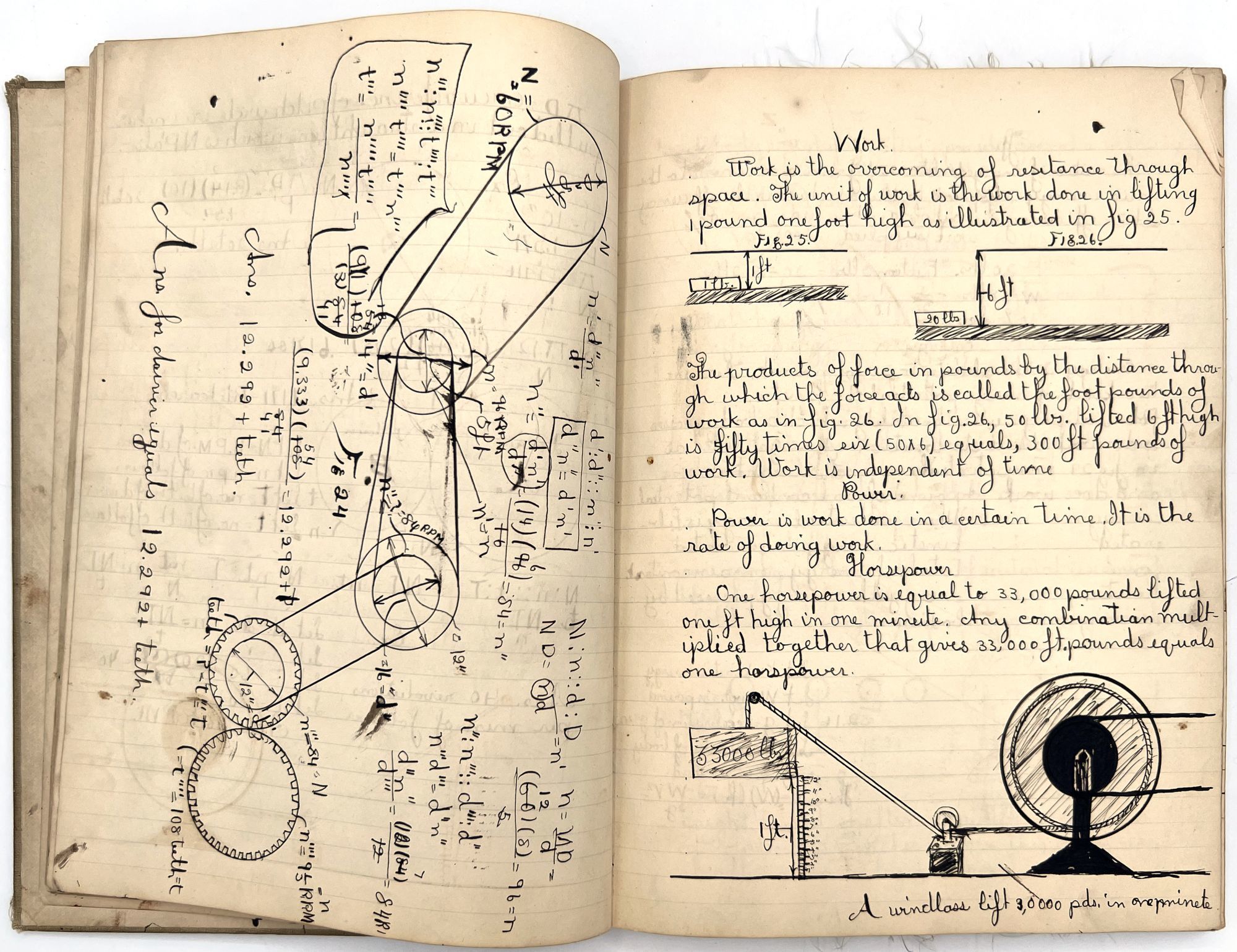
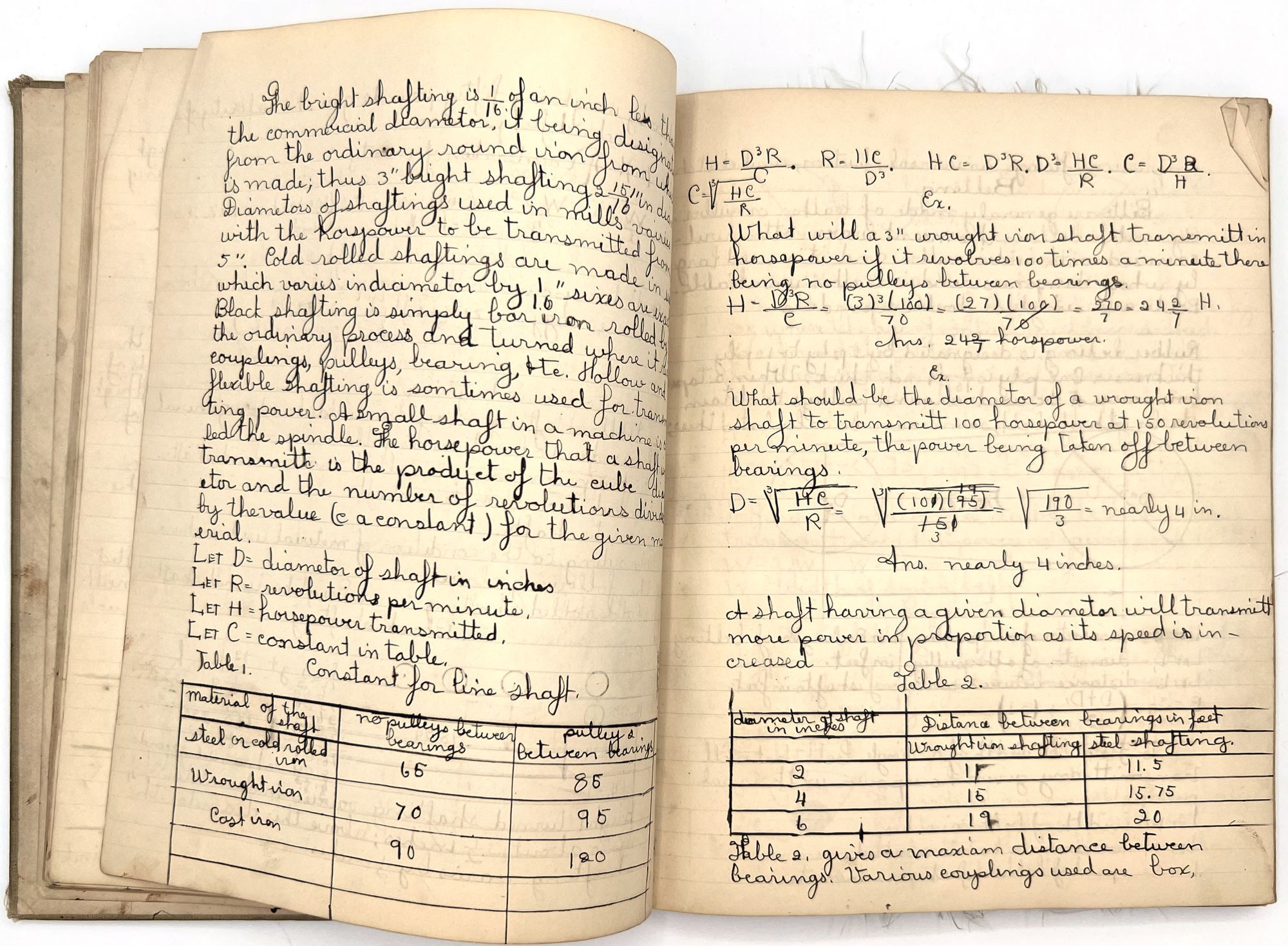
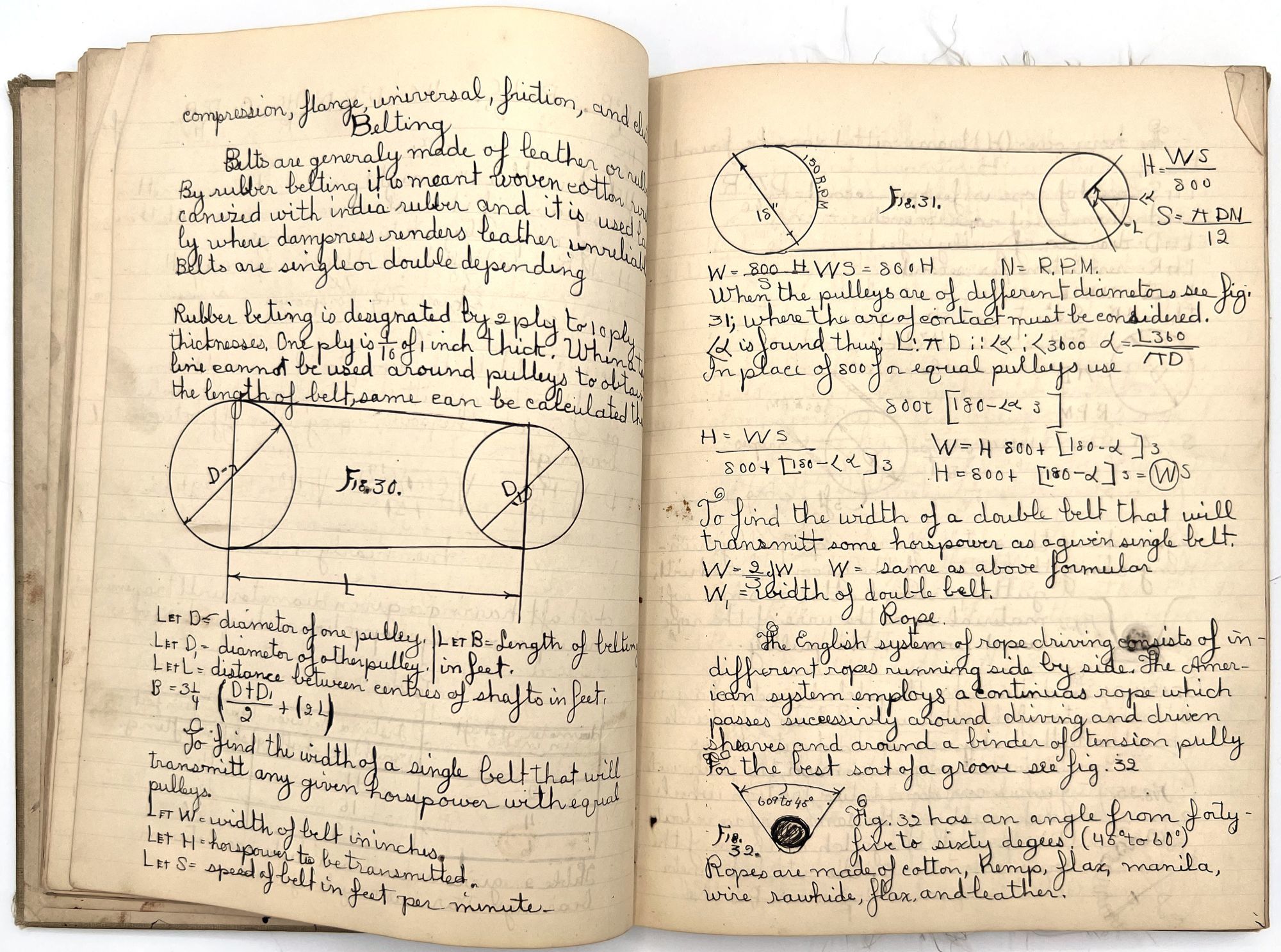
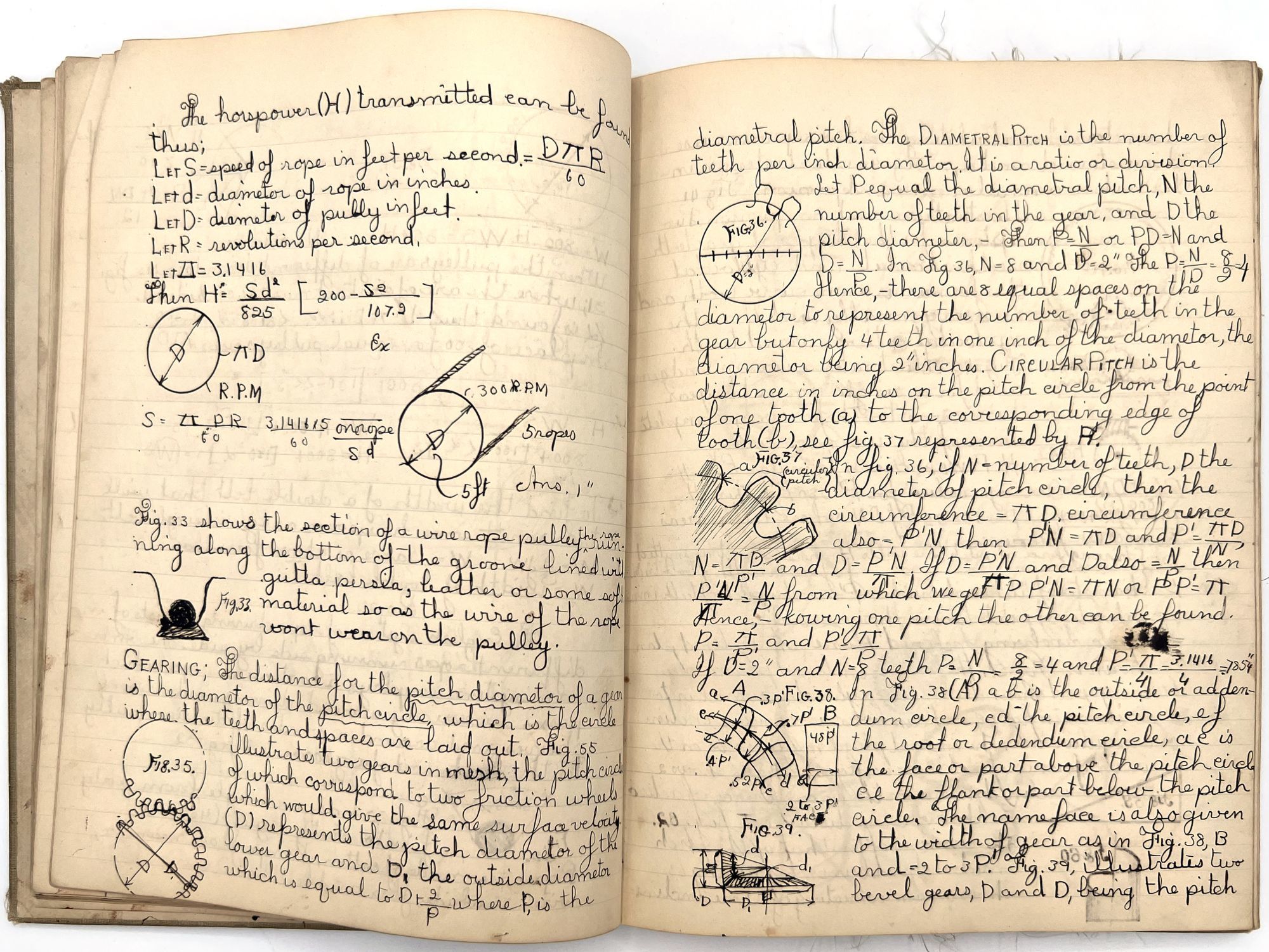
"Lecture Note Book". [New Bedford: New Bedford Textile School, c.1929]. Single vol. (10" by 7.75"), approx. 75 lined leaves, with about one quarter of the leaves filled with ink manuscript notes and diagrams, and the final third filled with approx. 225 samples of fine cotton woven fabric. Contents begin with definitions of "Mechanics", "Force", and "Machine", and become increasingly technical, with formulas and diagrams detailing how textile machines work down to each individual tooth in a gear. The New Bedford Textile School was chartered in 1895 to provide instruction in both the theory and practice of textile manufacturing, from conception to production. A typical length of study would be two years in the day program, and certificates would be awarded to students who took evening courses. Similar institutions established around the same period include the Lowell Textile School and the Bradford Durfee Textile School.
Walter's son, Walter Hampson Jr. (1920-2005), followed in his father's footsteps and worked for 30 years at Clinton Silk Mill in Holyoke, eventually becoming owner. There, he produced silk material for the use of the Navy In WWII. They used the material to insulate motors and vessels, as well as manufacture parachutes.
The two books are as follows:
"Pattern Book". [New Bedford: New Bedford Textile School, c.1929]. Single vol. (16" by 10.5"), approx. 48 leaves of printed textile manufacturing forms interleaved with a further 48 leaves of brown paper, bound in original cloth board stamped on upper cover. Contains at least 50 fabric samples (cotton, silk), loose order forms detailing information such as raw material cost and mill cost, and many scraps of paper with grids and charts for visualizing weave patterns. Given to each student, the New Bedford pattern books provided a space where students could design patterns and work out exactly how to translate conceptual patterns into practice, and formulas for the weaving machines.
"Lecture Note Book". [New Bedford: New Bedford Textile School, c.1929]. Single vol. (10" by 7.75"), approx. 75 lined leaves, with about one quarter of the leaves filled with ink manuscript notes and diagrams, and the final third filled with approx. 225 samples of fine cotton woven fabric. Contents begin with definitions of "Mechanics", "Force", and "Machine", and become increasingly technical, with formulas and diagrams detailing how textile machines work down to each individual tooth in a gear. The New Bedford Textile School was chartered in 1895 to provide instruction in both the theory and practice of textile manufacturing, from conception to production. A typical length of study would be two years in the day program, and certificates would be awarded to students who took evening courses. Similar institutions established around the same period include the Lowell Textile School and the Bradford Durfee Textile School.
Walter's son, Walter Hampson Jr. (1920-2005), followed in his father's footsteps and worked for 30 years at Clinton Silk Mill in Holyoke, eventually becoming owner. There, he produced silk material for the use of the Navy In WWII. They used the material to insulate motors and vessels, as well as manufacture parachutes.