

Arabian Sands
- Illustrated with black-and-white photographs and maps, with one fold-out map affixed to rear pastedown endpaper. xvi, 326 pp. 1
- New York: E.P. Dutton and Company, Inc, 1959
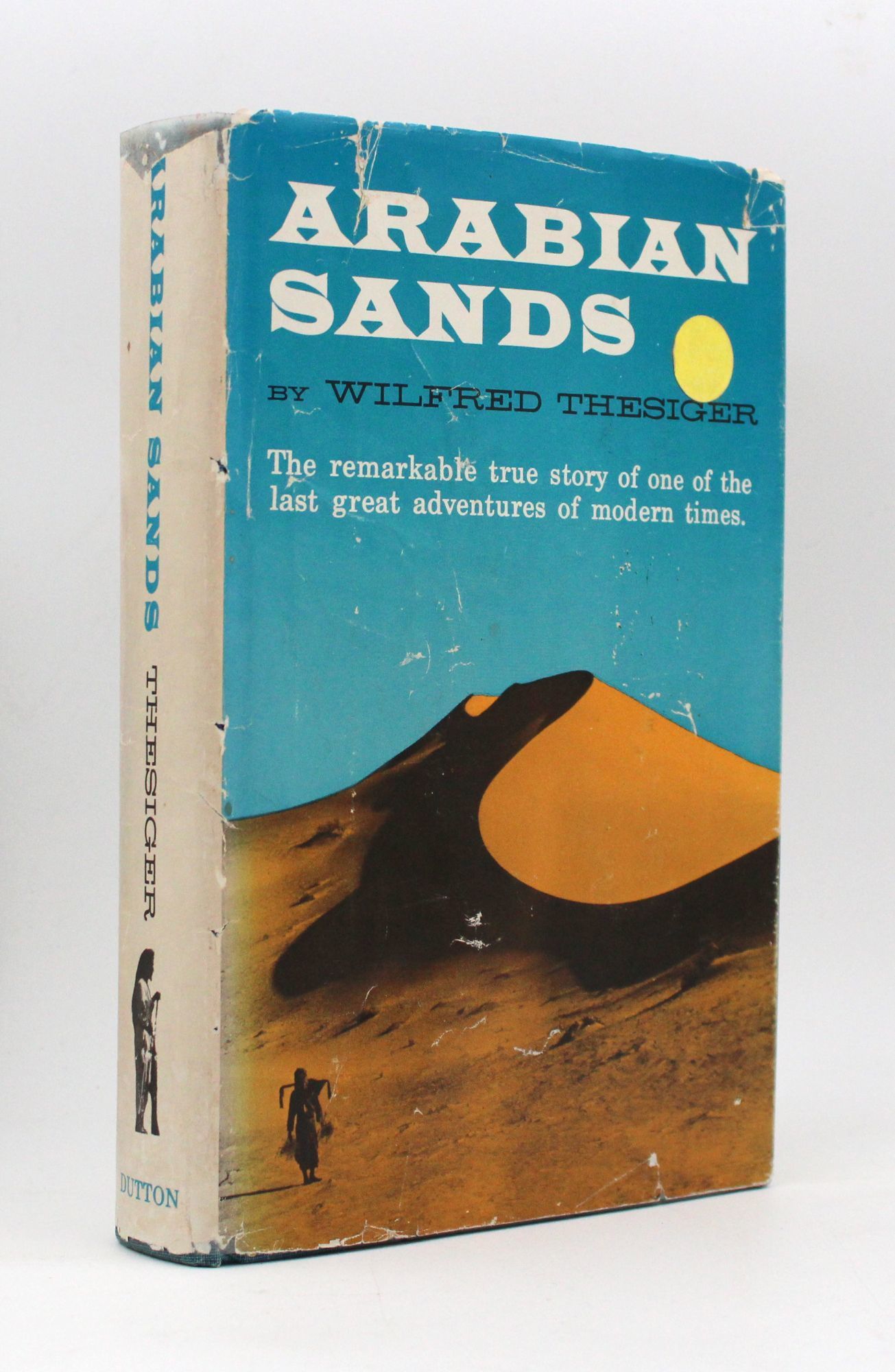
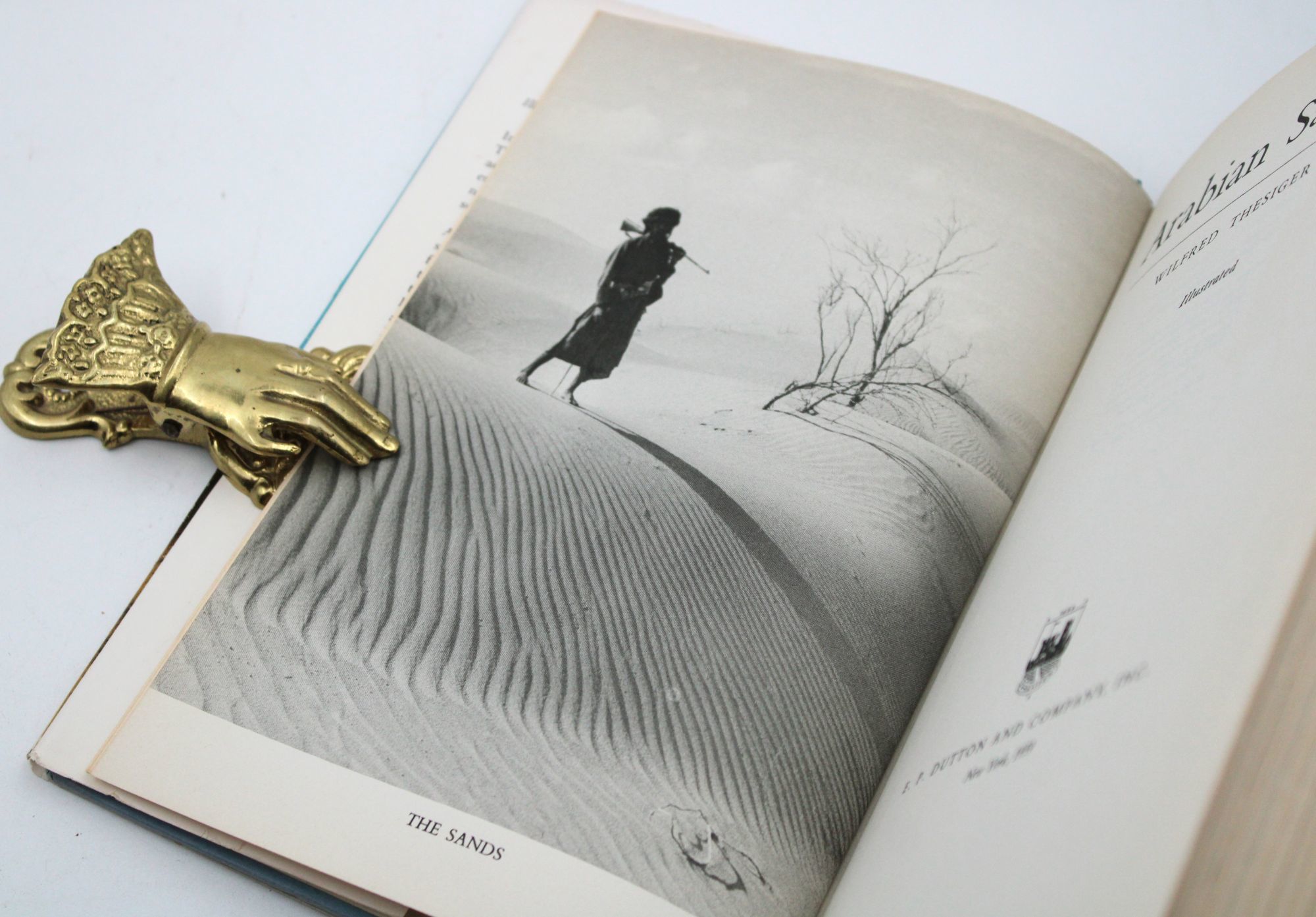
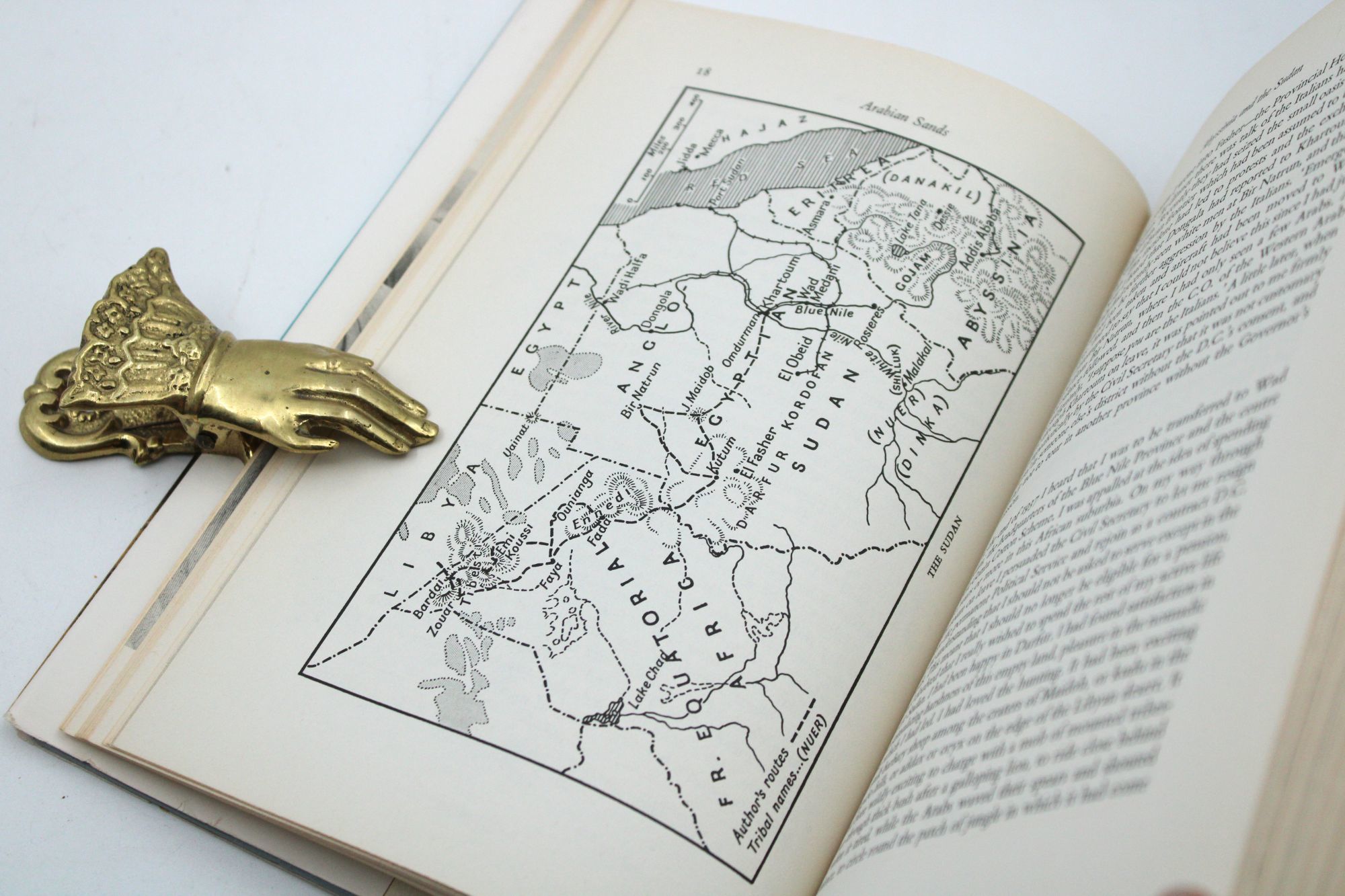
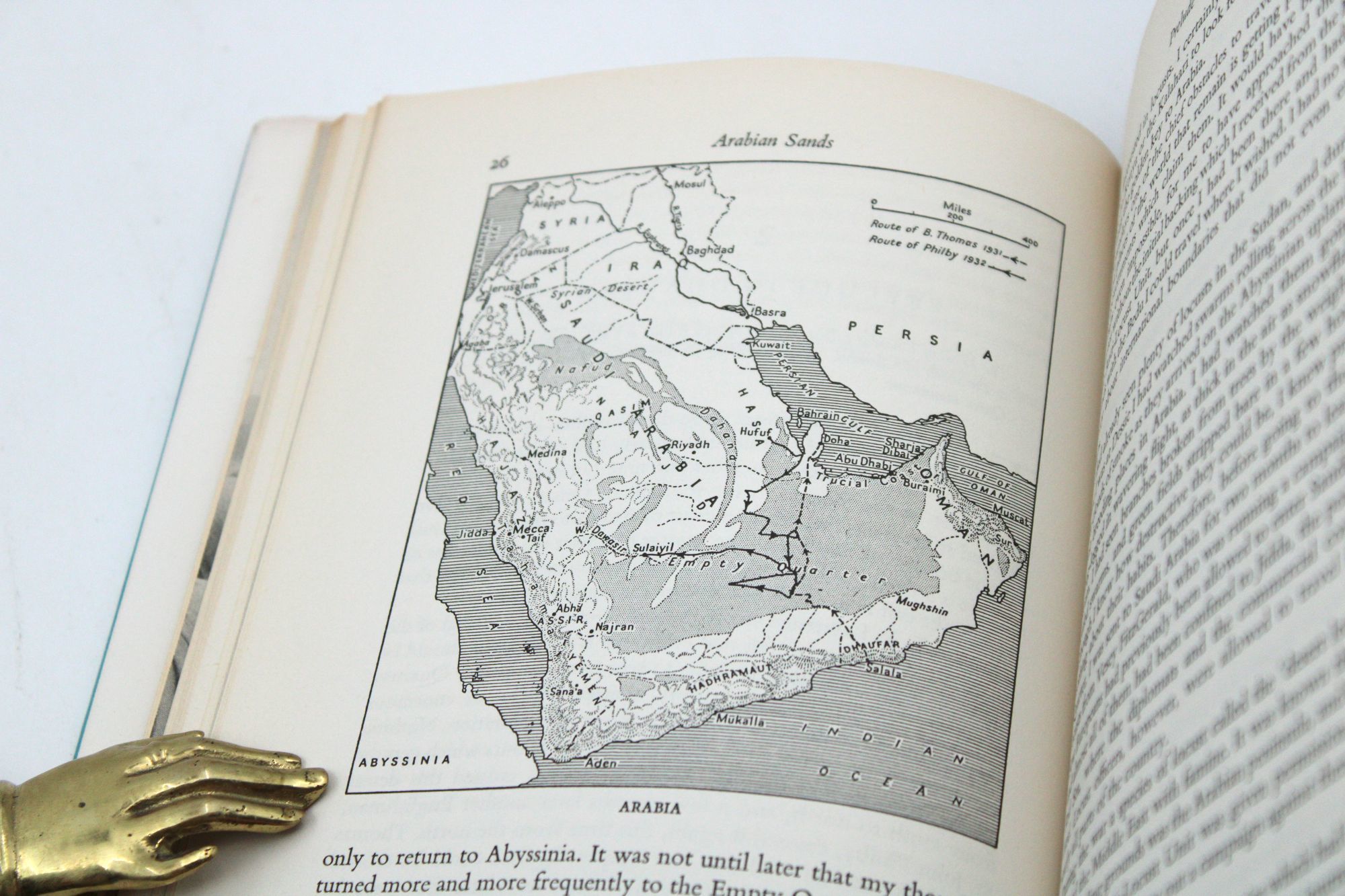
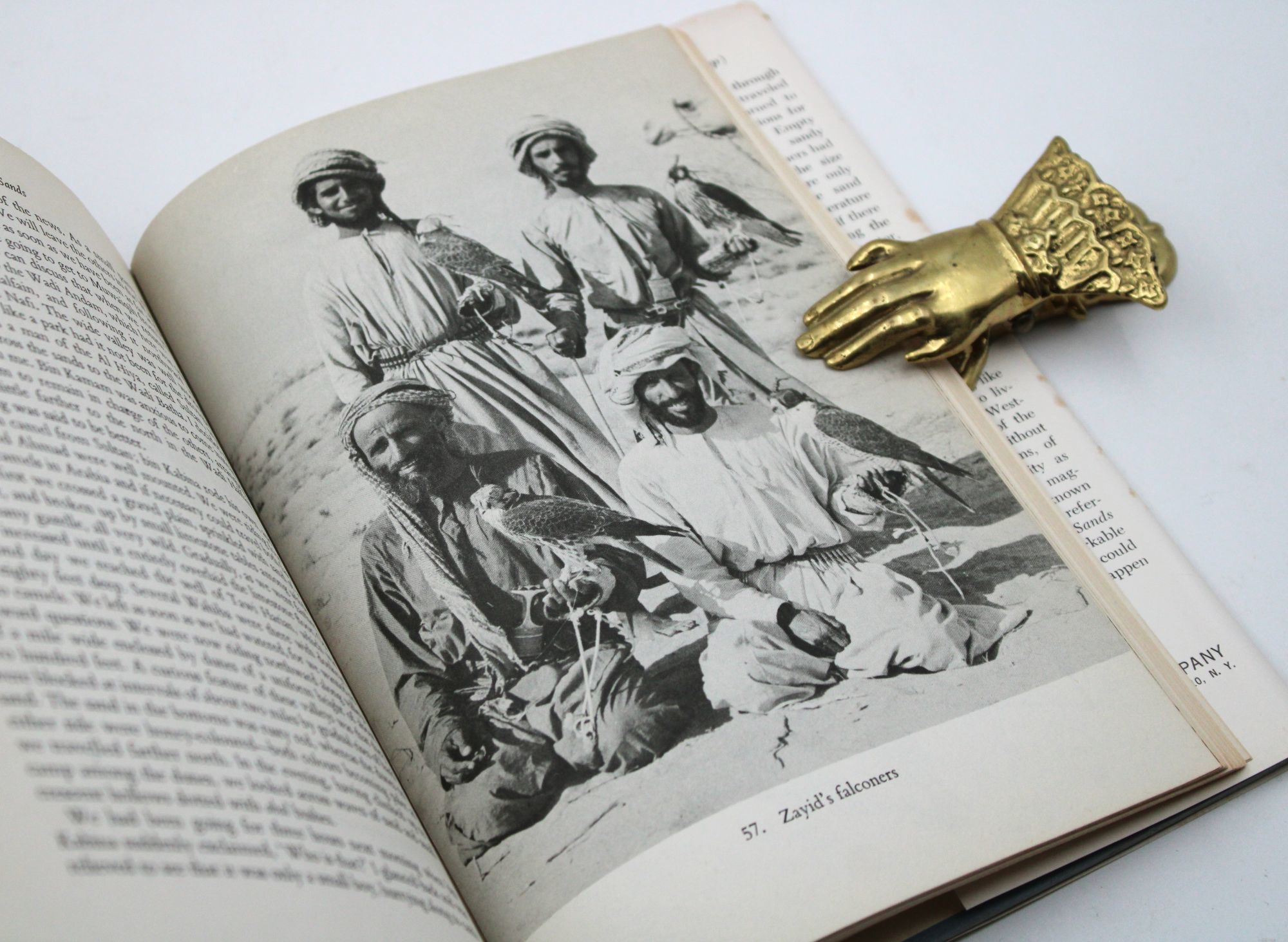
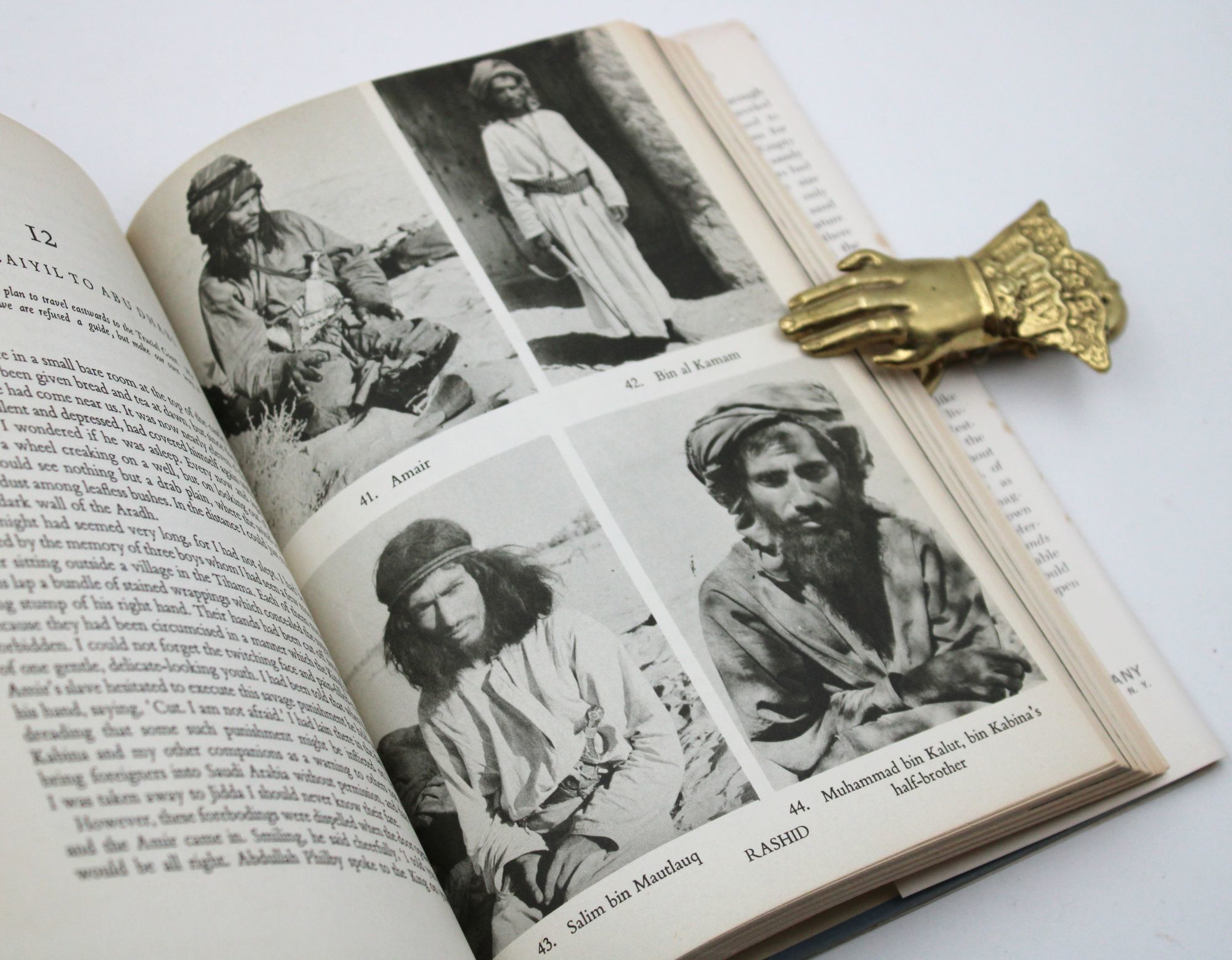
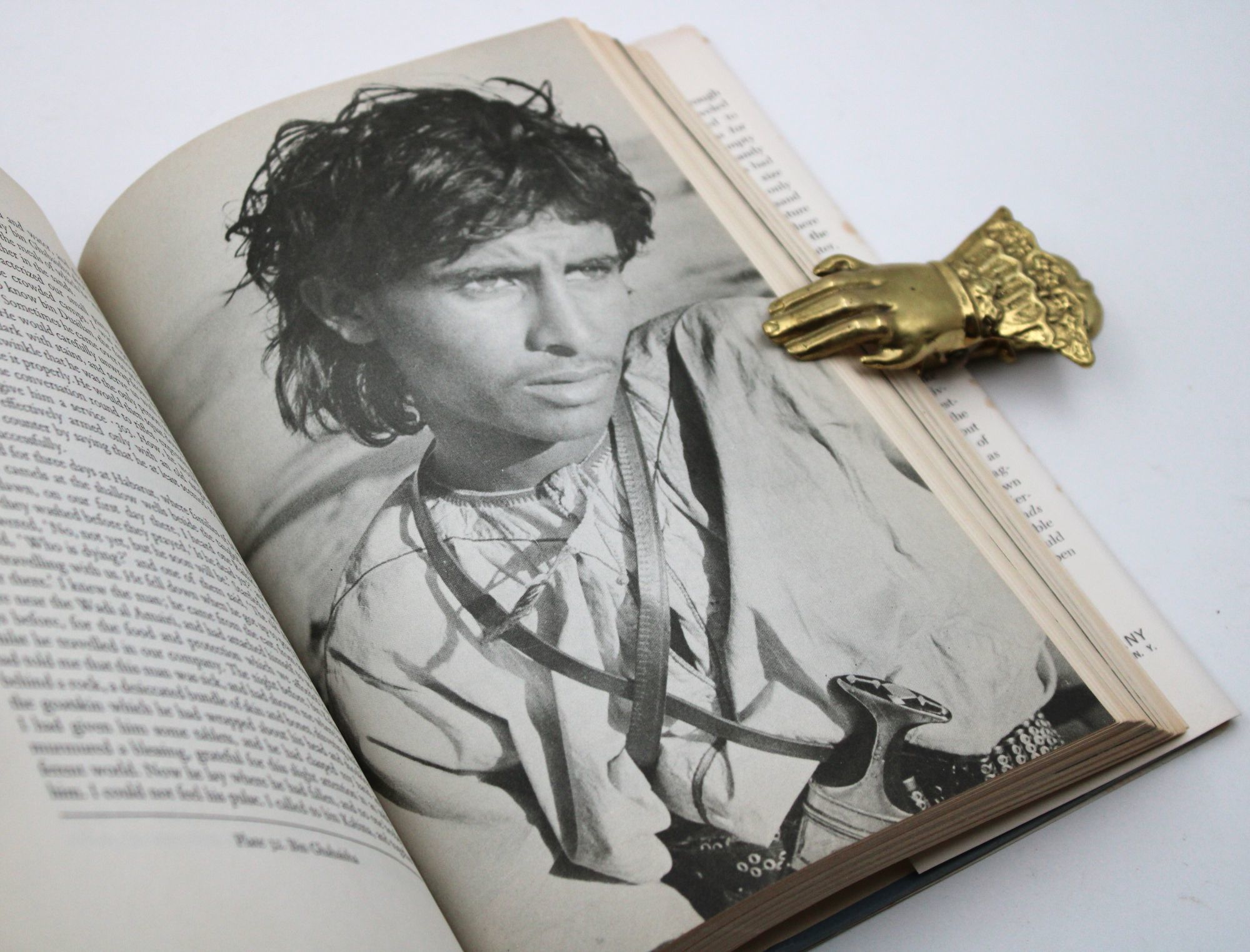
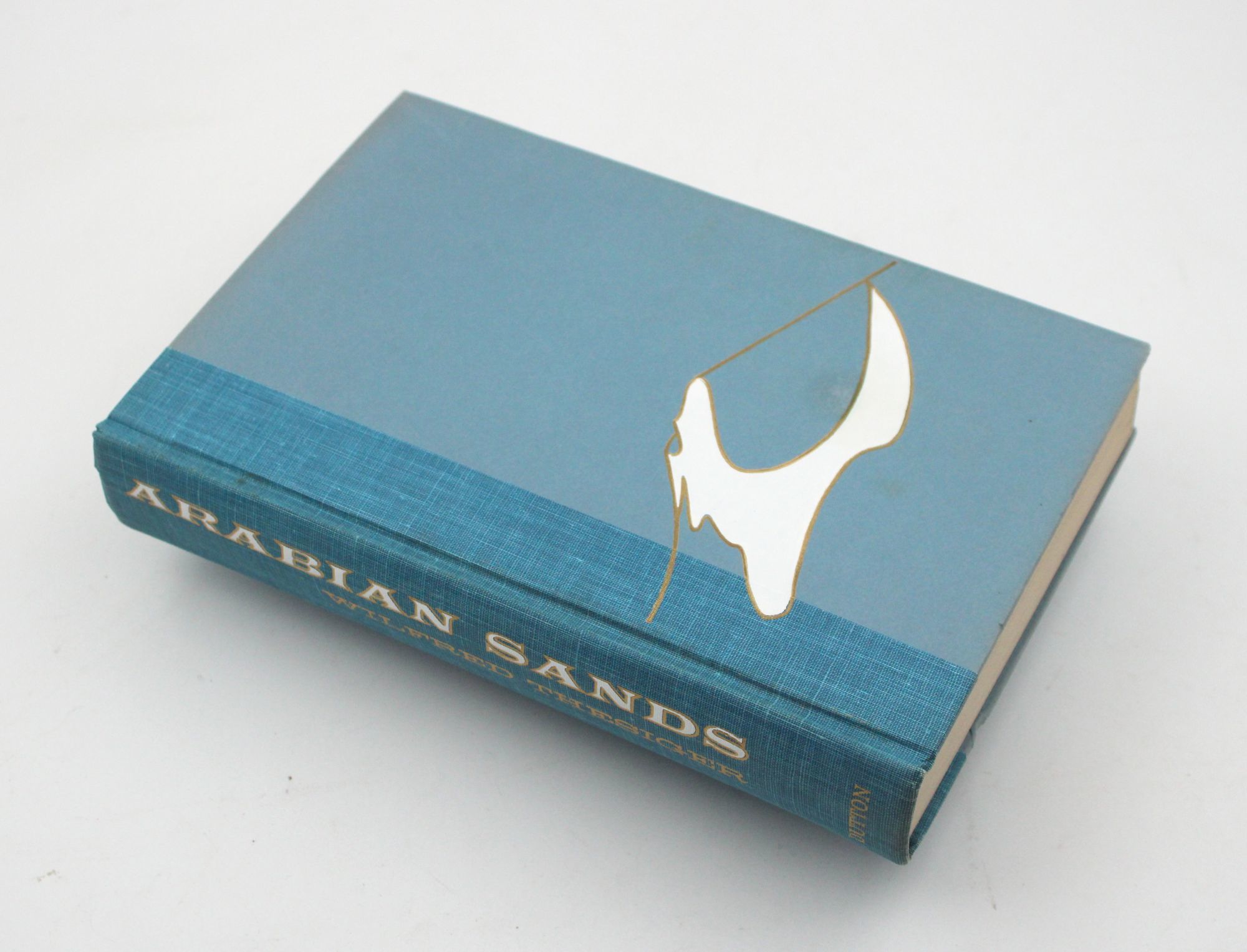
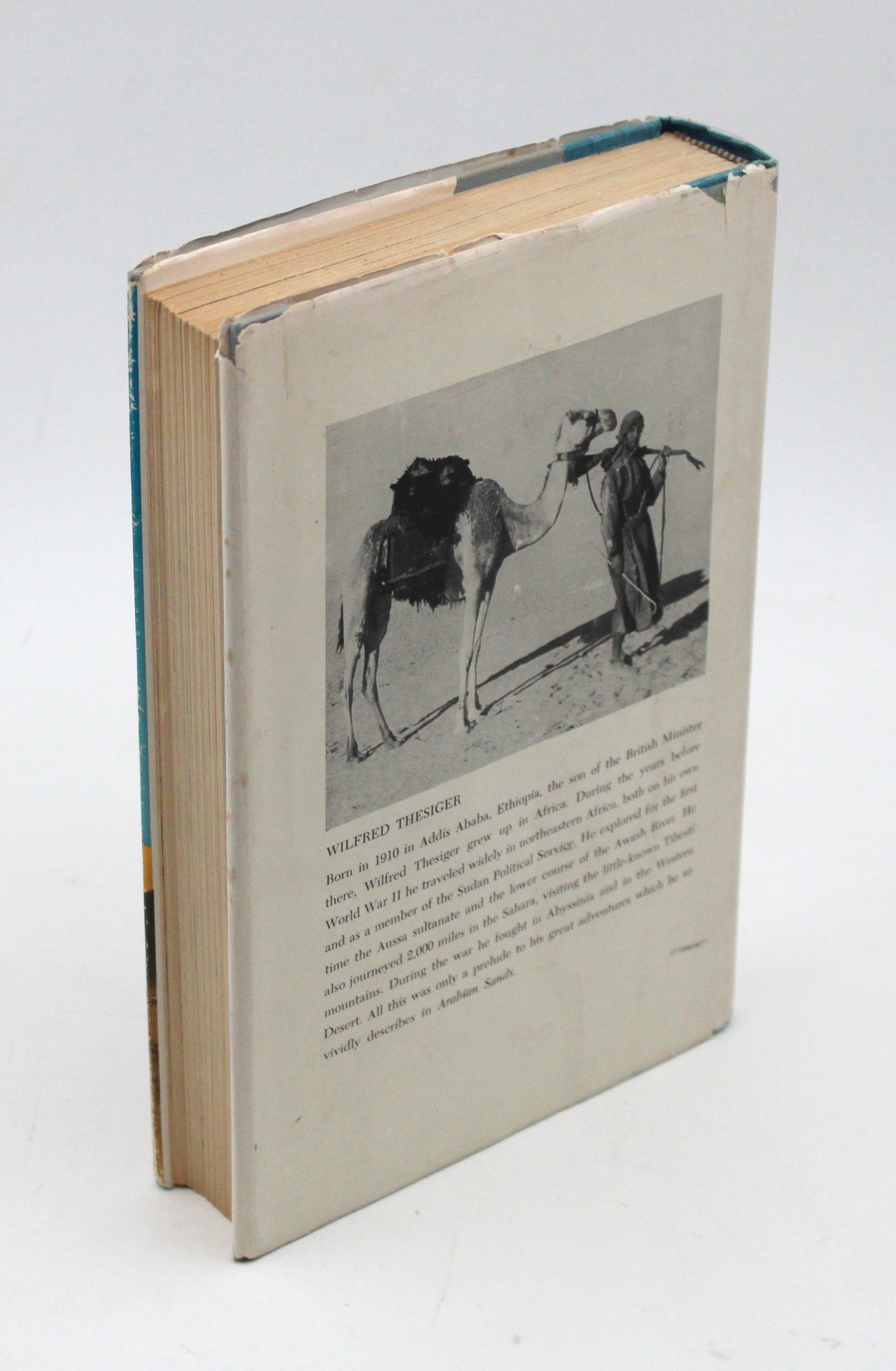
New York: E.P. Dutton and Company, Inc, 1959. First American edition. Illustrated with black-and-white photographs and maps, with one fold-out map affixed to rear pastedown endpaper. xvi, 326 pp. 1 vols. 8vo. Quarter bound blue cloth and paper boards, stamped in gilt and white on front and spine, photographic color dust jacket with some shelf wear to edges and corners. First American edition. Illustrated with black-and-white photographs and maps, with one fold-out map affixed to rear pastedown endpaper. xvi, 326 pp. 1 vols. 8vo. Arabian Sands is Thesiger's first and most important work, recounting his dual crossings of the Empty Quarter, the first under the aegis of the Middle East Anti-Locust Unit in 1946-7. Although brief reports of the journey were published in the Journal of the Royal Geographical Society in the late 1940s, it was only through the efforts of his friend Graham Watson and the publisher Mark Longman that Thesiger was persuaded to write a book-length account. This is the First American edition, published in the same year as the British first.
For a decade, Thesiger had longed to explore the Empty Quarter, and seized the opportunity presented by Owen Bevan Lean to accompany the Anti-Locust unit. This was a 2000 mile journey that began and ended at Salala on the south coast, and then Thesiger left again, almost immediately, in 1947, departing Manwakh well in Yemen and visiting Liwa Oasis and Abu Dhabi. This latter trip also included a brief imprisonment in Saudi Arabia.
Thesiger, who had a revulsion to modern life, immersed himself in the country, made friends with the Arabs, and travelled on foot and by camel. He states boldly in the introduction to this work, whatever their results "[future explorers] will never know the spirit of the land nor the greatness of the Arabs."
Arabian Sands includes accounts of both these crossings and is illustrated with Thesiger's own dramatic photographs. It was received enthusiastically in the press, and Thesiger himself thought it "his finest book" (ODNB). The Daily Telegraph stated: "Following worthily in the tradition of Burton, Lawrence, Philby and Thomas, [Arabian Sands] is, very likely, the book about Arabia to end all books about Arabia." Indeed, St John Philby described Thesiger as "probably the greatest of all explorers" (Maitland, 380) and Sir John Glubb regarded him "the last, and certainly one of the greatest, of the British travellers among the Arabs" (ibid.).
For a decade, Thesiger had longed to explore the Empty Quarter, and seized the opportunity presented by Owen Bevan Lean to accompany the Anti-Locust unit. This was a 2000 mile journey that began and ended at Salala on the south coast, and then Thesiger left again, almost immediately, in 1947, departing Manwakh well in Yemen and visiting Liwa Oasis and Abu Dhabi. This latter trip also included a brief imprisonment in Saudi Arabia.
Thesiger, who had a revulsion to modern life, immersed himself in the country, made friends with the Arabs, and travelled on foot and by camel. He states boldly in the introduction to this work, whatever their results "[future explorers] will never know the spirit of the land nor the greatness of the Arabs."
Arabian Sands includes accounts of both these crossings and is illustrated with Thesiger's own dramatic photographs. It was received enthusiastically in the press, and Thesiger himself thought it "his finest book" (ODNB). The Daily Telegraph stated: "Following worthily in the tradition of Burton, Lawrence, Philby and Thomas, [Arabian Sands] is, very likely, the book about Arabia to end all books about Arabia." Indeed, St John Philby described Thesiger as "probably the greatest of all explorers" (Maitland, 380) and Sir John Glubb regarded him "the last, and certainly one of the greatest, of the British travellers among the Arabs" (ibid.).