

American Expeditionary Forces Engineer Field Notes [with] Hand-drawn manuscript German plans for blowing up a bridge and street near Buzancy, France in 1918
- Washington, DC / Washington Barracks: Reprinted by Central Map Reproduction Plant - Engineer School U.S. Army, 1918
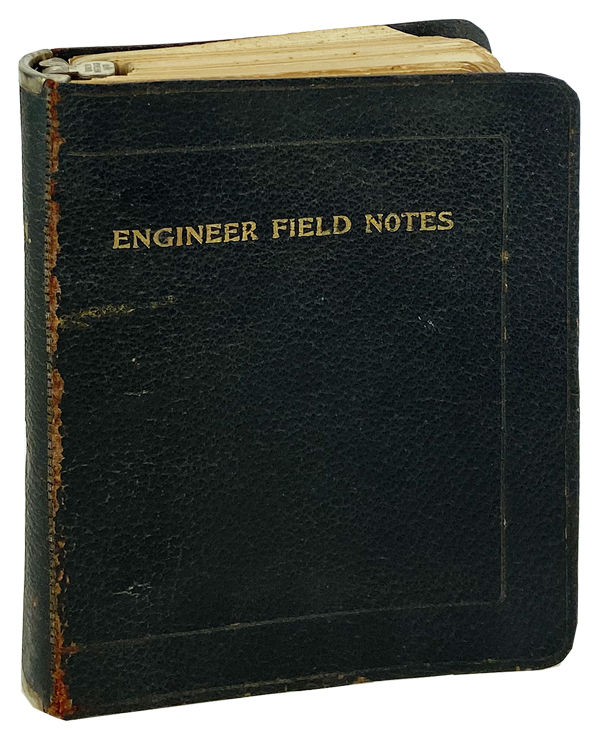
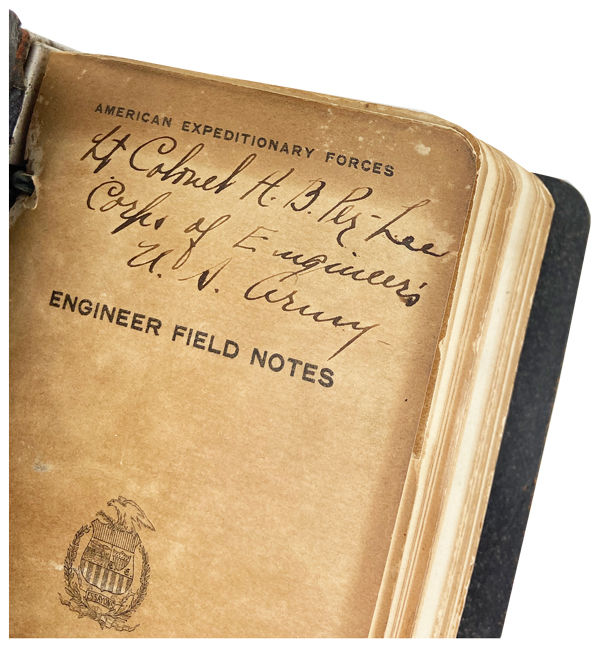
Washington, DC / Washington Barracks: Reprinted by Central Map Reproduction Plant - Engineer School U.S. Army, 1918. Very Good. Washington, DC / Washington Barracks: Reprinted by Central Map Reproduction Plant - Engineer School U.S. Army, 1918. Reprint. Various paginations for each content section. Three ring binder housed in flexible leather boards. Light scuffing and edgewear; binding sound; pages toned but legible throughout. Ownership inscription of "Lt. Colonel H.B. Per-Lee, Corps of Engineers U.S. Army" to title page. Laid in is a single folio sheet folded with text in German detailing plans to blow up a bridge and street in the Buzancy area of France in 1918. The plan appeared to have been acquired by U.S. forces and relayed to Per-Lee November 10, 1918, notifying him of the mine at Buzancy and confirming the bridge is not now of use.
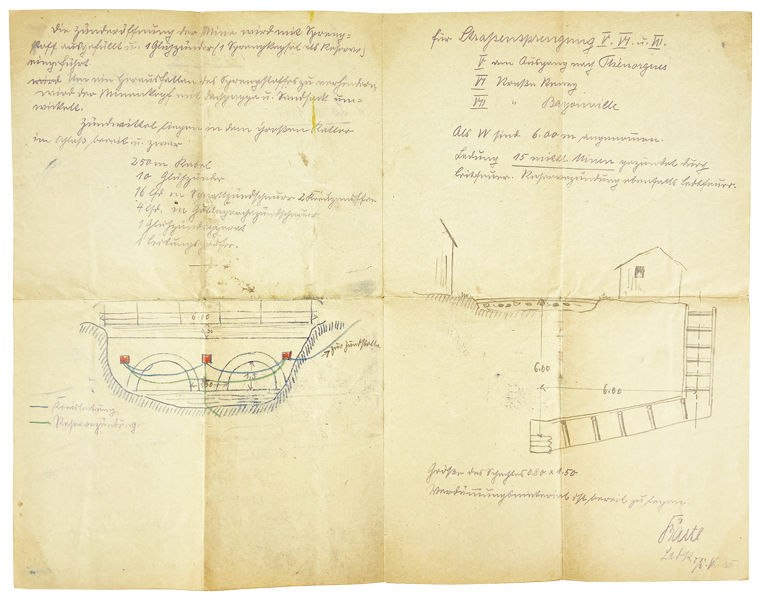
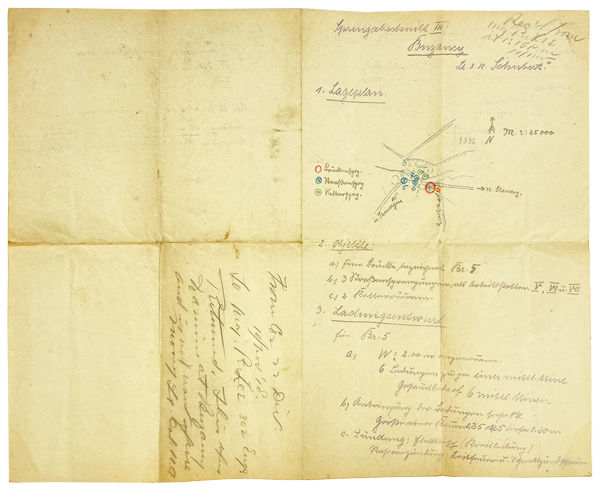
The German plans begin with a bird's eye site plan before listing their objective and order of operations. They continue with a drawing of the bridge with mines and fuses shown and additional materials listed. Facing is a drawing which appears to give details on plans for blowing up a street from a mineshaft below. Bayonville, 5km from Buzancy, is listed as a location, possibly giving this as a second blast site as the Germans retreated from their positions in late '18. A striking and intriguing survival from the Meuse-Argonne Offensive and dated by the Allies one day before the Armistice was signed.
Per-Lee himself was awarded a Silver Star for his work with the 302nd Engineers, American Expeditionary Forces, in which he repeatedly made personal reconnaissances. He is also listed as a contributor to the Memorial Clock and Carillon fund of the American Engineers' Memorial at Louvain in Belgium.
The German plans begin with a bird's eye site plan before listing their objective and order of operations. They continue with a drawing of the bridge with mines and fuses shown and additional materials listed. Facing is a drawing which appears to give details on plans for blowing up a street from a mineshaft below. Bayonville, 5km from Buzancy, is listed as a location, possibly giving this as a second blast site as the Germans retreated from their positions in late '18. A striking and intriguing survival from the Meuse-Argonne Offensive and dated by the Allies one day before the Armistice was signed.
Per-Lee himself was awarded a Silver Star for his work with the 302nd Engineers, American Expeditionary Forces, in which he repeatedly made personal reconnaissances. He is also listed as a contributor to the Memorial Clock and Carillon fund of the American Engineers' Memorial at Louvain in Belgium.