

The Well of Loneliness (Signed limited edition)





- SIGNED
- New York: Covici Freidi, 1929
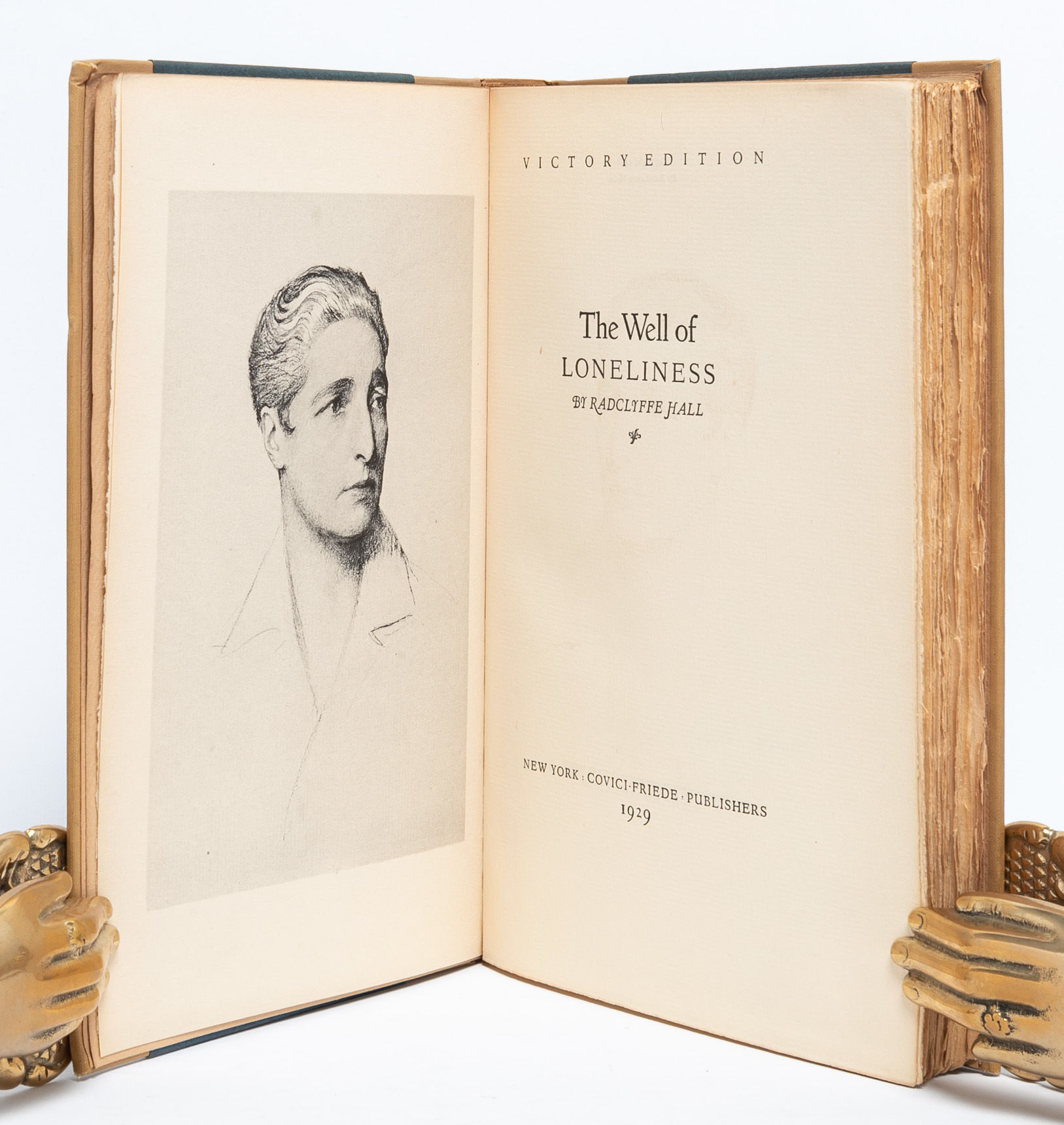
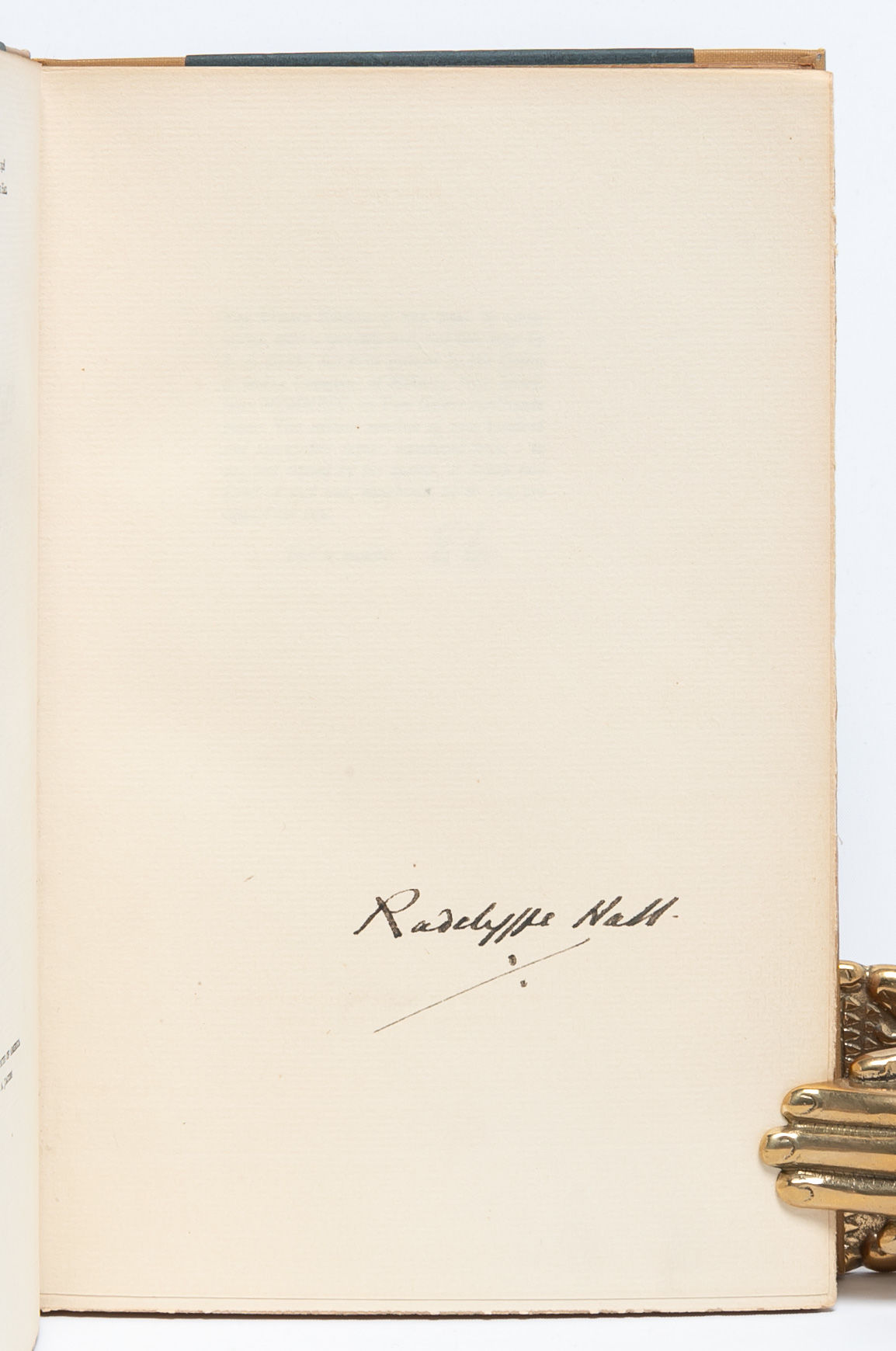
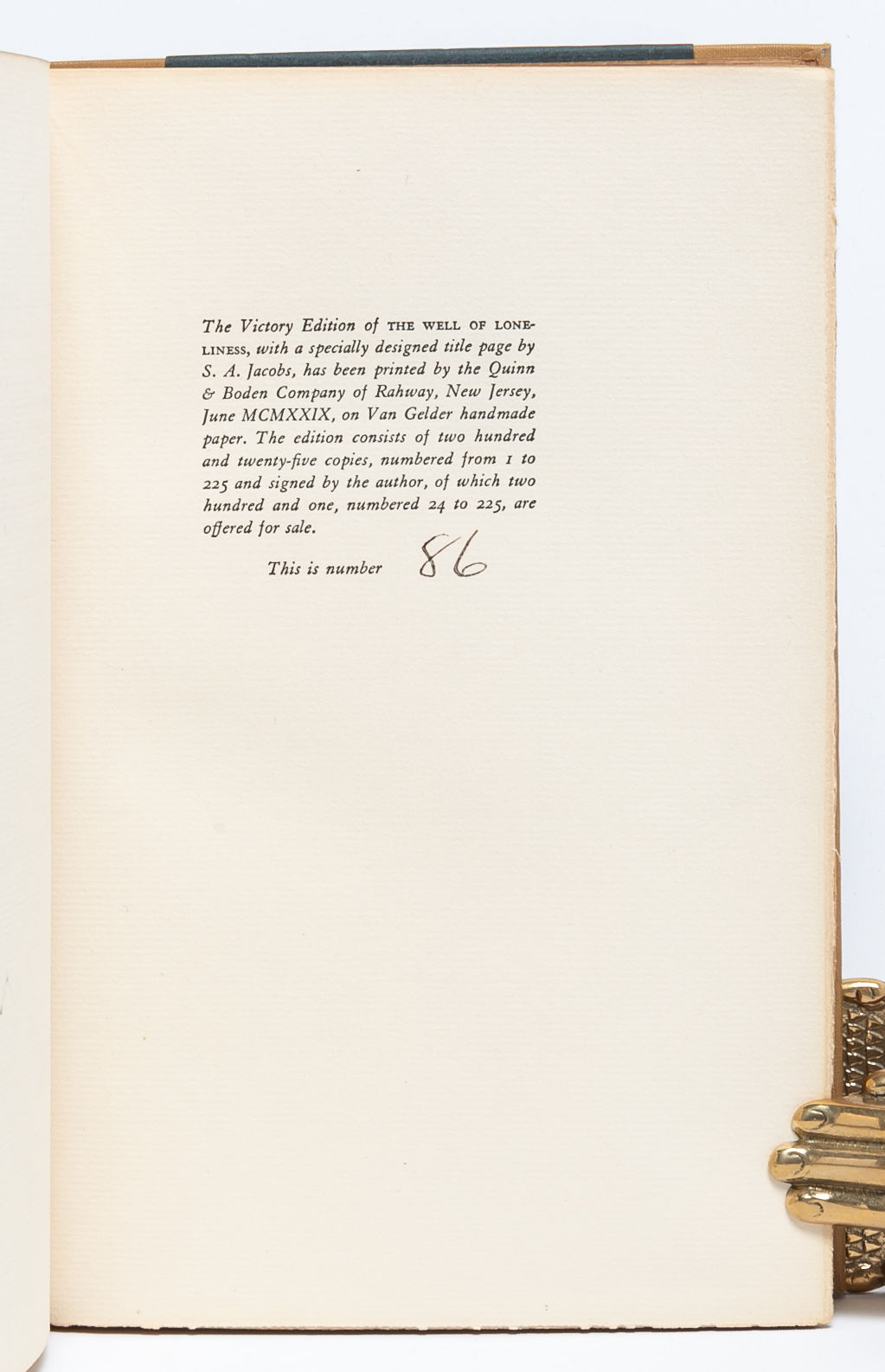
New York: Covici Freidi, 1929. First thus. Near Fine. Number 86 of 225 copies of the Victory Edition in two volumes, signed by the author. A Near Fine set with a spot on the front board of volume one and silver gilt on the spines a little rubbed, but generally in excellent condition internally and quite handsome overall.
Radclyffe Hall’s The Well of Loneliness is a ground-breaking novel featuring lesbian relationships and gender nonconformity, which argues that homosexuality (called sexual inversion in the book) is natural and that queer people deserve the right to live openly and happily with their chosen partners. The novel follows Stephen Gordon’s life from living in Paris to serving in the ambulance corps during WWI; a journey of self-exploration and a tragic quest for love. Hall engages with both Christianity and developments in Sexology throughout the text to support her argument for equality. Although controversial at its publication (legal hurdles and banning because of its purported “obscene” content), the novel has long been valued for its pioneering portrayal of queer people. Yet, in the decades since its publication, Radclyffe Hall’s prose and narrative choices have been critiqued, especially for perpetuating many of the boundaries it could have pushed against. For contemporary readers, the complicated novel also offers a chance to investigate nuances in the main character’s sexuality and gender identity through our modern framework. Near Fine.
Radclyffe Hall’s The Well of Loneliness is a ground-breaking novel featuring lesbian relationships and gender nonconformity, which argues that homosexuality (called sexual inversion in the book) is natural and that queer people deserve the right to live openly and happily with their chosen partners. The novel follows Stephen Gordon’s life from living in Paris to serving in the ambulance corps during WWI; a journey of self-exploration and a tragic quest for love. Hall engages with both Christianity and developments in Sexology throughout the text to support her argument for equality. Although controversial at its publication (legal hurdles and banning because of its purported “obscene” content), the novel has long been valued for its pioneering portrayal of queer people. Yet, in the decades since its publication, Radclyffe Hall’s prose and narrative choices have been critiqued, especially for perpetuating many of the boundaries it could have pushed against. For contemporary readers, the complicated novel also offers a chance to investigate nuances in the main character’s sexuality and gender identity through our modern framework. Near Fine.