

A Key to Uncle Tom's Cabin
- Boston: John P. Jewett & Co, 1853
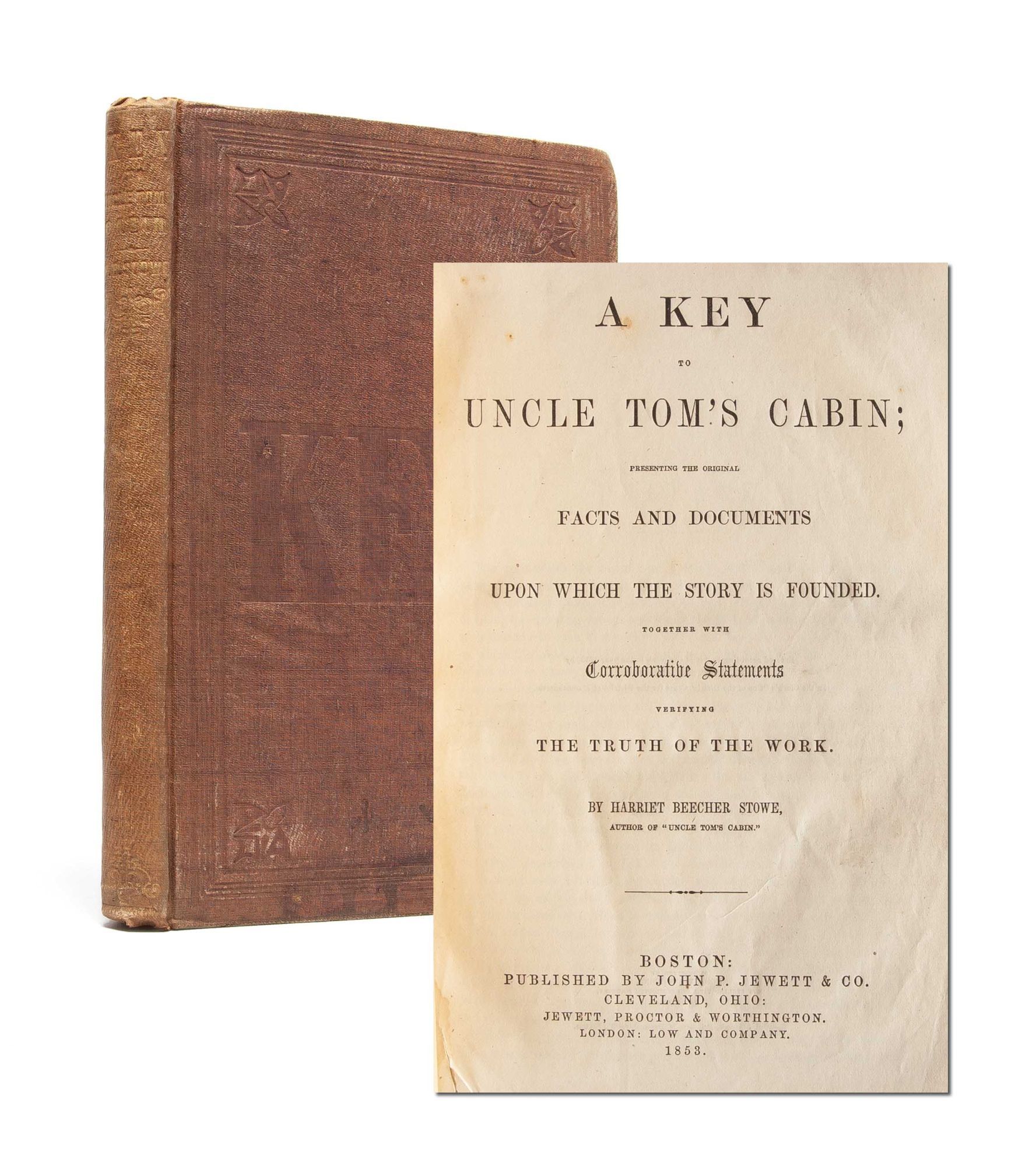
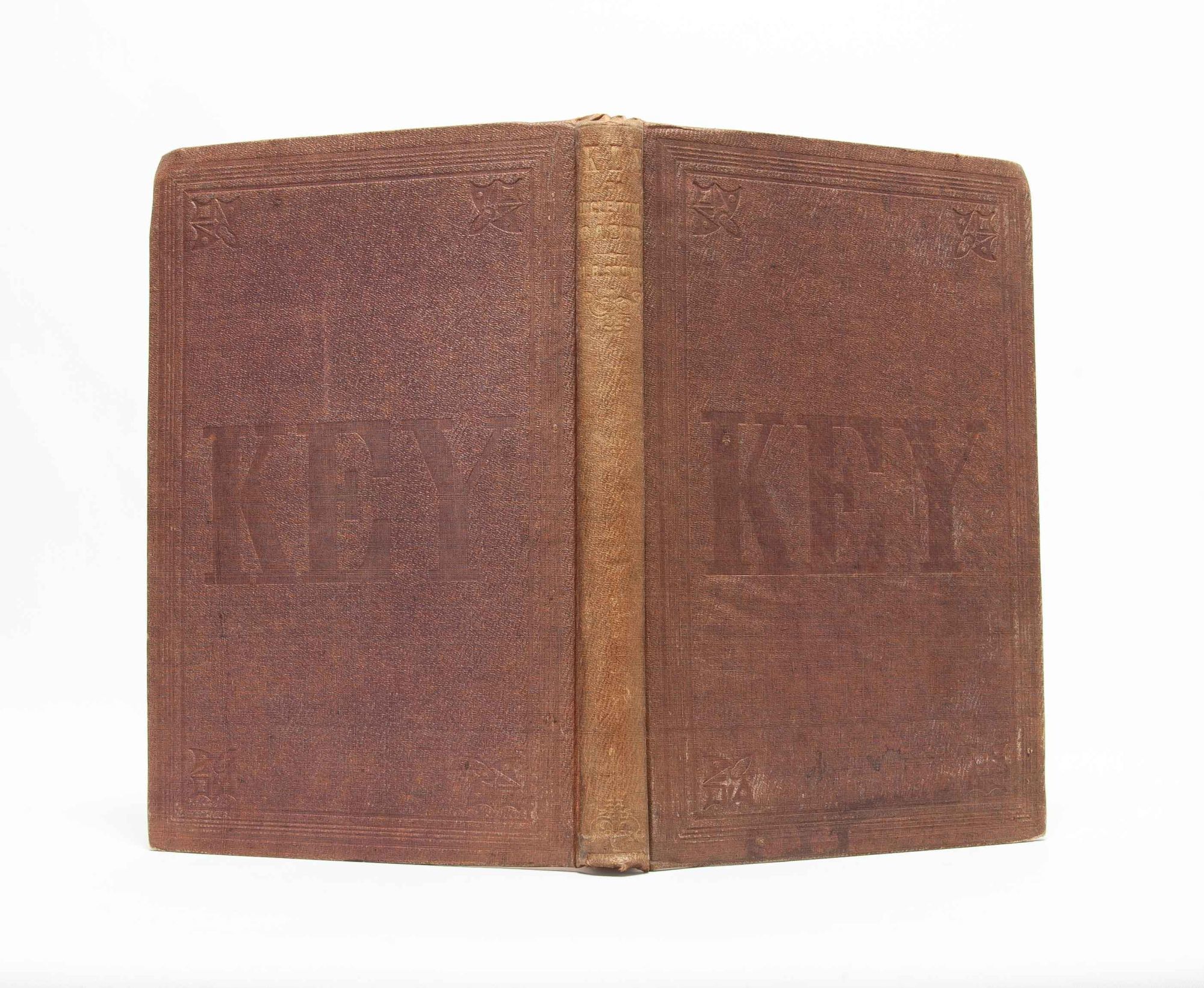
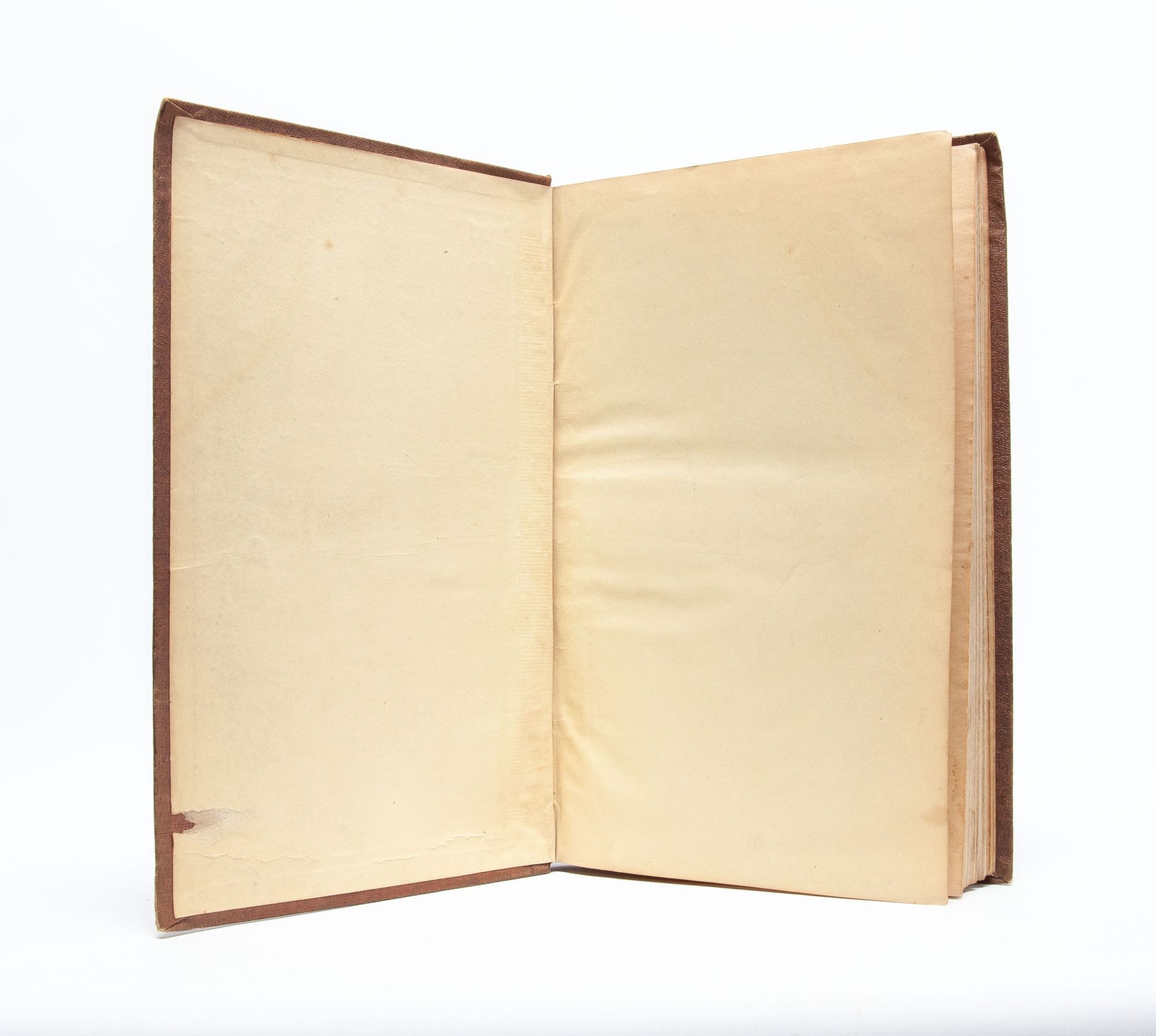
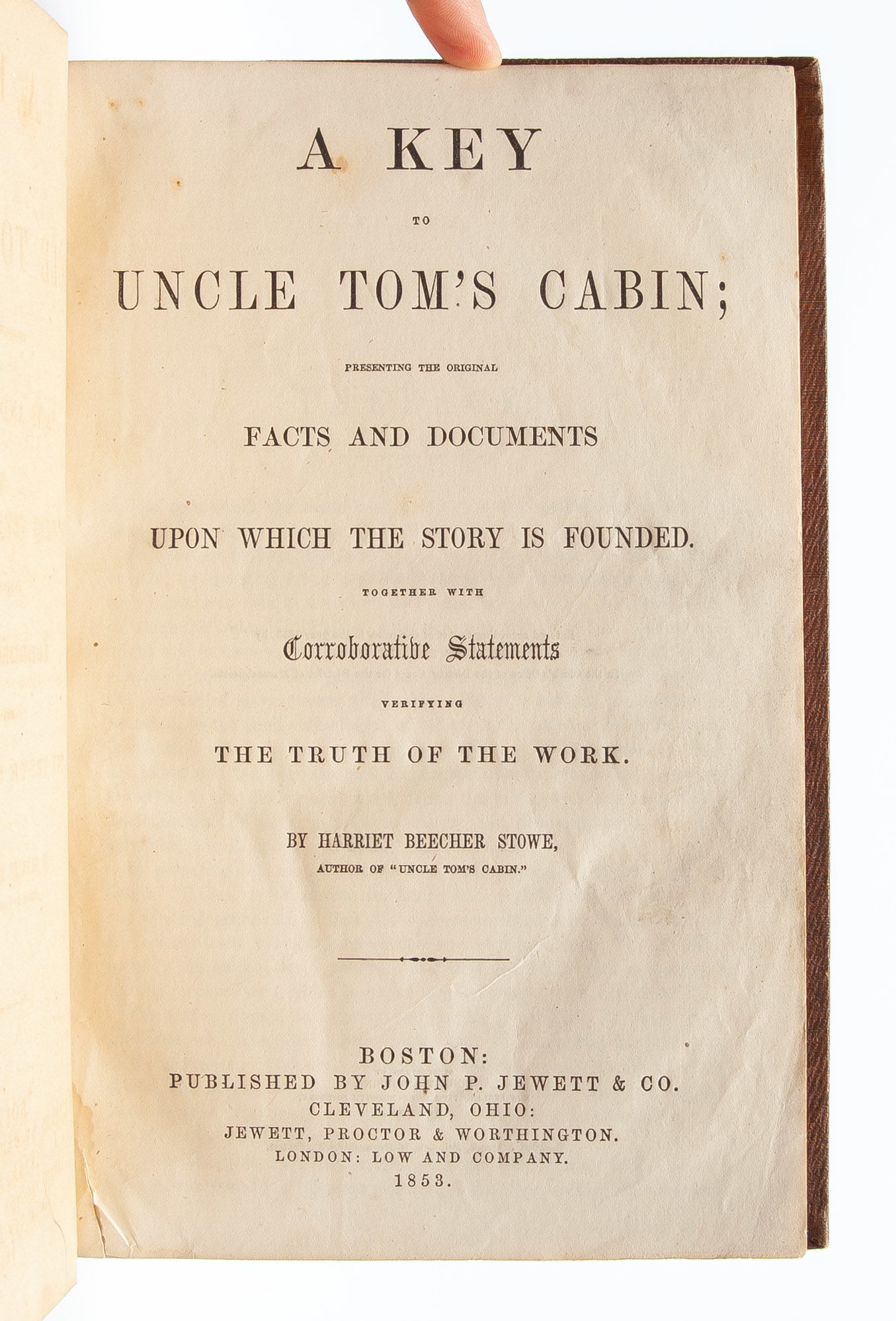
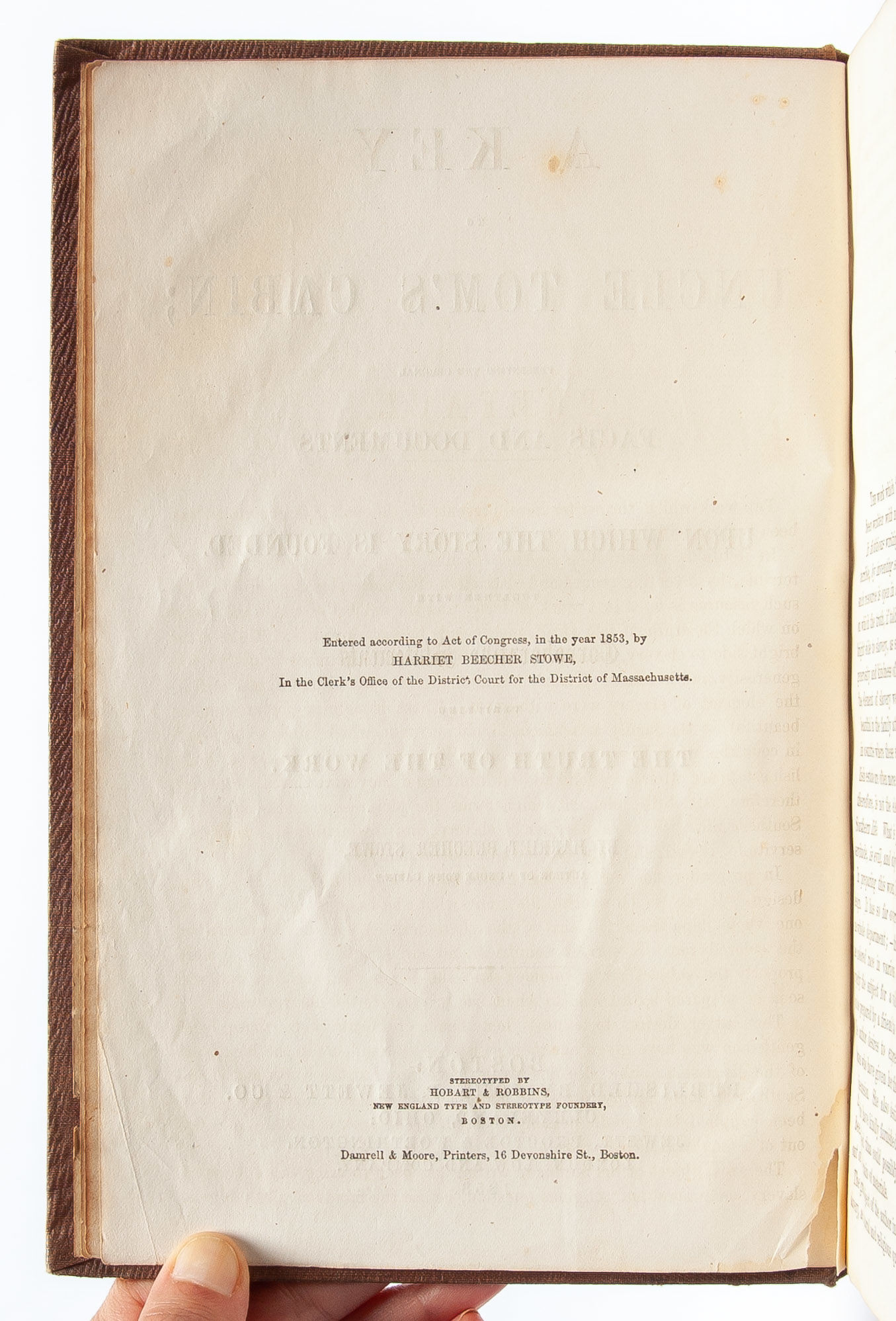
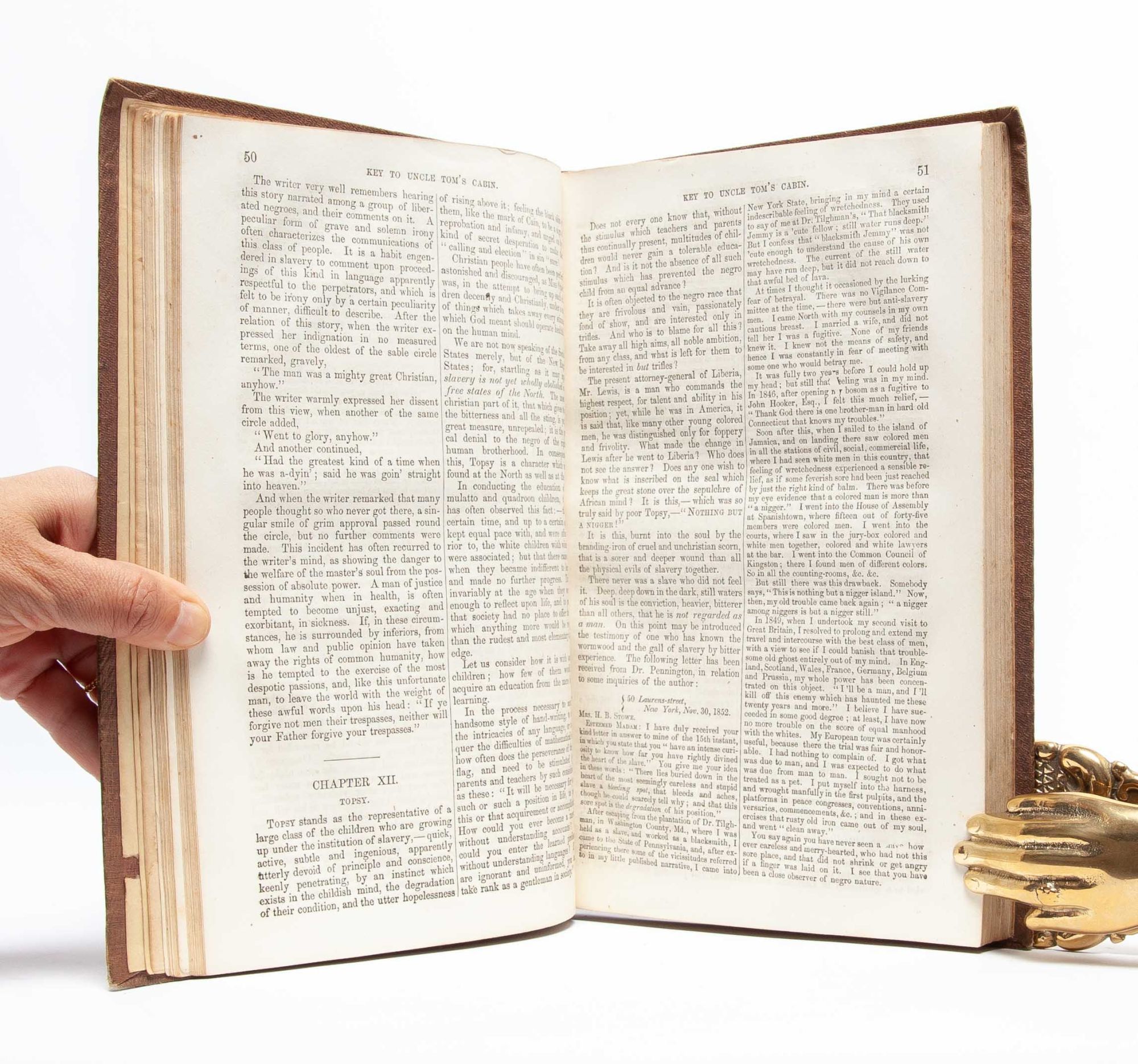
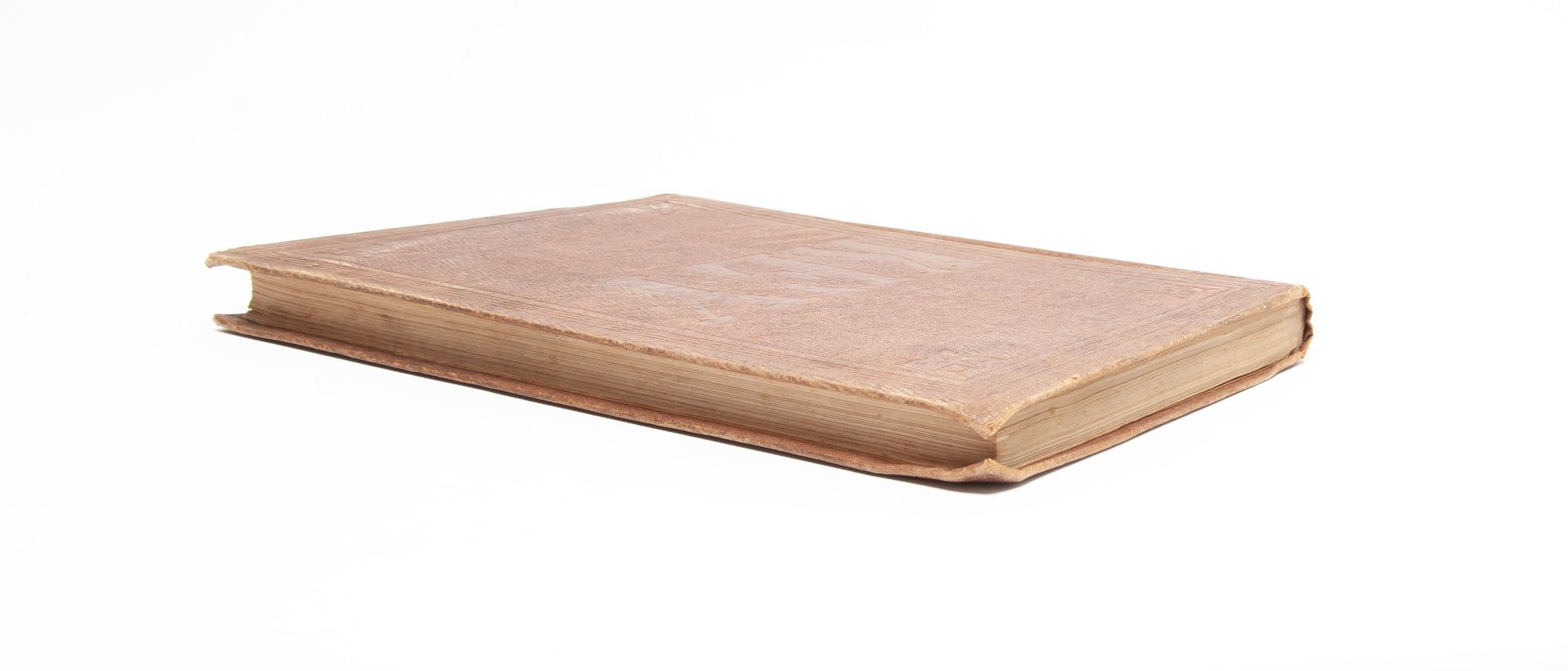
Boston: John P. Jewett & Co, 1853. First edition. First issue. Brown publishers cloth with bright gilt to spine and blind decorations to boards.Yellow endpapers. Near Fine, with some sunning to spine and rubbing to front board and extremities. Minor scuffing to front pastedown and small closed tear to the title along the lower gutter not affecting text; but otherwise contents are bright.
As soon as Stowe published Uncle Tom's Cabin, first in installments in The National Era from 1851-1852, and then in boards in 1852 after its astounding sales, slavery apologists attacked Stowe's portrait of enslavement. These pro-slavery writers and thinkers from all walks of life, trotted out numerous spurious arguments that justified human enslavement by denigrating Blacks, elevating Whites, and downplaying slavery's brutality. Stowe was livid but ready to fight back against these challengers. She notes that A Key to Uncle Tom's Cabin "Has been written with no pleasure, and with much pain."
To mount a rebuttal to these numerous pro-slavery apologists, Stowe assembled a voluminous amount of printed evidence to support the characters and events in her novel. The repetitive details and evidence also explicitly reveal the systemic nature of enslavement's terror, thus directly countering the many "well in my experience" pro-slavery arguments that appeared. A Key to Uncle Tom's Cabin is organized by chapter and character in order to function as a "key" that unlocks the historical foundation of Stowe's fictional work. In addition to supporting the novel's plot and characters against attacks, Stowe also uses A Key to Uncle Tom's Cabin to continue developing her Christian anti-slavery arguments, notably in Part IV. An important work of anti-slavery writing by an important anti-slavery writer.
As soon as Stowe published Uncle Tom's Cabin, first in installments in The National Era from 1851-1852, and then in boards in 1852 after its astounding sales, slavery apologists attacked Stowe's portrait of enslavement. These pro-slavery writers and thinkers from all walks of life, trotted out numerous spurious arguments that justified human enslavement by denigrating Blacks, elevating Whites, and downplaying slavery's brutality. Stowe was livid but ready to fight back against these challengers. She notes that A Key to Uncle Tom's Cabin "Has been written with no pleasure, and with much pain."
To mount a rebuttal to these numerous pro-slavery apologists, Stowe assembled a voluminous amount of printed evidence to support the characters and events in her novel. The repetitive details and evidence also explicitly reveal the systemic nature of enslavement's terror, thus directly countering the many "well in my experience" pro-slavery arguments that appeared. A Key to Uncle Tom's Cabin is organized by chapter and character in order to function as a "key" that unlocks the historical foundation of Stowe's fictional work. In addition to supporting the novel's plot and characters against attacks, Stowe also uses A Key to Uncle Tom's Cabin to continue developing her Christian anti-slavery arguments, notably in Part IV. An important work of anti-slavery writing by an important anti-slavery writer.