

Life of Robert Burns
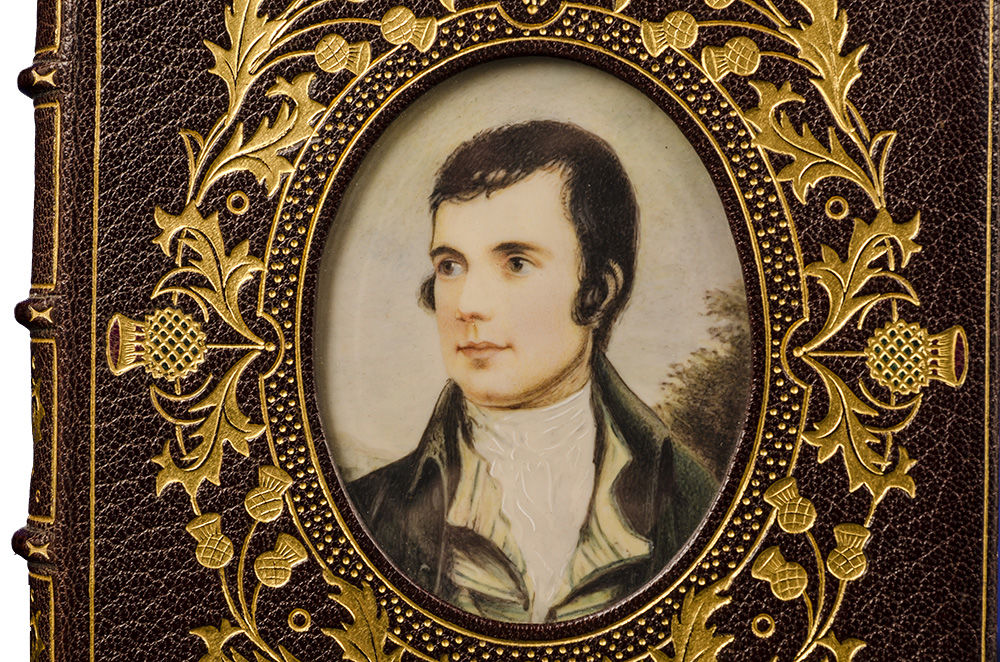
- Edinburgh and London: Constable and Co. and Hurst, Chance, and Co, 1828
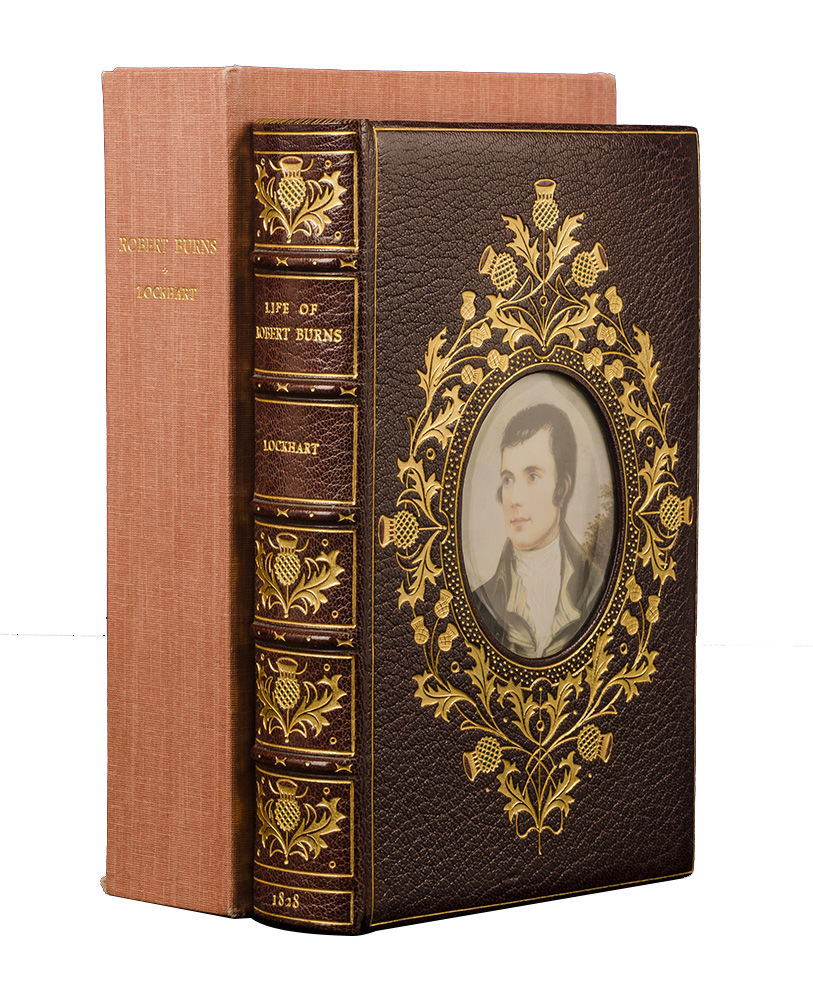
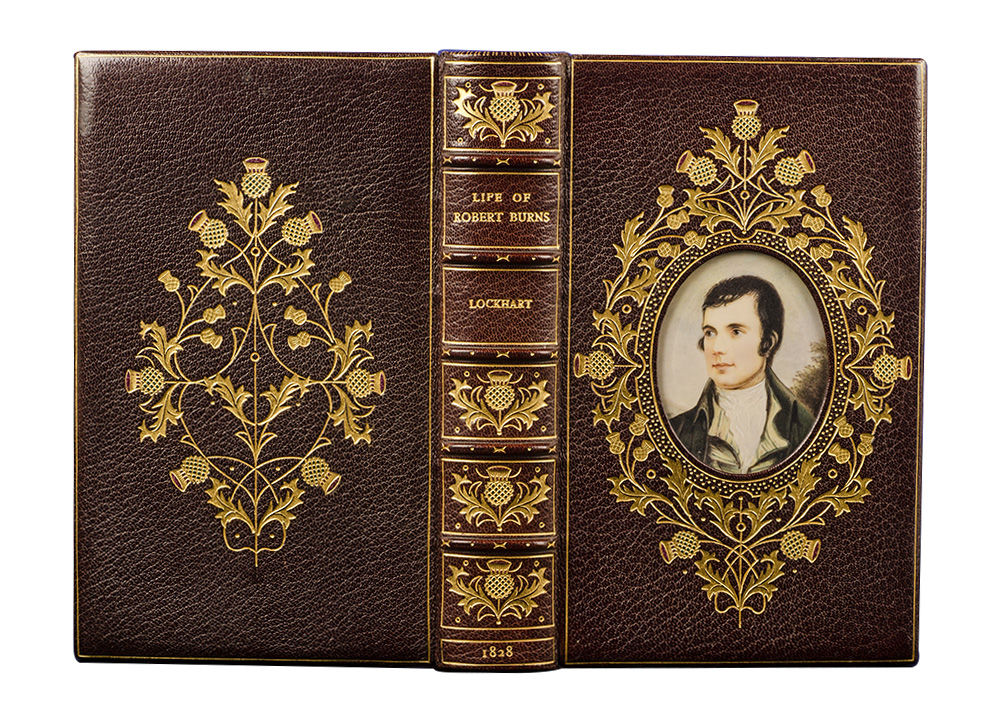
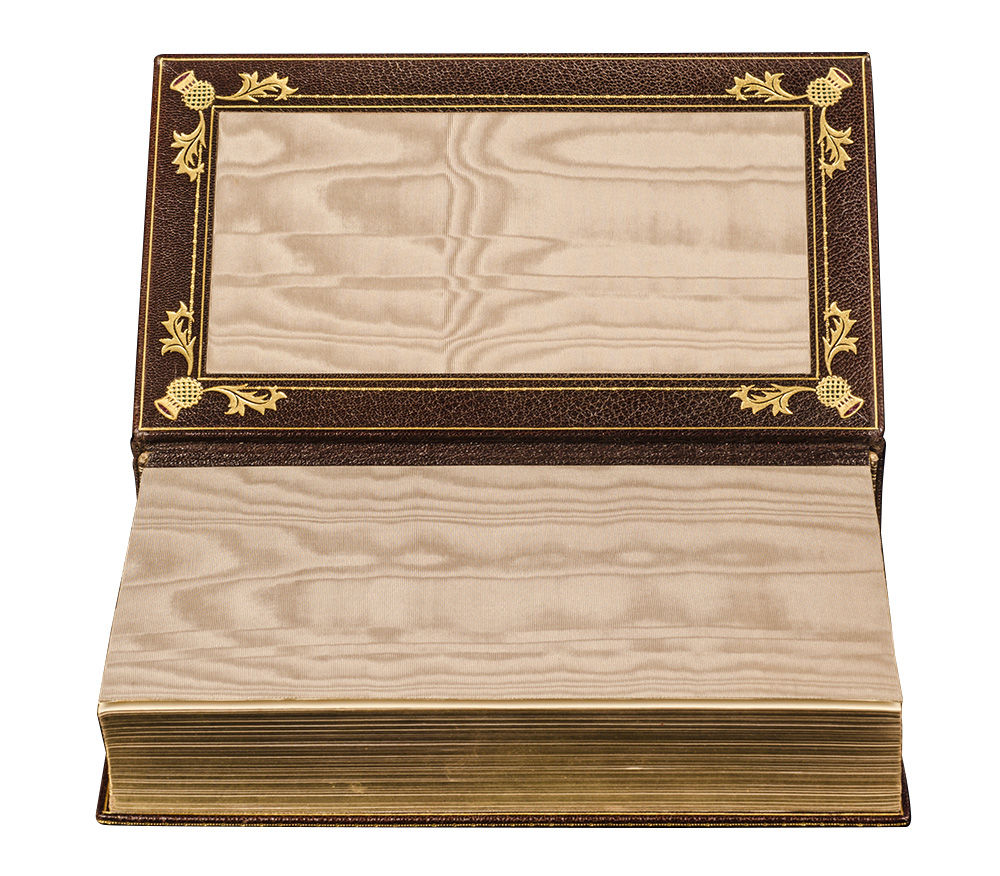
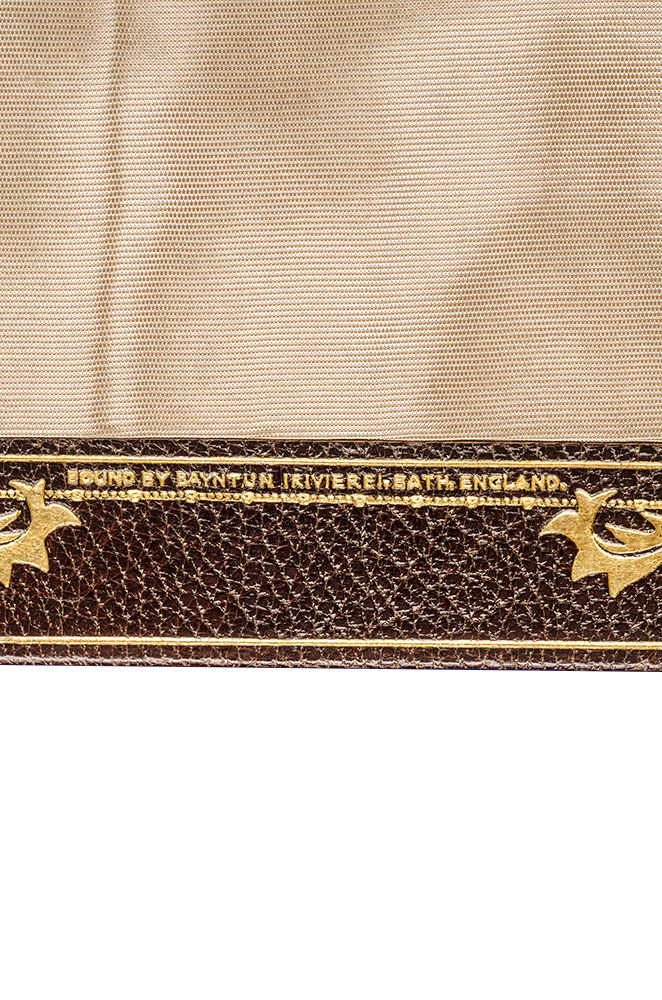
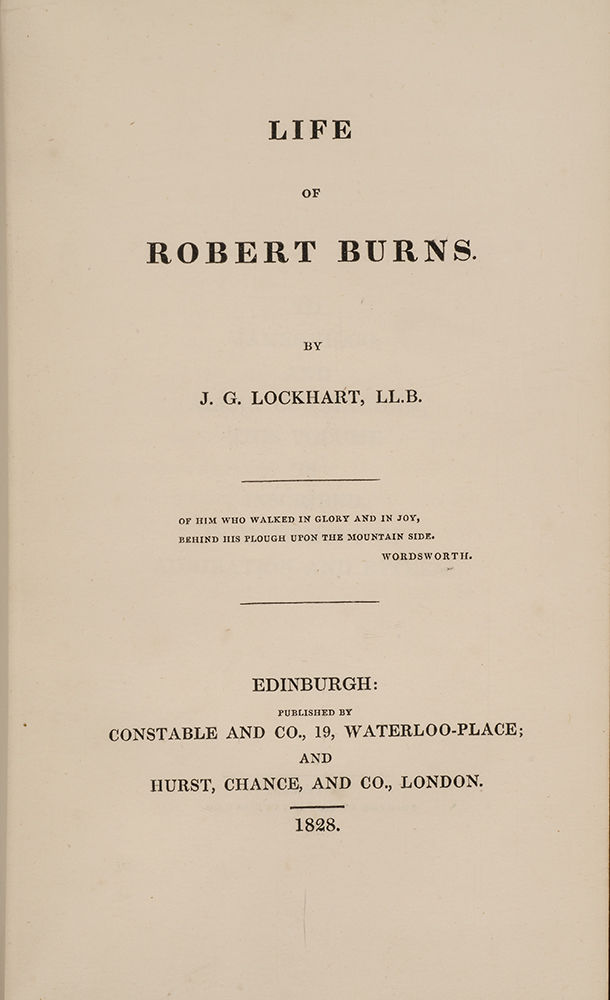
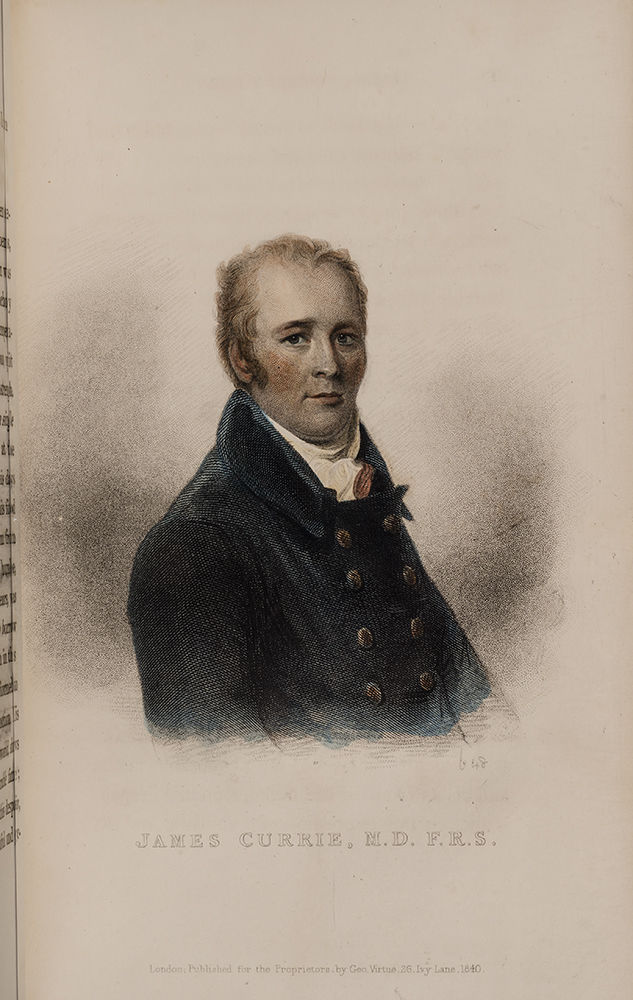
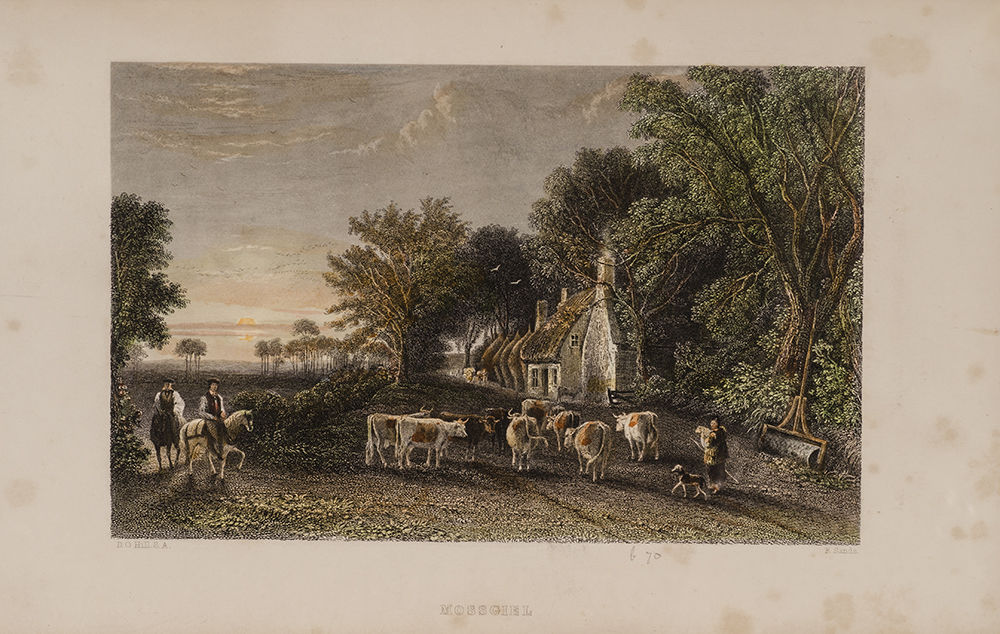
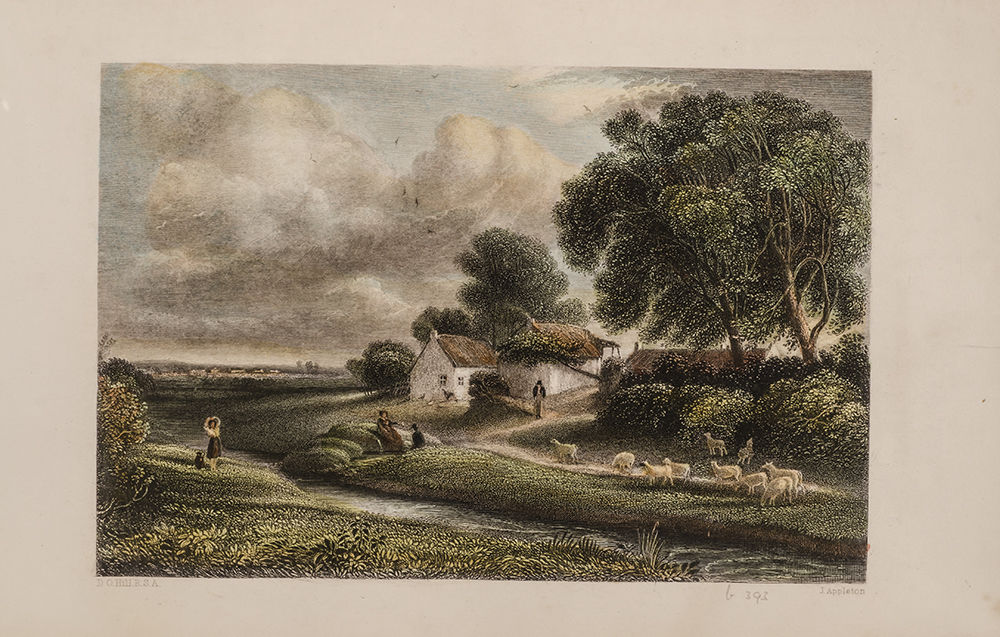
Edinburgh and London: Constable and Co. and Hurst, Chance, and Co, 1828. First edition. Fine. A very fine copy, octavo (8 1/2 x 5 1/4 inches; 215 x 133 mm.), viii, 446p. Illustrated with vignette engraving as head piece on first text page, extra illustrated with twenty-one plates of portraits and views, of which five are hand colored. A fine 'Extra-Illustrated' Cosway-Style binding ca. 1940 by Bayntun Rivière (stamp-signed in gilt on front turn-in). Full brown crushed levant morocco, both covers with an elaborate 'thistle' design in gilt, the upper cover with a fine oval portrait miniature set under glass of a young Robert Burns. Spine with five raised bands decoratively tooled and lettered in gilt and with small green inlays in the thistles. Decorative gilt board-edges and turn-ins, gray watered silk liners and endleaves, all edges gilt. Housed in it's original felt-lined red cloth clamshell case, spine lettered in gilt.
This biography details the life of Scotland’s national bard. Robert Burns (1759–1796) was one of the chief poets of Romanticism – as well as an accomplished lyricist – and though much of his work was heavily influenced by Scottish folk sources, he would achieve worldwide renown. Burns fame as poet happened almost by accident. He had his first collection – Poems, Chiefly in the Scottish dialect – published essentially to finance a move to Jamaica, where he planned to continue working as a farmer. Poems, however, became an immense success and Burns was fortunately able to continue working as a writer for the rest of his life. John Gibson Lockhart (1794-1854) was a Scottish writer and editor. He is best known as the author of a biography of his father-in-law Sir Walter Scott, which has been called the second most admirable in the English language, after Boswell's Life of Johnson. In 1828 he published his somewhat controversial Life of Robert Burns.
George Bayntun (1873-1940) was the founder of Bayntun Bindery (1894) dedicated to using traditional hand-crafted techniques and high-quality materials. “The Riviere Bindery was one of the most notable and prolific shops in London's West End from about 1840 through 1939” (Princeton). Bath-based Bayntun Bindery acquired the firm in 1939, transforming into the “Bayntun-Riviere bindery,” which is still in existence and family owned. Although named after the English miniaturist Richard Cosway (1742-1821), the desirable “Cosway Binding” with its jewel-like portrait miniature set into a fine binding was first developed at the turn of the century by J.H. Stonehouse, director of London’s Henry Sotheran Booksellers. Their miniatures were painstakingly crafted by the talented painter Miss C. B. Currie (1849-1940). As the style grew in popularity, other publishing houses quickly began to reproduce this technique—each developing their own desirable take on the aesthetic—referred to as “Cosway style.”. Fine.
This biography details the life of Scotland’s national bard. Robert Burns (1759–1796) was one of the chief poets of Romanticism – as well as an accomplished lyricist – and though much of his work was heavily influenced by Scottish folk sources, he would achieve worldwide renown. Burns fame as poet happened almost by accident. He had his first collection – Poems, Chiefly in the Scottish dialect – published essentially to finance a move to Jamaica, where he planned to continue working as a farmer. Poems, however, became an immense success and Burns was fortunately able to continue working as a writer for the rest of his life. John Gibson Lockhart (1794-1854) was a Scottish writer and editor. He is best known as the author of a biography of his father-in-law Sir Walter Scott, which has been called the second most admirable in the English language, after Boswell's Life of Johnson. In 1828 he published his somewhat controversial Life of Robert Burns.
George Bayntun (1873-1940) was the founder of Bayntun Bindery (1894) dedicated to using traditional hand-crafted techniques and high-quality materials. “The Riviere Bindery was one of the most notable and prolific shops in London's West End from about 1840 through 1939” (Princeton). Bath-based Bayntun Bindery acquired the firm in 1939, transforming into the “Bayntun-Riviere bindery,” which is still in existence and family owned. Although named after the English miniaturist Richard Cosway (1742-1821), the desirable “Cosway Binding” with its jewel-like portrait miniature set into a fine binding was first developed at the turn of the century by J.H. Stonehouse, director of London’s Henry Sotheran Booksellers. Their miniatures were painstakingly crafted by the talented painter Miss C. B. Currie (1849-1940). As the style grew in popularity, other publishing houses quickly began to reproduce this technique—each developing their own desirable take on the aesthetic—referred to as “Cosway style.”. Fine.