

The Wits and Beaux of Society (Extra-illustrated in 2 vols.)

- London: J.W. Jarvis & Son, 1890
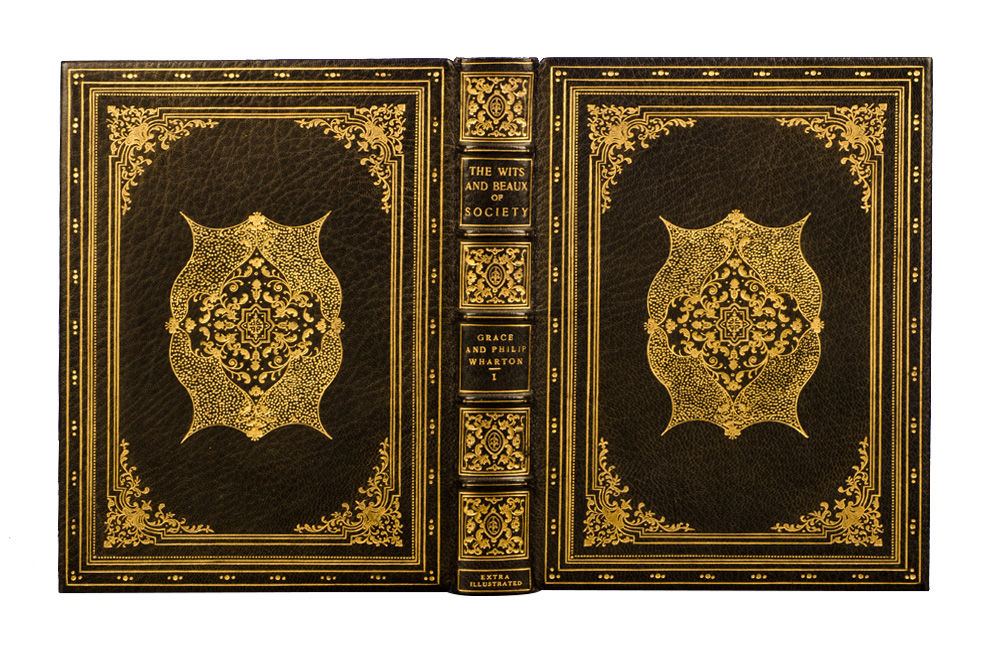
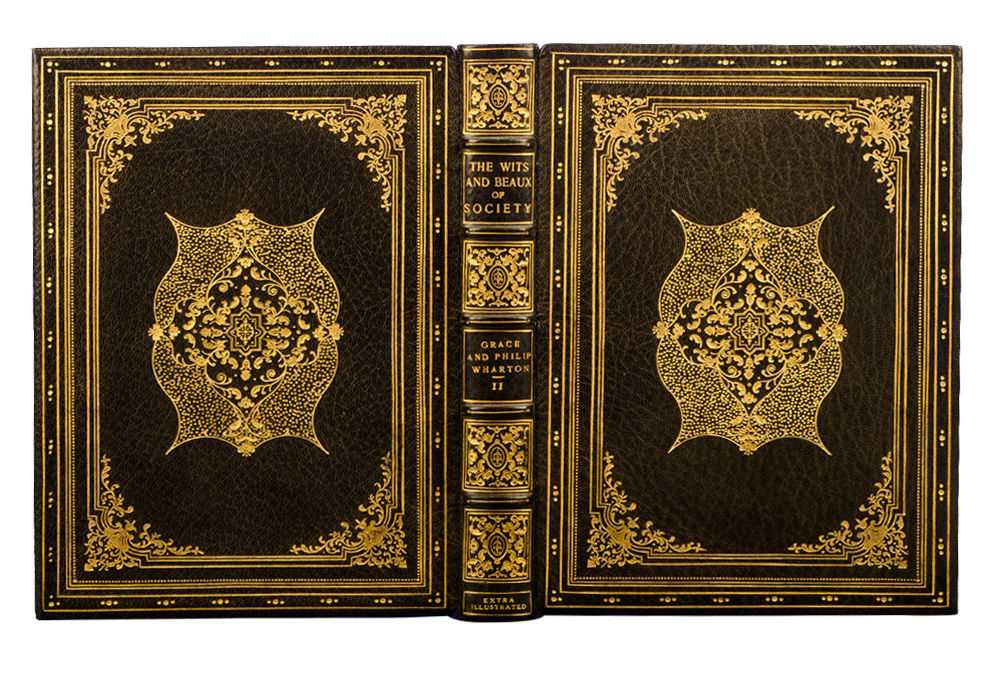
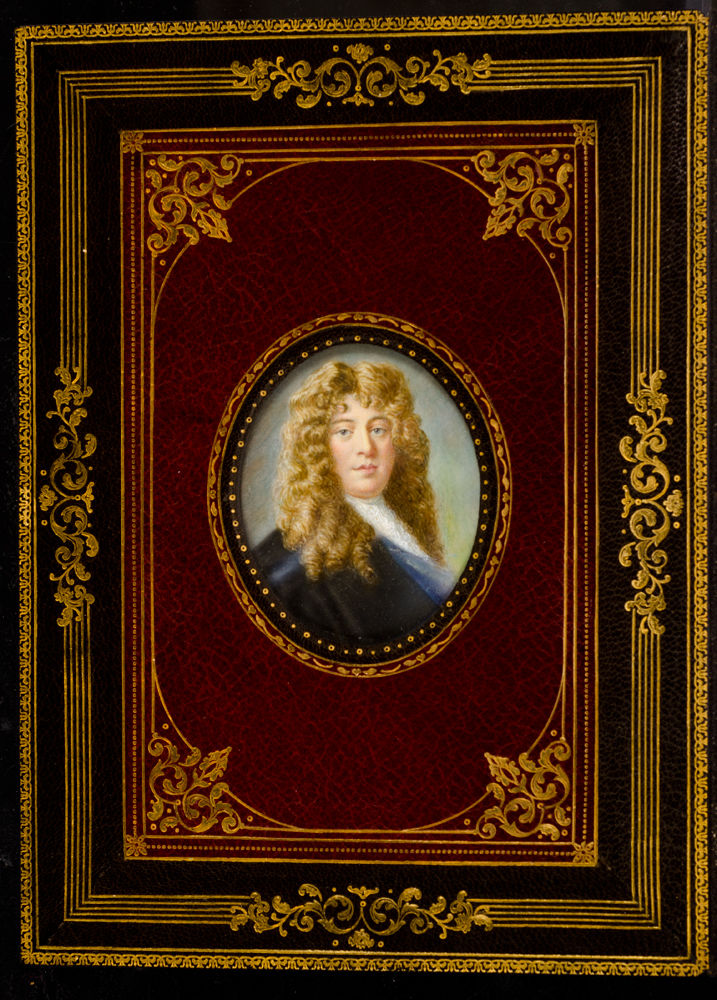
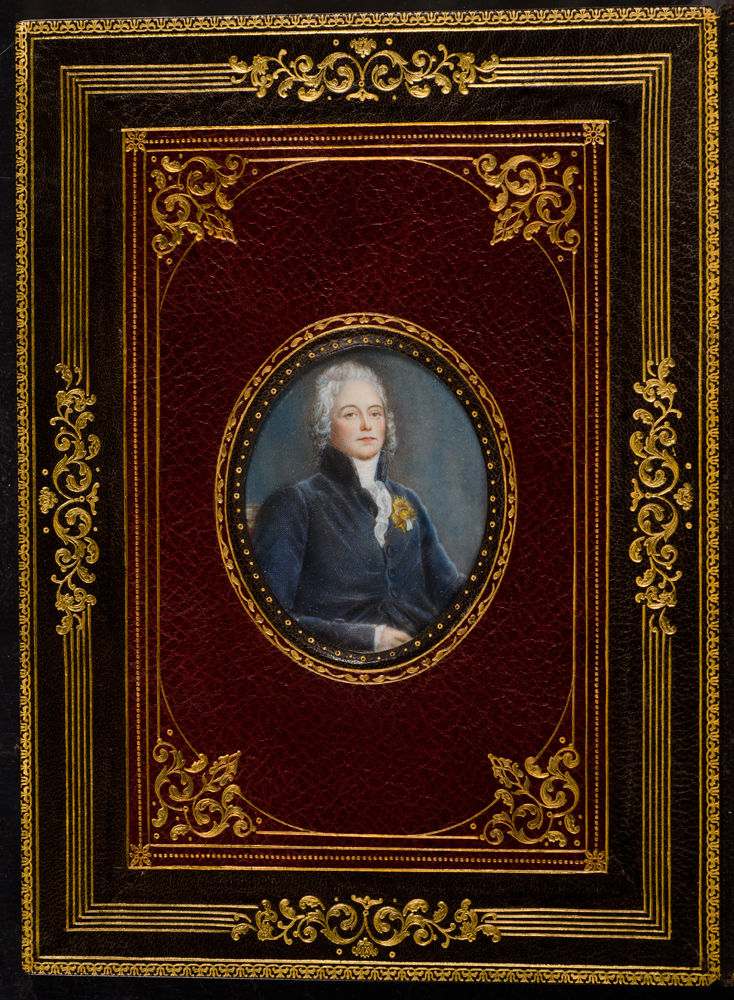
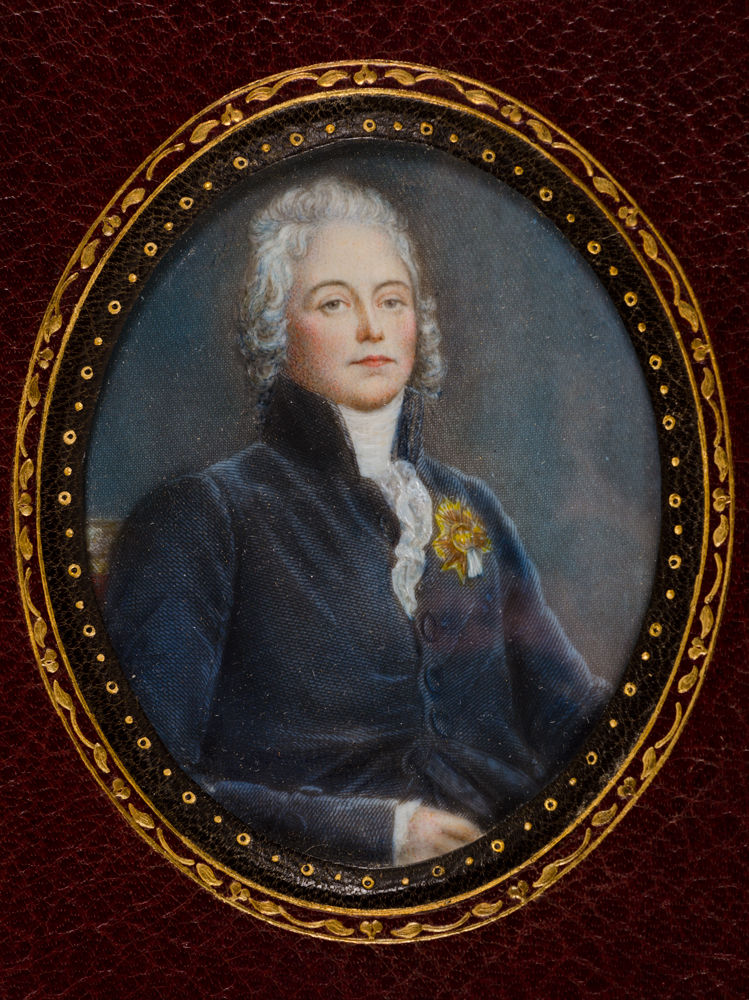
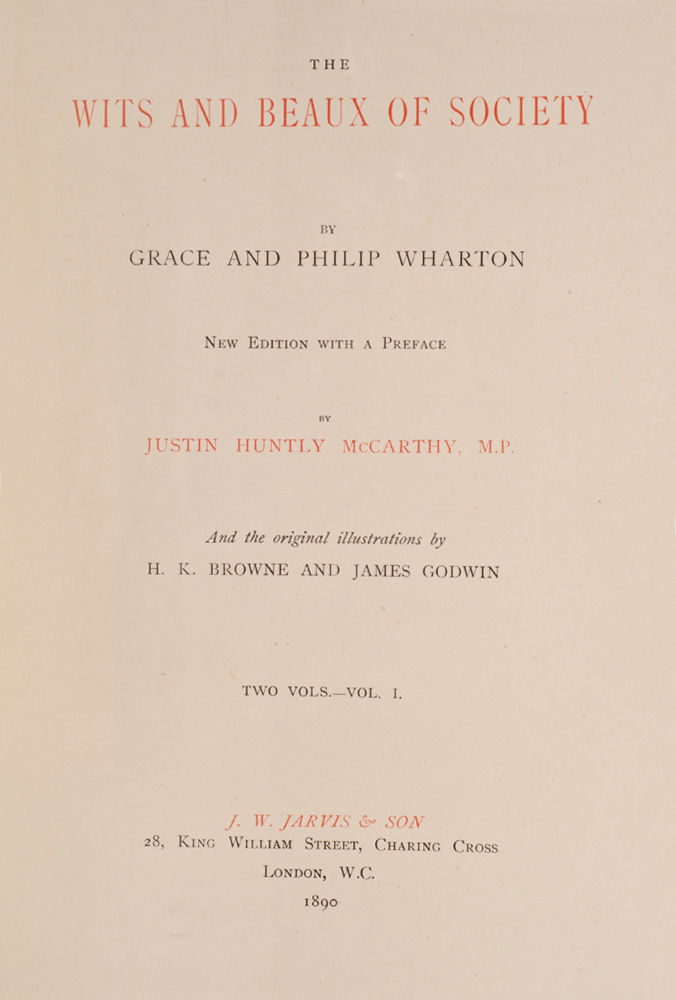
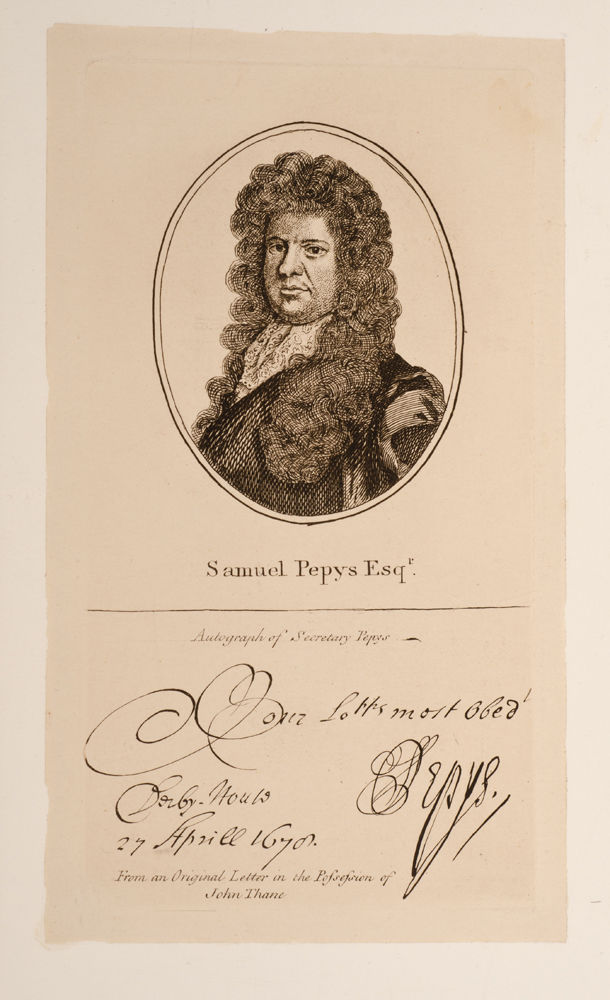
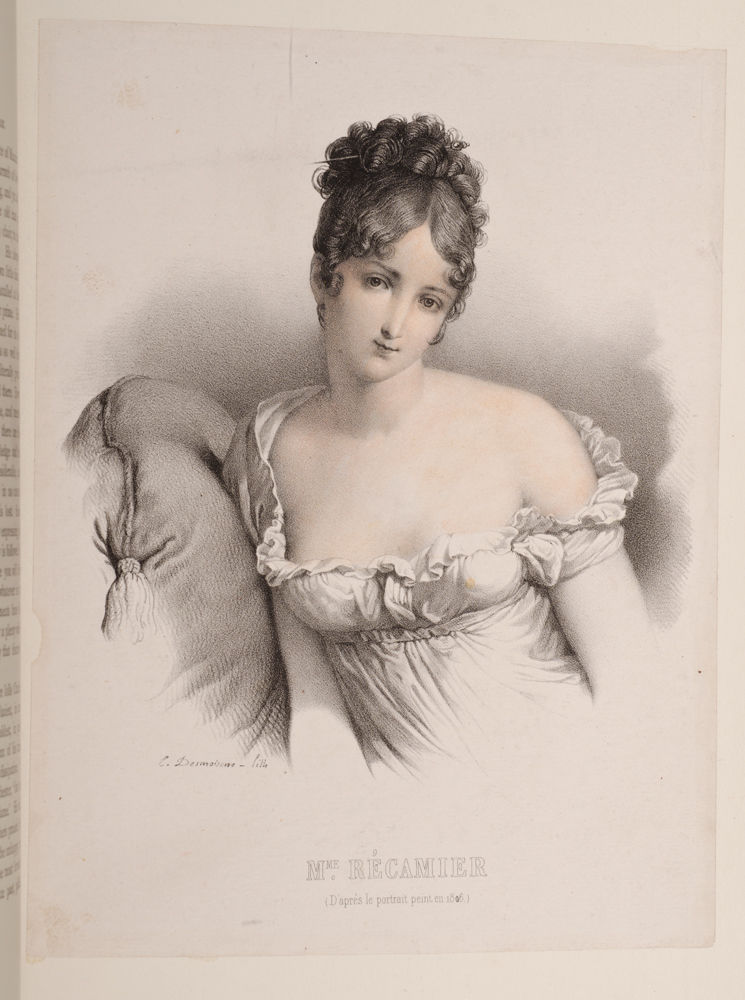
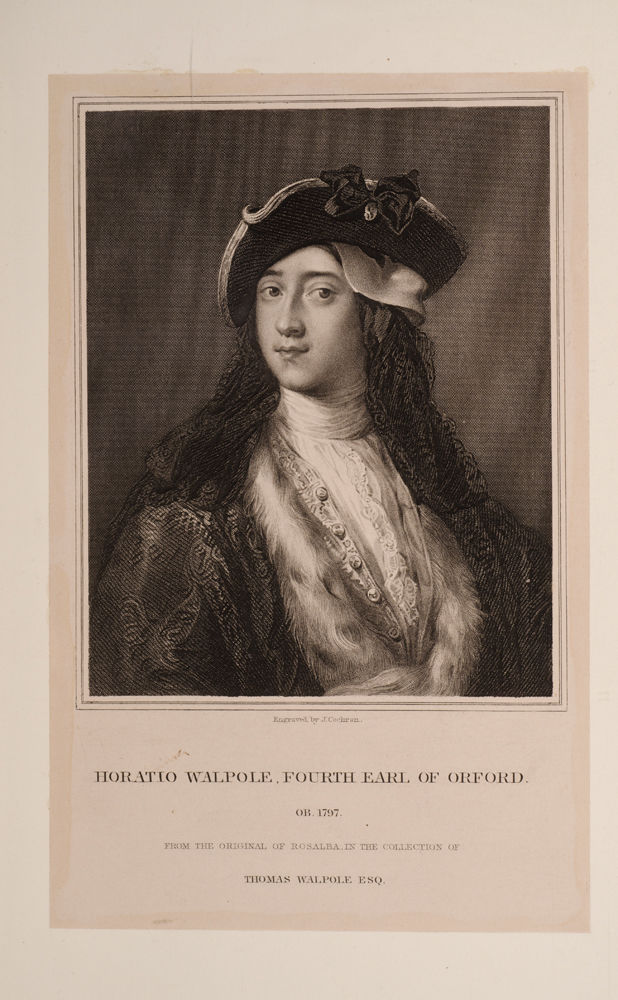
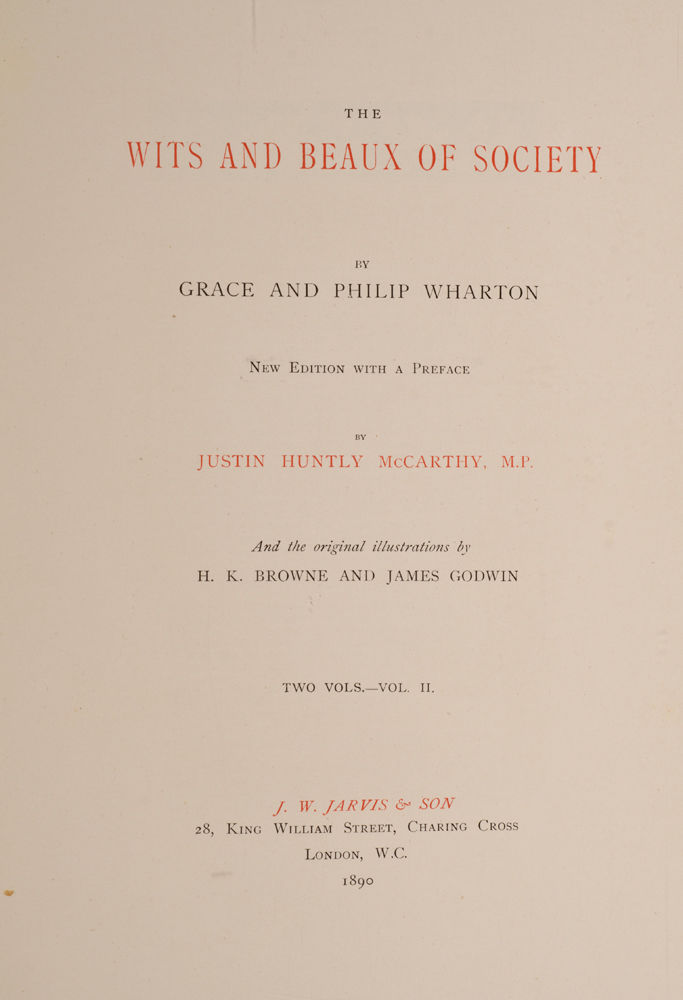
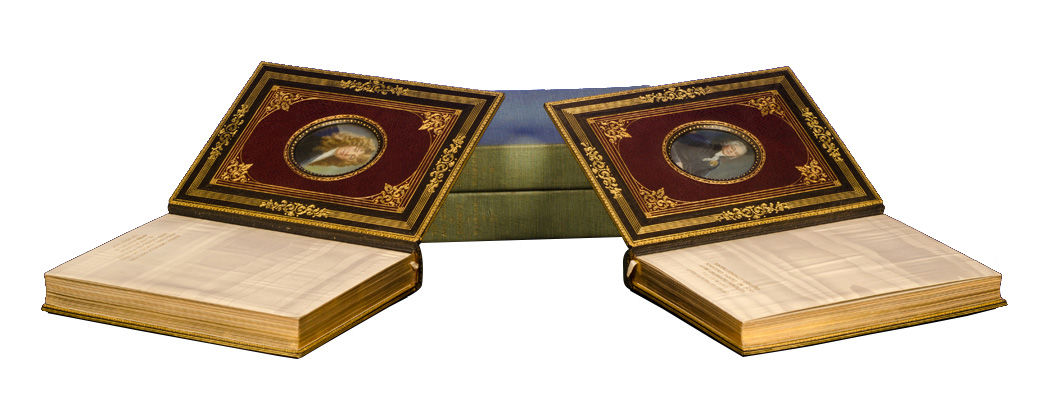
London: J.W. Jarvis & Son, 1890. New Edition. Fine. A very fine pair of Cosway-Style bindings, two large octavo volumes (9 9/16 x 7 3/16 inches; 243 x 182 mm.). xxxii, 262, (2, blank); vi, 246 pp, with two frontispieces and 14 plates by H.K. Browne and James Godwin. Extra-illustrated by the insertion of sixty-eight fine engraved portraits including one hand-colored. Bound ca. 1920 in full black crushed levant morocco, richly gilt, spines with five raised bands, decoratively tooled and lettered in gilt in compartments, gilt board edges, wide decoratively gilt tooled-turn-ins, gilt decorated maroon morocco doublures, all edges gilt, watered silk end-leaves. The first volume with an oval portrait miniature (3 1/8 x 2 1/2 inches) under glass, of William Wycherley after a painting by Sir Peter Lely. The second volume with an oval portrait miniature (3 1/8 x 2 1/2 inches) under glass, of Talleyrand after a painting by Gerard. Each volume chemised in a light green cloth slipcase, lettered in gilt on spine.
Katherine Thomson (1797–1862) was an English novelist and historian. After her marriage to physician Anthony Todd Thomson, the two established a literary and artistic circle. She partnered with her son John Cockburn Thomson (1834–1860) to co-author a few nonfiction texts under the pseudonym Philip and Grace Wharton (Database of Victorian Fiction). After their success publishing “Queens of Society,” a compilation of amusing biographic profiles on historic society ladies, the mother & son writing team turned their pens to famed gentlemen. Entertaining prose composed in a “gossiping style” (Preface) offers readers a humorous early pop history. The Wits and Beaux include: George Villiers (1592-1628), Count Grammont (1621-1707), Lord Rochester (1647-1680), Beau Fielding (1650-1712), William Congreve (1670-1729), Beau Nash (1674-1761), Philip - Duke of Wharton (1698-1731), Lord Hervey (1696-1743), Philip Dormer Stanhope (1694-1773), The Abbe Scarron (1610-1660), Francois Duc de la Rochefoucault (1613-1680), The Duc de Saint-Simon (1675-1755), Horace Walpole (1717-1797), George Selwyn (1719-1791), Richard Brinsley Sheridan (1751-1816), Beau Brummell (1778-1840), Theodore Edward Hook (1788-1841), Sydney Smith (1771-1845) & George Bubb Dodington - Lord Melborne (1691-1762).
Although named after the English miniaturist Richard Cosway (1742-1821), the desirable “Cosway Binding” with its jewel-like portrait miniature set into a fine binding was first developed at the turn of the century by J.H. Stonehouse, director of London’s Henry Sotheran Booksellers. Their miniatures were painstakingly crafted by the talented painter Miss C. B. Currie (1849-1940). As the style grew in popularity, other publishing houses quickly began to reproduce this technique—each developing their own desirable take on the aesthetic—referred to as “Cosway style.”. Fine.
Katherine Thomson (1797–1862) was an English novelist and historian. After her marriage to physician Anthony Todd Thomson, the two established a literary and artistic circle. She partnered with her son John Cockburn Thomson (1834–1860) to co-author a few nonfiction texts under the pseudonym Philip and Grace Wharton (Database of Victorian Fiction). After their success publishing “Queens of Society,” a compilation of amusing biographic profiles on historic society ladies, the mother & son writing team turned their pens to famed gentlemen. Entertaining prose composed in a “gossiping style” (Preface) offers readers a humorous early pop history. The Wits and Beaux include: George Villiers (1592-1628), Count Grammont (1621-1707), Lord Rochester (1647-1680), Beau Fielding (1650-1712), William Congreve (1670-1729), Beau Nash (1674-1761), Philip - Duke of Wharton (1698-1731), Lord Hervey (1696-1743), Philip Dormer Stanhope (1694-1773), The Abbe Scarron (1610-1660), Francois Duc de la Rochefoucault (1613-1680), The Duc de Saint-Simon (1675-1755), Horace Walpole (1717-1797), George Selwyn (1719-1791), Richard Brinsley Sheridan (1751-1816), Beau Brummell (1778-1840), Theodore Edward Hook (1788-1841), Sydney Smith (1771-1845) & George Bubb Dodington - Lord Melborne (1691-1762).
Although named after the English miniaturist Richard Cosway (1742-1821), the desirable “Cosway Binding” with its jewel-like portrait miniature set into a fine binding was first developed at the turn of the century by J.H. Stonehouse, director of London’s Henry Sotheran Booksellers. Their miniatures were painstakingly crafted by the talented painter Miss C. B. Currie (1849-1940). As the style grew in popularity, other publishing houses quickly began to reproduce this technique—each developing their own desirable take on the aesthetic—referred to as “Cosway style.”. Fine.