

The Life and Adventures of Oliver Goldsmith (Extra-illustrated in 3 vols.)
- London: Bradbury and Evans/Chapman & Hall, 1848
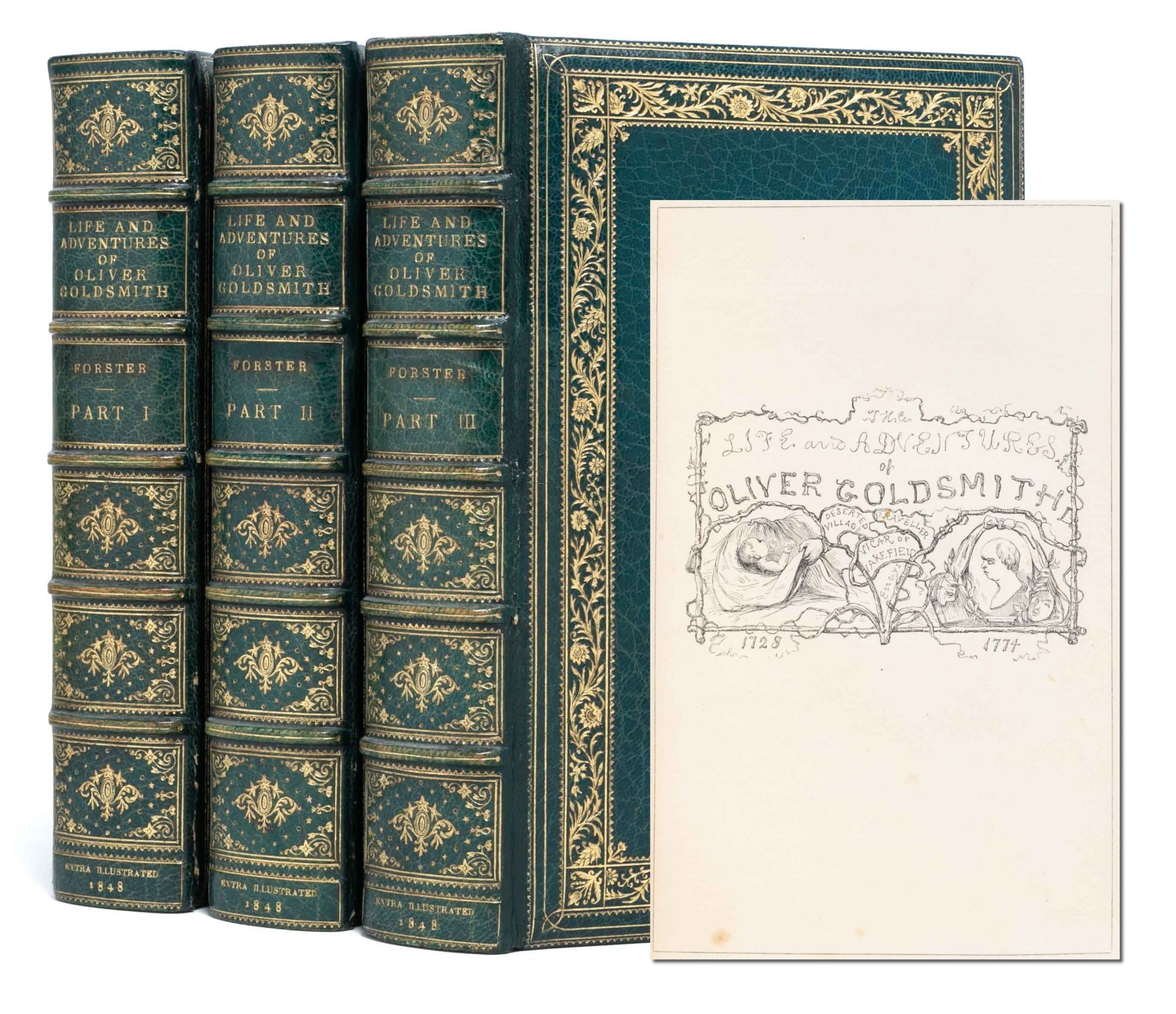
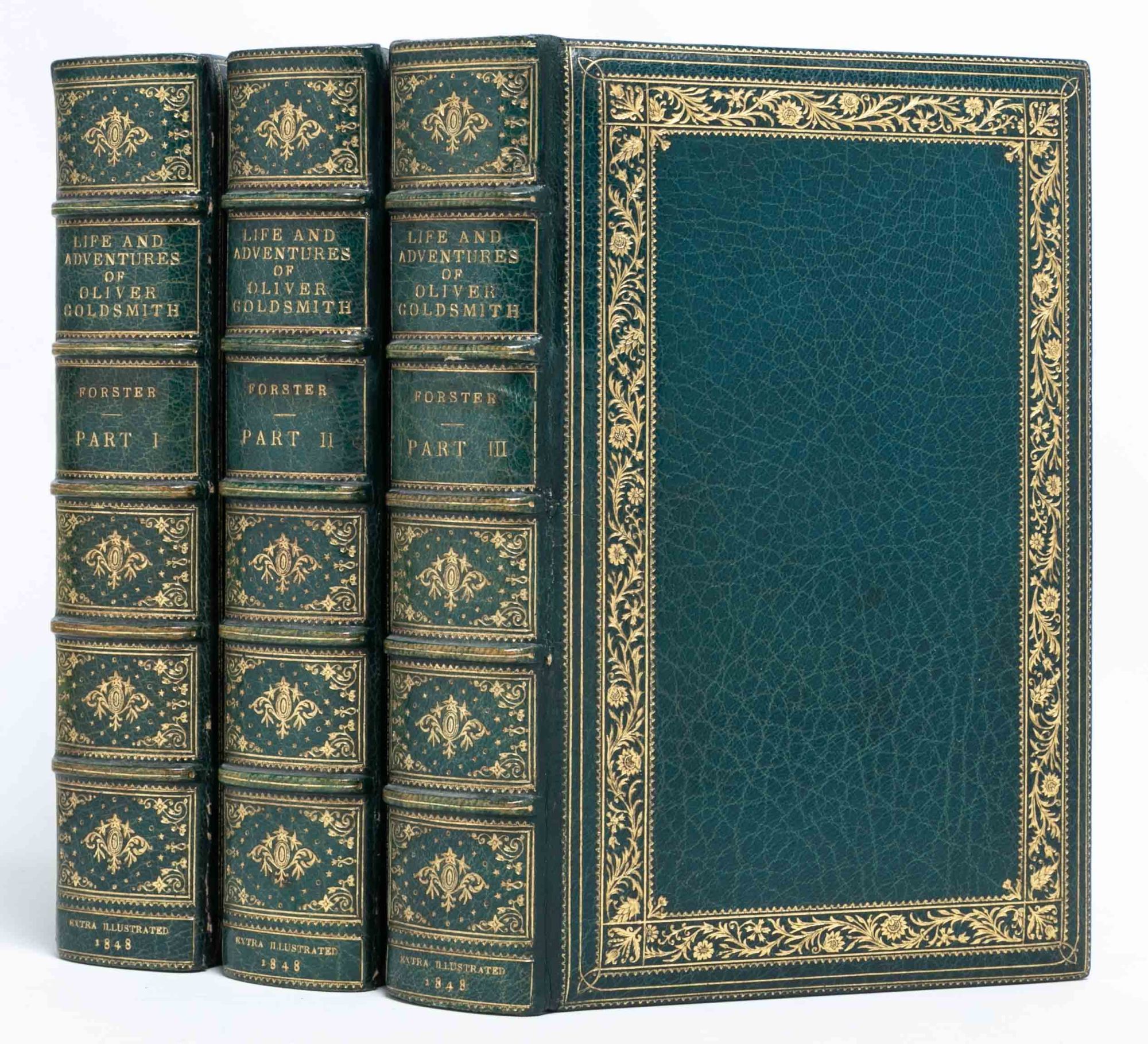
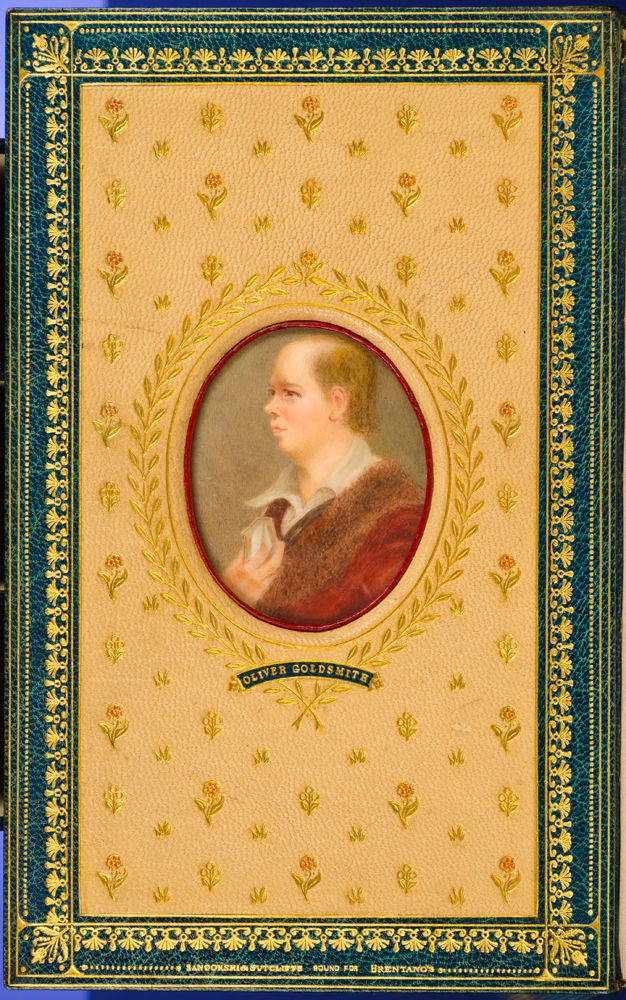
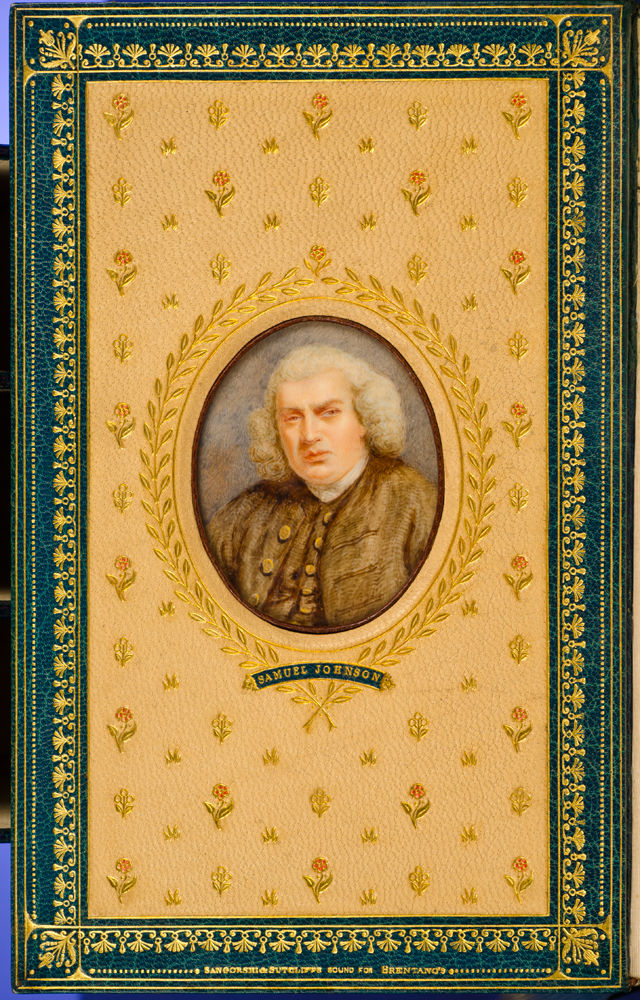
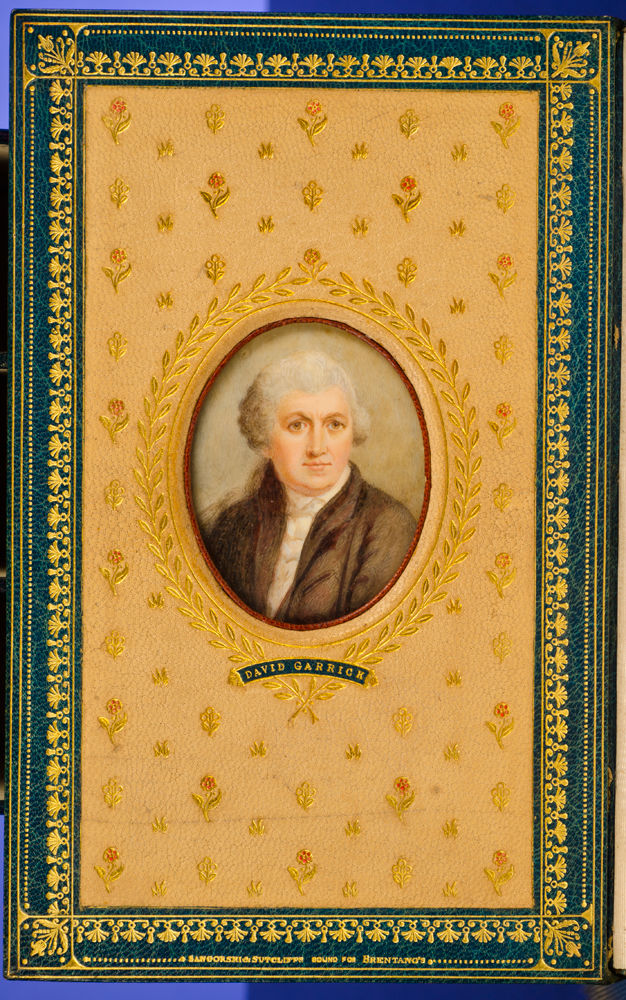
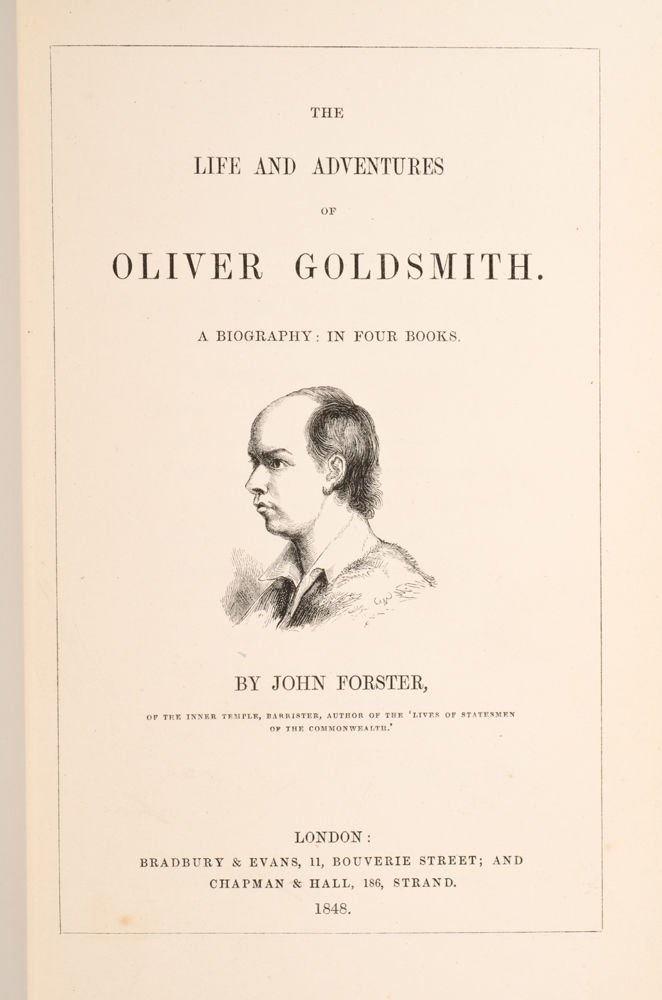
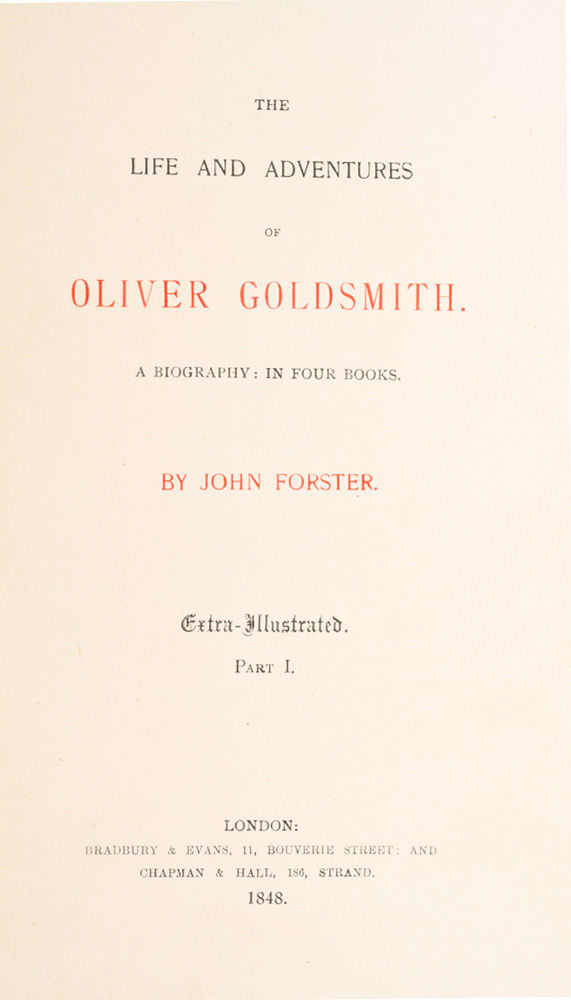
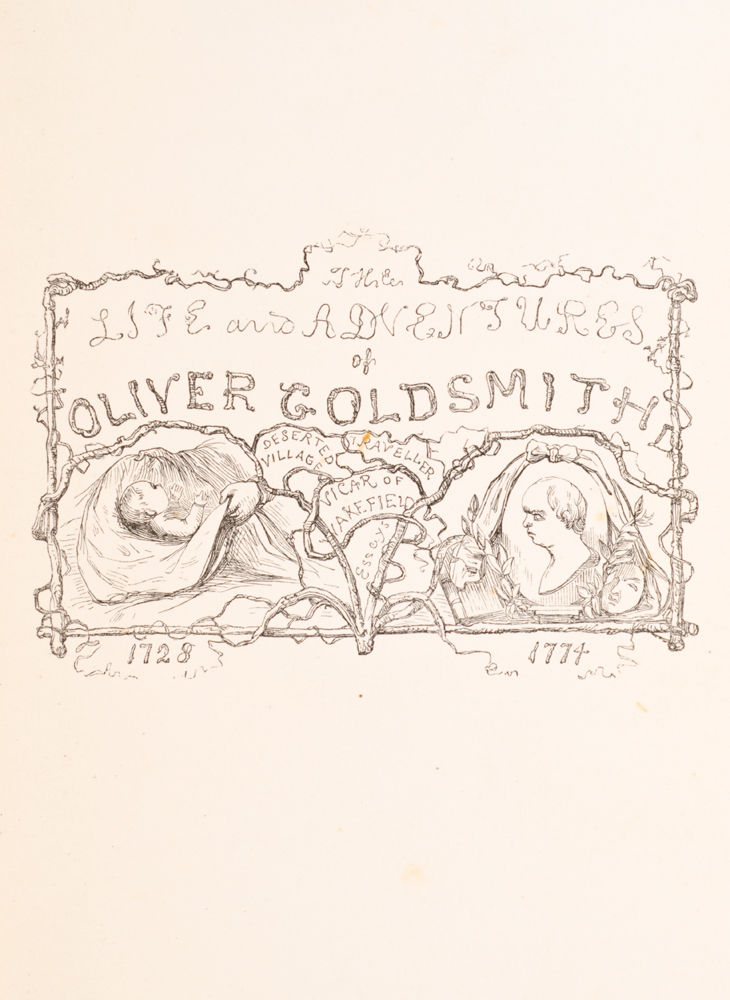
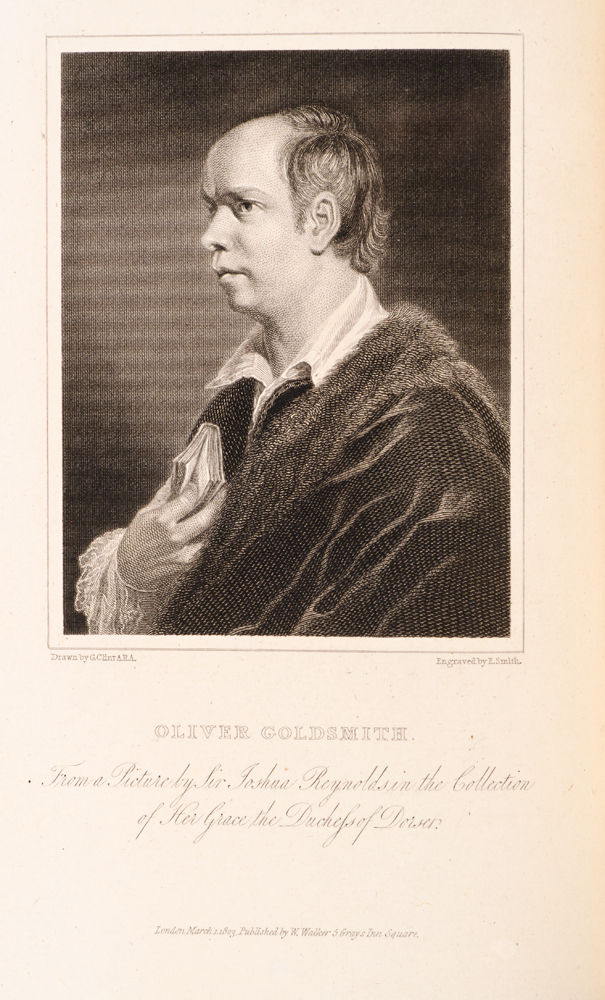
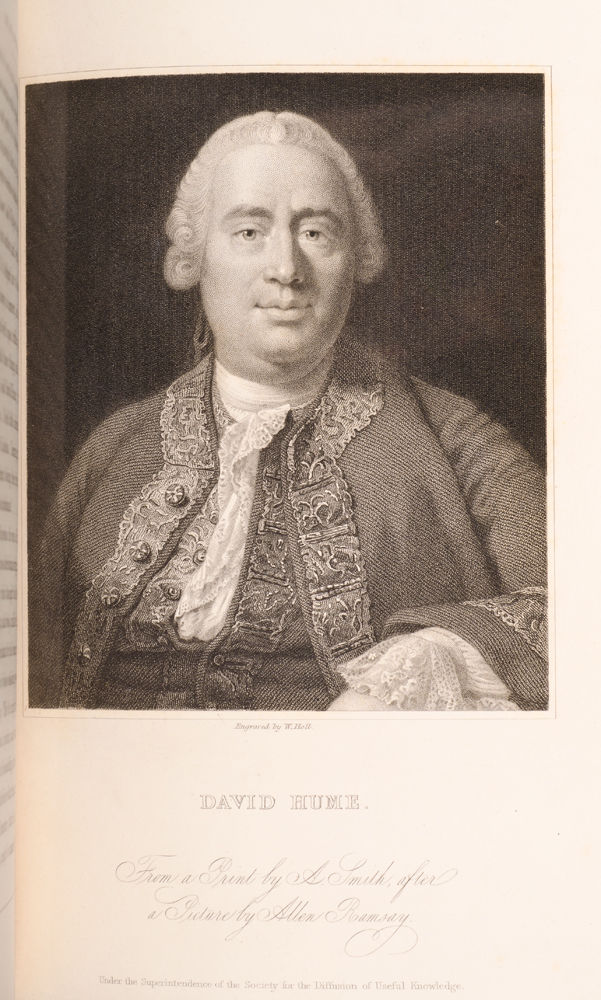
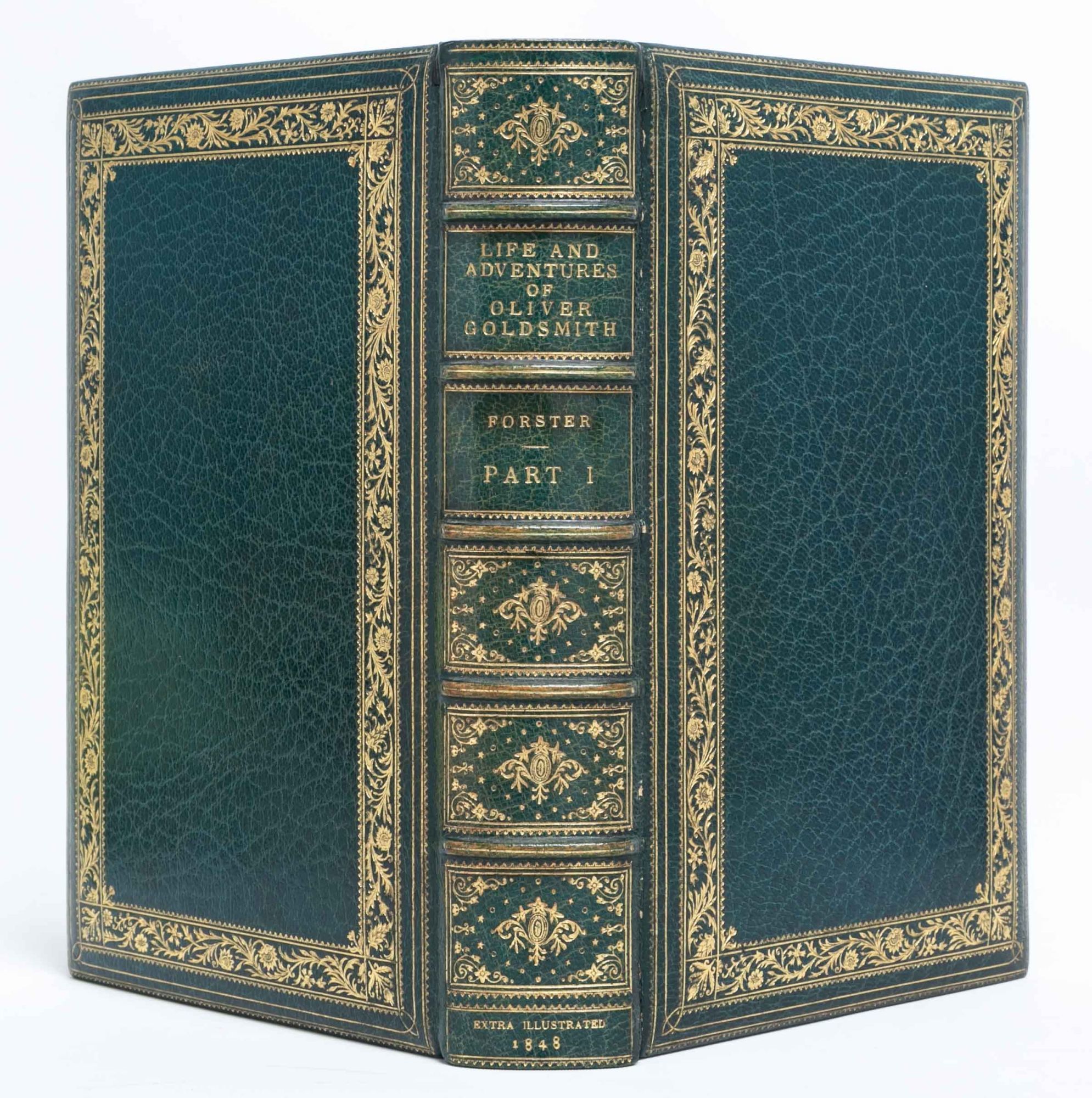
London: Bradbury and Evans/Chapman & Hall, 1848. First edition. Near Fine. Three octavo volumes (8 x 4 7/8 in; 204 x 123 mm.) collating: xvii, [4], 232; 233-448; [2], 451-704 pp. A fine set with etched half-title, three additional title-pages printed in red and black, and fifty black and white text illustrations as issued, with over seventy-five extra engraved portraits and views. Bound c. 1930 by Sangorski and Sutcliffe for Brentano's (stamp-signed) in full crushed teal blue morocco over beveled boards with elaborate gilt-rolled borders and gilt-tooled frame. Spines with five raised bands elaborately decorated and lettered in gilt in compartments. Gilt-ruled board edges, broad, gilt-rolled dentelles. Gilt-tooled beige morocco doublures featuring three watercolor portraits in sunken panels bordered with red morocco under glass of Oliver Goldsmith, Samuel Johnson, and David Garrick respectively, with gilt laurels. White moiré silk flyleaves. Beveled edges. All edges gilt. Some expert repairs to the outer joints of each volume. With the bookplate of Samuel Wieder. Housed in the original felt-lined, marbled paper-covered slipcase with blue morocco edges.
This biography details the life of Anglo-Irish author Oliver Goldsmith (1730-1774), probably best known for his novel Vicar of Wakefield (1766), the most popular book of the 18th century. Here however readers encounter a different side to his craft. Part of The Aldine Poet Series—a twenty-year long and fifty-three volume project of new editions of classic British poets from Chaucer through to the nineteenth century—this book highlights Goldsmith’s poetry. Apart from poetry and novels, Goldsmith wrote plays and legend has it, the children's story The History of Little Goody Two-Shoes. Goldsmith was a noted Irish wit and a member of Samuel Johnson’s famed literary club, who Johnson praised in a memorial epitaph as: “In genius, vivid, versatile, sublime. In style, clear, elevated, elegant." Contemporaries celebrated Goldsmith’s ability to craft deceptively complex characters, most notably in the case of Charles Primrose, the vicar from The Vicar of Wakefield.
The story of the Sangorski & Sutcliffe Bindery reads like something out of a novel—when two of Douglas Cockrell’s talented apprentices, Frances Sangorski and George Sutcliffe, were laid off during an economic downturn they began working out of an attic. Eventually their bindery would be famous for its intricate multicolored leather inlays and elaborate gold and jeweled bindings. Although named after the English miniaturist Richard Cosway (1742-1821), the desirable “Cosway Binding” with its jewel-like portrait miniature set into a fine binding was first developed at the turn of the century by J.H. Stonehouse, director of London’s Henry Sotheran Booksellers. Their miniatures were painstakingly crafted by the talented painter Miss C. B. Currie (1849-1940). As the style grew in popularity, other publishing houses quickly began to reproduce this technique—each developing their own desirable take on the aesthetic—referred to as “Cosway style.”. Near Fine.
This biography details the life of Anglo-Irish author Oliver Goldsmith (1730-1774), probably best known for his novel Vicar of Wakefield (1766), the most popular book of the 18th century. Here however readers encounter a different side to his craft. Part of The Aldine Poet Series—a twenty-year long and fifty-three volume project of new editions of classic British poets from Chaucer through to the nineteenth century—this book highlights Goldsmith’s poetry. Apart from poetry and novels, Goldsmith wrote plays and legend has it, the children's story The History of Little Goody Two-Shoes. Goldsmith was a noted Irish wit and a member of Samuel Johnson’s famed literary club, who Johnson praised in a memorial epitaph as: “In genius, vivid, versatile, sublime. In style, clear, elevated, elegant." Contemporaries celebrated Goldsmith’s ability to craft deceptively complex characters, most notably in the case of Charles Primrose, the vicar from The Vicar of Wakefield.
The story of the Sangorski & Sutcliffe Bindery reads like something out of a novel—when two of Douglas Cockrell’s talented apprentices, Frances Sangorski and George Sutcliffe, were laid off during an economic downturn they began working out of an attic. Eventually their bindery would be famous for its intricate multicolored leather inlays and elaborate gold and jeweled bindings. Although named after the English miniaturist Richard Cosway (1742-1821), the desirable “Cosway Binding” with its jewel-like portrait miniature set into a fine binding was first developed at the turn of the century by J.H. Stonehouse, director of London’s Henry Sotheran Booksellers. Their miniatures were painstakingly crafted by the talented painter Miss C. B. Currie (1849-1940). As the style grew in popularity, other publishing houses quickly began to reproduce this technique—each developing their own desirable take on the aesthetic—referred to as “Cosway style.”. Near Fine.