

Yorick's Sentimental Journey though France and Italy
- London , 1791
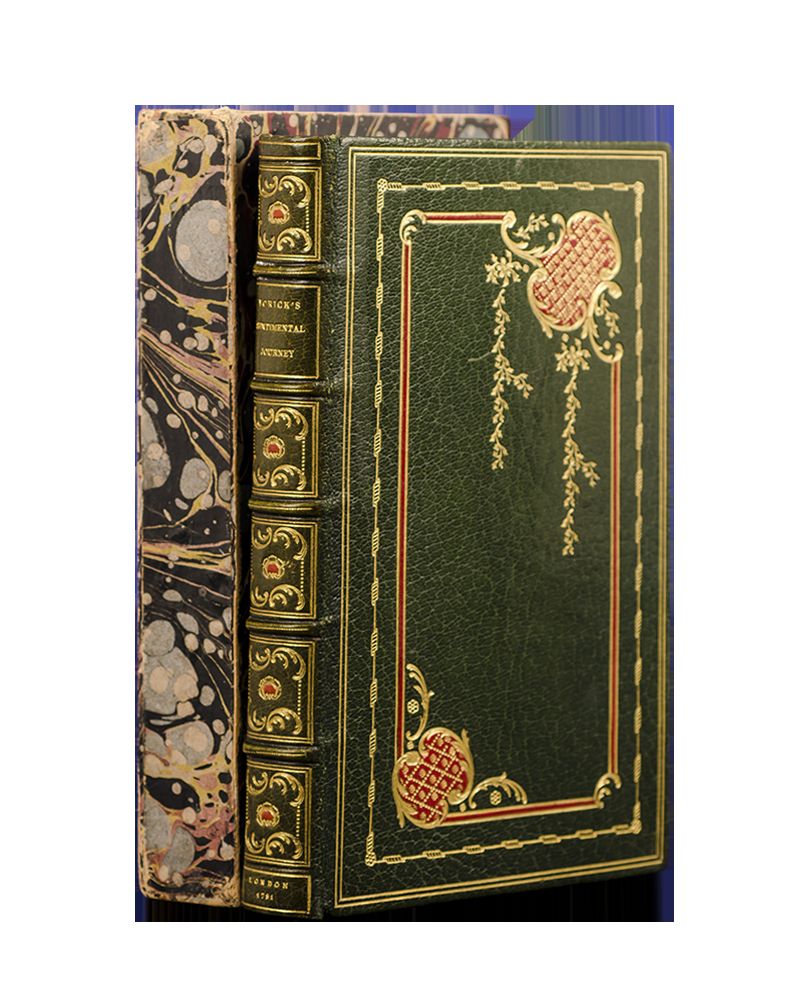
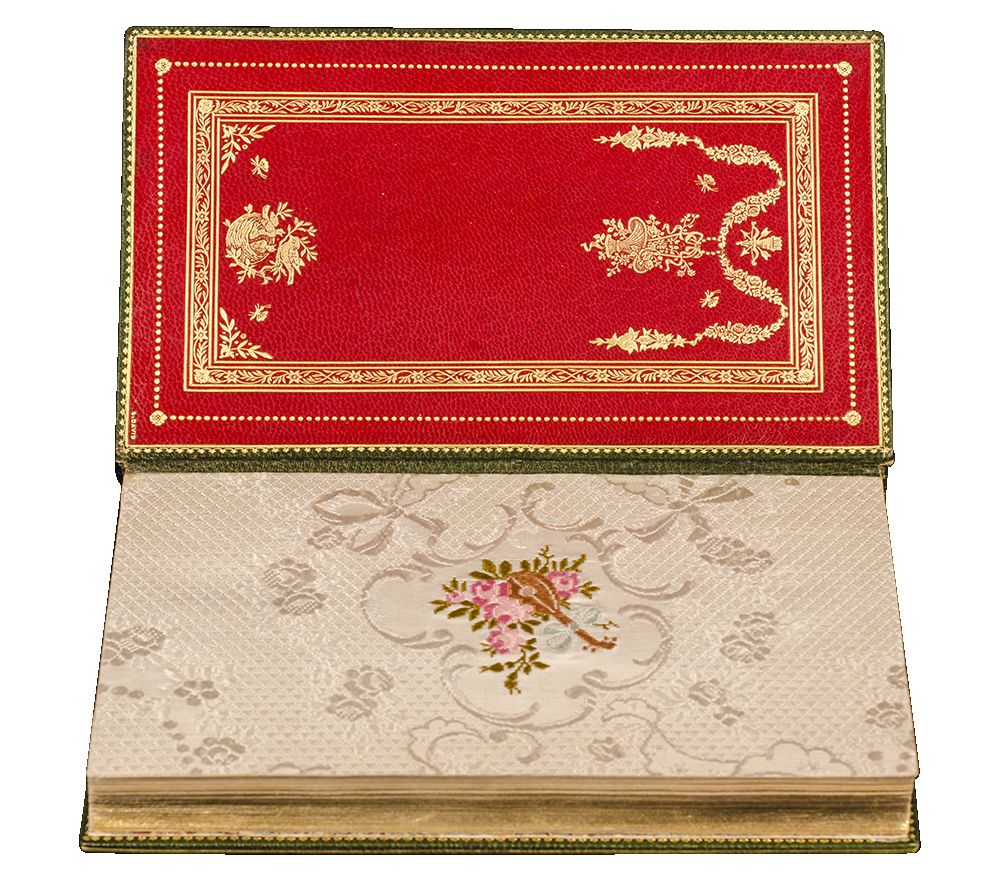
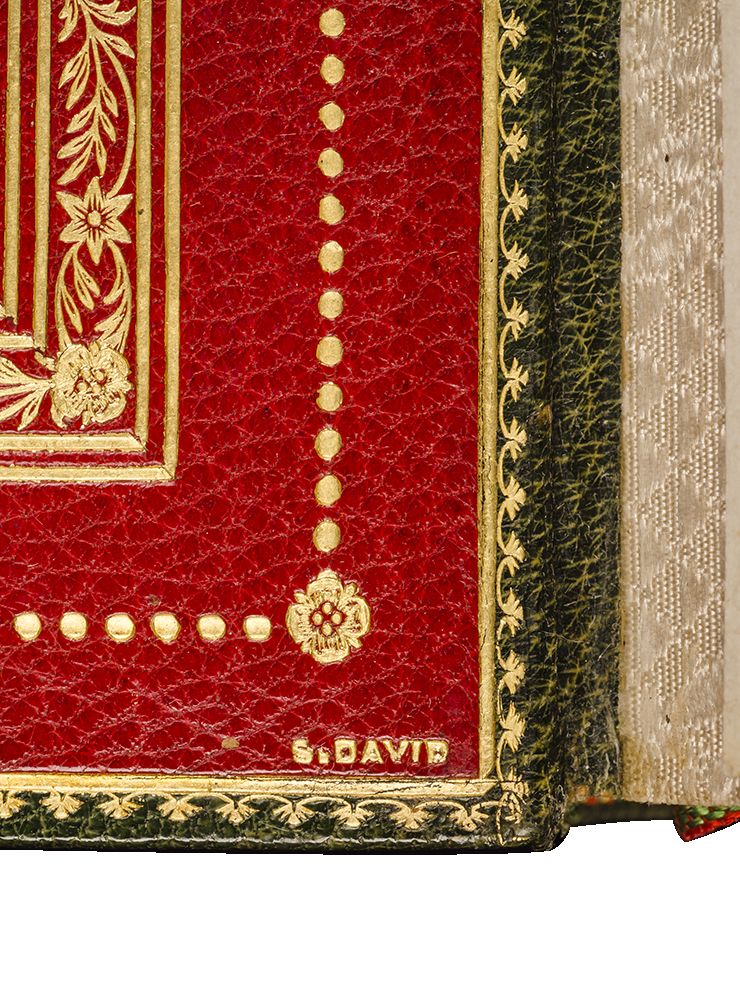
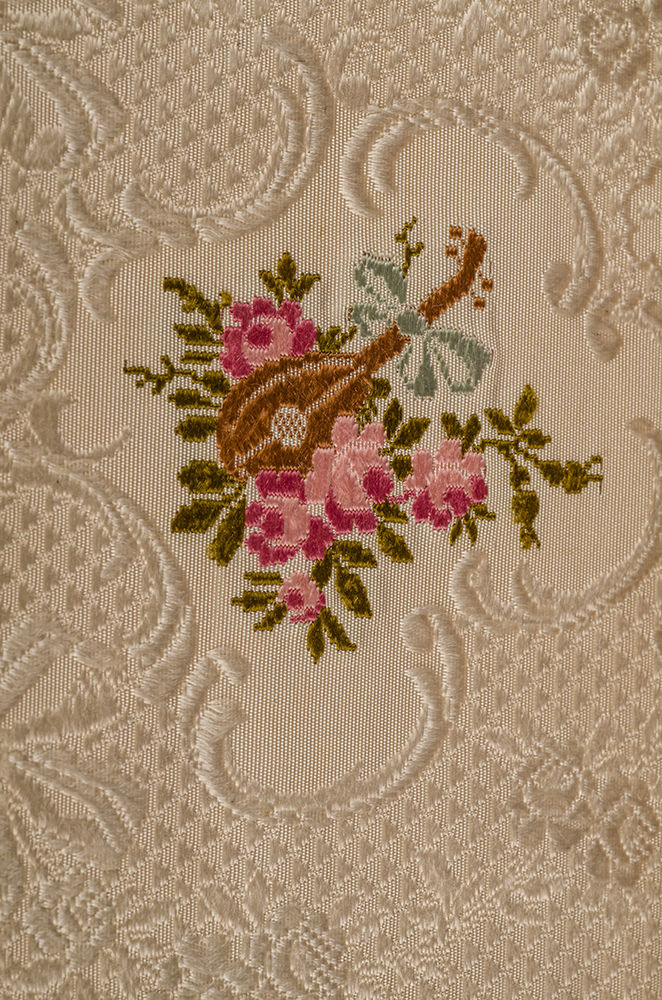
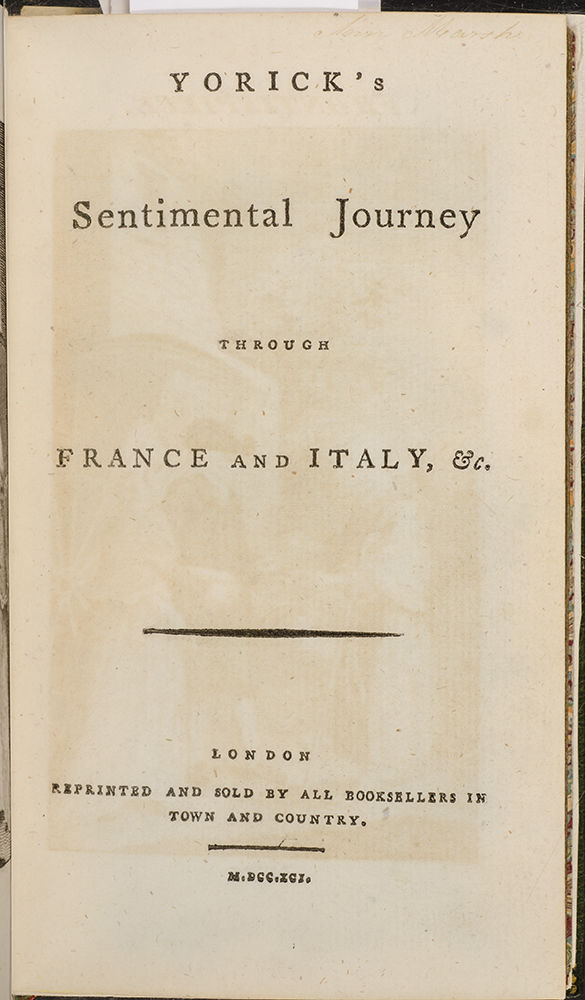
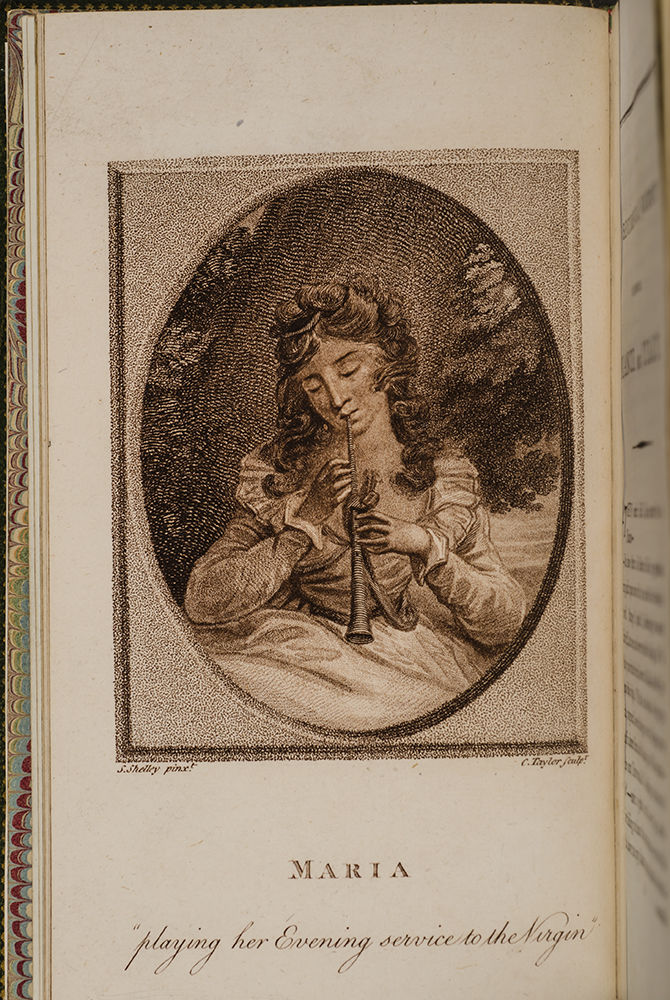
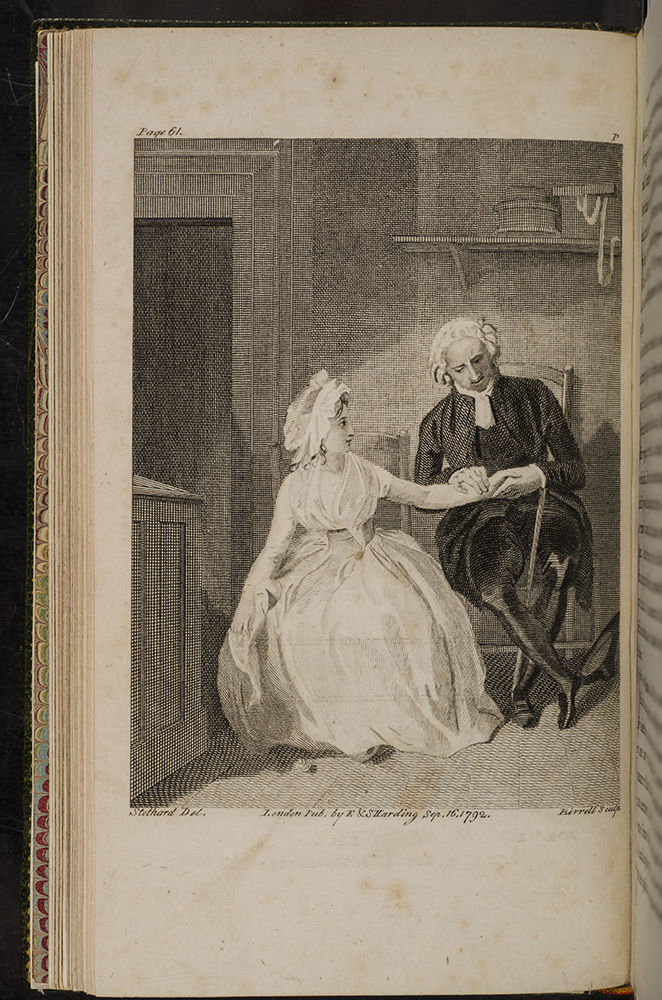
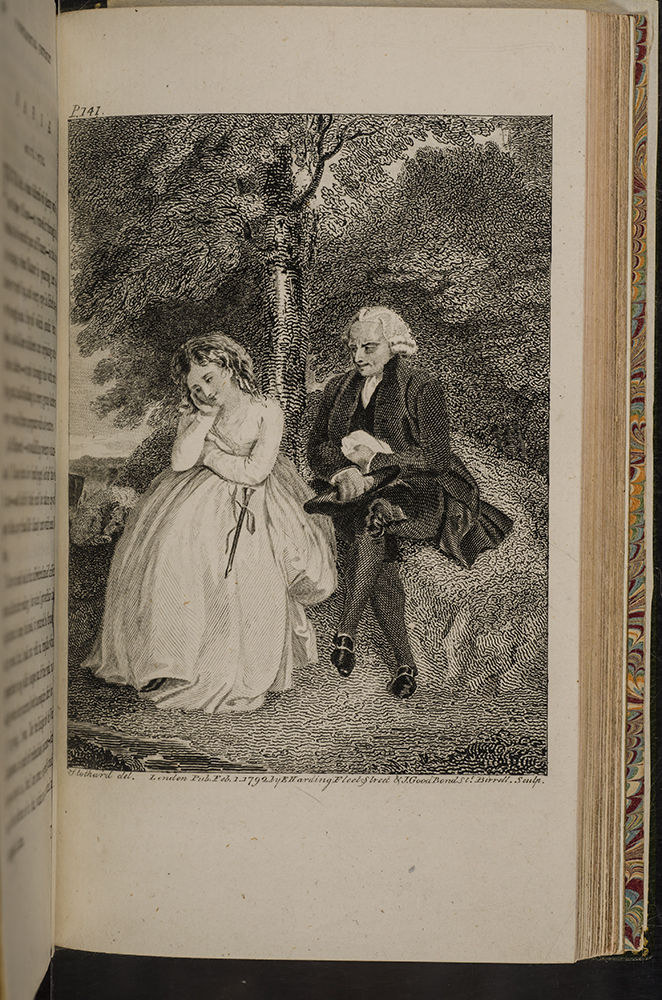
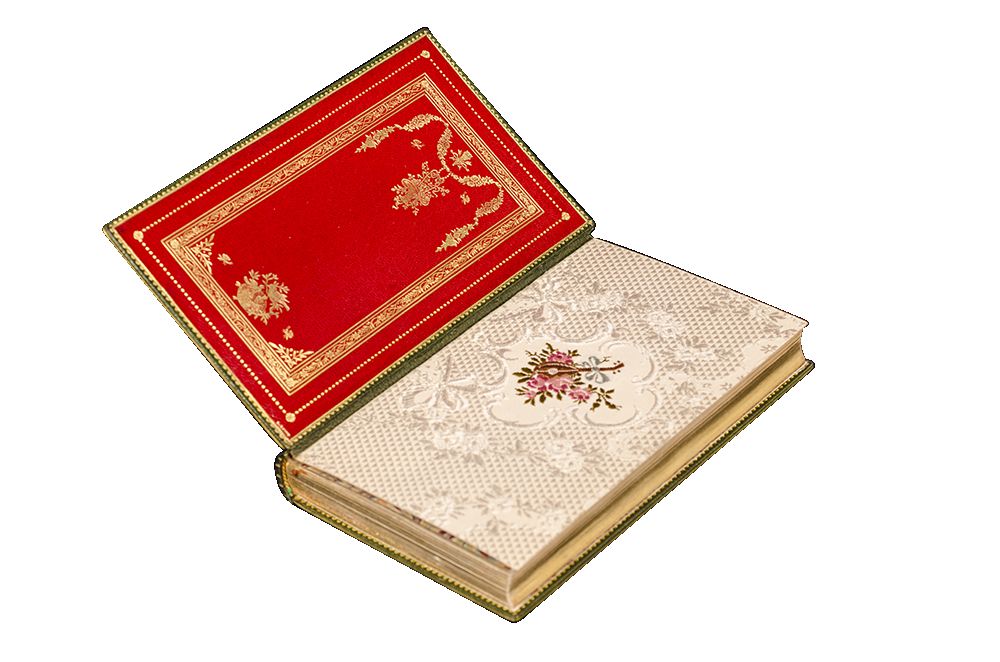
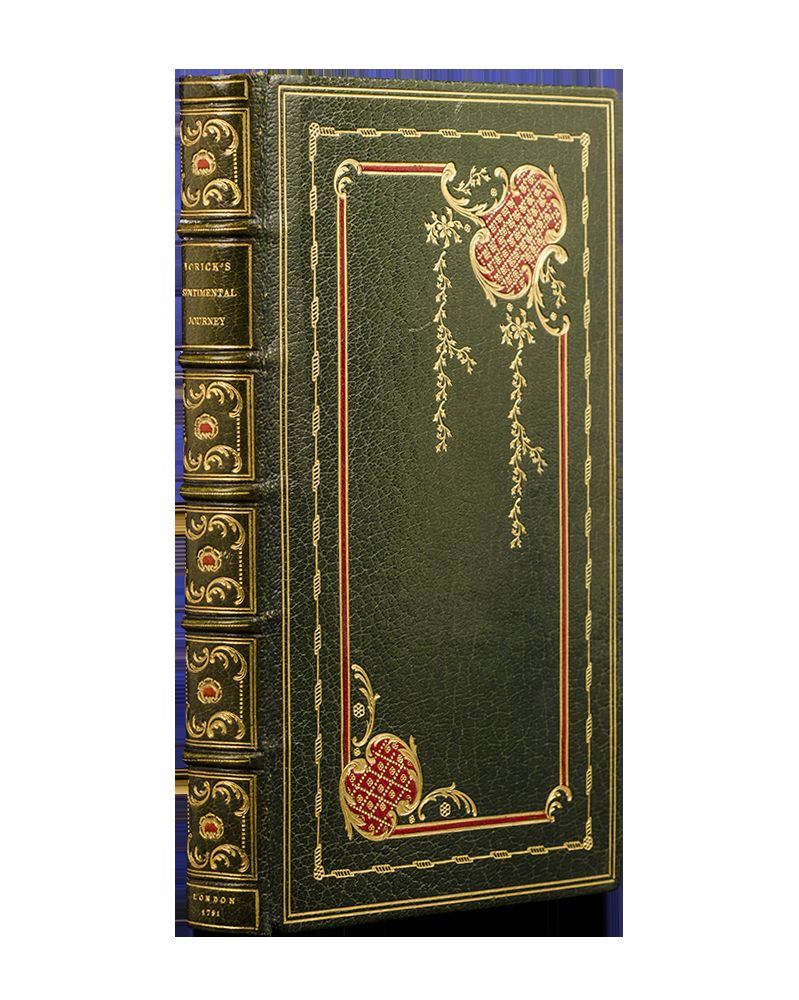
London, 1791. Later edition. Fine. Four parts in one twelvemo volume (6 11/16 x 4 inches; 170 x 101 mm.). [ii], 279, [1, blank] pp. Six plates including frontispiece engraved by Stothard. Two stipple portraits 'Maria' and 'The Monk' engraved by Taylor after S. Shelley. Bound ca. 1900 by Salvatore David (stamped signed "S. David" on front turn-in). Full dark green crushed levant morocco, covers richly bordered in gilt with an inlaid red morocco strip surrounding an elaborate floral and basket-weave design inlaid in red morocco and stamped in gilt. Spine with five raised bands, decoratively tooled and lettered in gilt in compartments with inlaid red morocco flowers. Double gilt-ruled board edges, red morocco liners elaborately decorated in gilt in a similar design. Cream embroidered silk endleaves with marbled endpapers, all edges gilt. A superlative example in perfect condition. Housed in it's original fleece-lined marbled slipcase with morocco tips and fore-edge. With the engraved bookplate of collector Horace G. Young of Worcester, Mass., on the rear marbled endleaf.
Laurence Sterne, famed for his novel The Life and Opinions of Tristram Shandy, Gentleman (1713 – 1768) is also credited for contributions to travelogue genre. The book was informed by Sterne’s travels throughout France and Italy, where he met Tobias Smollett, whose sour and unsentimental reactions to foreign places would inspirate the character “Smelfungus.” The name would eventually be adopted into common parlance as a term for grumpy and critical travelers. Seen as reactionary to Smollett’s travel account, Sterne’s “sentimental” version turns inward to closely follow the adventures of a Reverend Mr. Yorick (a veiled Sterne) and his servant La Fleur through a series of comedic and romantic vignettes. The novel was published just before Sternes death in 1768.
The French bookbinder-gilder, Salvatore David (1859-1929) came from a bookbinding family, taking over his father Bernard David’s business in 1890. Bernard had trained with Leon Gruel and started his own bindery in 1855. Collectors can trace the evolution of Salvatore’s style from his initial take-over in which he maintained his father’s classical ornamentation to a shift from library bindings “to éditions de luxe, which he decorated with a blend of gold fillets and garlanded flowers in a compelling and original manner” (Duncan & De Bartha). “Important collectors of his work included René Descamps-Scrive and Freund-Deschamps" (Duncan & De Bartha). Fine.
Laurence Sterne, famed for his novel The Life and Opinions of Tristram Shandy, Gentleman (1713 – 1768) is also credited for contributions to travelogue genre. The book was informed by Sterne’s travels throughout France and Italy, where he met Tobias Smollett, whose sour and unsentimental reactions to foreign places would inspirate the character “Smelfungus.” The name would eventually be adopted into common parlance as a term for grumpy and critical travelers. Seen as reactionary to Smollett’s travel account, Sterne’s “sentimental” version turns inward to closely follow the adventures of a Reverend Mr. Yorick (a veiled Sterne) and his servant La Fleur through a series of comedic and romantic vignettes. The novel was published just before Sternes death in 1768.
The French bookbinder-gilder, Salvatore David (1859-1929) came from a bookbinding family, taking over his father Bernard David’s business in 1890. Bernard had trained with Leon Gruel and started his own bindery in 1855. Collectors can trace the evolution of Salvatore’s style from his initial take-over in which he maintained his father’s classical ornamentation to a shift from library bindings “to éditions de luxe, which he decorated with a blend of gold fillets and garlanded flowers in a compelling and original manner” (Duncan & De Bartha). “Important collectors of his work included René Descamps-Scrive and Freund-Deschamps" (Duncan & De Bartha). Fine.