

Dombey and Son



- London: Bradbury & Evans, 1848
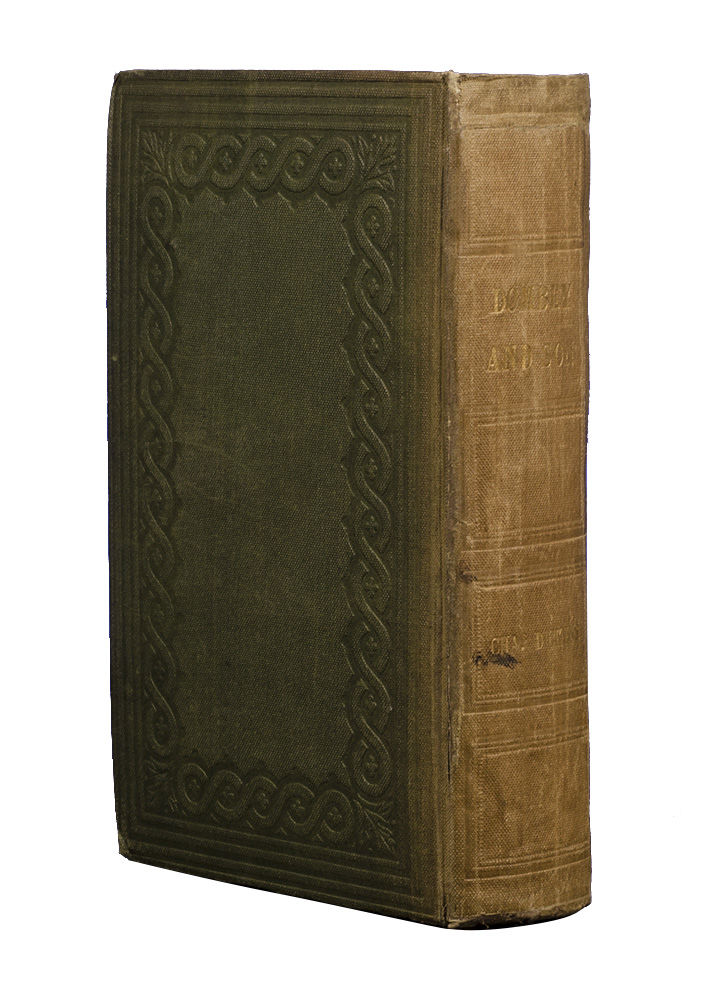
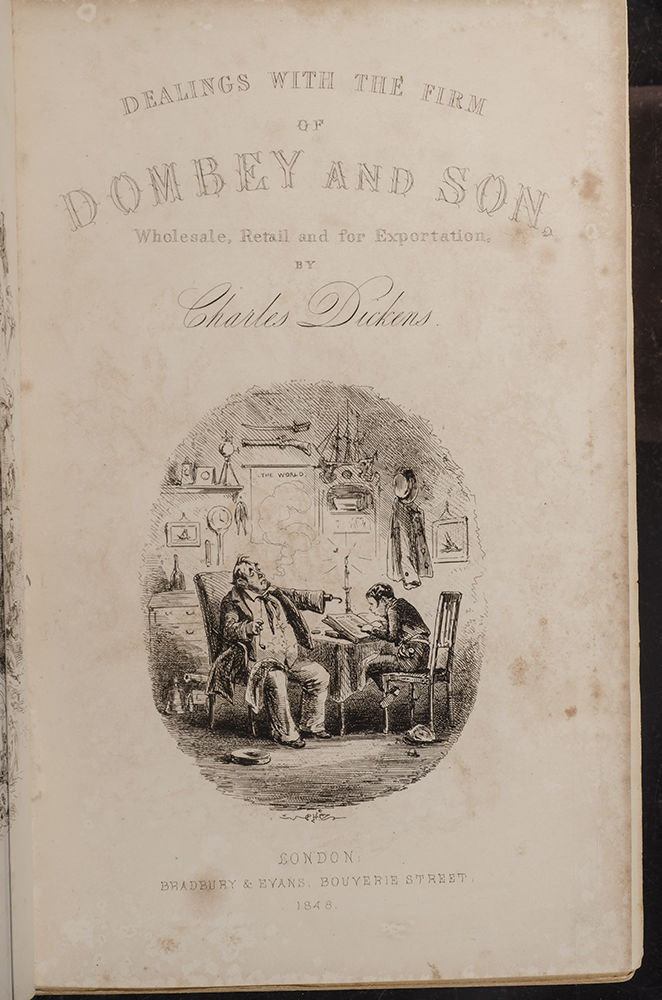
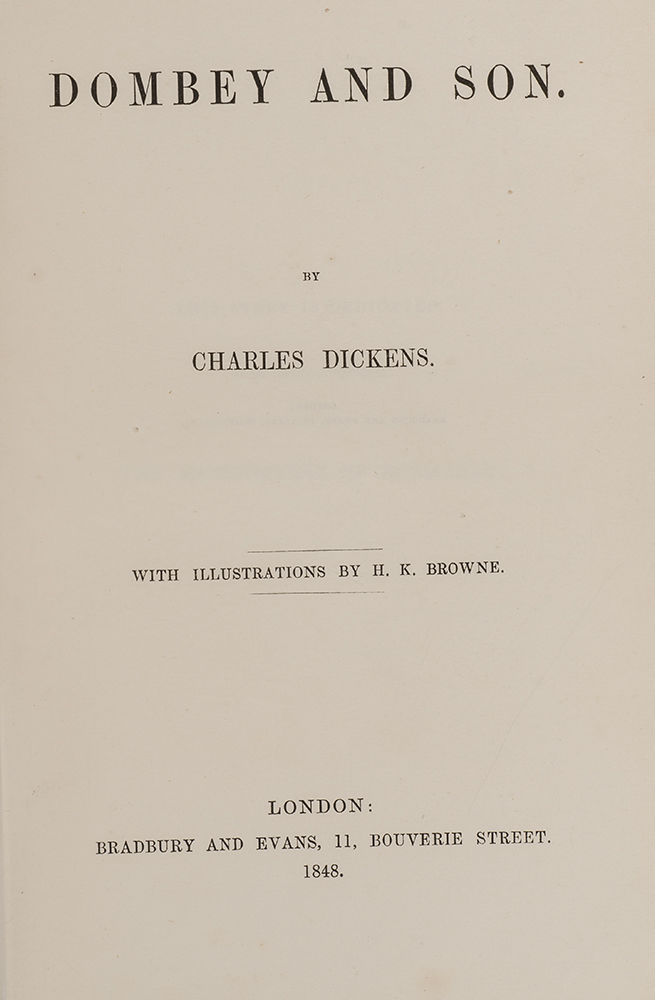
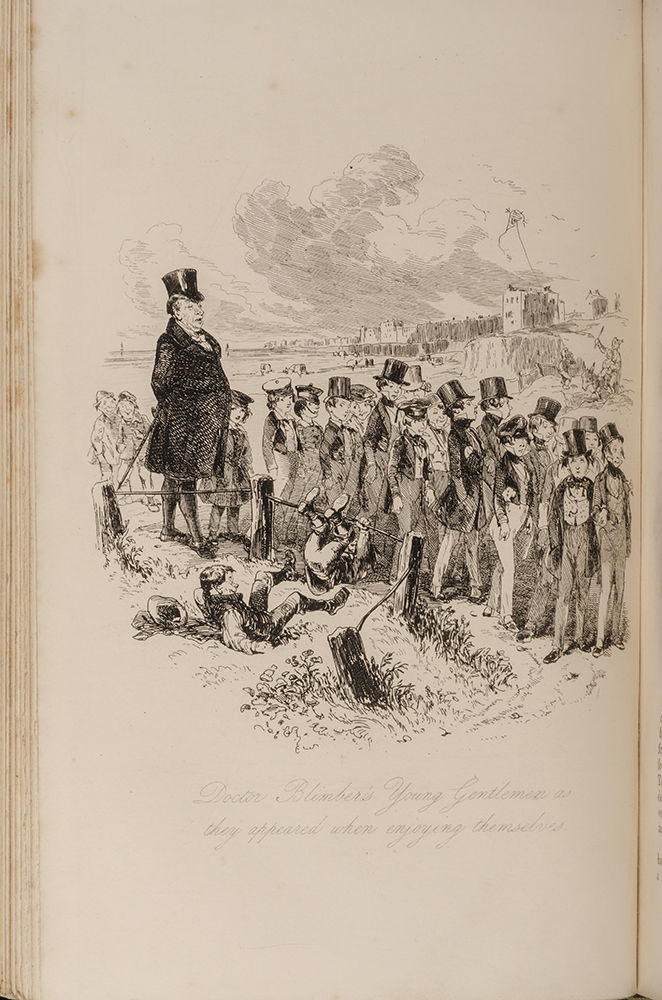
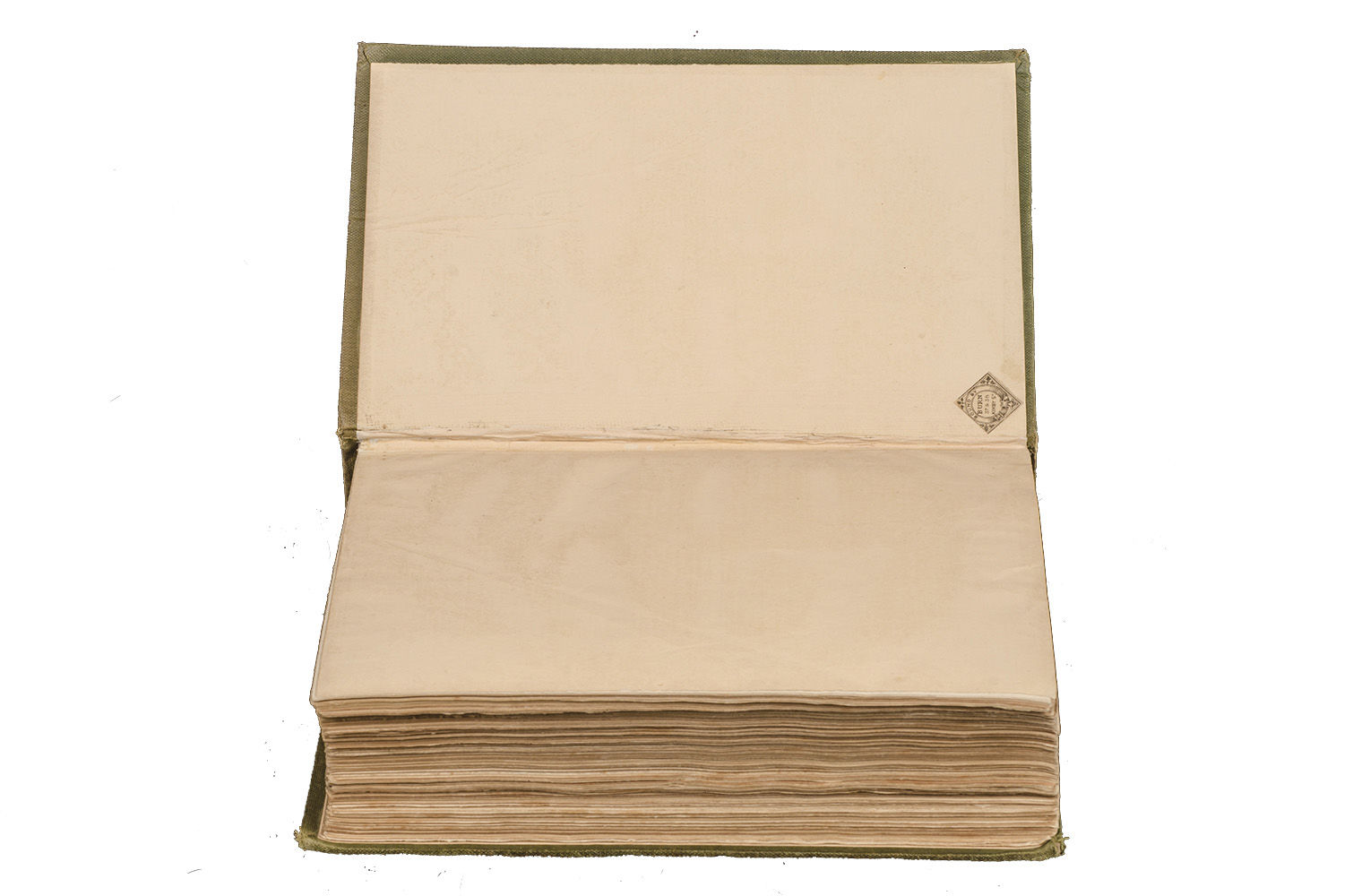
London: Bradbury & Evans, 1848. First edition. First issue with the 'eight-line errata' (following all but a very few of the points in Smith), in book form of Dickens' seventh novel, bound from the original monthly parts, with stab-holes present in the inner margins of gatherings. Octavo (8 3/4 x 5 1/2 in; 222 x 138 mm). xvi, [1, errata], [1, blank], 624 pp. Engraved frontispiece, titlepage, and thirty-eight plates after Hablot K. Browne ("Phiz") including the 'dark' plate "On the Dark Road", facing p. 547. Some of the plates with light foxing, mainly marginal, otherwise a very clean and partially uncut example. Publisher's 'primary' binding of moderate olive-green fine-diaper grain cloth; the front and back covers entirely stamped in blind with a three-line border which encloses a rectangular frame that occupies the length of the covers. The frame contains an ornament of leaves and stems in each corner and a chain-like design that runs along its inner edge; each segment of the chain encloses a four-headed flower and is bordered by a nipple. The spine is lettered in gilt and stamped in blind with a thick band at its top and bottom and four rectangular panels. Original pale orange-yellow coated endpapers. With nearly all of the 'internal flaws' mentioned by Smith uncorrected. Front joint, head and tail of spine and inner hinges expertly and almost invisibly repaired, spine slightly faded. An excellent example, far better than is usually seen, of this now hard to find Dickens novel in the original cloth.
Dombey and Son tackles a number of key themes that appear throughout Dickens' authorial career—concerns about family duty, class position, child welfare, and the dangers of arranged marriages in particular. As the titular Dombey builds his shipping company, he fantasizes that his son will someday take over the business and continue his legacy. But England is changing rapidly due to the effects of industrialization, and its effects ripple throughout Victorian culture. One symbol of industrialization's promise (and its perils) is the railroad. In chapter six, Dickens calls the railroad's impact a "great earthquake." Dombey and Son grapples with the effects of industrialization, and the railroad is one of the novel's symbols for this momentous era. The book first "appeared in twenty numbers, bound in nineteen monthly parts, the last forming a double number, from October 1846 - April 1848. It was published in book form on April 12, 1848. at 21s. Dombey and Son contains the first published example of a so-called dark plate, which was created by a machine process that tinted the etched plate and heightened its black-and-white contrast. The one dark plate in Dombey and Son is "On the Dark Road," p. 547. The smooth blending of light and shadow on this illustration vividly contrasts it with the other illustrations in the novel and is a fine example of the dark plate process" (Smith).
Smith I:8. Sadleir, 687. Wolff, 1798.
Dombey and Son tackles a number of key themes that appear throughout Dickens' authorial career—concerns about family duty, class position, child welfare, and the dangers of arranged marriages in particular. As the titular Dombey builds his shipping company, he fantasizes that his son will someday take over the business and continue his legacy. But England is changing rapidly due to the effects of industrialization, and its effects ripple throughout Victorian culture. One symbol of industrialization's promise (and its perils) is the railroad. In chapter six, Dickens calls the railroad's impact a "great earthquake." Dombey and Son grapples with the effects of industrialization, and the railroad is one of the novel's symbols for this momentous era. The book first "appeared in twenty numbers, bound in nineteen monthly parts, the last forming a double number, from October 1846 - April 1848. It was published in book form on April 12, 1848. at 21s. Dombey and Son contains the first published example of a so-called dark plate, which was created by a machine process that tinted the etched plate and heightened its black-and-white contrast. The one dark plate in Dombey and Son is "On the Dark Road," p. 547. The smooth blending of light and shadow on this illustration vividly contrasts it with the other illustrations in the novel and is a fine example of the dark plate process" (Smith).
Smith I:8. Sadleir, 687. Wolff, 1798.