

The Most Pleasant and Delectable Tale Of the Marriage of Cupid and Psyche
- London: David Nutt, 1887
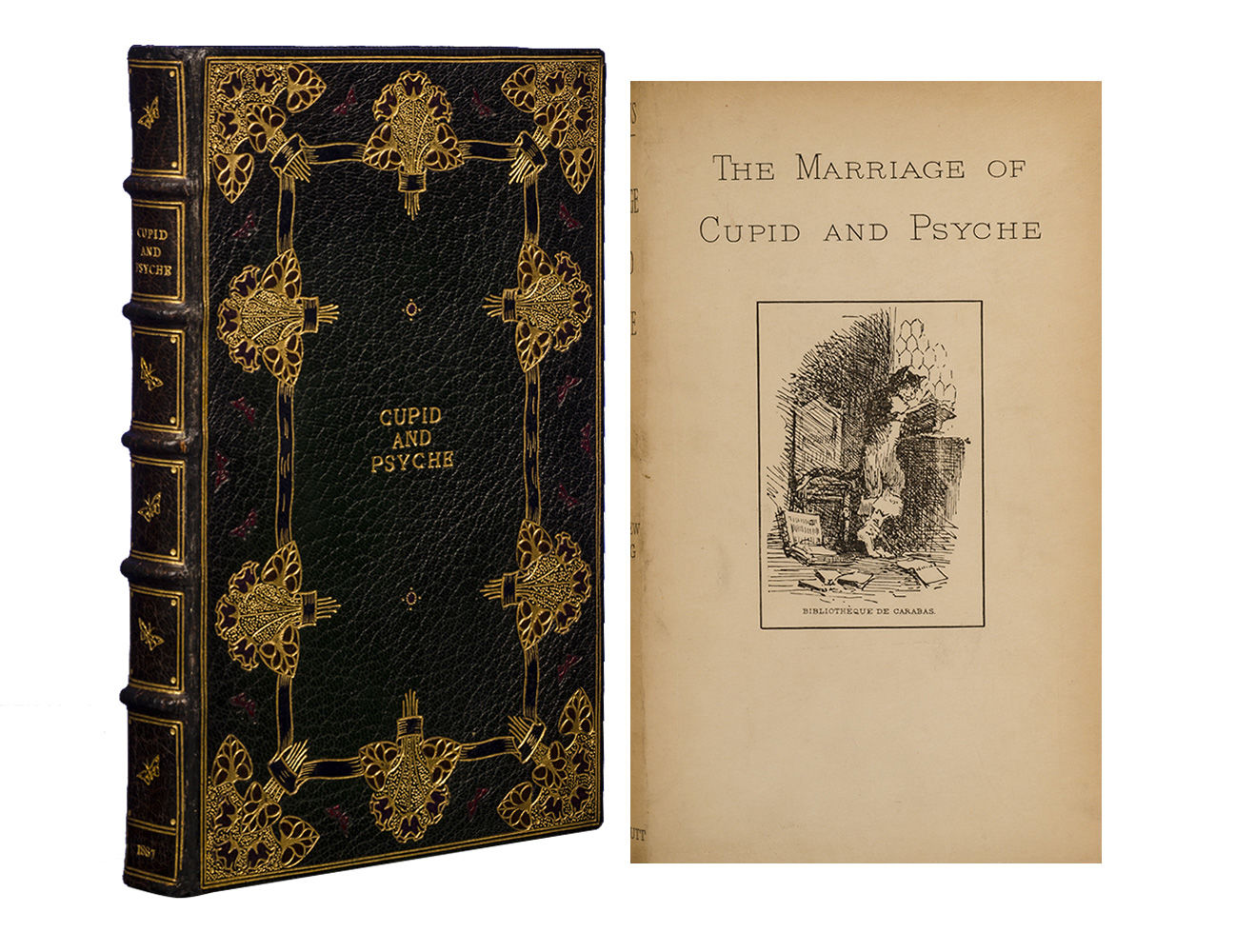
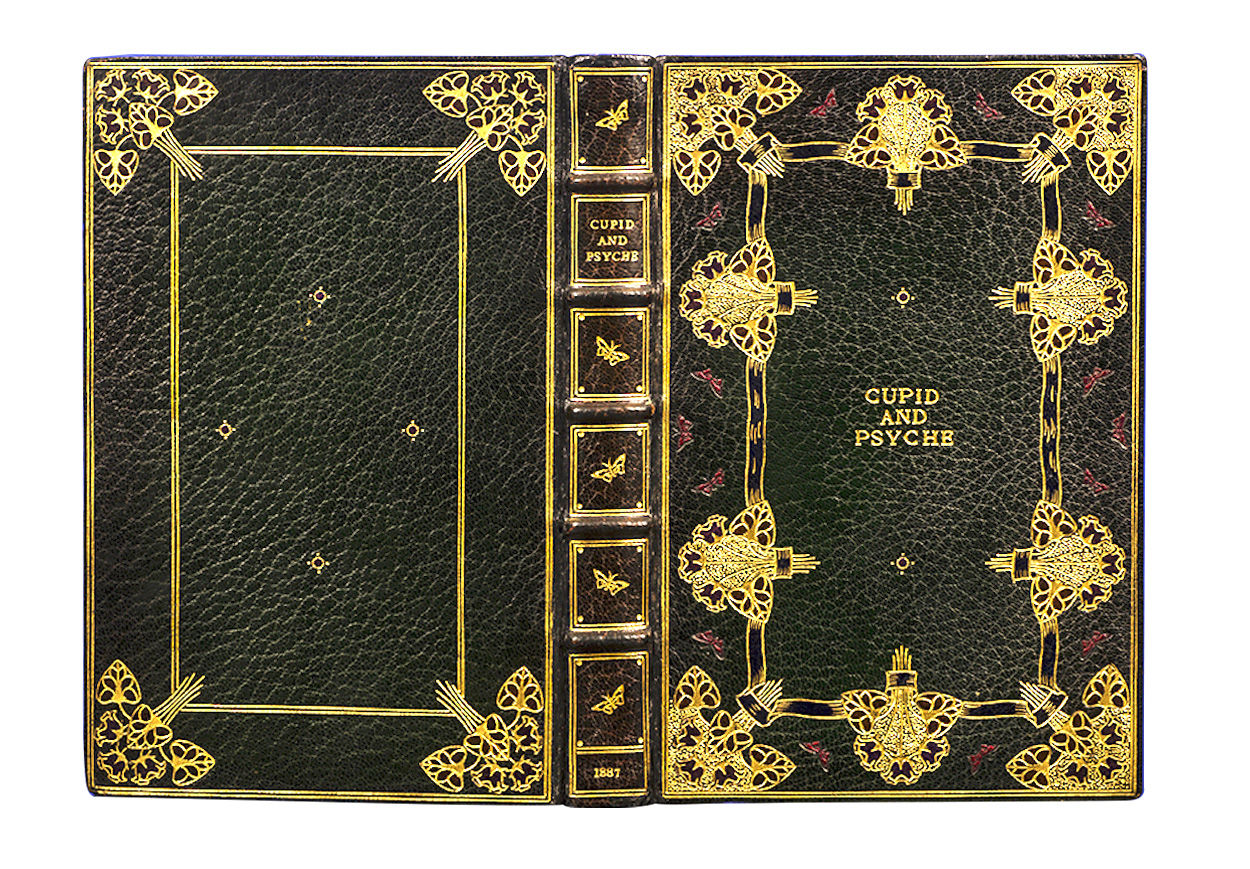
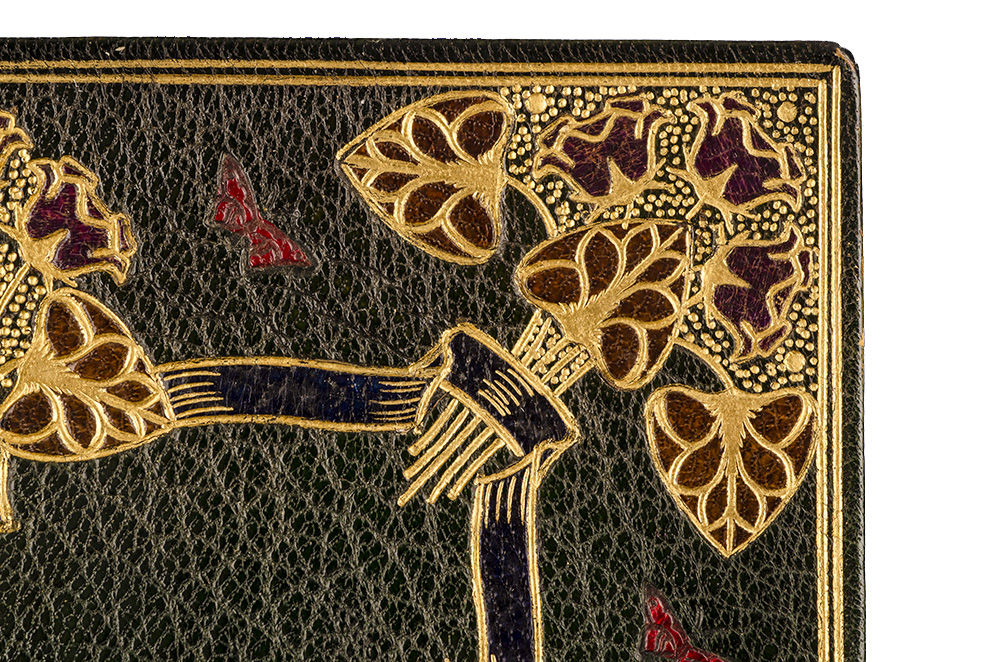
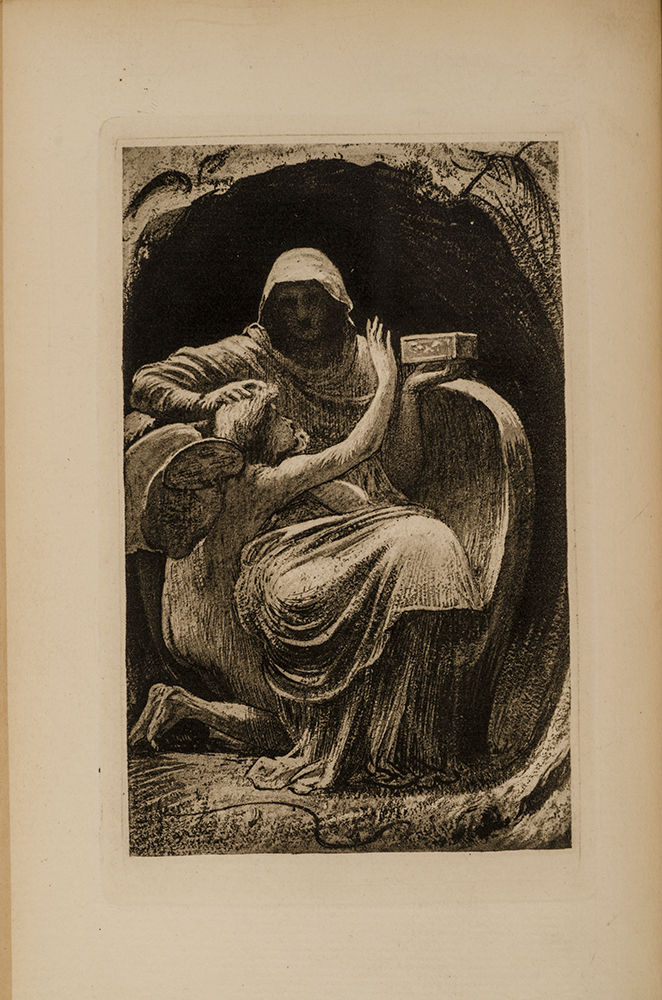
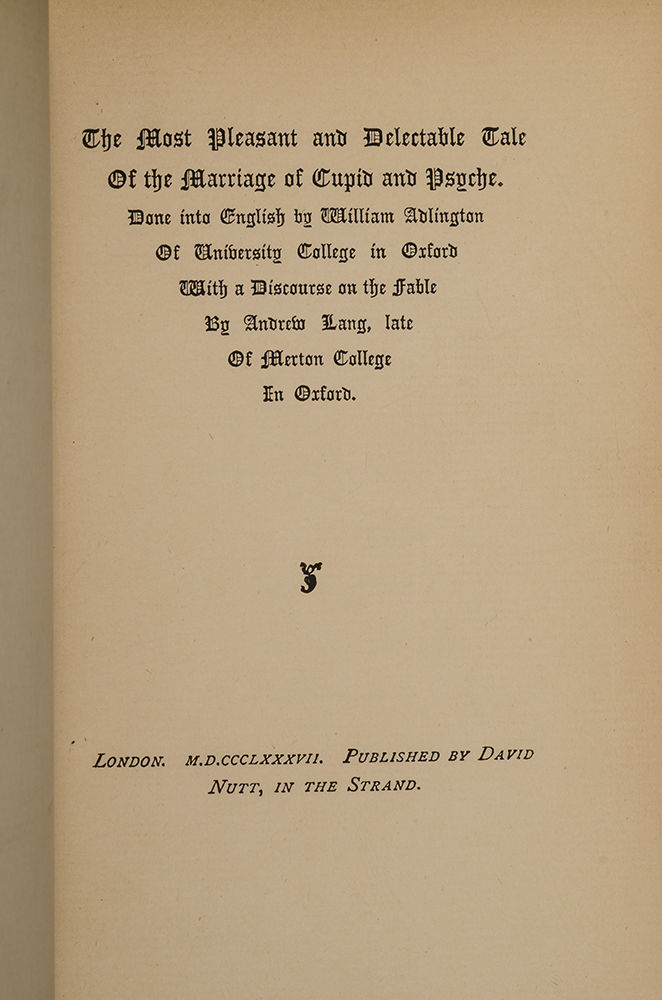
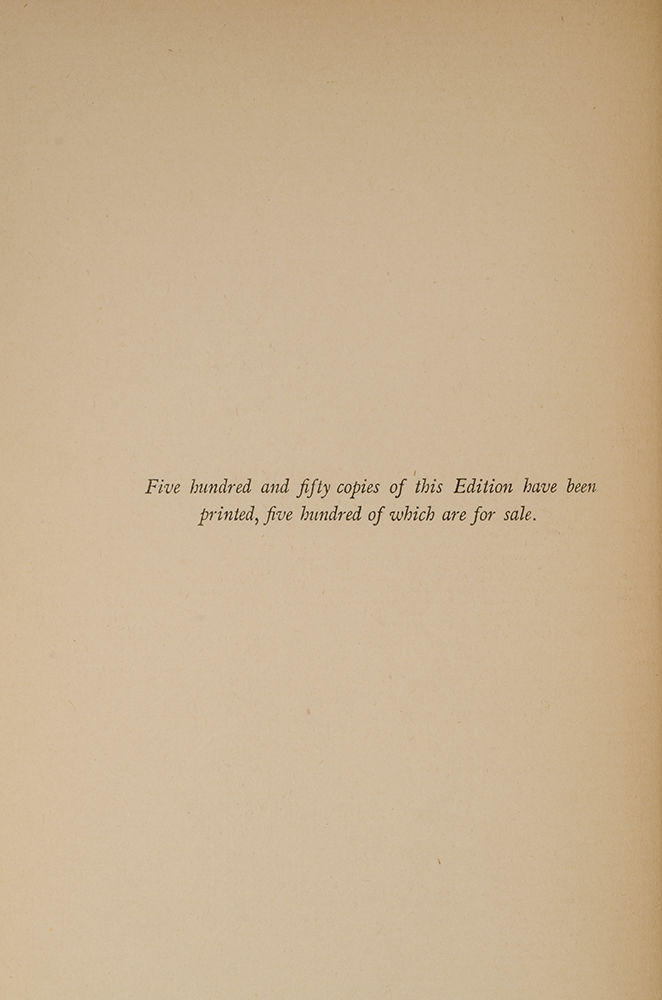
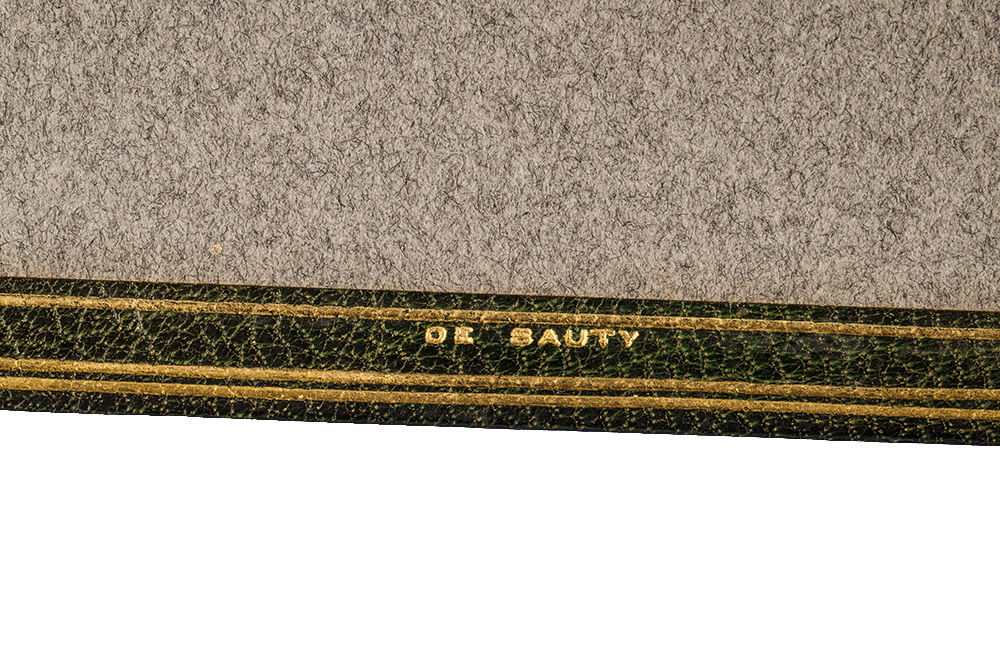
London: David Nutt, 1887. Limited edition. Fine. Limited to five hundred and fifty copies. Octavo (7 5/8 x 5 inches; 193 x 125 mm.).[ii], [lxxxvi], [1,], [1, blank], 65, [1, blank]. With a Pre-Raphaelite engraved frontispiece, a wonderful etched engraving of Venus and the Sea-Gull by Scottish Artist Vereker Monteith Hamilton (1856-1931), and a small engraved vignette on the last leaf. Original front wrapper bound in at end. Bound ca. 1910 by Alfred De Sauty (stamp-signed "De Sauty" in gilt on front turn-in) in an Arts and Crafts style binding of full dark green morocco. Front cover with double gilt ruled border surrounding ten floral clusters with maroon morocco inlaid bouquets and fine pointillé, all joined together by a decorative gilt bordered inlaid dark blue morocco gilt decorated branch. In addition there are fourteen inlaid red morocco butterflies and two small gilt decorated inlaid red morocco circles. The center of the front cover is lettered in gilt "Cupid and Psyche". Rear cover with double gilt ruled border surrounding four similar 'corner-piece' floral clusters with maroon morocco inlaid bouquets. There is a central rectangular panel surrounded by a double gilt border enclosing four small gilt decorated inlaid red morocco circles. Spine with five raised bands, decoratively paneled and lettered in gilt in compartments with five decorative gilt butterflies, gilt ruled board-edges, triple gilt ruled turn-ins, top edge gilt, others uncut. Spine ends expertly and almost invisibly repaired. A superb and understated example of the genius of Alfred De Sauty.
William Adlington (fl. 1566) was an Elizabethan translator most famous for his translation of Apuleius' Metamorphoses, a 2nd century Roman novel (based on a Greek text), known in English as “The Golden Ass” (1566). The plot follows Lucius, who driven by his desire to see and understand magic, accidentally transforms himself into a donkey. Adlington’s version departs at times from the original source material, embracing the “art” of translation and resulting in an incredibly readable version (Robert H. F. Carver). The Most Pleasant and Delectable Tale of the Marriage of Cupid and Psyche is an excerpt from The Golden Ass. Scholars cite Adlington’s translation as one of Shakespeare’s sources of inspiration.
The work of bookbinder Alfred de Sauty (1870-1949) is appreciated for its delicate tooling. Although little is known about his life he worked in both London (1898 to 1923) and Chicago (1923 to 1935). “For instance, scholars are unsure whether, when in London, de Sauty worked independently, for the firm of Riviere & Sons, or both. While in London, he may also have been a designer for the Hampstead Bindery and a teacher at the Central School of Arts and Crafts” (Harvard) as works he bound during this period are signed "de S" or "De Sauty." De Sauty’s career in Chicago working for the hand bindery of R. R. Donnelley & Sons is better documented; bindings made here use the name R. R. Donnelly. “He signed his work at the foot of the front doublure, if present, and at the center of the bottom turn-in of the front upper board, if not” (Harvard). Fine.
William Adlington (fl. 1566) was an Elizabethan translator most famous for his translation of Apuleius' Metamorphoses, a 2nd century Roman novel (based on a Greek text), known in English as “The Golden Ass” (1566). The plot follows Lucius, who driven by his desire to see and understand magic, accidentally transforms himself into a donkey. Adlington’s version departs at times from the original source material, embracing the “art” of translation and resulting in an incredibly readable version (Robert H. F. Carver). The Most Pleasant and Delectable Tale of the Marriage of Cupid and Psyche is an excerpt from The Golden Ass. Scholars cite Adlington’s translation as one of Shakespeare’s sources of inspiration.
The work of bookbinder Alfred de Sauty (1870-1949) is appreciated for its delicate tooling. Although little is known about his life he worked in both London (1898 to 1923) and Chicago (1923 to 1935). “For instance, scholars are unsure whether, when in London, de Sauty worked independently, for the firm of Riviere & Sons, or both. While in London, he may also have been a designer for the Hampstead Bindery and a teacher at the Central School of Arts and Crafts” (Harvard) as works he bound during this period are signed "de S" or "De Sauty." De Sauty’s career in Chicago working for the hand bindery of R. R. Donnelley & Sons is better documented; bindings made here use the name R. R. Donnelly. “He signed his work at the foot of the front doublure, if present, and at the center of the bottom turn-in of the front upper board, if not” (Harvard). Fine.