

Spanish Hill and Carantouan: The History, the People, and the Politics
- Spiral-Bound Softcover
- Sayre, Pennsylvania: Susquehanna River Archaeological Center of Native Indian Studies, 2007
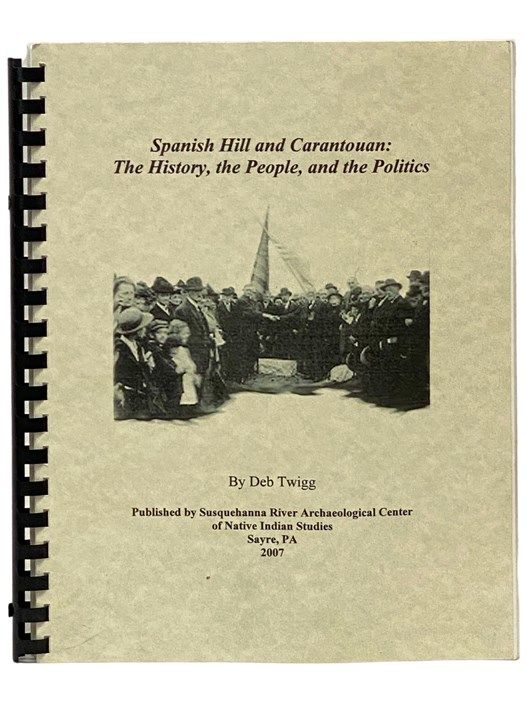
Sayre, Pennsylvania: Susquehanna River Archaeological Center of Native Indian Studies, 2007. Spiral-Bound Softcover. Good. 0x0x0. Wrappers and pages bowed. 2007 Spiral-Bound Softcover. 101 pp. A review of the connection between a grand mound in northern Pennsylvania known as Spanish Hill and an Indian nation that was once called 'Carantouan,' by local historian and archaeologist Deb Twigg. Spanish Hill is a hill located in the borough of South Waverly, Pennsylvania. The hill is controversial among historians and archaeologists; opinions regarding the origin of structures found on the site vary from embankments created by early farmers, to the remnants of a Native American village and battlements, due to the site's similarity to the description found in the account of Etienne Brule of the settlement called Carantouan. The area in the hill's vicinity was previously occupied by Susquehannock Native Americans. It was a common site for both amateur and professional archaeology, as well as for relic hunting. In 1918, historian and archaeologist George P. Donehoo, after a survey of the site, determined that it was impossible for Spanish Hill to have been the site of the town described by Brule. He cited the sharp incline, which would have made ascension difficult, as well as the lack of water and archaeological evidence on the hill as evidence against it having been the location of Carantouan. However, historian Deb Twigg suggests that prior excavations conducted by early twentieth-century archaeologist Warren Moorehead, as well as years of heavy farming activity in the area may have contributed to the lack of artifacts found during the Griffin expedition.