

Sketches by Boz
- London: Chapman and Hall, 1839
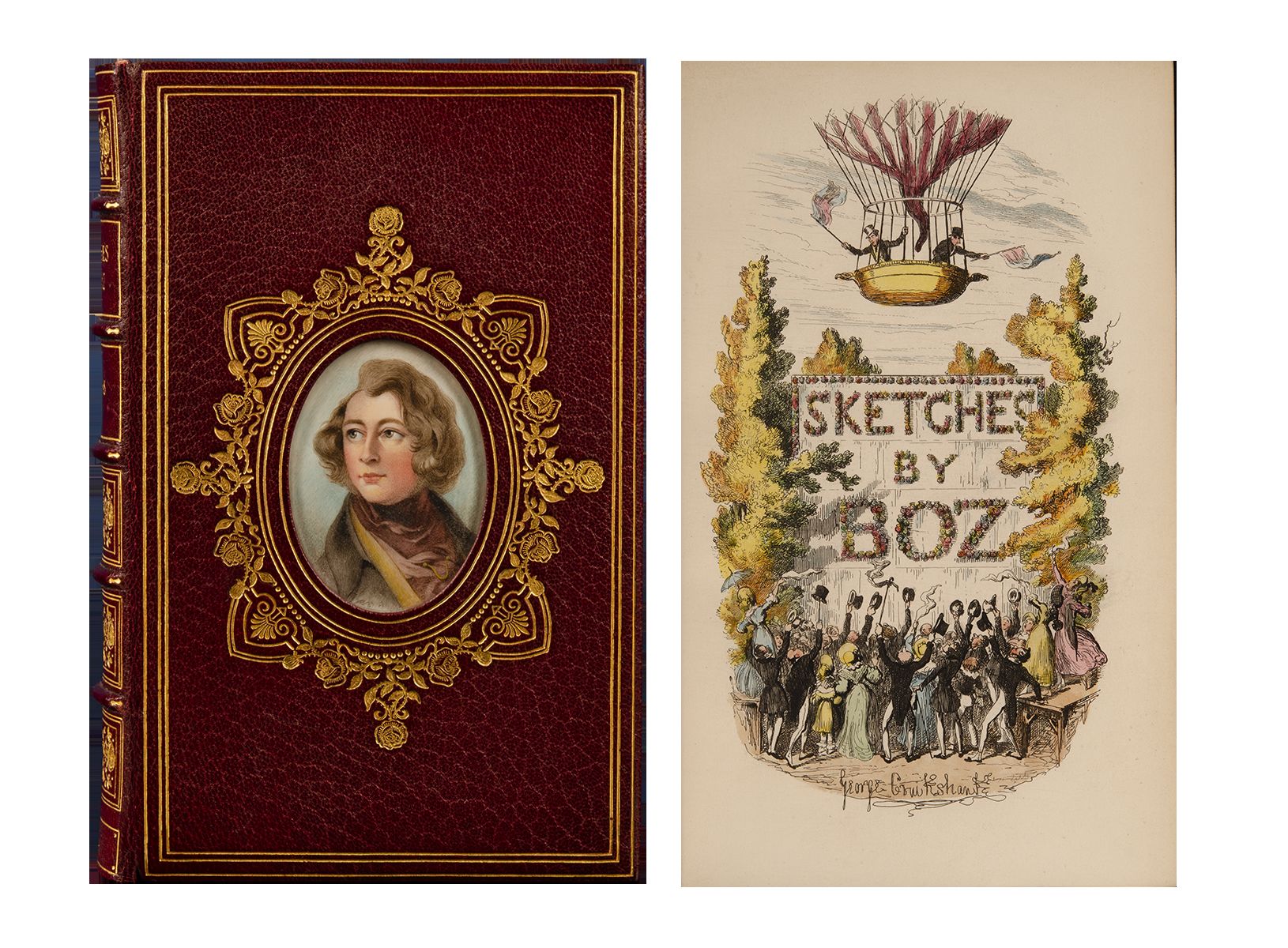
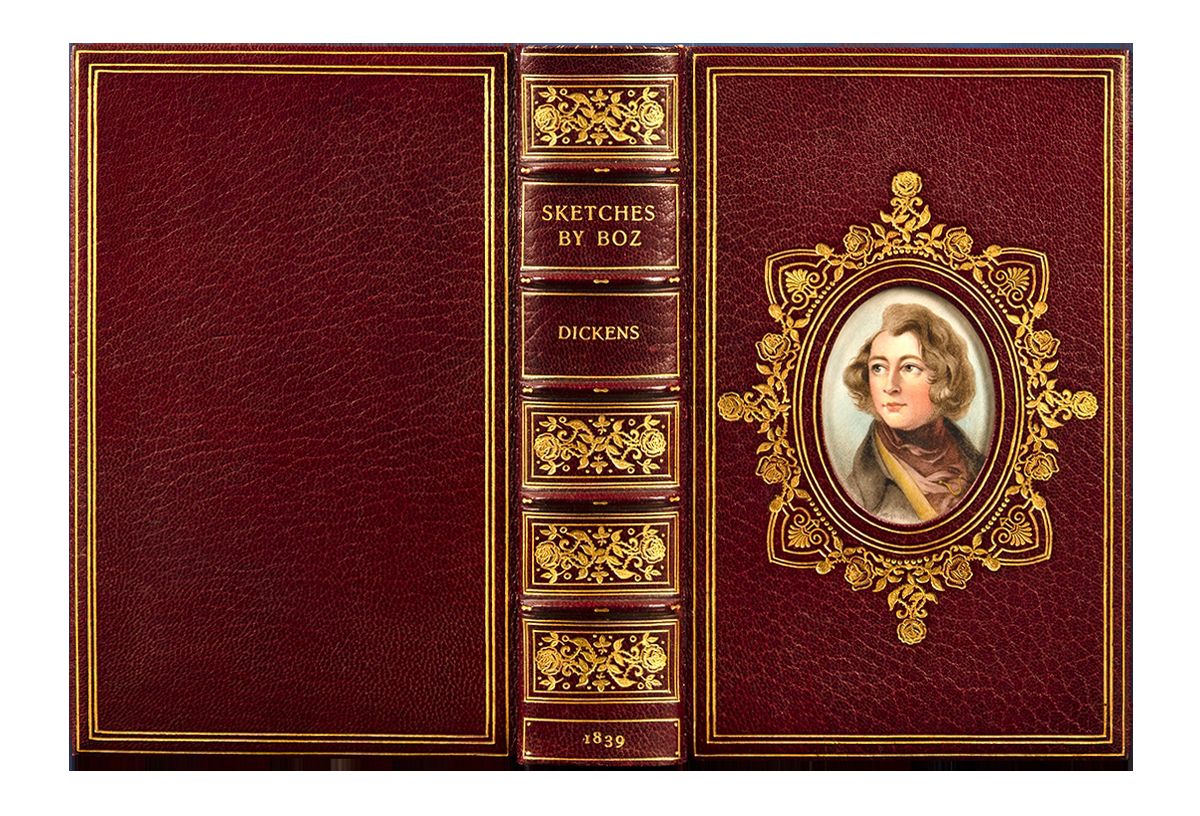
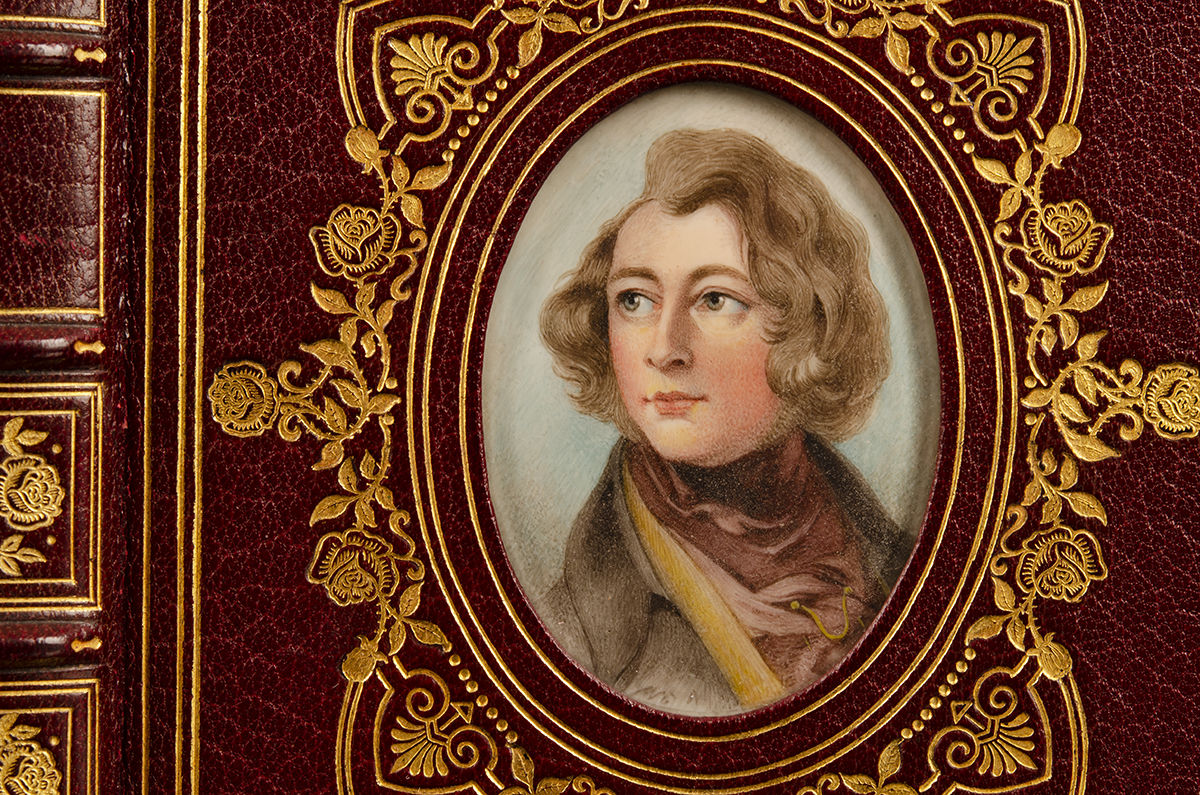
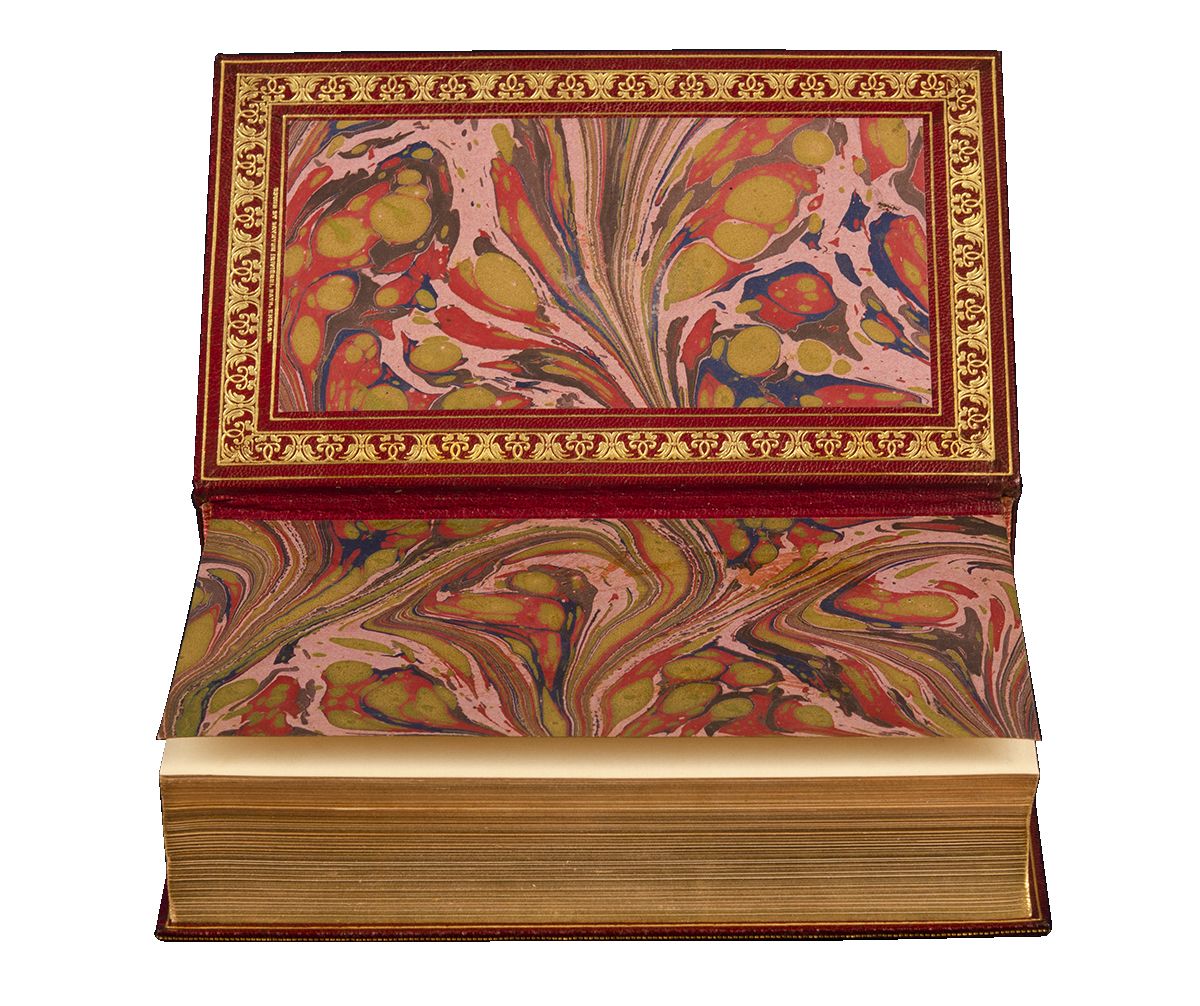
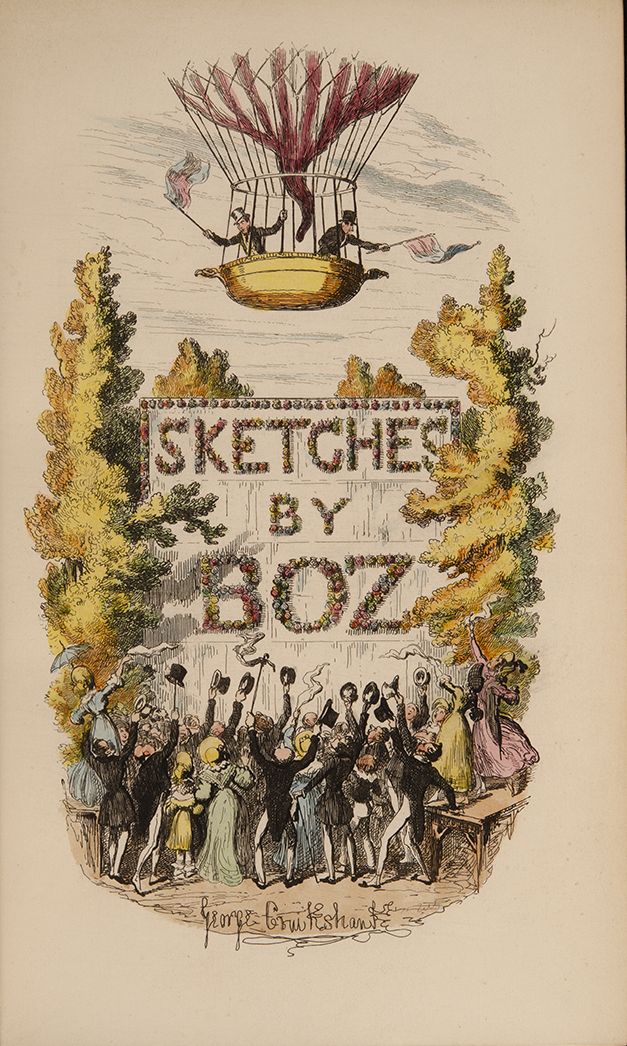
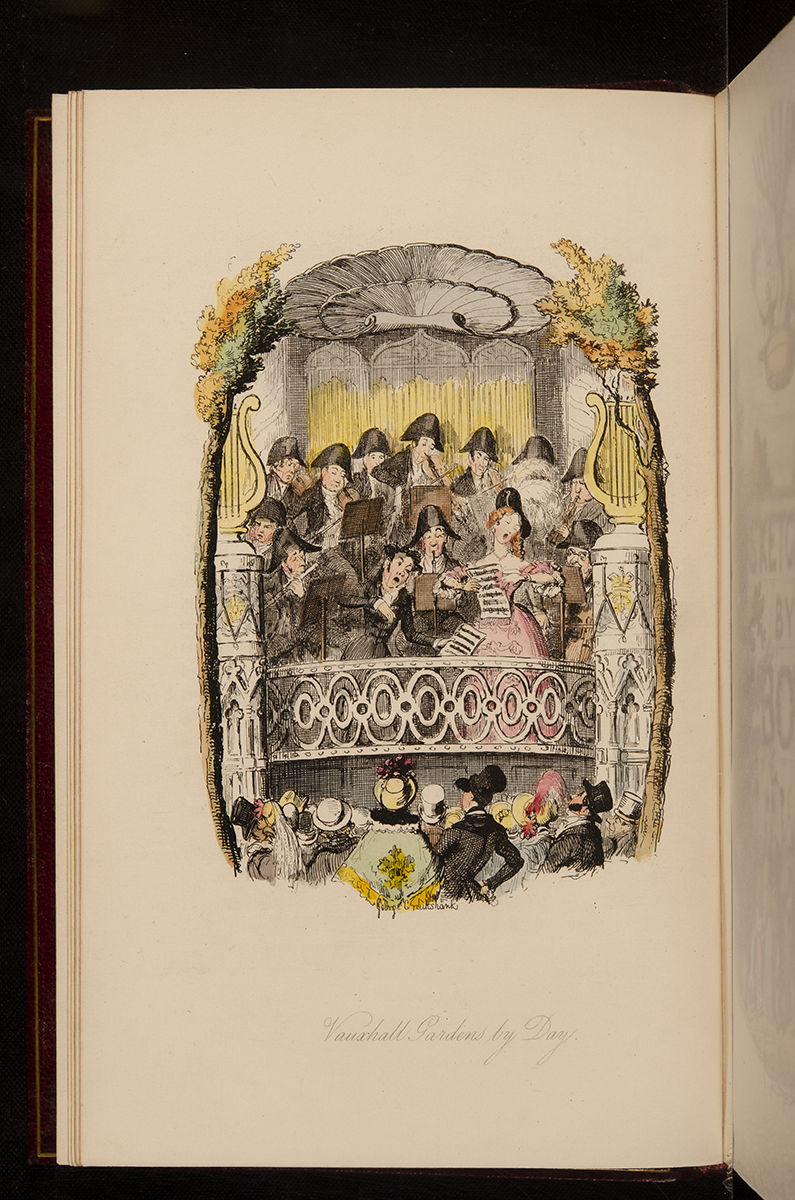
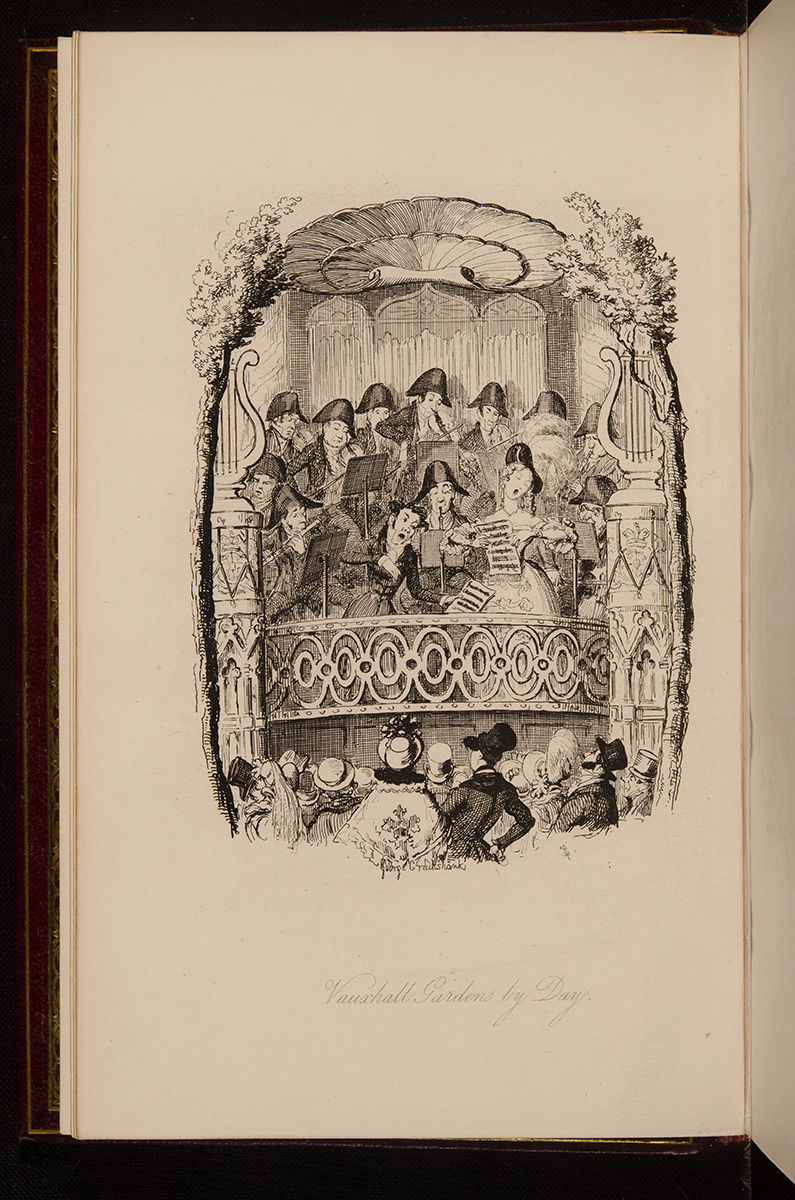
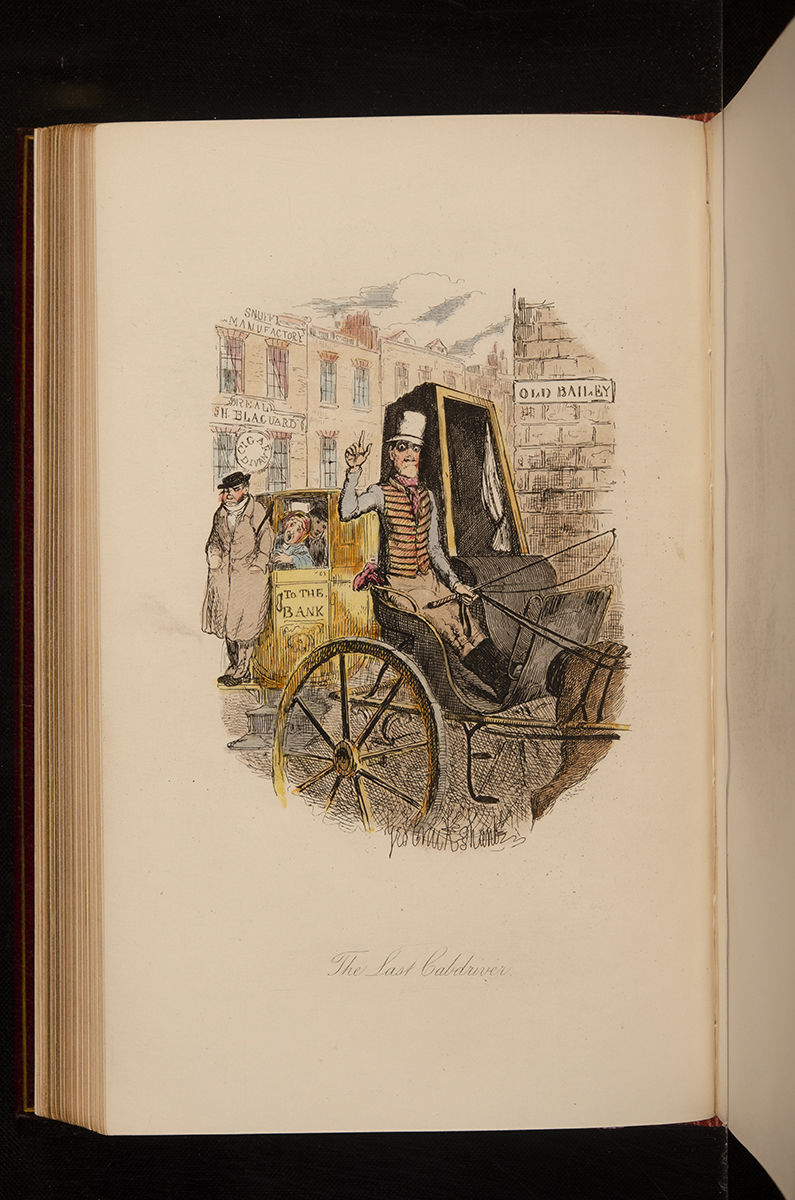
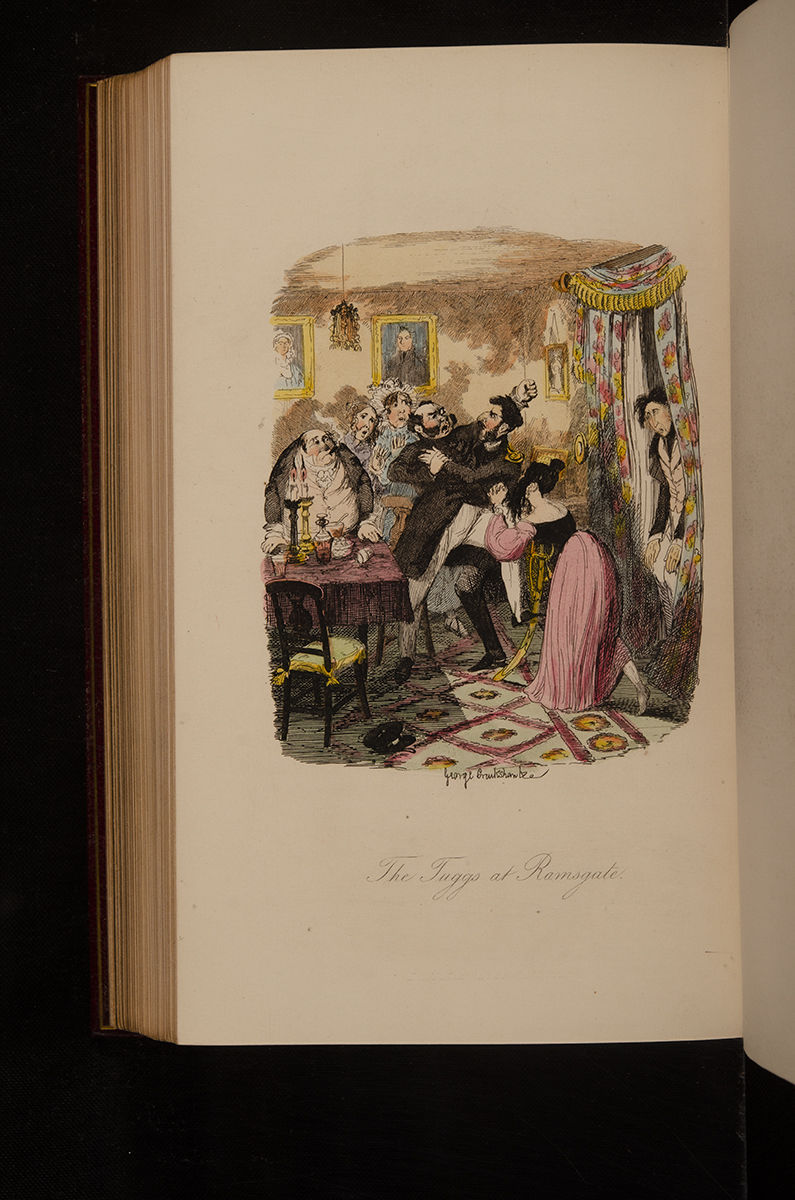
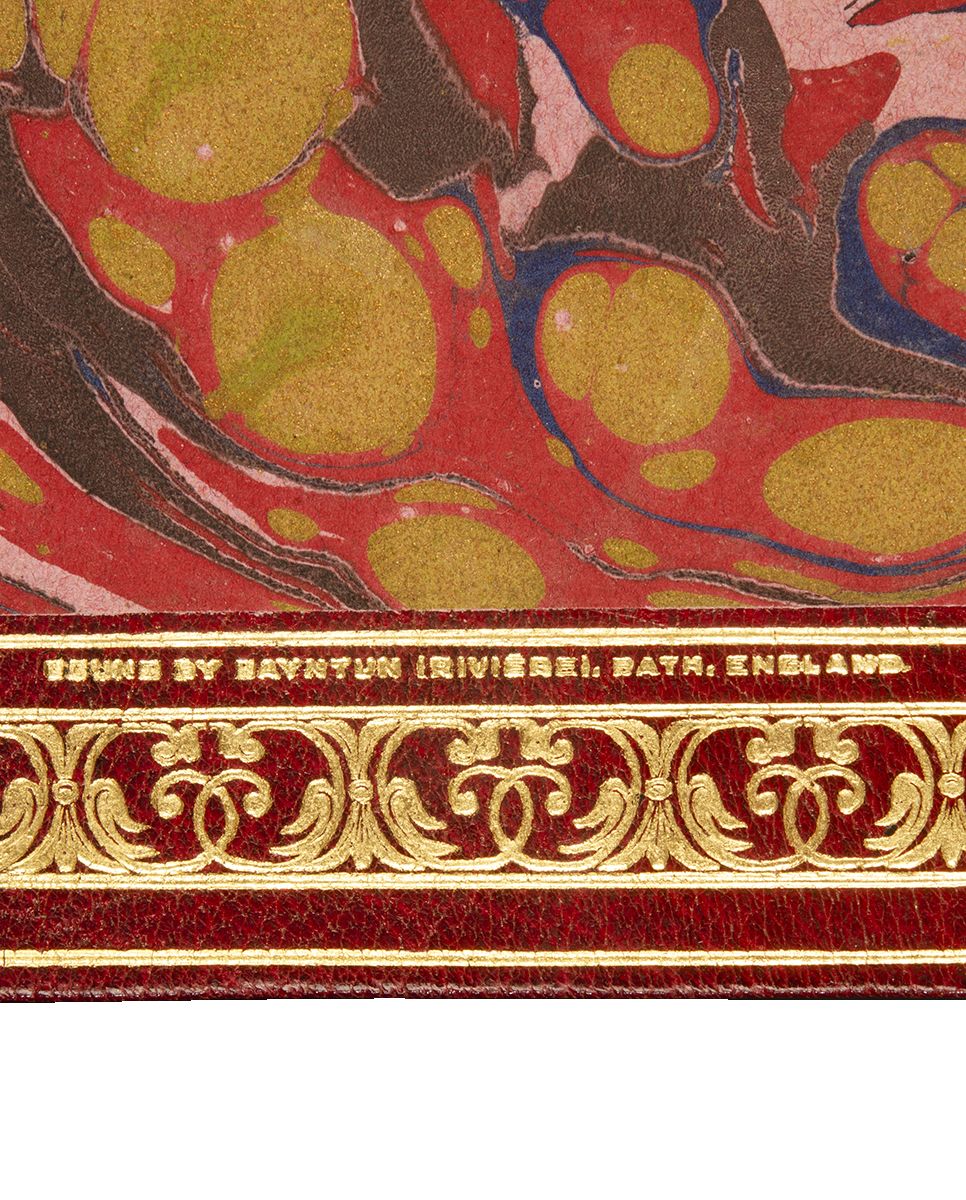
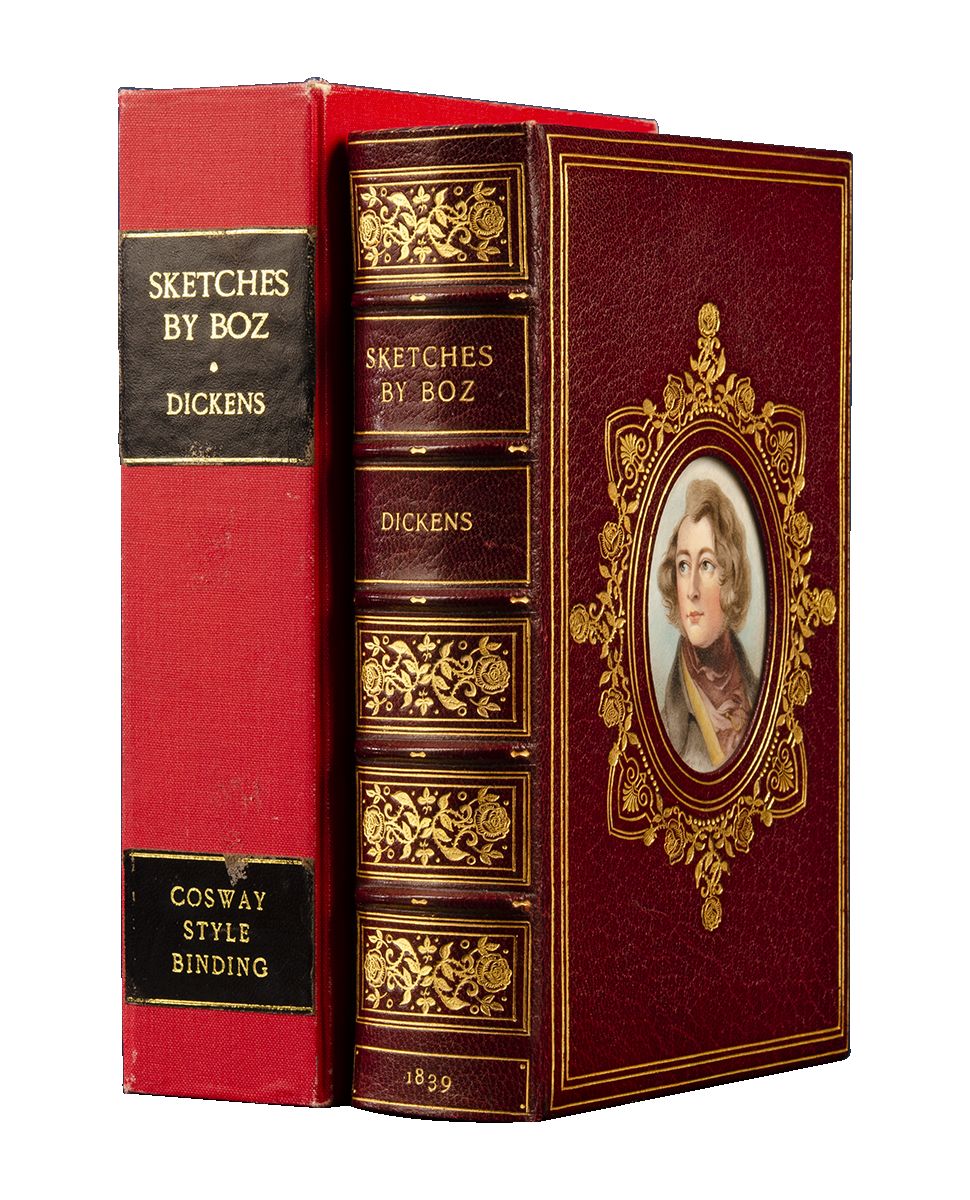
London: Chapman and Hall, 1839. Fine. First book form edition of the first and second series complete in one volume with Chapman and Hall revised texts and re-engraved plates used in their Parts issue. Octavo (8 1/8 x 5 1/4 inches; 208 x 133 mm.). [iii-vii]viii, [1-3]4-526. Forty inserted steel engravings. Extra-illustrated by the insertion of a duplicate suite of the original engravings expertly hand-colored. Bound by Bayntun (Rivière) Bath ca. 1955 (stamp-signed in gilt on front turn-in) in full wine red crushed levant morocco over beveled boards. Covers triple-ruled in gilt, front cover with an elaborate central gilt floral and thistle design surrounding a fine hand-painted portrait miniature (2 3/4 x 2 inches; 70 x 51 mm.) of a young Charles Dickens set under glass. Spine with five raised bands elaborately tooled and lettered in gilt in compartments. Decorative gilt board-edges, wide elaborate gilt turn-ins, marbled liners and endleaves, all edges gilt. Housed in the original felt-lined red cloth slipcase, spine with two black morocco labels lettered in gilt.
"This collection of short pieces contains the earliest of Dickens's work. It is undoubtedly the most valuable from the antiquarian's point of view, containing references and descriptions of life in the 30's to be found nowhere else" (Hayward). Sketches by Boz contains stories and vignettes about daily life in London that Dickens first published in various newspapers and other periodicals between 1833 and 1836. The book is divided into four sections: "Our Parish", "Scenes", "Characters" and "Tales." A classic example of Dickensian observation. A total of forty plates were drawn and etched by George Cruikshank for this octavo edition, of which twenty-seven are the original designs as they appeared in the First and Second Series of the Sketches published in volume form, 1836-37; these, however, were enlarged in size to match an additional thirteen etchings. "When Chapman and Hall obtained the copyright of Sketches in 1837, they published all of them in twenty monthly parts from November 1837 through June 1839. Cruikshank designed a cover, enlarged the plates (except 'The Free and Easy' which was discarded), and created 13 new illustrations for these monthly parts. In may 1839, Chapman and Hall published these parts complete in one volume with all 40 of Cruikshank's illustrations" (Smith).
George Bayntun (1873-1940) was the founder of Bayntun Bindery (1894) dedicated to using traditional hand-crafted techniques and high-quality materials. “The Riviere Bindery was one of the most notable and prolific shops in London's West End from about 1840 through 1939” (Princeton). Bath-based Bayntun Bindery acquired the firm in 1939, transforming into the “Bayntun-Riviere bindery,” which is still in existence and family owned. Although named after the English miniaturist Richard Cosway (1742-1821), the desirable “Cosway Binding” with its jewel-like portrait miniature set into a fine binding was first developed at the turn of the century by J.H. Stonehouse, director of London’s Henry Sotheran Booksellers. Their miniatures were painstakingly crafted by the talented painter Miss C. B. Currie (1849-1940). As the style grew in popularity, other publishing houses quickly began to reproduce this technique—each developing their own desirable take on the aesthetic—referred to as “Cosway style.”
Smith I: 2, note 4; Gimbel A7; Hatton and Cleaver, cf. pp. 91-128. Fine.
"This collection of short pieces contains the earliest of Dickens's work. It is undoubtedly the most valuable from the antiquarian's point of view, containing references and descriptions of life in the 30's to be found nowhere else" (Hayward). Sketches by Boz contains stories and vignettes about daily life in London that Dickens first published in various newspapers and other periodicals between 1833 and 1836. The book is divided into four sections: "Our Parish", "Scenes", "Characters" and "Tales." A classic example of Dickensian observation. A total of forty plates were drawn and etched by George Cruikshank for this octavo edition, of which twenty-seven are the original designs as they appeared in the First and Second Series of the Sketches published in volume form, 1836-37; these, however, were enlarged in size to match an additional thirteen etchings. "When Chapman and Hall obtained the copyright of Sketches in 1837, they published all of them in twenty monthly parts from November 1837 through June 1839. Cruikshank designed a cover, enlarged the plates (except 'The Free and Easy' which was discarded), and created 13 new illustrations for these monthly parts. In may 1839, Chapman and Hall published these parts complete in one volume with all 40 of Cruikshank's illustrations" (Smith).
George Bayntun (1873-1940) was the founder of Bayntun Bindery (1894) dedicated to using traditional hand-crafted techniques and high-quality materials. “The Riviere Bindery was one of the most notable and prolific shops in London's West End from about 1840 through 1939” (Princeton). Bath-based Bayntun Bindery acquired the firm in 1939, transforming into the “Bayntun-Riviere bindery,” which is still in existence and family owned. Although named after the English miniaturist Richard Cosway (1742-1821), the desirable “Cosway Binding” with its jewel-like portrait miniature set into a fine binding was first developed at the turn of the century by J.H. Stonehouse, director of London’s Henry Sotheran Booksellers. Their miniatures were painstakingly crafted by the talented painter Miss C. B. Currie (1849-1940). As the style grew in popularity, other publishing houses quickly began to reproduce this technique—each developing their own desirable take on the aesthetic—referred to as “Cosway style.”
Smith I: 2, note 4; Gimbel A7; Hatton and Cleaver, cf. pp. 91-128. Fine.