

Sir Walter Scott (Extra-illustrated)



- London: Cassell and Company Ltd, 1932
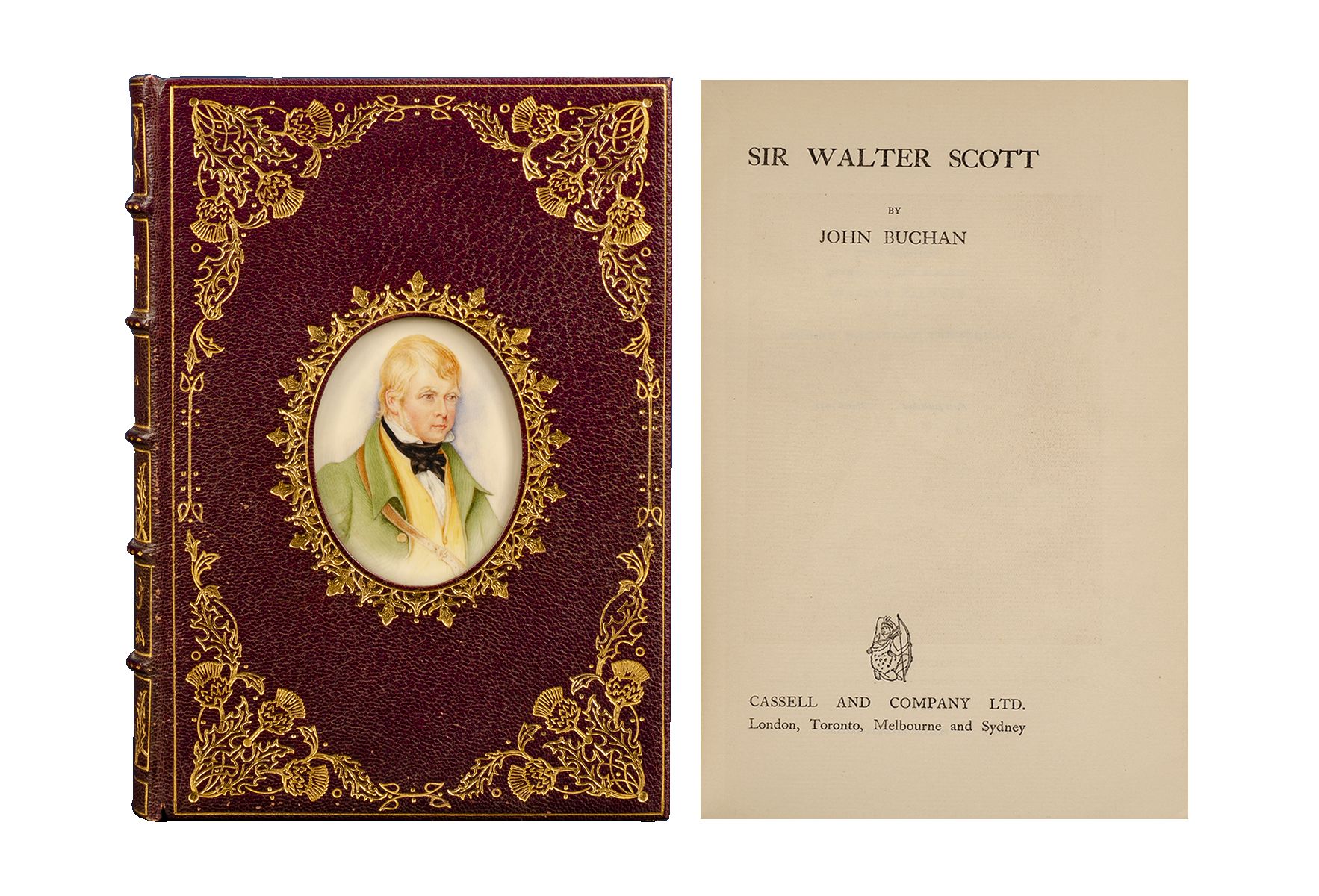
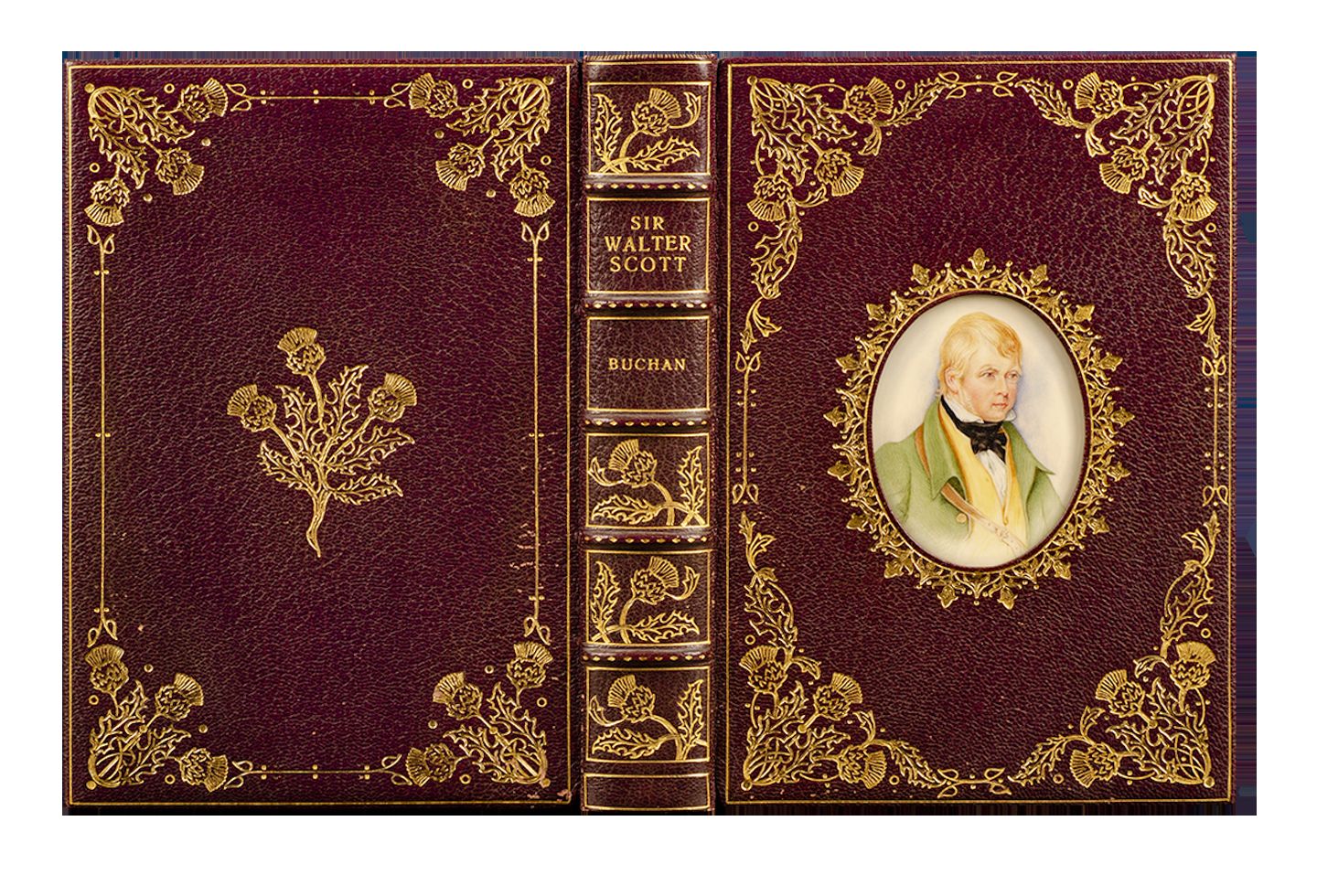
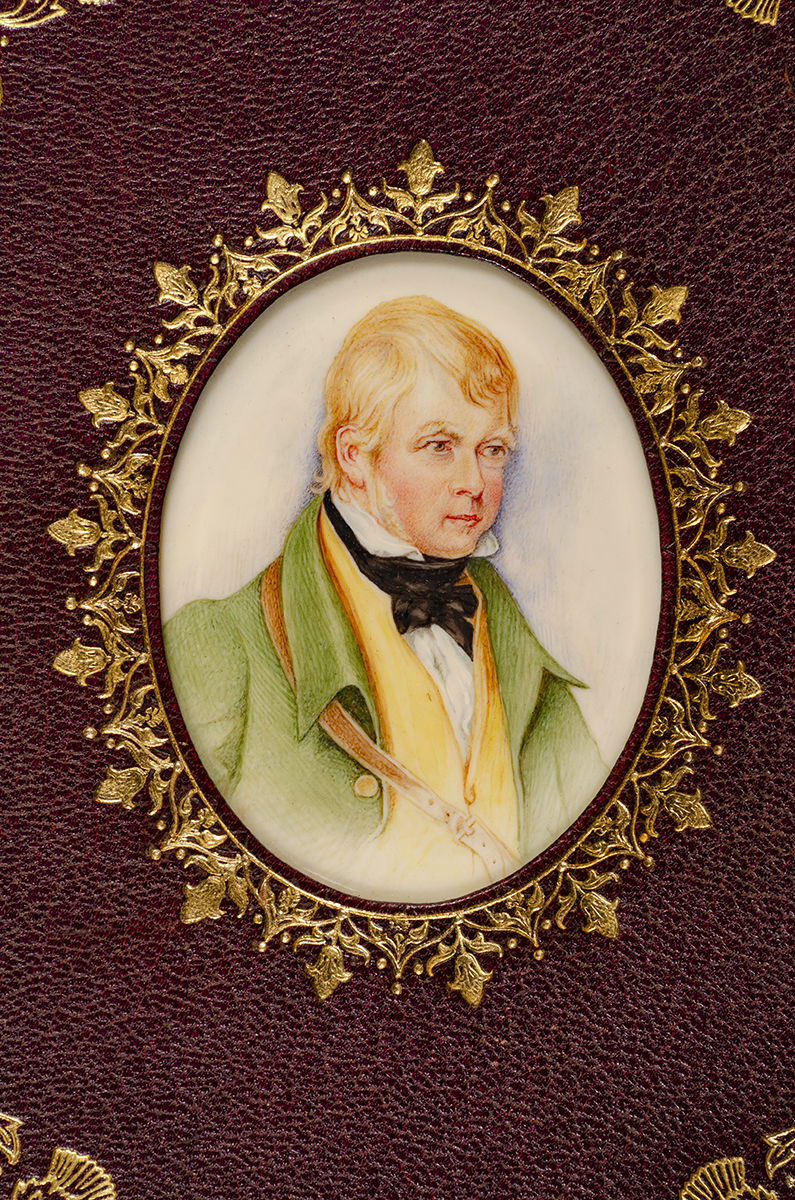
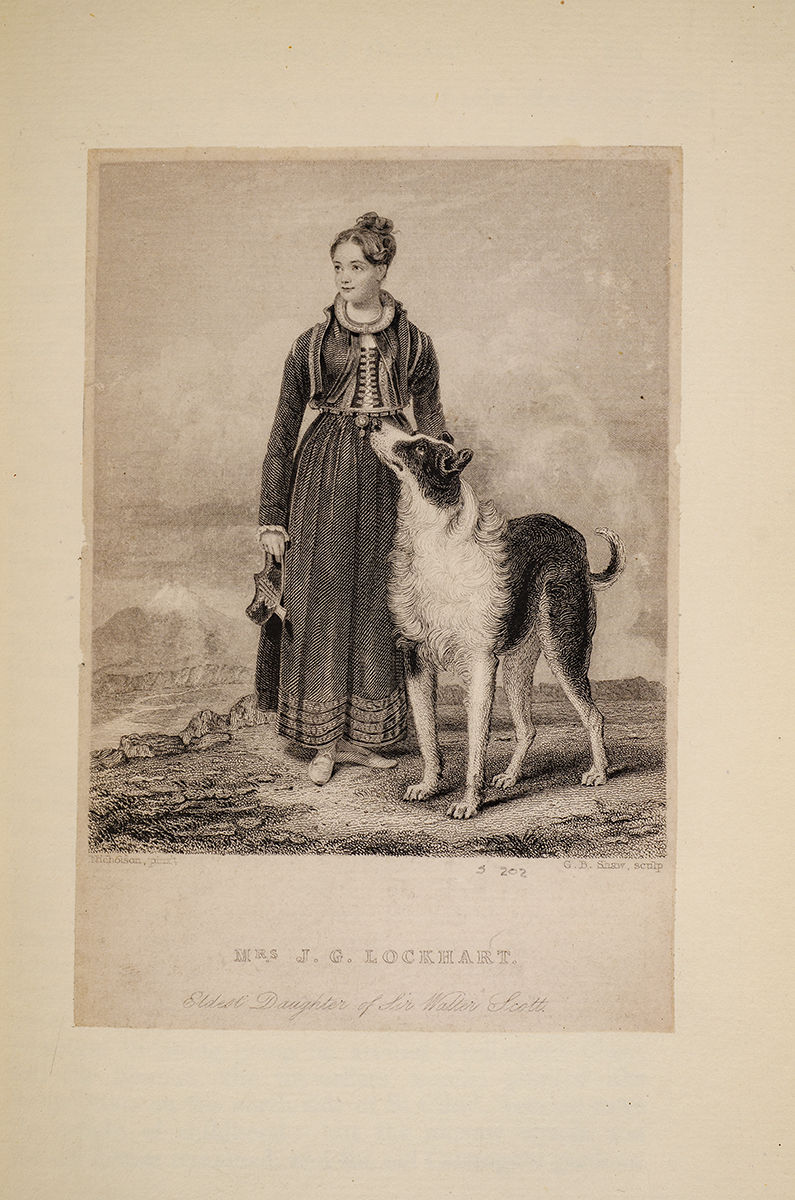
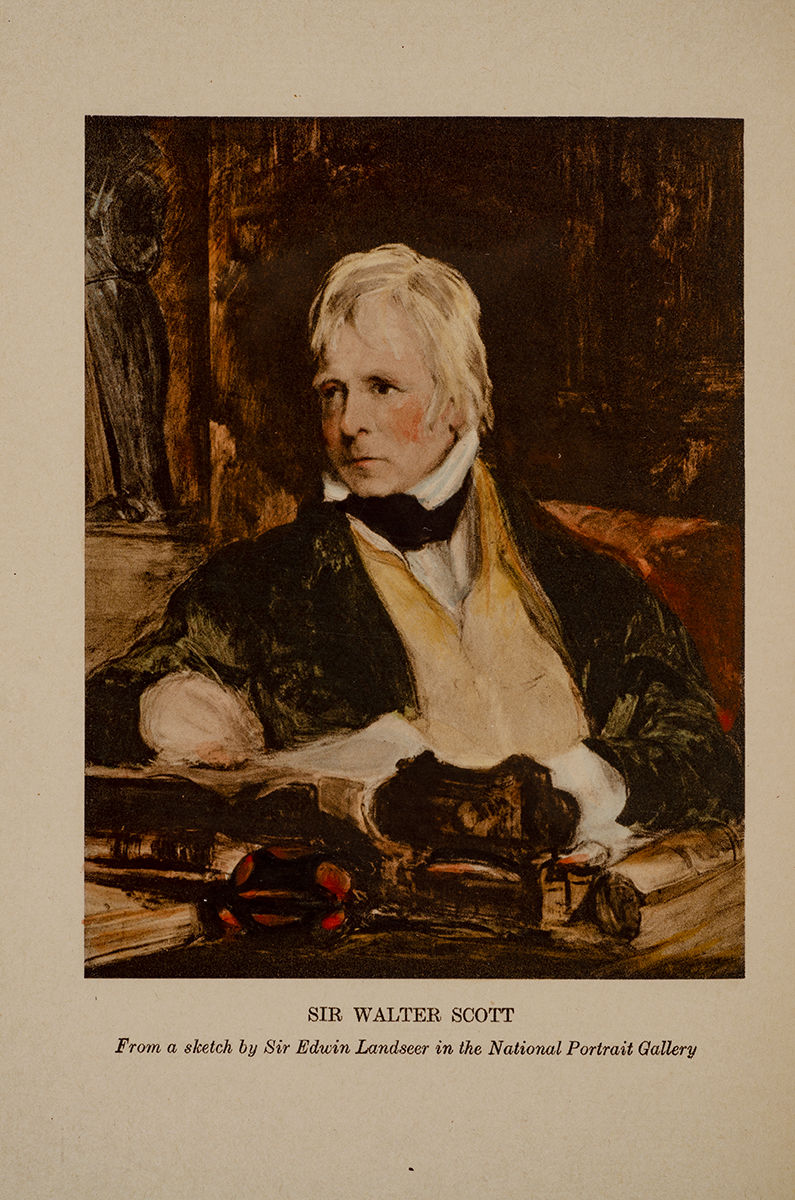
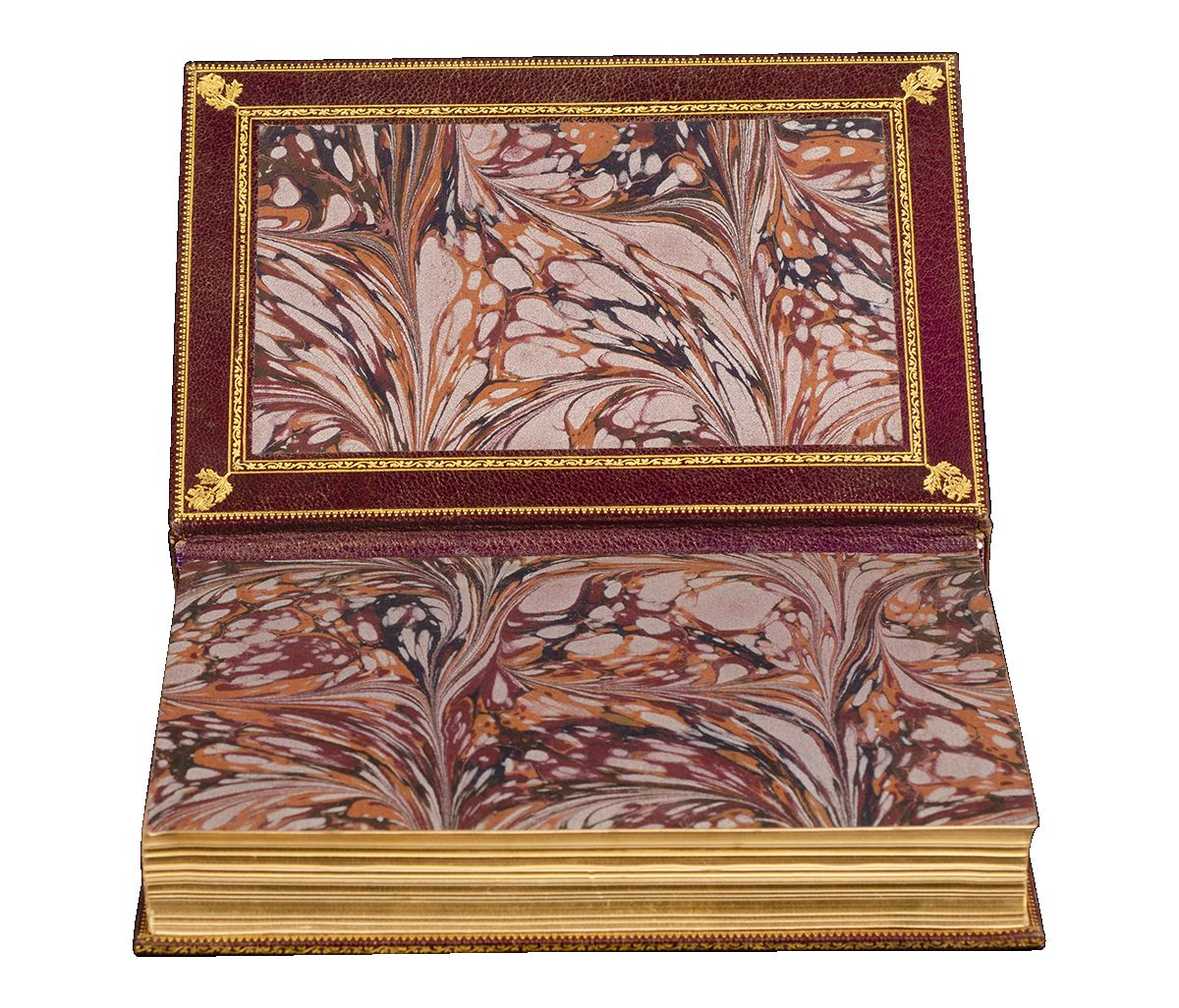
London: Cassell and Company Ltd, 1932. First edition. Fine. Octavo (8 5/8 x 6 inches; 219 x 152 mm.). 388 pp. Extra illustrated by the insertion of twelve plates, three of which are hand colored. A fine Cosway-Style binding by Bayntun (Rivière) ca. 1940, stamp signed in gilt on front turn-in. Full sangria red morocco, covers elaborately tooled in gilt in a fine thistle design. Front cover with a fine hand-painted oval portrait miniature (3 1/4 x 2 1/2 inches; 82 x 63 mm.) of a young Sir Walter Scott, set under glass and surrounded by a fine thistle design in gilt. Spine with five raised bands, decoratively tooled with a thistle design and lettered in gilt in compartments. Decorative gilt board edges and wide turn-ins. Marbled liners and endleaves, all edges gilt. Housed in the original felt-lined purple cloth clamshell case, spine lettered in gilt.
Sir Walter Scott was a preeminent Scottish author, historian, and biographer famed for his historical fiction and poetry. “Waverley, which he published anonymously in 1814, is now considered the first historical novel in Western literature. This story revolves around the Jacobite Rebellion of 1745” (Poetry Foundation). This biography was written by John Buchan (1875-1940) another prolific Scottish novelist and historian, whose works include The Thirty-Nine Steps and Greenmantle. He was also a Unionist politician who served as Governor General of Canada and studied classics at the University of Glasgow.
George Bayntun (1873-1940) was the founder of Bayntun Bindery (1894) dedicated to using traditional hand-crafted techniques and high-quality materials. “The Riviere Bindery was one of the most notable and prolific shops in London's West End from about 1840 through 1939” (Princeton). Bath-based Bayntun Bindery acquired the firm in 1939, transforming into the “Bayntun-Riviere bindery,” which is still in existence and family owned. Although named after the English miniaturist Richard Cosway (1742-1821), the desirable “Cosway Binding” with its jewel-like portrait miniature set into a fine binding was first developed at the turn of the century by J.H. Stonehouse, director of London’s Henry Sotheran Booksellers. Their miniatures were painstakingly crafted by the talented painter Miss C. B. Currie (1849-1940). As the style grew in popularity, other publishing houses quickly began to reproduce this technique—each developing their own desirable take on the aesthetic—referred to as “Cosway style.”. Fine.
Sir Walter Scott was a preeminent Scottish author, historian, and biographer famed for his historical fiction and poetry. “Waverley, which he published anonymously in 1814, is now considered the first historical novel in Western literature. This story revolves around the Jacobite Rebellion of 1745” (Poetry Foundation). This biography was written by John Buchan (1875-1940) another prolific Scottish novelist and historian, whose works include The Thirty-Nine Steps and Greenmantle. He was also a Unionist politician who served as Governor General of Canada and studied classics at the University of Glasgow.
George Bayntun (1873-1940) was the founder of Bayntun Bindery (1894) dedicated to using traditional hand-crafted techniques and high-quality materials. “The Riviere Bindery was one of the most notable and prolific shops in London's West End from about 1840 through 1939” (Princeton). Bath-based Bayntun Bindery acquired the firm in 1939, transforming into the “Bayntun-Riviere bindery,” which is still in existence and family owned. Although named after the English miniaturist Richard Cosway (1742-1821), the desirable “Cosway Binding” with its jewel-like portrait miniature set into a fine binding was first developed at the turn of the century by J.H. Stonehouse, director of London’s Henry Sotheran Booksellers. Their miniatures were painstakingly crafted by the talented painter Miss C. B. Currie (1849-1940). As the style grew in popularity, other publishing houses quickly began to reproduce this technique—each developing their own desirable take on the aesthetic—referred to as “Cosway style.”. Fine.