

James Francis Edward - The Old Chevalier
- London: J.M. Dent & Co, 1907
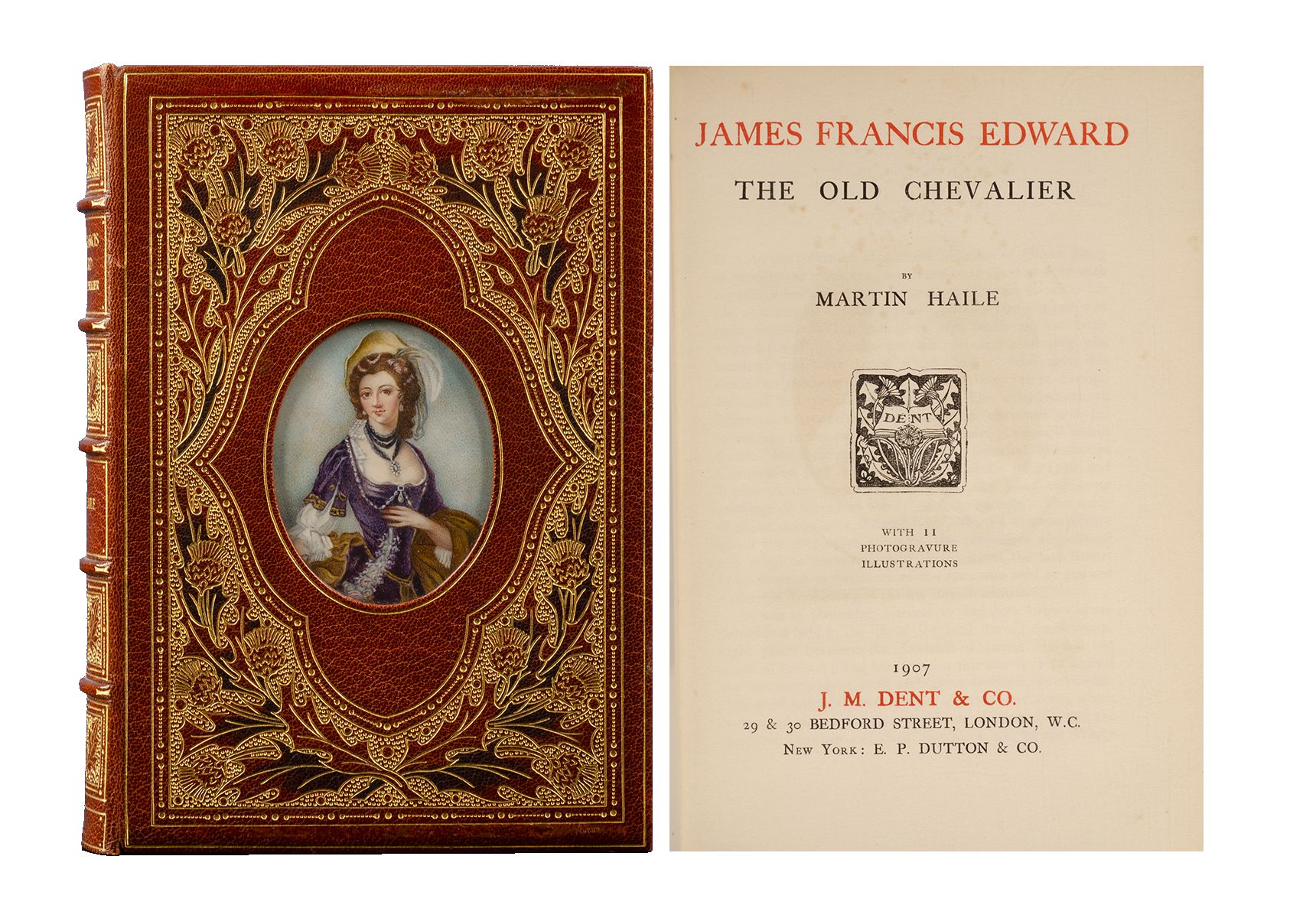
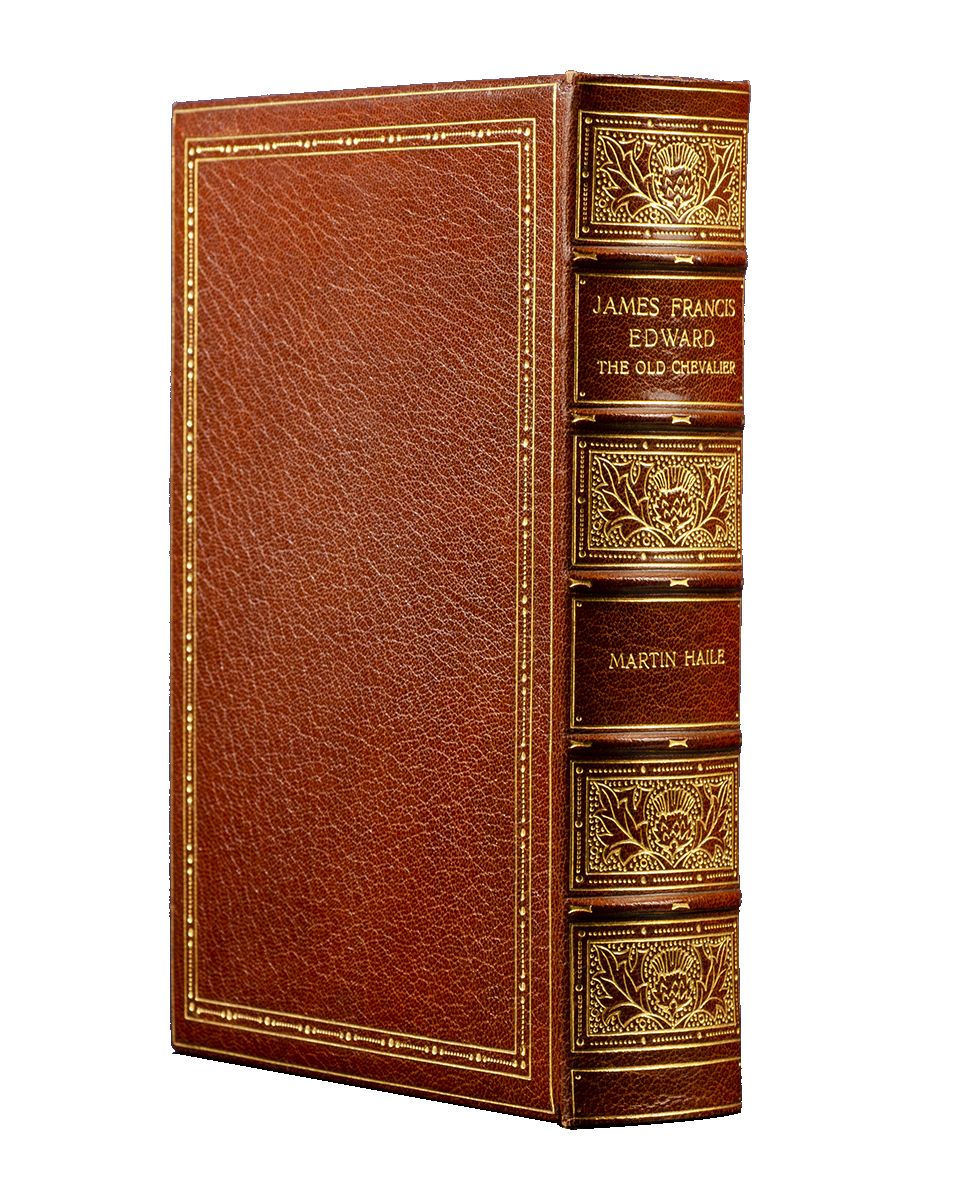
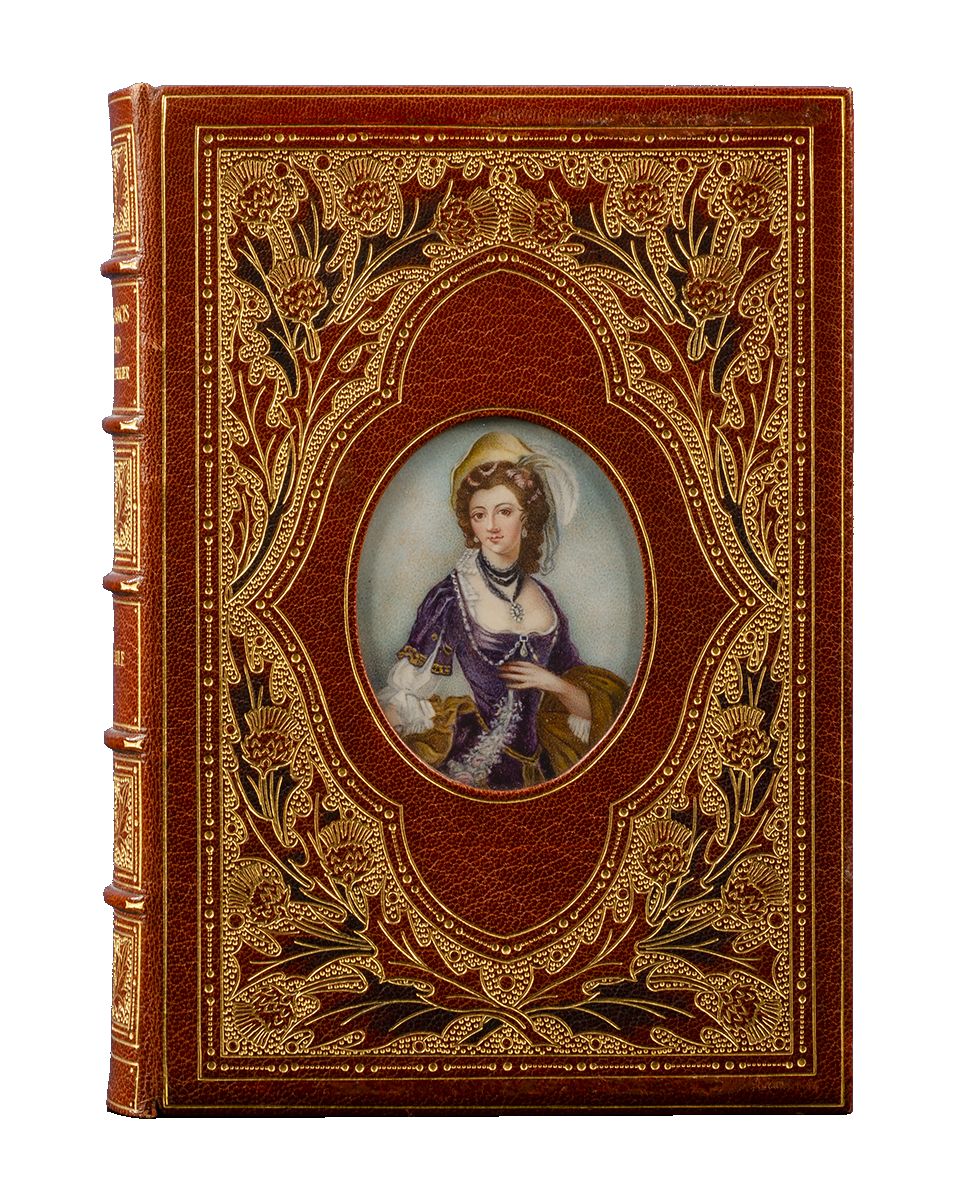
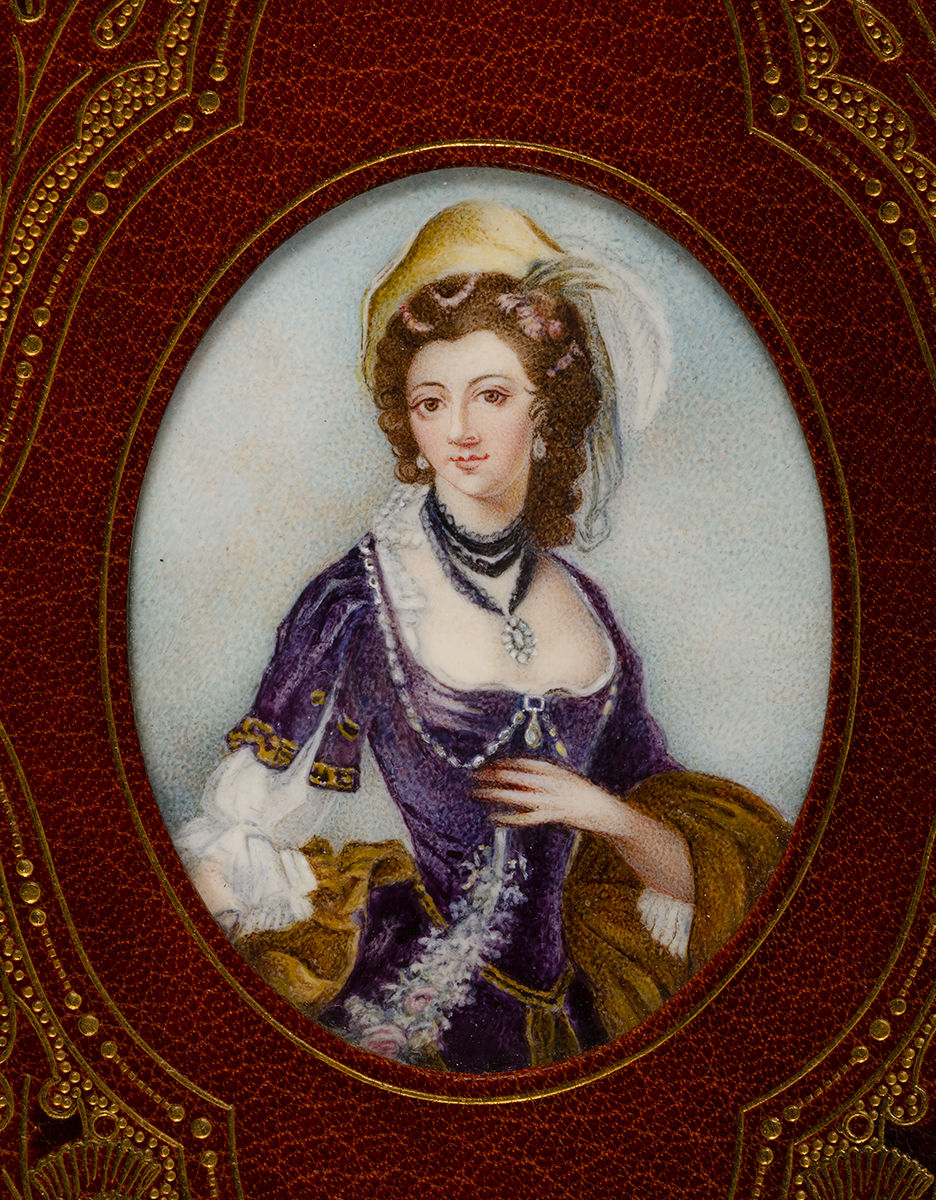
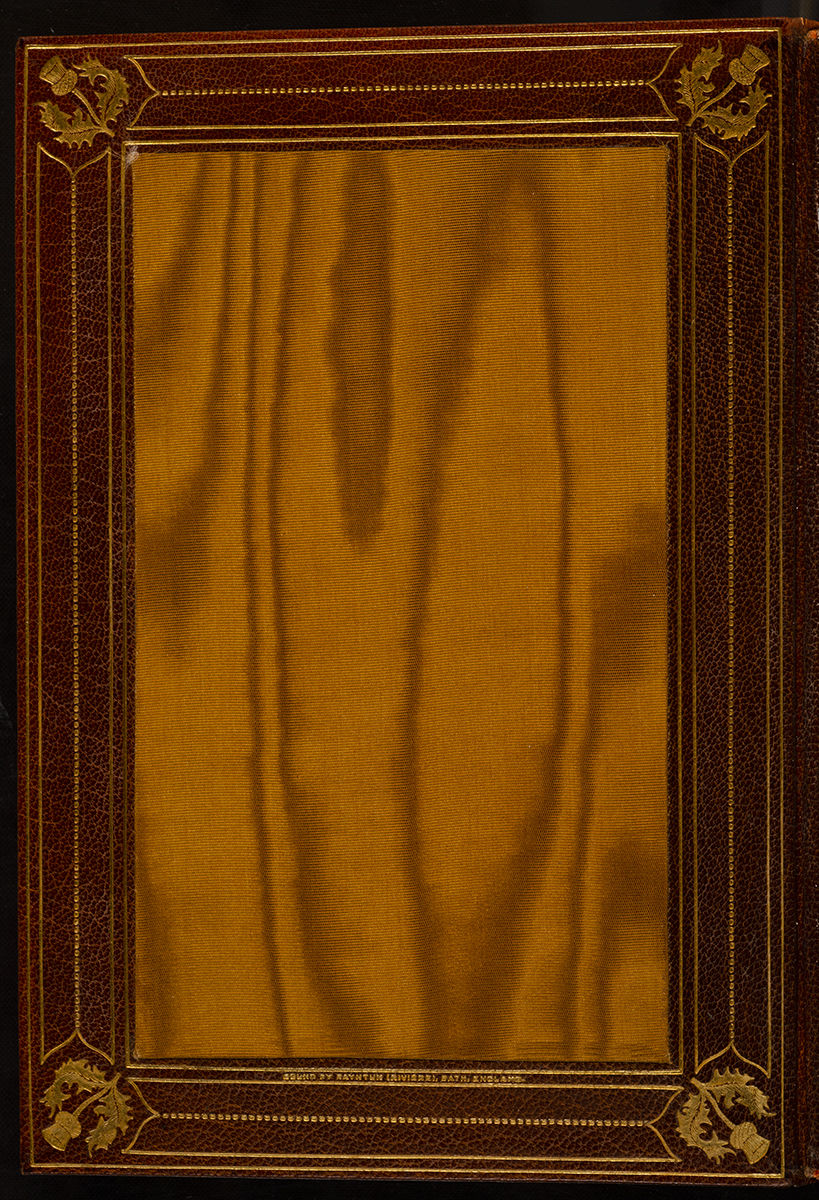
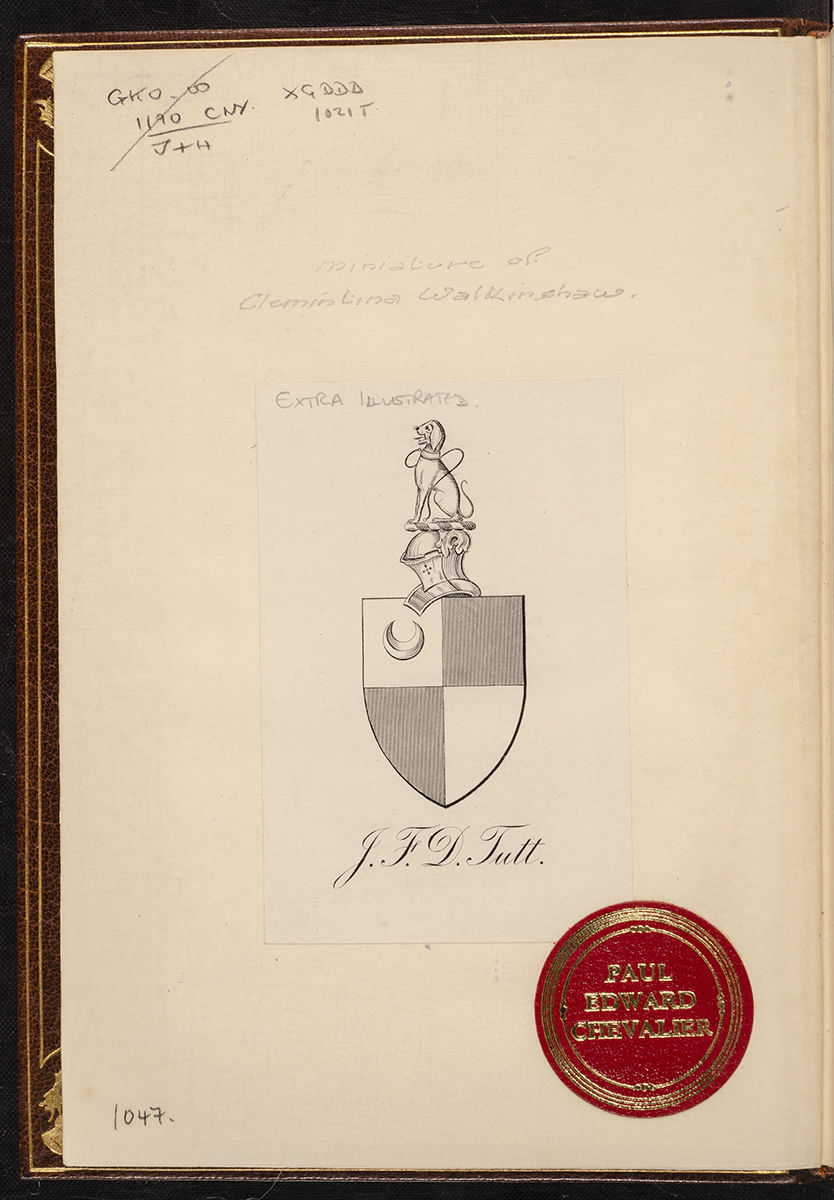
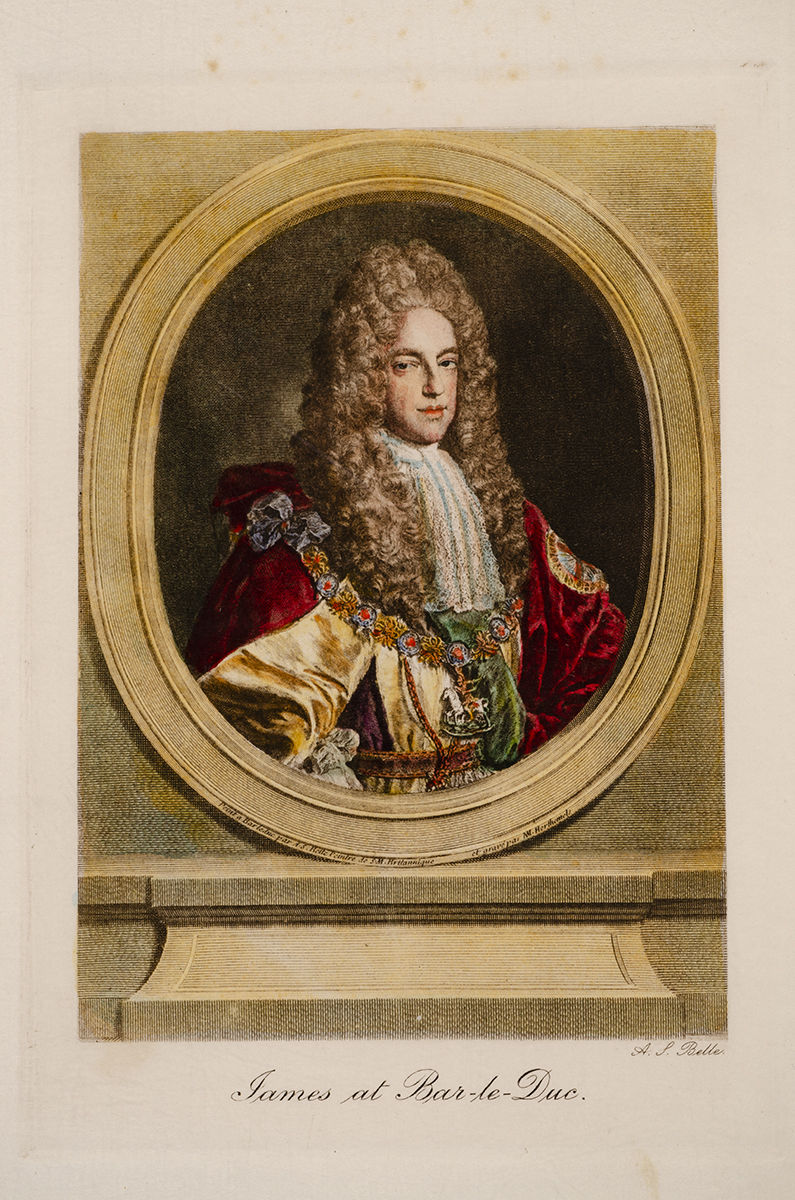
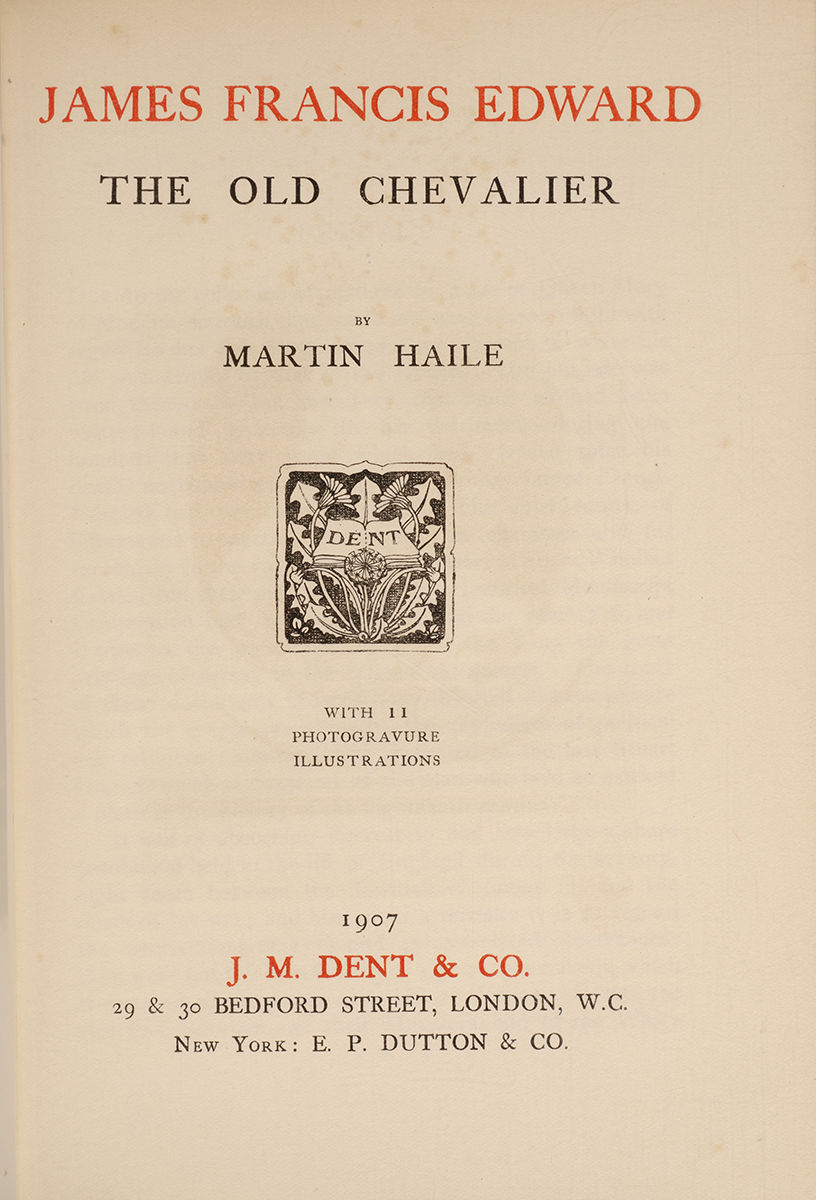
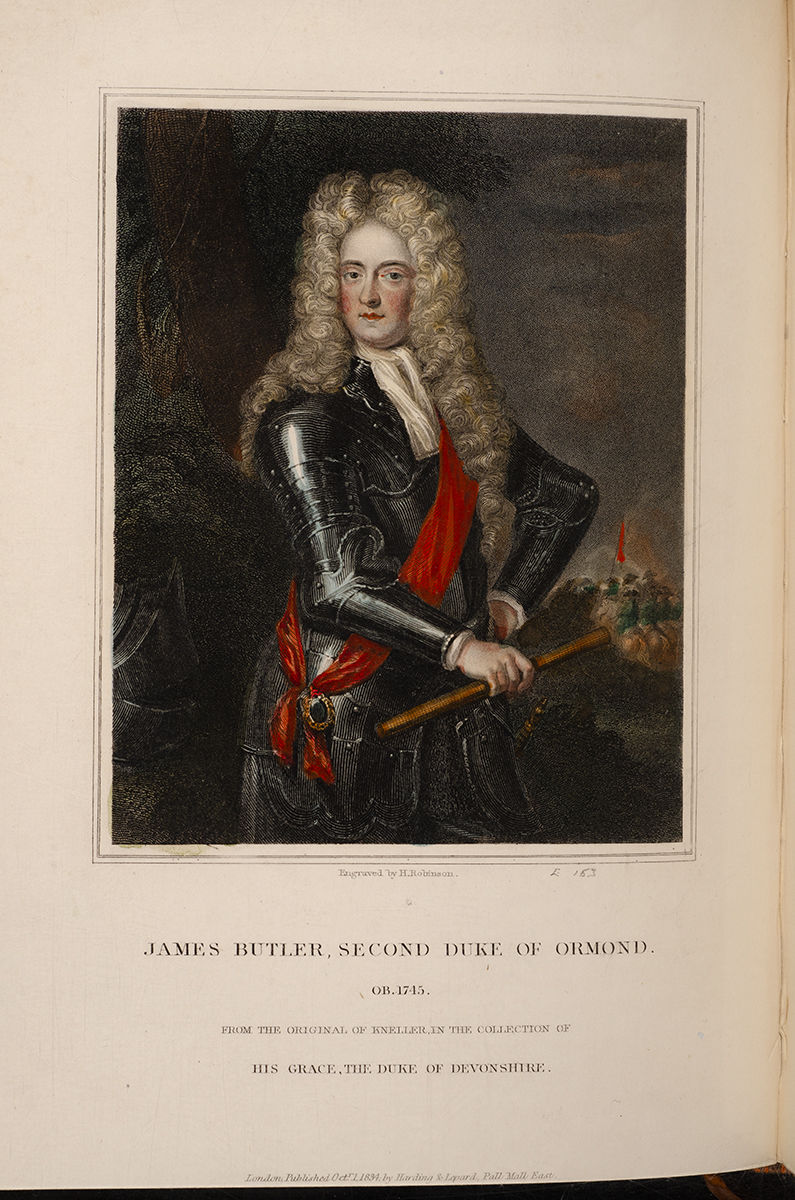
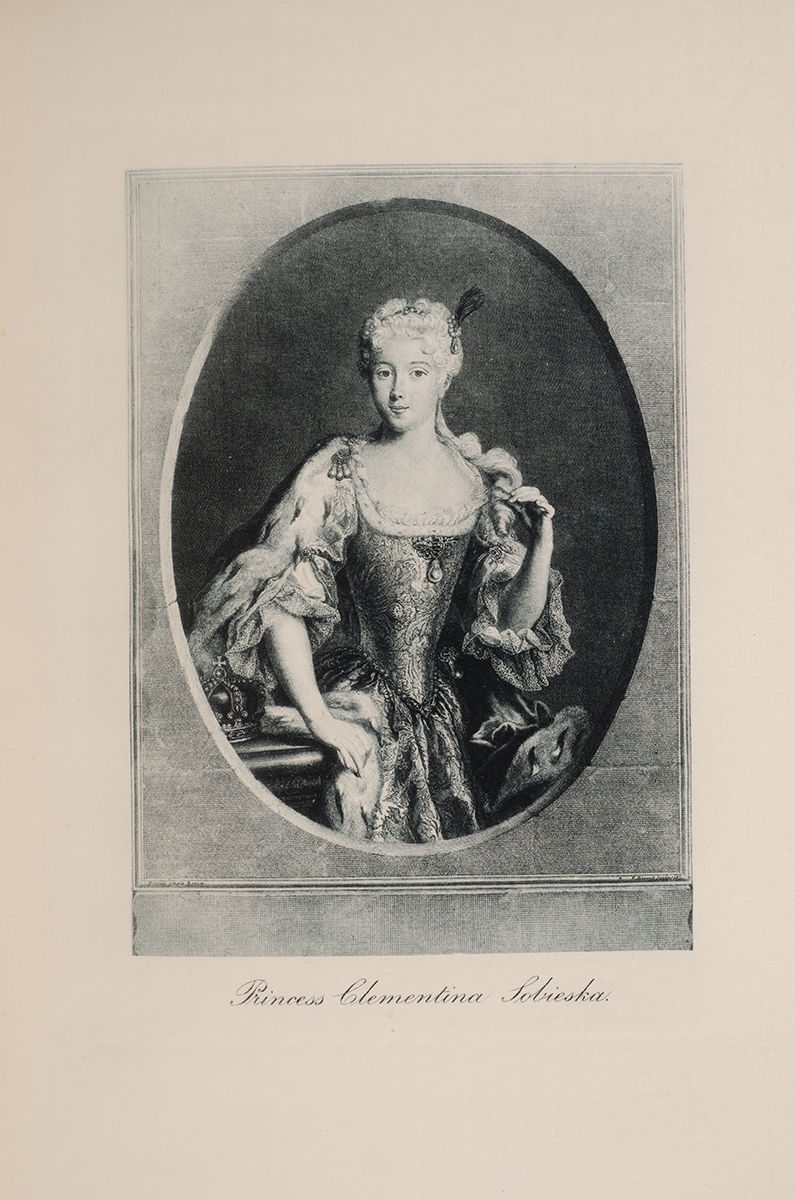
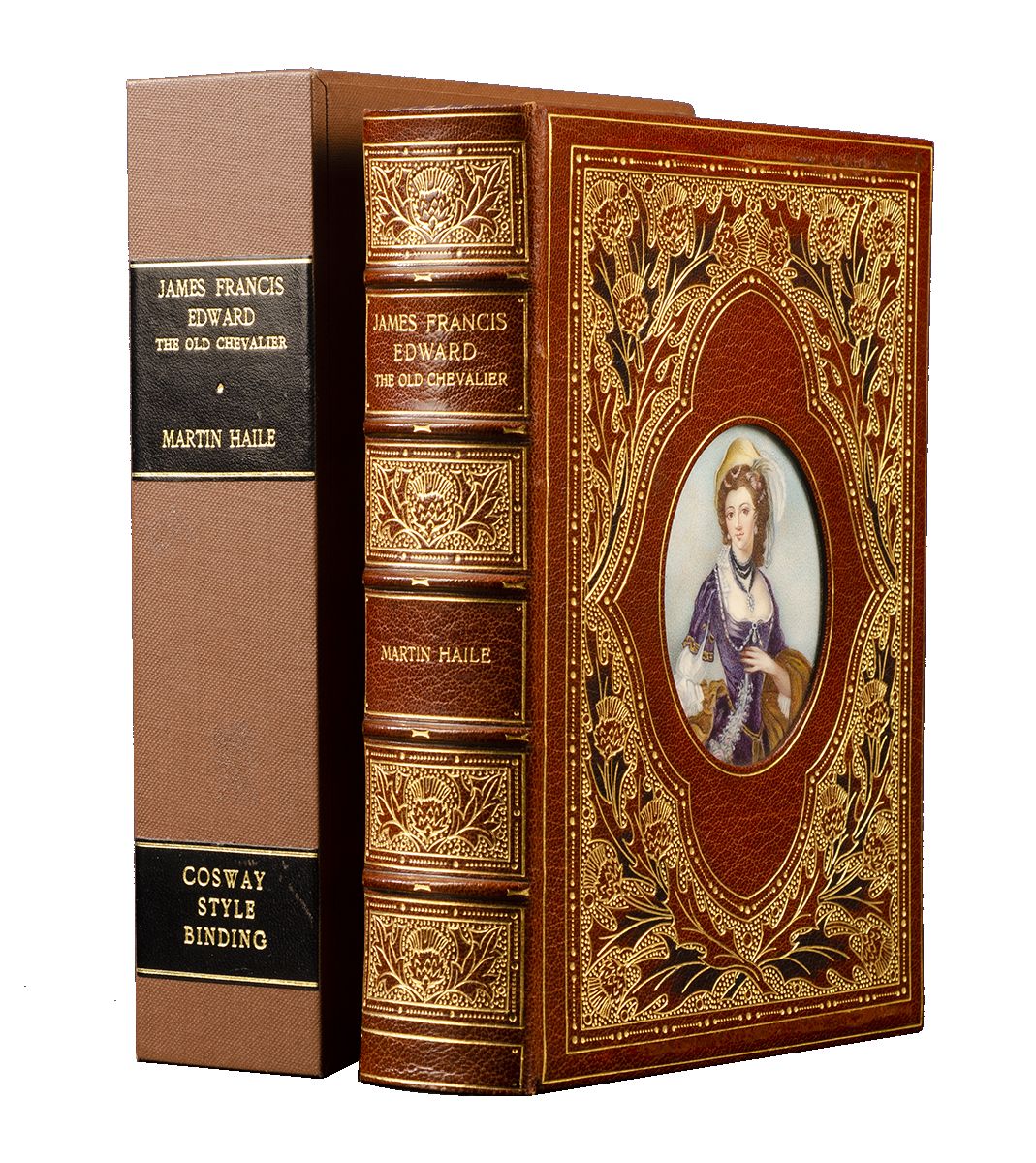
London: J.M. Dent & Co, 1907. First edition. Fine. Octavo (9 5/8 x 6 inches; 218 x 152 mm.). [i]-xii, [xiii, list of illustrations], [xiv, blank], 1-479, [1, printers imprint] pp. Title-page printed in black and red. Eleven (on ten) photogravure plates, extra-illustrated by the insertion of twelve engraved plates, three of which are hand-colored. Bound ca. 1940 by Bayntun-Rivière, stamp-signed in gilt on front turn-in. Full brown crushed levant morocco, both covers with single gilt fillet around a double-ruled and gilt-dotted inner border. Front cover with a broad panel border of gilt-tooled thistles and gilt dots, portions of the background with leather dyed black. In the center a large gilt arabesque lozenge framing a fine oval portrait miniature set under glass (measuring 3 1/4 x 2 1/2 inches; 82 x 63 mm.) of Clementina Walkinshaw. Spine with five raised bands elaborately decorated in gilt in a repeated thistle and dot design, lettered in gilt in two compartments. Gilt-dotted board edges, decorative gilt turn-ins with thistle corner pieces, brown watered silk liners and endleaves. Housed in the original felt-lined brown cloth slipcase, spine with two black morocco labels lettered in gilt. A superb example of a Bayntun-Rivière Cosway-Style binding. From the renowned collections of J.F.D. Tutt and Paul Edward Chevalier with their bookplates on verso of front endleaf.
Prince James Francis Edward Stuart (1688-1766) was the “only son of James II and Mary of Modena, he was raised in exile in France after his father was deposed in 1688 in favour of the Protestant William of Orange. Known as the 'Old Pretender', he became the focus of Jacobite resistance and mounted several unsuccessful campaigns to reclaim the throne in 1706, 1708 and finally in 1715 when he landed at Peterhead in Scotland. He married the Polish Princess Maria Clementina Sobieska in 1719 and spent much of the remainder of his life in exile in Rome” (Early Georgian Portraits). A final attempt at rebellion, led by his son Charles Edward Stuart, aka Bonnie Prince Charlie, was made in the Jacobite rising of 1745. The portrait medallion on the front cover depicts, not an image of the titular character, but one of Clementina Maria Sophia Walkinshaw (1720-1802) was the Glaswegian mistress of Bonnie Prince Charlie.
The book was owned by John Francis Donald Tutt (1893-1971) a renowned veterinary surgeon and collector of fine bindings, whose library (including the present binding) was sold at Sotheby's London in October 1983. It was also in the library of Paul Edward Chevalier (born 1939), who collected fine bindings including jeweled and Cosway styles. Over twelve years he assembled what was possibly America’s finest private collection of British, American and European bindings from the late 19th and early 20th centuries. The collection was sold at Christie's New York, November 9th, 1990.
George Bayntun (1873-1940) was the founder of Bayntun Bindery (1894) dedicated to using traditional hand-crafted techniques and high-quality materials. “The Riviere Bindery was one of the most notable and prolific shops in London's West End from about 1840 through 1939” (Princeton). Bath-based Bayntun Bindery acquired the firm in 1939, transforming into the “Bayntun-Riviere bindery,” which is still in existence and family owned. Although named after the English miniaturist Richard Cosway (1742-1821), the desirable “Cosway Binding” with its jewel-like portrait miniature set into a fine binding was first developed at the turn of the century by J.H. Stonehouse, director of London’s Henry Sotheran Booksellers. Their miniatures were painstakingly crafted by the talented painter Miss C. B. Currie (1849-1940). As the style grew in popularity, other publishing houses quickly began to reproduce this technique—each developing their own desirable take on the aesthetic—referred to as “Cosway style.”. Fine.
Prince James Francis Edward Stuart (1688-1766) was the “only son of James II and Mary of Modena, he was raised in exile in France after his father was deposed in 1688 in favour of the Protestant William of Orange. Known as the 'Old Pretender', he became the focus of Jacobite resistance and mounted several unsuccessful campaigns to reclaim the throne in 1706, 1708 and finally in 1715 when he landed at Peterhead in Scotland. He married the Polish Princess Maria Clementina Sobieska in 1719 and spent much of the remainder of his life in exile in Rome” (Early Georgian Portraits). A final attempt at rebellion, led by his son Charles Edward Stuart, aka Bonnie Prince Charlie, was made in the Jacobite rising of 1745. The portrait medallion on the front cover depicts, not an image of the titular character, but one of Clementina Maria Sophia Walkinshaw (1720-1802) was the Glaswegian mistress of Bonnie Prince Charlie.
The book was owned by John Francis Donald Tutt (1893-1971) a renowned veterinary surgeon and collector of fine bindings, whose library (including the present binding) was sold at Sotheby's London in October 1983. It was also in the library of Paul Edward Chevalier (born 1939), who collected fine bindings including jeweled and Cosway styles. Over twelve years he assembled what was possibly America’s finest private collection of British, American and European bindings from the late 19th and early 20th centuries. The collection was sold at Christie's New York, November 9th, 1990.
George Bayntun (1873-1940) was the founder of Bayntun Bindery (1894) dedicated to using traditional hand-crafted techniques and high-quality materials. “The Riviere Bindery was one of the most notable and prolific shops in London's West End from about 1840 through 1939” (Princeton). Bath-based Bayntun Bindery acquired the firm in 1939, transforming into the “Bayntun-Riviere bindery,” which is still in existence and family owned. Although named after the English miniaturist Richard Cosway (1742-1821), the desirable “Cosway Binding” with its jewel-like portrait miniature set into a fine binding was first developed at the turn of the century by J.H. Stonehouse, director of London’s Henry Sotheran Booksellers. Their miniatures were painstakingly crafted by the talented painter Miss C. B. Currie (1849-1940). As the style grew in popularity, other publishing houses quickly began to reproduce this technique—each developing their own desirable take on the aesthetic—referred to as “Cosway style.”. Fine.