

After Worcester Fight


- London: John Lane, The Bodley Head, 1904
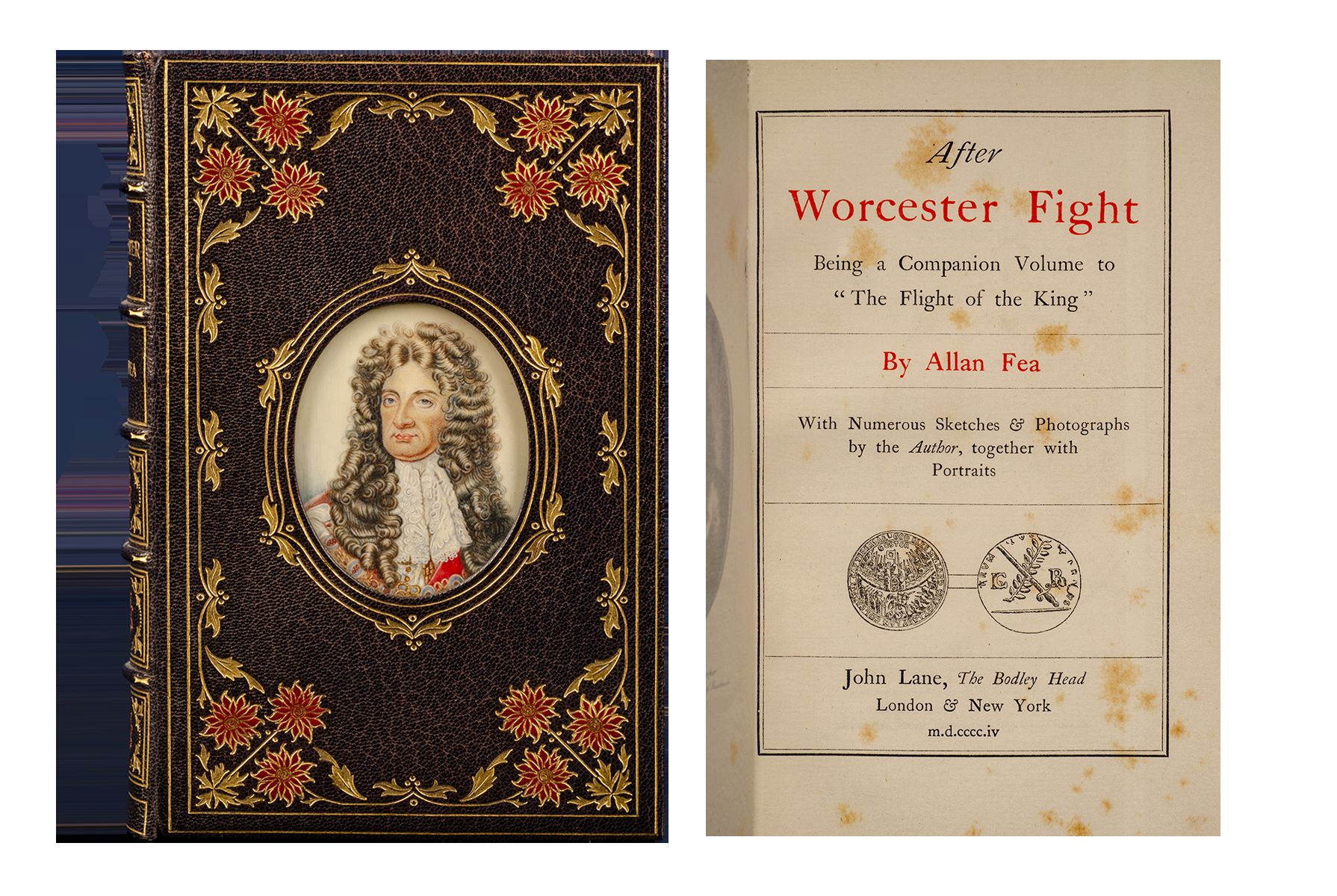
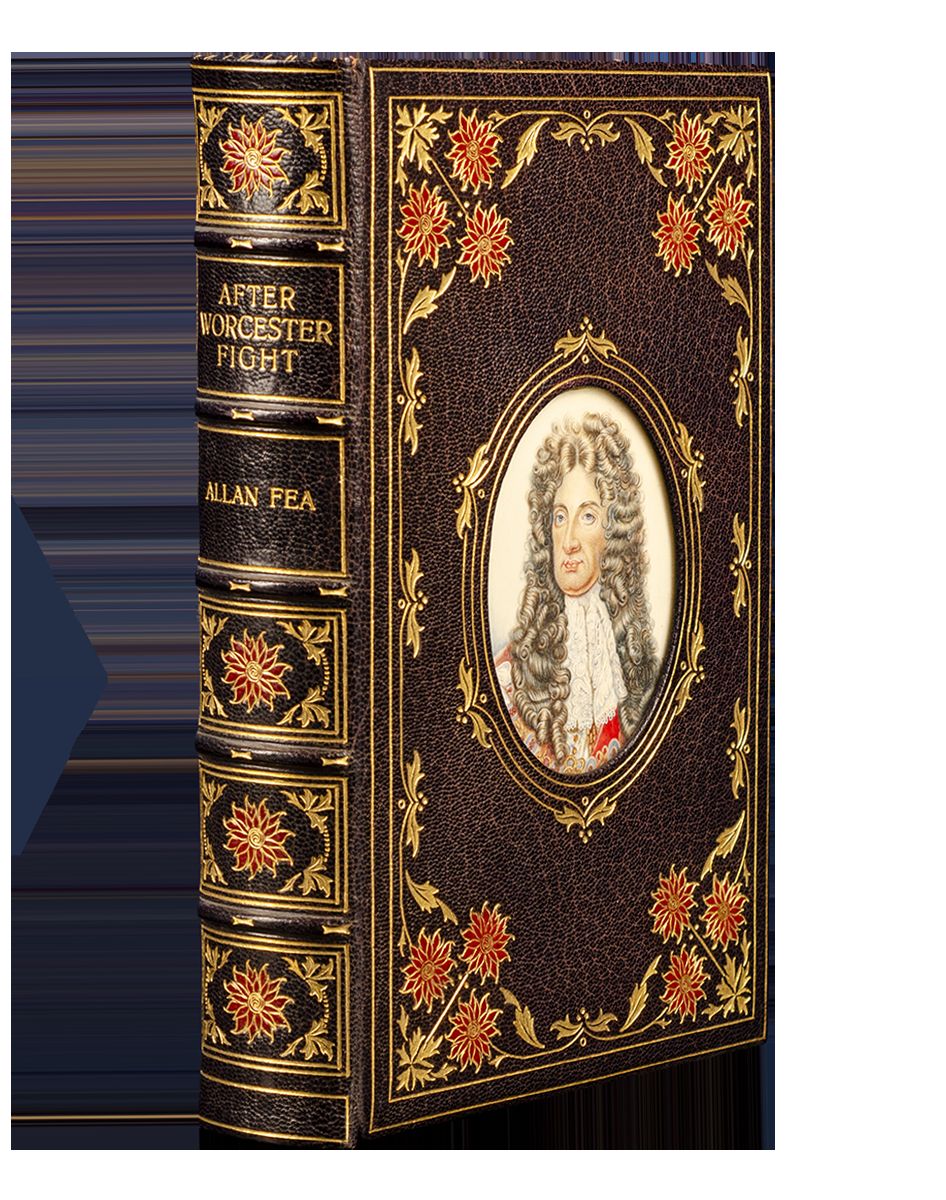
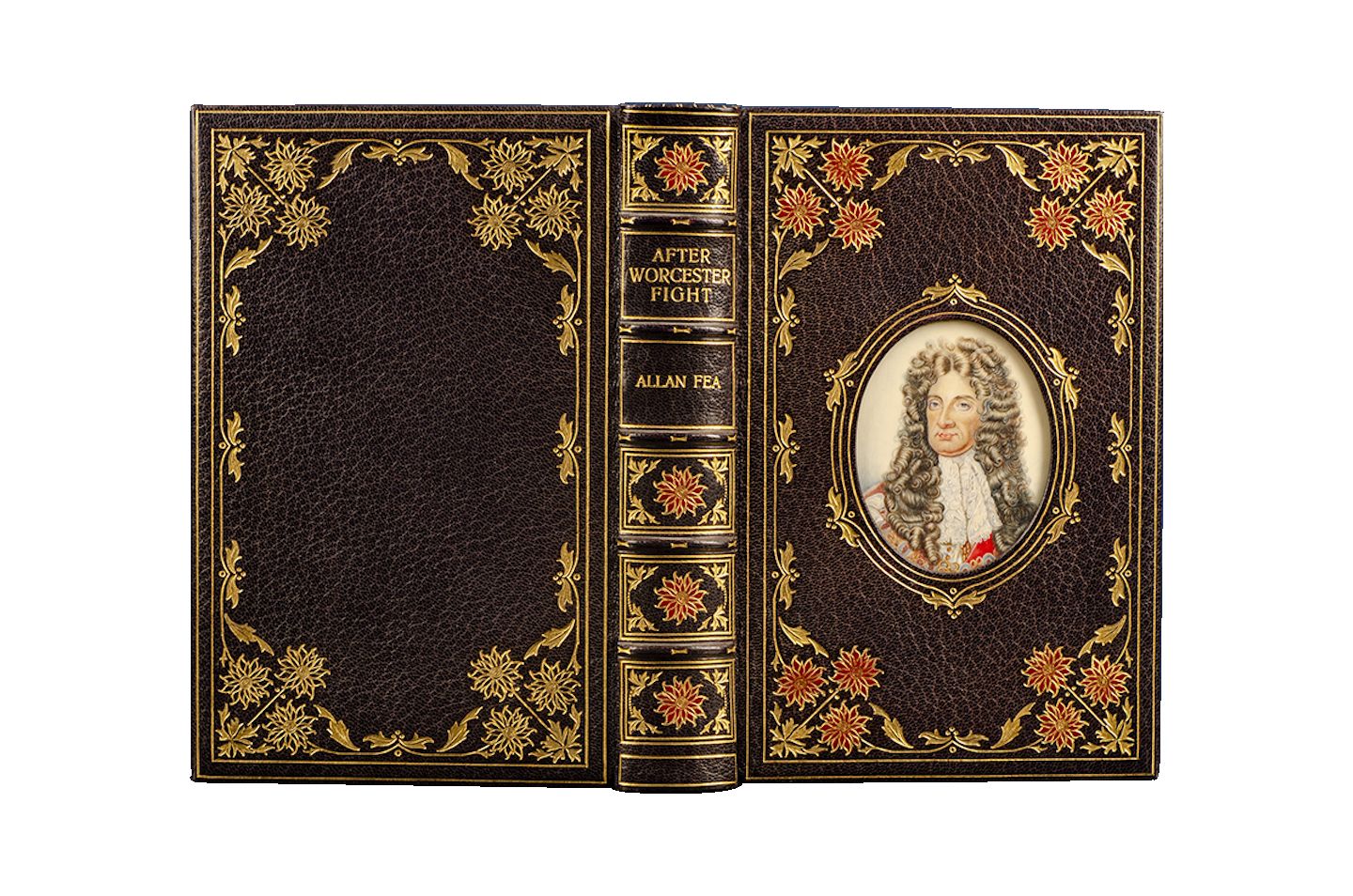
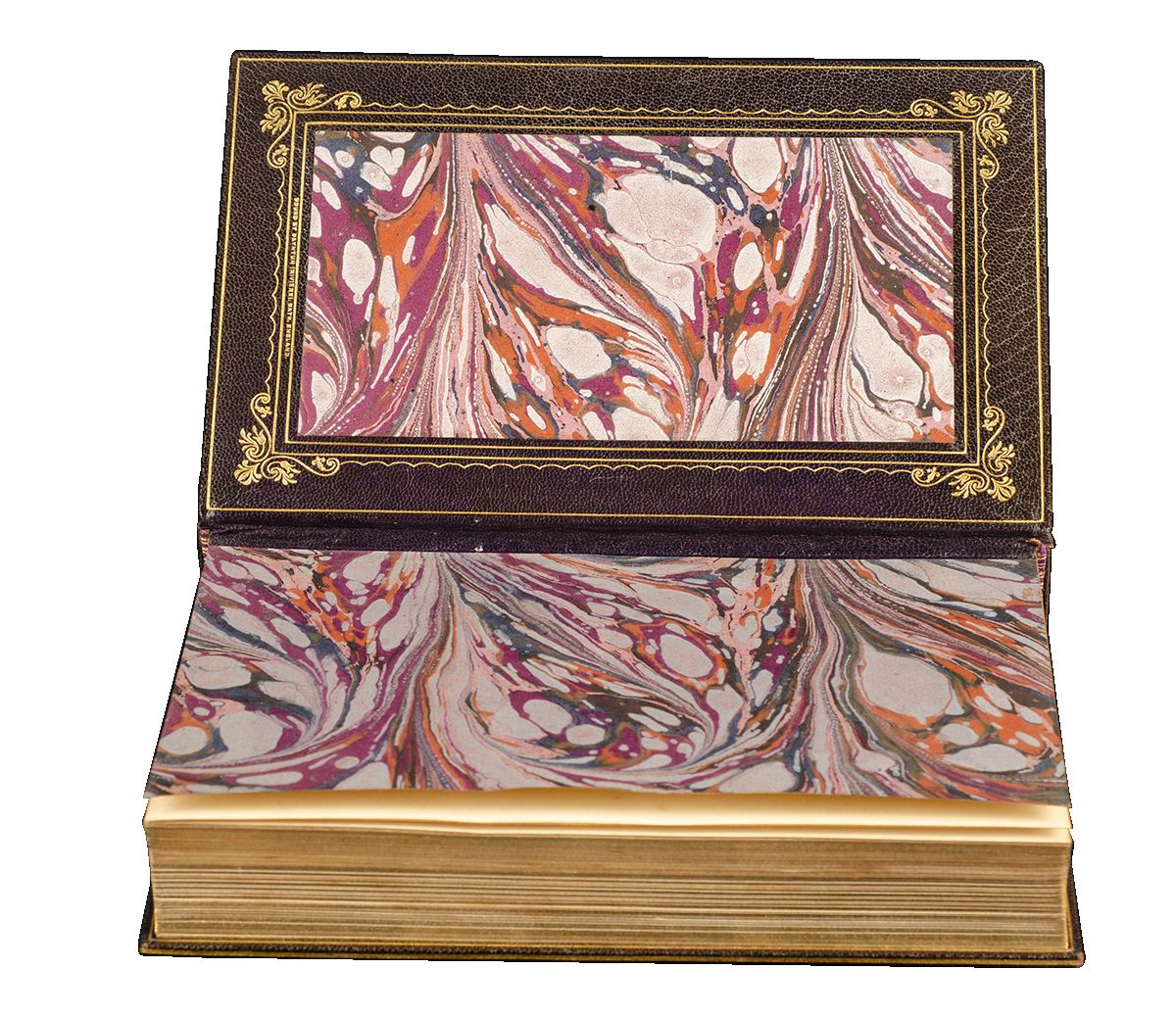
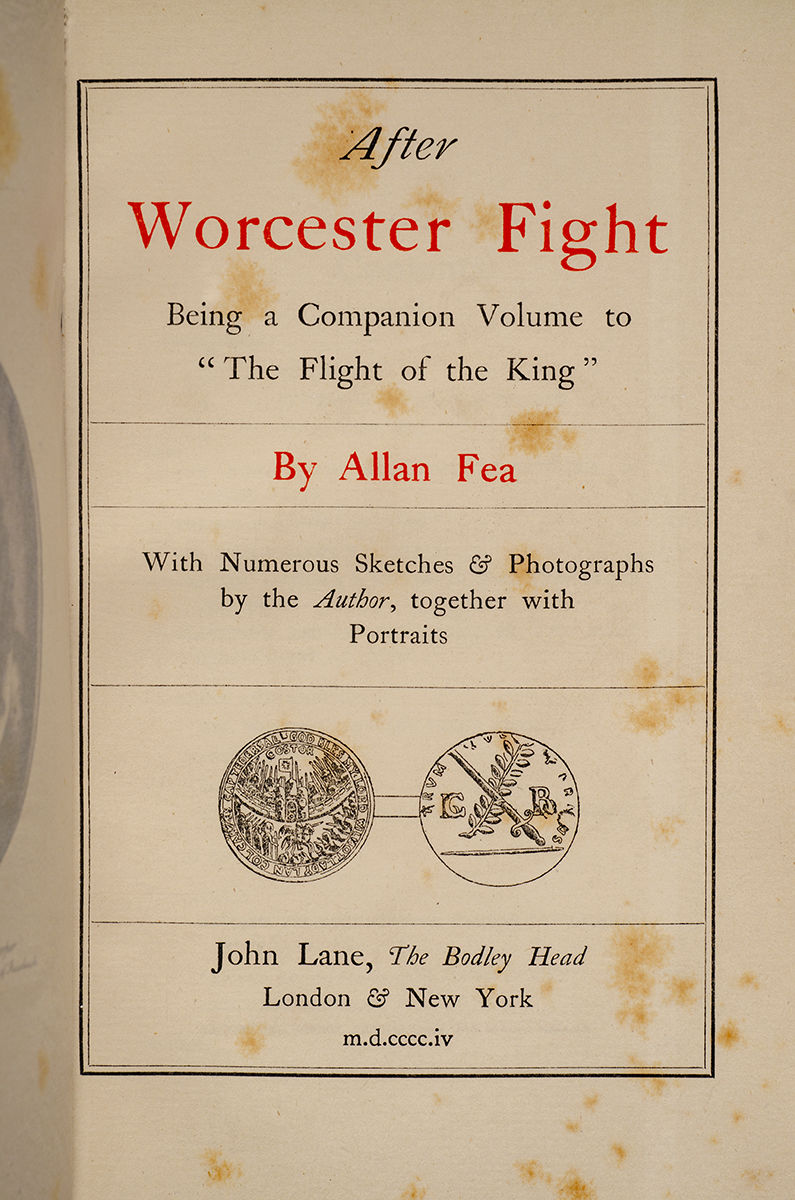
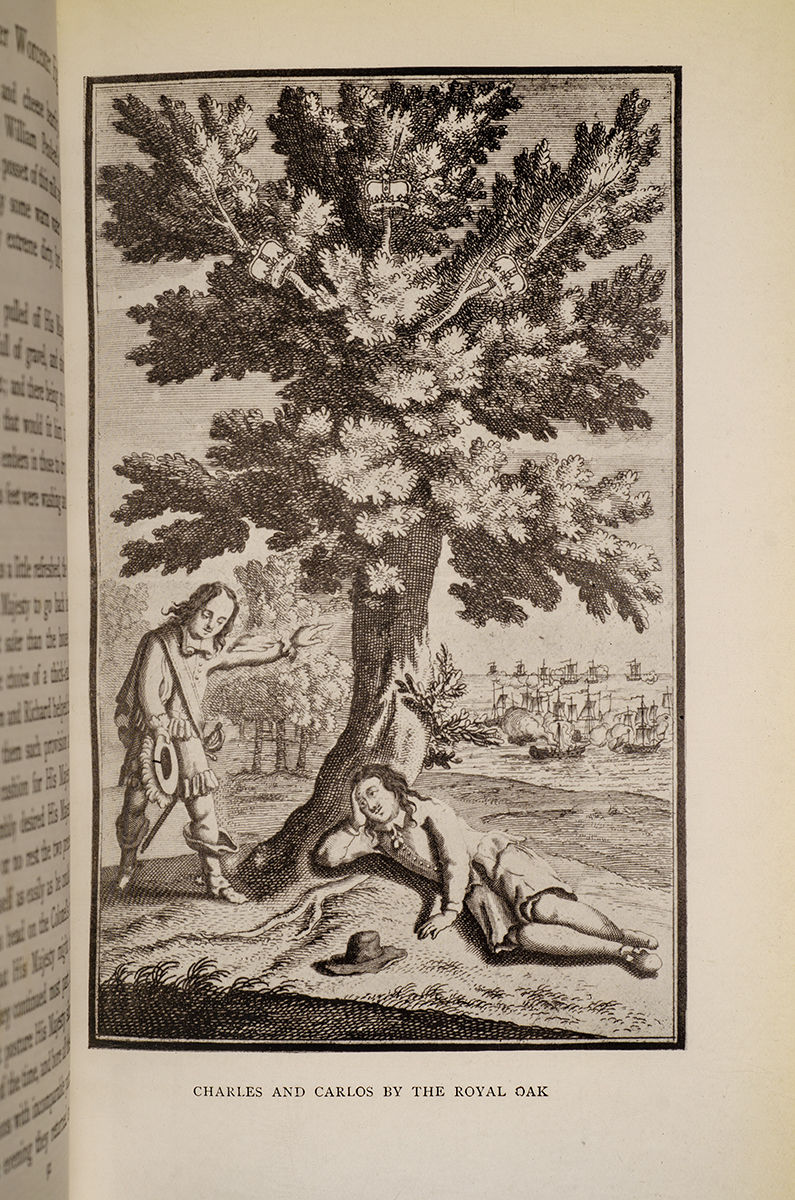
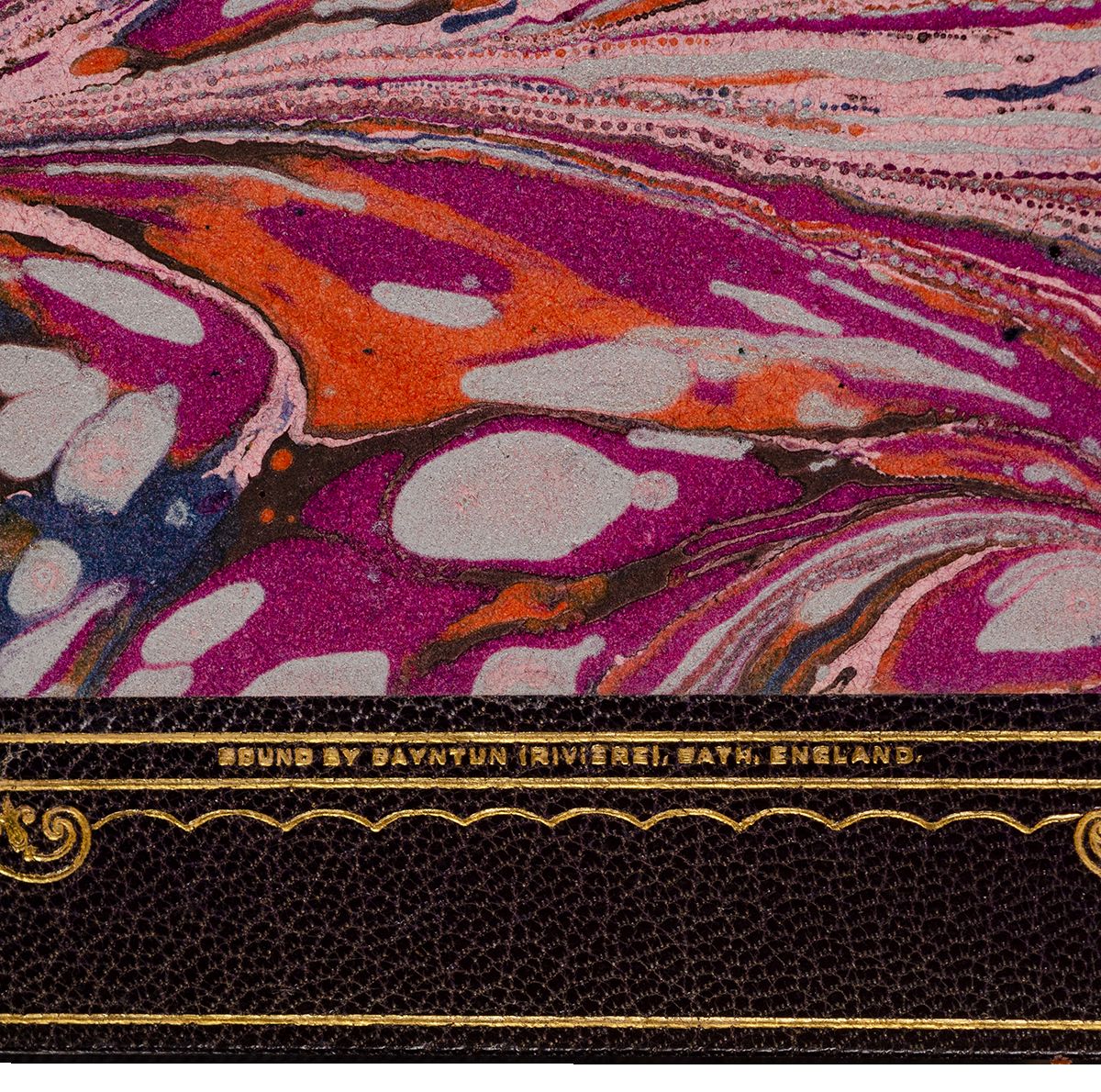
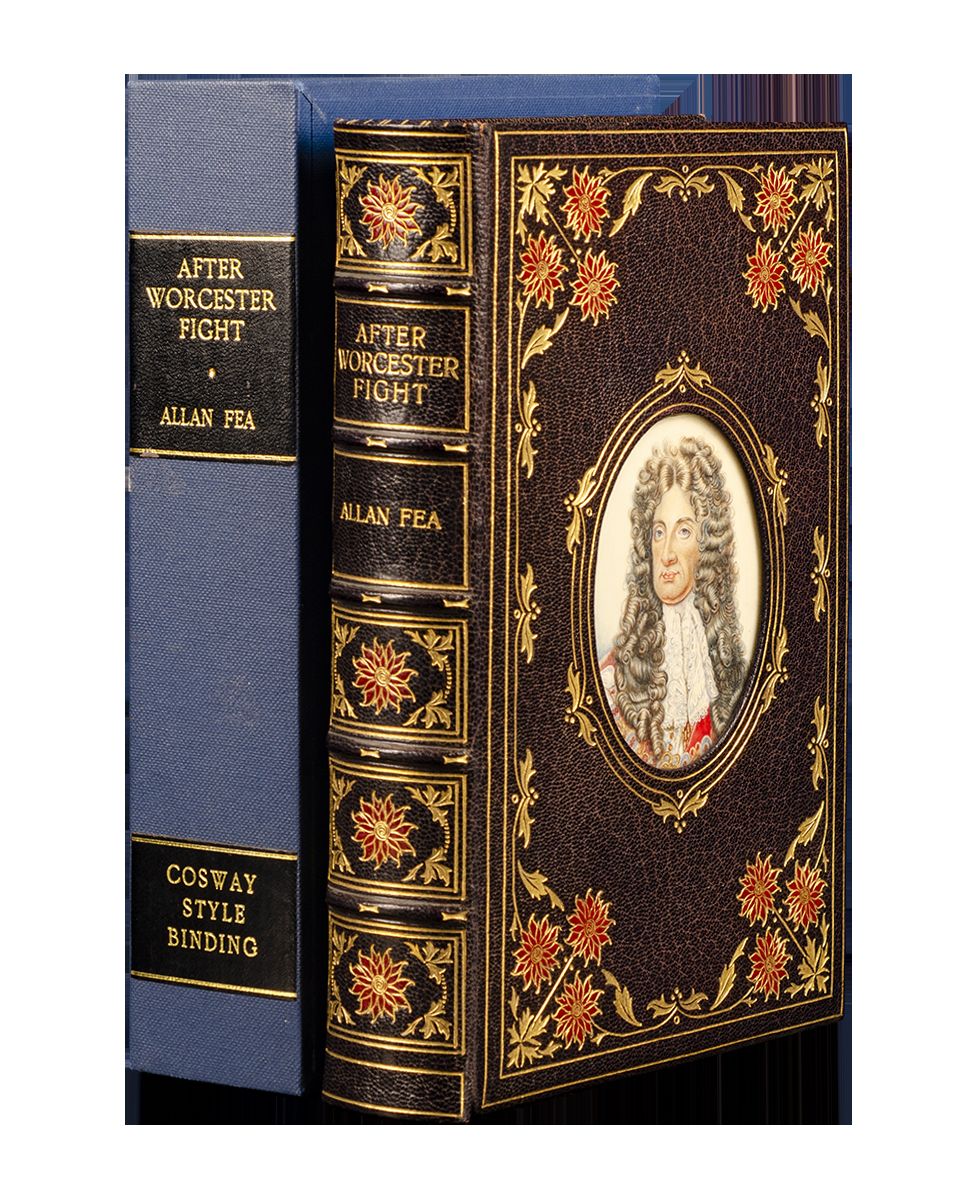
London: John Lane, The Bodley Head, 1904. First edition. Fine. Octavo (8 1/4 x 5 3/8 inches; 210 x 136 mm.). [i]-liv, 1-[268] pp. Title-page printed in red and black. Fifty-one illustrations including many photogravure plates. Text leaves a little foxed. Bound by Bayntun (Rivière) Bath ca. 1948 (stamp-signed in gilt on front turn-in) in full dark purple crushed levant morocco over beveled boards. Front cover double-ruled in gilt enclosing a highly elaborate floral design with gilt leaves and stems and twelve inlaid eighteen-piece red flowers. In the center a gilt decorated oval frame surrounding a fine hand-painted portrait miniature of Charles II. Lower cover identically tooled but without the inlays. Spine with five raised bands, elaborately decorated to a similar design with five inlaid eighteen-piece red flowers, lettered in gilt in compartments, double gilt-ruled board edges, and fine wide turn-ins decorated in gilt. Blue and red cockerel paste-downs and end-leaves, all edges gilt. With the armorial bookplate of J.F.D. Tutt on verso of front free endpaper. Light foxing throughout. Housed in the original fleece-lined blue cloth slipcase with two black morocco spine labels lettered in gilt. An exceptionally fine example from one of the major English collections.
British historian and antiquarian Allan Fea (1860-1956) specialized in the English Civil War & Wars of the Three Kingdoms period (1639-1653). Designed as a supplemental volume to Fea’s history text The Flight of the King, the Worcester Fight contains five contemporary accounts of King Charles II’s escape after the Battle of Worcester (1651): "The King's Narrative," Blount's "Boscobel," Whitgreave's "Narrative," "Ellesdon's Letter," and the "Claustrum Regale Reseratum" (Introduction). This elaborate Cosway-style binding pays homage to the central character in Fea’s history: King Charles II (1630-1685), famed for ruling after the 1660 monarchial Restoration; a period in English history marked by significant social change.
George Bayntun (1873-1940) was the founder of Bayntun Bindery (1894) dedicated to using traditional hand-crafted techniques and high-quality materials. “The Riviere Bindery was one of the most notable and prolific shops in London's West End from about 1840 through 1939” (Princeton). Bath-based Bayntun Bindery acquired the firm in 1939, transforming into the “Bayntun-Riviere bindery,” which is still in existence and family owned. Although named after the English miniaturist Richard Cosway (1742-1821), the desirable “Cosway Binding” with its jewel-like portrait miniature set into a fine binding was first developed at the turn of the century by J.H. Stonehouse, director of London’s Henry Sotheran Booksellers. Their miniatures were painstakingly crafted by the talented painter Miss C. B. Currie (1849-1940). As the style grew in popularity, other publishing houses quickly began to reproduce this technique—each developing their own desirable take on the aesthetic—referred to as “Cosway style.”
This copy was previously owned by John Francis Donald Tutt (1893-1971) was a renowned veterinary surgeon and collector of fine bindings, whose collection (including the present binding) was sold at Sotheby's London in October 1983. Fine.
British historian and antiquarian Allan Fea (1860-1956) specialized in the English Civil War & Wars of the Three Kingdoms period (1639-1653). Designed as a supplemental volume to Fea’s history text The Flight of the King, the Worcester Fight contains five contemporary accounts of King Charles II’s escape after the Battle of Worcester (1651): "The King's Narrative," Blount's "Boscobel," Whitgreave's "Narrative," "Ellesdon's Letter," and the "Claustrum Regale Reseratum" (Introduction). This elaborate Cosway-style binding pays homage to the central character in Fea’s history: King Charles II (1630-1685), famed for ruling after the 1660 monarchial Restoration; a period in English history marked by significant social change.
George Bayntun (1873-1940) was the founder of Bayntun Bindery (1894) dedicated to using traditional hand-crafted techniques and high-quality materials. “The Riviere Bindery was one of the most notable and prolific shops in London's West End from about 1840 through 1939” (Princeton). Bath-based Bayntun Bindery acquired the firm in 1939, transforming into the “Bayntun-Riviere bindery,” which is still in existence and family owned. Although named after the English miniaturist Richard Cosway (1742-1821), the desirable “Cosway Binding” with its jewel-like portrait miniature set into a fine binding was first developed at the turn of the century by J.H. Stonehouse, director of London’s Henry Sotheran Booksellers. Their miniatures were painstakingly crafted by the talented painter Miss C. B. Currie (1849-1940). As the style grew in popularity, other publishing houses quickly began to reproduce this technique—each developing their own desirable take on the aesthetic—referred to as “Cosway style.”
This copy was previously owned by John Francis Donald Tutt (1893-1971) was a renowned veterinary surgeon and collector of fine bindings, whose collection (including the present binding) was sold at Sotheby's London in October 1983. Fine.