

An Outcast of the Islands
- London: T. Fisher Unwin, 1896
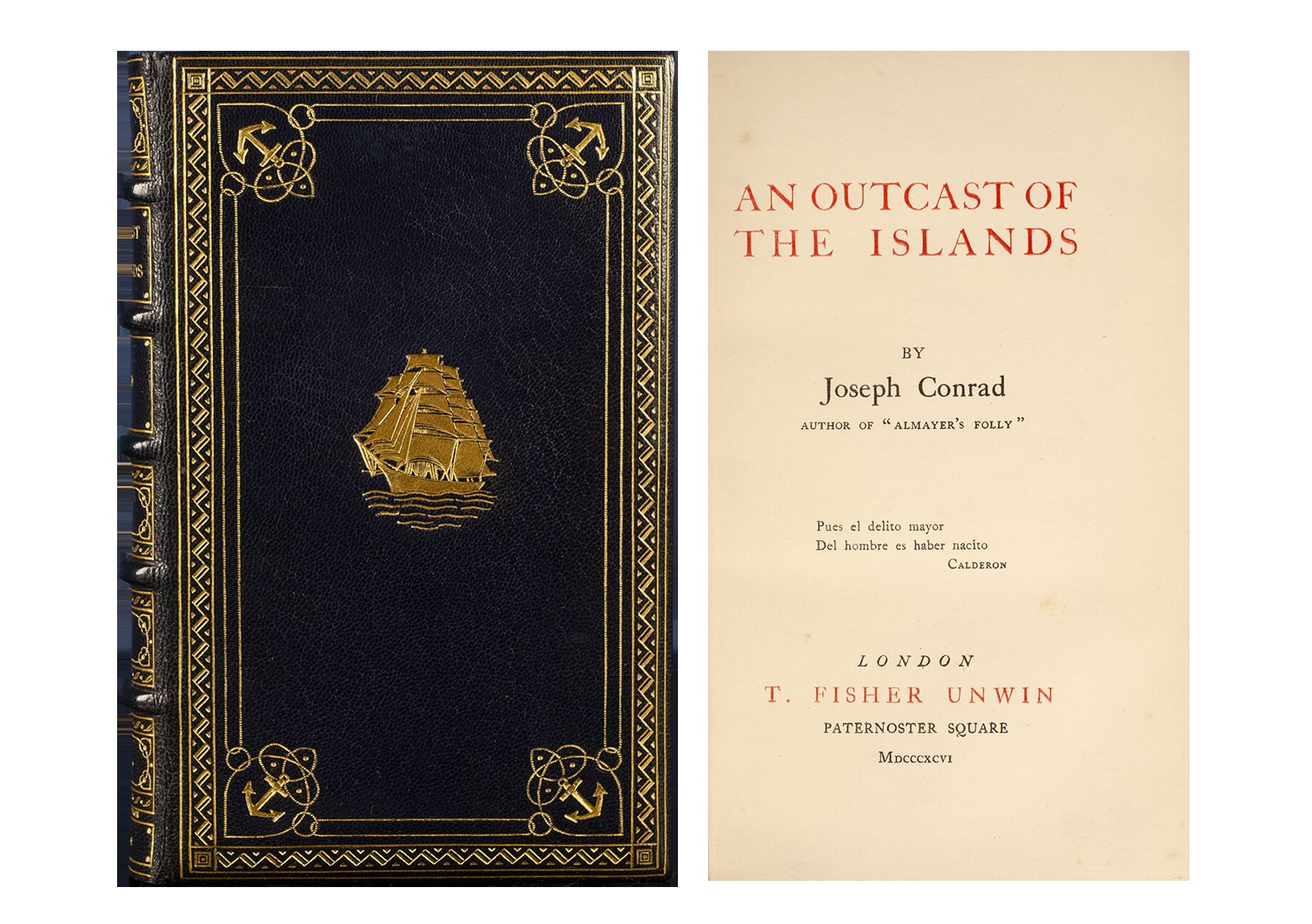
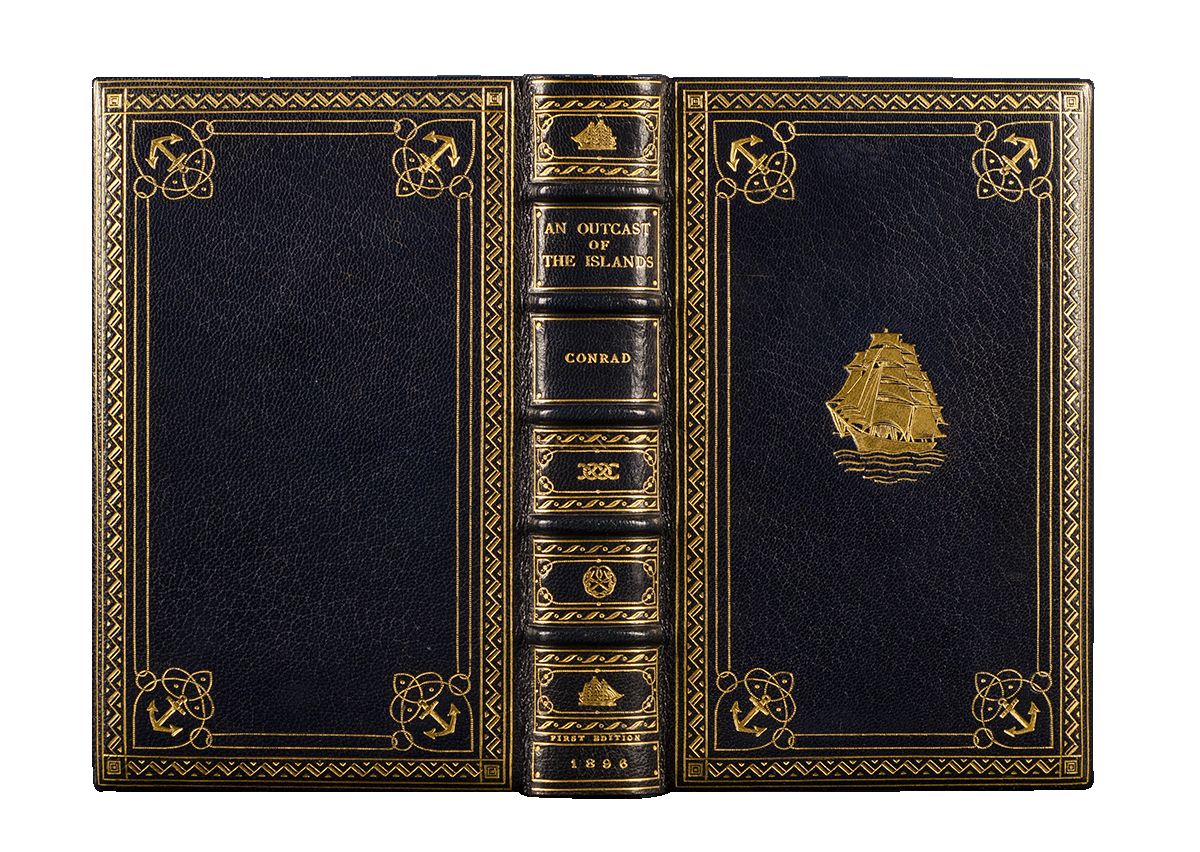
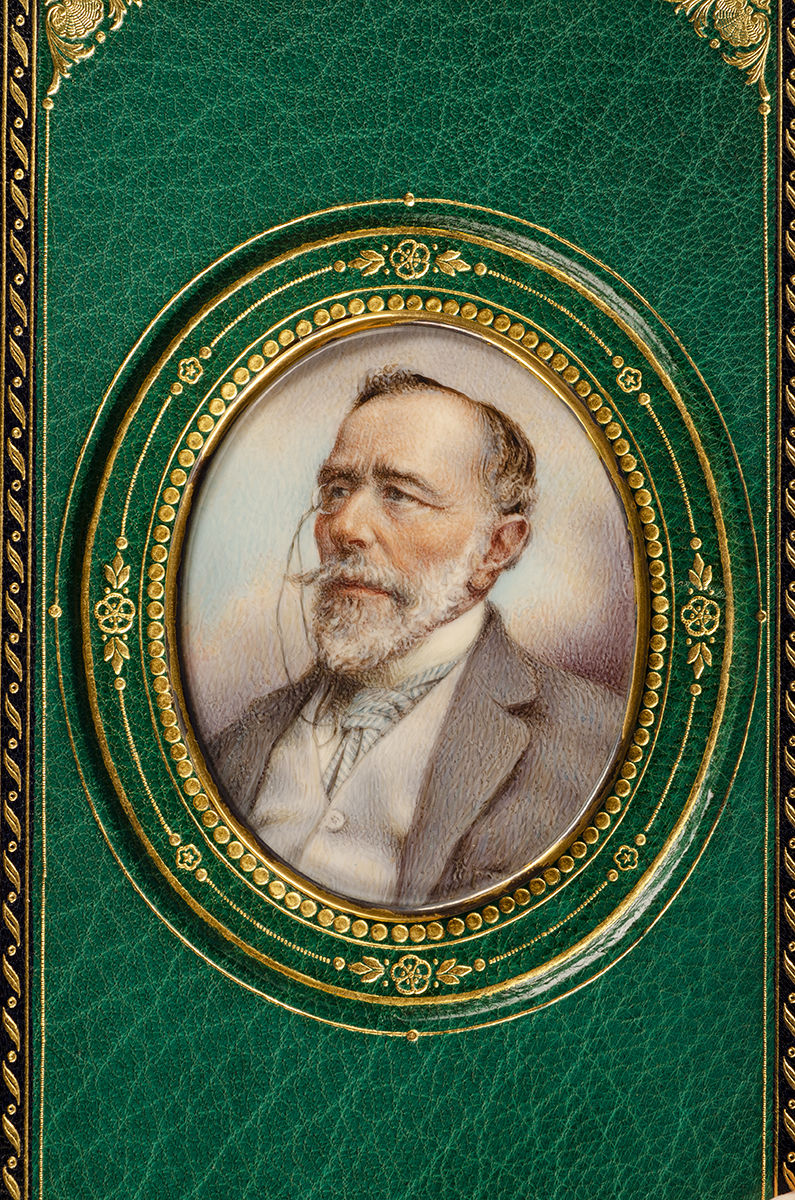
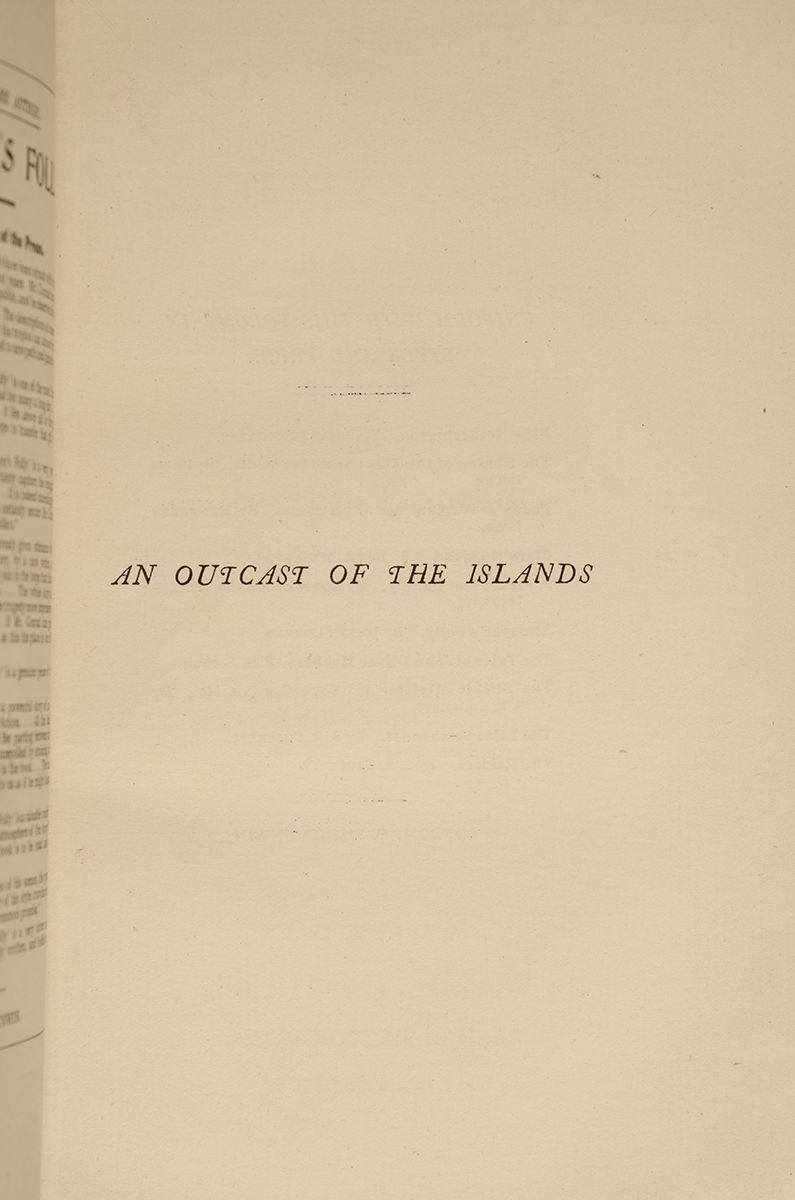
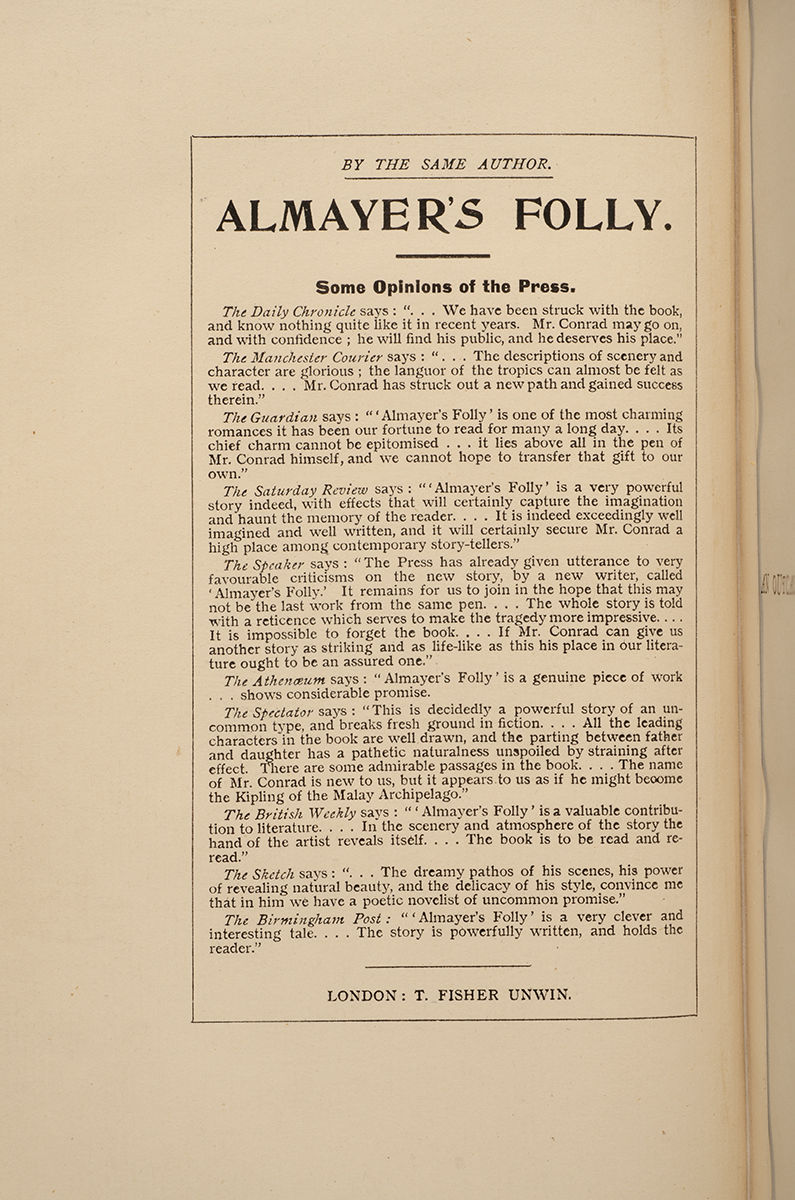
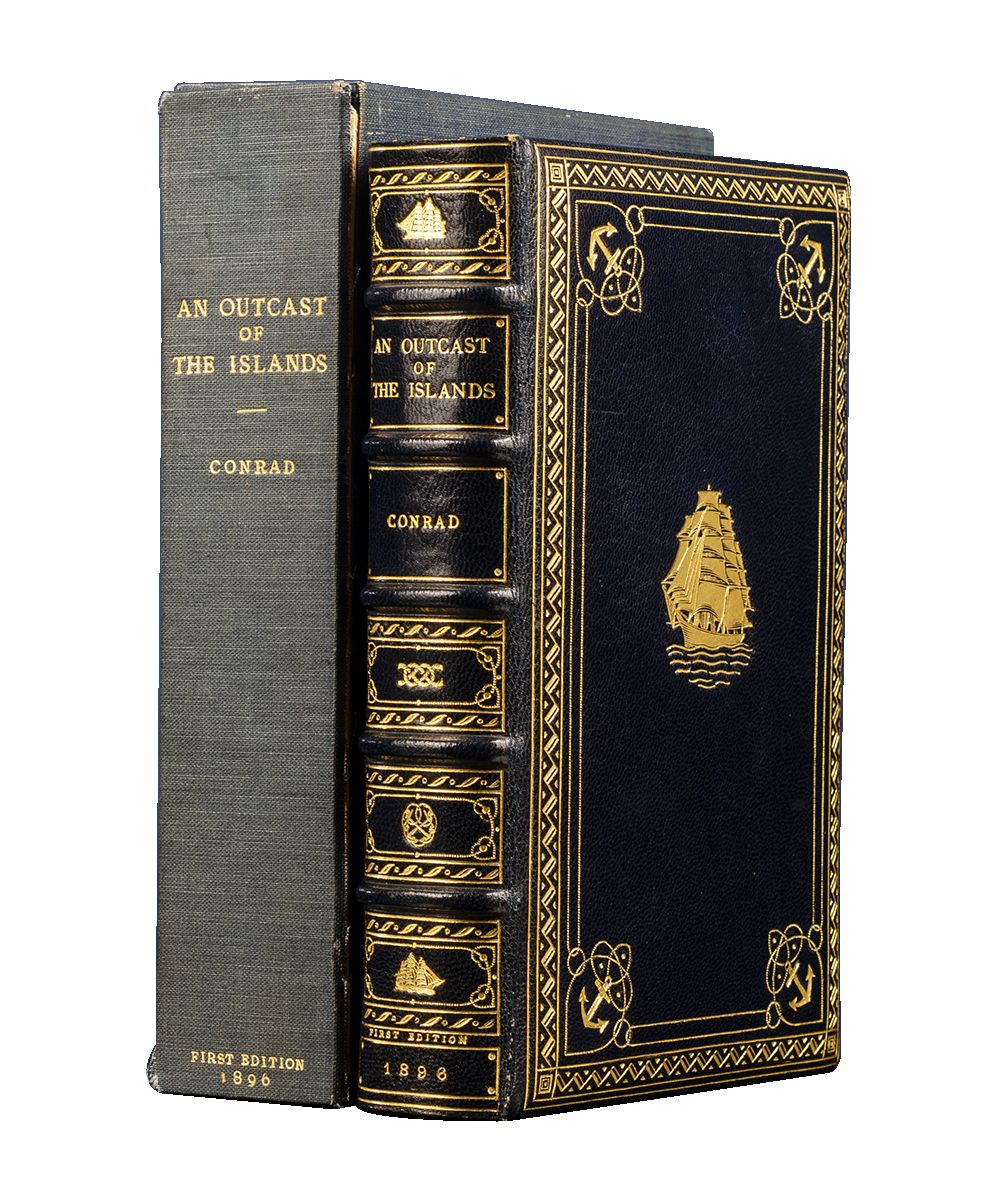
London: T. Fisher Unwin, 1896. First edition. Fine. Octavo (7 3/4 x 4 7/8 inches; 197 x 124 mm.). [ii, ads], [vi], 391, [1] pp. First issue, with "this" for "their" on p. 26, line 31; "Absolution" for "ablution" p. 110, line 12; "9" missing on p. 129; and "hate" for "fate" on p. 356, line 26. Title-page in red and black. Bound ca, 1940 by Sangorski & Sutcliffe, stamp-signed in gilt on rear turn-in. A Fine copy, bound in full dark blue crushed levant morocco over beveled boards, covers elaborately bordered in gilt with decorative anchor corner-pieces, front cover with a sailing ship in gilt. Spine with five raised bands, decoratively tooled and lettered in gilt in compartments, gilt-ruled board-edges and turn-ins, blue watered silk endleaves. Inside front cover with a large rectangular panel of green morocco with a superb and exquisite oval portrait miniature of Joseph Conrad (3 x 2 3/8 inches) under glass and surrounded by a gilt metal frame. Original green cloth covers and spine bound in at end. Housed in the original fleece-lined blue cloth clamshell case, spine lettered in gilt. Front hinge of clamshell case neatly repaired, rear hinge starting.
Joseph Conrad (1857-1924) was a Polish-British writer whose reputation as one of the greatest English-language novelists holds true today. Conrad’s prose is infused with a unique sensibility blurring the boundaries between modernism and realism; he was never afraid to depict the darkness of the humanity. In much of his fiction Conrad drew from his experiences as a sailor, such as in his second novel An Outcast of the Islands (1896), which recounts the downfall of Peter Willems. As in his more famous Heart of Darkness, Conrad relishes in this jungle setting.
The story of the Sangorski & Sutcliffe Bindery reads like something out of a novel—when two of Douglas Cockrell’s talented apprentices, Frances Sangorski and George Sutcliffe, were laid off during an economic downturn they began working out of an attic. Eventually their bindery would be famous for its intricate multicolored leather inlays and elaborate gold and jeweled bindings. Although named after the English miniaturist Richard Cosway (1742-1821), the desirable “Cosway Binding” with its jewel-like portrait miniature set into a fine binding was first developed at the turn of the century by J.H. Stonehouse, director of London’s Henry Sotheran Booksellers. Their miniatures were painstakingly crafted by the talented painter Miss C. B. Currie (1849-1940). As the style grew in popularity, other publishing houses quickly began to reproduce this technique—each developing their own desirable take on the aesthetic—referred to as “Cosway style.”. Fine.
Joseph Conrad (1857-1924) was a Polish-British writer whose reputation as one of the greatest English-language novelists holds true today. Conrad’s prose is infused with a unique sensibility blurring the boundaries between modernism and realism; he was never afraid to depict the darkness of the humanity. In much of his fiction Conrad drew from his experiences as a sailor, such as in his second novel An Outcast of the Islands (1896), which recounts the downfall of Peter Willems. As in his more famous Heart of Darkness, Conrad relishes in this jungle setting.
The story of the Sangorski & Sutcliffe Bindery reads like something out of a novel—when two of Douglas Cockrell’s talented apprentices, Frances Sangorski and George Sutcliffe, were laid off during an economic downturn they began working out of an attic. Eventually their bindery would be famous for its intricate multicolored leather inlays and elaborate gold and jeweled bindings. Although named after the English miniaturist Richard Cosway (1742-1821), the desirable “Cosway Binding” with its jewel-like portrait miniature set into a fine binding was first developed at the turn of the century by J.H. Stonehouse, director of London’s Henry Sotheran Booksellers. Their miniatures were painstakingly crafted by the talented painter Miss C. B. Currie (1849-1940). As the style grew in popularity, other publishing houses quickly began to reproduce this technique—each developing their own desirable take on the aesthetic—referred to as “Cosway style.”. Fine.