

A History of India from the Earliest Times to the Present Day
- London: Ivor Nicholson & Watson Limited, 1936
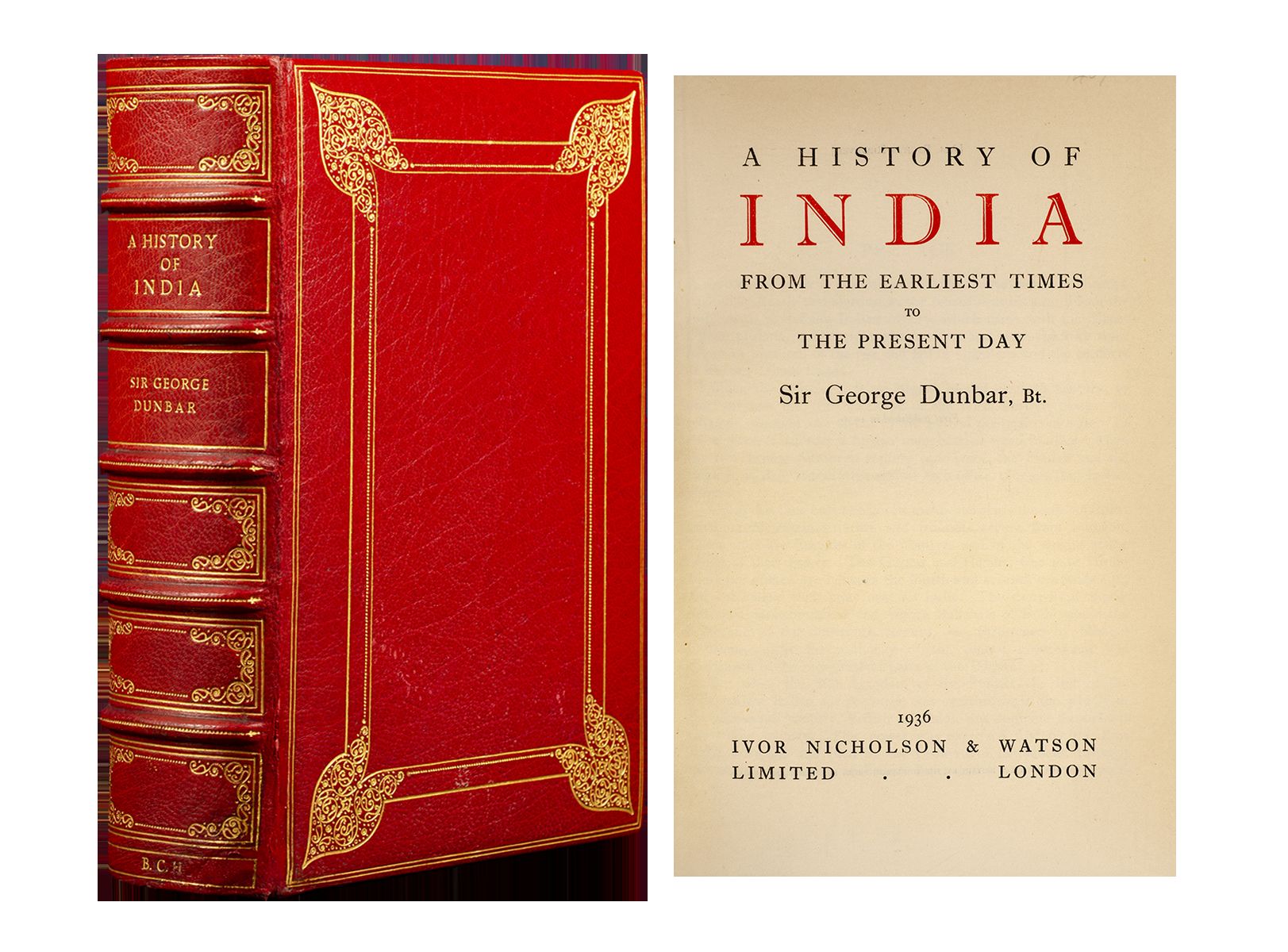
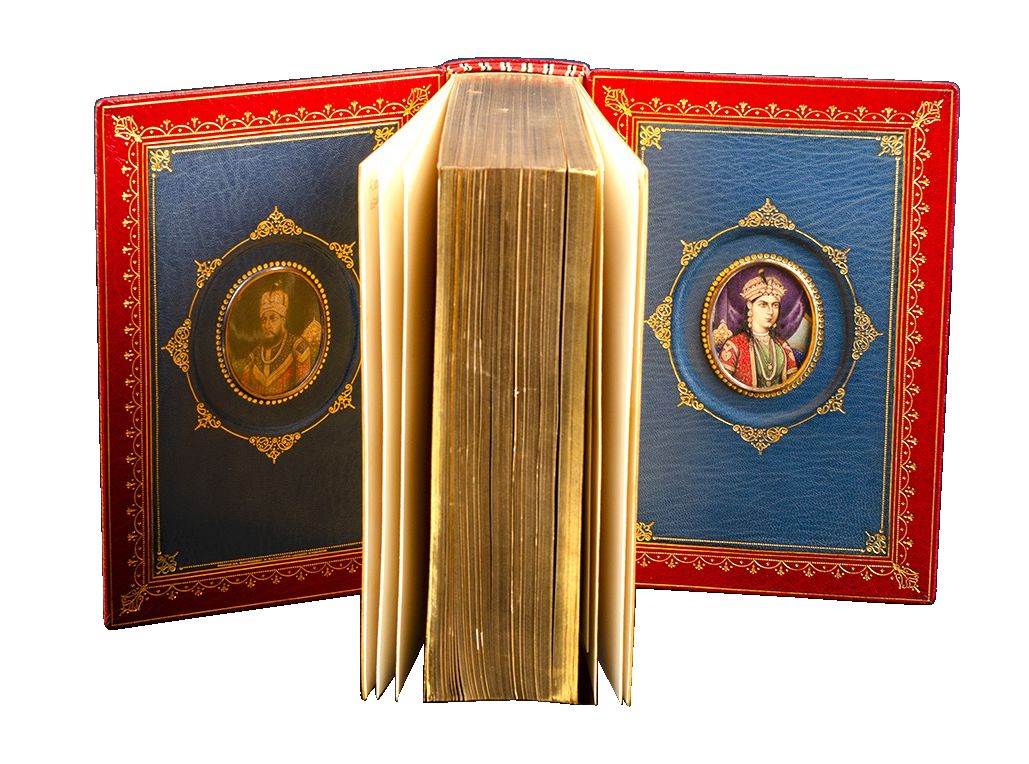
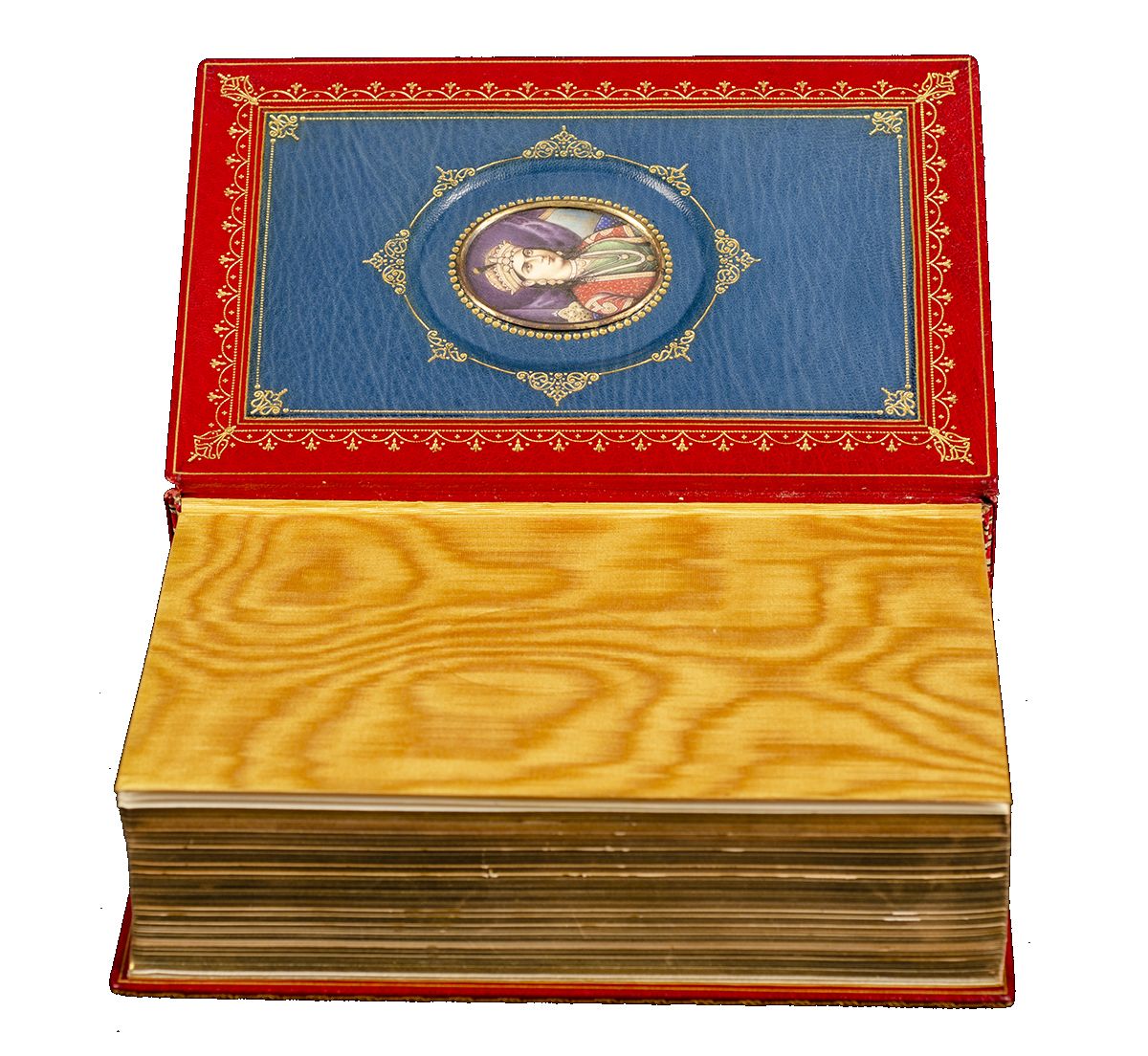
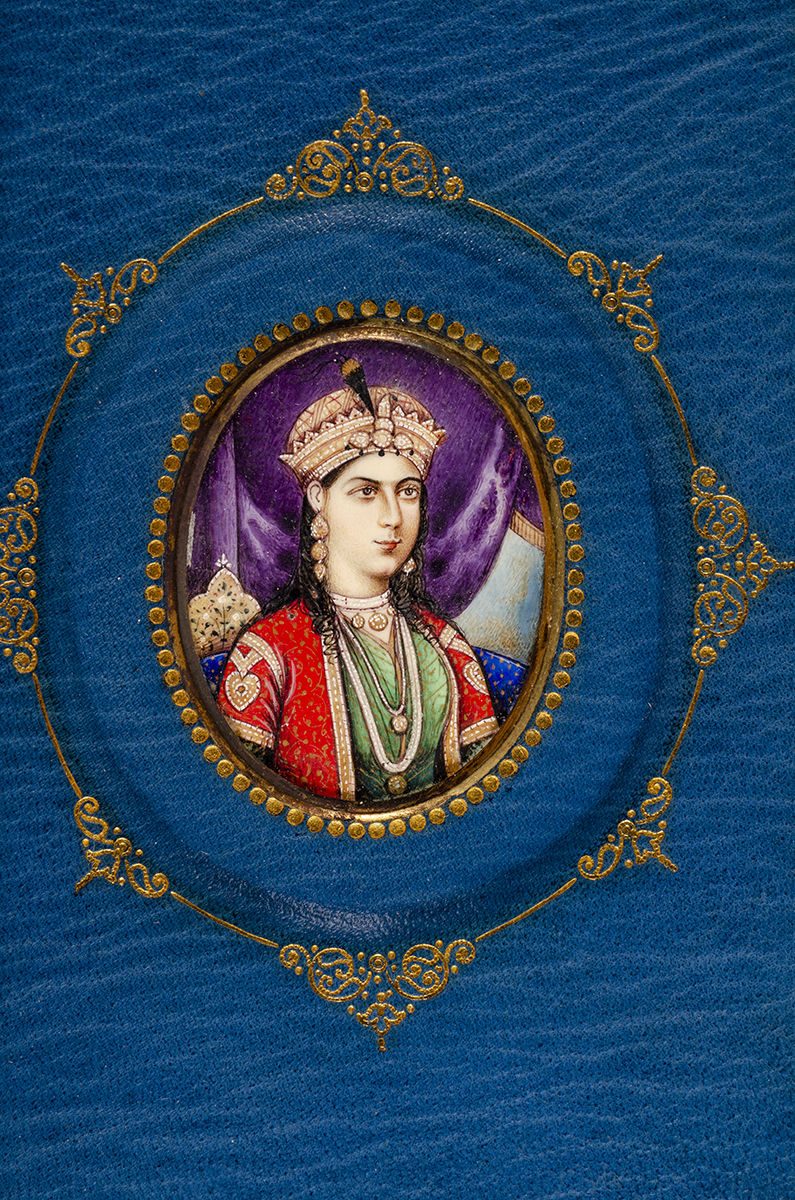
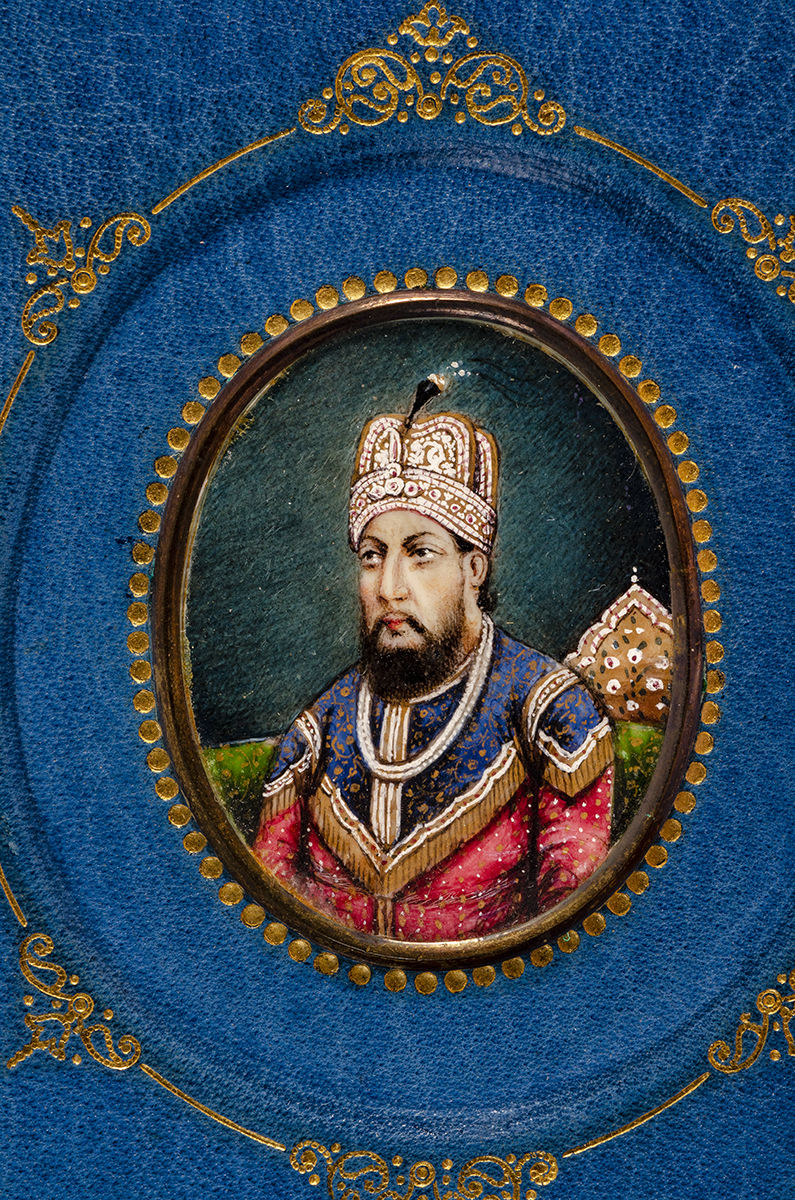
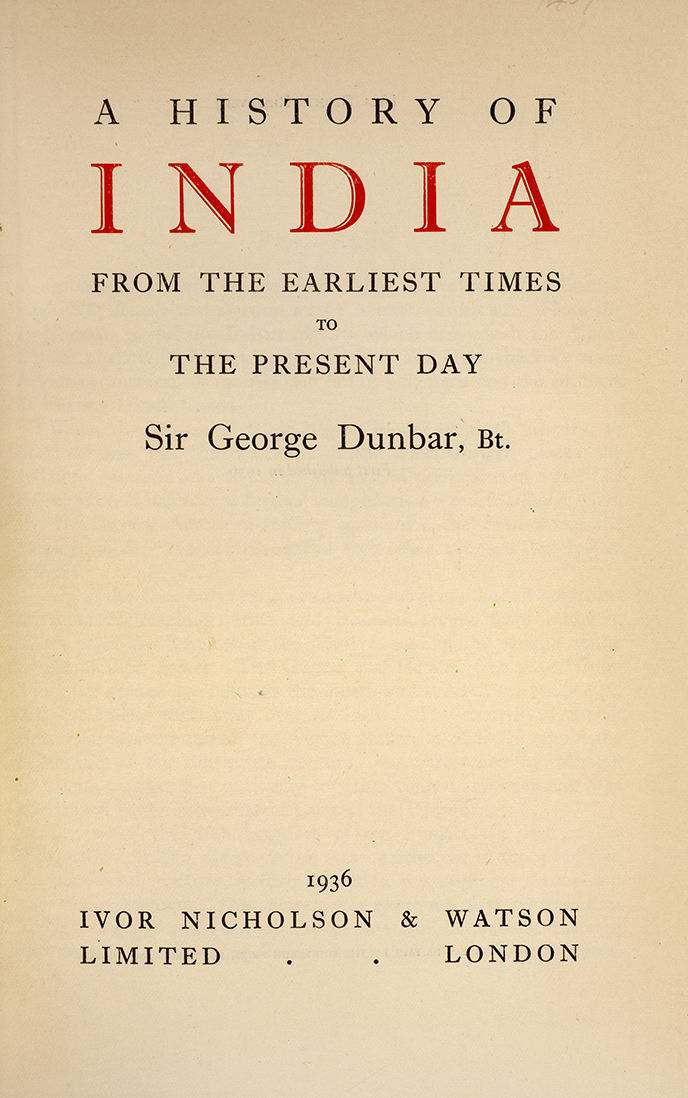
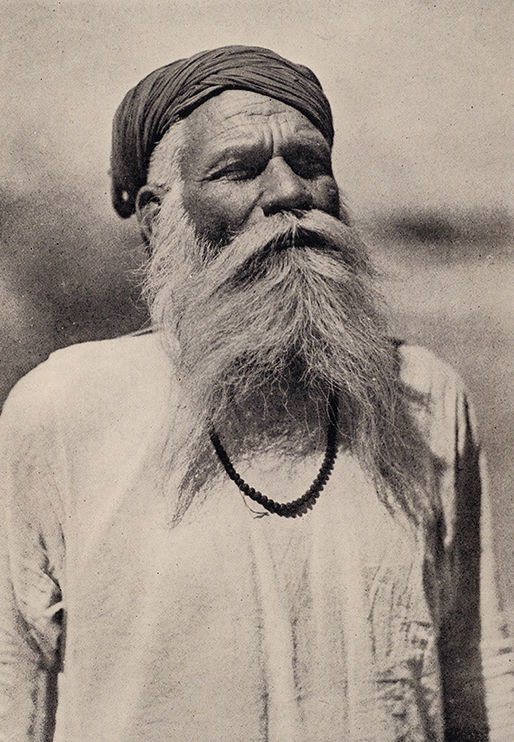
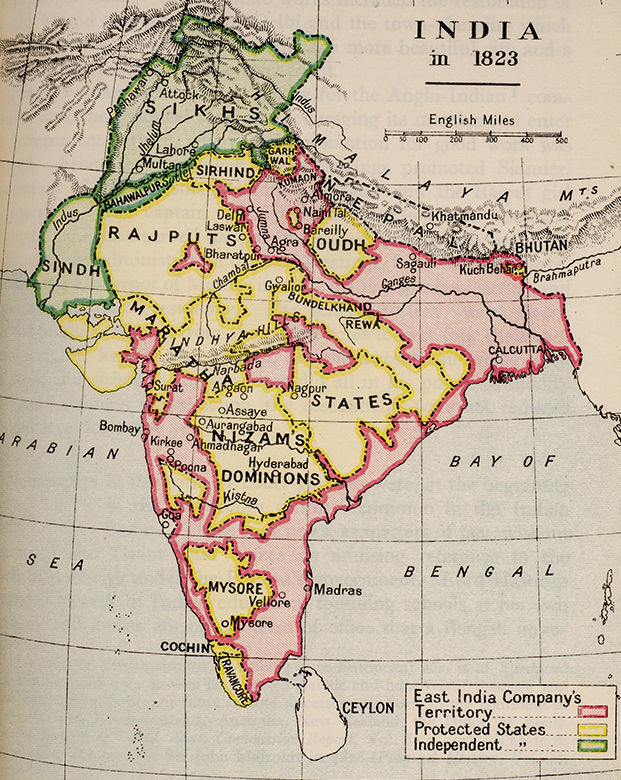
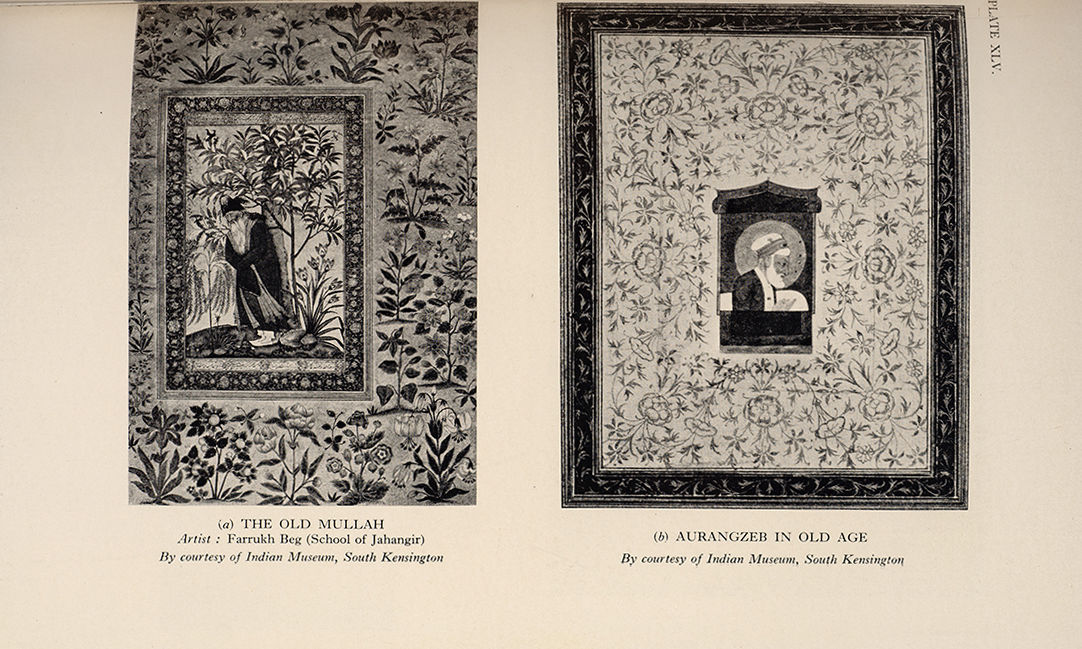
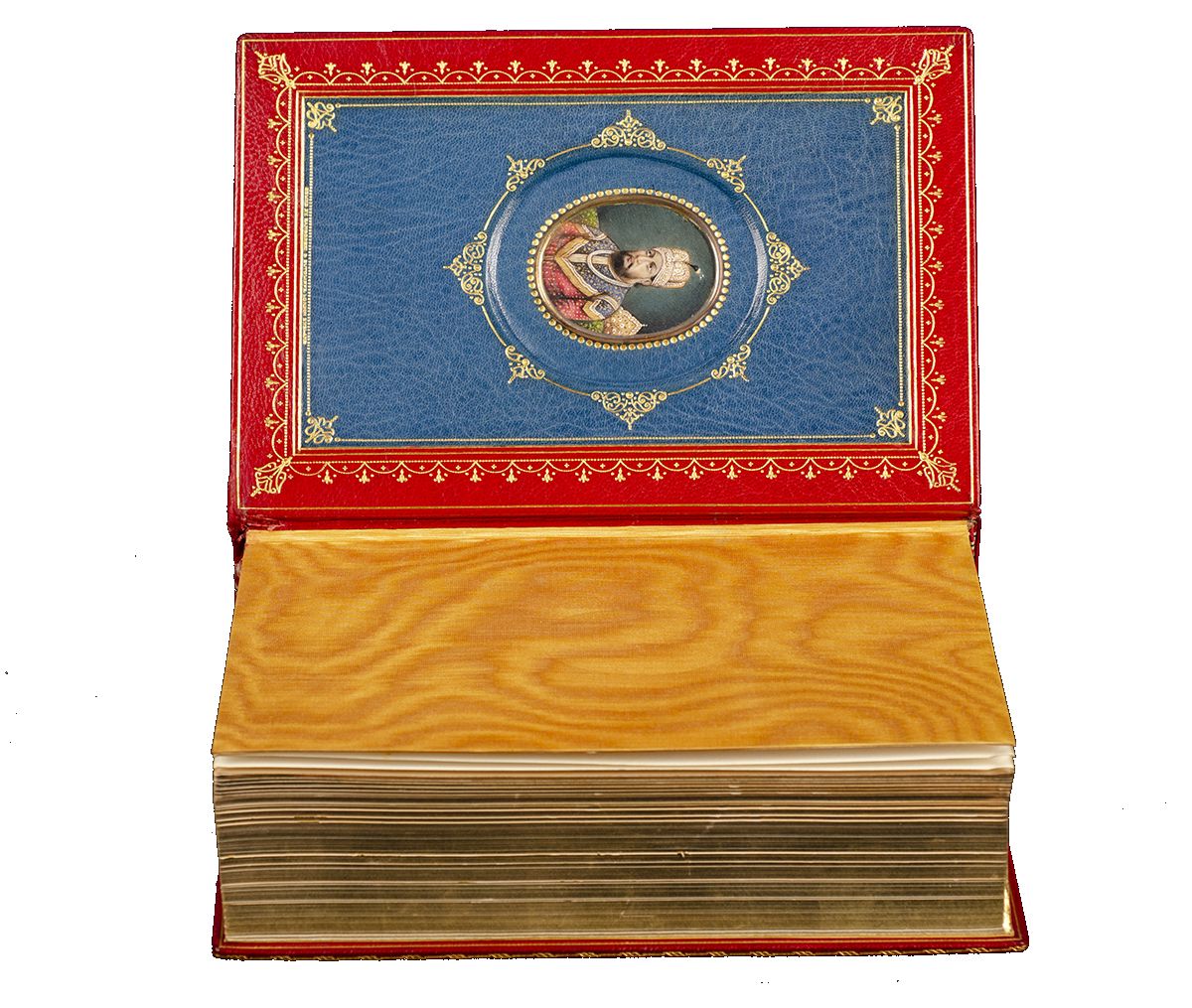
London: Ivor Nicholson & Watson Limited, 1936. First edition. Near Fine. Octavo (7 15/16 x 5 3/8 inches; 202 x 137 mm.). [xxiv], 1-[632] pp. Erratum slip inserted facing p. [viii]. Thirty-four photogravure plates containing sixty-four illustrations. Sixteen colored maps including one large folding at end. Bound ca. 1936 by Sangorski & Sutcliffe, stamp signed in gilt on front turn-in. Full red crushed levant morocco over beveled boards, covers richly decorated on gilt, spine with five raised bands decoratively tooled and lettered in gilt in compartments, decorative gilt board edges, elaborate gilt turn-ins, gilt decorated blue morocco doublures, ochre watered silk endleaves, all edges gilt. With the gilt initials of Ohio collector B. C. Hoffman at foot of the spine. Inside front cover with large oval sunken panel with a fine gold-framed oval miniature under glass of a Maharaja (2 x 1 1/2 inches), and on the inside rear cover a fine gold-framed oval miniature under glass of a Raja (2 x 1 1/2 inches). Expert and almost invisible repair to foot of spine. Minimal rubbing to joints, otherwise near fine. An excellent example of a 'double' Sangorski & Sutcliffe Cosway-Style binding.
"A history of India is equivalent in range to the history of Europe George Duff-Sutherland-Dunbar (1878-1962) declares in his preface, admitting "it is clearly impossible to compress the history of India into a single volume and deal adequately with every period." That said, he makes a progressive move to "compile a History of India from the standpoint of the governed rather than the many rulers of the country." A colonial officer and historian, Dunbar had firsthand experience in India as a member of the British forces, and a deep interest in the nation's evolving culture. Across over 600 pages, his tome traces the earliest periods on the country's political and religious development, documenting how people experienced cultural shifts due to frequently jarring and violent changes in leadership across centuries; and he includes, at the end, an account of British imperialism.
The story of the Sangorski & Sutcliffe Bindery reads like something out of a novel—when two of Douglas Cockrell’s talented apprentices, Frances Sangorski and George Sutcliffe, were laid off during an economic downturn they began working out of an attic. Eventually their bindery would be famous for its intricate multicolored leather inlays and elaborate gold and jeweled bindings. Although named after the English miniaturist Richard Cosway (1742-1821), the desirable “Cosway Binding” with its jewel-like portrait miniature set into a fine binding was first developed at the turn of the century by J.H. Stonehouse, director of London’s Henry Sotheran Booksellers. Their miniatures were painstakingly crafted by the talented painter Miss C. B. Currie (1849-1940). As the style grew in popularity, other publishing houses quickly began to reproduce this technique—each developing their own desirable take on the aesthetic—referred to as “Cosway style.”. Near Fine.
"A history of India is equivalent in range to the history of Europe George Duff-Sutherland-Dunbar (1878-1962) declares in his preface, admitting "it is clearly impossible to compress the history of India into a single volume and deal adequately with every period." That said, he makes a progressive move to "compile a History of India from the standpoint of the governed rather than the many rulers of the country." A colonial officer and historian, Dunbar had firsthand experience in India as a member of the British forces, and a deep interest in the nation's evolving culture. Across over 600 pages, his tome traces the earliest periods on the country's political and religious development, documenting how people experienced cultural shifts due to frequently jarring and violent changes in leadership across centuries; and he includes, at the end, an account of British imperialism.
The story of the Sangorski & Sutcliffe Bindery reads like something out of a novel—when two of Douglas Cockrell’s talented apprentices, Frances Sangorski and George Sutcliffe, were laid off during an economic downturn they began working out of an attic. Eventually their bindery would be famous for its intricate multicolored leather inlays and elaborate gold and jeweled bindings. Although named after the English miniaturist Richard Cosway (1742-1821), the desirable “Cosway Binding” with its jewel-like portrait miniature set into a fine binding was first developed at the turn of the century by J.H. Stonehouse, director of London’s Henry Sotheran Booksellers. Their miniatures were painstakingly crafted by the talented painter Miss C. B. Currie (1849-1940). As the style grew in popularity, other publishing houses quickly began to reproduce this technique—each developing their own desirable take on the aesthetic—referred to as “Cosway style.”. Near Fine.