

The Story of Marie-Antoinette


- London: T. Fisher Unwin, 1897
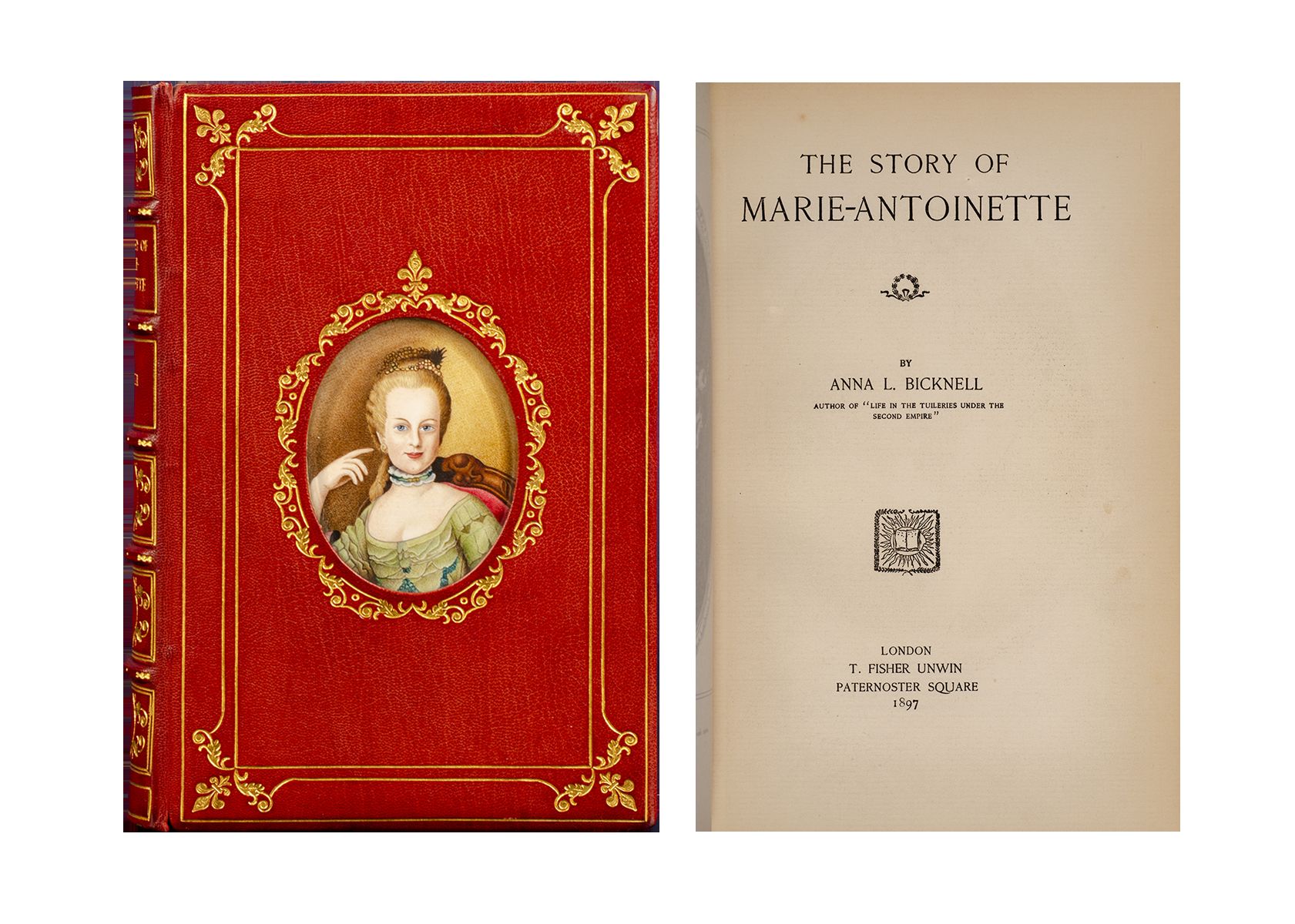
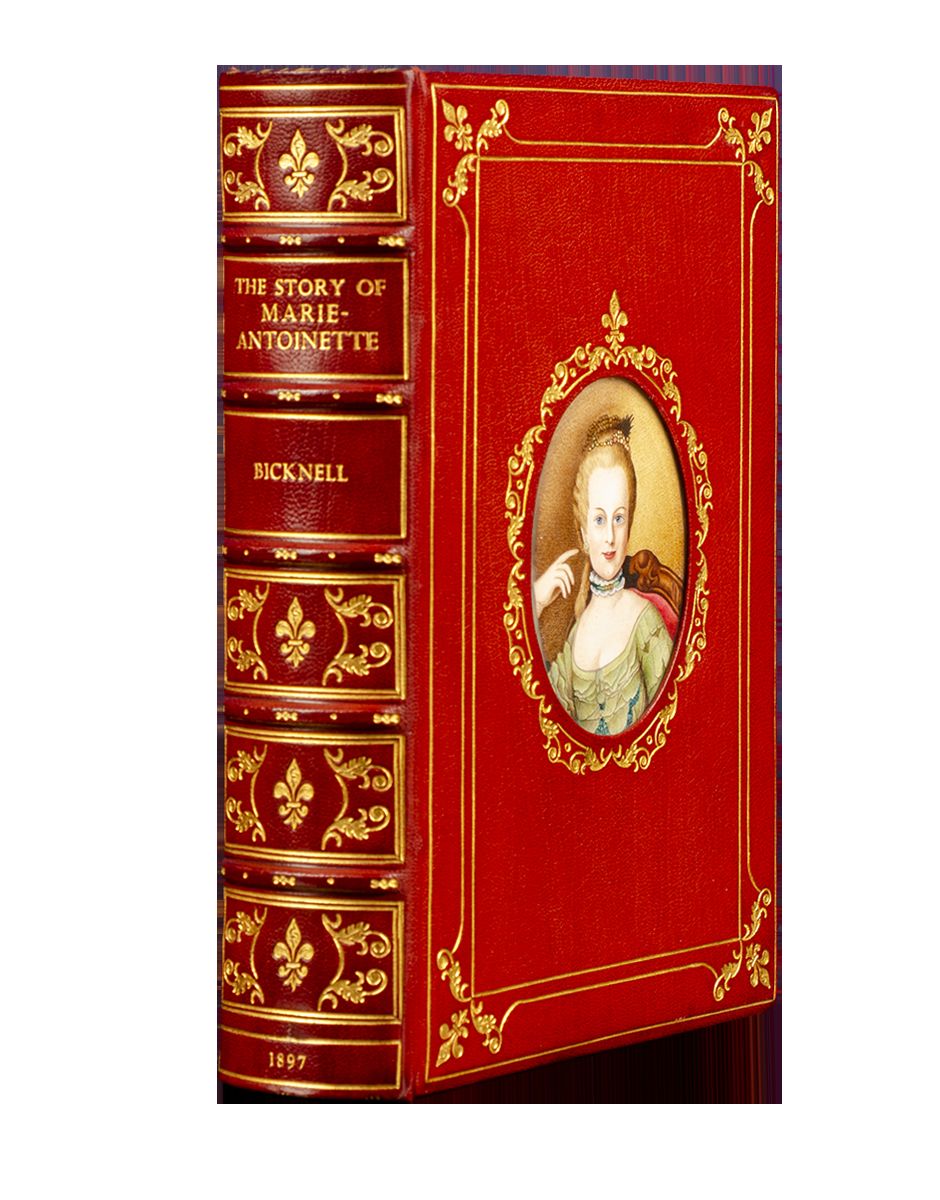
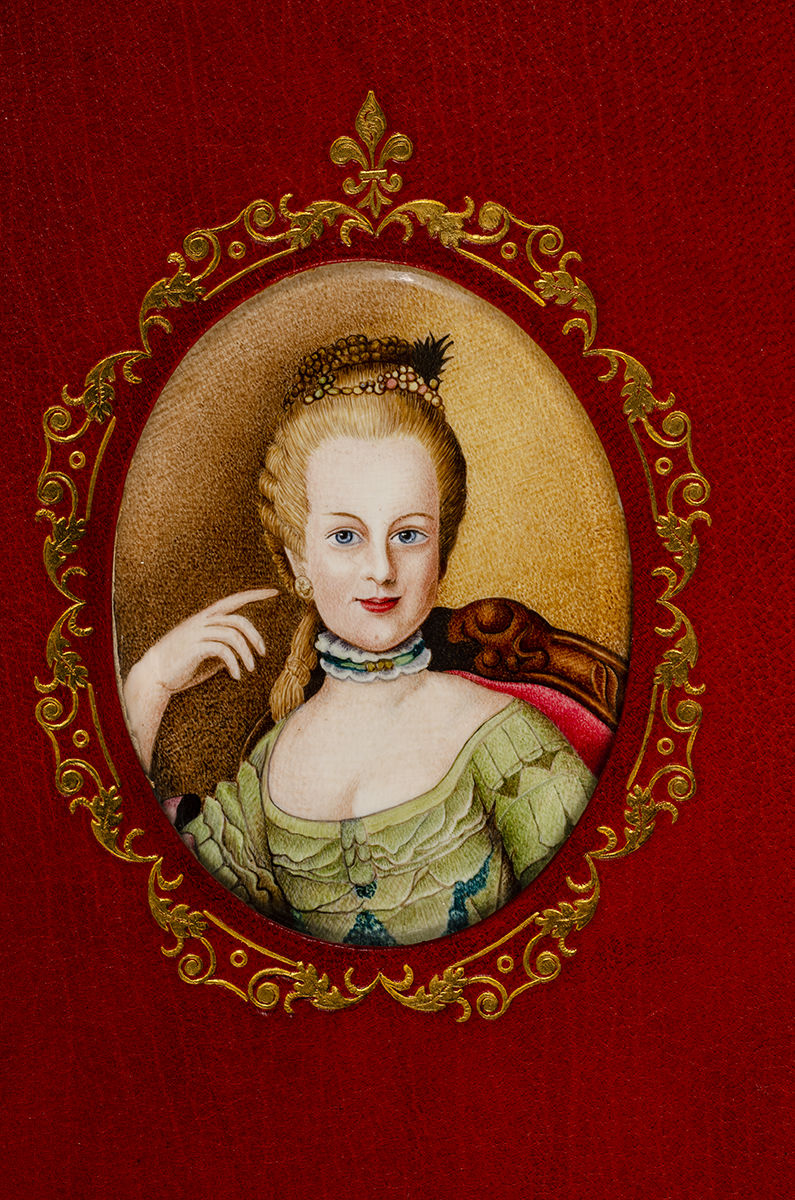
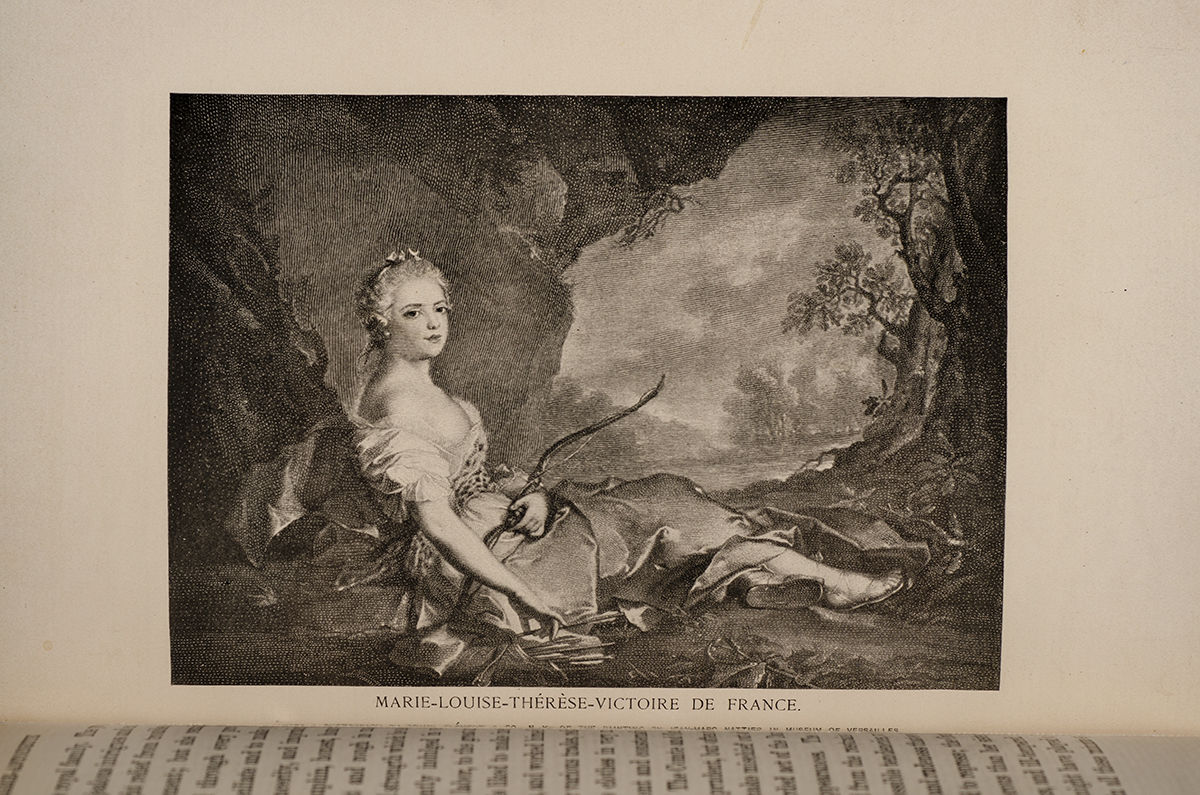
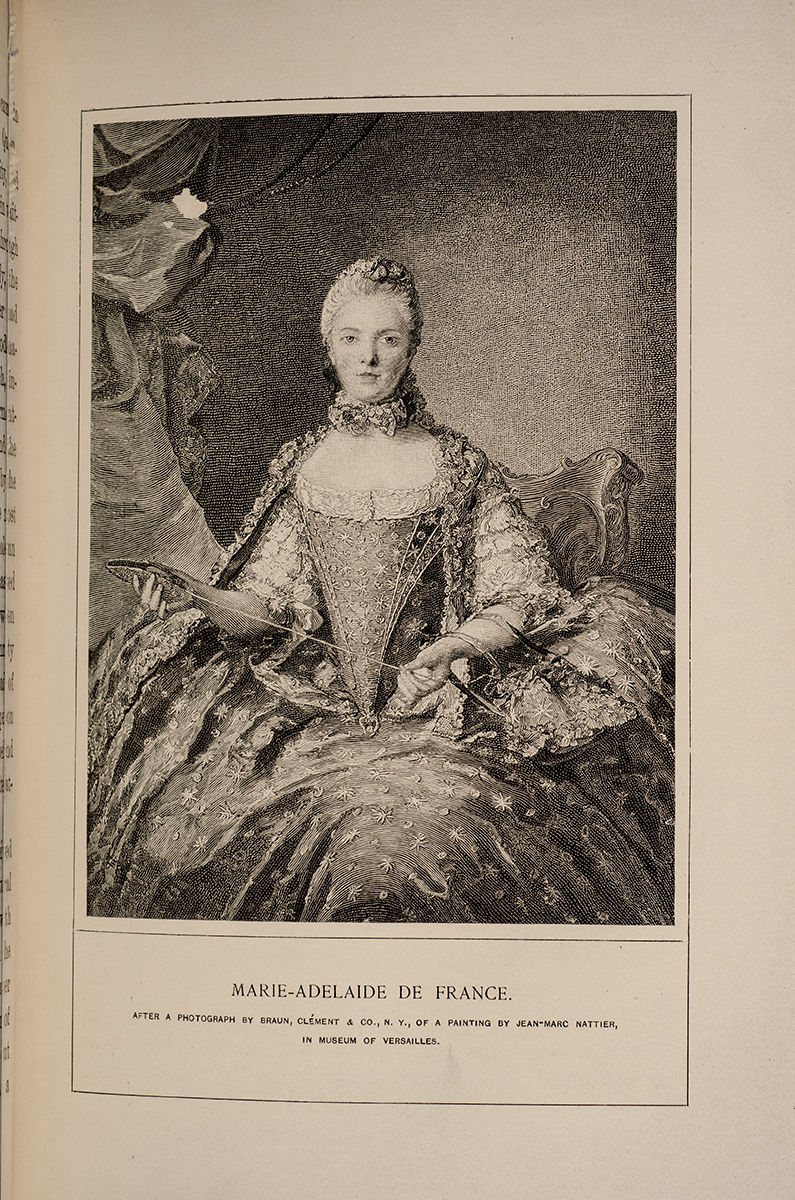
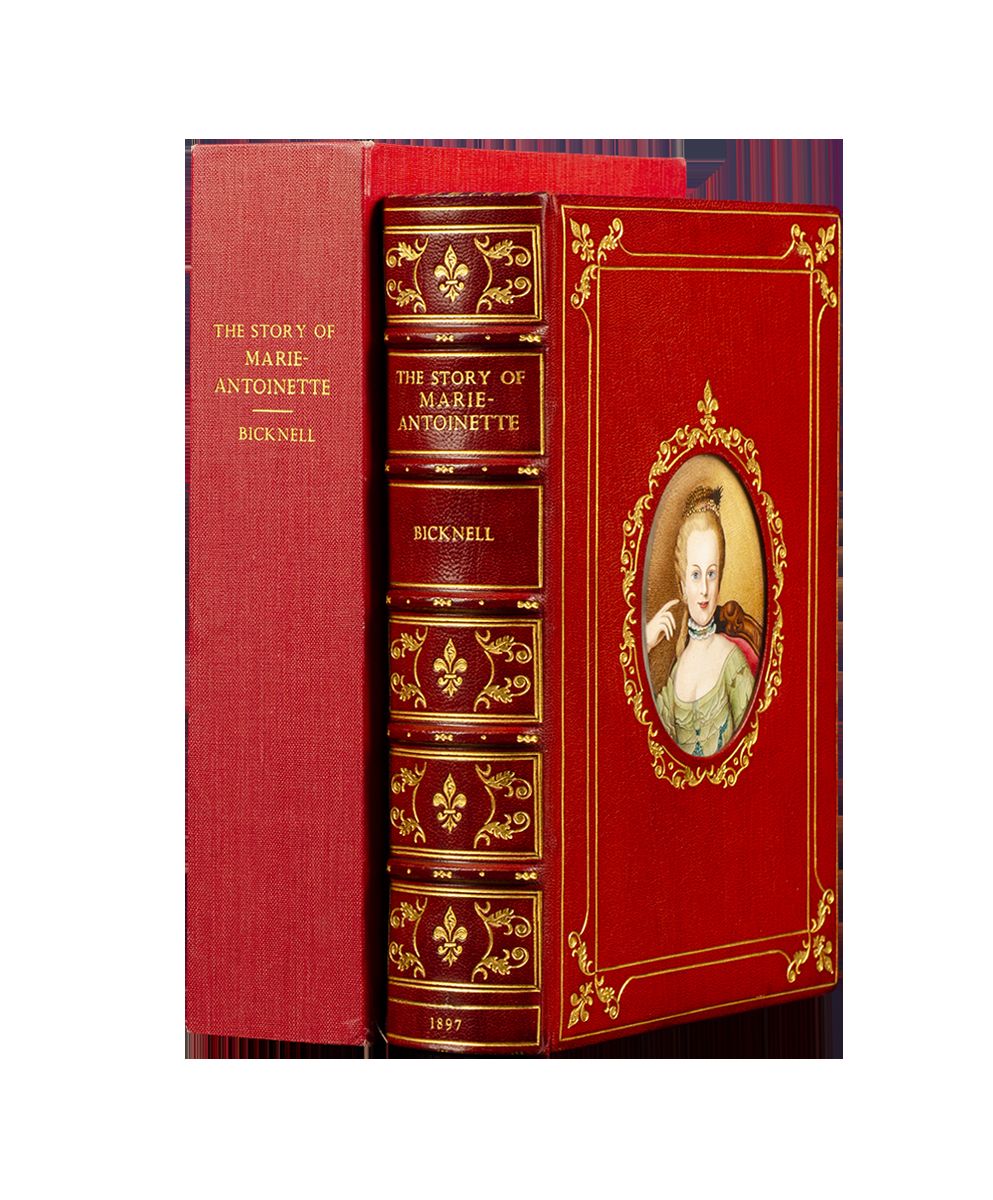
London: T. Fisher Unwin, 1897. First edition. Fine. Octavo (8 3/8 x 5 3/4 inches; 212 x 146 mm.). [i]-xiv, [2], 334, [2, blank] pp, twenty-seven photogravure plates. Bound ca 1960 in full red crushed levant morocco, covers decoratively bordered in gilt, front cover with a central gilt design surrounding a fine oval hand-painted portrait miniature of Marie-Antoinette (3 1/4 x 2 1/2 inches; 82 x 63 mm.), set under glass. Spine with five raised bands elaborately tooled and lettered in gilt in compartments. Double-ruled gilt board edges and wide turn-ins, red silk liners and endleaves, all edges gilt. A Fine copy overall. Housed in the original fleece-lined, red cloth clamshell case, spine lettered in gilt. The binding is unsigned but is very similar to the Cosway-Style bindings that were done by Sangorski & Sutcliffe for Asprey's.
Marie-Antoinette (1755-1793) was the infamous last queen of France before the French Revolution. The youngest daughter of Empress Maria Theresa and Emperor Francis I, the archduchess of Austria became dauphine of France in May 1770 at age 14 upon her marriage to the Dauphin Louis-Auguste (the future King Louis XVI). Celebrated and criticized for her extravagant fashion (among many other things), her life continues to fascinate. Anna Louise Bicknell (1835?-), was an author and historian who published extensively on French history. In addition to her biography on Marie-Antoinette, she published the book Life in the Tuleries under the Second Empire (1894) and wrote several Century Magazine and National Geographic including: The Pretenders to the Throne of France (1883); Marie-Antoinette as Dauphine (1897), The Last Days of Louis XVI and Marie-Antoinette (1897); French Wives and Mothers (1898).
The story of the Sangorski & Sutcliffe Bindery reads like something out of a novel—when two of Douglas Cockrell’s talented apprentices, Frances Sangorski and George Sutcliffe, were laid off during an economic downturn they began working out of an attic. Eventually their bindery would be famous for its intricate multicolored leather inlays and elaborate gold and jeweled bindings. Although named after the English miniaturist Richard Cosway (1742-1821), the desirable “Cosway Binding” with its jewel-like portrait miniature set into a fine binding was first developed at the turn of the century by J.H. Stonehouse, director of London’s Henry Sotheran Booksellers. Their miniatures were painstakingly crafted by the talented painter Miss C. B. Currie (1849-1940). As the style grew in popularity, other publishing houses quickly began to reproduce this technique—each developing their own desirable take on the aesthetic—referred to as “Cosway style.”. Fine.
Marie-Antoinette (1755-1793) was the infamous last queen of France before the French Revolution. The youngest daughter of Empress Maria Theresa and Emperor Francis I, the archduchess of Austria became dauphine of France in May 1770 at age 14 upon her marriage to the Dauphin Louis-Auguste (the future King Louis XVI). Celebrated and criticized for her extravagant fashion (among many other things), her life continues to fascinate. Anna Louise Bicknell (1835?-), was an author and historian who published extensively on French history. In addition to her biography on Marie-Antoinette, she published the book Life in the Tuleries under the Second Empire (1894) and wrote several Century Magazine and National Geographic including: The Pretenders to the Throne of France (1883); Marie-Antoinette as Dauphine (1897), The Last Days of Louis XVI and Marie-Antoinette (1897); French Wives and Mothers (1898).
The story of the Sangorski & Sutcliffe Bindery reads like something out of a novel—when two of Douglas Cockrell’s talented apprentices, Frances Sangorski and George Sutcliffe, were laid off during an economic downturn they began working out of an attic. Eventually their bindery would be famous for its intricate multicolored leather inlays and elaborate gold and jeweled bindings. Although named after the English miniaturist Richard Cosway (1742-1821), the desirable “Cosway Binding” with its jewel-like portrait miniature set into a fine binding was first developed at the turn of the century by J.H. Stonehouse, director of London’s Henry Sotheran Booksellers. Their miniatures were painstakingly crafted by the talented painter Miss C. B. Currie (1849-1940). As the style grew in popularity, other publishing houses quickly began to reproduce this technique—each developing their own desirable take on the aesthetic—referred to as “Cosway style.”. Fine.