

Little Dorrit
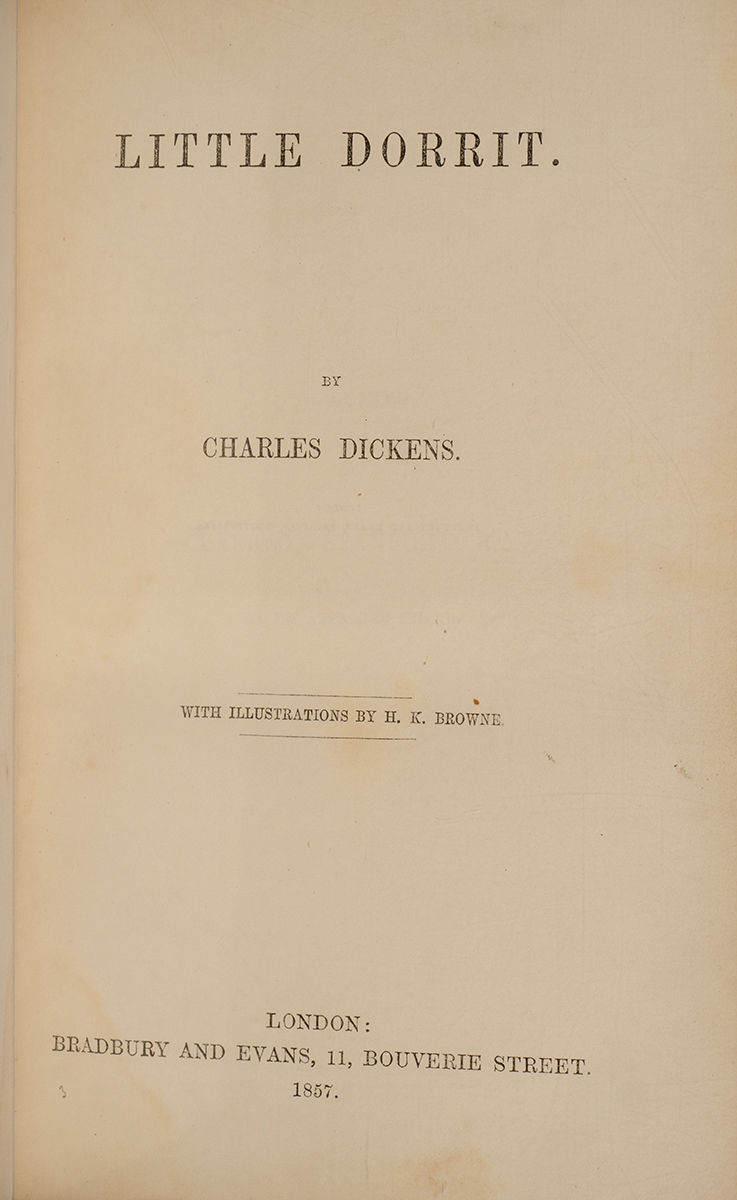
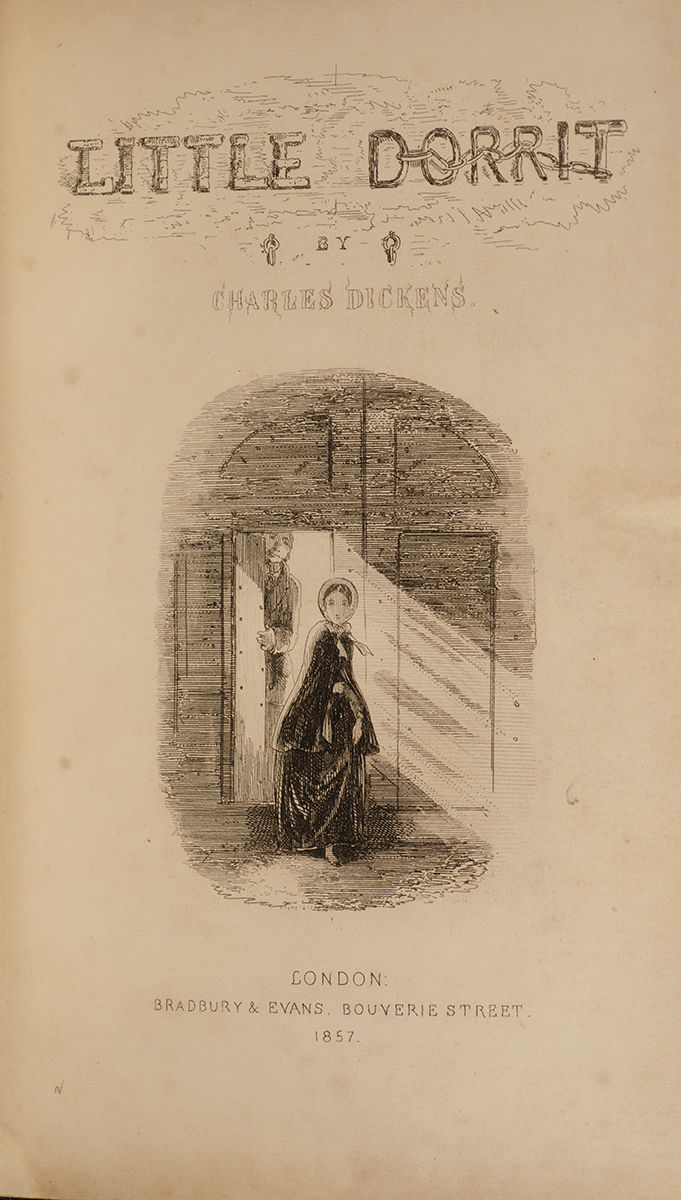
- London: Bradbury & Evans, 1857
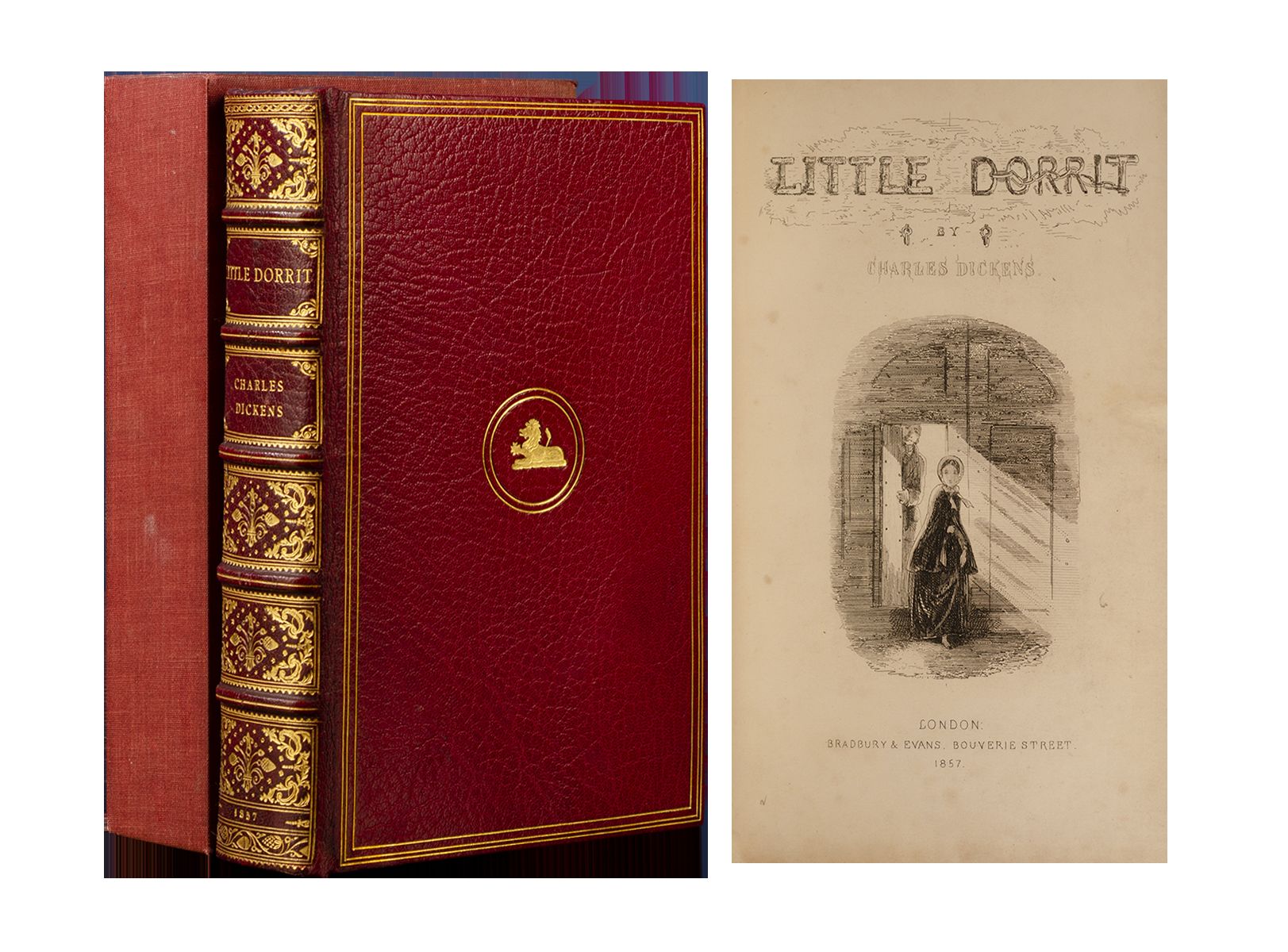
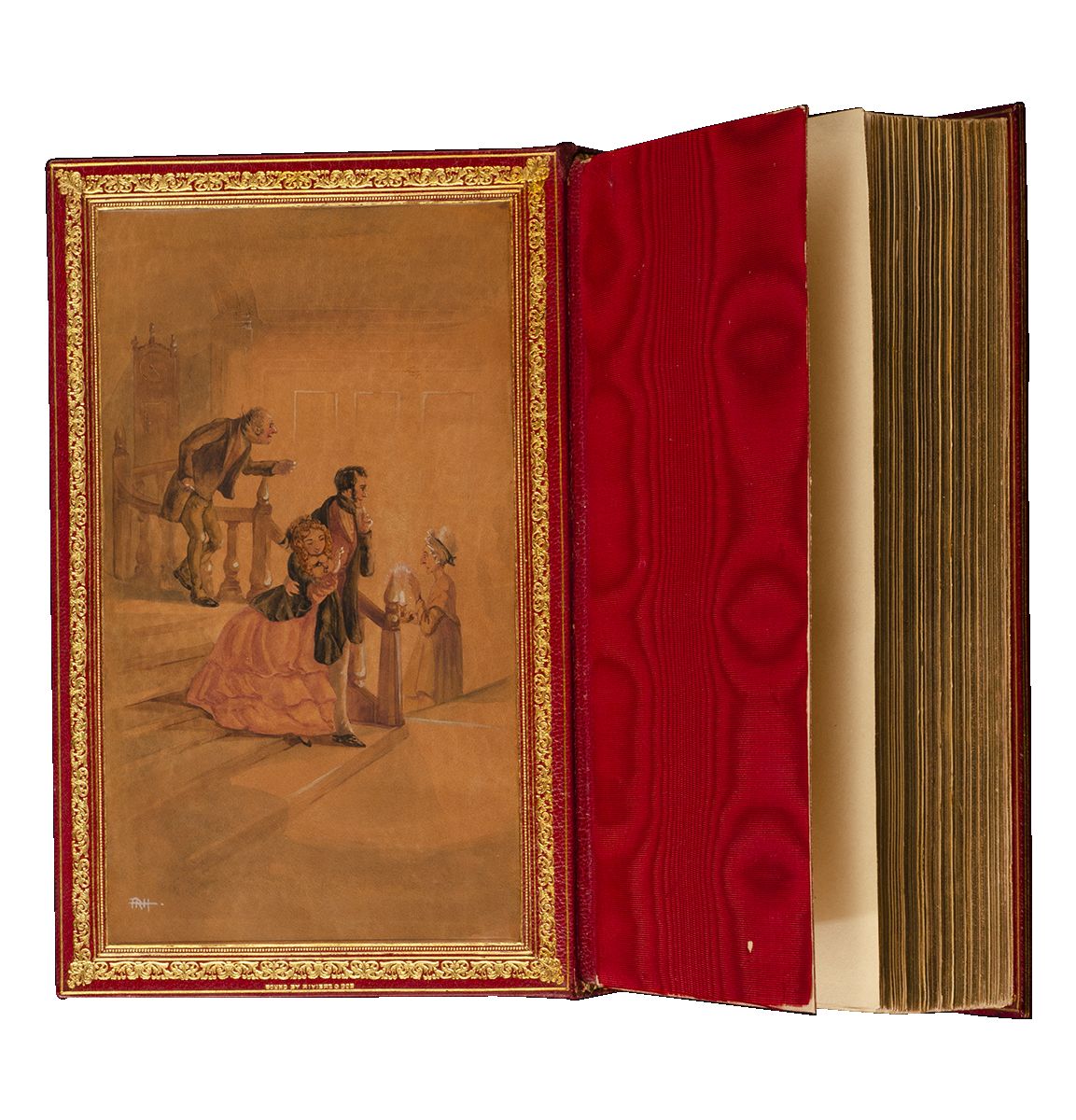
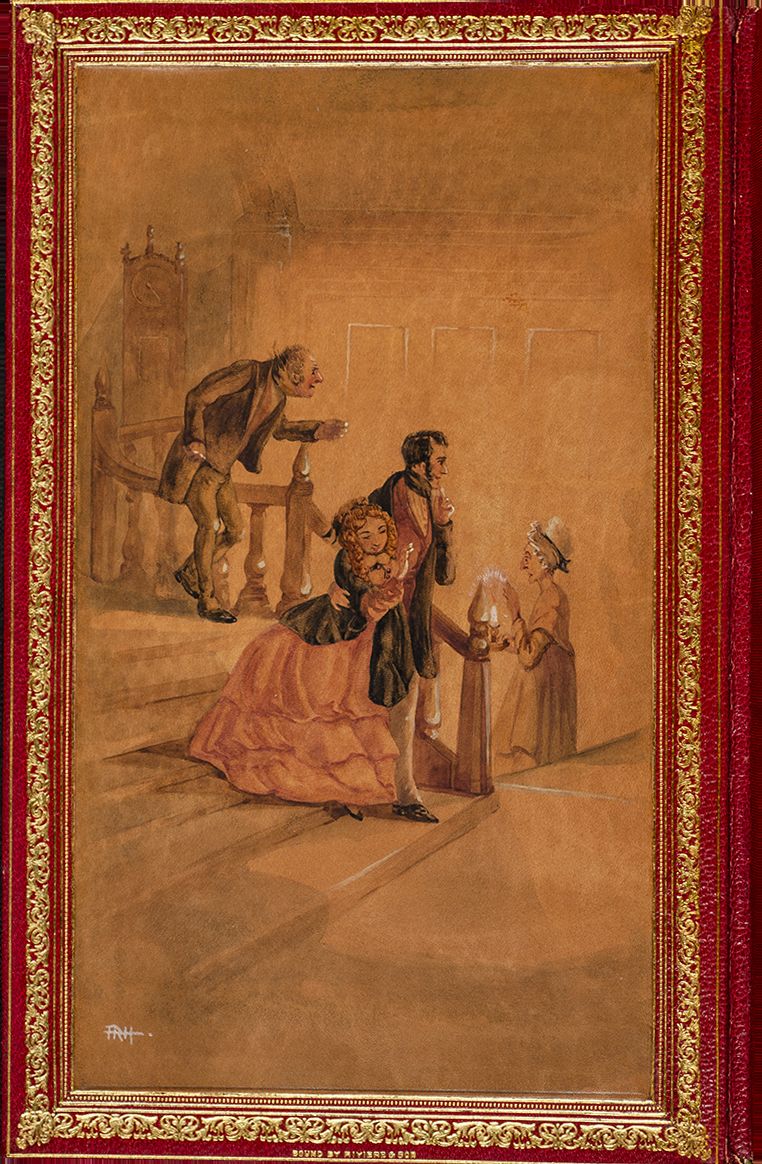
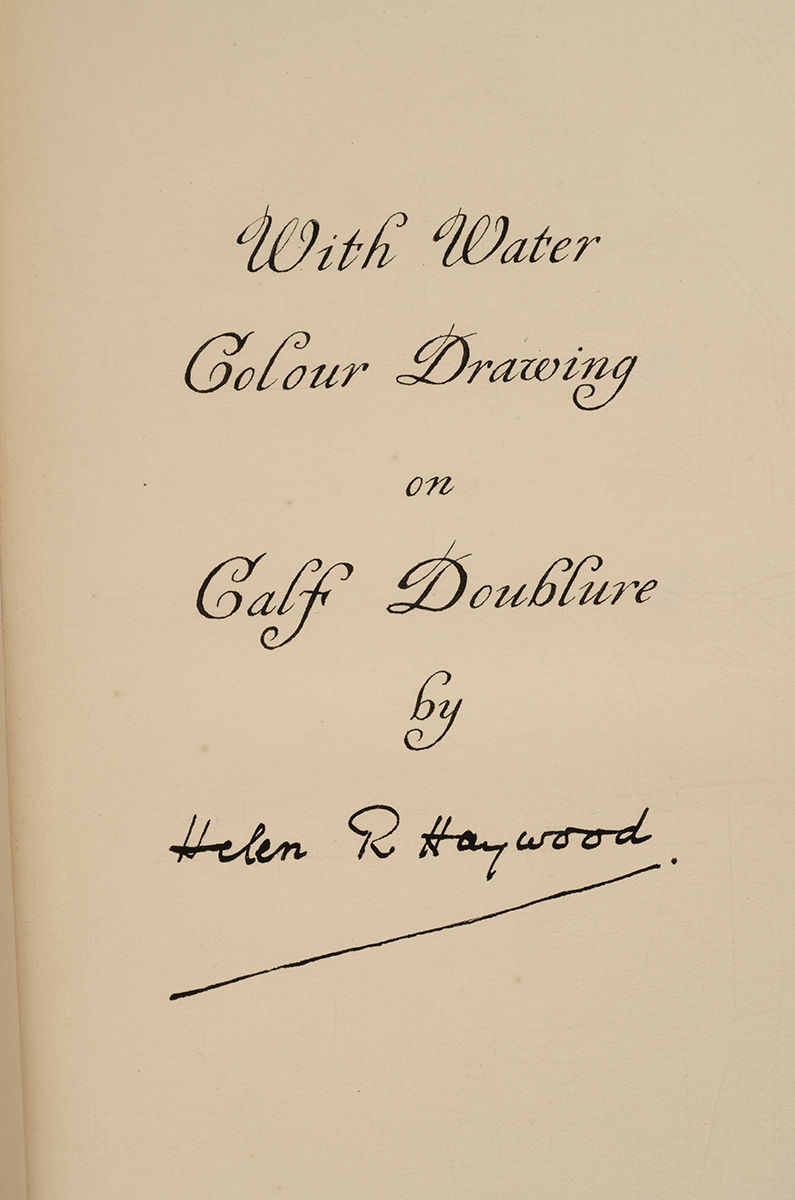
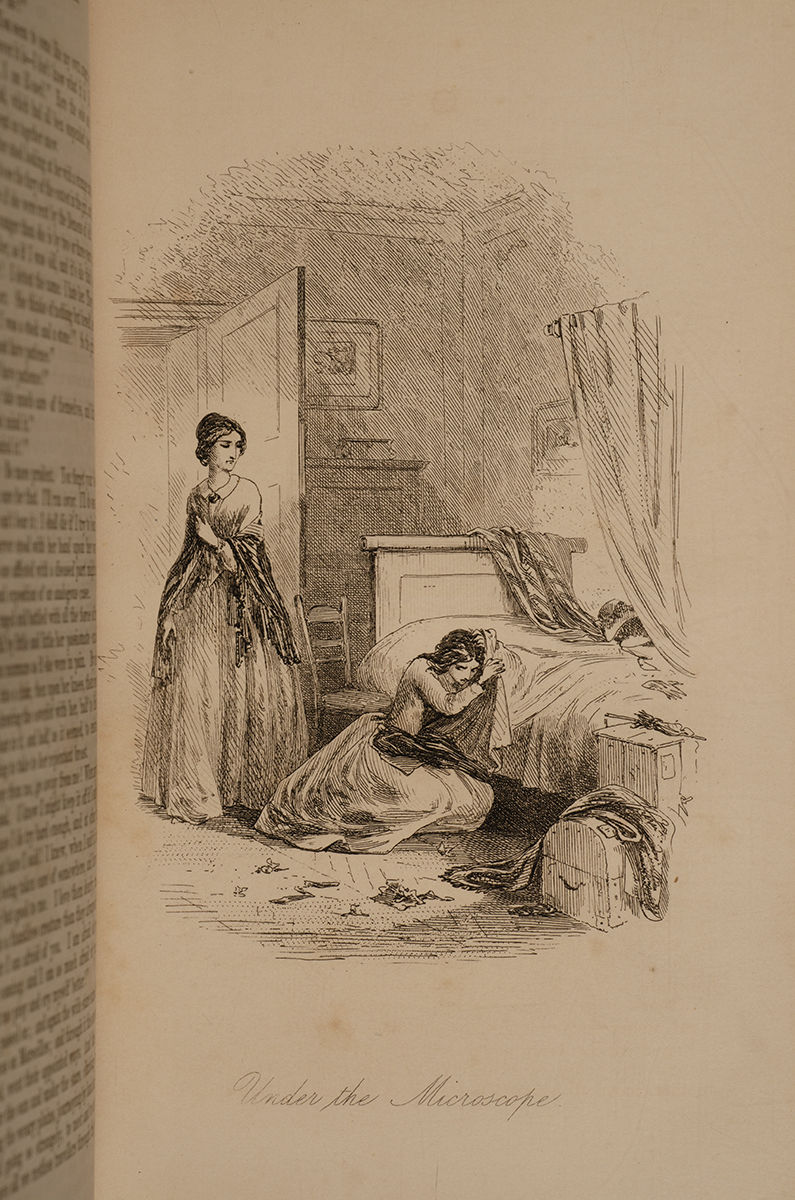
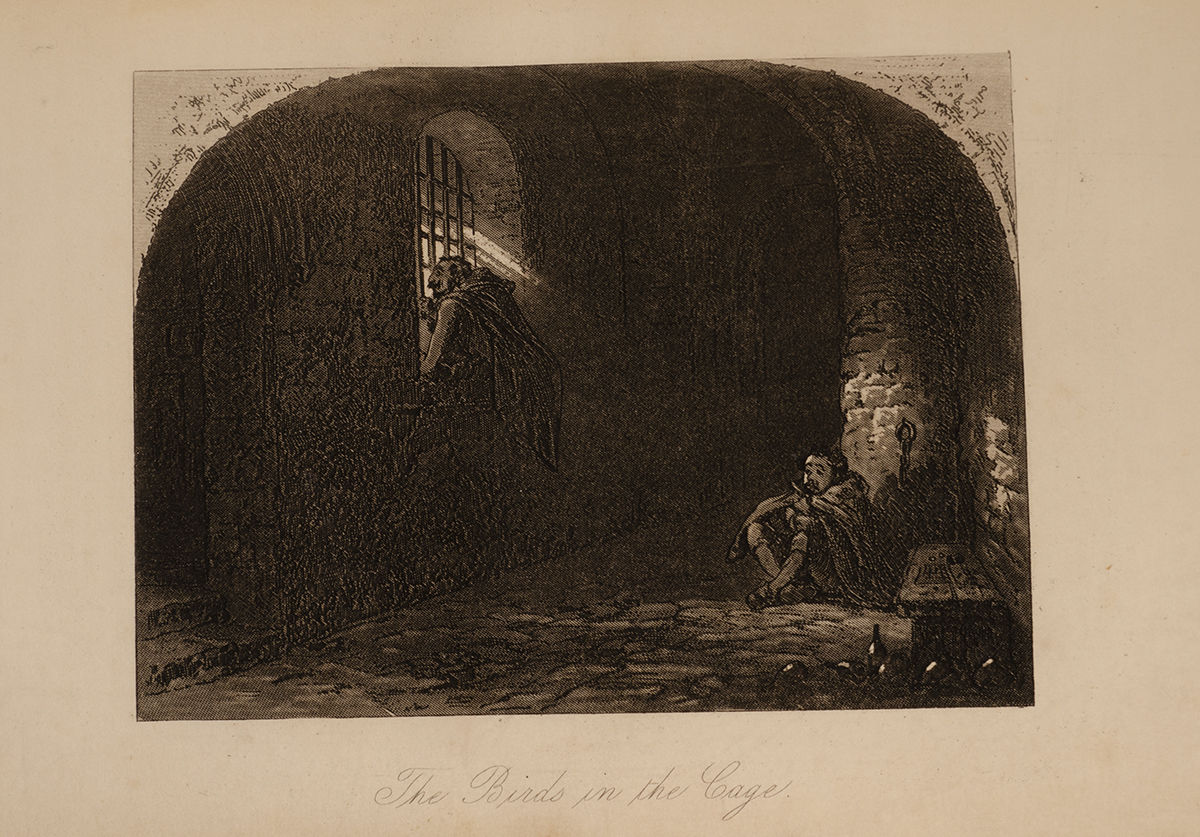
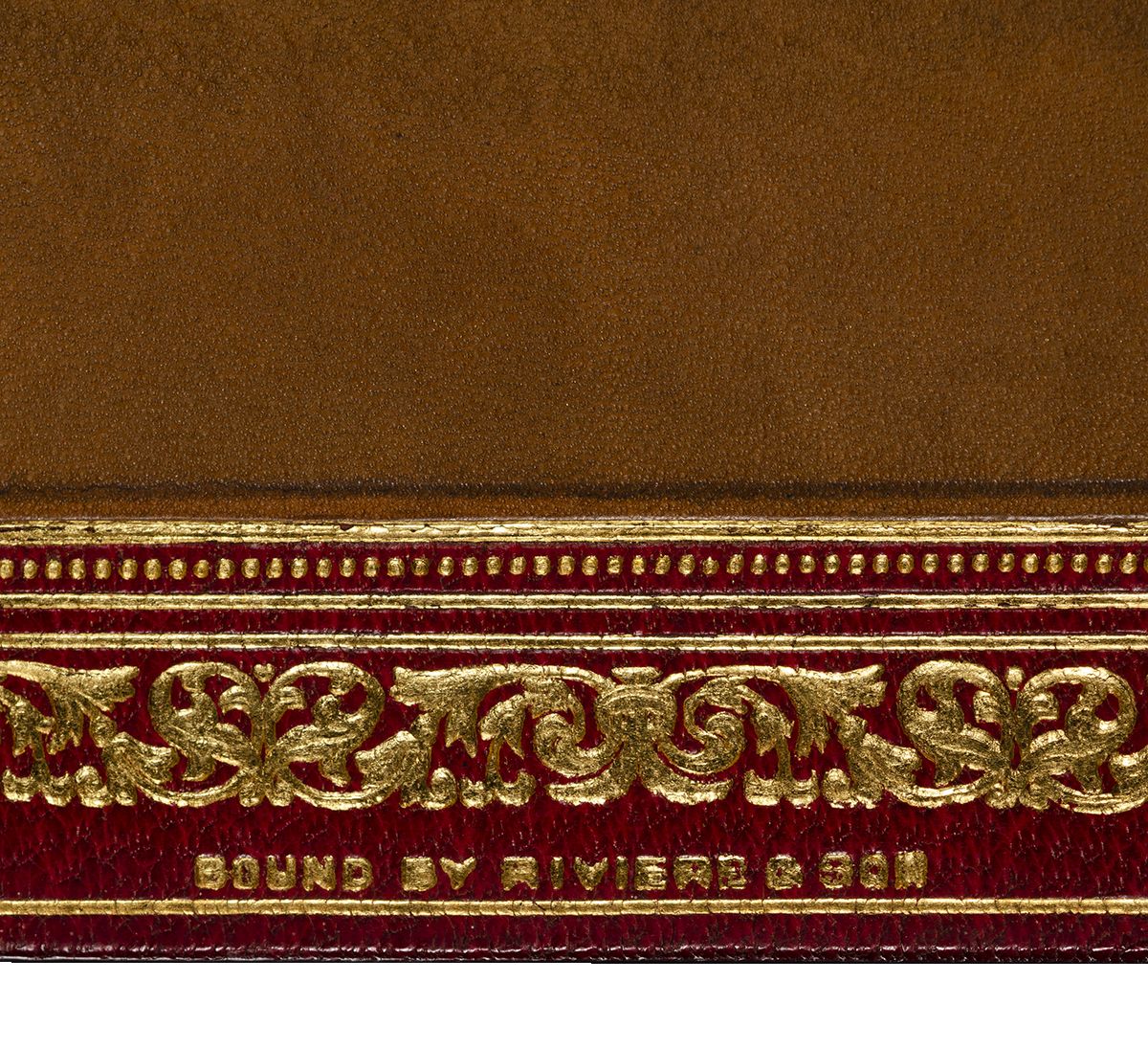
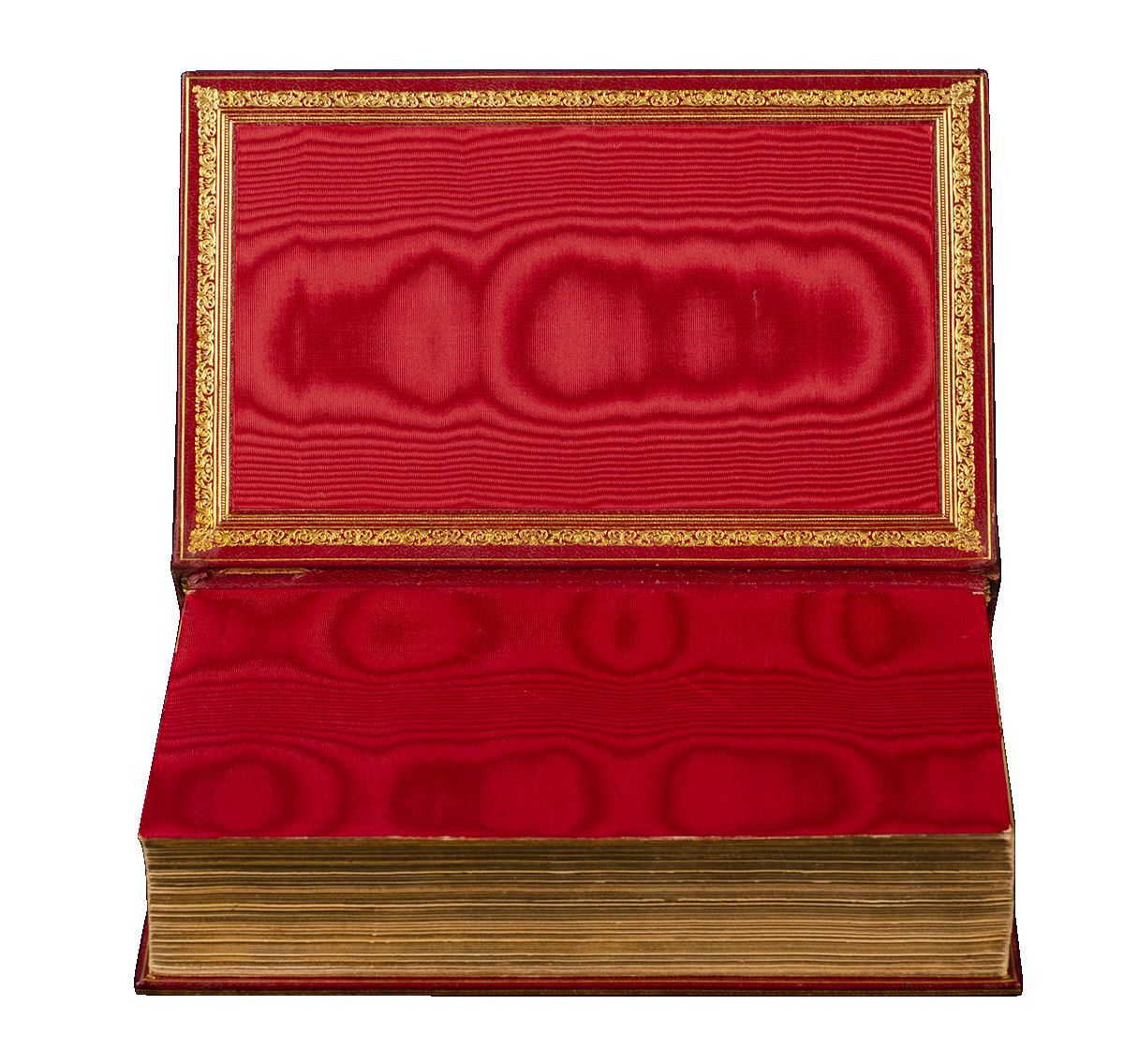
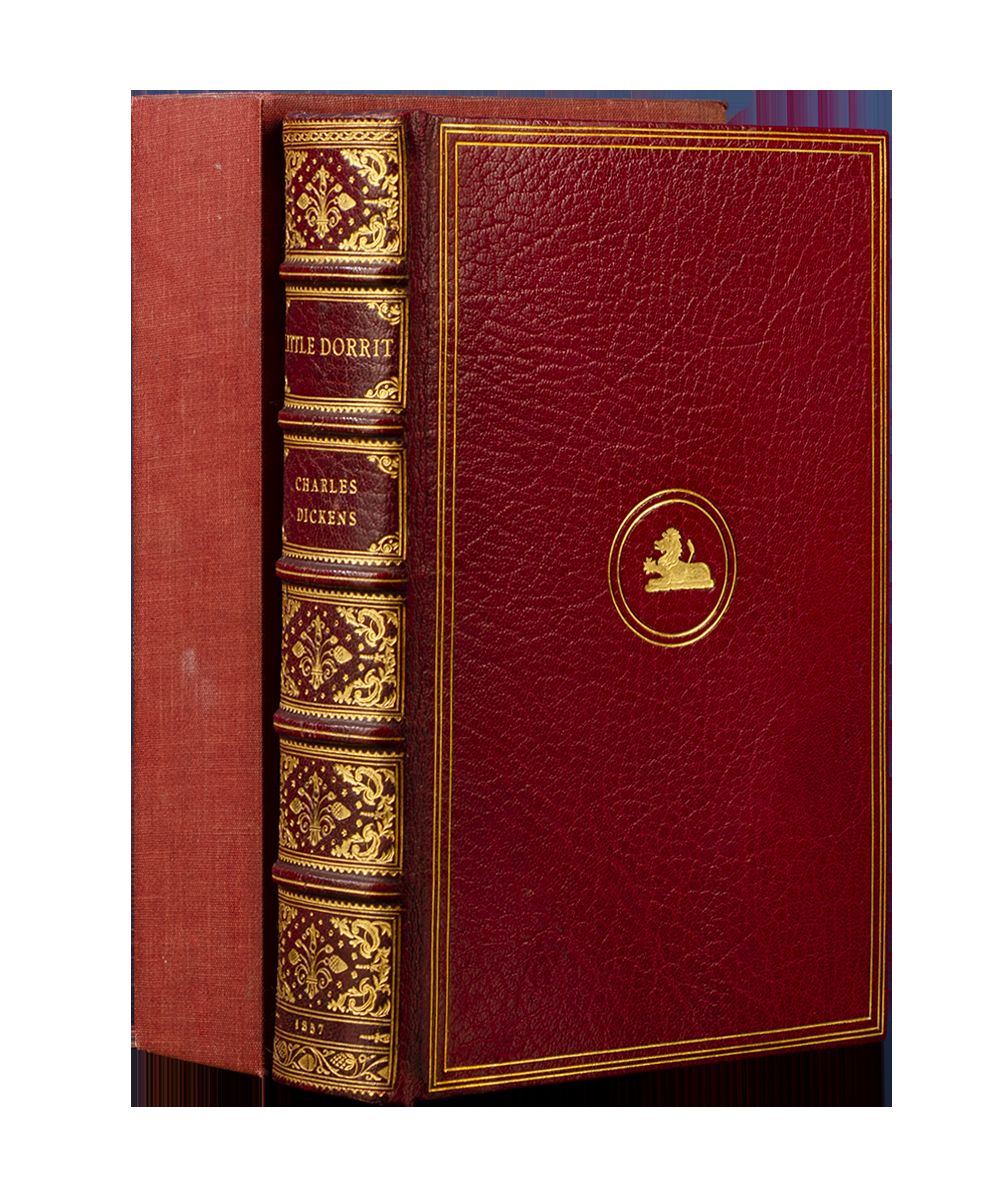
London: Bradbury & Evans, 1857. First edition. Near Fine. First issue with all twenty-one internal text flaws as noted by Smith. Octavo. (8 1/2 x 5 1/2 in; 216 x 138 mm). xii, 625, [1, blank] pp. Forty engraved plates by "Phiz" (H.K. Brown), including frontispiece and engraved vignette title page. With an inserted preliminary leaf printed "With Water Colour Drawing on Calf Doublure by" [signed] Helen R. Haywood. Bound ca. 1930 by Rivière and Son (stamp signed to upper doublure) in full wine crushed morocco. Gilt French fillets. Gilt vignette to upper board. Five gilt ruled raised bands. Gilt lettered and decorated compartments. Original watercolor painting, ca.1930, by Helen R. Haywood reproducing in color the Phiz plate "Flora's Tour of inspection" found opposite to page 519, on calf to upper doublure (signed "HRH" at lower left corner) with gilt rolled decorative borders. Red moire silk endpapers. Red moire silk to lower doublure with gilt rolled borders. All edges gilt. Neat ink inscription on front blank "Louise Dalton Kirk./from/Mother and Dad-/1936-." Expertly rebacked with the original spine panel laid down. Housed in the binder's original fleece-lined red cloth slipcase. A unique copy.
With Amy Dorrit as his case study, Dickens reveals how a parents' financial shortcomings can detrimentally affect their daughters' lives -- forcing women into unsafe or unsavory employment and preventing them from finding husbands or forming families of their own. And he suggests that only through goodness and self sacrifice can women rise up from these conditions. "On any other terms than those of allegory, angelic Amy Dorrit would be squirmingly hard to swallow. As it is, her goodness is indispensable to the story. Born in the Marshals debtor's prison, she is the only character whose wishes are wholly unselfish and whose unbreakable will to love and be loved frees her metaphorically from every prison, literal and social. All the other major characters are imprisoned by discontent, by poverty, by ignorance, by personal ambition, even by ill-judged kindness; but most conspicuously by an insatiable desire for money, power and status" (Stevenson). No other Dickens novel tackles more overtly the burdens women bear in the face of economic hardship, nor so highly glorifies its female characters for their endurance. "Little Dorrit originally appeared in twenty numbers, bound in nineteen monthly parts, the last part forming a double number, from December 1855 - June 1857. It was published in book form on May 30, 1857" (Smith).
Helen R[iviere] Haywood (1908-1995), was an English painter, children's book illustrator, and writer, best known for her foredge paintings. She came from a book-binding family: Haywood was the granddaughter Robert Riviere, founder of the great bindery, which executed this lovely binding, and her uncle (who also worked for the firm) introduced her to foredge and double foredge painting. Between the 1930s-1970s she completed multiple commissions for Inman's Books, a New York City based antiquarian book dealer. From her intertest in science, anthropology, and naturalism, Haywood developed a keen attention to the world’s natural elements; this talent for observation and specificity found its way into her artwork. “The Riviere Bindery was one of the most notable and prolific shops in London's West End from about 1840 through 1939” (Princeton). Bath-based Bayntun Bindery acquired the firm in 1939, transforming into the “Bayntun-Riviere bindery,” which is still in existence and family owned.
Provenance: Louise Dalton Kirk 1936; Purchased by David Brass Rare Books from a private California collection 2007; sold to Randal Moscovitz 2008.
Smith I, 12. Eckel pp. 82-85. Near Fine.
With Amy Dorrit as his case study, Dickens reveals how a parents' financial shortcomings can detrimentally affect their daughters' lives -- forcing women into unsafe or unsavory employment and preventing them from finding husbands or forming families of their own. And he suggests that only through goodness and self sacrifice can women rise up from these conditions. "On any other terms than those of allegory, angelic Amy Dorrit would be squirmingly hard to swallow. As it is, her goodness is indispensable to the story. Born in the Marshals debtor's prison, she is the only character whose wishes are wholly unselfish and whose unbreakable will to love and be loved frees her metaphorically from every prison, literal and social. All the other major characters are imprisoned by discontent, by poverty, by ignorance, by personal ambition, even by ill-judged kindness; but most conspicuously by an insatiable desire for money, power and status" (Stevenson). No other Dickens novel tackles more overtly the burdens women bear in the face of economic hardship, nor so highly glorifies its female characters for their endurance. "Little Dorrit originally appeared in twenty numbers, bound in nineteen monthly parts, the last part forming a double number, from December 1855 - June 1857. It was published in book form on May 30, 1857" (Smith).
Helen R[iviere] Haywood (1908-1995), was an English painter, children's book illustrator, and writer, best known for her foredge paintings. She came from a book-binding family: Haywood was the granddaughter Robert Riviere, founder of the great bindery, which executed this lovely binding, and her uncle (who also worked for the firm) introduced her to foredge and double foredge painting. Between the 1930s-1970s she completed multiple commissions for Inman's Books, a New York City based antiquarian book dealer. From her intertest in science, anthropology, and naturalism, Haywood developed a keen attention to the world’s natural elements; this talent for observation and specificity found its way into her artwork. “The Riviere Bindery was one of the most notable and prolific shops in London's West End from about 1840 through 1939” (Princeton). Bath-based Bayntun Bindery acquired the firm in 1939, transforming into the “Bayntun-Riviere bindery,” which is still in existence and family owned.
Provenance: Louise Dalton Kirk 1936; Purchased by David Brass Rare Books from a private California collection 2007; sold to Randal Moscovitz 2008.
Smith I, 12. Eckel pp. 82-85. Near Fine.