

History of the Negro Race in America from 1619 to 1880. Negroes as Slaves, As Soldiers and as Citizens
- Portrait. xix,481; xiii,[1],611pp. 2 vols. 8vo
- New York: G. P. Putnam's Sons, 1883
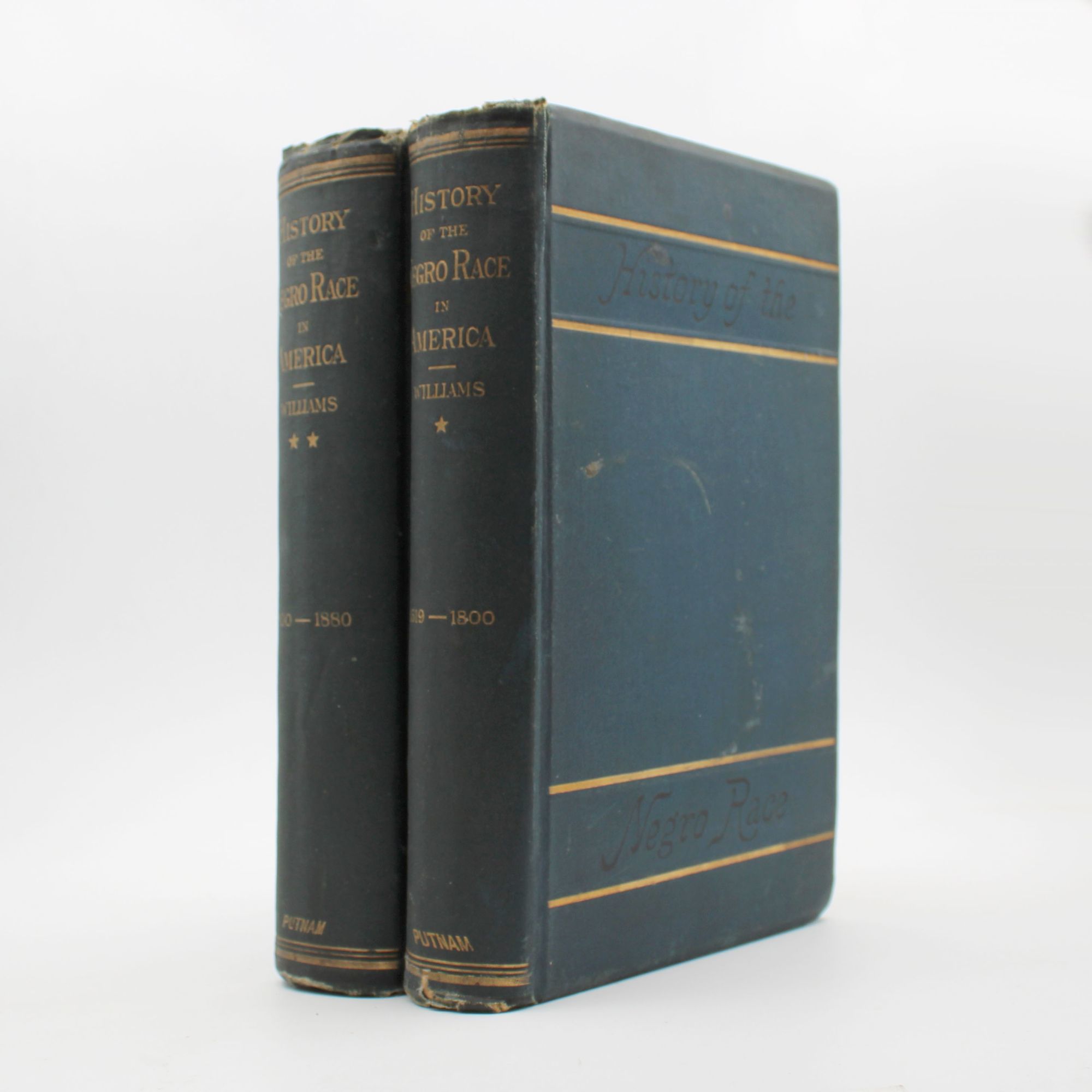
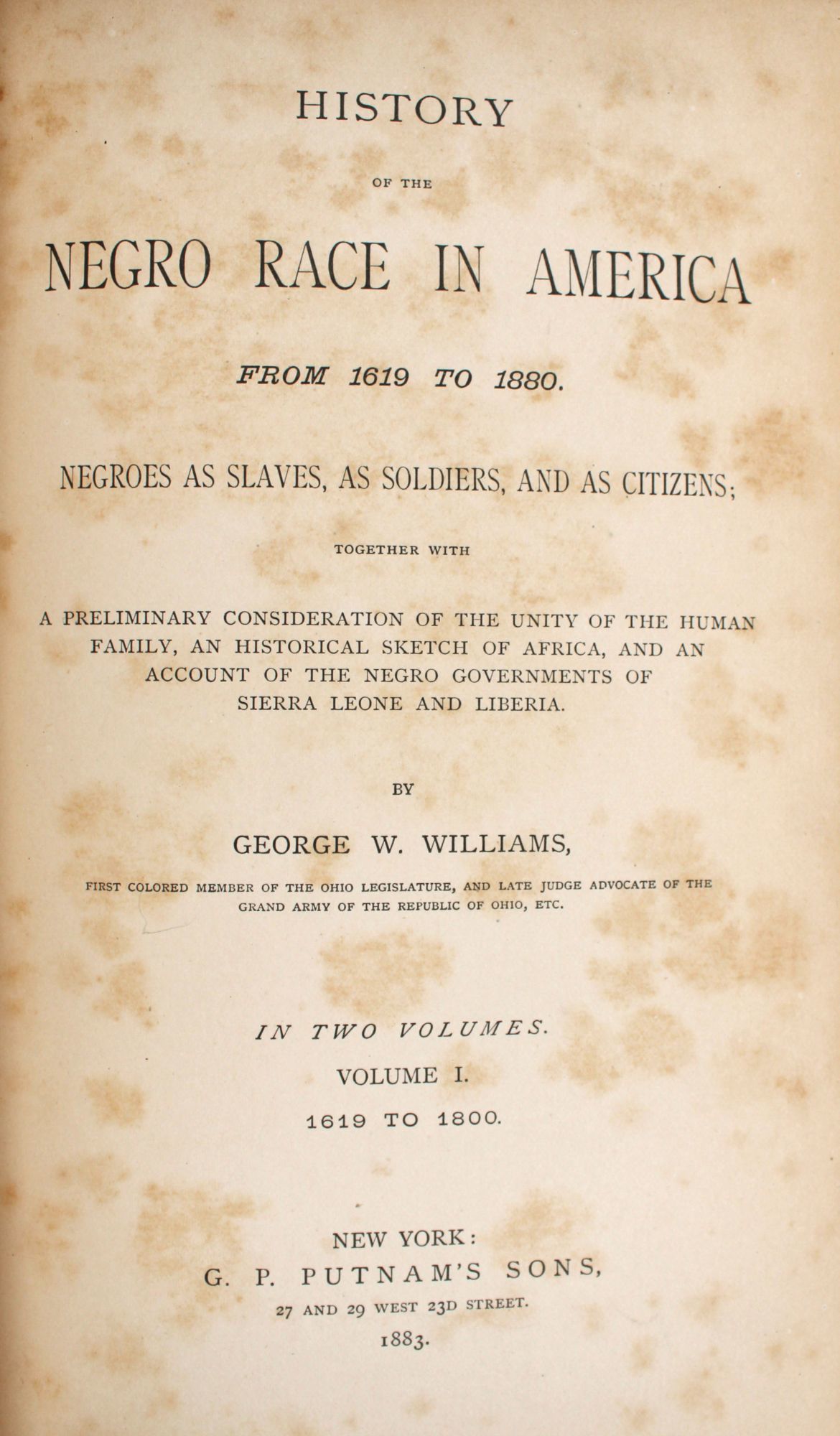
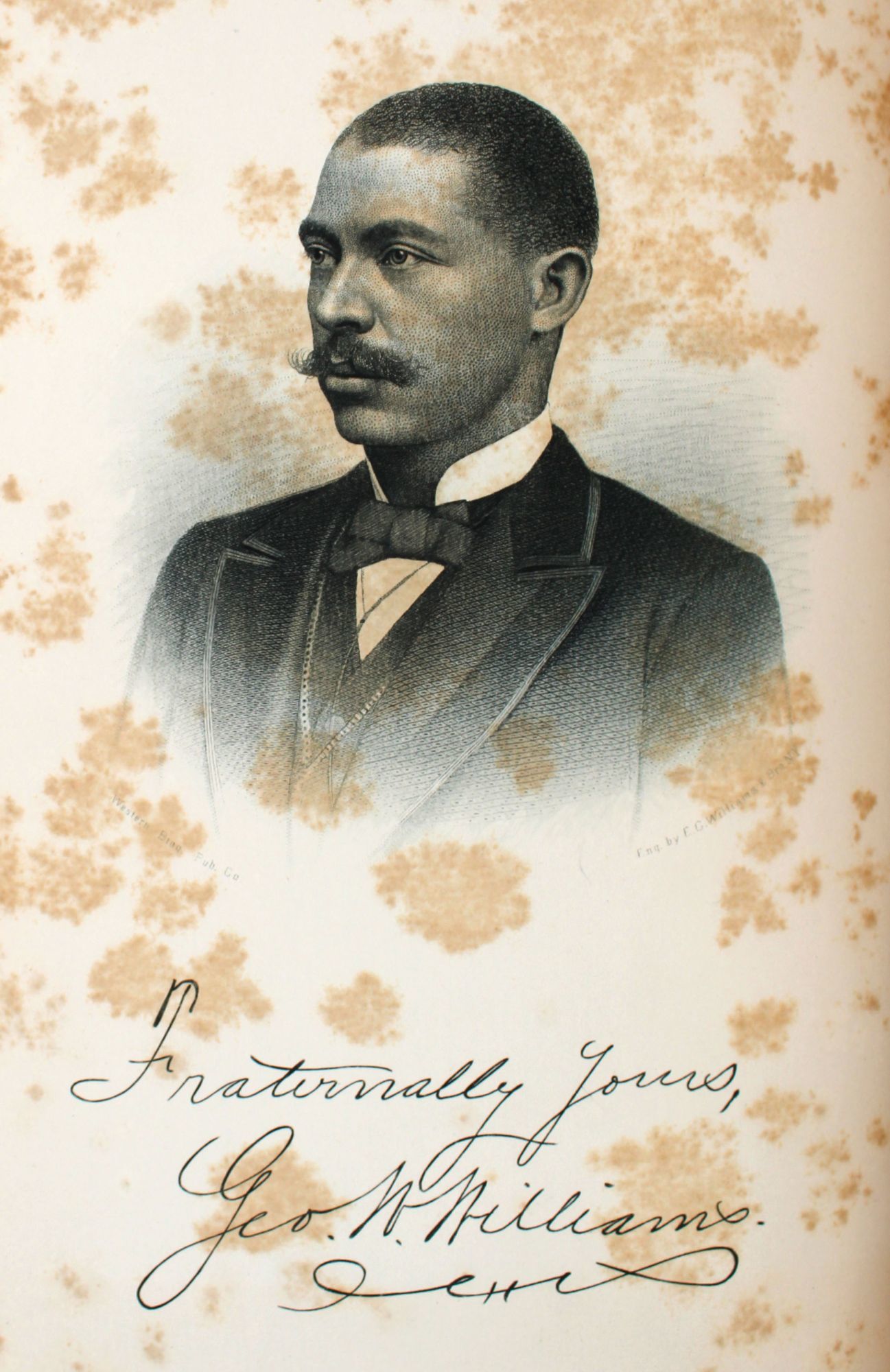
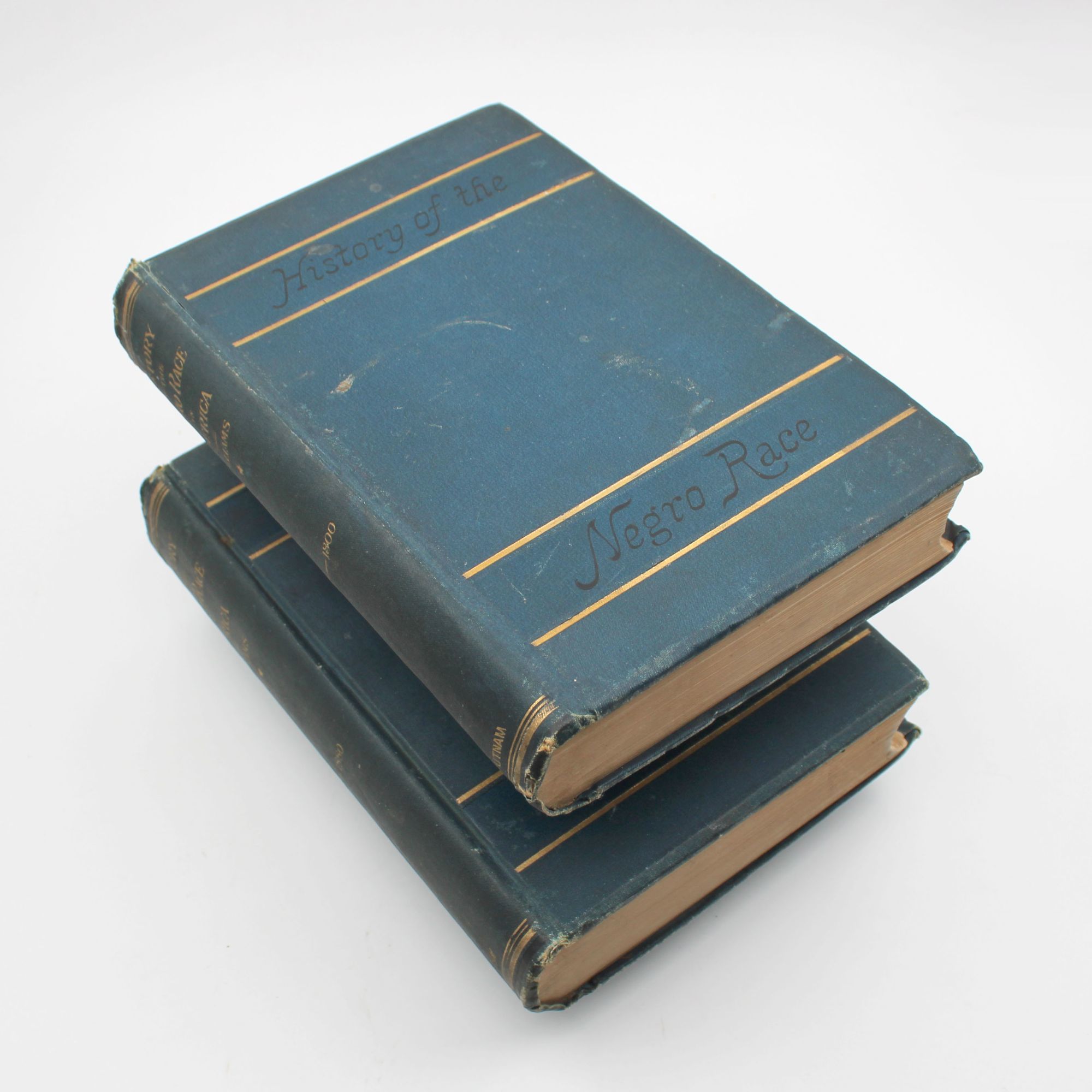
New York: G. P. Putnam's Sons, 1883. First edition. Portrait. xix,481; xiii,[1],611pp. 2 vols. 8vo. Publisher's blue cloth, upper covers ruled in gilt and titled in black, spines lettered in gilt, bevelled board edges, minor wear and spotting. Foxing to the portrait and vol. 1 title, else minor toning to text. First edition. Portrait. xix,481; xiii,[1],611pp. 2 vols. 8vo. The first history of African Americans in the United States by the man W. E.B Du Bois called “the greatest historian of the race”, and a work considered by modern historians to be a “pioneering achievement” in the field of historiography.
The African American author was born a freeman in Pennsylvania in 1849 and enlisted in the Union army at the age of fourteen. After being discharged due to his age, he convinced his superiors to let him stay, and continued to serve until the end of the war. Following his service, he enrolled at the Newton Theological Institute in 1870, graduated in 1874 and then became the pastor of the Twelfth Baptist Church of Boston. In 1876 became the pastor of the Union Baptist Church in Cincinnati, and studied law in evening classes at the Cincinnati Law School and at the law offices of Alfonso Taft, the father of future president, William Howard Taft. Williams was admitted to the bar, and began a career in politics under the guidance of the Taft family. In 1879 Williams became the first African American to be elected to the Ohio state legislature. He began his comprehensive history of African Americans in the United States soon after becoming a pastor, and continued his work on it through his law degree and during his work as a legislator. Instead of following what would have been a very promising political career, Williams retired entirely from politics in 1882 following the publication of the first edition of this book and devoted himself to studying and writing history.
Taking seven years to complete, the work is the first history of African Americans in the United States, tracing the establishment and growth of slavery in the American colonies under the English crown, with a focus on each of the thirteen original colonies. The history continues with the significant contributions African Americans made to the Continental Army during the course of the Revolution at a time when slavery was flourishing. The first volume ends with a discussion of slavery becoming a political and legal quagmire for the colonies during and after the revolution. The second volume reviews the issues that precipitated the Civil War, with slavery being primary among them. It continues forward, looking at the contributions African Americans made as soldiers on both sides of the war, reviewing the conclusion of the war, Reconstruction and the subsequent “Great Exodus” of African Americans northward to escape White cruelties.
Williams’ history is a truly spectacular piece of research for several reasons – he was the first to apply scientific methods to the study of history, including his pioneering use of archival research as well as the use of newspapers and oral histories as primary sources. Williams gathered source material from both Black and White perspectives and searched out the records of “the inarticulate masses…whose records could not be found in the usual repositories” (Franklin). His exhaustive search for source material gave him an objectivity on his subject matter that modern historians are hard-pressed to follow. Even now, a current review of the present work by McConarty shows that Williams “came to a number of historical conclusions outside the mainstream of his era. But one hundred thirty years later, historians accept many of these out-of-place interpretations as the most accurate explanations of the past.” At an early stage he stressed the centrality of slavery as the cause of the Civil War, and concluded that women and African Americans were an important part of the abolitionist movement.
A very difficult work to find in good condition. Work, p.417; Blockson 9523. See John Hope Franklin, “George Washington Williams and the Beginnings of Afro-American Historiography,” in Critical Inquiry, Vol. 4, No. 4 (Summer, 1978), pp.657-672
The African American author was born a freeman in Pennsylvania in 1849 and enlisted in the Union army at the age of fourteen. After being discharged due to his age, he convinced his superiors to let him stay, and continued to serve until the end of the war. Following his service, he enrolled at the Newton Theological Institute in 1870, graduated in 1874 and then became the pastor of the Twelfth Baptist Church of Boston. In 1876 became the pastor of the Union Baptist Church in Cincinnati, and studied law in evening classes at the Cincinnati Law School and at the law offices of Alfonso Taft, the father of future president, William Howard Taft. Williams was admitted to the bar, and began a career in politics under the guidance of the Taft family. In 1879 Williams became the first African American to be elected to the Ohio state legislature. He began his comprehensive history of African Americans in the United States soon after becoming a pastor, and continued his work on it through his law degree and during his work as a legislator. Instead of following what would have been a very promising political career, Williams retired entirely from politics in 1882 following the publication of the first edition of this book and devoted himself to studying and writing history.
Taking seven years to complete, the work is the first history of African Americans in the United States, tracing the establishment and growth of slavery in the American colonies under the English crown, with a focus on each of the thirteen original colonies. The history continues with the significant contributions African Americans made to the Continental Army during the course of the Revolution at a time when slavery was flourishing. The first volume ends with a discussion of slavery becoming a political and legal quagmire for the colonies during and after the revolution. The second volume reviews the issues that precipitated the Civil War, with slavery being primary among them. It continues forward, looking at the contributions African Americans made as soldiers on both sides of the war, reviewing the conclusion of the war, Reconstruction and the subsequent “Great Exodus” of African Americans northward to escape White cruelties.
Williams’ history is a truly spectacular piece of research for several reasons – he was the first to apply scientific methods to the study of history, including his pioneering use of archival research as well as the use of newspapers and oral histories as primary sources. Williams gathered source material from both Black and White perspectives and searched out the records of “the inarticulate masses…whose records could not be found in the usual repositories” (Franklin). His exhaustive search for source material gave him an objectivity on his subject matter that modern historians are hard-pressed to follow. Even now, a current review of the present work by McConarty shows that Williams “came to a number of historical conclusions outside the mainstream of his era. But one hundred thirty years later, historians accept many of these out-of-place interpretations as the most accurate explanations of the past.” At an early stage he stressed the centrality of slavery as the cause of the Civil War, and concluded that women and African Americans were an important part of the abolitionist movement.
A very difficult work to find in good condition. Work, p.417; Blockson 9523. See John Hope Franklin, “George Washington Williams and the Beginnings of Afro-American Historiography,” in Critical Inquiry, Vol. 4, No. 4 (Summer, 1978), pp.657-672