

The Poetical Works of John Keats
- London: Edward Moxon, 1854
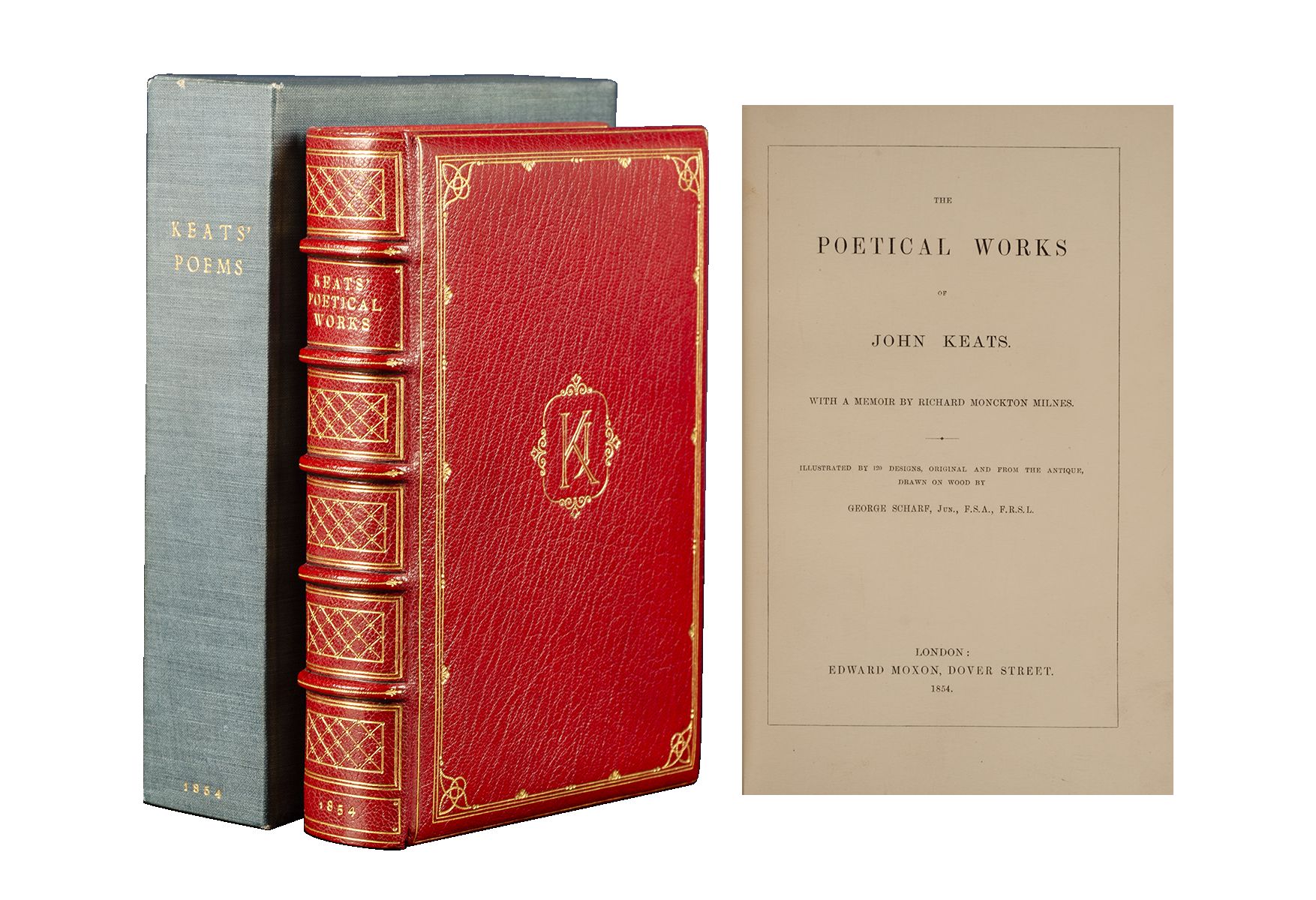
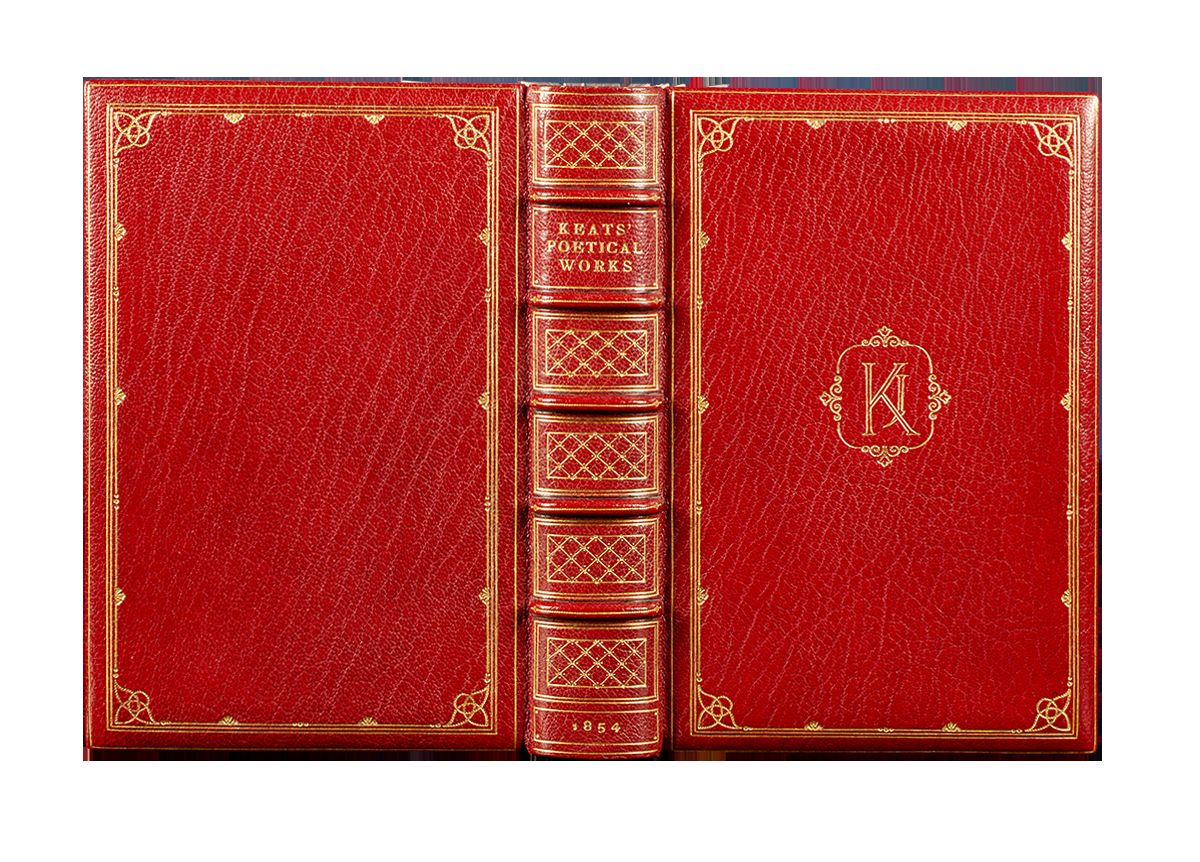
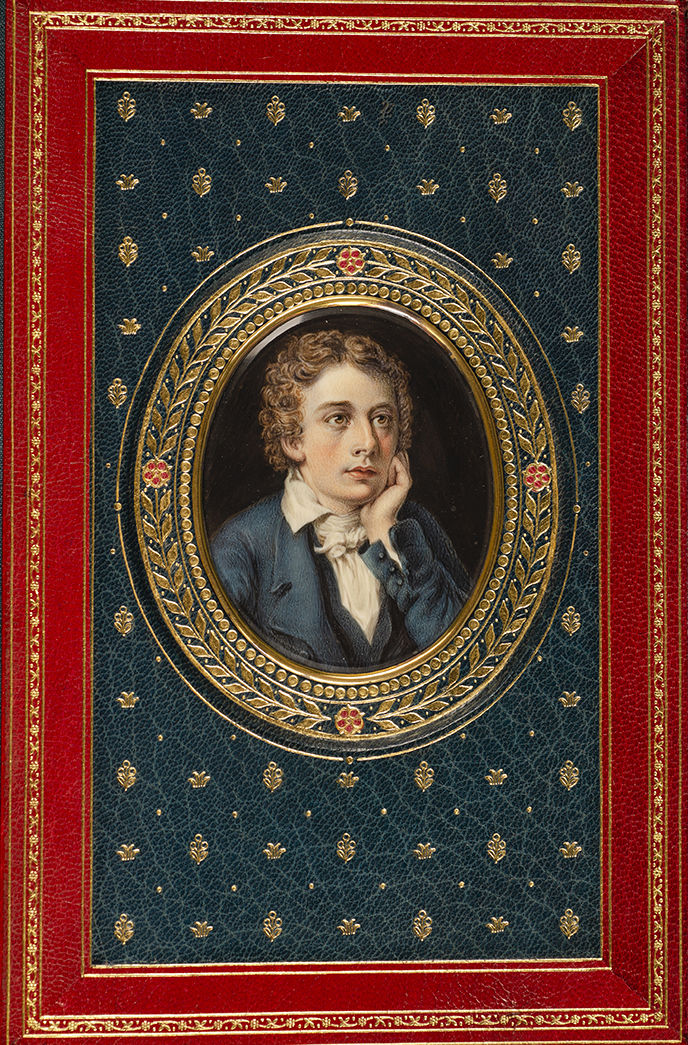
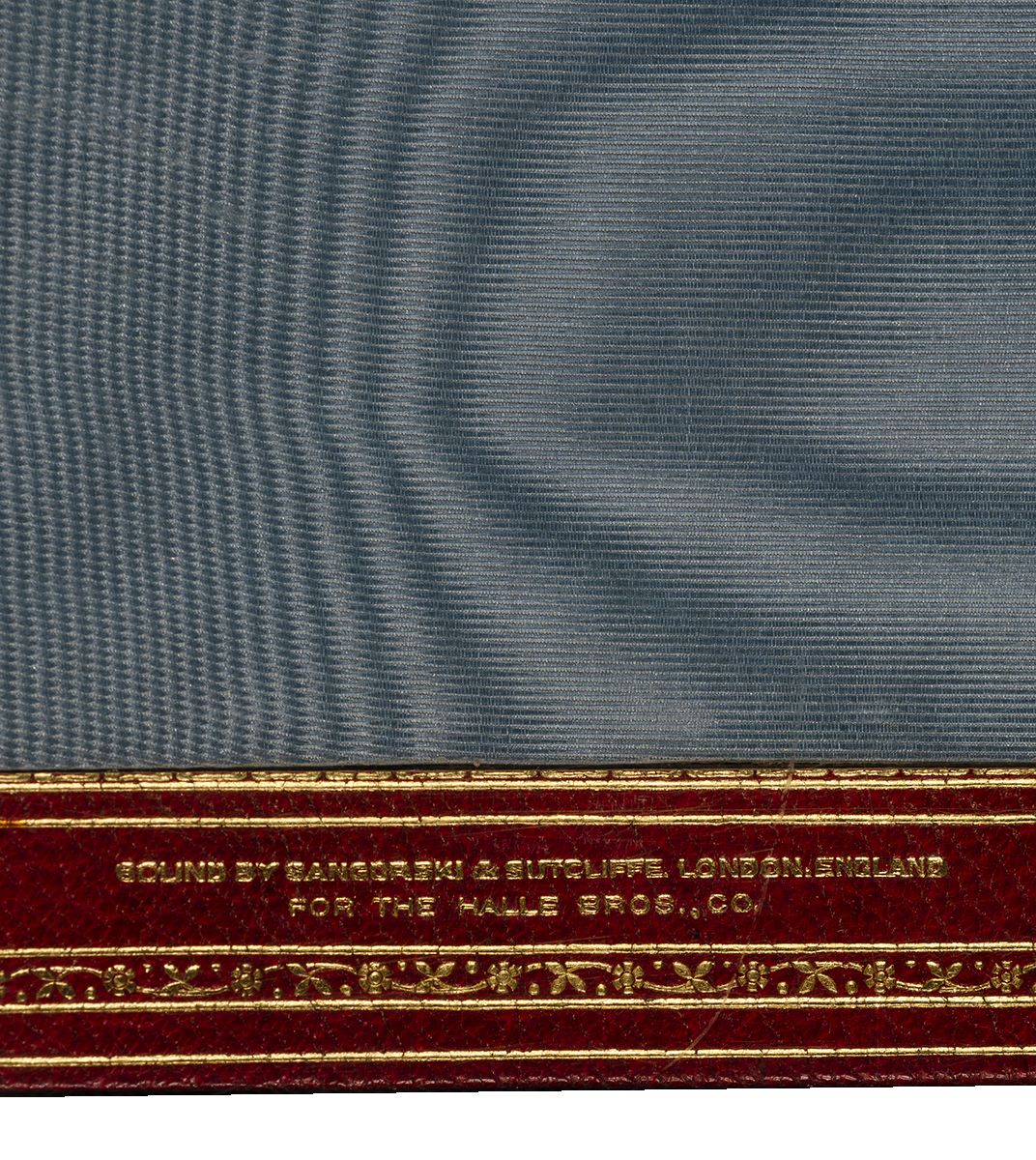
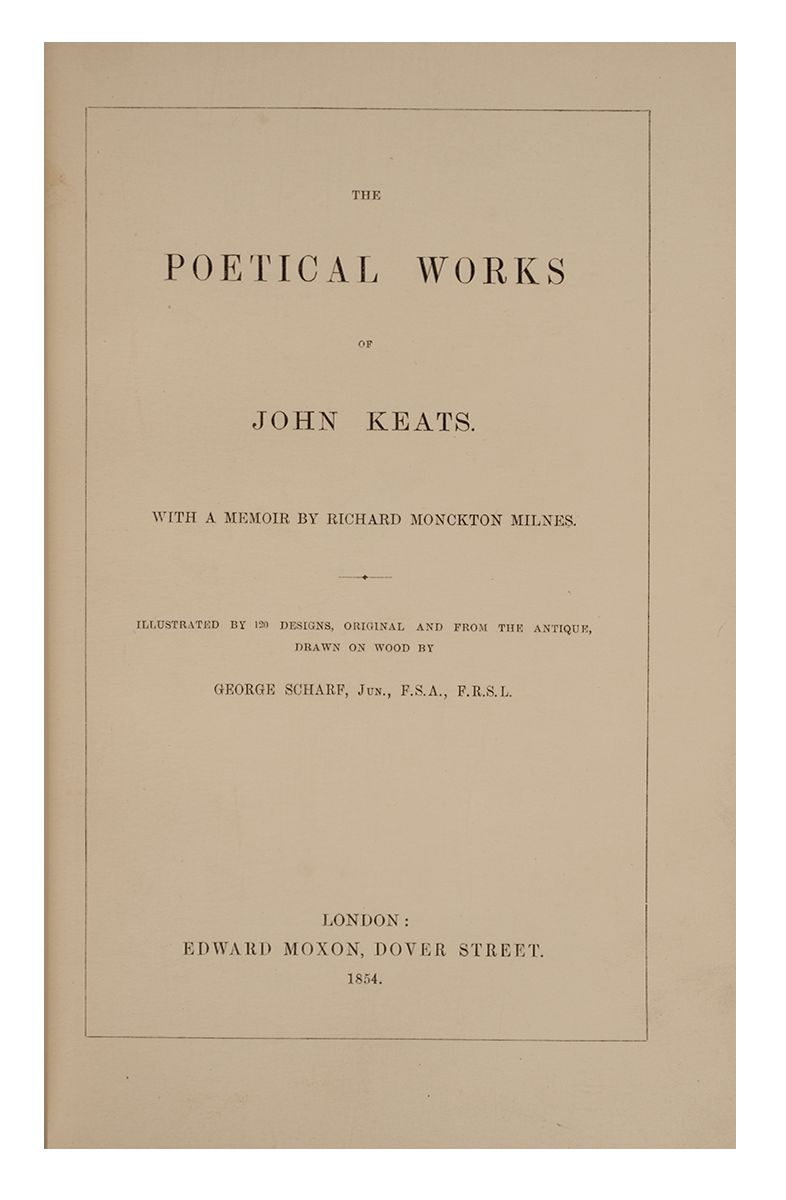
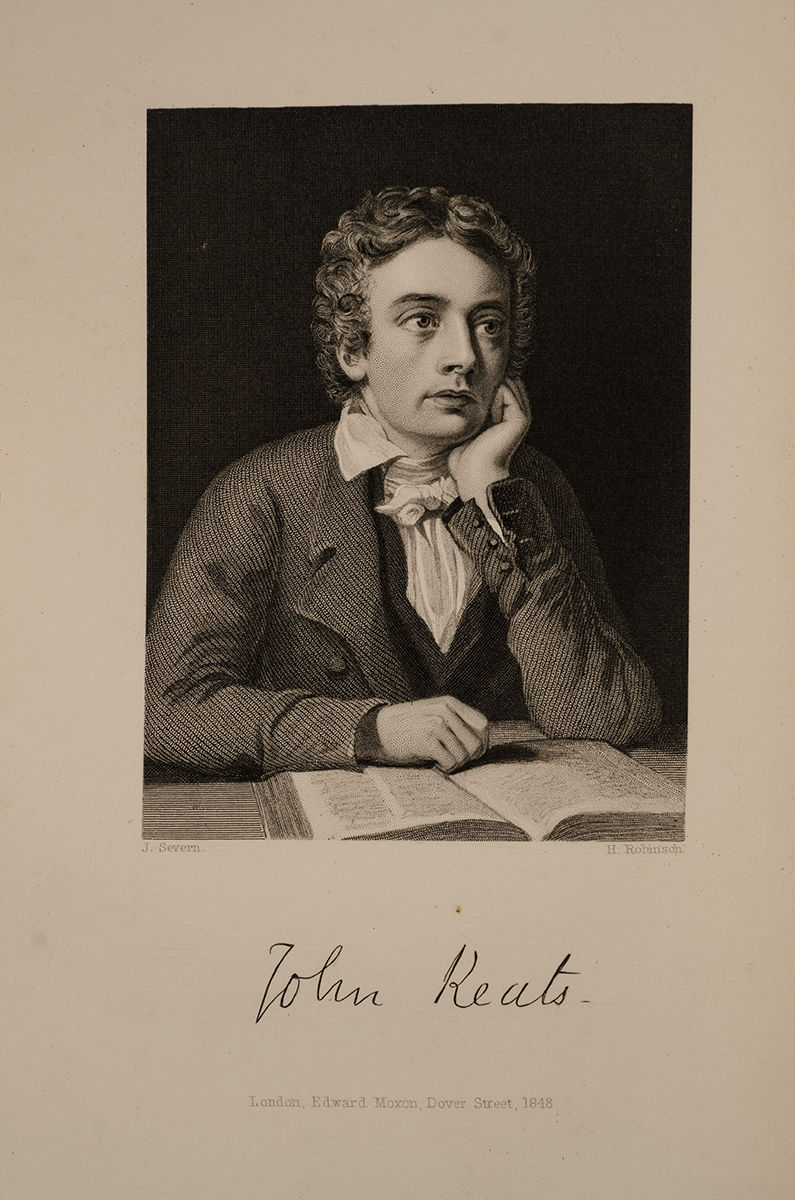
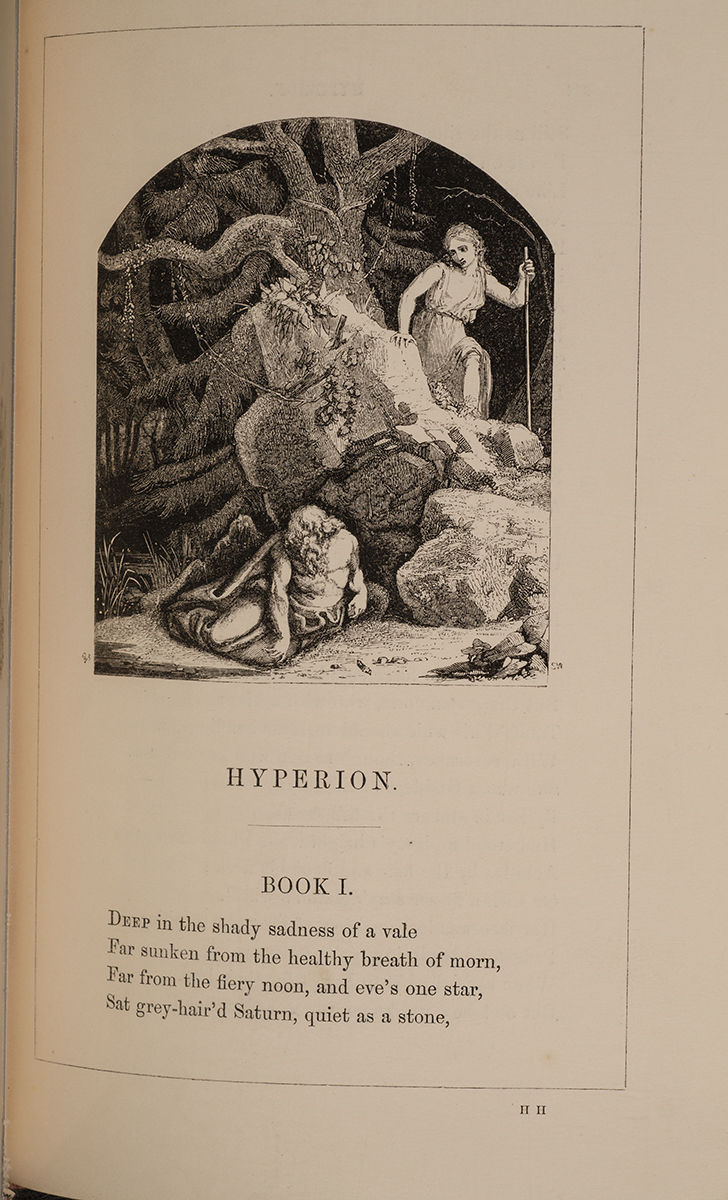
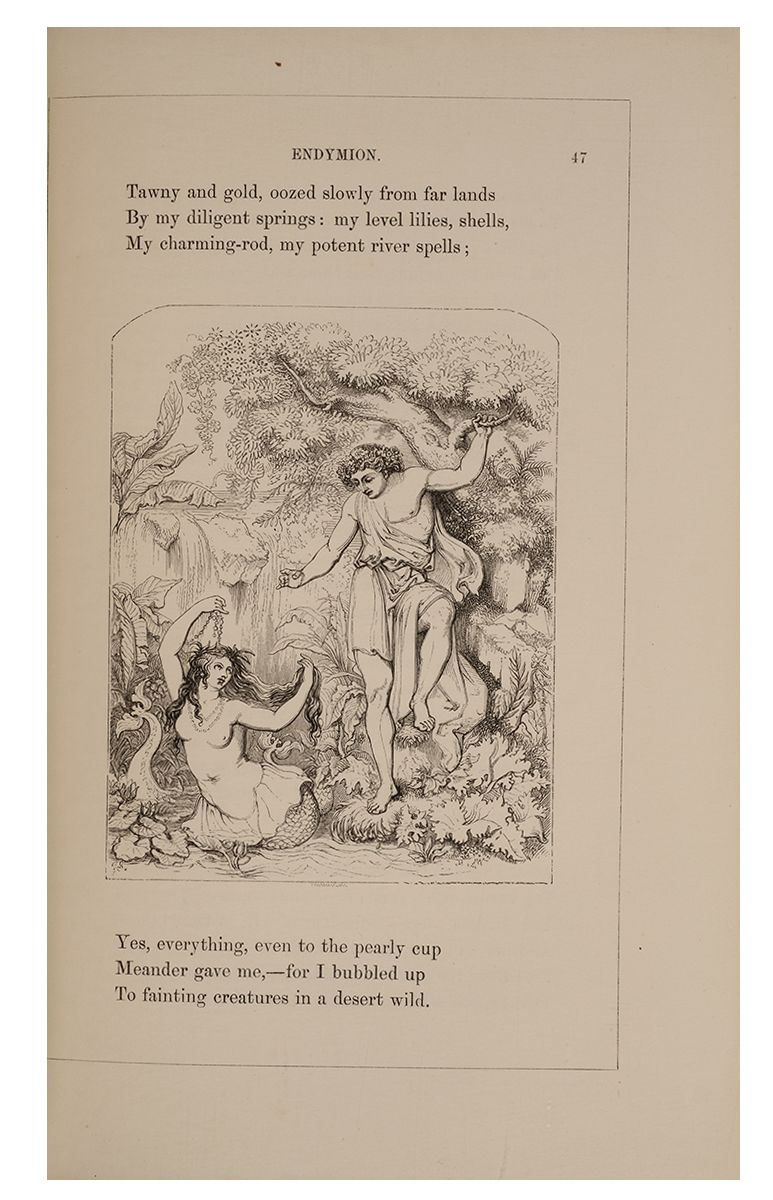
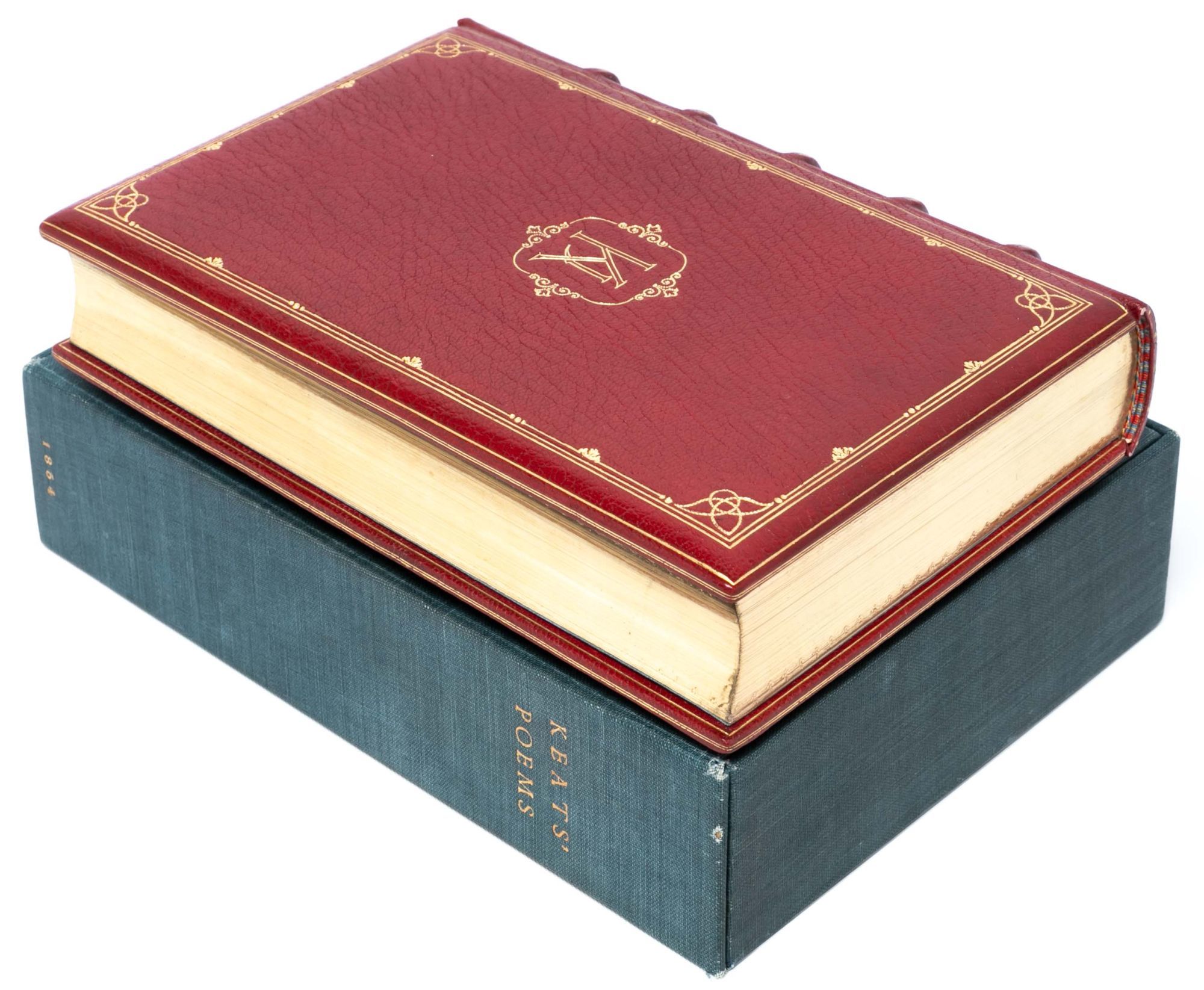
London: Edward Moxon, 1854. First thus. Fine. Octavo (7 7/8 x 5 1/4 inches; 201 x 133 mm.). xii, xl, 375, [1, imprint] pp, with an engraved portrait frontispiece of Keats and engraved text illustrations throughout. Handsomely bound ca. 1950 by Sangorski & Sutcliffe London England for the Halle Bros. Co. (stamp signed in gilt on rear turn-in). Full red morocco over beveled board, covers with triple gilt frames and knot-work corner-pieces. Front cover with monogram of John Keats in center. Spine with five raised bands decorated in gilt, fancy gilt lattice-work and lettered in gilt in compartments, double gilt ruled board edges, elaborate gilt turn-ins. Front doublure in dark blue morocco decorated with small gilt floral designs, an oval 'sunken' compartment in the center with a very fine portrait miniature (3 x 2 3/8 inches) of John Keats set under glass within a brass frame, this in turn encircled by a gilt wreath set with four inlaid pink morocco blossoms, pale blue watered silk endleaves and rear liner, all edges gilt. Housed in the original fleece-lined, blue cloth clamshell case, spine lettered in gilt.
"A thing of beauty is a joy forever: Its loveliness increases, it will never pass into nothingness." The creator of some of the most famous lines in English verse, Keats' works are odes to the timelessness of the idea of beauty, even as its reality fades. Among his core themes are the tension between man's mortality and the immortality of his muse, and the role art plays in assisting the creation of a lasting legacy. This collection of works by one of the three great English Romantic poets, along with an influential biography of Keats is presented here in a luxurious Cosway-style binding by the great London bookbinding firm of Sangorski & Sutcliffe. The story of the Sangorski & Sutcliffe Bindery reads like something out of a novel—when two of Douglas Cockrell’s talented apprentices, Frances Sangorski and George Sutcliffe, were laid off during an economic downturn they began working out of an attic. Eventually their bindery would be famous for its intricate multicolored leather inlays and elaborate gold and jeweled bindings. Although named after the English miniaturist Richard Cosway (1742-1821), the desirable “Cosway Binding” with its jewel-like portrait miniature set into a fine binding was first developed at the turn of the century by J.H. Stonehouse, director of London’s Henry Sotheran Booksellers. Their miniatures were painstakingly crafted by the talented painter Miss C. B. Currie (1849-1940). As the style grew in popularity, other publishing houses quickly began to reproduce this technique—each developing their own desirable take on the aesthetic—referred to as “Cosway-style.” This particular copy is an exceptionally fine example made for The Halle Brothers Company (1891-1982) of Cleveland, Ohio, a department store known for high quality merchandise and service. In 1970 they merged with Marshall Field and Company of Chicago who were very well known for their rare book department. Fine.
"A thing of beauty is a joy forever: Its loveliness increases, it will never pass into nothingness." The creator of some of the most famous lines in English verse, Keats' works are odes to the timelessness of the idea of beauty, even as its reality fades. Among his core themes are the tension between man's mortality and the immortality of his muse, and the role art plays in assisting the creation of a lasting legacy. This collection of works by one of the three great English Romantic poets, along with an influential biography of Keats is presented here in a luxurious Cosway-style binding by the great London bookbinding firm of Sangorski & Sutcliffe. The story of the Sangorski & Sutcliffe Bindery reads like something out of a novel—when two of Douglas Cockrell’s talented apprentices, Frances Sangorski and George Sutcliffe, were laid off during an economic downturn they began working out of an attic. Eventually their bindery would be famous for its intricate multicolored leather inlays and elaborate gold and jeweled bindings. Although named after the English miniaturist Richard Cosway (1742-1821), the desirable “Cosway Binding” with its jewel-like portrait miniature set into a fine binding was first developed at the turn of the century by J.H. Stonehouse, director of London’s Henry Sotheran Booksellers. Their miniatures were painstakingly crafted by the talented painter Miss C. B. Currie (1849-1940). As the style grew in popularity, other publishing houses quickly began to reproduce this technique—each developing their own desirable take on the aesthetic—referred to as “Cosway-style.” This particular copy is an exceptionally fine example made for The Halle Brothers Company (1891-1982) of Cleveland, Ohio, a department store known for high quality merchandise and service. In 1970 they merged with Marshall Field and Company of Chicago who were very well known for their rare book department. Fine.