

Miscellaneous Poems
- Edinburgh: Archibald Constable, 1820
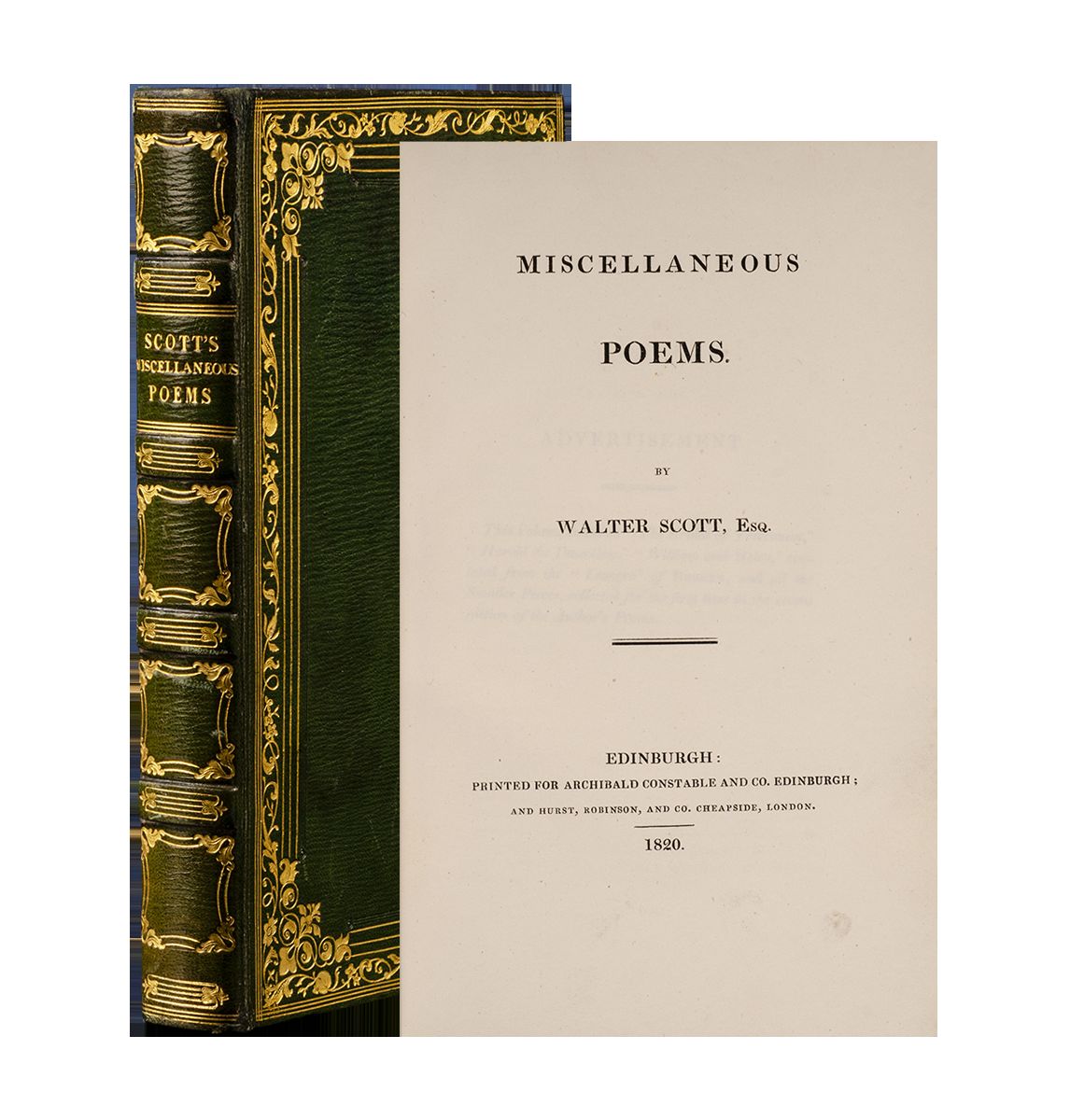
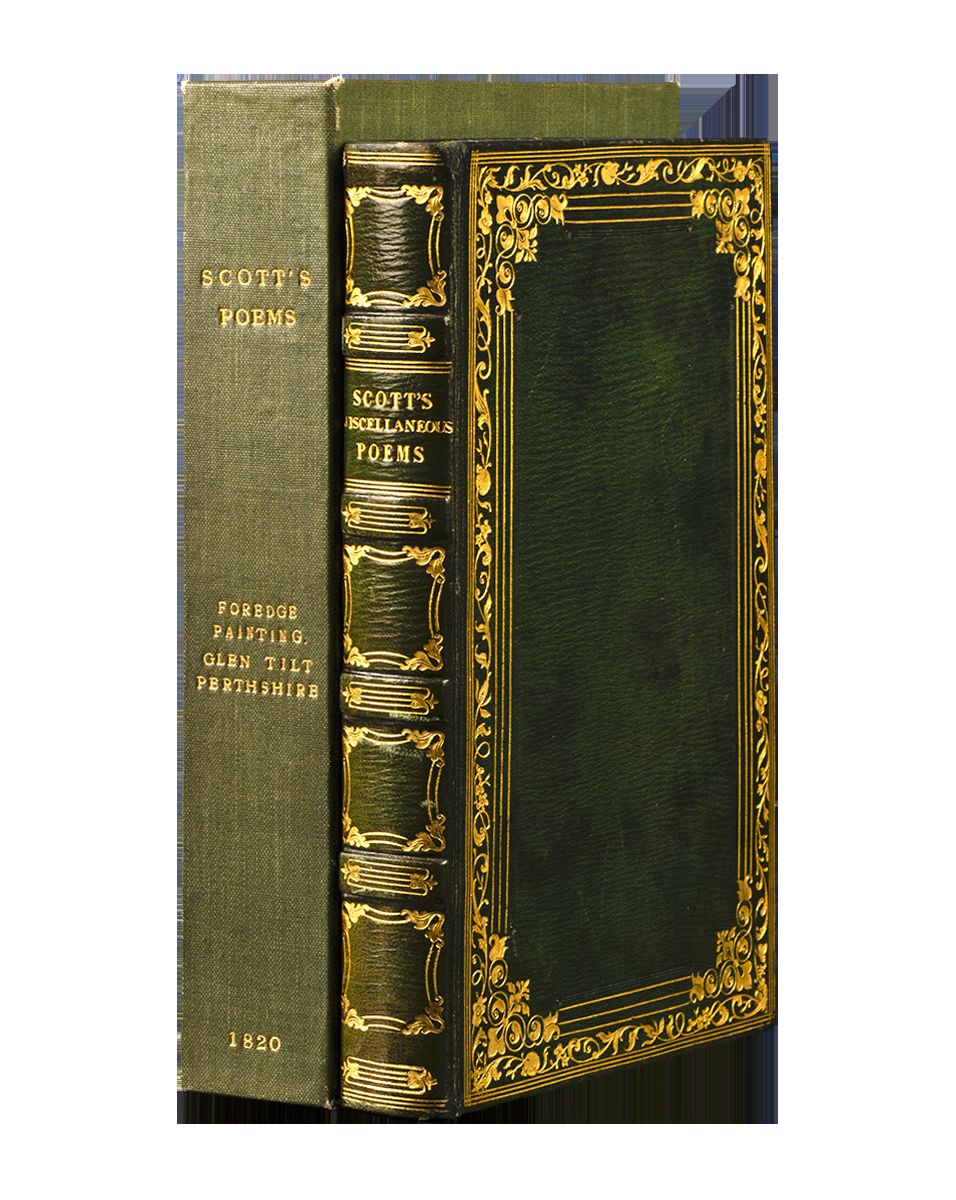
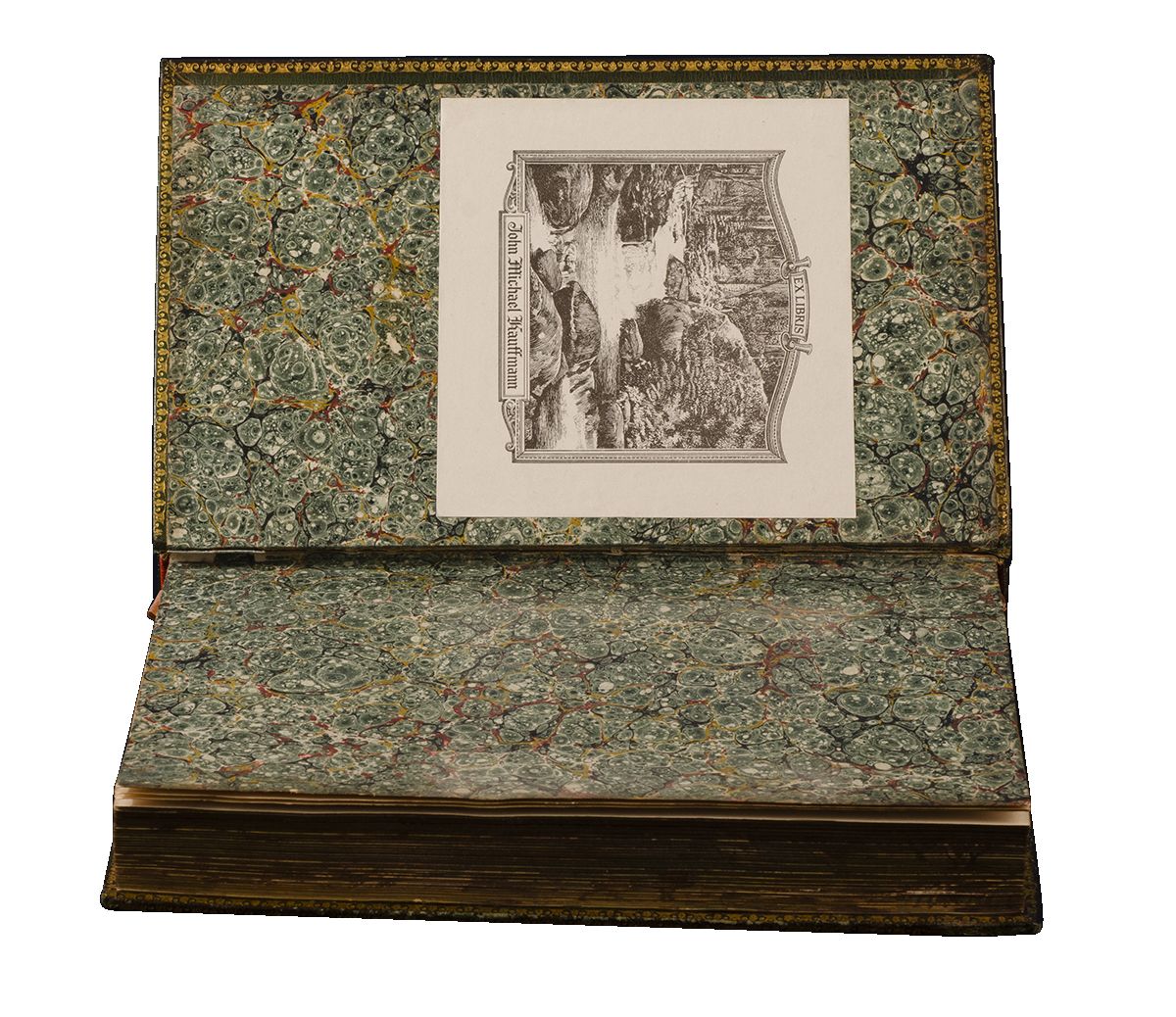
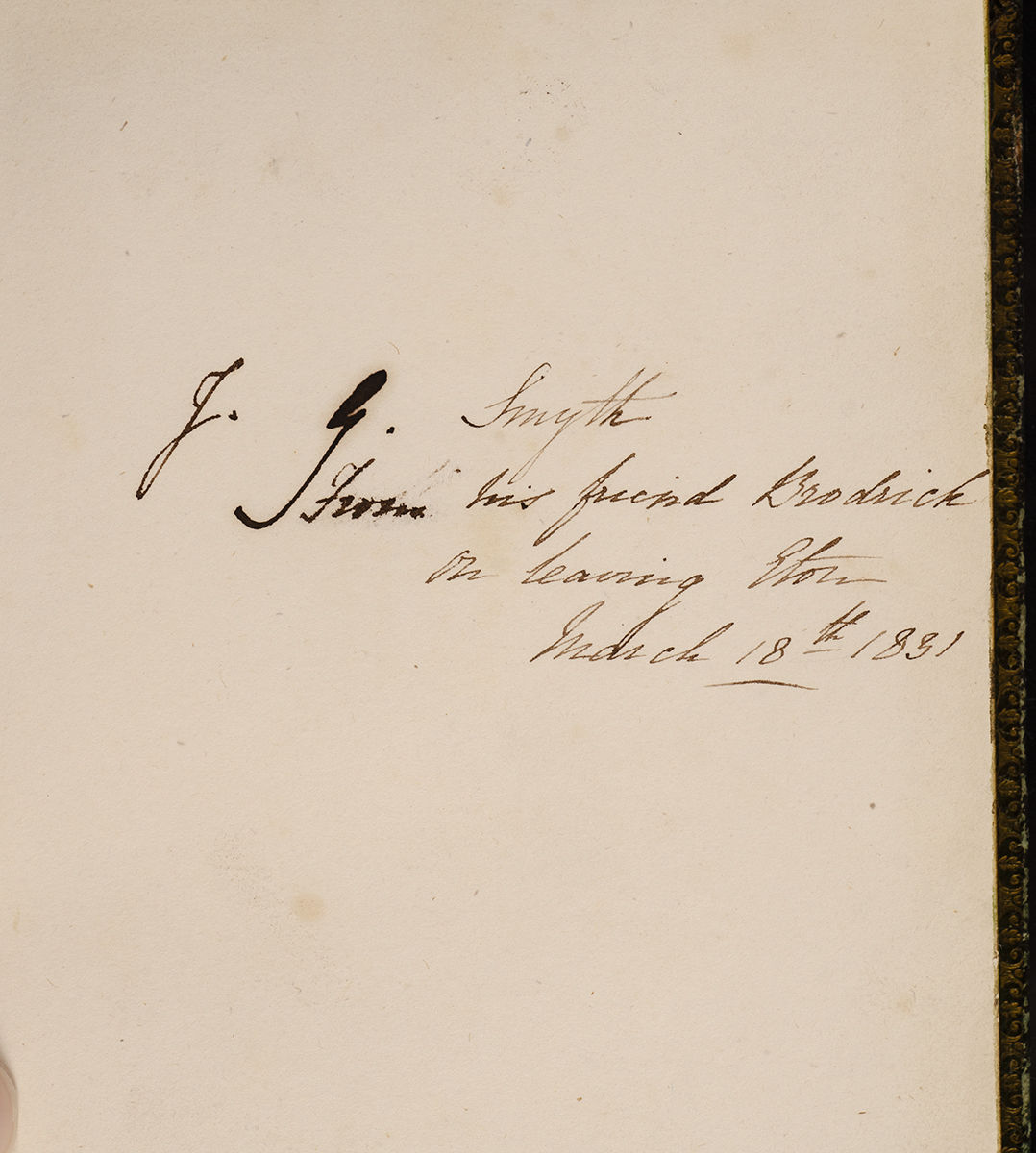
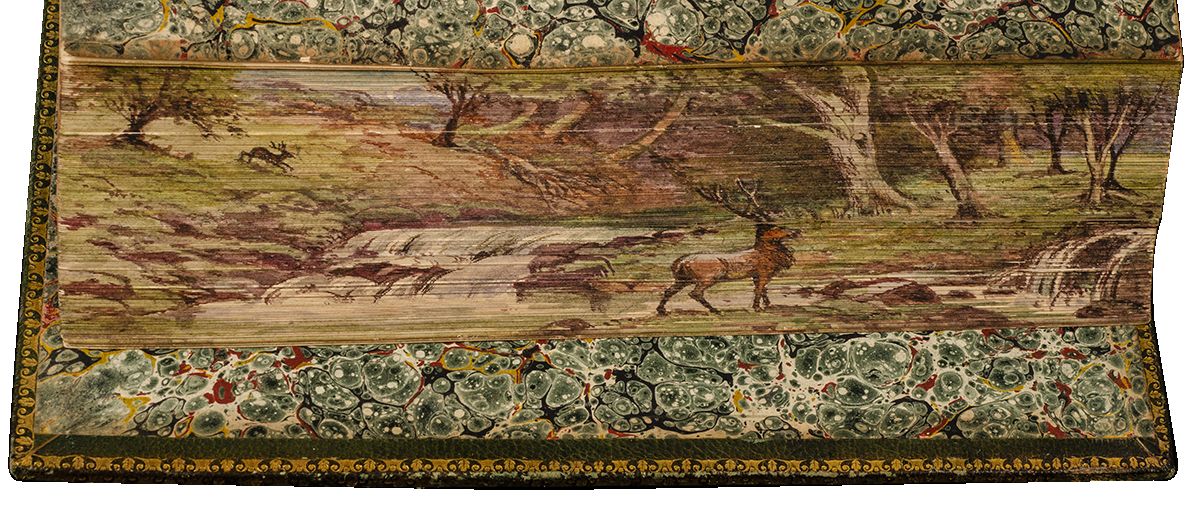
Edinburgh: Archibald Constable, 1820. First edition, third printing. Octavo (8 7/16 x 5 5/16 inches; 215 x 135 mm.). [i]-viii, [i]-xii, [1]-448 pp. Contemporary ink inscription on first blank "J.G. Smyth/from his friend Broderick/on leaving Eton/March 18th 1831." Loosely inserted is a small card from Mrs. Rudolph Max Kauffmann presenting the book to her son on his graduation from Princeton: "To my dear son/John, on his graduation/from Princeton/June 24 - 1944/with love and con-/gratulations and/great pride." Full contemporary dark green straight-grain morocco, covers decoratively bordered in gilt. Spine with four shallow raised bands, decoratively tooled and lettered in gilt, gilt decorated board edges and turn-ins, green marbled endpapers, all edges gilt. With the pictorial bookplate of John Michael Kauffmann on front paste-down. With a fine early twentieth century fore-edge painting of Glentilt, Perthshire, showing a stag with large antlers, standing between two cascading streams, while in the background is a wooded scene with another stag approaching. Housed in an early twentieth century green cloth clamshell case, spine lettered in gilt.
Sir Walter Scott (1777-1832) was one of the most important Scottish writers of the Romantic era. "Scott's influence as a novelist was incalculable; he established the form of the historical novel, and, according to V.S. Pritchett, the form of the short story. He was avidly read and imitated throughout the 19th century, not only by historical novelists such as Ainsworth and Bulwer-Lytton, but also by writers like Mrs. Gaskell, G. Eliot, the Brontës, and many others, who treated rural themes, contemporary peasant life, regional speech, etc., in a manner that owed much to Scott. His reputation gradually declined (though his medieval and Tudor romances retained a popular readership) until there was a revival of interest…in the 1930s…In 1951 three seminal essays were published…these heralded a considerable upsurge of scholarly activity and reappraisal, most of which concurs in regarding the Scottish 'Waverley' novels as his masterpieces" (Oxford Companion to English Literature).
Glen Tilt is a valley located in the historic county of Perthshire, or in northern modern-day Pether and Kinross, Scotland. A location defined by the river Tilt and magnificent scenery, including great forests, swift flowing rivers, beautiful lochs with rugged backgrounds of mountain and moorland. The wildlife is also of variation and abundance and along every road is much evidence of a long and proud history. Sir Walter Scott, once described the area thusly: "If an intelligent stranger were asked to describe the most varied and most beautiful province in Scotland, it is likely that he would name the County of Perth." The present-day visitor would find no fault with that statement.
Sir Walter Scott (1777-1832) was one of the most important Scottish writers of the Romantic era. "Scott's influence as a novelist was incalculable; he established the form of the historical novel, and, according to V.S. Pritchett, the form of the short story. He was avidly read and imitated throughout the 19th century, not only by historical novelists such as Ainsworth and Bulwer-Lytton, but also by writers like Mrs. Gaskell, G. Eliot, the Brontës, and many others, who treated rural themes, contemporary peasant life, regional speech, etc., in a manner that owed much to Scott. His reputation gradually declined (though his medieval and Tudor romances retained a popular readership) until there was a revival of interest…in the 1930s…In 1951 three seminal essays were published…these heralded a considerable upsurge of scholarly activity and reappraisal, most of which concurs in regarding the Scottish 'Waverley' novels as his masterpieces" (Oxford Companion to English Literature).
Glen Tilt is a valley located in the historic county of Perthshire, or in northern modern-day Pether and Kinross, Scotland. A location defined by the river Tilt and magnificent scenery, including great forests, swift flowing rivers, beautiful lochs with rugged backgrounds of mountain and moorland. The wildlife is also of variation and abundance and along every road is much evidence of a long and proud history. Sir Walter Scott, once described the area thusly: "If an intelligent stranger were asked to describe the most varied and most beautiful province in Scotland, it is likely that he would name the County of Perth." The present-day visitor would find no fault with that statement.