

Dirty Jim (Original artwork)
- London , 1883
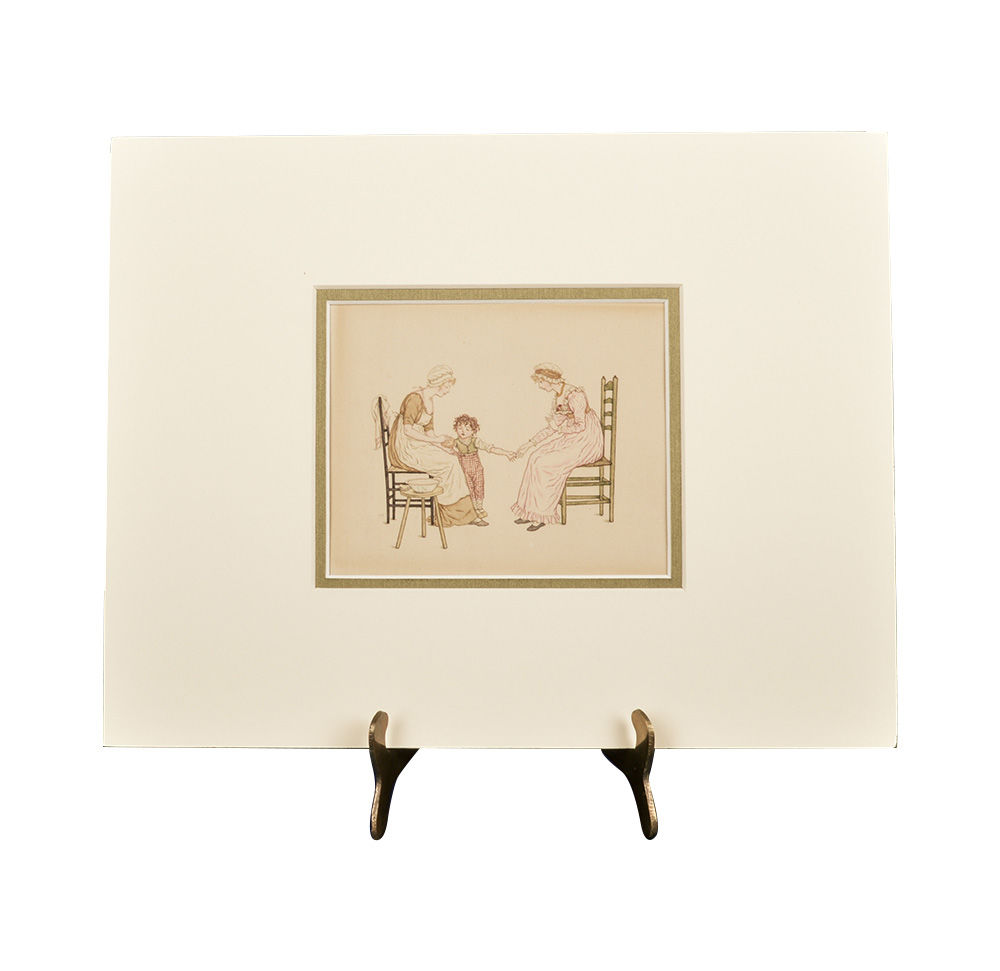
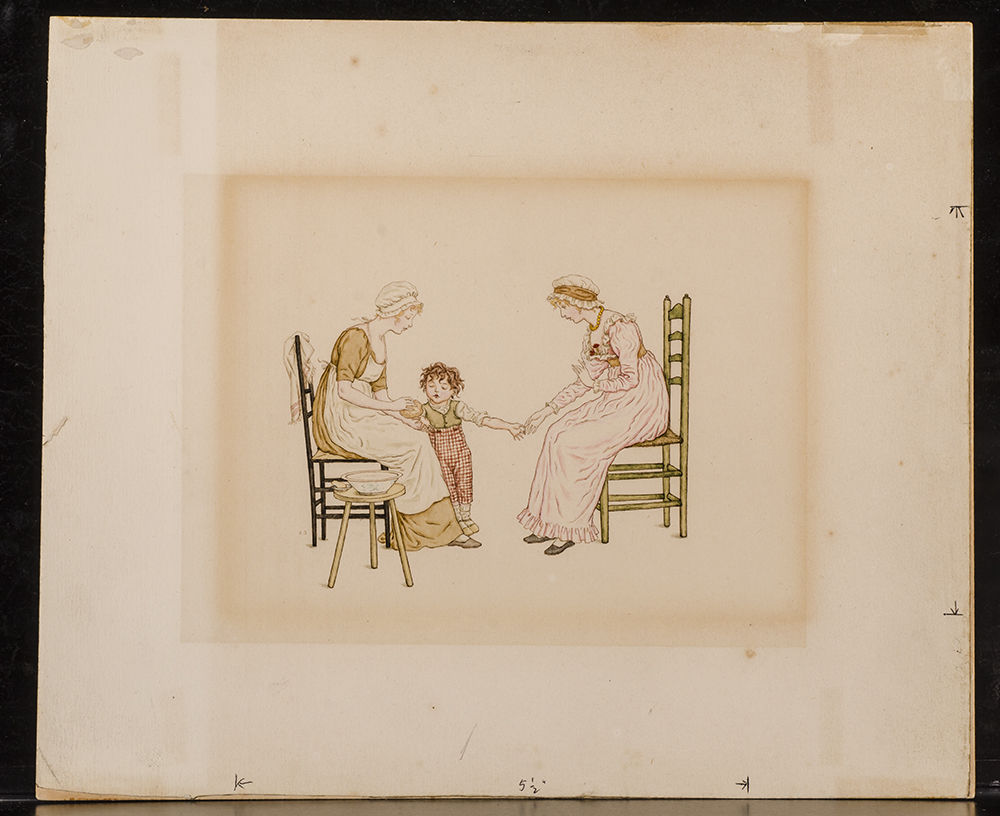
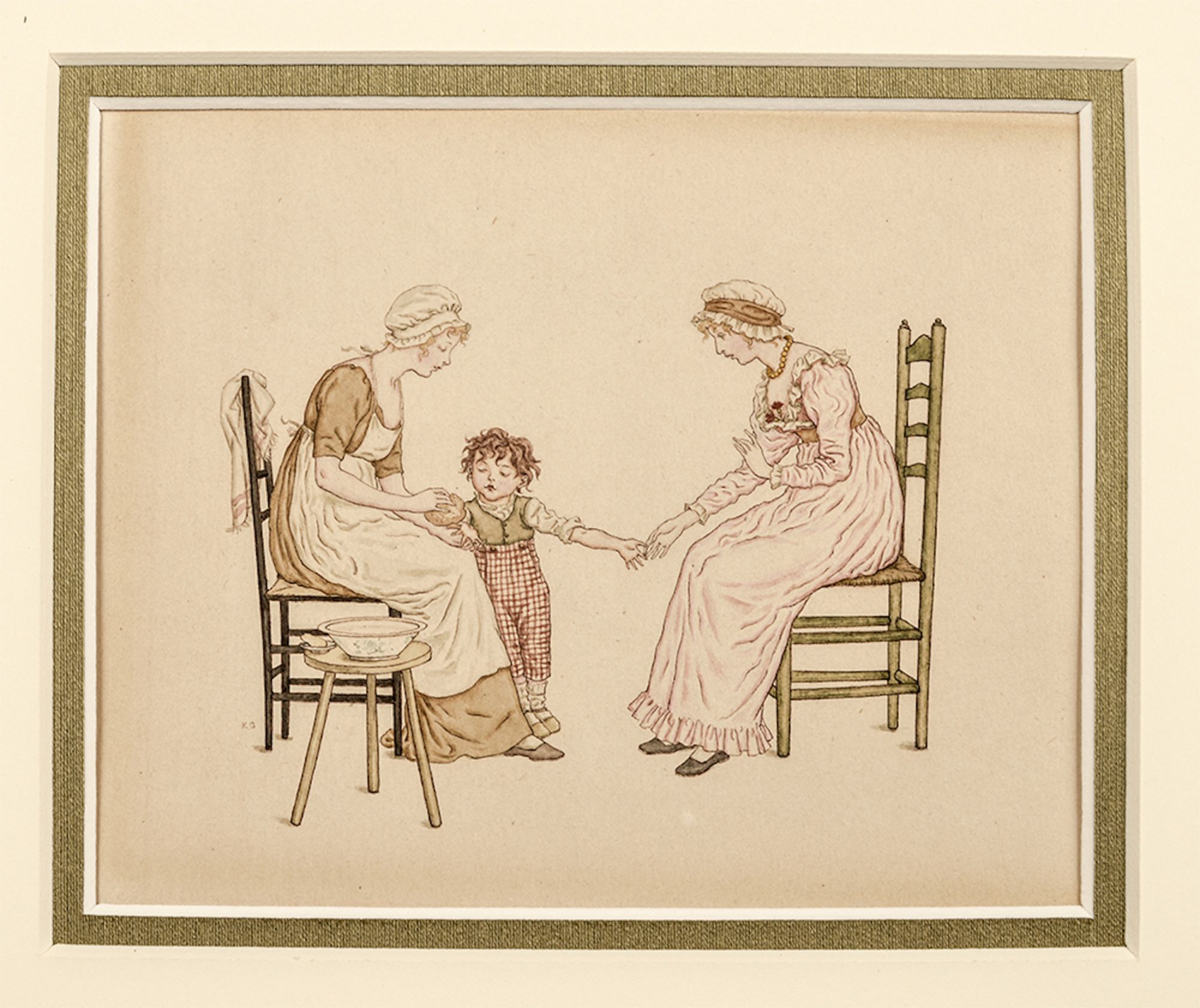
London, 1883. First edition. A 5 x 6 inch original pen, ink and watercolor illustration by Greenaway that is reproduced on page 24 of the book Little Ann and Other Poems (London: George Routledge & Sons, 1883).
A gentle image of a young boy and two women; one in a brown dress and apron cleans the young child's hand while opposite a woman in a fine pink dress holds the boy's other hand. This illustration has all of the typical sweetness and warmth that made Greenaway's work so beloved. "Victorian-era children’s book artist and author Kate Greenaway began her career during the early 1870s illustrating greeting cards," (NYPL) but she soon turned her successful brush towards book illustration. "Like fellow illustrators Walter Crane and Randolph Caldecott, Greenaway sought to publish innovative children’s works of the highest quality. Her focus on depictions of children, however, set her illustrations apart from those of her contemporaries. Greenaway’s work is cherished today for its unaffected, pastoral imagery" (NYPL). Famous critic John Ruskin was known to be a huge admirer of her art. Greenaway worked on illustrations for Little Ann and Other Poems (based on poems by Jane and Ann Taylor) throughout the spring of 1883. The artist Henry Stacy Marks wrote of Little Ann, "on the whole, I might say entirely, your best book…"(Engen).
This illustration accompanied a poem, which reads:
"There was one little Jim,
'Tis reported of him,
And must be to his lasting disgrace,
That he never was seen
With hands at all clean,
Nor yet ever clean was his face.
His friends were much hurt
To see so much dirt,
And often they made him quite clean;
But all was in vain,
He got dirty again,
And not at all fit to be seen.
It gave him no pain
To hear them complain,
Nor his own dirty clothes to survey:
His indolent mind
No pleasure could find
In tidy and wholesome array.
The idle and bad,
Like this little lad,
May love dirty ways, to be sure:
But good boys are seen
To be decent and clean,
Although they are ever so poor.
A gentle image of a young boy and two women; one in a brown dress and apron cleans the young child's hand while opposite a woman in a fine pink dress holds the boy's other hand. This illustration has all of the typical sweetness and warmth that made Greenaway's work so beloved. "Victorian-era children’s book artist and author Kate Greenaway began her career during the early 1870s illustrating greeting cards," (NYPL) but she soon turned her successful brush towards book illustration. "Like fellow illustrators Walter Crane and Randolph Caldecott, Greenaway sought to publish innovative children’s works of the highest quality. Her focus on depictions of children, however, set her illustrations apart from those of her contemporaries. Greenaway’s work is cherished today for its unaffected, pastoral imagery" (NYPL). Famous critic John Ruskin was known to be a huge admirer of her art. Greenaway worked on illustrations for Little Ann and Other Poems (based on poems by Jane and Ann Taylor) throughout the spring of 1883. The artist Henry Stacy Marks wrote of Little Ann, "on the whole, I might say entirely, your best book…"(Engen).
This illustration accompanied a poem, which reads:
"There was one little Jim,
'Tis reported of him,
And must be to his lasting disgrace,
That he never was seen
With hands at all clean,
Nor yet ever clean was his face.
His friends were much hurt
To see so much dirt,
And often they made him quite clean;
But all was in vain,
He got dirty again,
And not at all fit to be seen.
It gave him no pain
To hear them complain,
Nor his own dirty clothes to survey:
His indolent mind
No pleasure could find
In tidy and wholesome array.
The idle and bad,
Like this little lad,
May love dirty ways, to be sure:
But good boys are seen
To be decent and clean,
Although they are ever so poor.