

The Fables of La Fontaine (Extra-illustrated in 2 vols.)
- Boston: Roberts Brothers, 1884
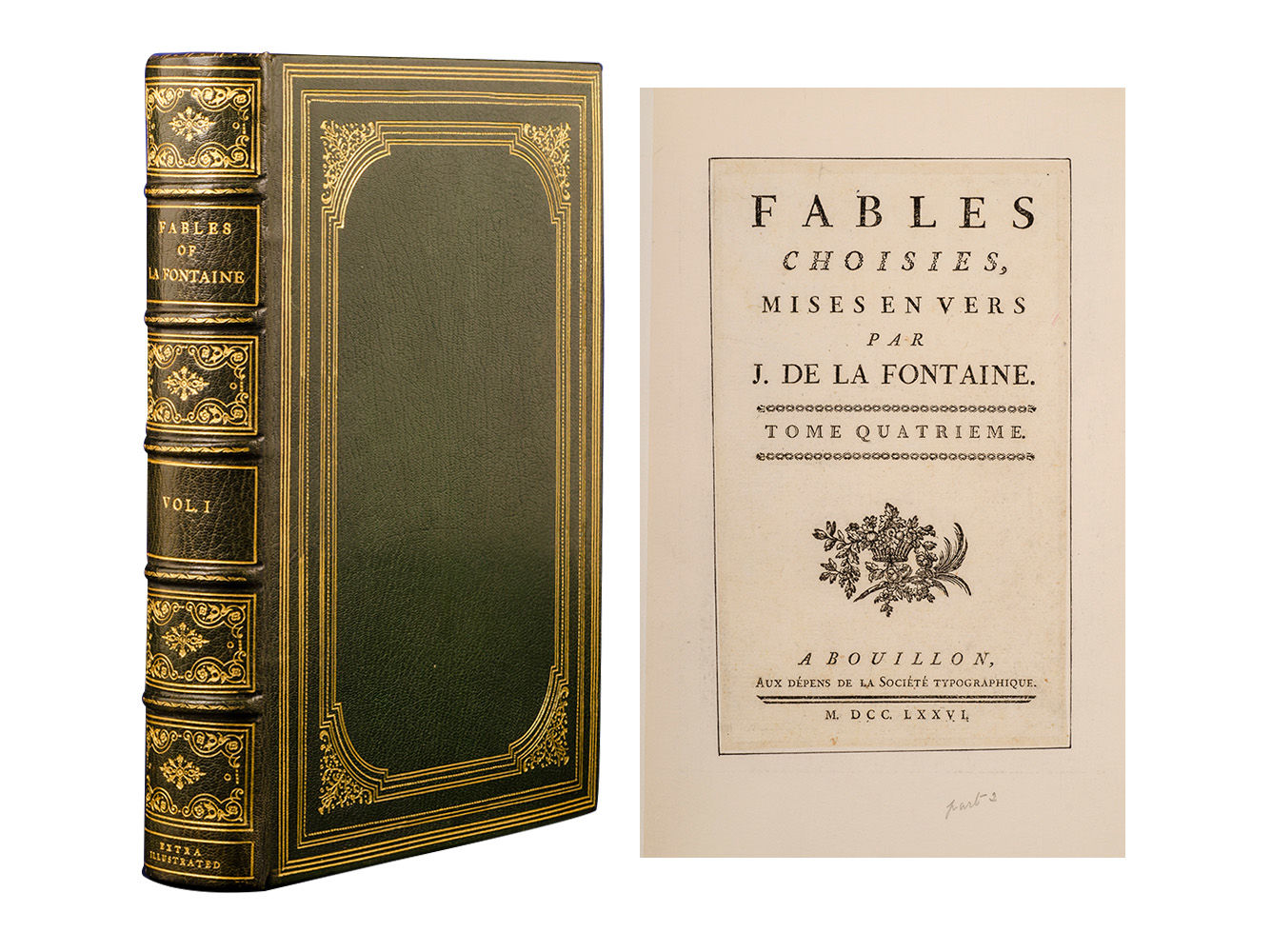
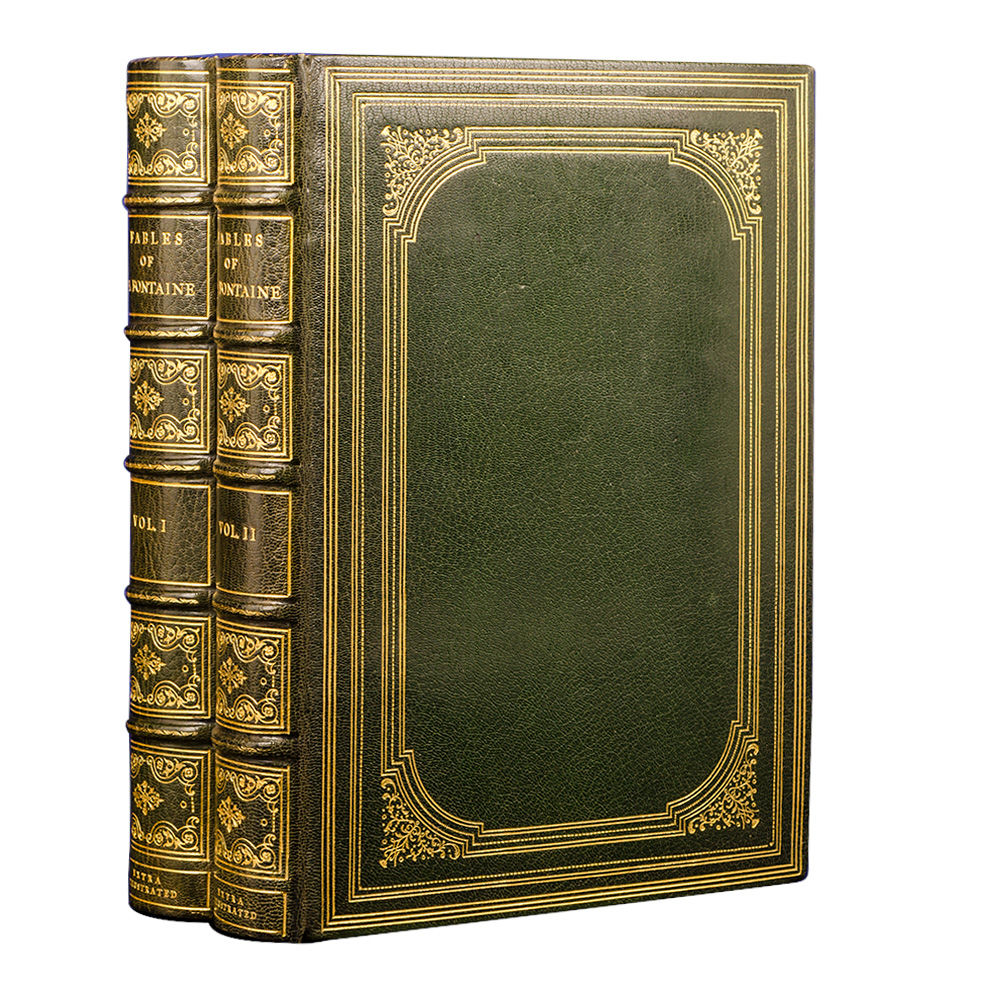
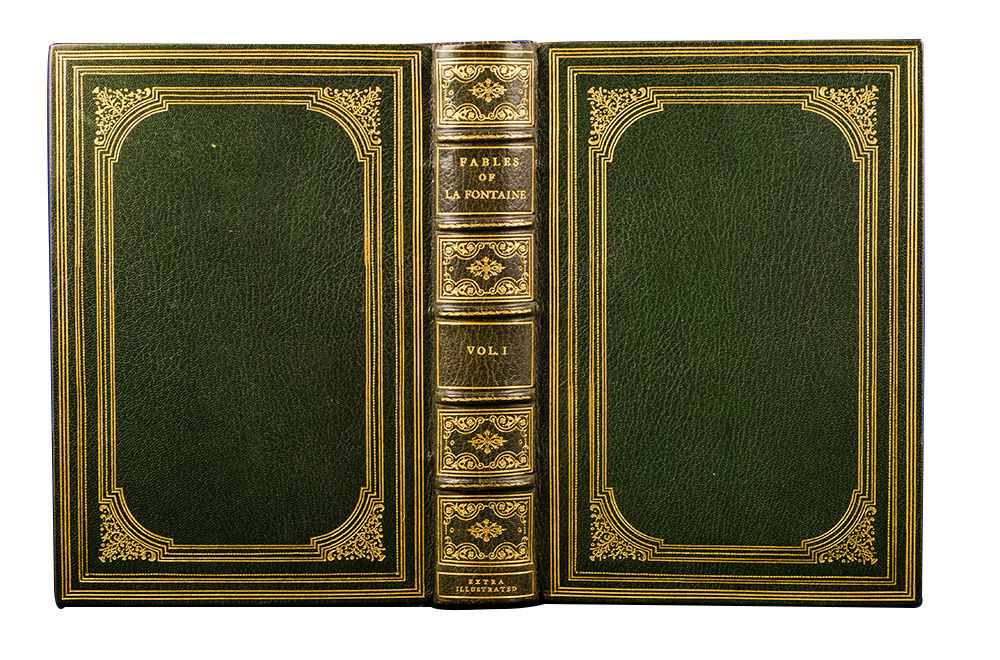
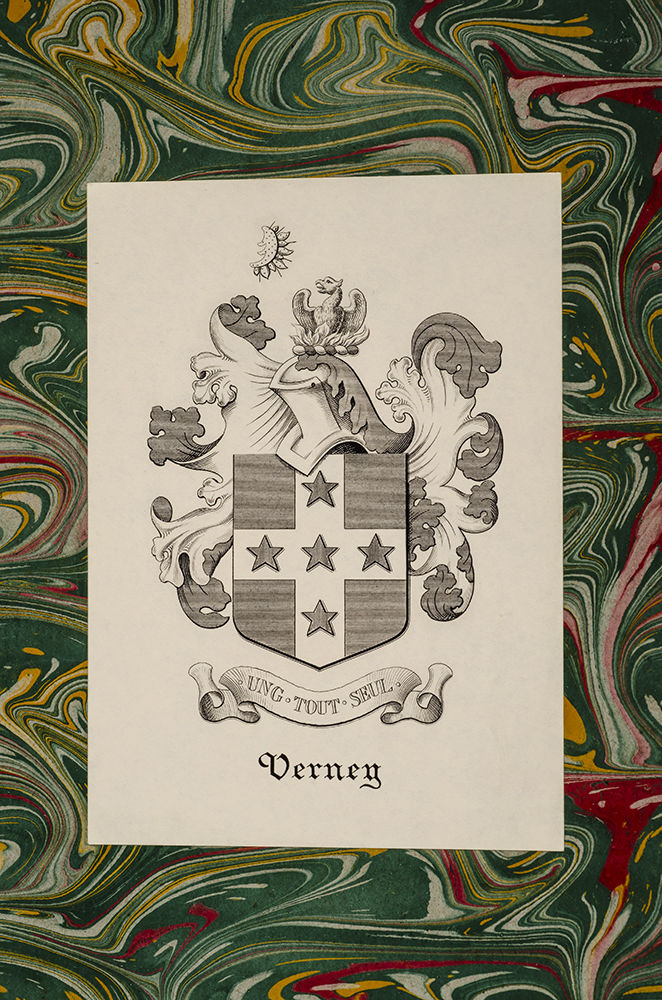
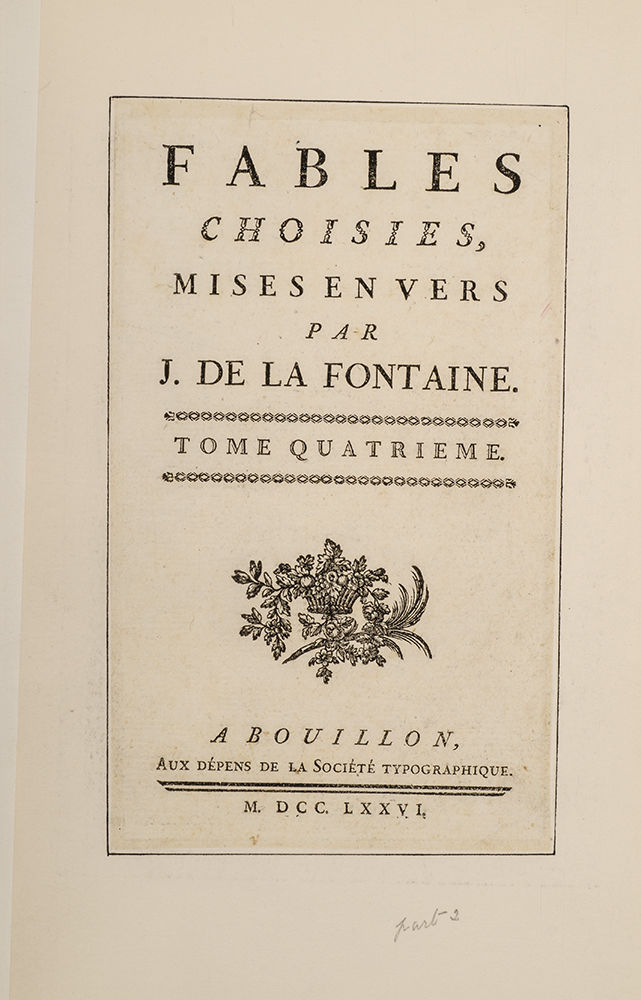
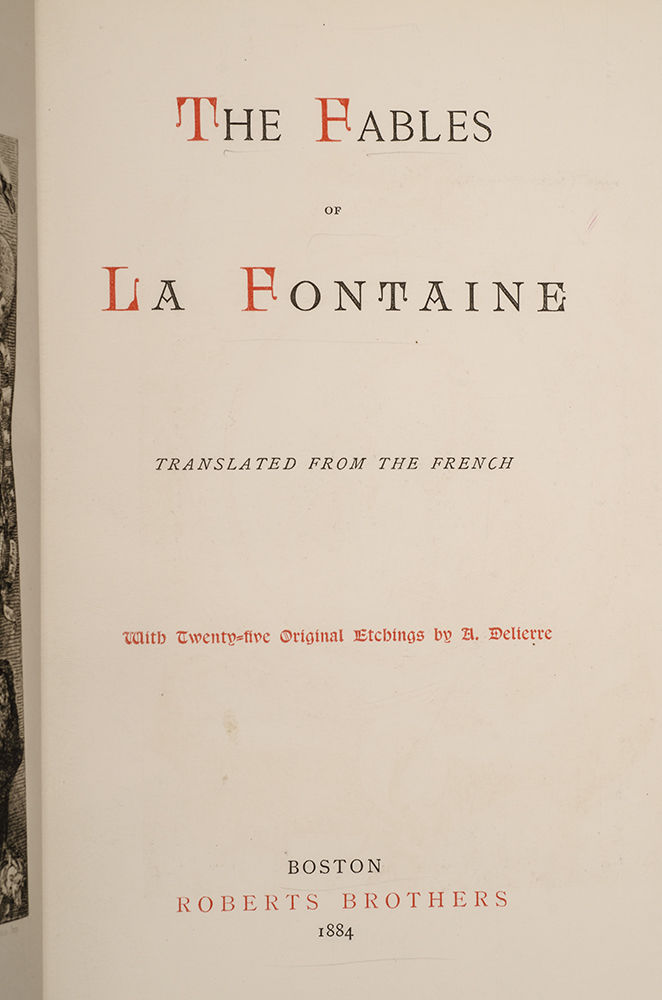
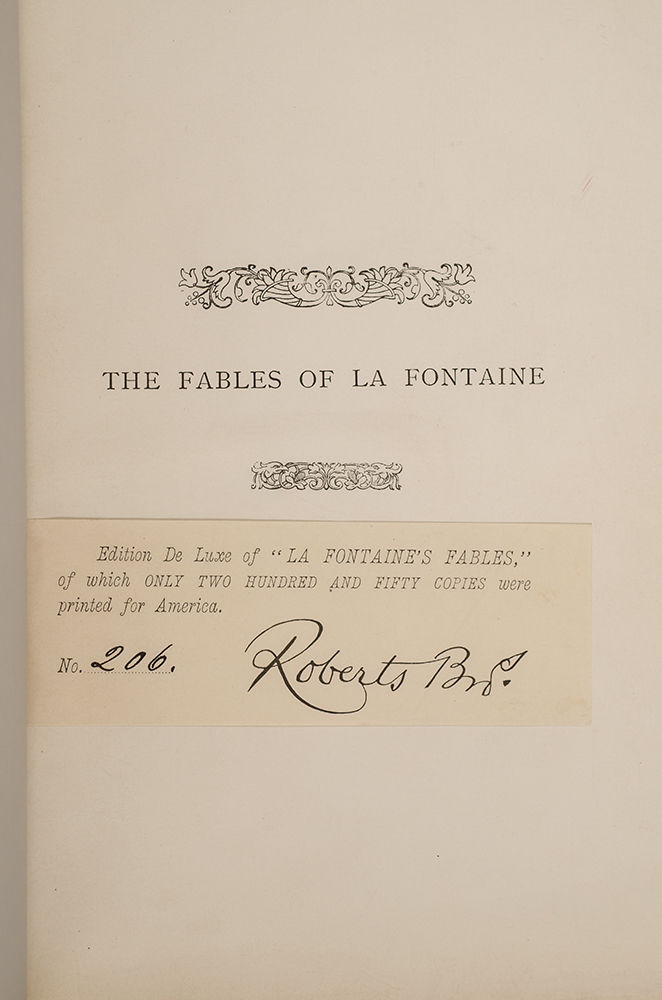
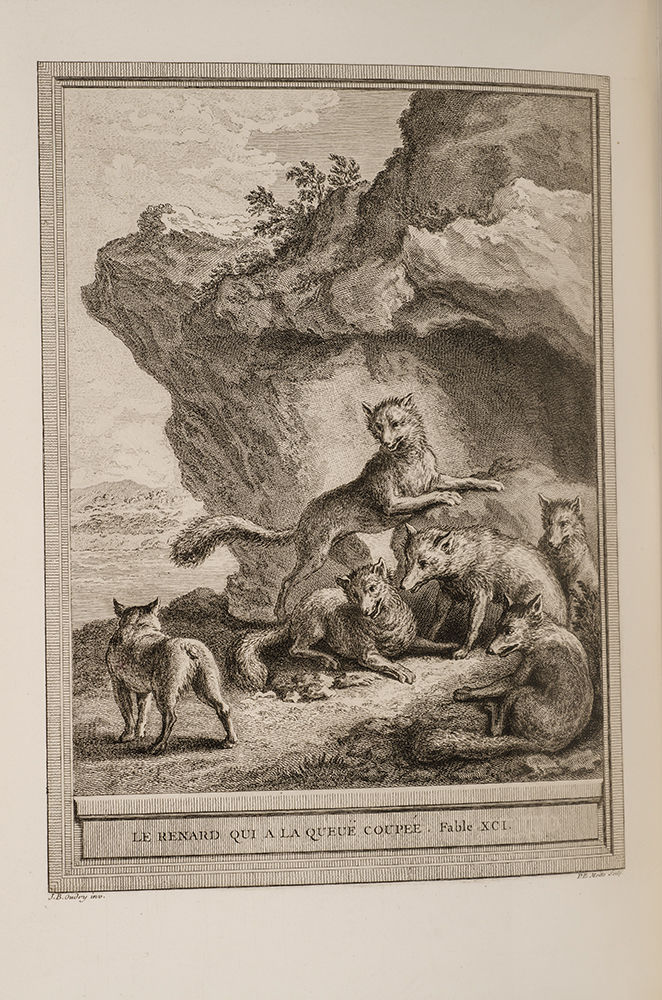
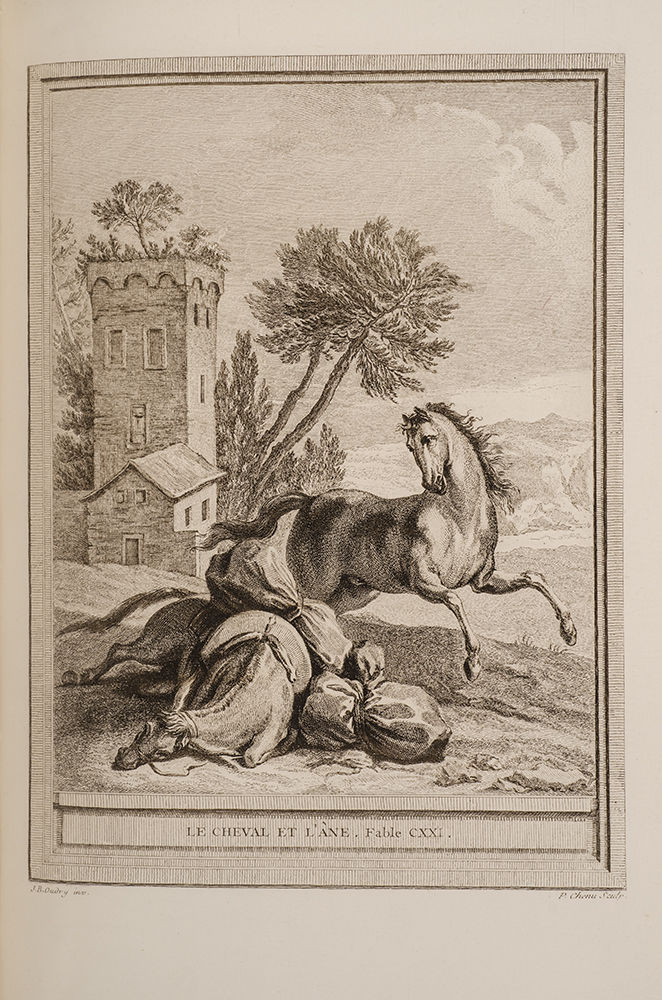
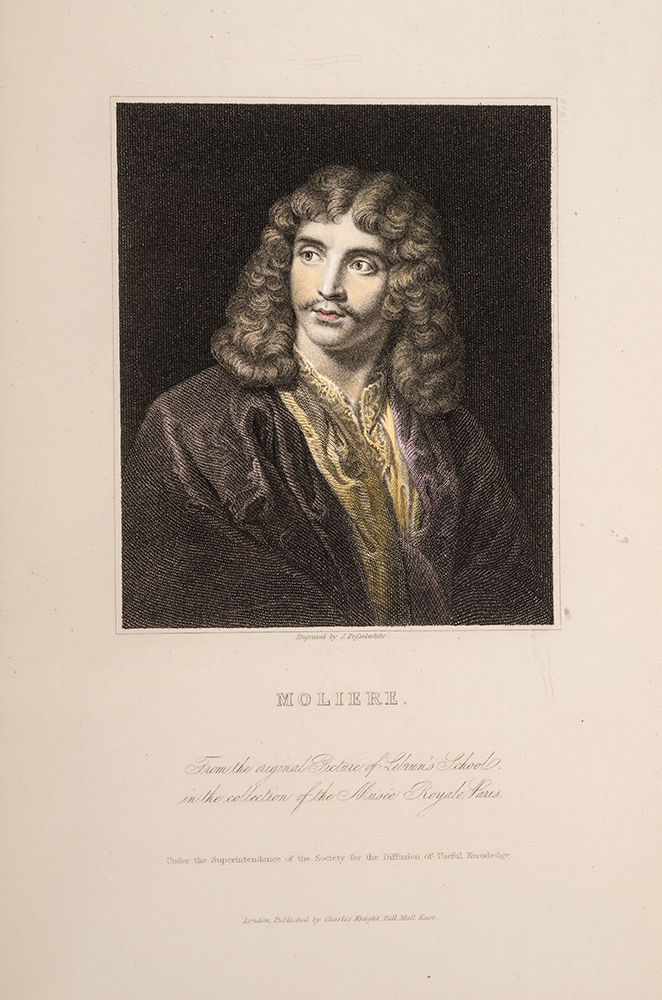
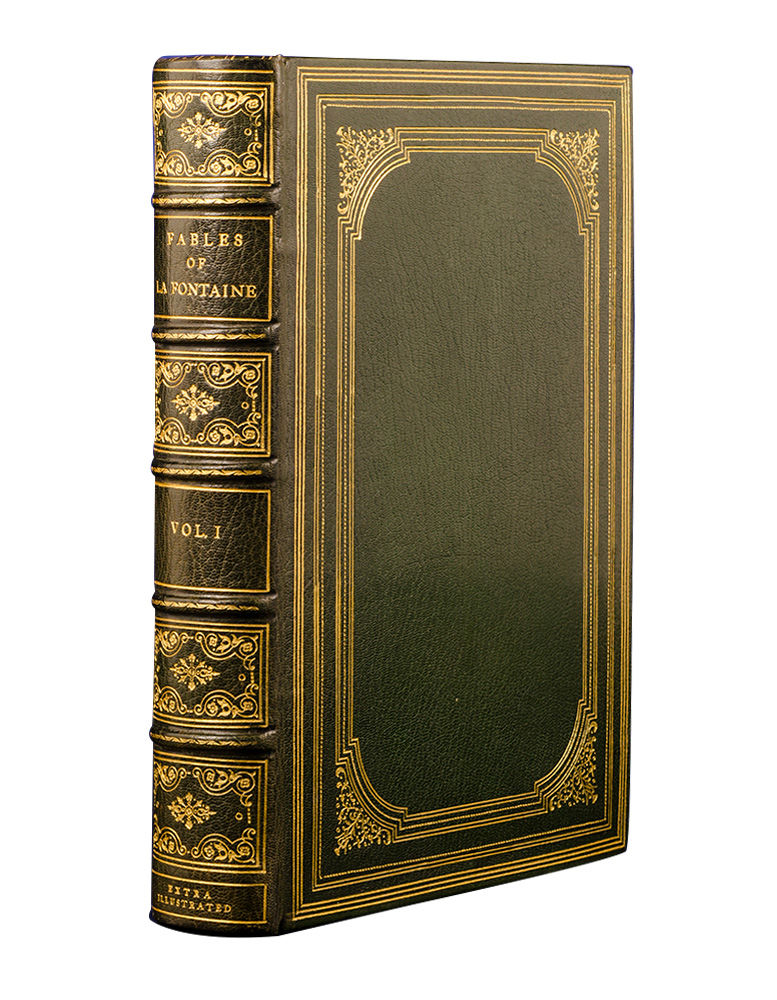
Boston: Roberts Brothers, 1884. Edition de luxe. Fine. Number 206 of 250 numbered copies. Two large octavo volumes (10 7/16 x 7 1/4 inches; 265 x184 mm.). viii, 160; 161-304 pp. Title-page printed in red and black, with twenty-five full page etchings by Auguste Delierre (1829-1890). Complete with the small printed slip preceding the half-title, signed and numbered in black ink by Roberts Bros. Extended from one volume into two and extra-illustrated with 202 additional engravings related to the fables being presented (a few in color) including many by J.B. Oudry and other artists. Handsomely bound ca. 1940 in full crushed dark green morocco with multi-layered elaborate gilt borders, spines richly tooled and lettered in gilt in compartments, gilt ruled board edges, ornate gilt turn-ins, marbled endpapers, top edges gilt, others uncut. Armorial bookplate of Verney on front p aste-downs. An exceptionally fine, profusely extra-illustrated example of the Fables of La Fontaine in a handsome binding.
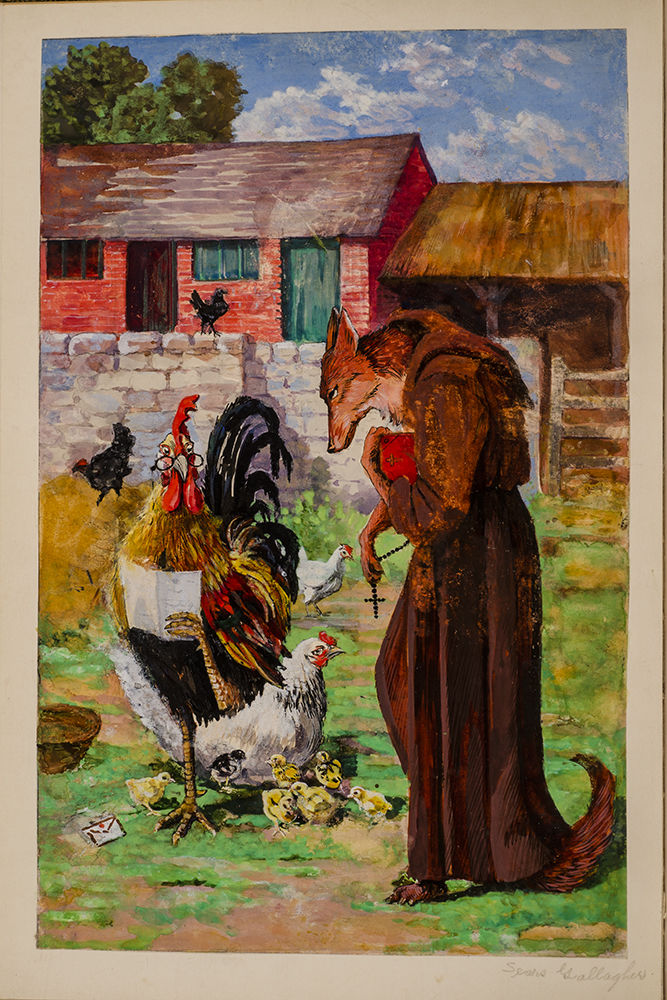
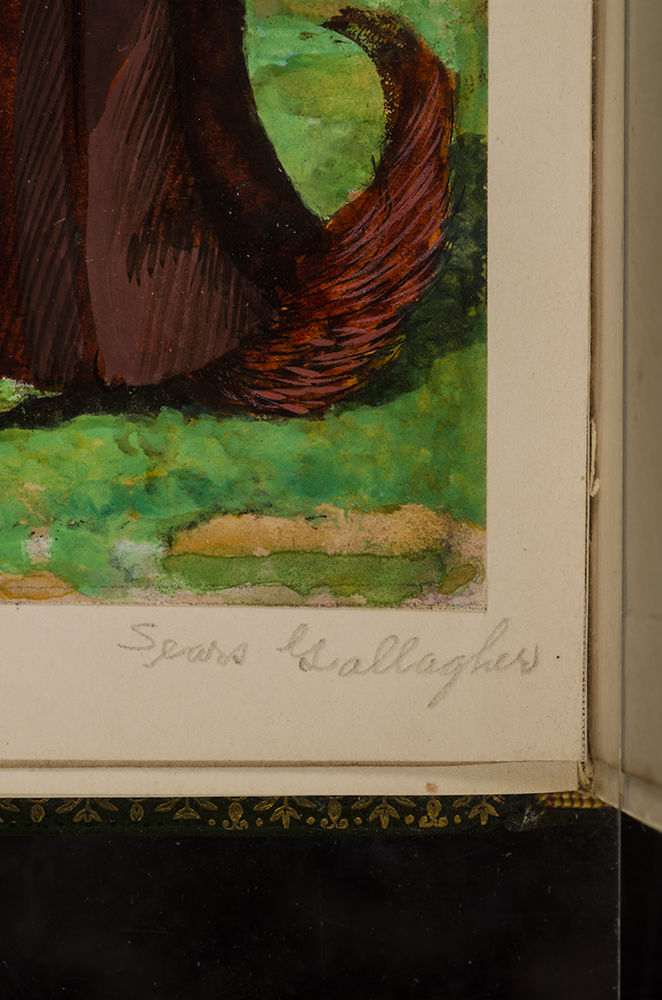
The frontispiece in volume one is an original watercolor by Sears Gallagher showing a barnyard scene with a fox in Franciscan robes holding a bible and rosary listening to a learned rooster reading from a broadside. Sears Gallagher (1869-1955) was a Master Etcher and Watercolorist. He studied under Samuel P.R. Triscott and Thomas Juglaris in Boston, and at the Academie Julian in Paris under Jean Paul Laurens and Benjamin Constant. Gallagher with his soft tonality and understanding of line had a rare ability to capture the natural world.
The Fables of La Fontaine is Jean de La Fontaine’s (1621-1695) towering classic of French literature. “They are like a basket of strawberries. You begin by selecting the largest and best, but, little by little, you eat first one, then another, till at last the basket is empty,” wrote the famed wit Madame de Sevigne. La Fontaine did not start writing full time until he was over thirty, but he would become one of the major figures in the French canon. His fables are his most well known and well regarded work -- he collected and adapted close to 240 of them” (New York Review of Books). Fontaine first took inspiration from the Aesopic tradition, but eventually expanded the collection to include East Asian stories (Britanica). Many of these “fabels” were more than simple morality tales, they were satire or poetry or intellectual contributions; many were dedicated to members of the French royal family. "The present translation of La Fontaine's Fables is mainly that of Robert Thomson, who published in 1806 in Paris an edition of them in verse very nearly complete. This work is extremely rare. It is now reproduced after extensive and careful revision" (Preface). Fine.
The frontispiece in volume one is an original watercolor by Sears Gallagher showing a barnyard scene with a fox in Franciscan robes holding a bible and rosary listening to a learned rooster reading from a broadside. Sears Gallagher (1869-1955) was a Master Etcher and Watercolorist. He studied under Samuel P.R. Triscott and Thomas Juglaris in Boston, and at the Academie Julian in Paris under Jean Paul Laurens and Benjamin Constant. Gallagher with his soft tonality and understanding of line had a rare ability to capture the natural world.
The Fables of La Fontaine is Jean de La Fontaine’s (1621-1695) towering classic of French literature. “They are like a basket of strawberries. You begin by selecting the largest and best, but, little by little, you eat first one, then another, till at last the basket is empty,” wrote the famed wit Madame de Sevigne. La Fontaine did not start writing full time until he was over thirty, but he would become one of the major figures in the French canon. His fables are his most well known and well regarded work -- he collected and adapted close to 240 of them” (New York Review of Books). Fontaine first took inspiration from the Aesopic tradition, but eventually expanded the collection to include East Asian stories (Britanica). Many of these “fabels” were more than simple morality tales, they were satire or poetry or intellectual contributions; many were dedicated to members of the French royal family. "The present translation of La Fontaine's Fables is mainly that of Robert Thomson, who published in 1806 in Paris an edition of them in verse very nearly complete. This work is extremely rare. It is now reproduced after extensive and careful revision" (Preface). Fine.