

The Natural History and Antiquities of Selborne
- London: Chiswick Press, 1837
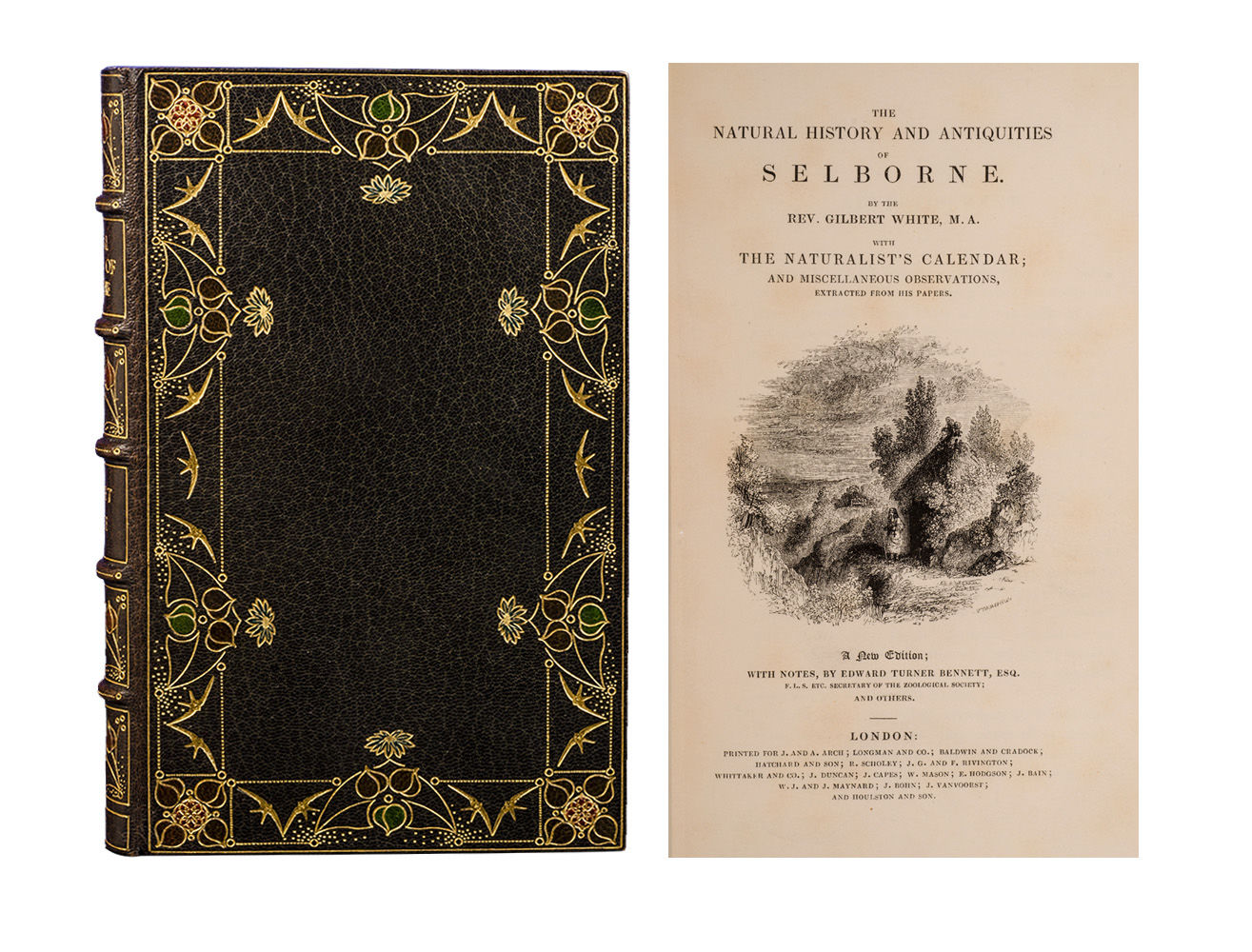
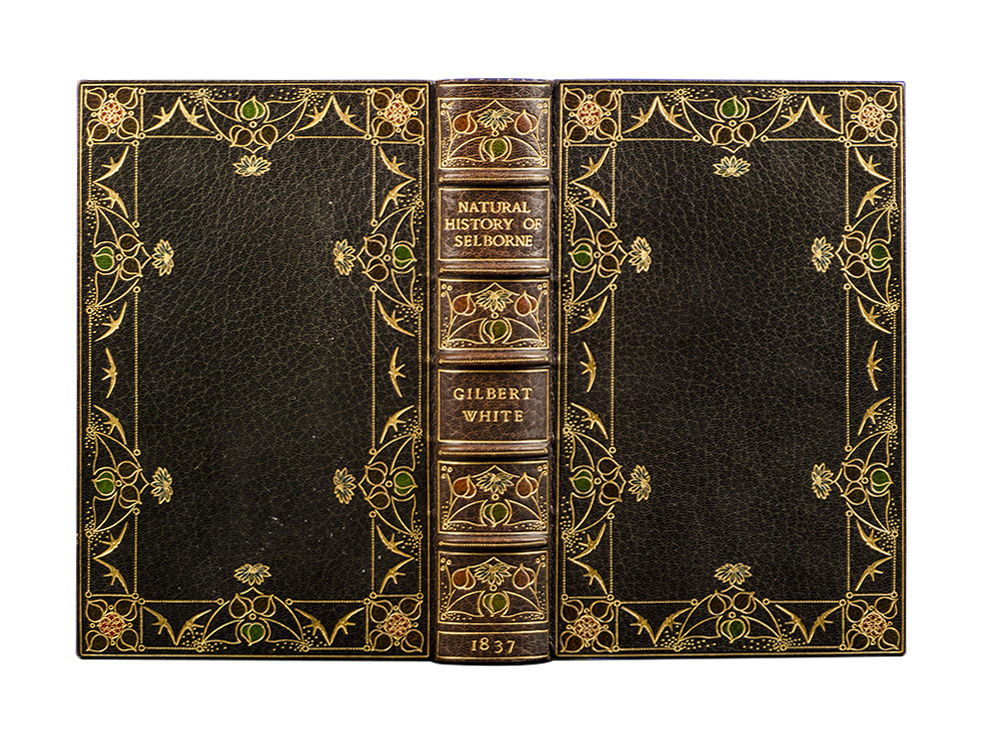
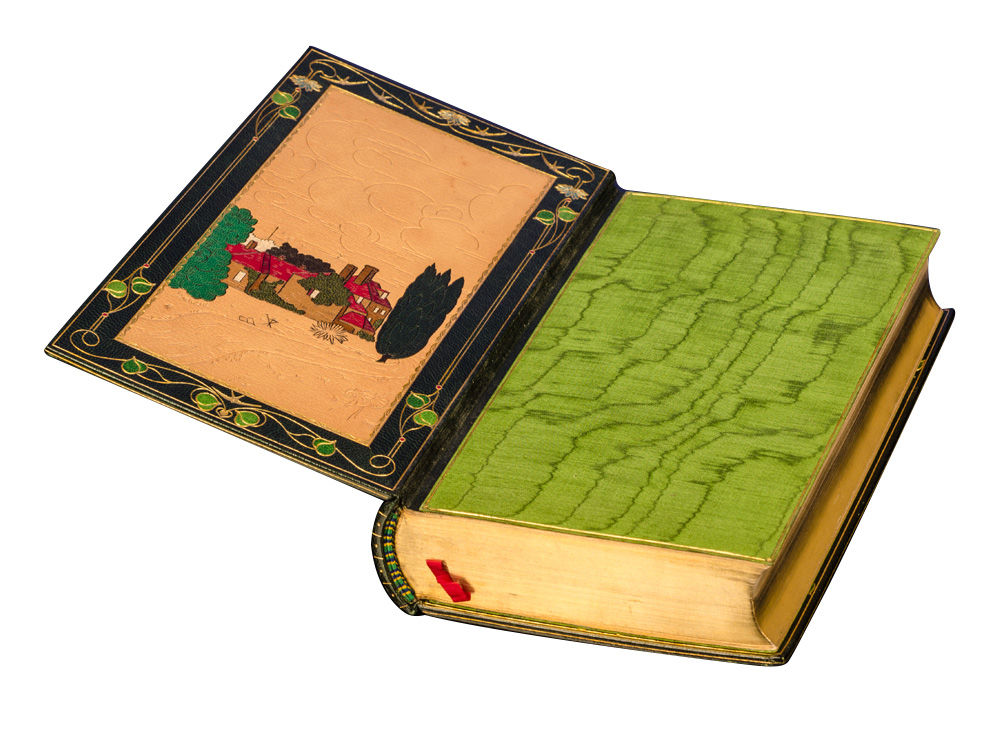
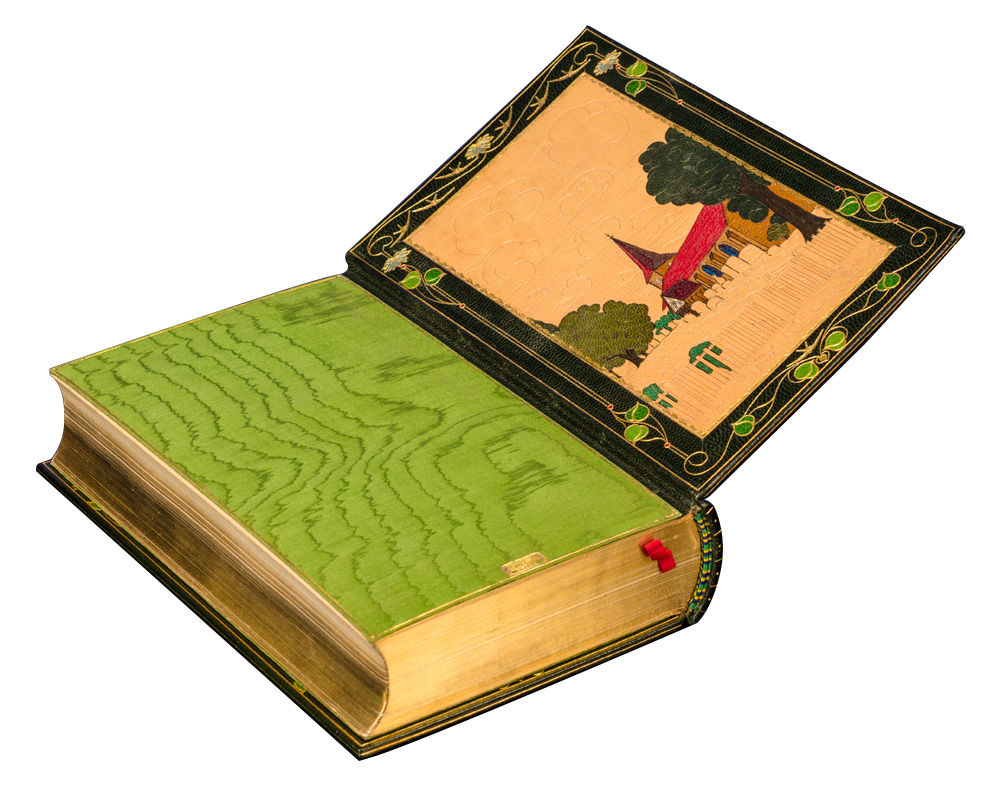
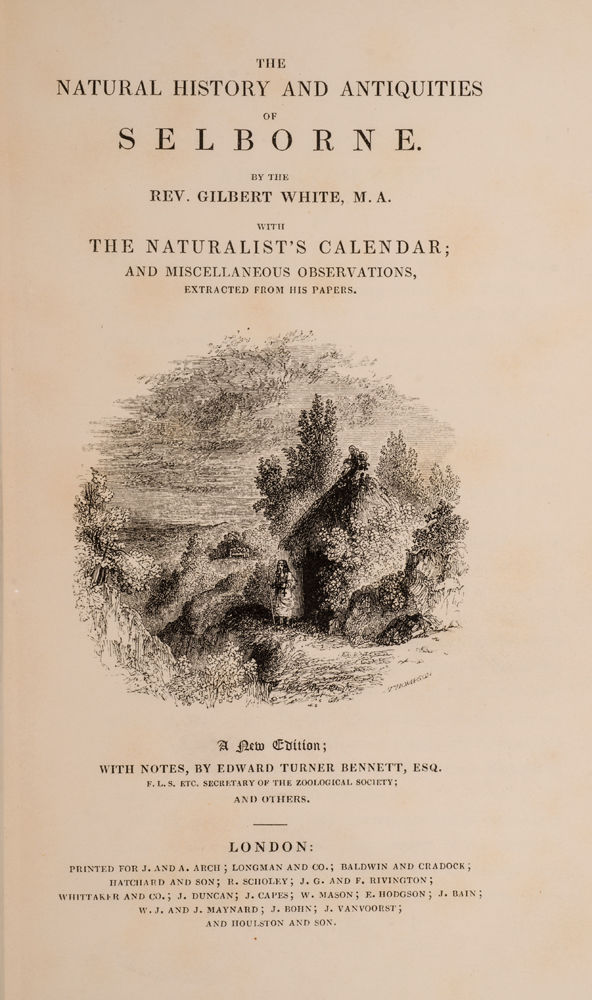
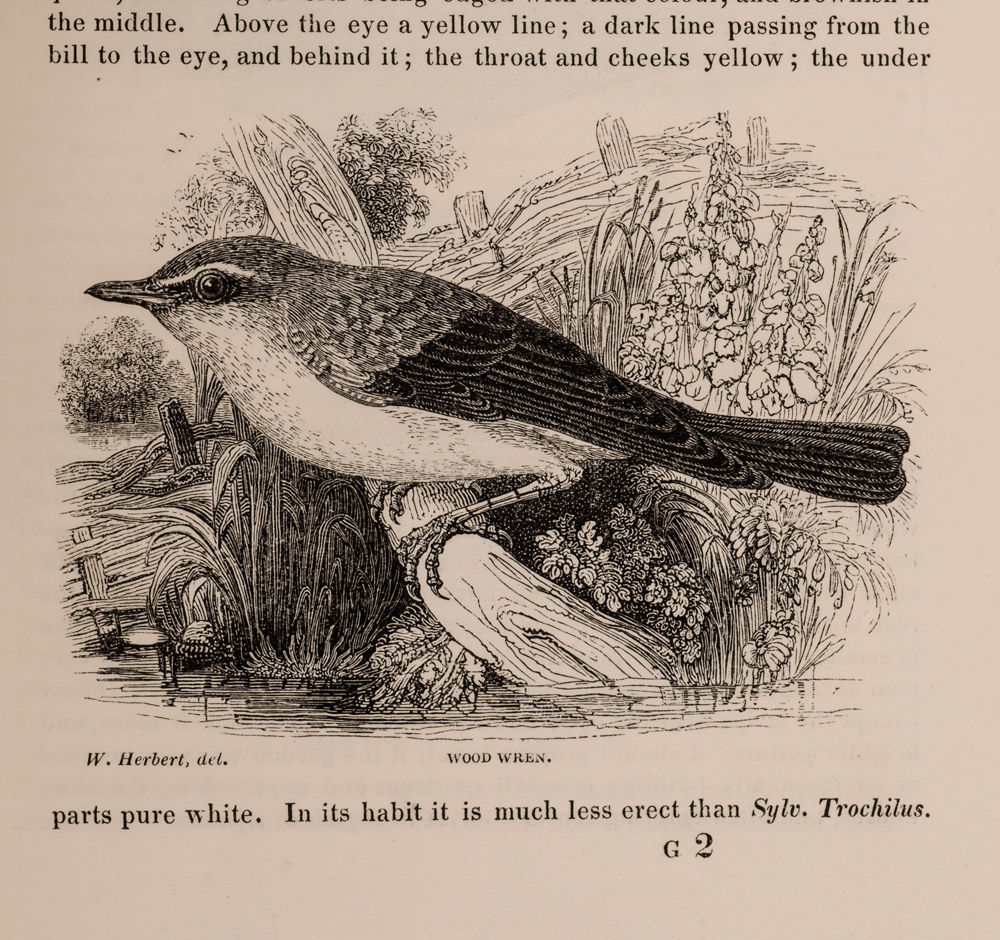
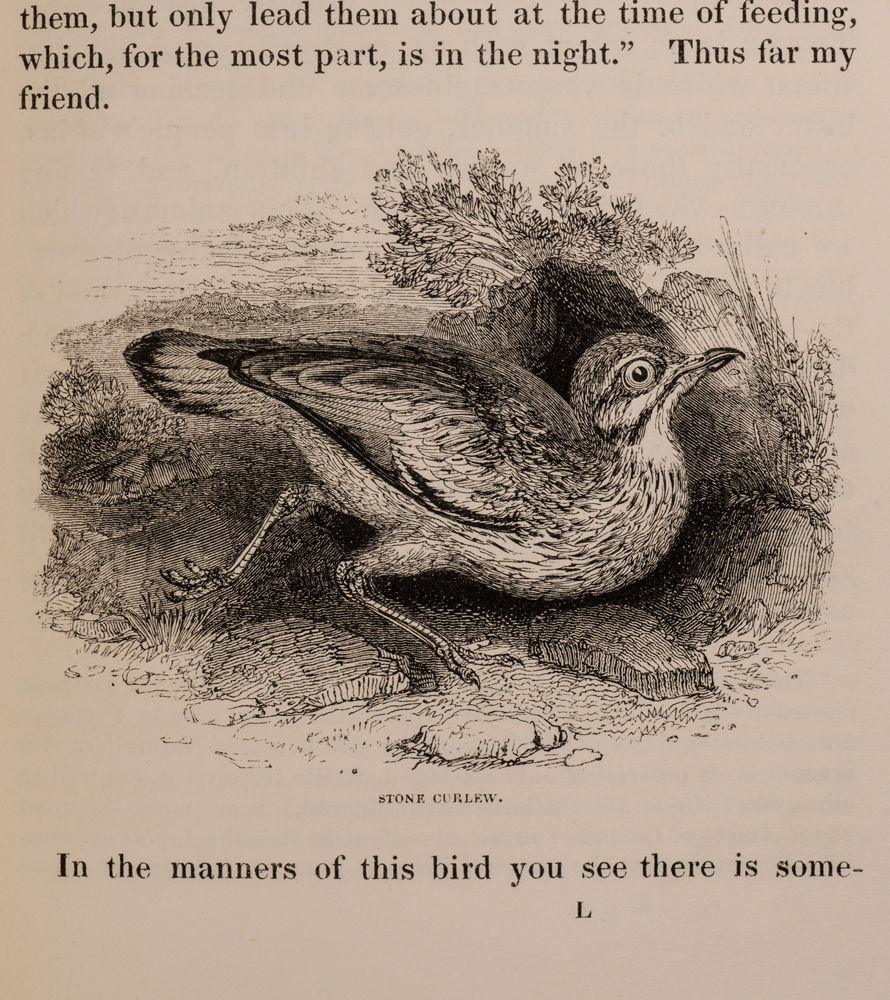
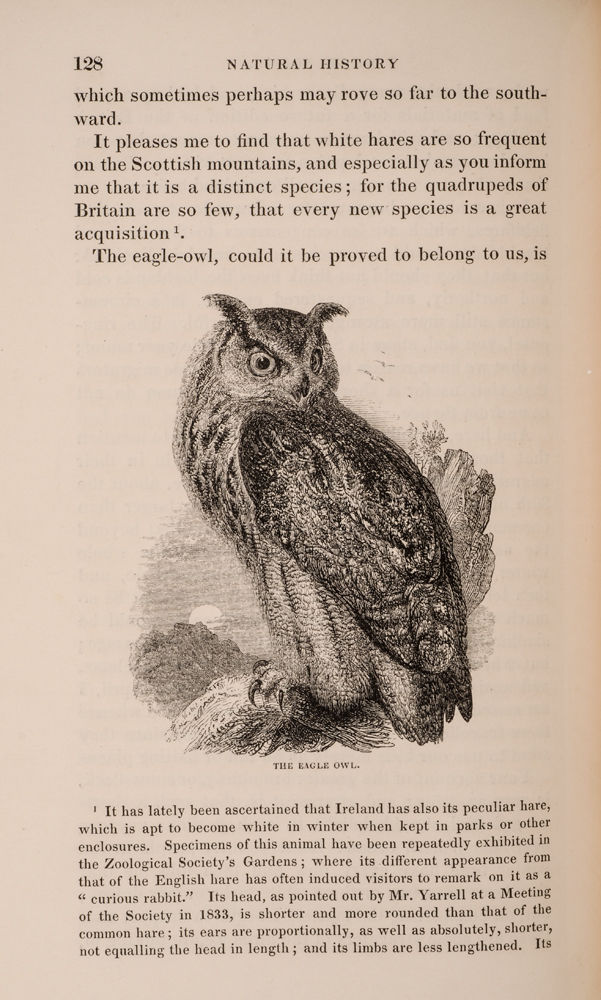
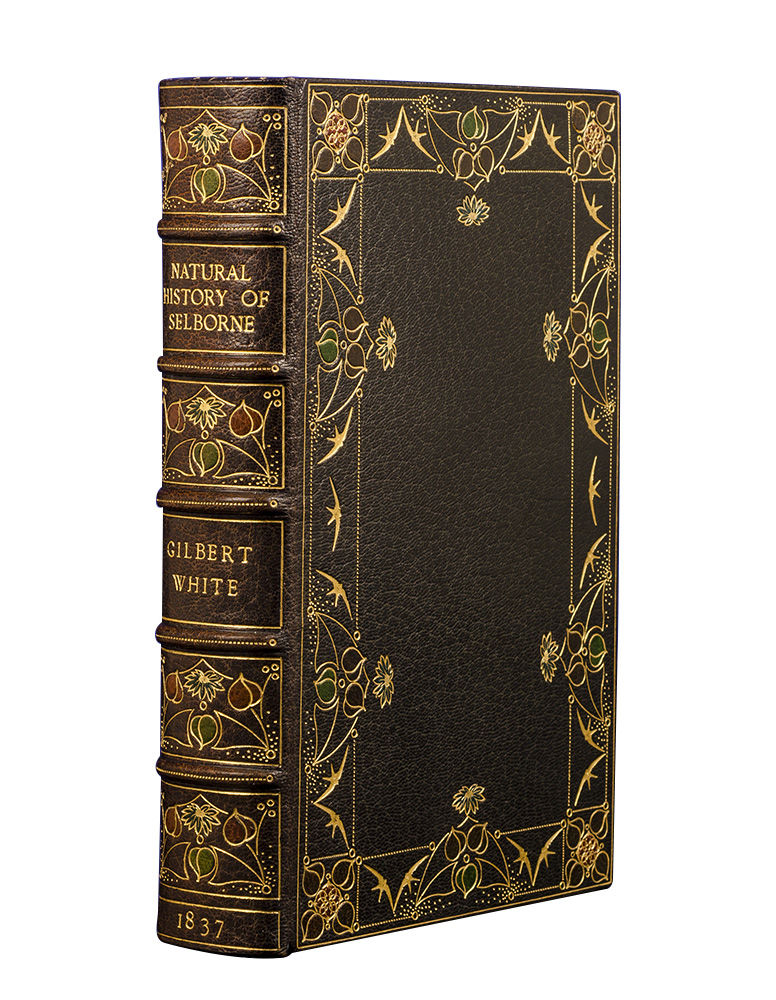
London: Chiswick Press, 1837. New edition. Fine. A Fine copy. Octavo (8 1/2 x 5 1/4 inches; 216 x 134 mm.). xxiv, 640 pp. Forty-five engraved vignette illustrations, with numerous engravings of flora, fauna, and landscapes in the text. Verso of front free endpaper with rectangular bookplate of Thos. D. Murphy. Bound ca. 1910 in a stunning Art Nouveau binding of dark green crushed morocco, handsomely gilt and inlaid, by Kelliegram (stamp-signed in gilt on rear watered silk endleaf) Covers with fanciful Art Nouveau-style frame formed by inlaid flowers of red and blue and leaves in two shades of green, these inlays connected by gilt dots, and the spaces between them featuring swooping gilt birds and sprinklings of gilt dots; raised bands, spine compartments tooled in gilt with similar inlaid leaves and flowers, turn-ins with gilt tendrils and continuing the bird, flower, and leaf motifs, the turn-ins enclosing pictorial morocco doublures, the front doublure depicting Gilbert White’s vine-covered house in Selborne, the rear a slate-roofed country church and cemetery, moss green watered silk endleaves, all edges gilt. Original cloth spine bound in at rear.
This New Edition, with notes by Edward Turner Bennett and others, is a lovely copy of White’s beloved account of the wonders of nature, offered in a very pleasing pictorial binding from the firm that is best known for that kind of work. First published in 1789, White attempts to inspire readers to observe in their own backyards, “is open to everyone, for everyone has observed much of what it describes. Writer and reader each share the inheritance of the natural world, and delight in what is given, so that Selbourne becomes an expression of universal thanksgiving, treasured by all.” (DNB)
This cover design is animated and unusual, the gilt birds in flight adding a charming note of whimsy to the graceful Art Nouveau design. As with many Kelliegram bindings, pictorial inlays are prominently featured – though here they are atypically large and found inside, rather than on, the covers. The doublures represent two things dear to White’s heart: his Selbourne home, “The Wakes,” and a small country church like the one where he served as a perpetual curate, forsaking a more brilliant career in the church or at Oxford in order to remain in the place that he loved. The doublure scenes employ at least ten different consonant colors of morocco and much incising to give a fine level of detail. This copy makes for a prime example of a Kelliegram binding. The London-based firm Kelly and Sons was one of the longest running in the trade. Started in 1770 by John Kellie, various family members continued the business into the early twentieth century. Fine.
This New Edition, with notes by Edward Turner Bennett and others, is a lovely copy of White’s beloved account of the wonders of nature, offered in a very pleasing pictorial binding from the firm that is best known for that kind of work. First published in 1789, White attempts to inspire readers to observe in their own backyards, “is open to everyone, for everyone has observed much of what it describes. Writer and reader each share the inheritance of the natural world, and delight in what is given, so that Selbourne becomes an expression of universal thanksgiving, treasured by all.” (DNB)
This cover design is animated and unusual, the gilt birds in flight adding a charming note of whimsy to the graceful Art Nouveau design. As with many Kelliegram bindings, pictorial inlays are prominently featured – though here they are atypically large and found inside, rather than on, the covers. The doublures represent two things dear to White’s heart: his Selbourne home, “The Wakes,” and a small country church like the one where he served as a perpetual curate, forsaking a more brilliant career in the church or at Oxford in order to remain in the place that he loved. The doublure scenes employ at least ten different consonant colors of morocco and much incising to give a fine level of detail. This copy makes for a prime example of a Kelliegram binding. The London-based firm Kelly and Sons was one of the longest running in the trade. Started in 1770 by John Kellie, various family members continued the business into the early twentieth century. Fine.