

David Elginbrod (in 3 vols.)
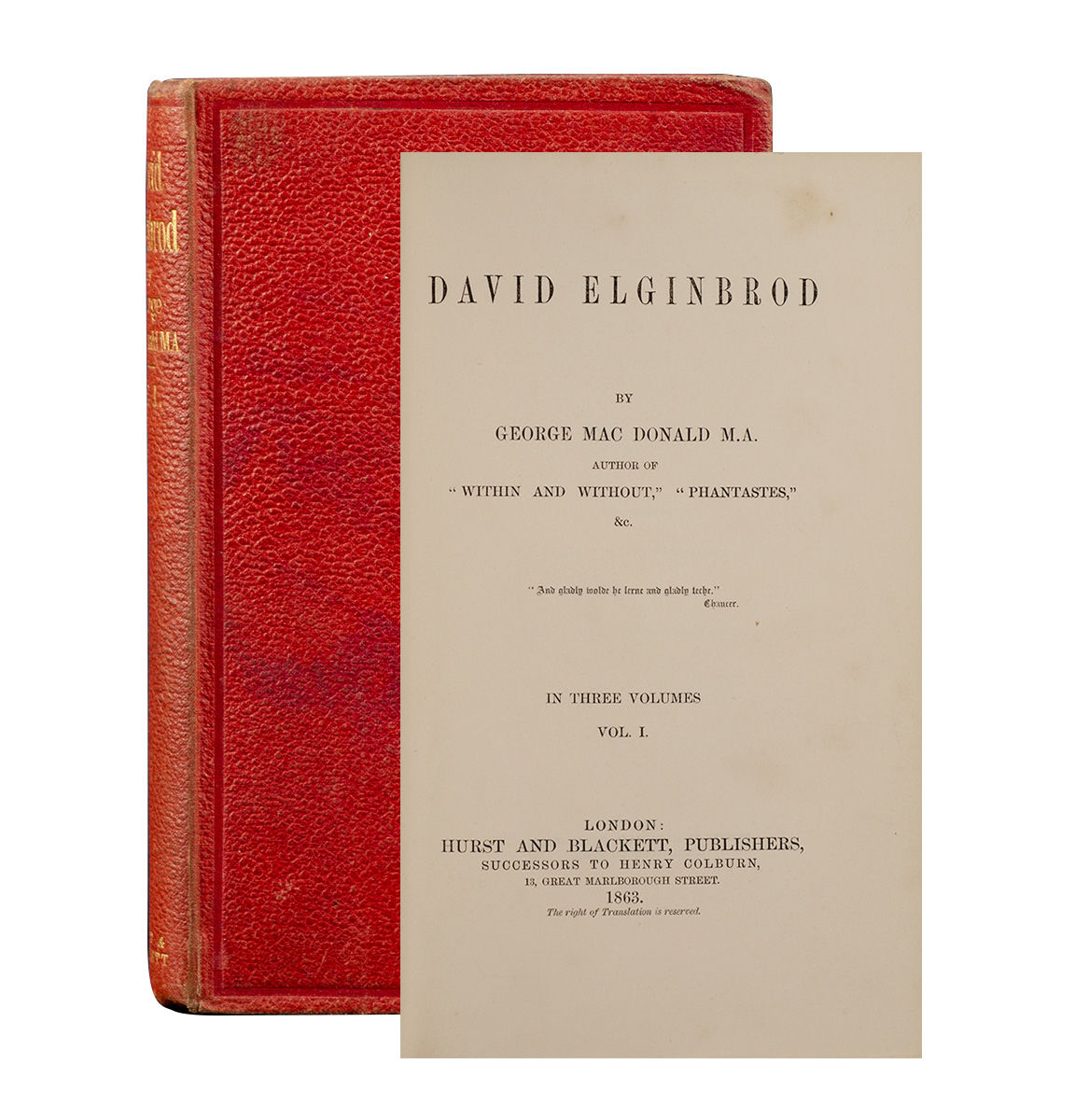
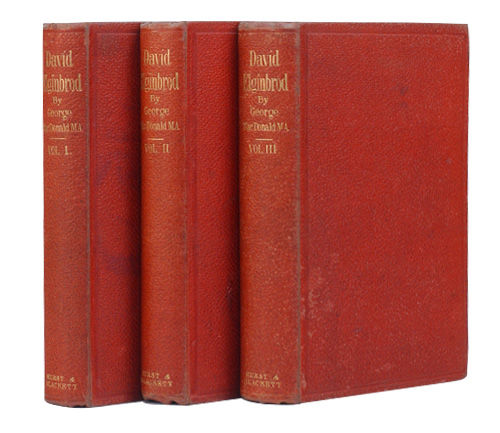
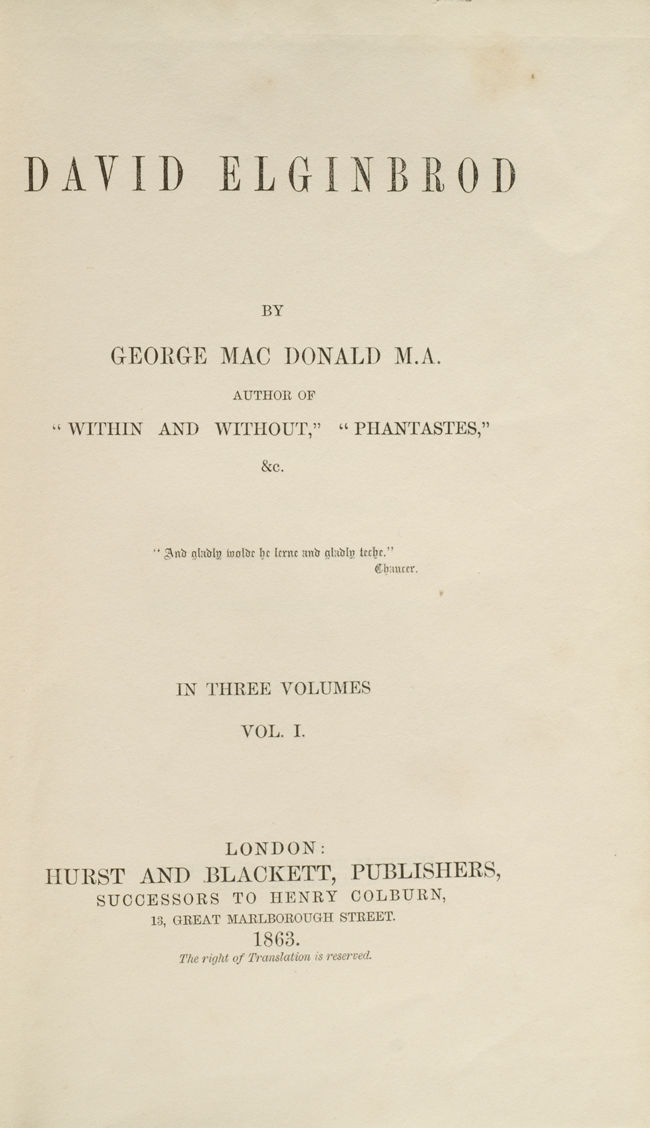
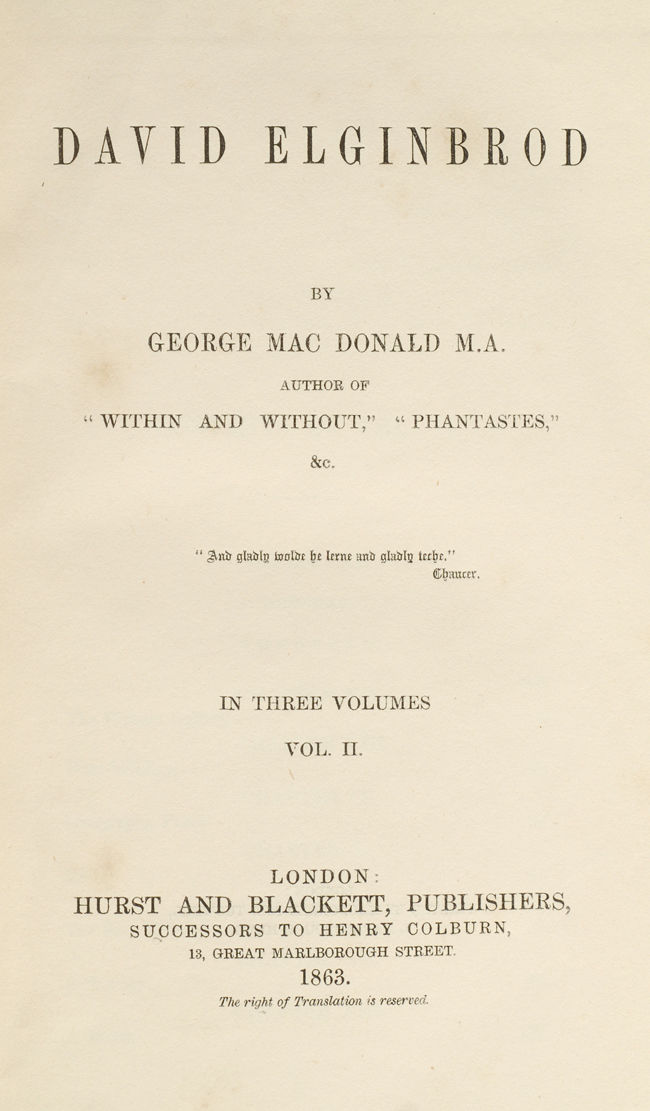
- London: Hurst and Blackett, 1863
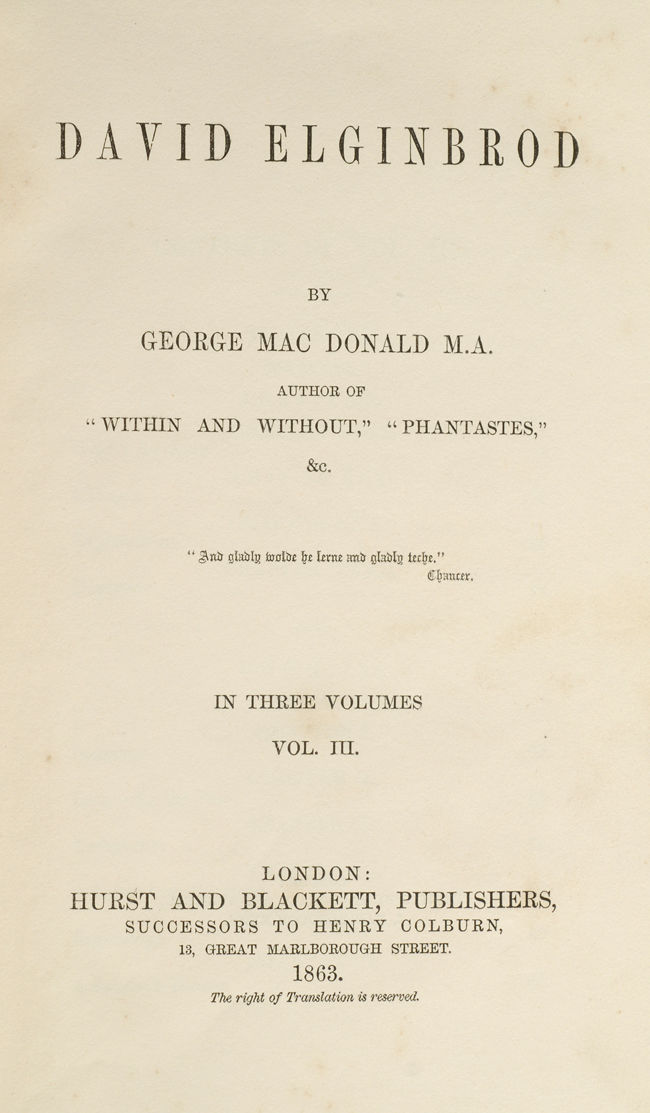
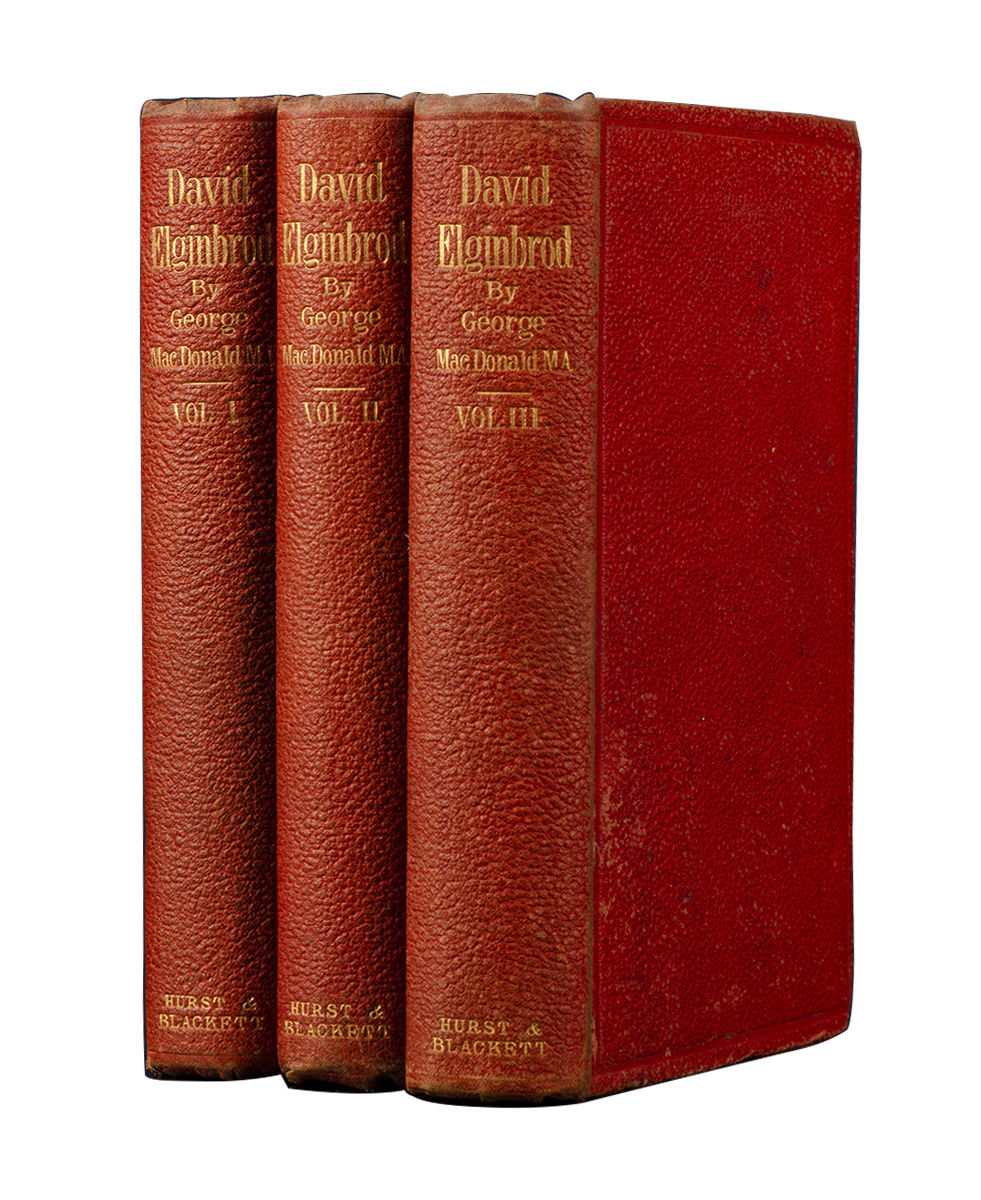
London: Hurst and Blackett, 1863. First edition. Near Fine. Three octavo volumes (7 3/4 x 4 7/8 inches; 199 x 125 mm.). viii, 325, [1]; vi, 335, [1]; vi, 398. A few leaves in gathering N in Volume I poorly opened at top and a few leaves in gathering H in Volume III poorly opened at edge (not affecting any text). The front cover of Volume I shows evidence of a lending library label having once been affixed, and the front and rear pastedowns of Volume III show signs of there once having been a brown paper protective cover. Bound in original brick red pebble-grain cloth with covers ruled in blind and spines ruled in gilt and blind and lettered in gilt. Spine of volume three a bit rolled. Triple-decker novels were affordable only to circulating libraries from which they were then rented out fortnightly.
First edition of the author’s first published novel. MacDonald had previously tried to publish his poetry and fantasy pieces to little success. Encouraged to try his hand at fiction, one of the results was David Elginbrod. MacDonald struggled at first to get it published, and only after a family friend showed the manuscript to the author Dinah Maria Mulock Craik who encouraged her publishers to consider the text did he have success (Shaberman). Despite this initial difficulty, David Elginbrod made him a household name. The lengthy realist novel was “[p]artially set in MacDonald’s homeland of northern Scotland, the story of Hugh Sutherland and Margaret Elginbrod is replete with the dialect and thorough “Scottishness” that became MacDonald’s trademark. The story takes the characters into the eerie world of the occult and spiritualism that so fascinated Victorian readers” (Wentz). Many of the characters in the book were inspired by MacDonald’s own family and acquaintances.
Shaberman, George MacDonald: A Bibliographical Study, 14. Not in Sadleir or Wolff. Near Fine.
First edition of the author’s first published novel. MacDonald had previously tried to publish his poetry and fantasy pieces to little success. Encouraged to try his hand at fiction, one of the results was David Elginbrod. MacDonald struggled at first to get it published, and only after a family friend showed the manuscript to the author Dinah Maria Mulock Craik who encouraged her publishers to consider the text did he have success (Shaberman). Despite this initial difficulty, David Elginbrod made him a household name. The lengthy realist novel was “[p]artially set in MacDonald’s homeland of northern Scotland, the story of Hugh Sutherland and Margaret Elginbrod is replete with the dialect and thorough “Scottishness” that became MacDonald’s trademark. The story takes the characters into the eerie world of the occult and spiritualism that so fascinated Victorian readers” (Wentz). Many of the characters in the book were inspired by MacDonald’s own family and acquaintances.
Shaberman, George MacDonald: A Bibliographical Study, 14. Not in Sadleir or Wolff. Near Fine.