

The Water-Babies





- London & Cambridge: Macmillan, 1863
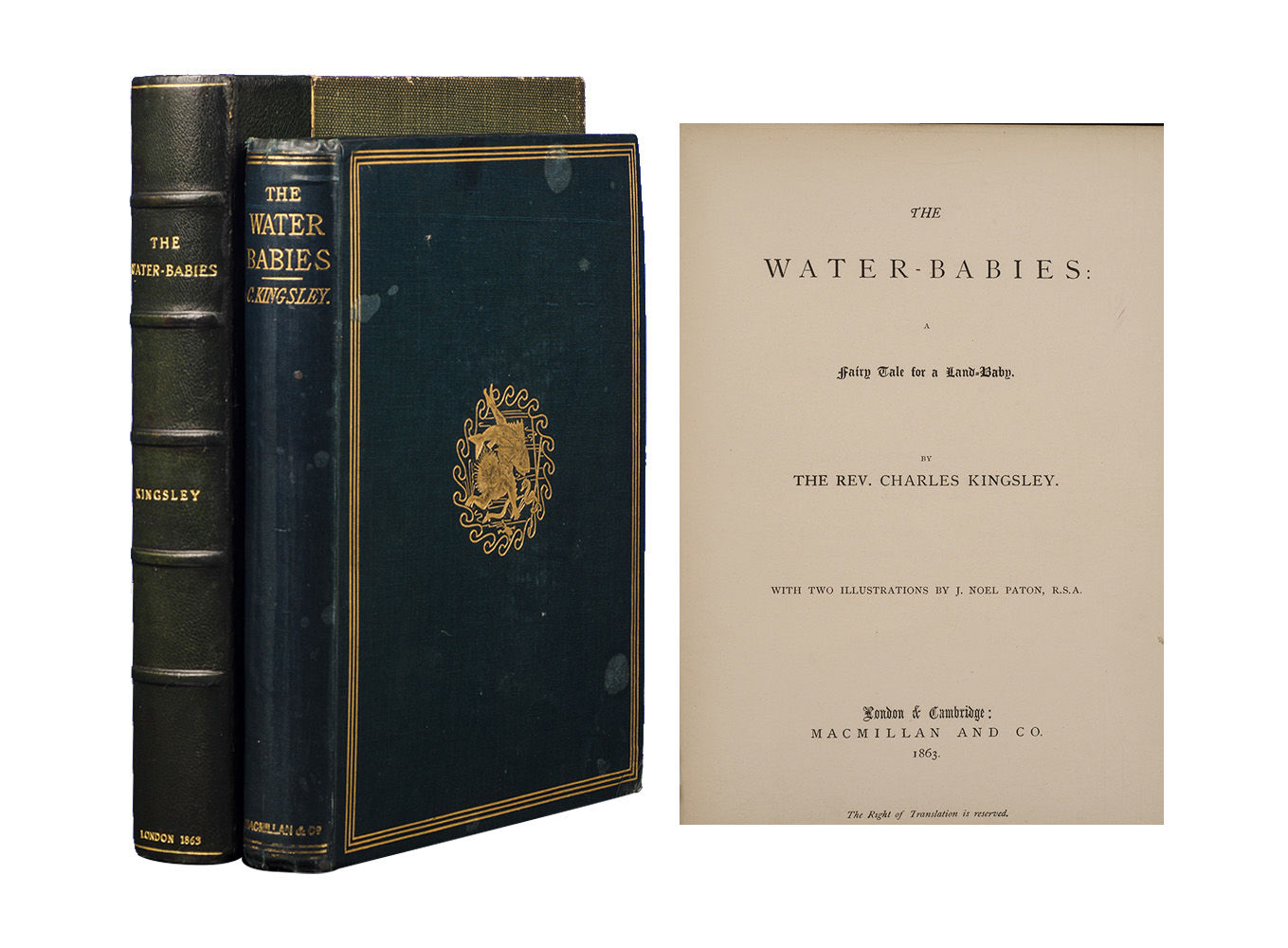
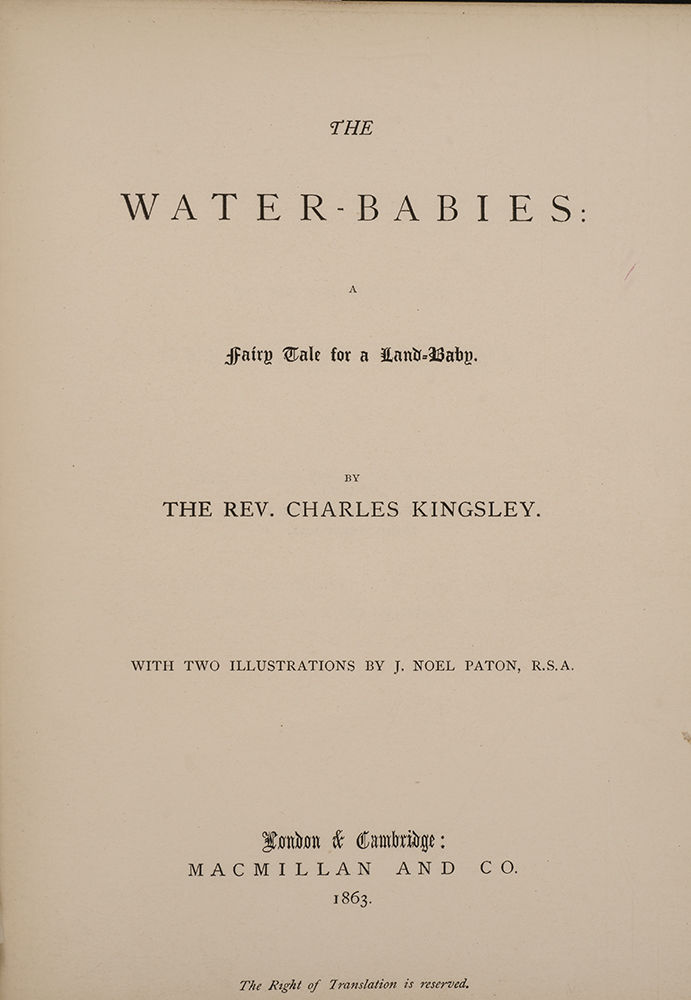
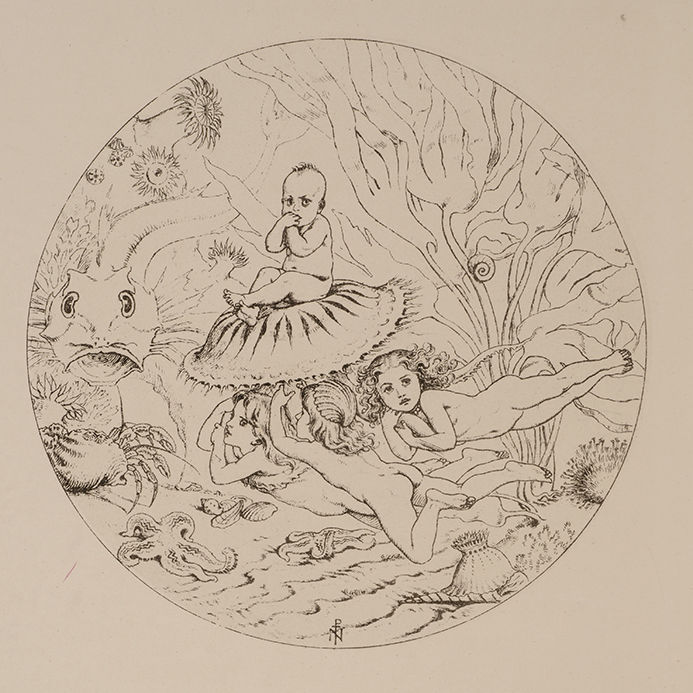
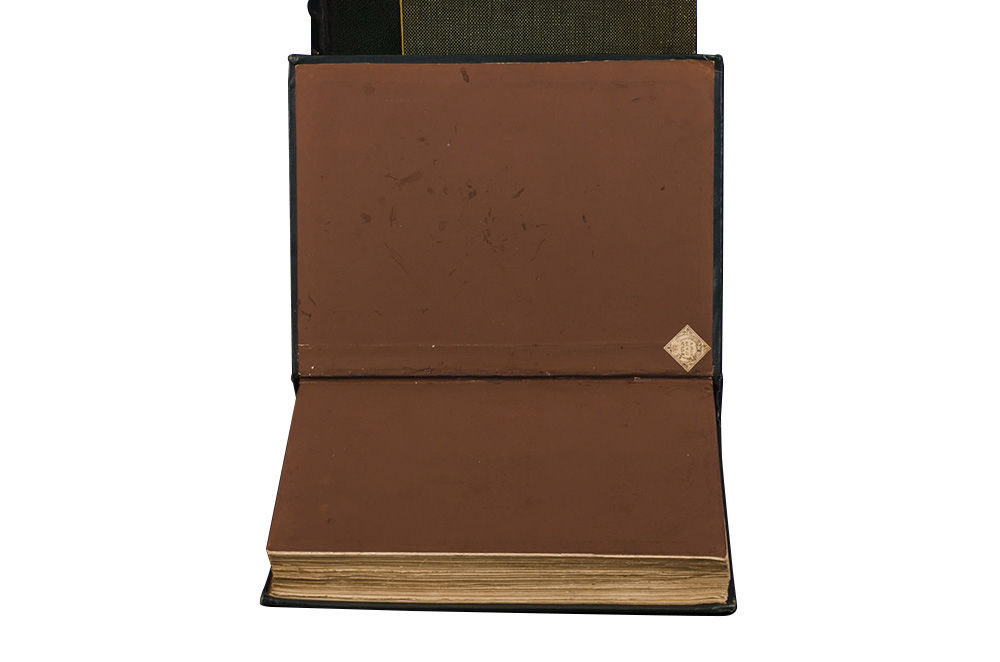
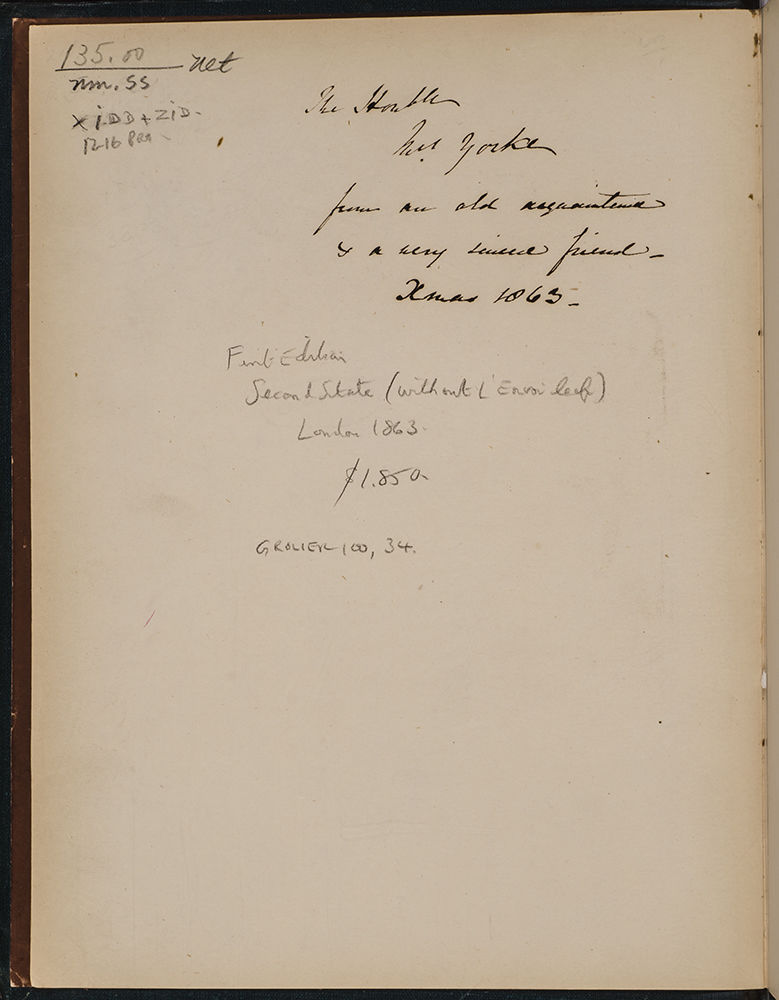
London & Cambridge: Macmillan, 1863. First edition, second state. Near Fine. Small square octavo (8 x 6 1/8 inches; 203 x 155 mm.). [viii], [3], 4-350, [1 advertisements], 1 blank, without the ‘L’Envoi’ leaf which was canceled early on by Kingsley, and inserted frontispiece and full-page illustration opposite p. 145, with eight large engraved initial chapter letters. Bound in original dark green fine-grain cloth, front cover with gilt triple-rule border enclosing a pictorial gilt center device depicting Tom, a Fish and a Sea-Horse. Spine ruled and lettered in gilt. Dark brown coated endpapers, top edge gilt. With the binders ticket of Burn of Kirby St., on the rear pastedown. Unidentified rectangular bookplate on front paste-down. Contemporary neat ink inscription on verso of front end-paper dated "Xmas 1863." A couple of small and very light spots on front cover short splits to the cloth at the lower spine fold, inner hinges with partial expert and almost invisible repairs. Otherwise a Near Fine copy, the gilt bright and fresh, of this scarce children’s classic. Housed in a fleece-lined, quarter green morocco over green cloth clamshell case.
"Charles Kingsley was a rural vicar in Victorian England, and the "land-baby" of the sub-title was his youngest son, five-year-old Grenville Arthur. In writing this fairy tale about the underwater adventures of Tom, a chimney-sweep's climbing-boy, Kingsley uttered many a sermon. But along with his zeal for Anglican Christianity he also brought into play his enthusiasm for nature and his strong sense of indignation at the Victorian practice of using small children as laborers. The difference between the first and second states is solely the removal of the L'Envoi leaf. The first state "contains a leaf bearing a poem, L'Envoi. Kingsley had second thoughts about this while the book was being printed, and he had the leaf removed, but not before a few hundred copies of the book had already gone forth" (Early Children's Books and Their Illustration).
Grolier 100, 34. Near Fine.
"Charles Kingsley was a rural vicar in Victorian England, and the "land-baby" of the sub-title was his youngest son, five-year-old Grenville Arthur. In writing this fairy tale about the underwater adventures of Tom, a chimney-sweep's climbing-boy, Kingsley uttered many a sermon. But along with his zeal for Anglican Christianity he also brought into play his enthusiasm for nature and his strong sense of indignation at the Victorian practice of using small children as laborers. The difference between the first and second states is solely the removal of the L'Envoi leaf. The first state "contains a leaf bearing a poem, L'Envoi. Kingsley had second thoughts about this while the book was being printed, and he had the leaf removed, but not before a few hundred copies of the book had already gone forth" (Early Children's Books and Their Illustration).
Grolier 100, 34. Near Fine.