

The Essays of Elia [and] The Last Essays of Elia
![The Essays of Elia [and] The Last Essays of Elia](https://d3525k1ryd2155.cloudfront.net/h/023/676/1614676023.0.x.jpg)



- London: J.M. Dent & Co, 1900
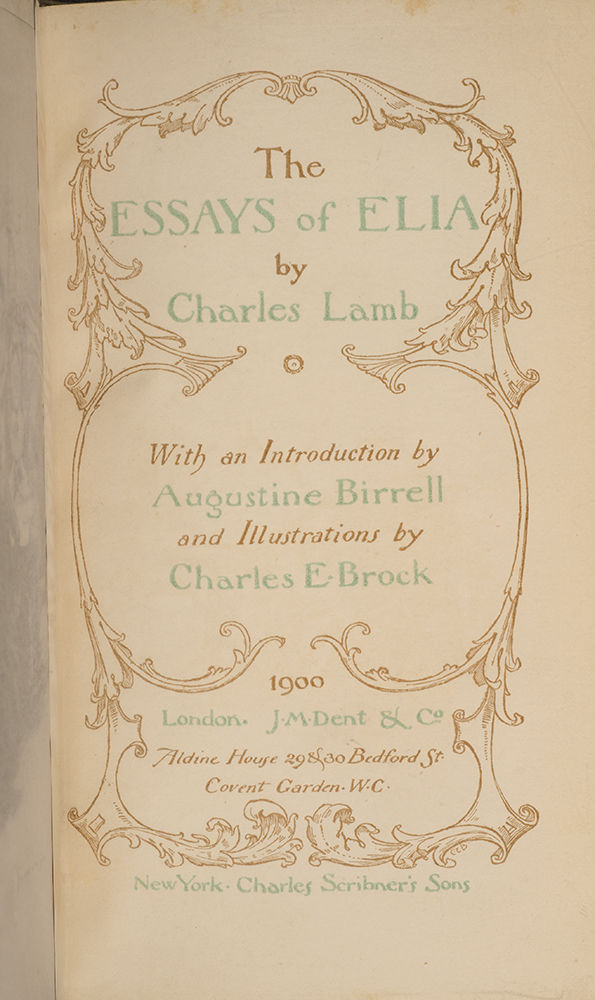
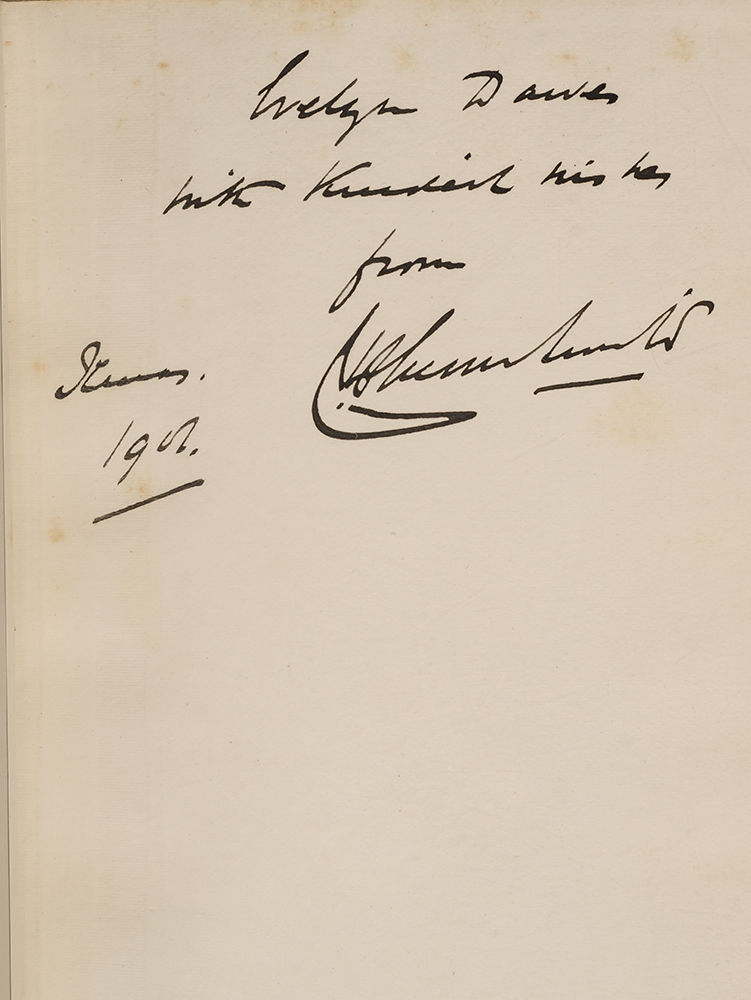
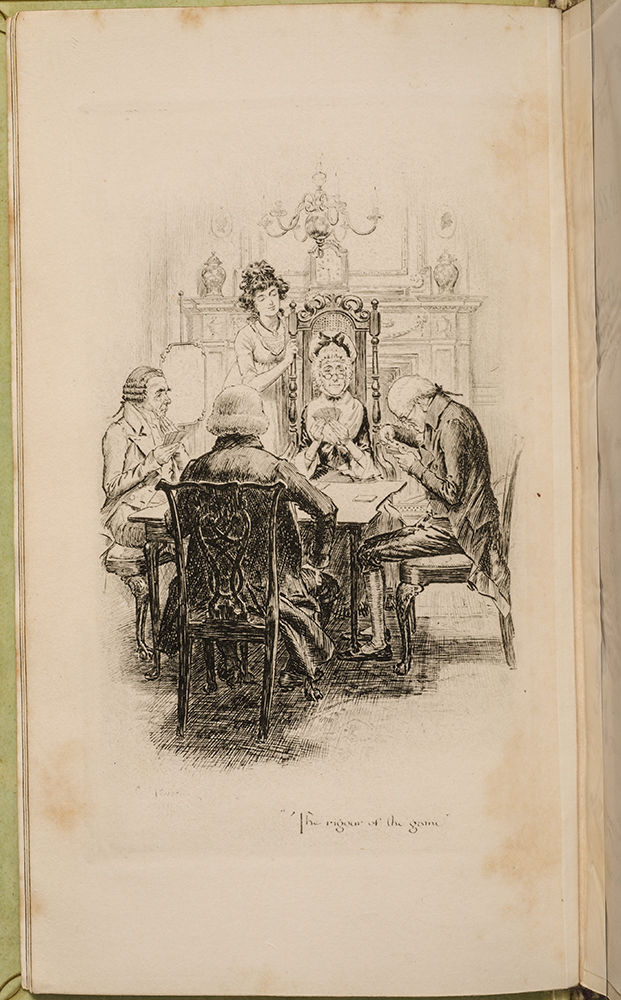
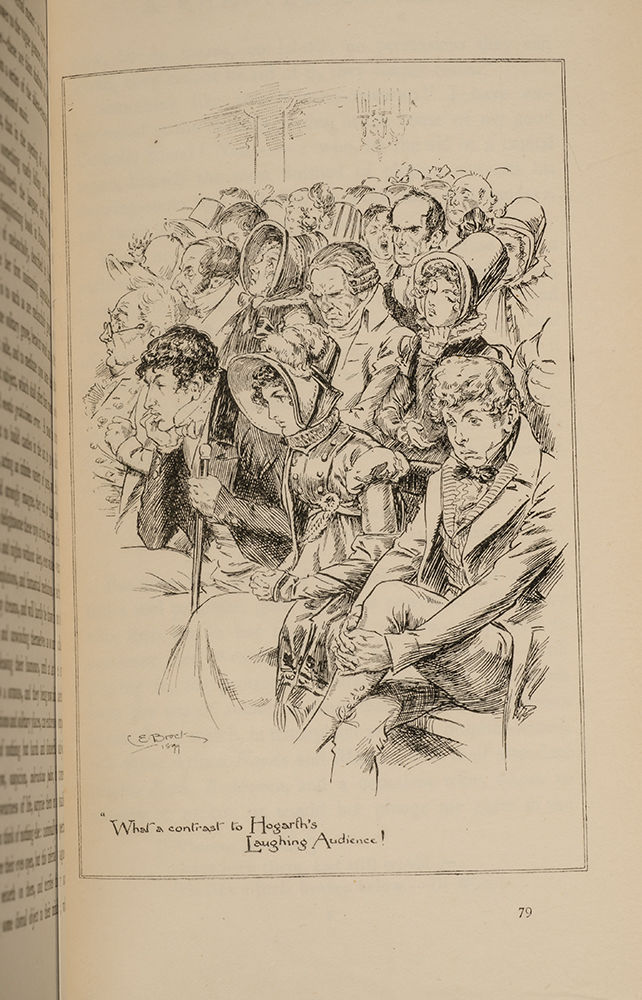
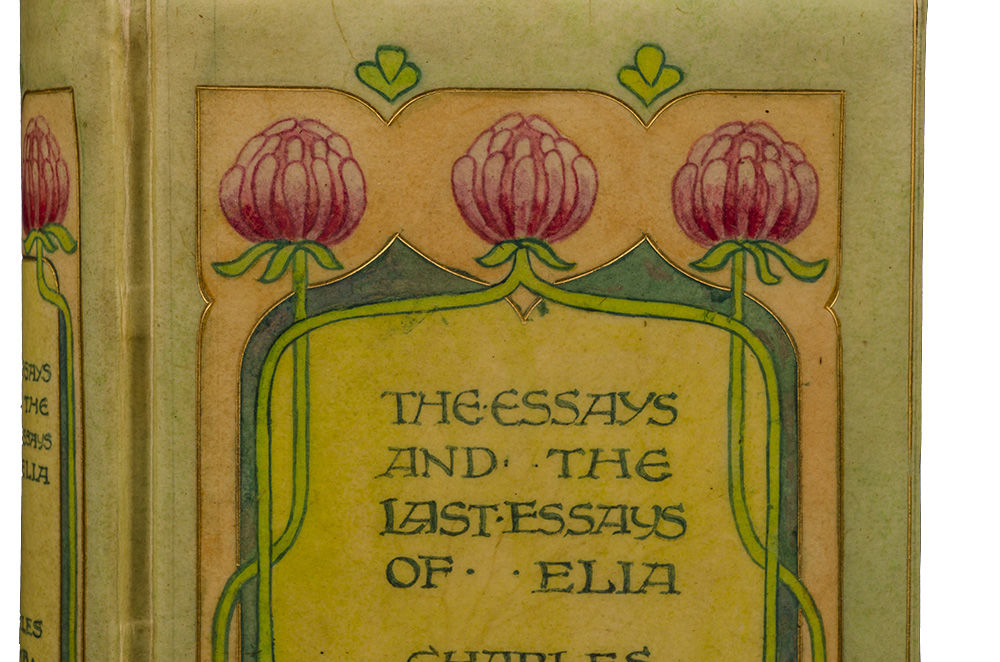
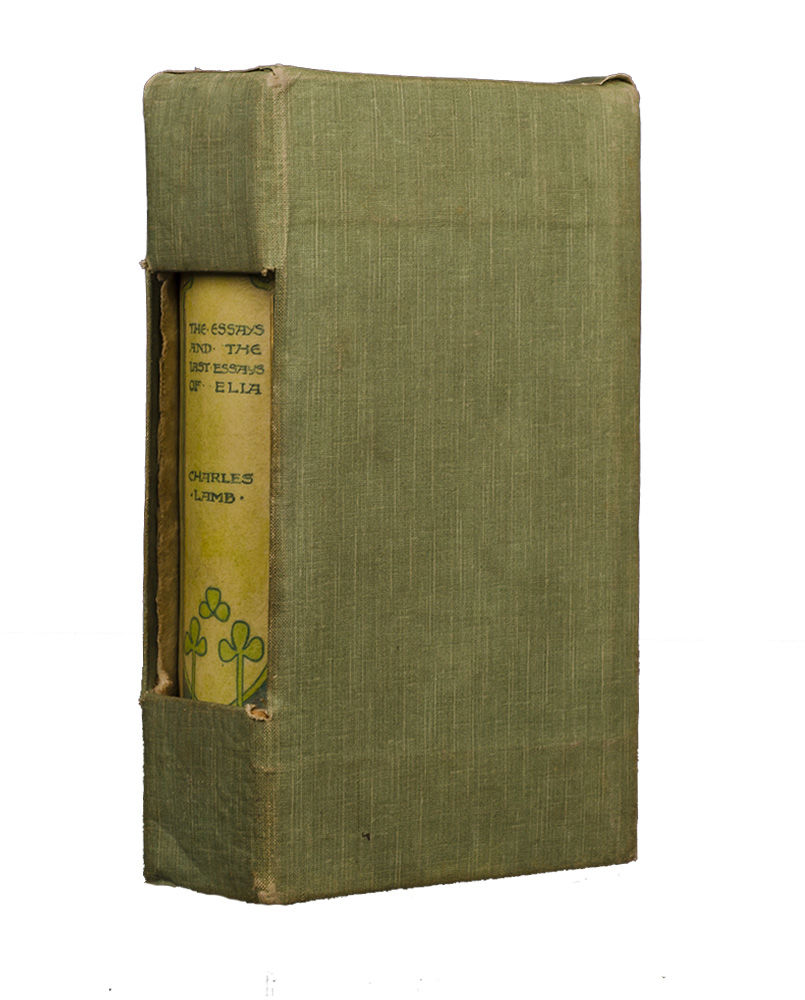
London: J.M. Dent & Co, 1900. Second edition. Fine. Two volumes bound in one, small octavo (6 15/16 x 4 1/16 inches; 177 x 103 mm.). xxii, 294, [1, imprint], [1, blank];, xii, 254, [1, imprint], [1, blank] pp. Two engraved frontispieces and one hundred and sixty-two black & white illustrations, including decorative head and tailpieces, all by Charles E. Brock. Bound ca. 1906 in a fine pastel “vellucent” binding by Cedric Chivers (stamp-signed in gilt on rear lower turn-in), with a delicately hand-painted 'Art Nouveau' floral design. This binding is No. LXXXV on page 34 of the Cedric Chivers catalog "Books in Beautiful Bindings." The front cover with three red flowers and a green vine design enclosing the title "The Essays And The Last Essays of Elia. Charles Lamb". Lower cover with a similar design but with just one red flower. Smooth spine similarly decorated and lettered in watercolor and gilt, gilt ruled turn-ins, mottled pale-green liners and end-papers, all edges gilt. Neat ink inscription dated "Xmas 1906" on front blank. A very fine example housed in the original fleece-lined, green cloth slipcase (missing the movable spine panel).
Patented in 1898, Chivers’s “vellucent” bindings departed from traditional methods of creating hand-painted vellum bindings. The usual approach was to merely bind a book in vellum and then paint on a design, but this is prone to rubbing and flaking and such examples are often now found chipped and deteriorated. In the 18th century Chivers’s great predecessor, Edwards of Halifax, painted in reverse on the underside of translucent vellum, thereby providing a layer of protection for the design. His technique was not widely copied and almost vanished with his death, and it was not until the 1890s that Chivers developed his own similar method for protecting the design underneath the vellum itself - the backing sheet of the vellum was painted, which was then covered in vellum which had been shaved to transparency. The vellum was then tooled in gilt, on occasion incorporating additional mother-of-pearl and onlays. The books which Chivers thus bound have always been a favorite of collectors, and usually still present well, the vellum having served its purpose of protecting the design for many decades, as Chivers intended. Chivers was also known to have employed a great many craftswomen at his bindery in Portway: “forty women for folding, sewing, mending, and collating work, and in addition, five more women worked in a separate department, to design, illuminate, and colour vellum for book decoration, and to work on embossed leather. These five were Dorothy Carleton Smyth, Alice Shepherd, Miss J.D. Dunn, Muriel Taylor, and Agatha Gales” (Tidcombe).
This book brings together Charles Lamb’s Essays of Elia (first published in 1823) with the subsequent volume Last Essays of Elia (issues in 1833). The accessible and conversational essays were published under the pseudonym Elia, inspired by an Italian man that Lamb had known at the South Sea House, and had appeared serially in The London Magazine between 1820 and 1825. Despite his struggles with mental illness, Charles Lamb (1775-1834) would be celebrated for his literary contributions, producing a range of material from essays to poems. Lamb belonged to an active literary circle which included Percy Bysshe Shelley and Lord Byron. Fine.
Patented in 1898, Chivers’s “vellucent” bindings departed from traditional methods of creating hand-painted vellum bindings. The usual approach was to merely bind a book in vellum and then paint on a design, but this is prone to rubbing and flaking and such examples are often now found chipped and deteriorated. In the 18th century Chivers’s great predecessor, Edwards of Halifax, painted in reverse on the underside of translucent vellum, thereby providing a layer of protection for the design. His technique was not widely copied and almost vanished with his death, and it was not until the 1890s that Chivers developed his own similar method for protecting the design underneath the vellum itself - the backing sheet of the vellum was painted, which was then covered in vellum which had been shaved to transparency. The vellum was then tooled in gilt, on occasion incorporating additional mother-of-pearl and onlays. The books which Chivers thus bound have always been a favorite of collectors, and usually still present well, the vellum having served its purpose of protecting the design for many decades, as Chivers intended. Chivers was also known to have employed a great many craftswomen at his bindery in Portway: “forty women for folding, sewing, mending, and collating work, and in addition, five more women worked in a separate department, to design, illuminate, and colour vellum for book decoration, and to work on embossed leather. These five were Dorothy Carleton Smyth, Alice Shepherd, Miss J.D. Dunn, Muriel Taylor, and Agatha Gales” (Tidcombe).
This book brings together Charles Lamb’s Essays of Elia (first published in 1823) with the subsequent volume Last Essays of Elia (issues in 1833). The accessible and conversational essays were published under the pseudonym Elia, inspired by an Italian man that Lamb had known at the South Sea House, and had appeared serially in The London Magazine between 1820 and 1825. Despite his struggles with mental illness, Charles Lamb (1775-1834) would be celebrated for his literary contributions, producing a range of material from essays to poems. Lamb belonged to an active literary circle which included Percy Bysshe Shelley and Lord Byron. Fine.