

The Golden Treasury (in 2 vols.)
- London: Macmillan, 1902
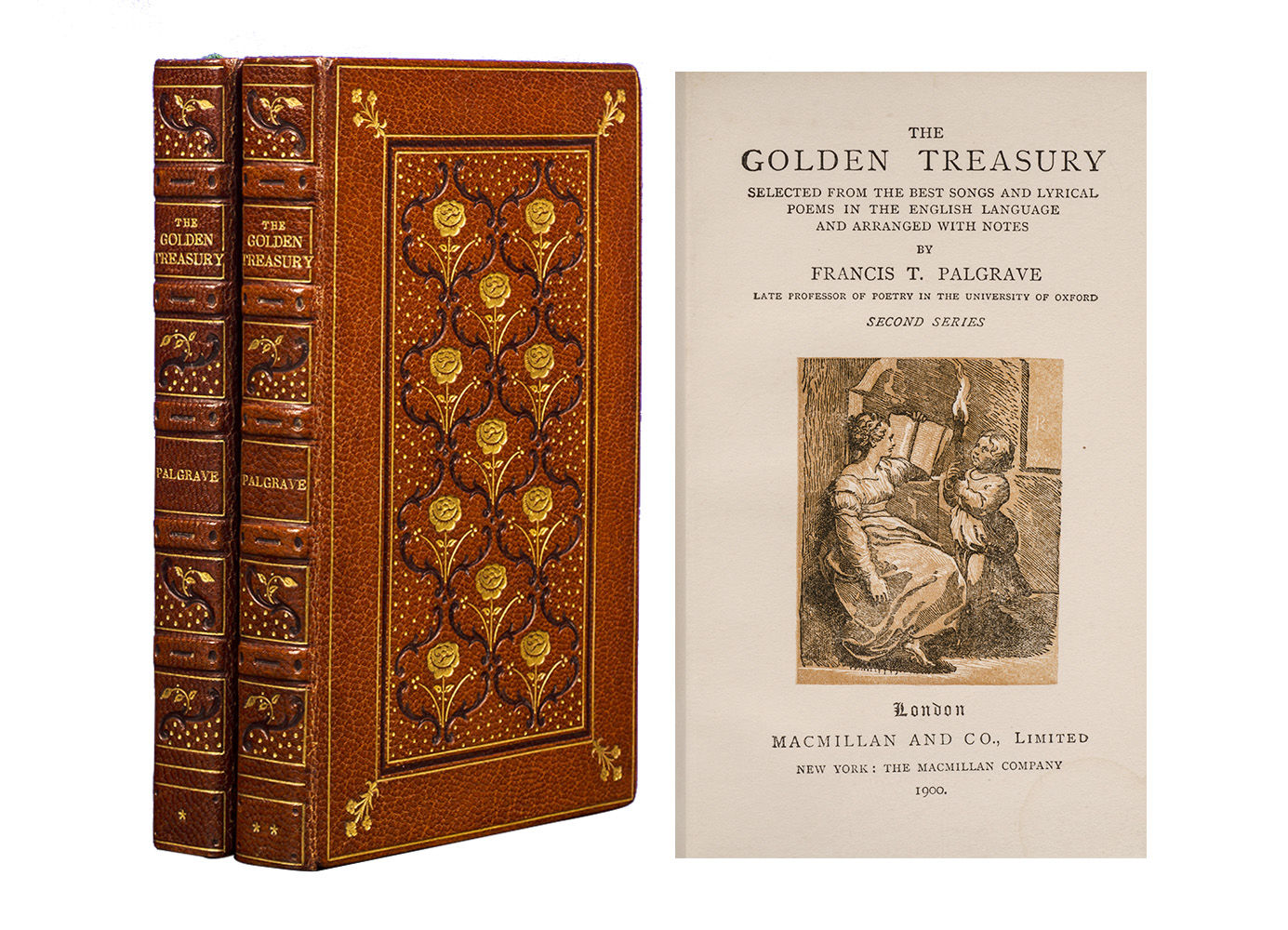
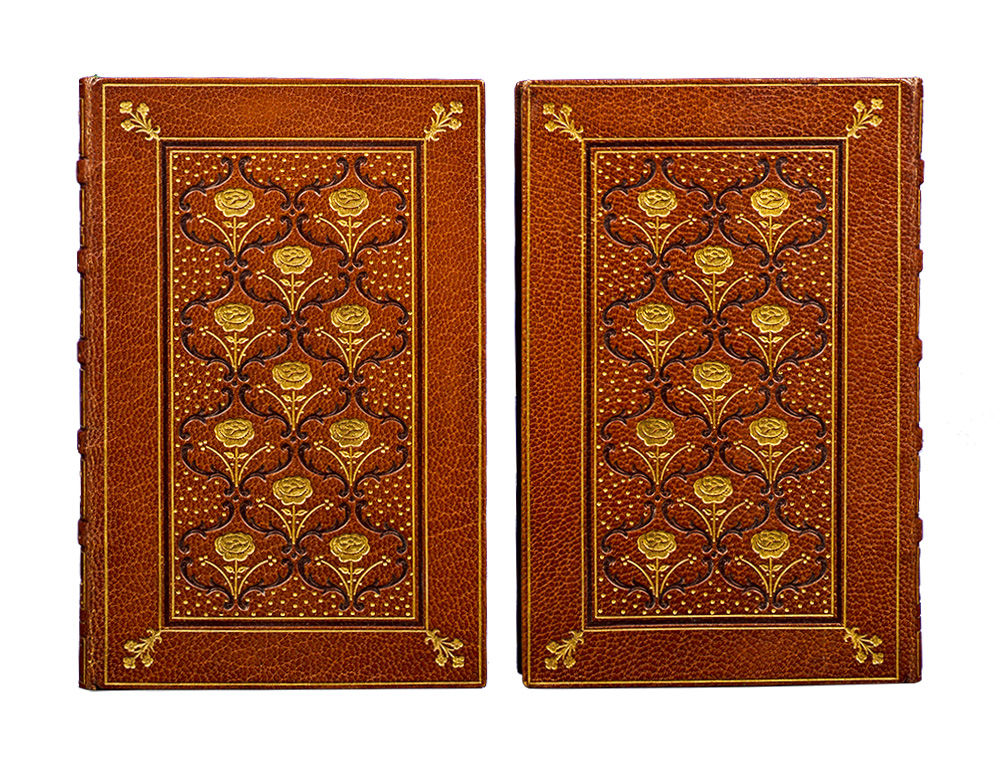
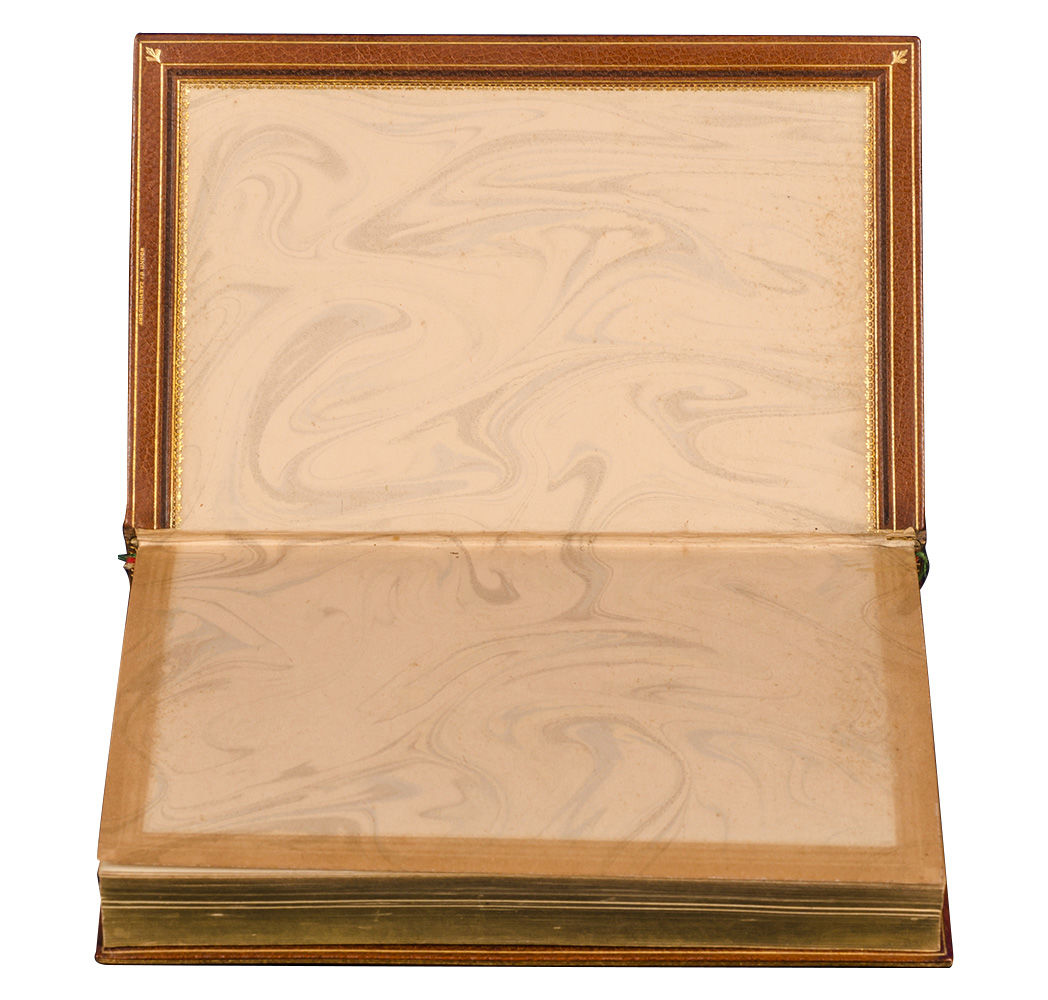
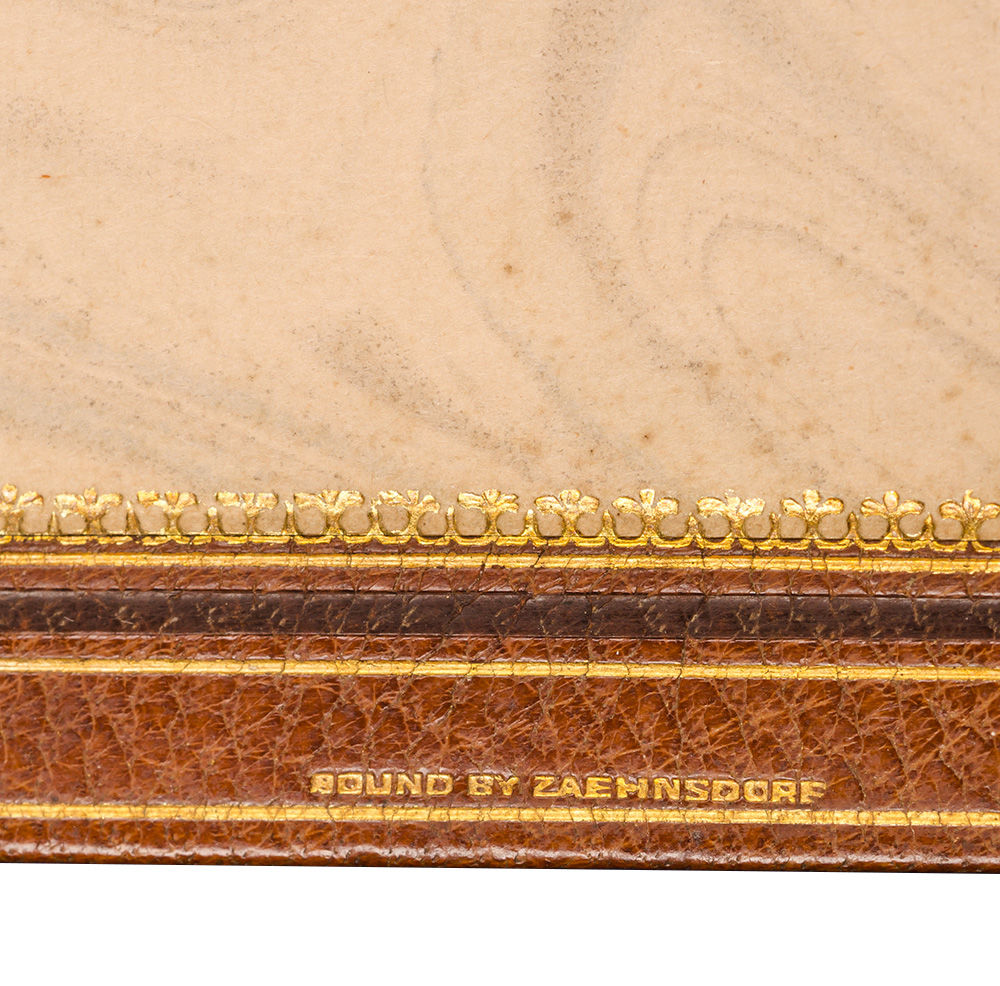
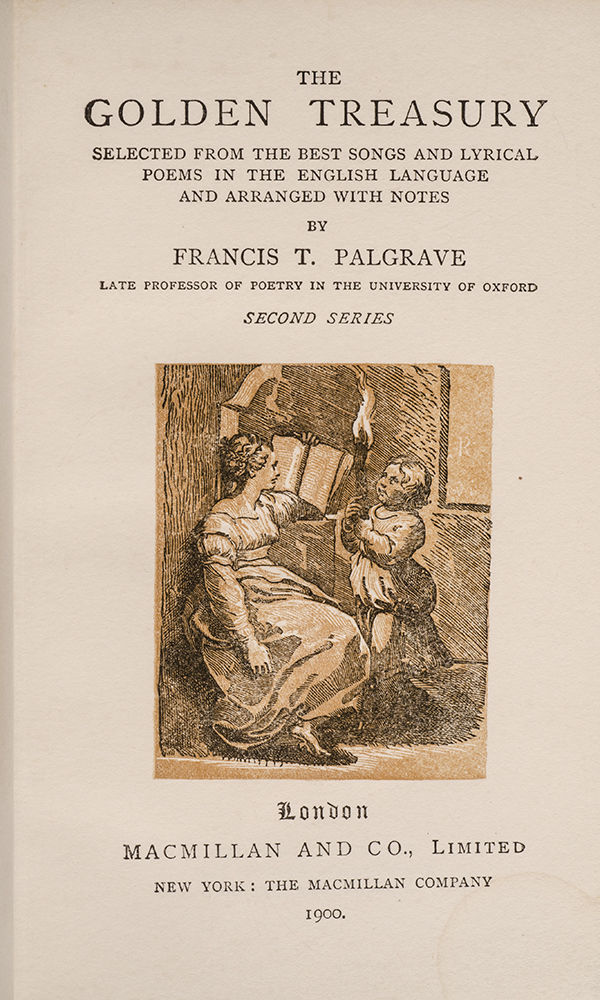
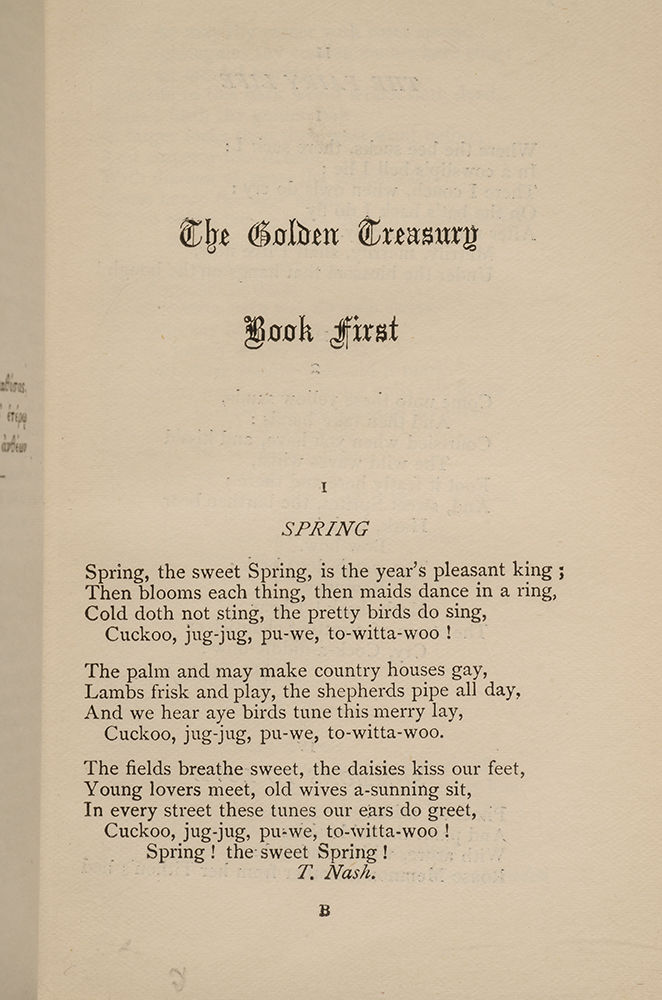
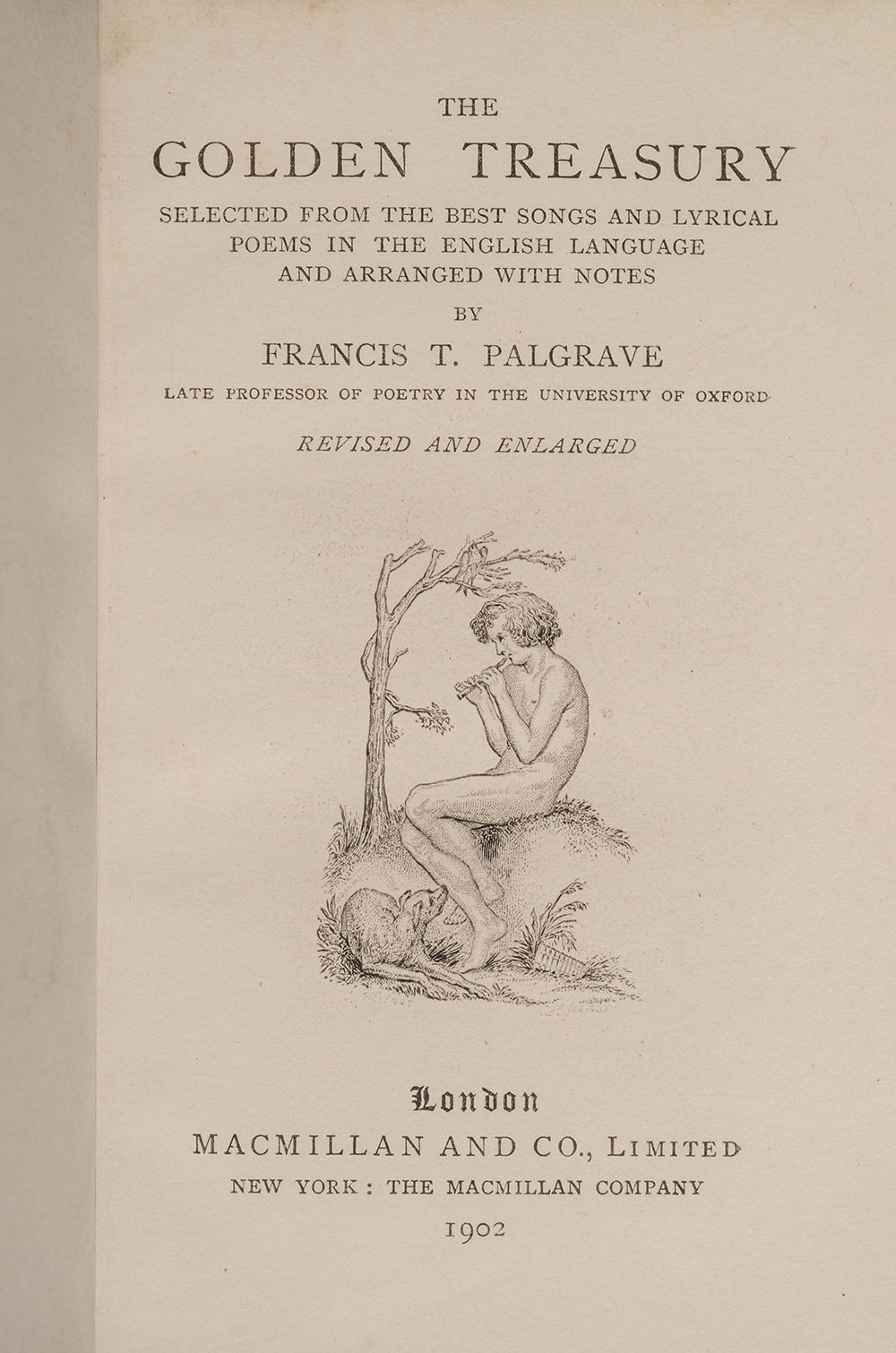
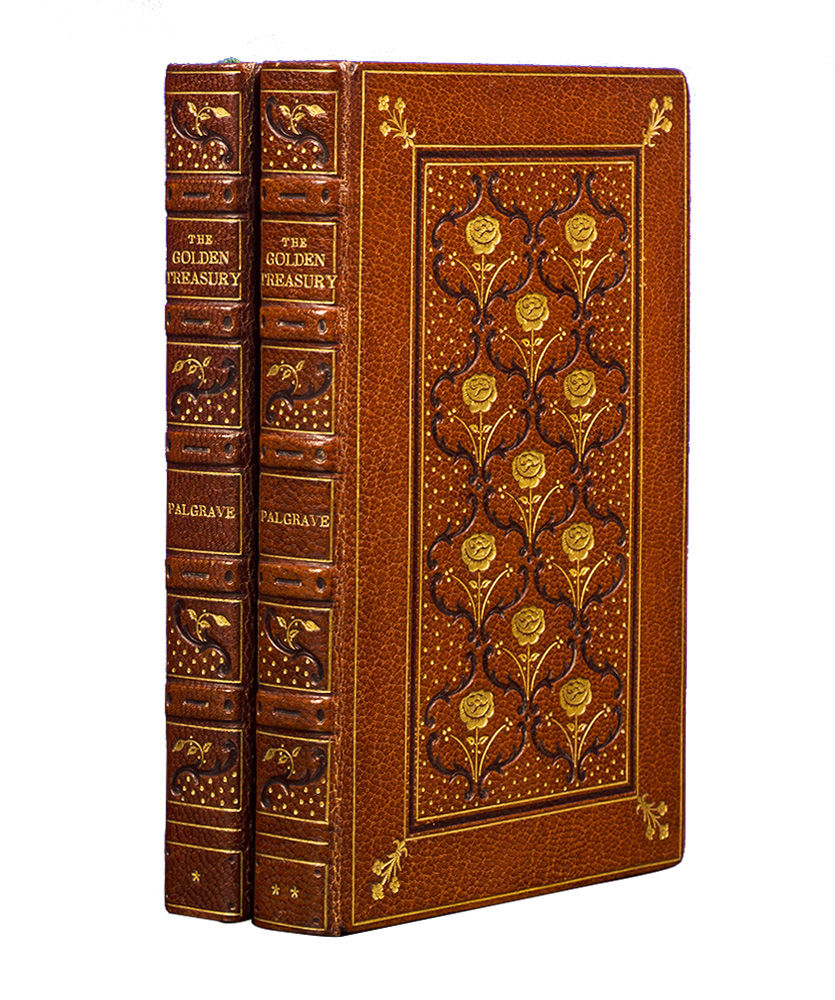
London: Macmillan, 1902. Later printings. Fine. A beautiful set with the rather uncommon Second Series which was first published in 1897. Two small octavo volumes (6 x 3 7/8 inches; 152 x 98 mm.). [xii], 381, [1, imprint]; xii, 275, [1. blank] pp. title-page to first series with engraved vignette, title-page to second series with tinted engraved vignette. Small neat tape repair to front blank leaf in volume one. Finely bound by Zaehnsdorf ca. 1902 (stamp-signed in gilt on front turn-ins). Full brown levant morocco, covers bordered in gilt and blind with gilt floral corner-pieces, enclosing a panel of eleven gilt flowers and stems with gilt pointillé and decorative blind stamping. Spines with five raised bands, decoratively tooled an gilt and blind and lettered in gilt in compartments, double gilt-ruled board edges, gilt ruled and decorated turn-ins, marbled end-papers, all edges gilt.
The Golden Treasury of the Best Songs and Lyrical Poems in the English Language was a monumental project, not just aimed at capturing the history of English poetry, but at its core explored what we mean by the poetic form (Kirsh). The book’s immediate impact on British Victorians was significant, and it remains incredibly influential today (Kirsh). “Palgrave poetry is sincere, direct, and beautiful; it approximates song rather than speech; it deals with the most sweeping subjects—in particular, love, death, and nature—rather than the merely personal and local. Palgrave poetry is almost never urban, ironic, obscure, or verbally ambiguous" (Kirsh).
The Austro-Hungarian -born, Joseph Zaehnsdorf (1816-1886) trained with binders in Stuttgart and in Vienna, before moving to Germany, Switzerland, France, and eventually settling London. He working for various shops before opening his own bindery in 1842. In the face of industrializing production Zaehnsdorf embraced craft and eventually gained recognition for his talent. He was known for his precise finish and elegant design. The firm would continue in his son John William’s capable hands; it employed binders like Louis Genth, Roger de Coverly, and Sarah Prideaux. Family run until 1947, it was eventually acquired by Asprey of London in 1983 (Gertz). Fine.
The Golden Treasury of the Best Songs and Lyrical Poems in the English Language was a monumental project, not just aimed at capturing the history of English poetry, but at its core explored what we mean by the poetic form (Kirsh). The book’s immediate impact on British Victorians was significant, and it remains incredibly influential today (Kirsh). “Palgrave poetry is sincere, direct, and beautiful; it approximates song rather than speech; it deals with the most sweeping subjects—in particular, love, death, and nature—rather than the merely personal and local. Palgrave poetry is almost never urban, ironic, obscure, or verbally ambiguous" (Kirsh).
The Austro-Hungarian -born, Joseph Zaehnsdorf (1816-1886) trained with binders in Stuttgart and in Vienna, before moving to Germany, Switzerland, France, and eventually settling London. He working for various shops before opening his own bindery in 1842. In the face of industrializing production Zaehnsdorf embraced craft and eventually gained recognition for his talent. He was known for his precise finish and elegant design. The firm would continue in his son John William’s capable hands; it employed binders like Louis Genth, Roger de Coverly, and Sarah Prideaux. Family run until 1947, it was eventually acquired by Asprey of London in 1983 (Gertz). Fine.