

Marius the Epicurean (in 2 vols.)
- London: Macmillan, 1885
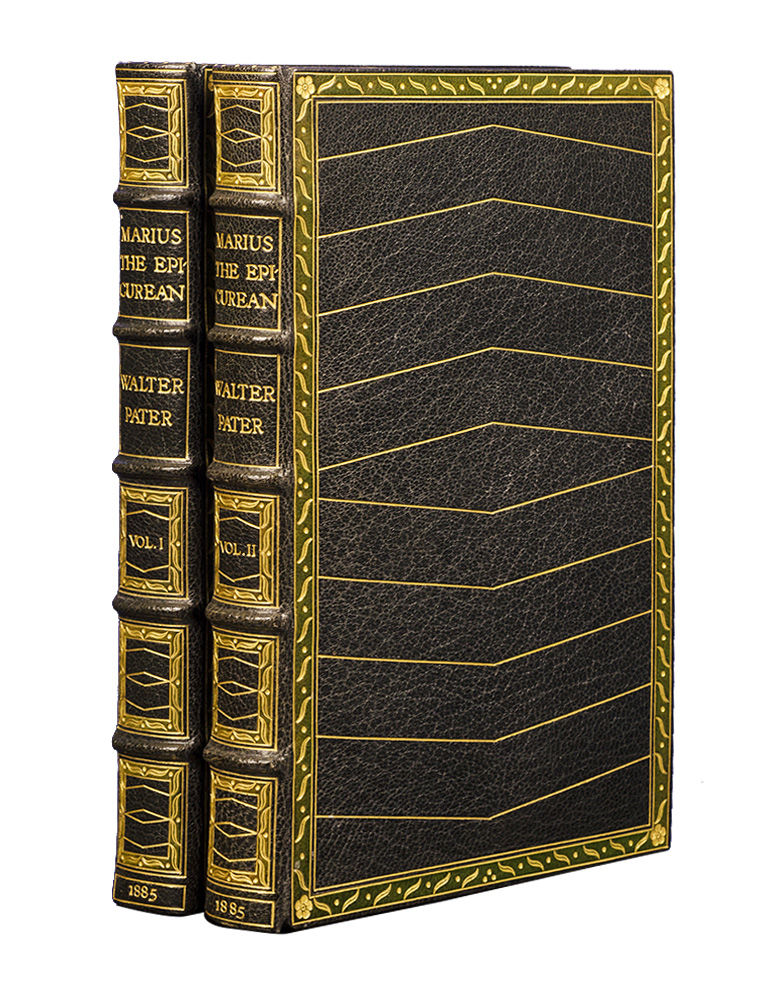
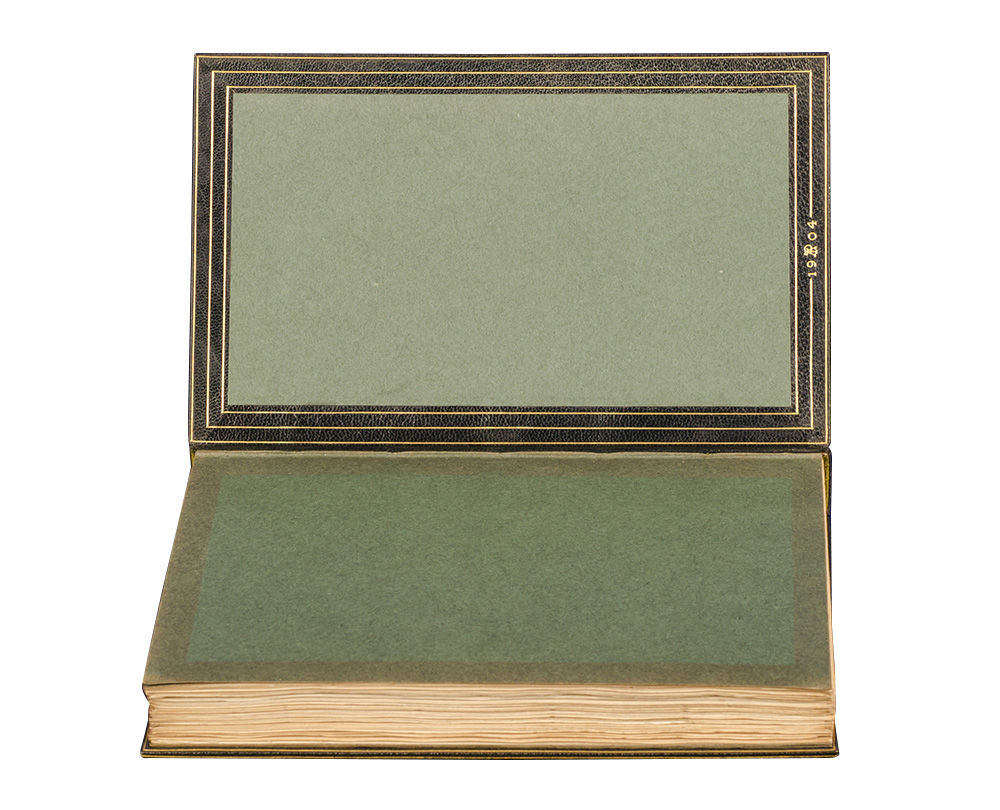
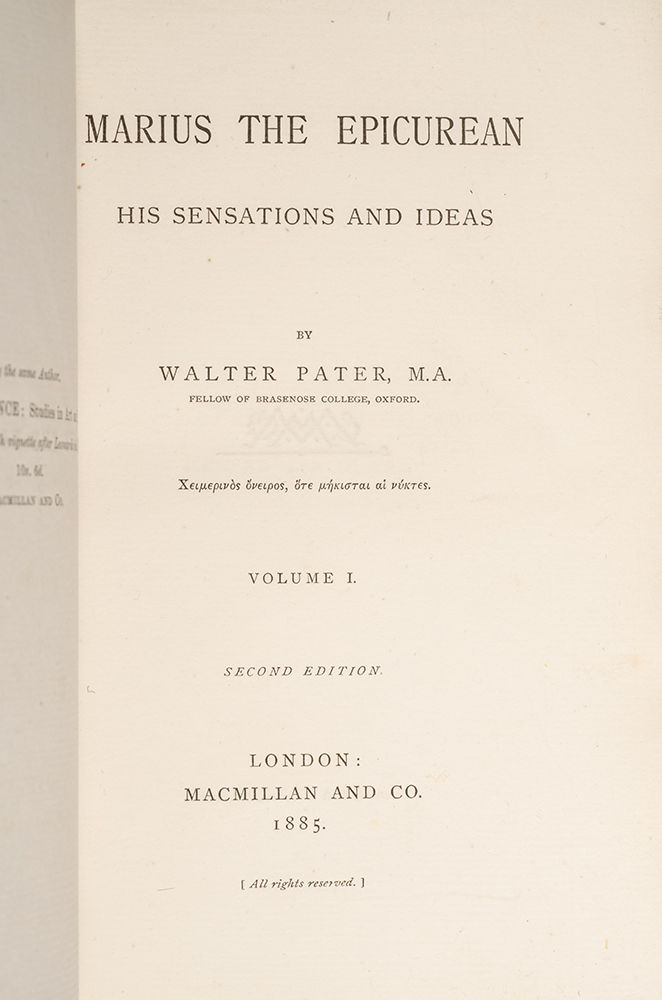
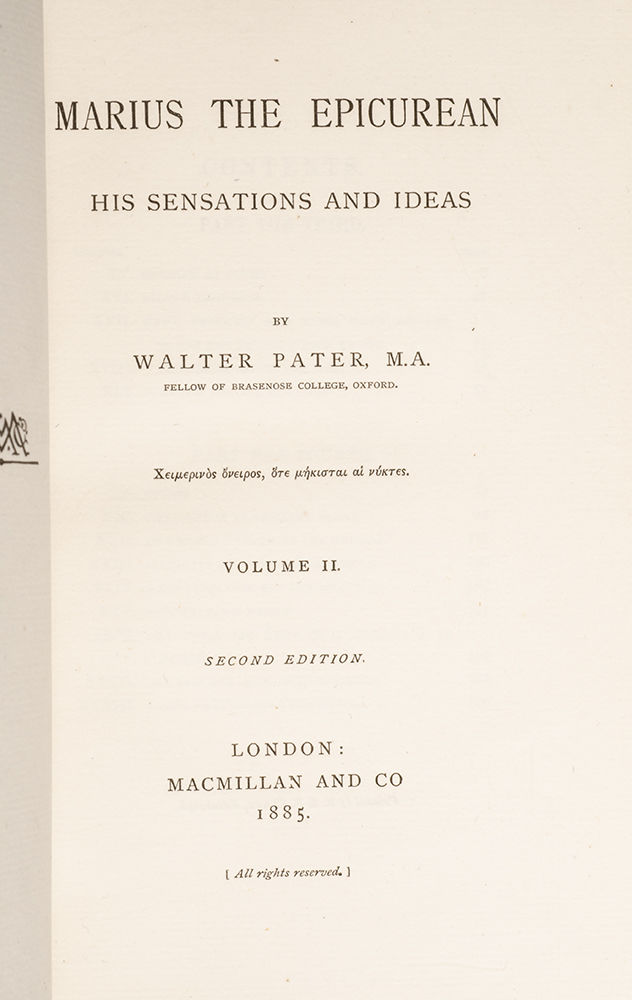
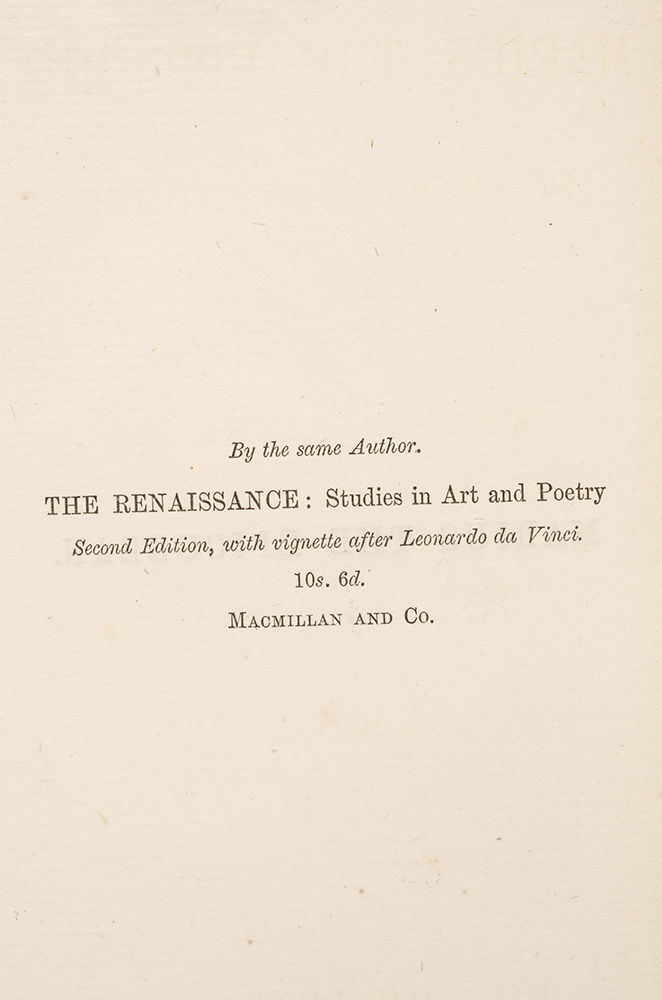
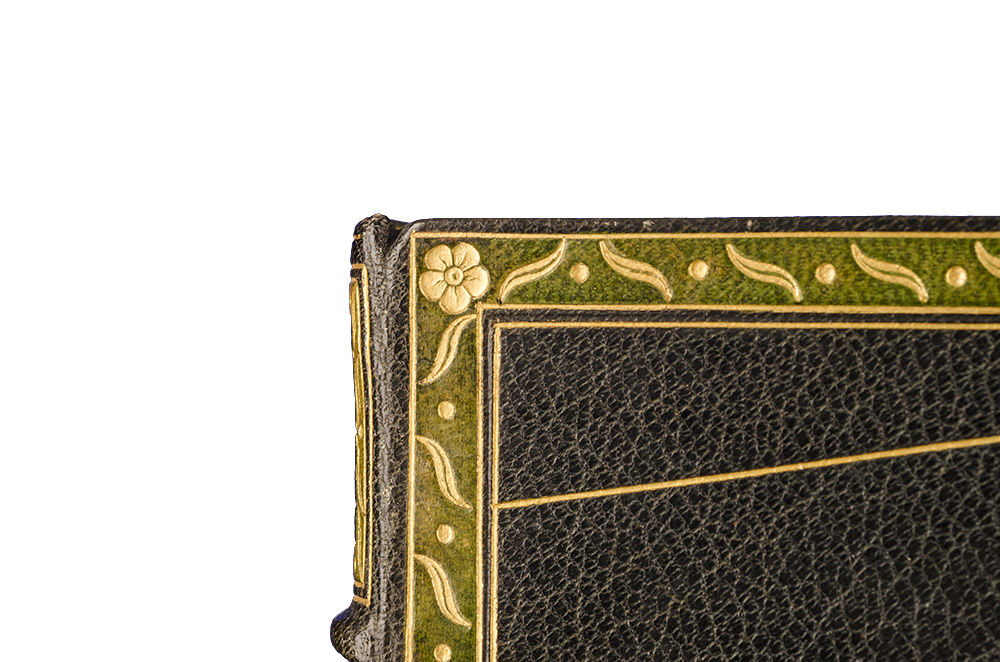
London: Macmillan, 1885. Second edition. Fine. Two octavo volumes (7 7/8 x 4 7/8 inches; 200 x 124 mm.). [1-11], 12-239, [1, blank]; [1-9], 10-218, pp. Bound by Alice Pattinson in 1904 stamp-signed in gilt "19 AP 04" on rear turn-ins. Crushed navy blue morocco, covers with matching designs on front and rear, featuring a symmetrical chevron-like design enclosed within an inlaid green morocco border at the edges of the covers richly decorated with gilt leaves, dots, and corner flowers. Spines with five raised bands, similarly decorated in gilt with olive morocco inlaid borders elaborately decorated and lettered in gilt in compartments. Gilt-ruled board edges and wide turn-ins triple-ruled in gilt, dark green paste-downs and endleaves, top edges gilt, others uncut. The bindings are in fine condition with absolutely no signs of wear.
Alice Pattinson, was a talented bookbinder active in the late-19th century. She trained with famous the binder Douglas Cockerell and alongside Katharine Adams and Florence Paget was involved with binding the Ashendene Press “Song of Songs” (1902). She ran a collaborative enterprise “all her later bindings were forwarded by her partner Else Hoffman, and finished by George Fisher, who at the time was one of the finest finishers in England. Fisher attended Douglas Cockerell’s evening classes at the Central School, and Cockerell introduced him to Pattinson just after he had finished his apprenticeship with Rivière’s. Pattinson made no secret of employing Fisher, although frequently her bindings were illustrated in catalogues and journals with no mention at all of who did the different parts of the work. Her bindings are signed with the monogram of her initials, similar to that of Annie Power, and are usually dated” (Tidcombe).
Walter Horatio Pater (1839-1894) was an “English critic, essayist, and humanist whose advocacy of “art for art’s sake” became a cardinal doctrine of the movement known as Aestheticism” (Britannica). His training in the classics, and work on Renaissance subjects and visual theory brought him into the circle of the Pre-Raphaelites. His only novel, Marius the Epicurean: his Sensations and Ideas (1885), uses its ancient Roman setting as a vehicle to speak to set forth Pater’s ideal spiritual, intellectual, and philosophical life. Told from the third-person point of view, Pater incorporates classical and early Christian sources into the text. Fine.
Alice Pattinson, was a talented bookbinder active in the late-19th century. She trained with famous the binder Douglas Cockerell and alongside Katharine Adams and Florence Paget was involved with binding the Ashendene Press “Song of Songs” (1902). She ran a collaborative enterprise “all her later bindings were forwarded by her partner Else Hoffman, and finished by George Fisher, who at the time was one of the finest finishers in England. Fisher attended Douglas Cockerell’s evening classes at the Central School, and Cockerell introduced him to Pattinson just after he had finished his apprenticeship with Rivière’s. Pattinson made no secret of employing Fisher, although frequently her bindings were illustrated in catalogues and journals with no mention at all of who did the different parts of the work. Her bindings are signed with the monogram of her initials, similar to that of Annie Power, and are usually dated” (Tidcombe).
Walter Horatio Pater (1839-1894) was an “English critic, essayist, and humanist whose advocacy of “art for art’s sake” became a cardinal doctrine of the movement known as Aestheticism” (Britannica). His training in the classics, and work on Renaissance subjects and visual theory brought him into the circle of the Pre-Raphaelites. His only novel, Marius the Epicurean: his Sensations and Ideas (1885), uses its ancient Roman setting as a vehicle to speak to set forth Pater’s ideal spiritual, intellectual, and philosophical life. Told from the third-person point of view, Pater incorporates classical and early Christian sources into the text. Fine.