

Marie Antoinette
- London: Arthur L. Humphreys, 1905
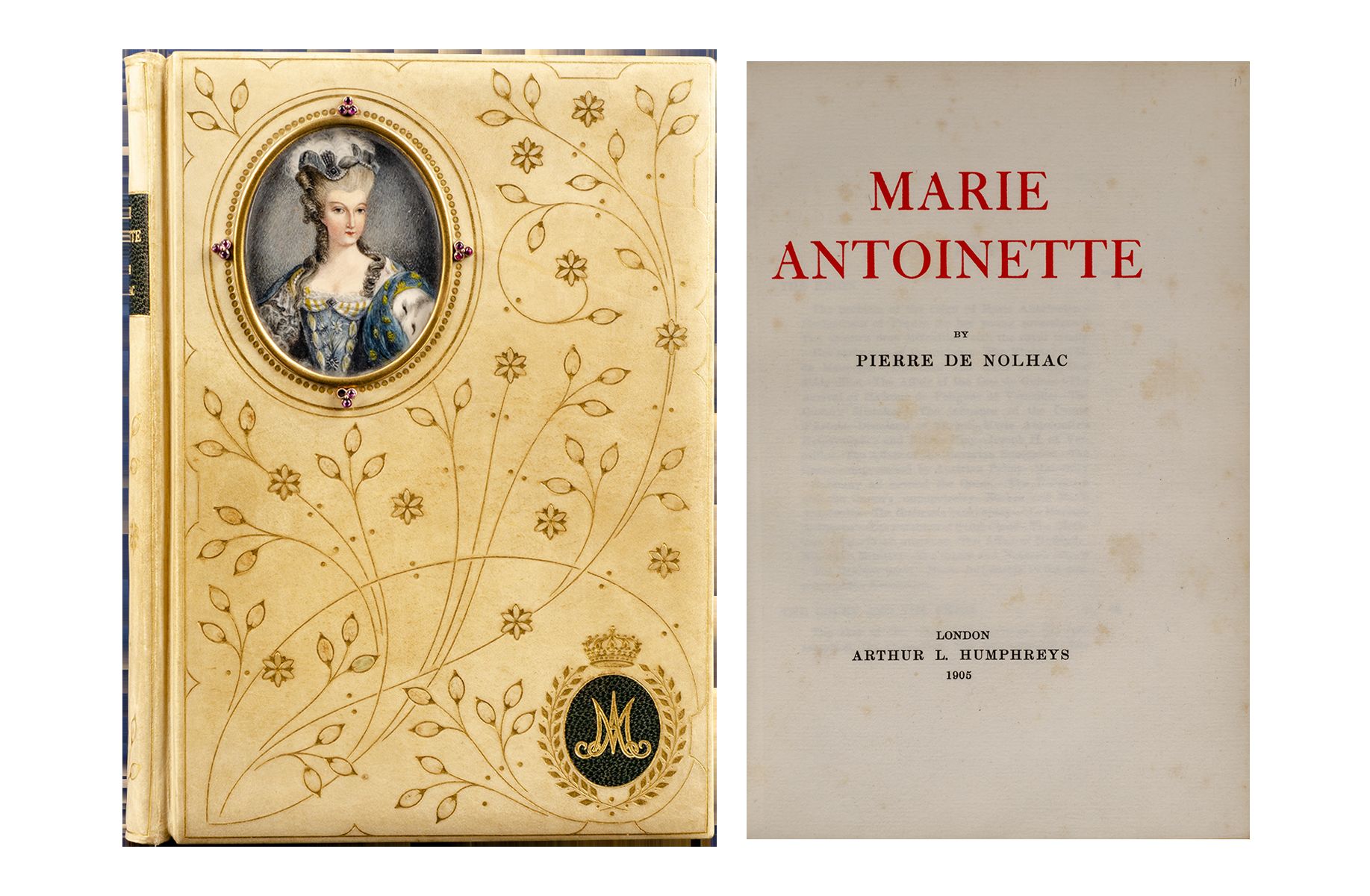
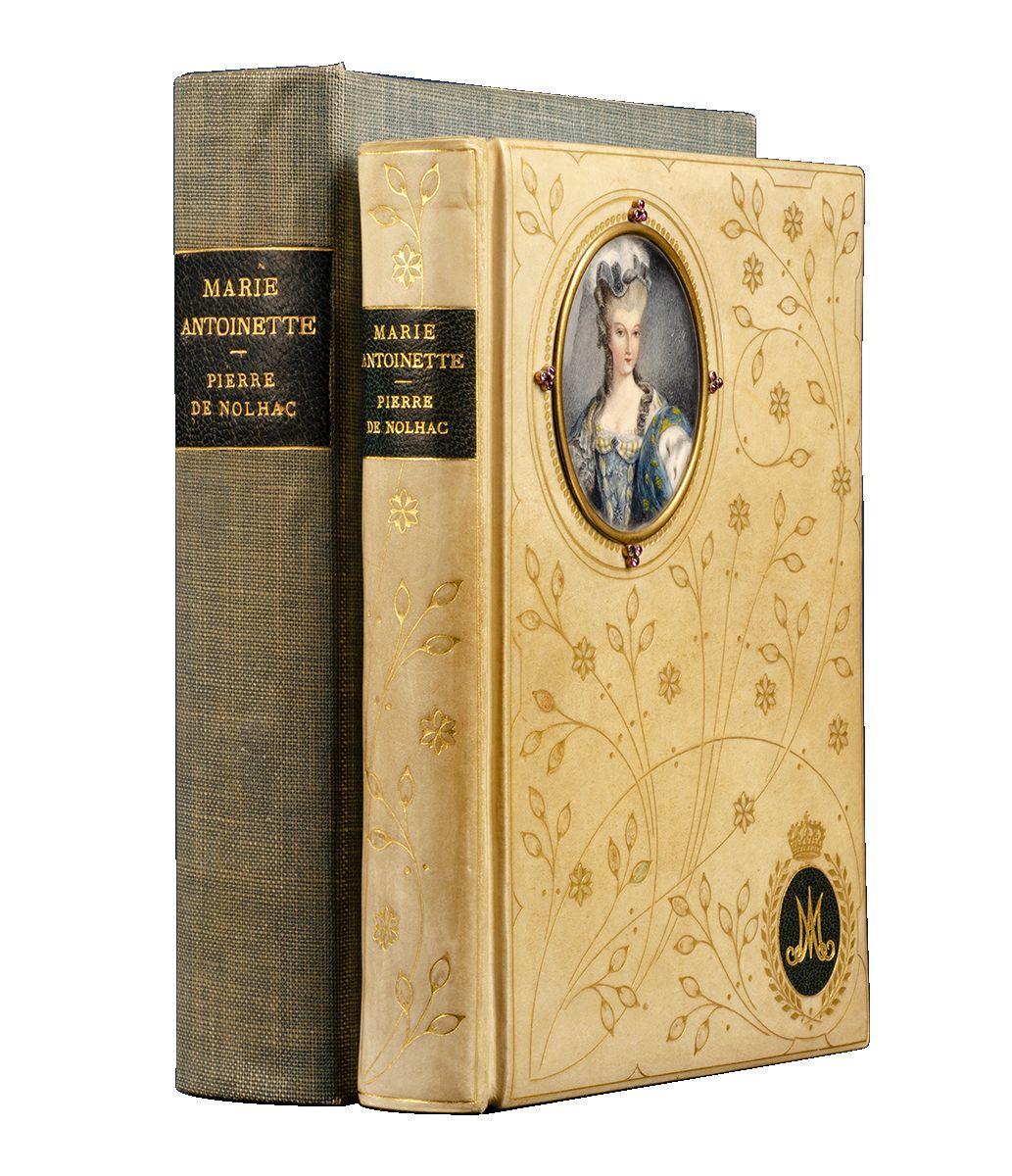
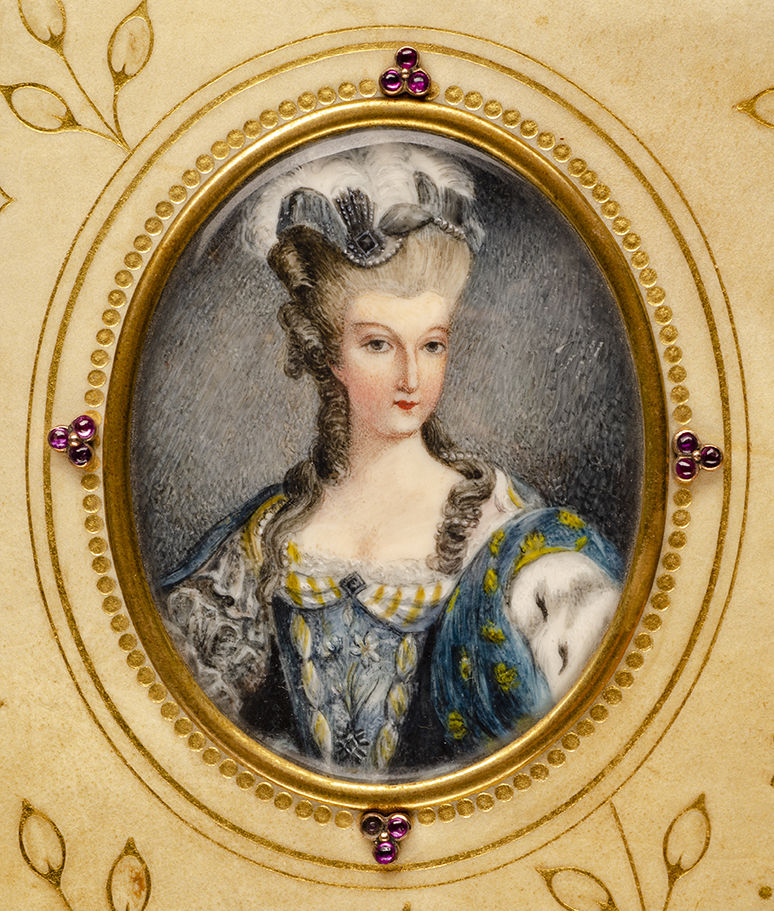
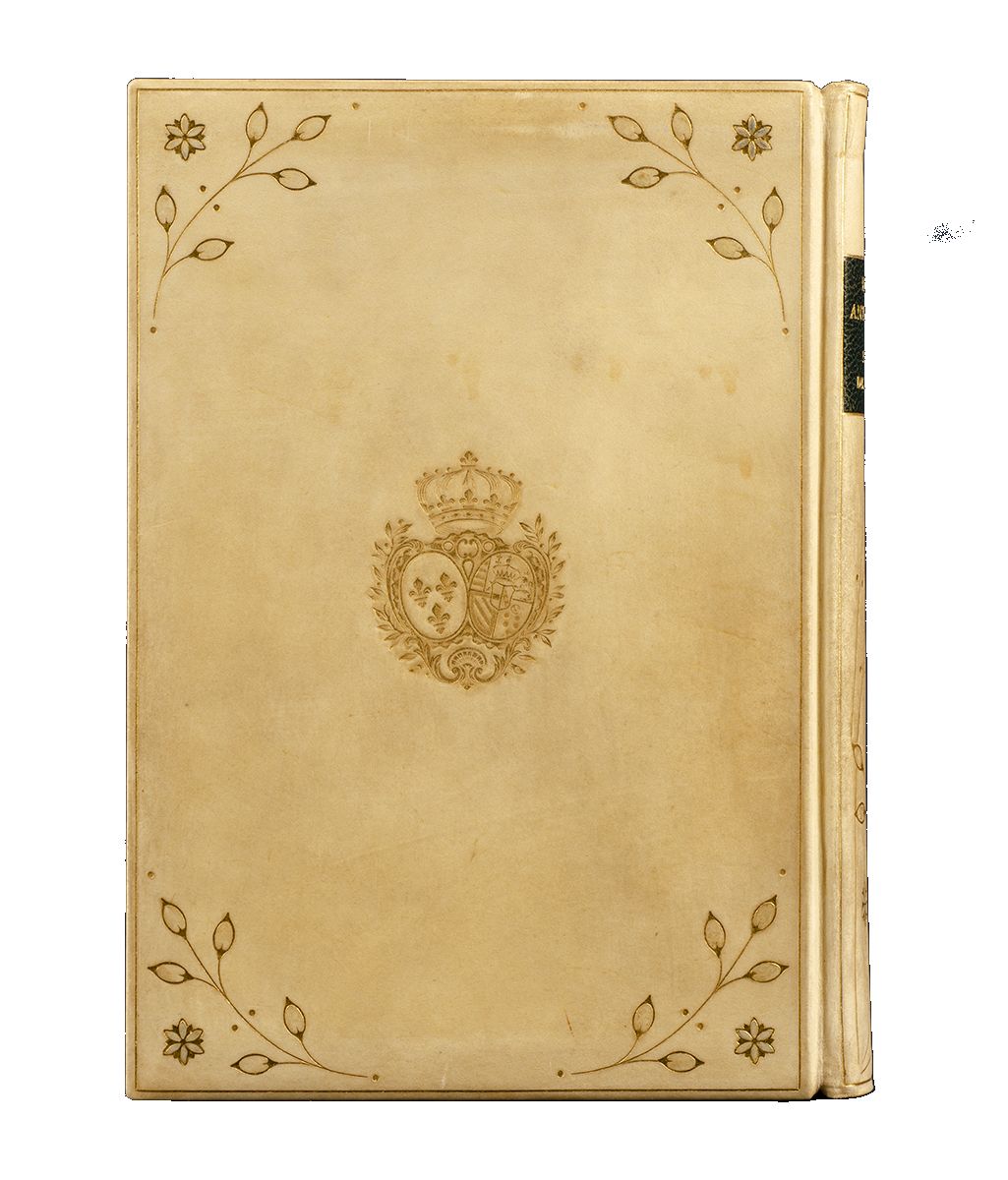
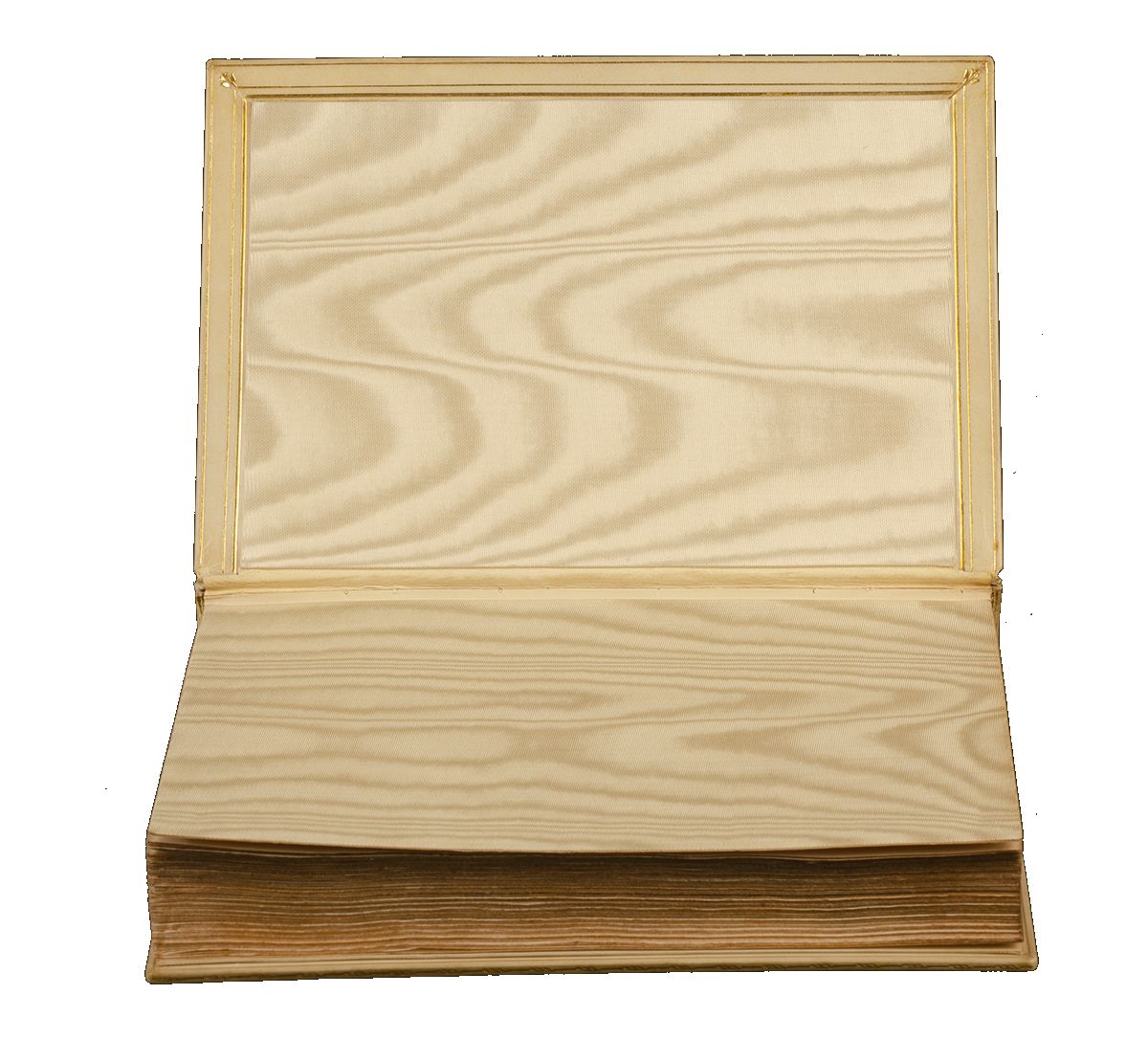
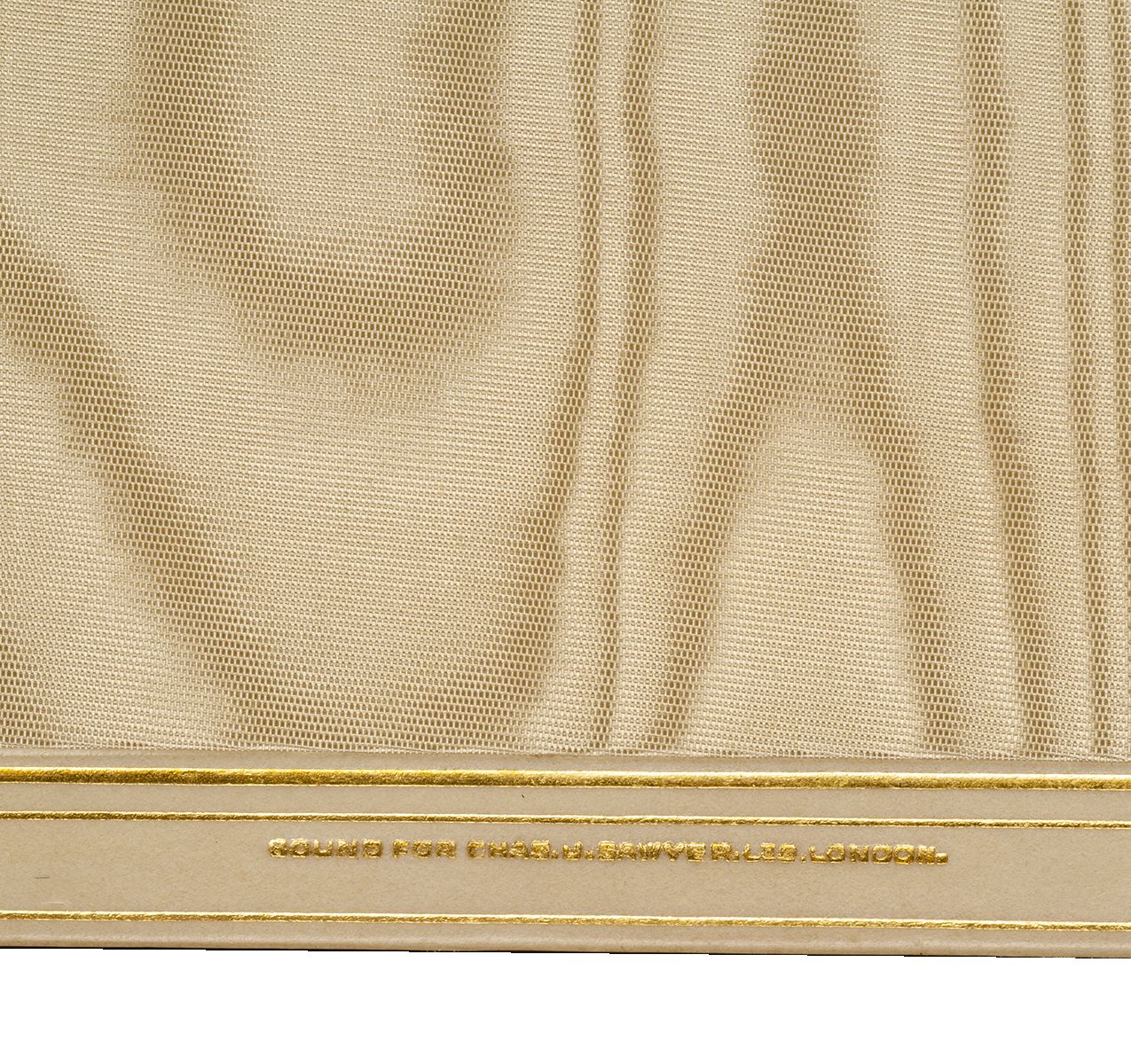
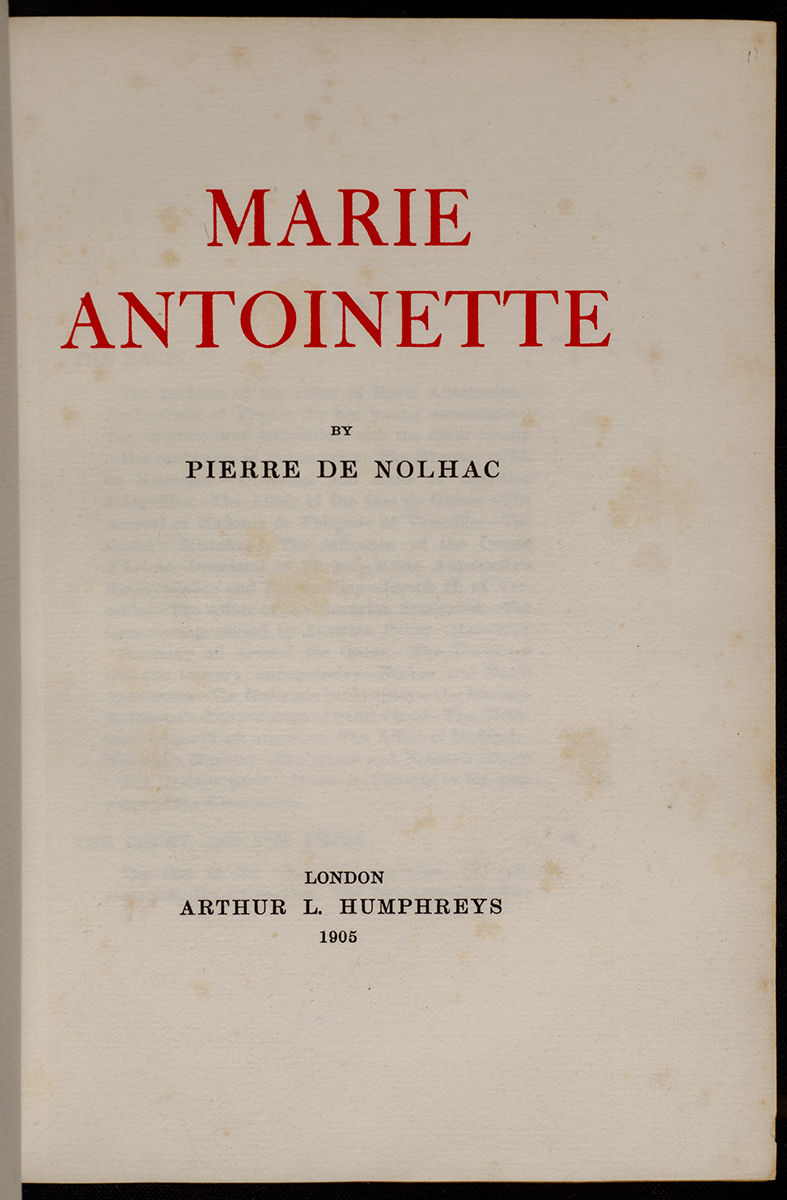
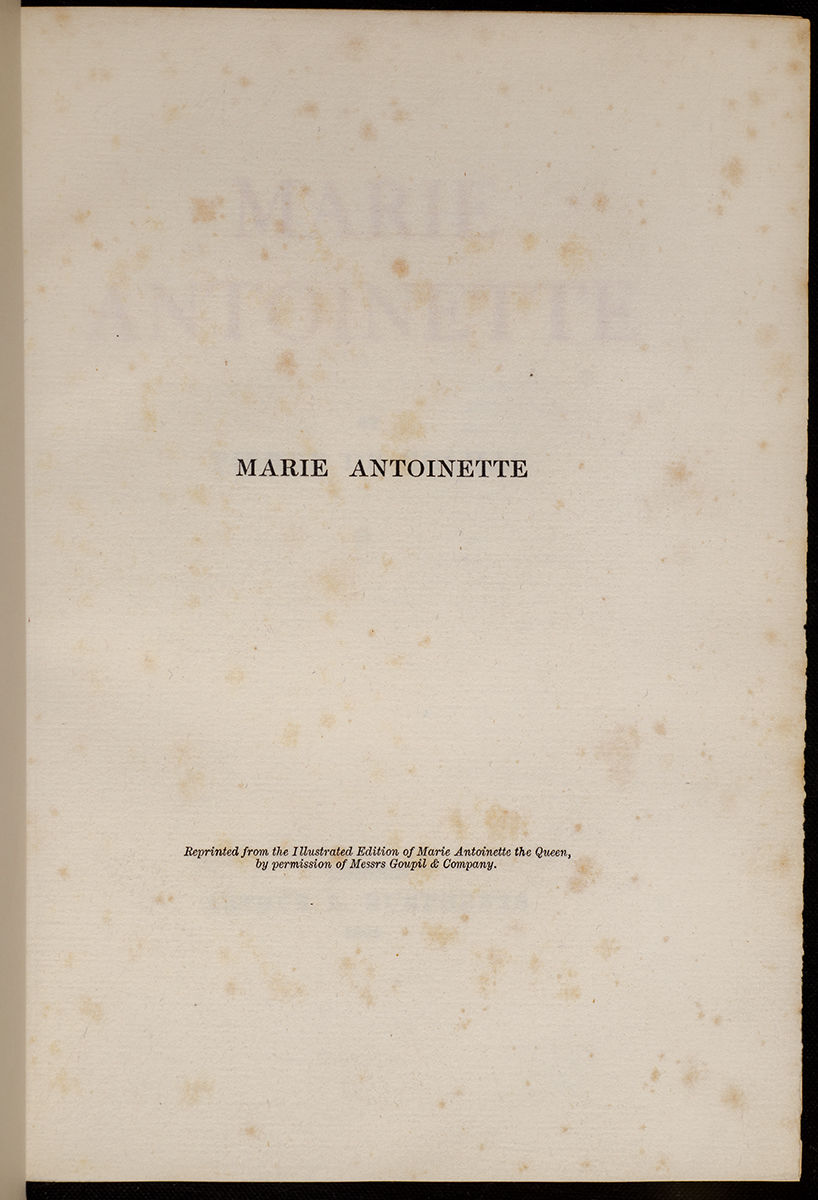
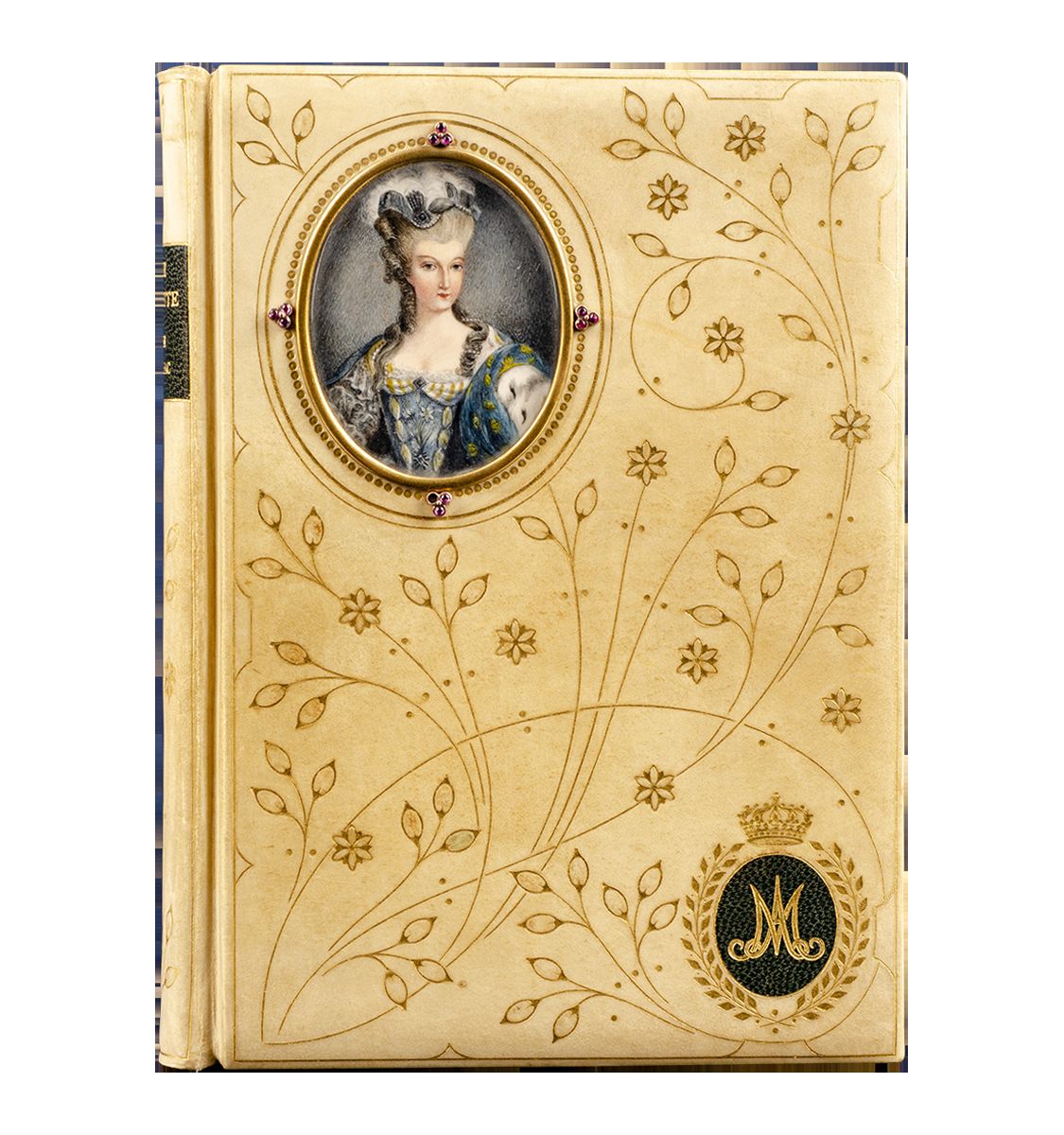
London: Arthur L. Humphreys, 1905. Later printing. Fine. A Fine copy. Octavo (8 1/8 x 5 3/4 inches; 208 x 146 mm.). [viii], 268 pp. Title-page printed in red & black. A most unusual Cosway-Style Binding ca. 1920 believed to be by Cedric Chivers for the London Bookseller Chas. J. Sawyer, stamp signed in gilt on rear turn-in. Full vellum over beveled boards, front cover richly decorated with a swirling floral gilt design with the flowers hand painted in red and green (colors faded). In the lower right-hand corner is an oval inlay of black morocco with the monogram of Marie Antoinette in gilt surrounded by leaves and the Queen's crown in gilt. At the top left-hand corner is a very fine hand-painted portrait miniature of Marie Antoinette, set under glass within a gilt metal frame surrounded by gilt dots and four sets of three red semi-precious stones (one stone missing). The rear cover with a similar floral design and the arms of Marie Antoinette in gilt. Smooth spine with similar gilt floral design, black morocco label lettered in gilt. Decorative gilt board edges and turn-ins, cream watered silk liners and endleaves, all edges rough gilt. Housed in the original velvet-lined blue buckram clamshell case, spine with black morocco label lettered in gilt.
Marie-Antoinette (1755-1793) was the infamous last queen of France before the French Revolution. The youngest daughter of Empress Maria Theresa and Emperor Francis I, the archduchess of Austria became dauphine of France in May 1770 at age 14 upon her marriage to the Dauphin Louis-Auguste (the future King Louis XVI). Celebrated and criticized for her extravagant fashion (among many other things), her life continues to fascinate.
An unusual Cosway-Style binding, apparently by Cedric Chivers; an exciting addition to his usual style. Patented in 1898, Chivers’s “vellucent” bindings departed from traditional methods of creating hand-painted vellum bindings. The usual approach was to merely bind a book in vellum and then paint on a design, but this is prone to rubbing and flaking and such examples are often now found chipped and deteriorated. In the 18th century Chivers’s great predecessor, Edwards of Halifax, painted in reverse on the underside of translucent vellum, thereby providing a layer of protection for the design. His technique was not widely copied and almost vanished with his death, and it was not until the 1890s that Chivers developed his own similar method for protecting the design underneath the vellum itself - the backing sheet of the vellum was painted, which was then covered in vellum which had been shaved to transparency. The vellum was then tooled in gilt, on occasion incorporating additional mother-of-pearl and onlays. The books which Chivers thus bound have always been a favorite of collectors, and usually still present well, the vellum having served its purpose of protecting the design for many decades, as Chivers intended. Chivers was also known to have employed a great many craftswomen at his bindery in Portway: “forty women for folding, sewing, mending, and collating work, and in addition, five more women worked in a separate department, to design, illuminate, and colour vellum for book decoration, and to work on embossed leather. These five were Dorothy Carleton Smyth, Alice Shepherd, Miss J.D. Dunn, Muriel Taylor, and Agatha Gales” (Tidcombe).
Chas J. Sawyer (1906-1990) was a London bookselling firm specializing in the finest books. It is most likely that they supplied the miniature to Cedric Chivers when placing the binding order Although named after the English miniaturist Richard Cosway (1742-1821), the desirable “Cosway Binding” with its jewel-like portrait miniature set into a fine binding was first developed at the turn of the century by J.H. Stonehouse, director of London’s Henry Sotheran Booksellers. Their miniatures were painstakingly crafted by the talented painter Miss C. B. Currie (1849-1940). As the style grew in popularity, other publishing houses quickly began to reproduce this technique—each developing their own desirable take on the aesthetic—referred to as “Cosway style.” The quality of the miniature is quite superb. Fine.
Marie-Antoinette (1755-1793) was the infamous last queen of France before the French Revolution. The youngest daughter of Empress Maria Theresa and Emperor Francis I, the archduchess of Austria became dauphine of France in May 1770 at age 14 upon her marriage to the Dauphin Louis-Auguste (the future King Louis XVI). Celebrated and criticized for her extravagant fashion (among many other things), her life continues to fascinate.
An unusual Cosway-Style binding, apparently by Cedric Chivers; an exciting addition to his usual style. Patented in 1898, Chivers’s “vellucent” bindings departed from traditional methods of creating hand-painted vellum bindings. The usual approach was to merely bind a book in vellum and then paint on a design, but this is prone to rubbing and flaking and such examples are often now found chipped and deteriorated. In the 18th century Chivers’s great predecessor, Edwards of Halifax, painted in reverse on the underside of translucent vellum, thereby providing a layer of protection for the design. His technique was not widely copied and almost vanished with his death, and it was not until the 1890s that Chivers developed his own similar method for protecting the design underneath the vellum itself - the backing sheet of the vellum was painted, which was then covered in vellum which had been shaved to transparency. The vellum was then tooled in gilt, on occasion incorporating additional mother-of-pearl and onlays. The books which Chivers thus bound have always been a favorite of collectors, and usually still present well, the vellum having served its purpose of protecting the design for many decades, as Chivers intended. Chivers was also known to have employed a great many craftswomen at his bindery in Portway: “forty women for folding, sewing, mending, and collating work, and in addition, five more women worked in a separate department, to design, illuminate, and colour vellum for book decoration, and to work on embossed leather. These five were Dorothy Carleton Smyth, Alice Shepherd, Miss J.D. Dunn, Muriel Taylor, and Agatha Gales” (Tidcombe).
Chas J. Sawyer (1906-1990) was a London bookselling firm specializing in the finest books. It is most likely that they supplied the miniature to Cedric Chivers when placing the binding order Although named after the English miniaturist Richard Cosway (1742-1821), the desirable “Cosway Binding” with its jewel-like portrait miniature set into a fine binding was first developed at the turn of the century by J.H. Stonehouse, director of London’s Henry Sotheran Booksellers. Their miniatures were painstakingly crafted by the talented painter Miss C. B. Currie (1849-1940). As the style grew in popularity, other publishing houses quickly began to reproduce this technique—each developing their own desirable take on the aesthetic—referred to as “Cosway style.” The quality of the miniature is quite superb. Fine.