

The Pied Piper of Hamelin (Signed limited edition)
- SIGNED
- London: George G. Harrap & Co, 1934
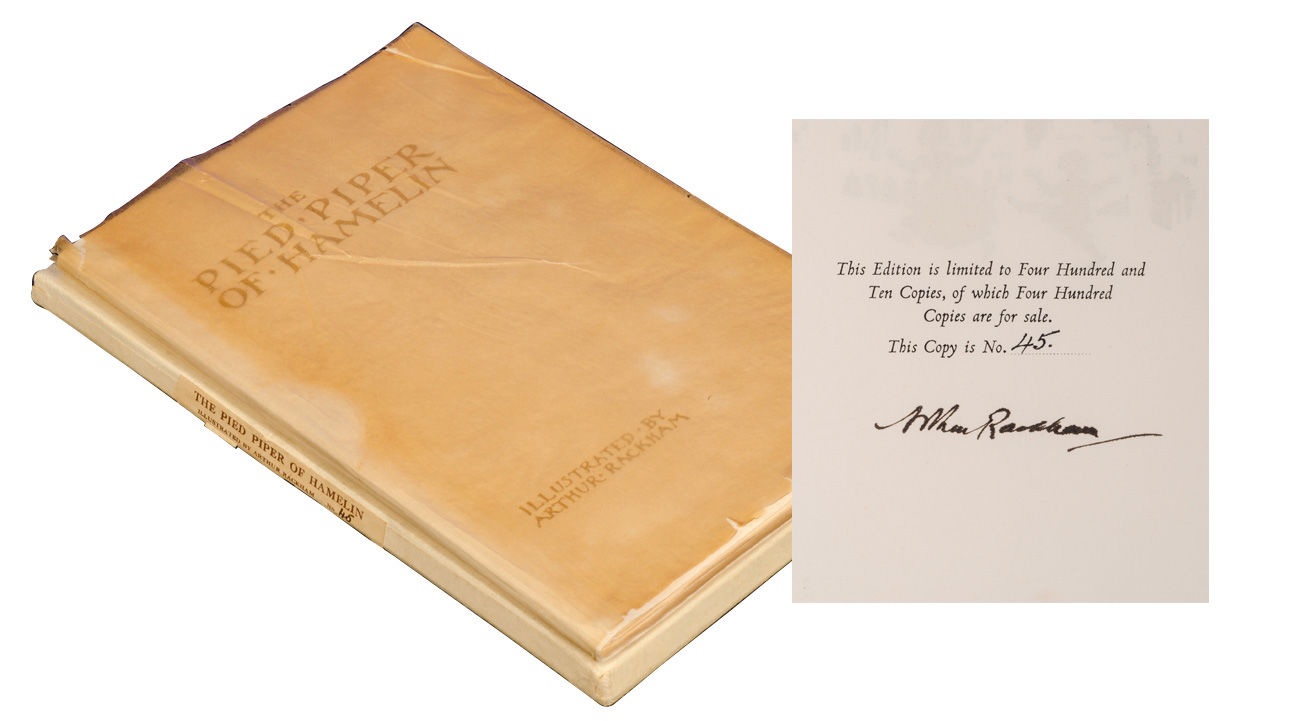
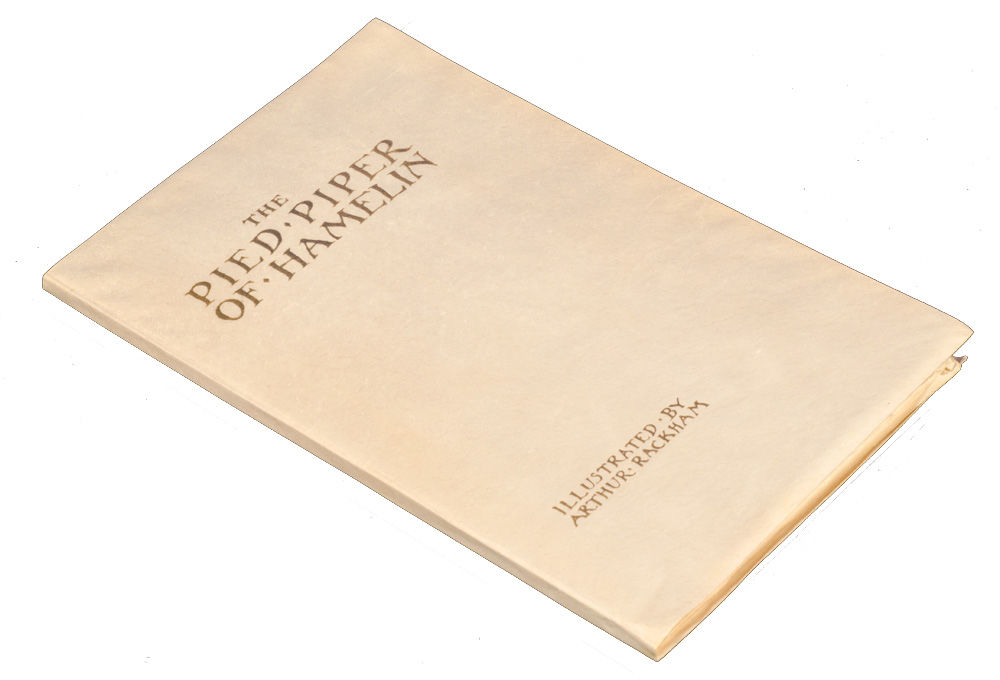
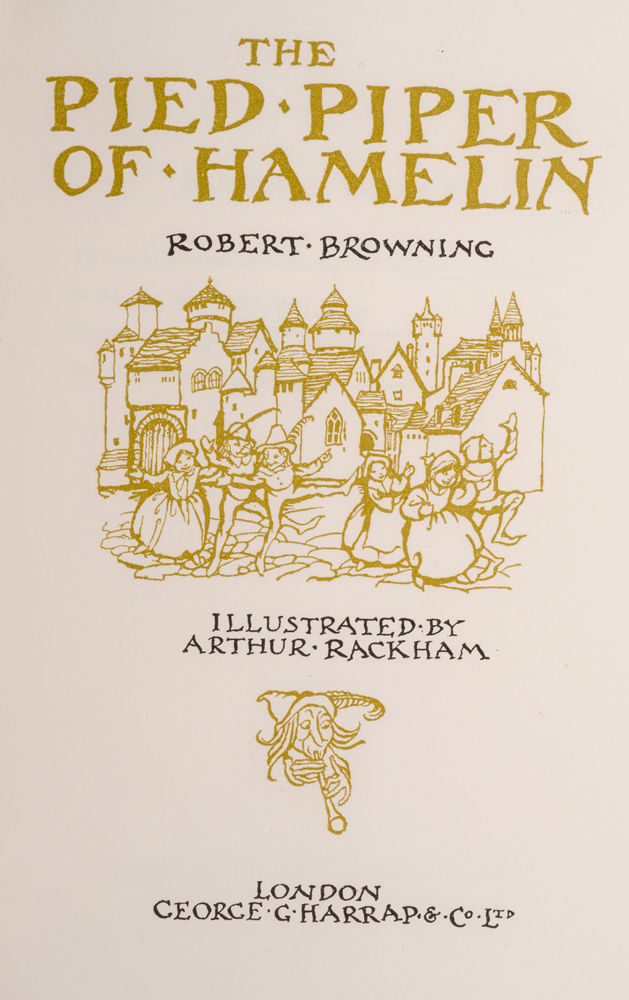
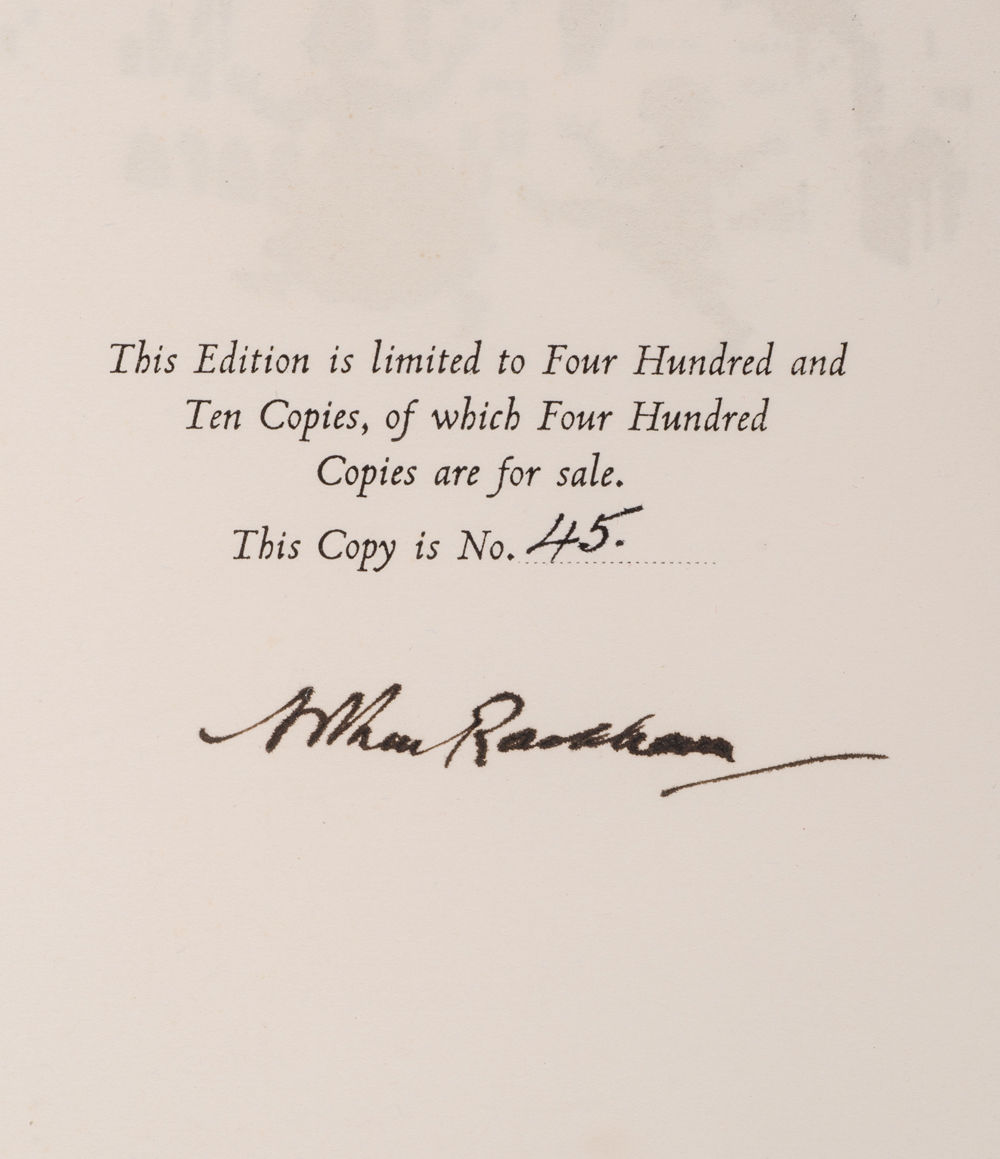
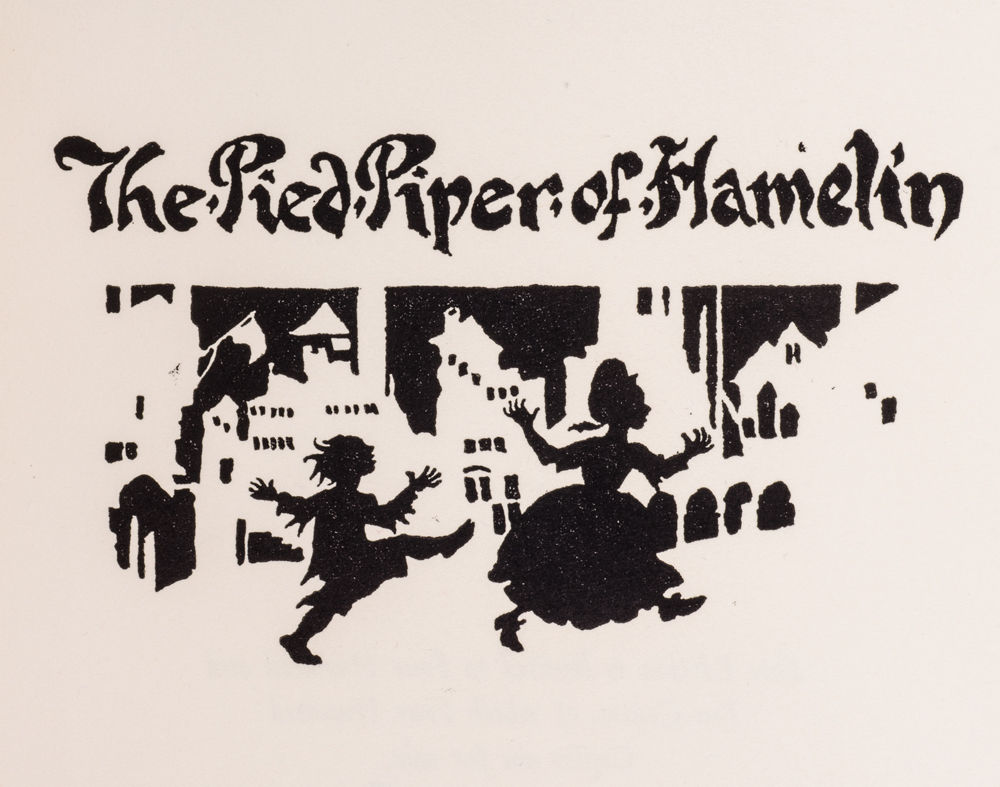
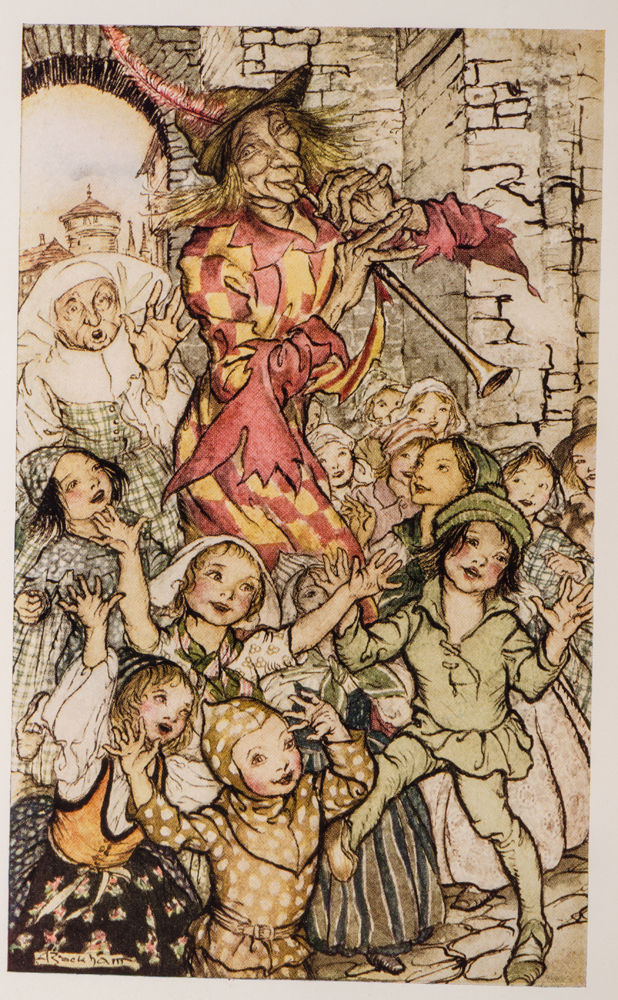
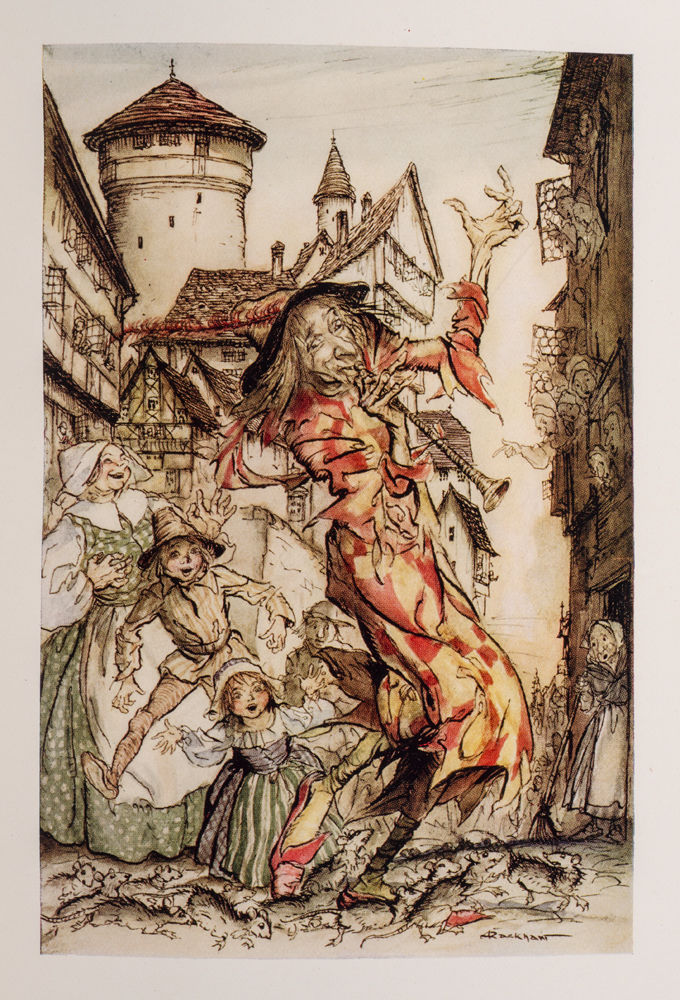
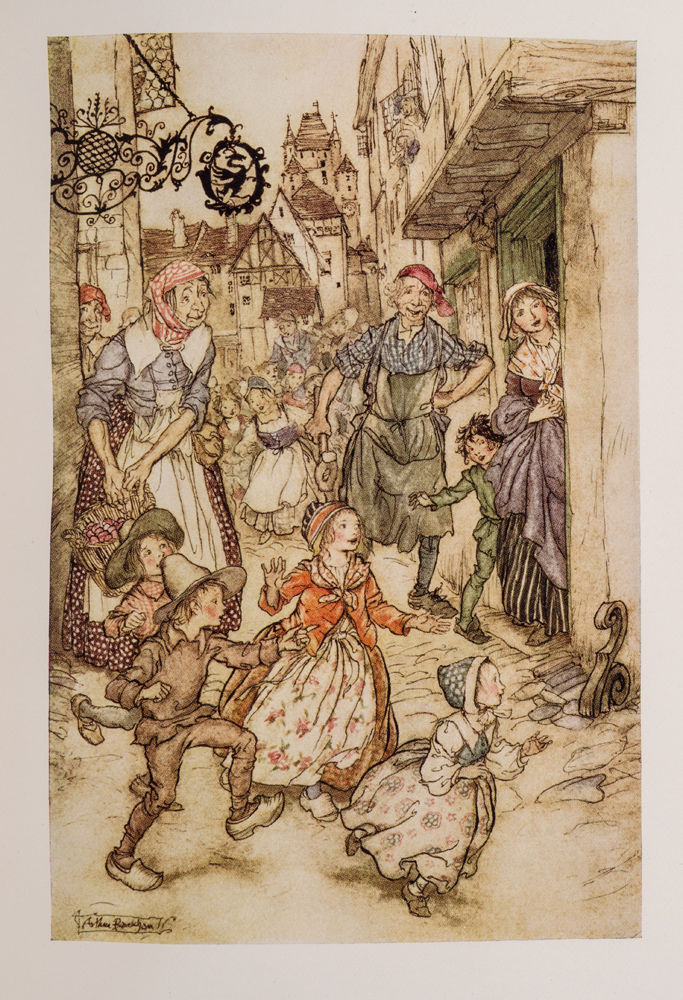
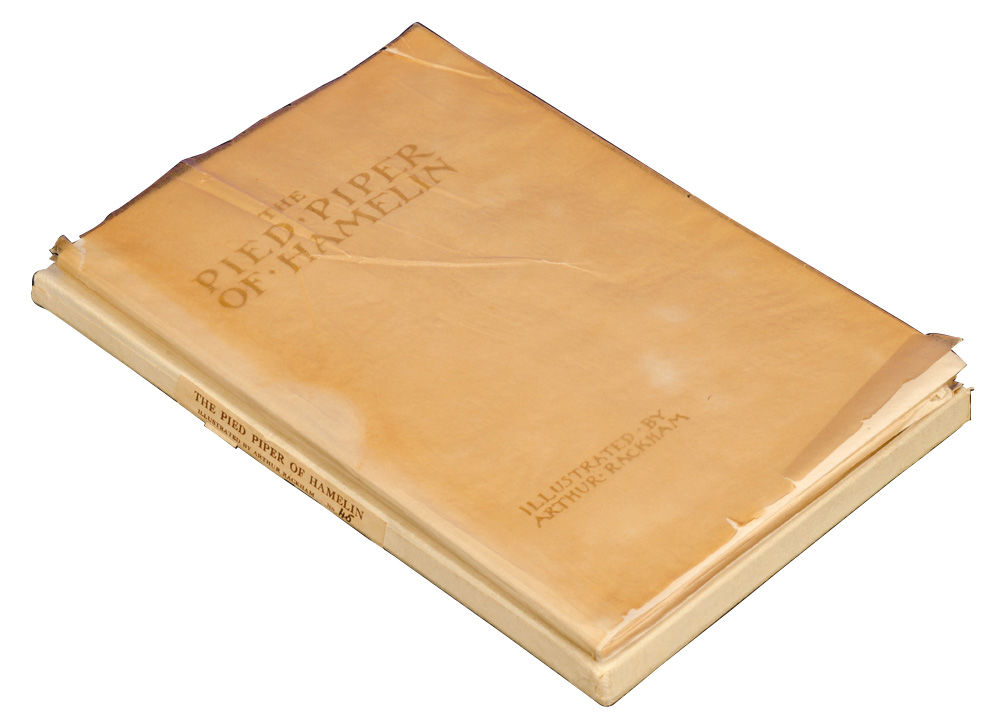
London: George G. Harrap & Co, 1934. First thus. Fine/Near Fine. Edition deluxe, number 45 of 410 copies, signed by Arthur Rackham. A Fine copy in nearly Fine dust jacket. Octavo (9 1/8 x 6 inches; 232 x 152 mm.). 44, [1], [3, blank] pp. Four color plates and fourteen drawings in black and white (including one double-page). Original full limp vellum lettered in gilt on front cover with the publisher's original glassine wrapper (with a just a few small chips at edges). Top edge gilt. In the original publisher’s cardboard slipcase with matching limitation number on spine.
Victorian poet Robert Browning's interpretation of this German legend meets its visual counterpart in Arthur Rackham's illustrations. In this medieval cautionary tale, the Pied Pieper uses song to lead rats away from towns, but when local townspeople refuse to pay him, the Pied Pieper takes revenge and uses his magical pipe to lead the town's children to their demise (although the children's fate varies depending on the telling).
Arthur Rackham (1867-1939) is perhaps the most acclaimed and influential illustrator of the Golden Age of Illustration. A prolific artist even from his youth, Rackham got his start as an illustrator working for the Westminster Budget Newspaper (1892). Over the next few years, he took on more and more commissions for children’s books, hitting his career high in the first three decades of the twentieth century. Rackham turned his imaginative pen to every classic—from Shakespeare to Dickens to Poe.
Latimore and Haskell, p. 71. Riall, p. 186. Fine in Near Fine dust jacket.
Victorian poet Robert Browning's interpretation of this German legend meets its visual counterpart in Arthur Rackham's illustrations. In this medieval cautionary tale, the Pied Pieper uses song to lead rats away from towns, but when local townspeople refuse to pay him, the Pied Pieper takes revenge and uses his magical pipe to lead the town's children to their demise (although the children's fate varies depending on the telling).
Arthur Rackham (1867-1939) is perhaps the most acclaimed and influential illustrator of the Golden Age of Illustration. A prolific artist even from his youth, Rackham got his start as an illustrator working for the Westminster Budget Newspaper (1892). Over the next few years, he took on more and more commissions for children’s books, hitting his career high in the first three decades of the twentieth century. Rackham turned his imaginative pen to every classic—from Shakespeare to Dickens to Poe.
Latimore and Haskell, p. 71. Riall, p. 186. Fine in Near Fine dust jacket.