

The Wind in the Willows (Signed limited edition)
- SIGNED
- New York: The Limited Editions Club, 1940
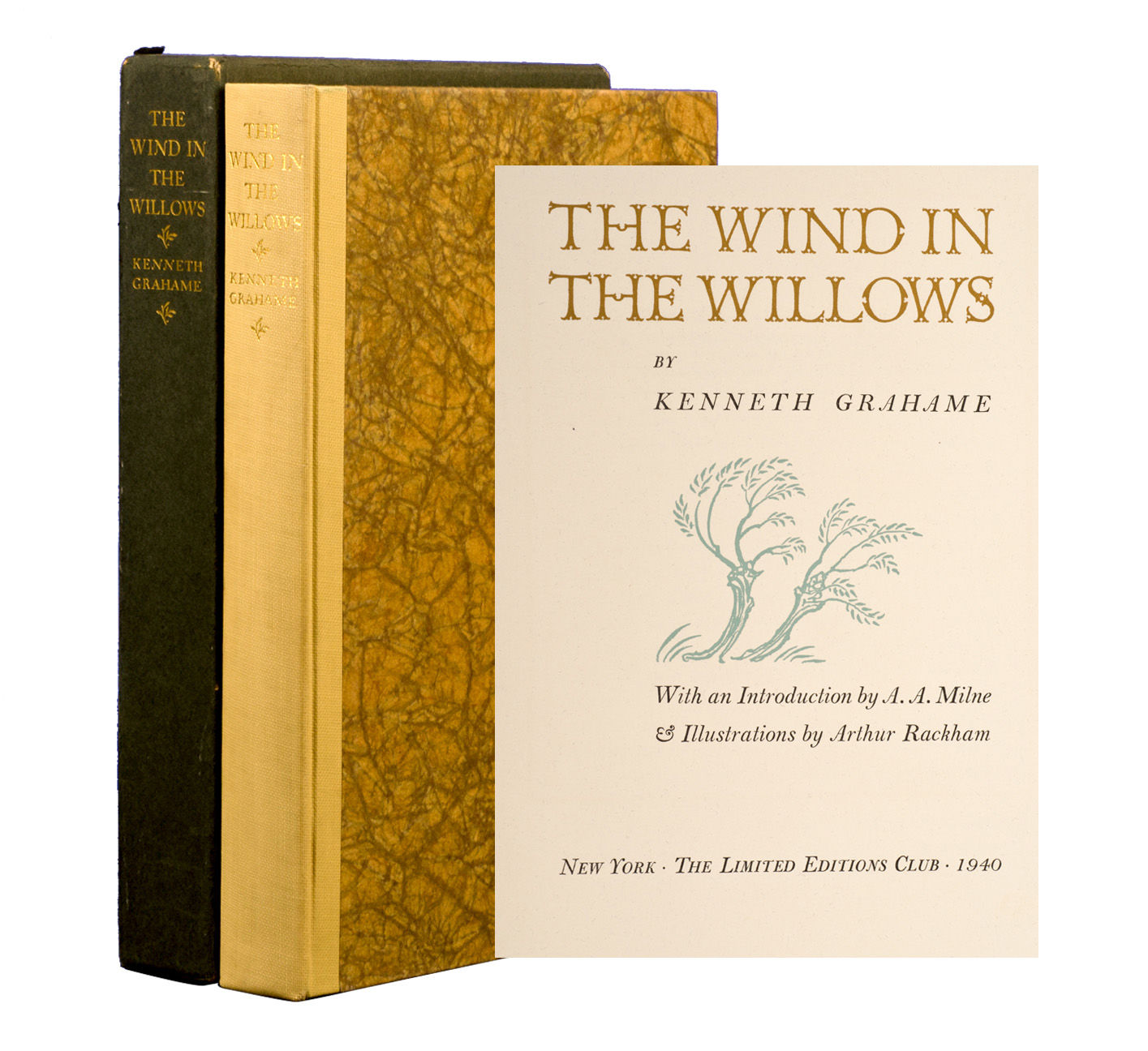
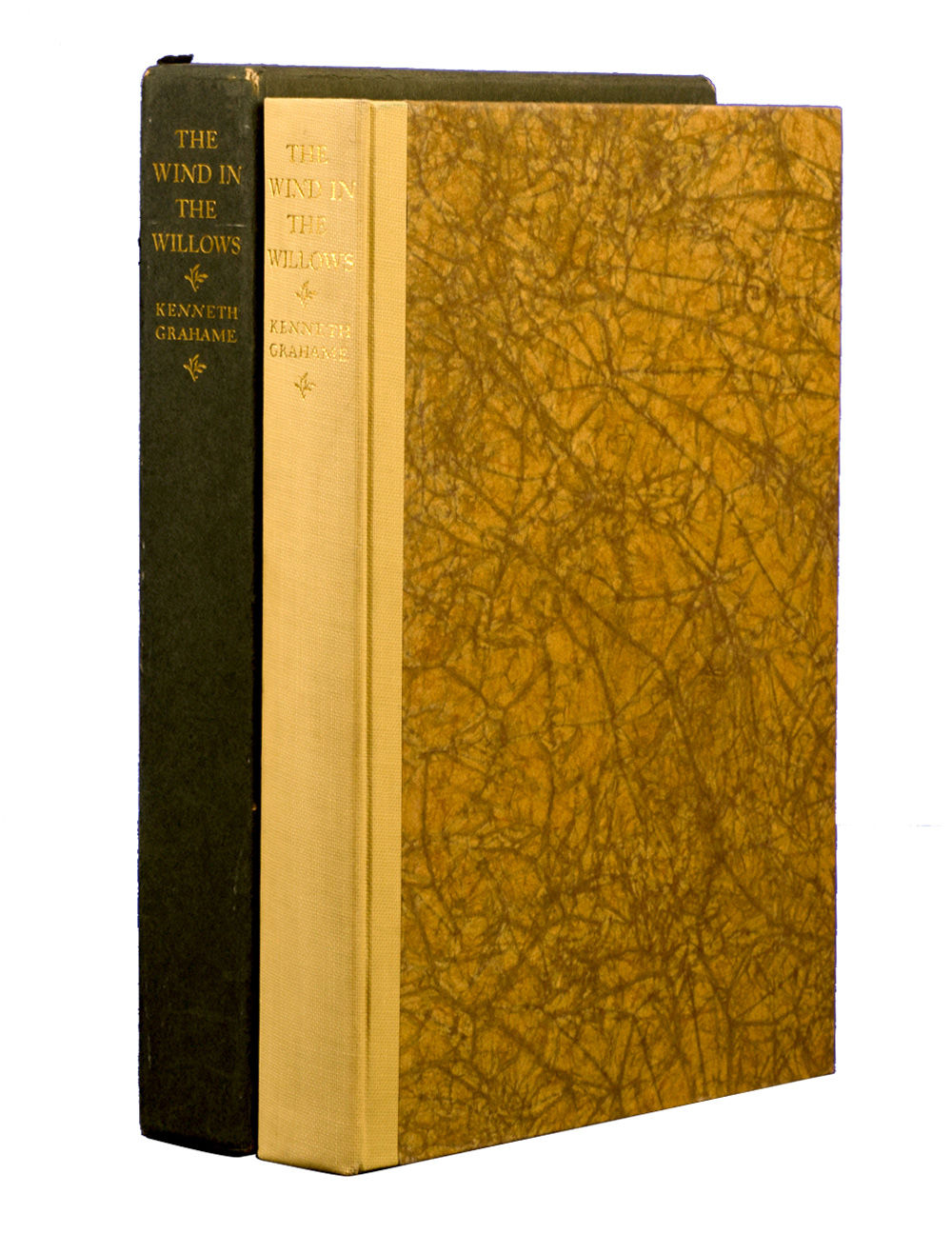
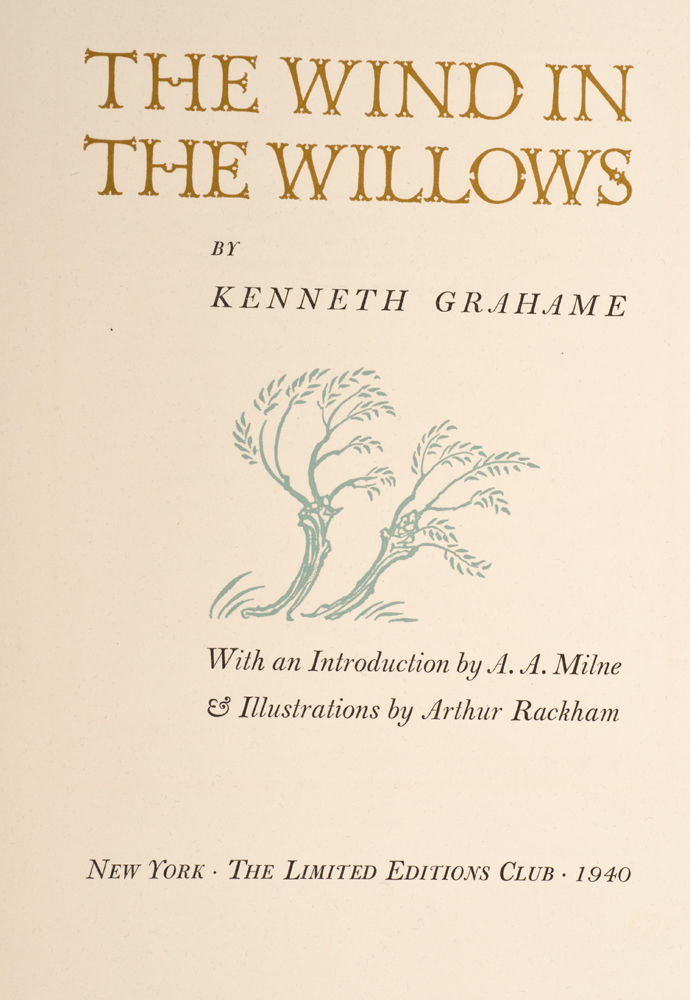
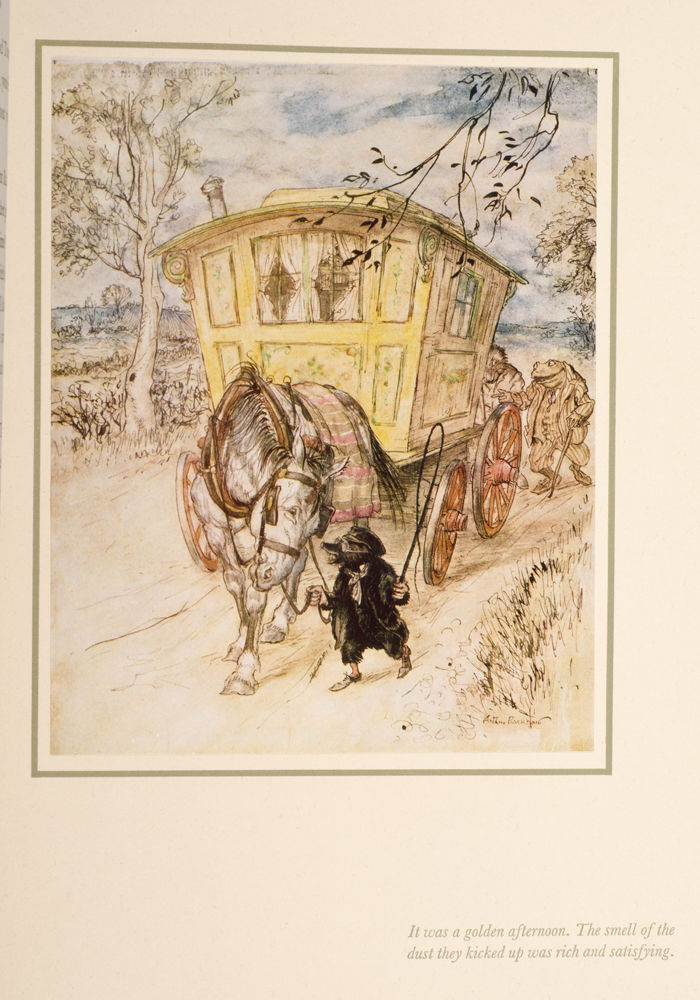
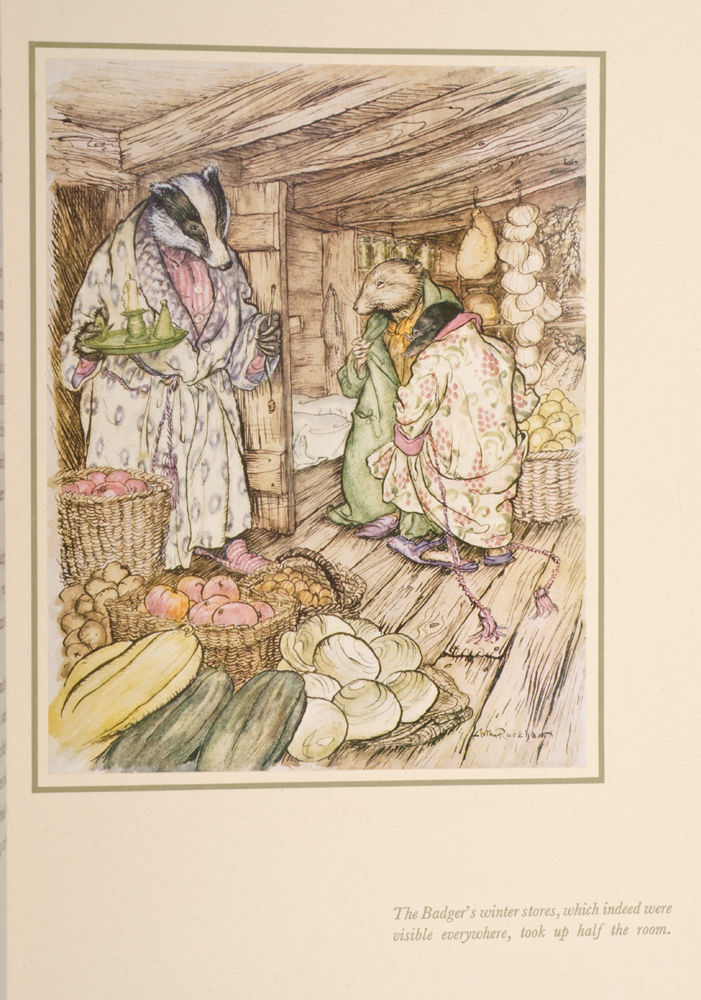
New York: The Limited Editions Club, 1940. First thus. Limited to 2,020 numbered copies (this copy being No. 1315), signed by the designer, Bruce Rogers. A very fine, partially uncut copy. Quarto (11 3/8 x 8 1/8 inches; 289 x 207 mm.). [2], 244, [2] pp. Sixteen mounted color plates. Original quarter pale yellow buckram over patterned paper boards. Spine lettered in gilt. Top edge gilt, others uncut. In the original publisher’s olive green cardboard slipcase.
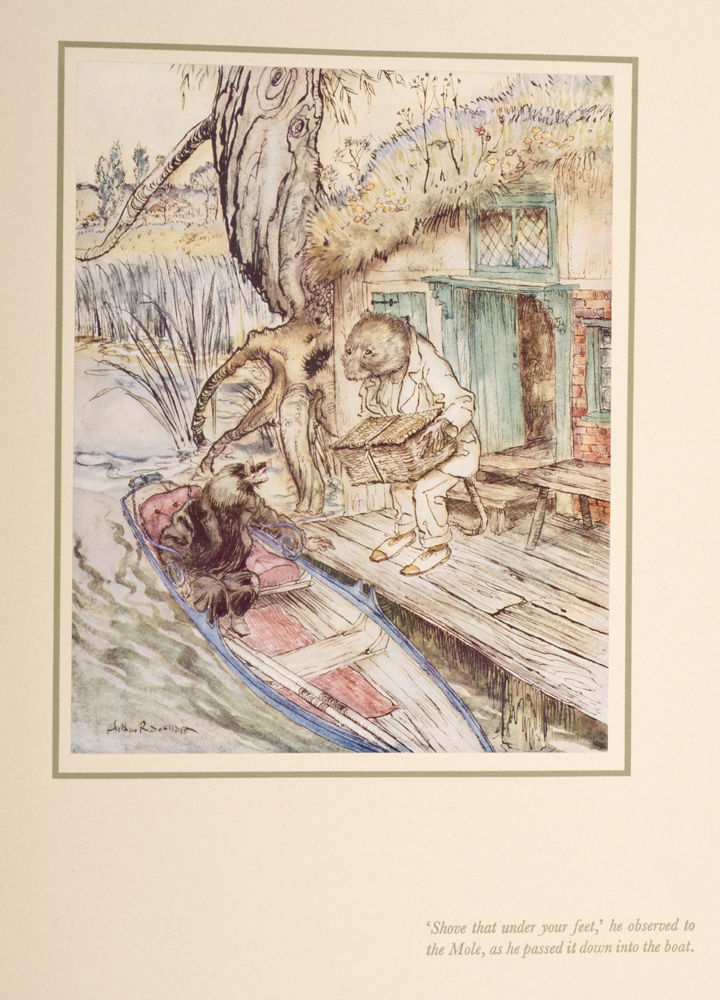
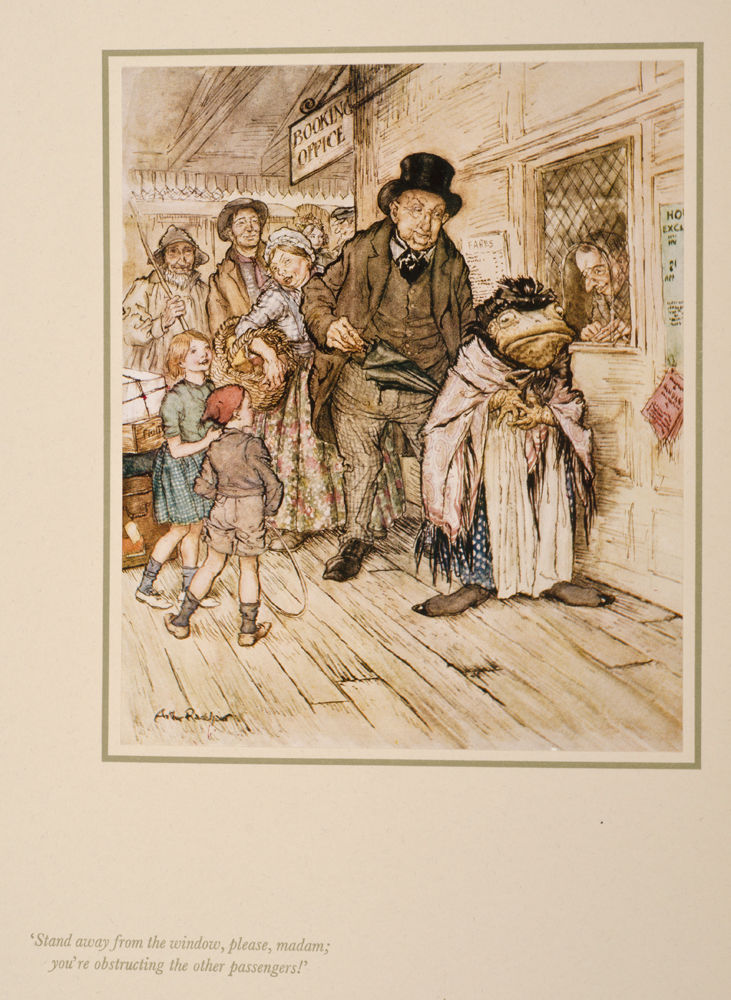
Grahame’s famed children’s novel, featuring the beloved Mr. Toad, Rat, Badger, and Mole. Grahame began writing the book in 1908 – in his late 40s -- after leaving his position as Secretary of the Bank of England. Much of the plot of The Wind in the Willows had its origins both in the bedtime stories Grahame had invented to tell his own son, and in Grahame’s childhood experiences in Berkshire county. The book might not have been published if not for the efforts of President Theodore Roosevelt, who lobbied Methuen to release it. While reviews were mixed, the book became a classic. Rackham’s illustrated edition of this beloved book was released with two different publishers: The Limited Editions Club, New York who created the deluxe edition and The Heritage Press, New York who published the trade edition after Rackham’s death. The Heritage version has twelve illustrations that complement the anthropomorphized characters created by Sheperd. “Perhaps the most interesting picture is the color plate facing p. 113, which depicts the egocentric Toad leveled to the drab clothes of a no-pocket washerwoman, hopping about permissively, totally unequipped for the real contest. In the real world of people, like all egoists, animal or human, he is alien, and it is a typical piece of Rackhamerie that we should see two children laughing at the glum toad, not because he is a toad, but because he is obviously pretending to be something else” (Gettings).
Arthur Rackham (1867-1939) is perhaps the most acclaimed and influential illustrator of the Golden Age of Illustration. A prolific artist even from his youth, Rackham got his start as an illustrator working for the Westminster Budget Newspaper (1892). Over the next few years, he took on more and more commissions for children’s books, hitting his career high in the first three decades of the twentieth century. Rackham turned his imaginative pen to every classic—from Shakespeare to Dickens to Poe.
Bruce Rogers (1870 – 1957) was an American typographer and type designer, acclaimed by some as among the greatest book designers of the twentieth century. Rogers was known for his "classical" style of design, rejecting modernism, never using asymmetrical arrangements, rarely using sans serif type faces, favoring stolid roman faces such as Caslon and his own Centaur.
Grahame’s famed children’s novel, featuring the beloved Mr. Toad, Rat, Badger, and Mole. Grahame began writing the book in 1908 – in his late 40s -- after leaving his position as Secretary of the Bank of England. Much of the plot of The Wind in the Willows had its origins both in the bedtime stories Grahame had invented to tell his own son, and in Grahame’s childhood experiences in Berkshire county. The book might not have been published if not for the efforts of President Theodore Roosevelt, who lobbied Methuen to release it. While reviews were mixed, the book became a classic. Rackham’s illustrated edition of this beloved book was released with two different publishers: The Limited Editions Club, New York who created the deluxe edition and The Heritage Press, New York who published the trade edition after Rackham’s death. The Heritage version has twelve illustrations that complement the anthropomorphized characters created by Sheperd. “Perhaps the most interesting picture is the color plate facing p. 113, which depicts the egocentric Toad leveled to the drab clothes of a no-pocket washerwoman, hopping about permissively, totally unequipped for the real contest. In the real world of people, like all egoists, animal or human, he is alien, and it is a typical piece of Rackhamerie that we should see two children laughing at the glum toad, not because he is a toad, but because he is obviously pretending to be something else” (Gettings).
Arthur Rackham (1867-1939) is perhaps the most acclaimed and influential illustrator of the Golden Age of Illustration. A prolific artist even from his youth, Rackham got his start as an illustrator working for the Westminster Budget Newspaper (1892). Over the next few years, he took on more and more commissions for children’s books, hitting his career high in the first three decades of the twentieth century. Rackham turned his imaginative pen to every classic—from Shakespeare to Dickens to Poe.
Bruce Rogers (1870 – 1957) was an American typographer and type designer, acclaimed by some as among the greatest book designers of the twentieth century. Rogers was known for his "classical" style of design, rejecting modernism, never using asymmetrical arrangements, rarely using sans serif type faces, favoring stolid roman faces such as Caslon and his own Centaur.