

The Wind in the Willows (Limited edition)
- London: Methuen & Co, 1951
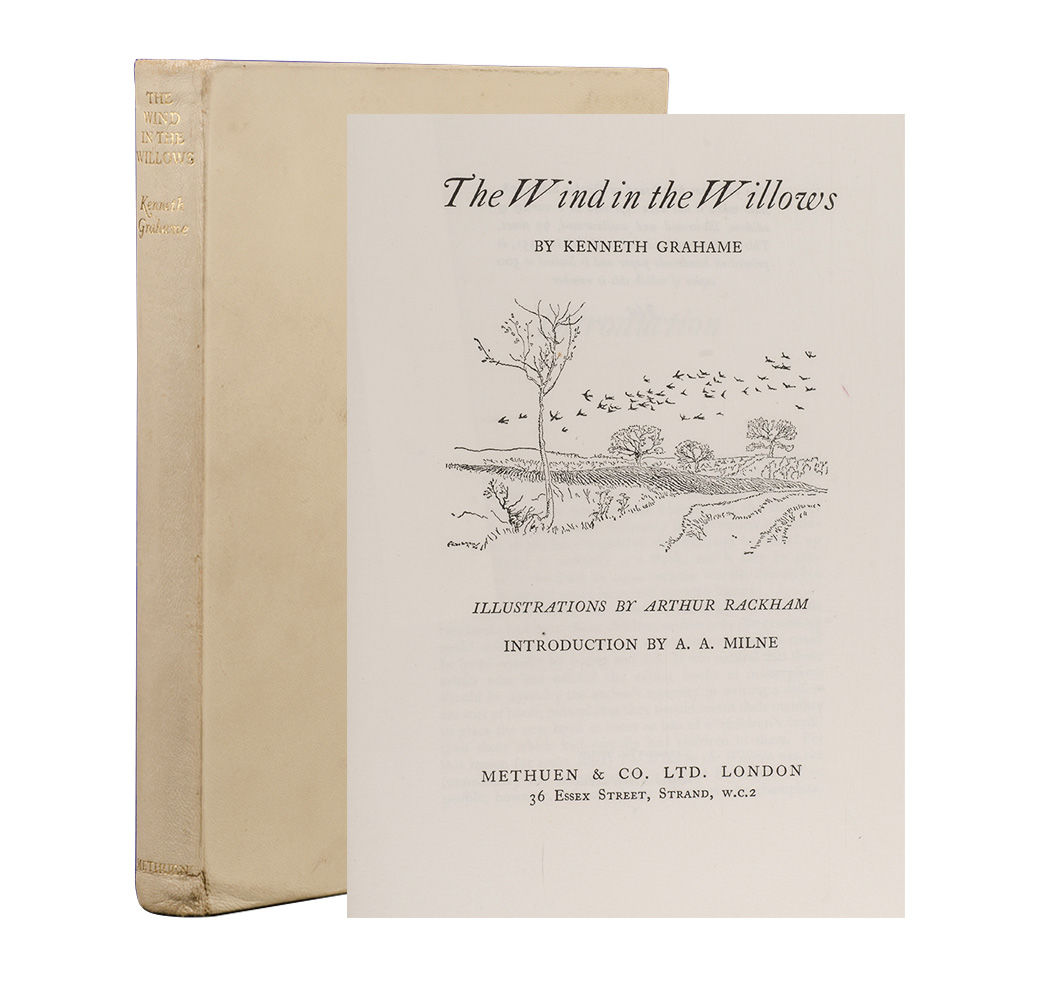
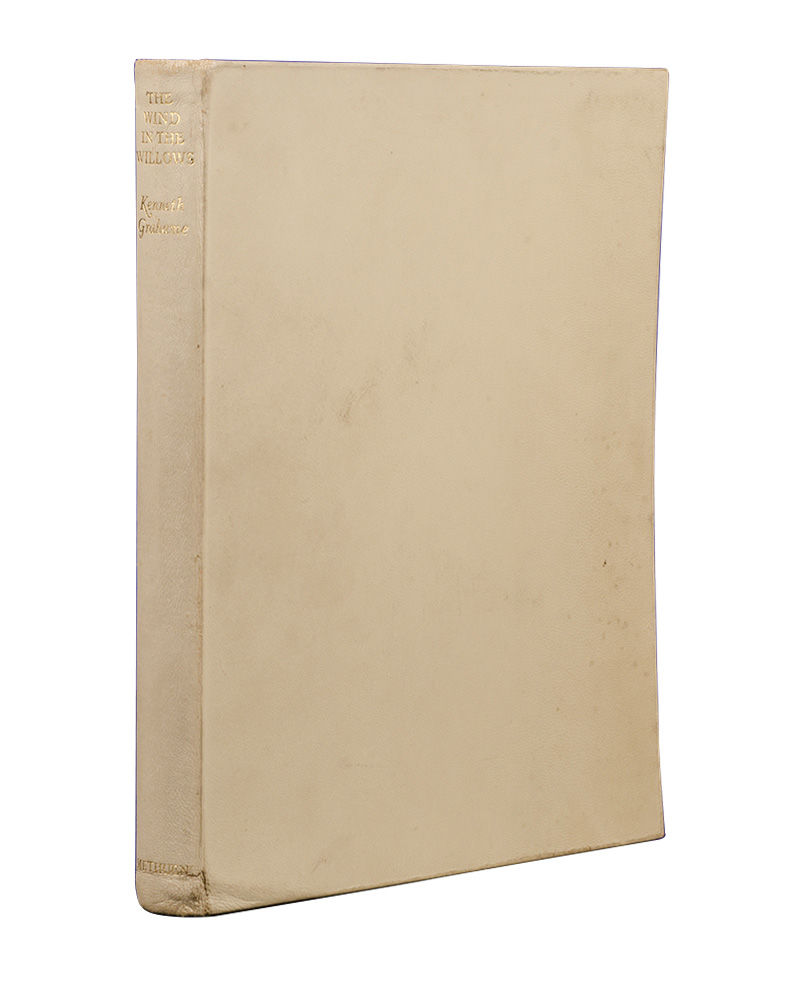
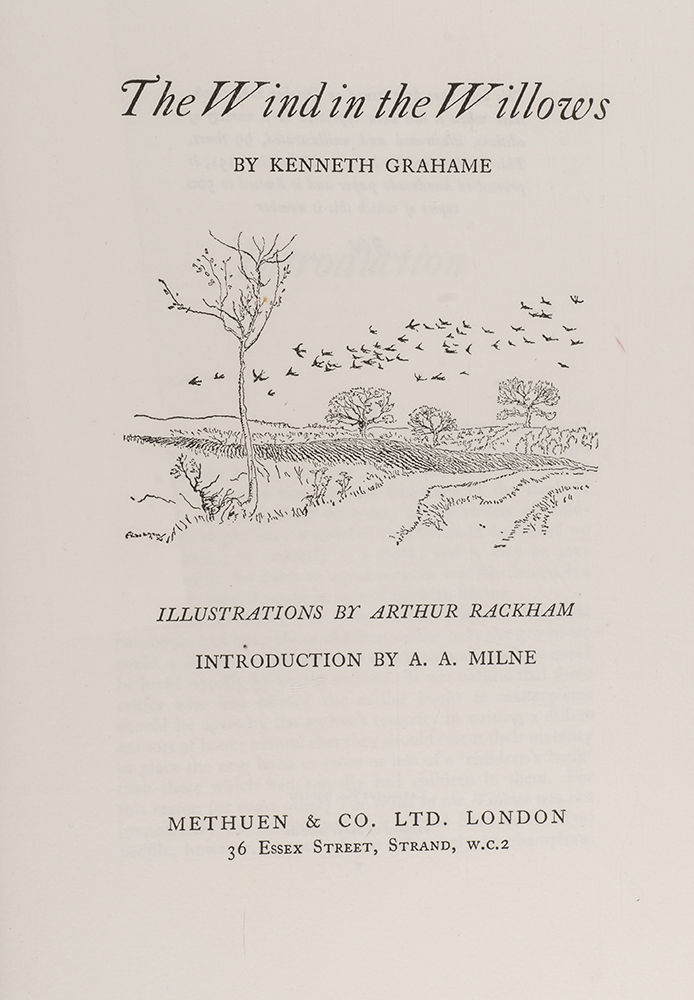
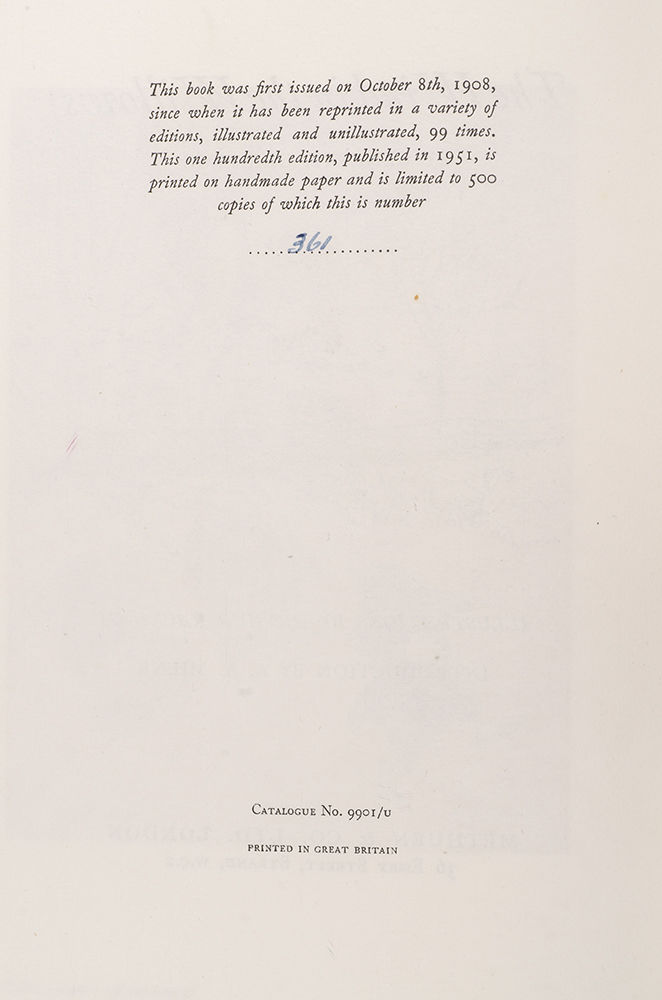
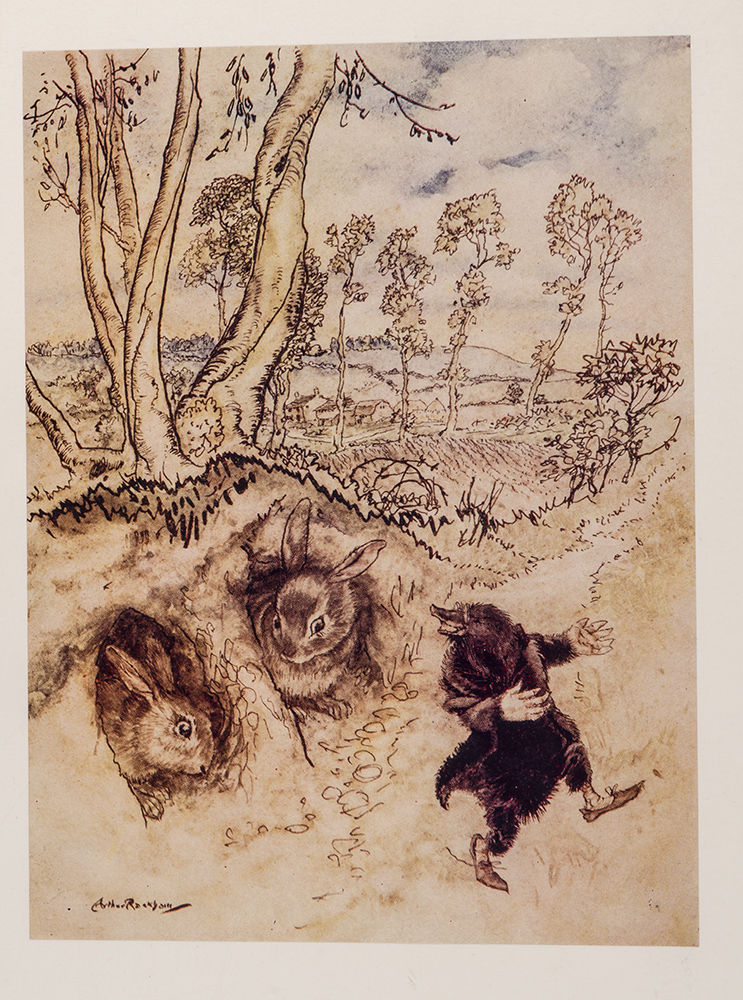
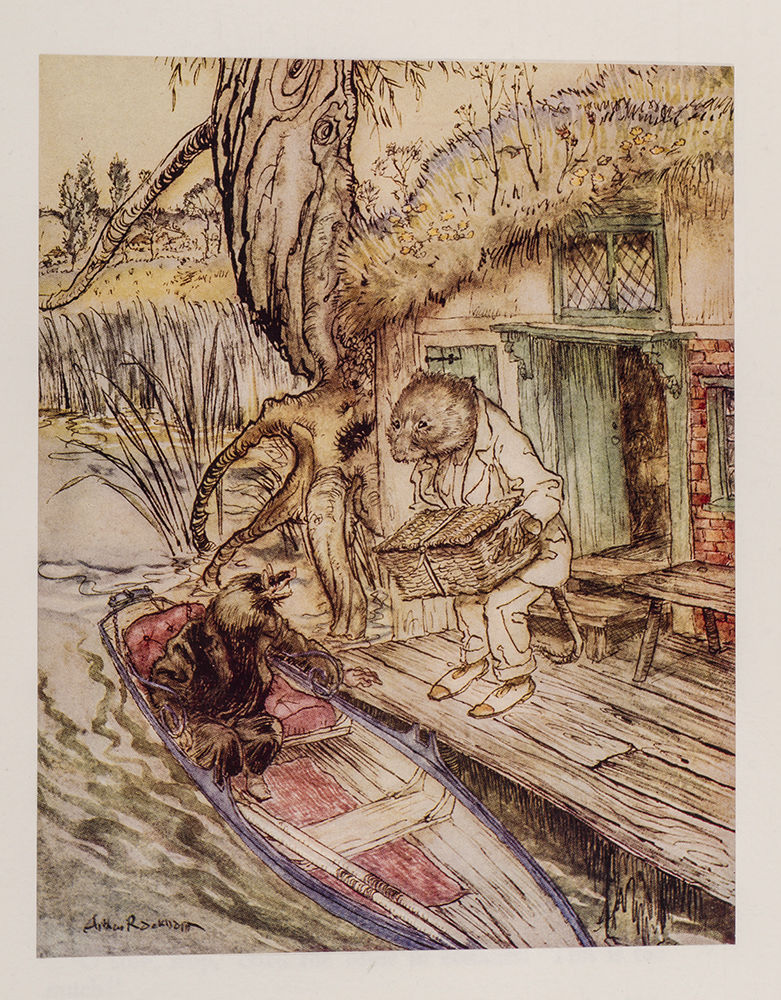
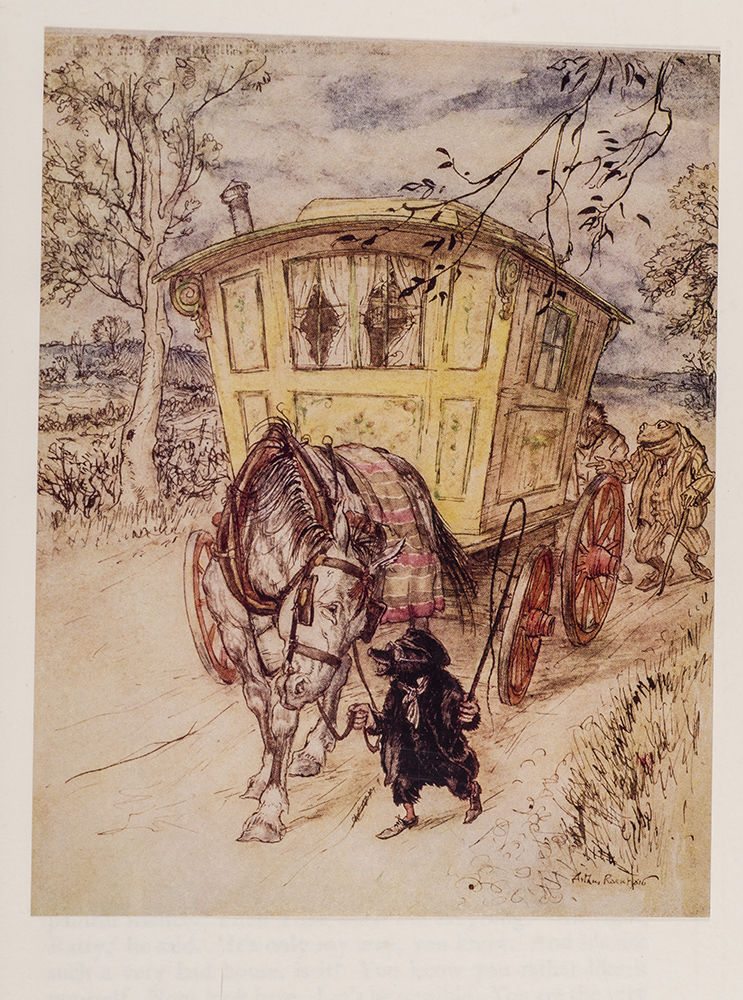
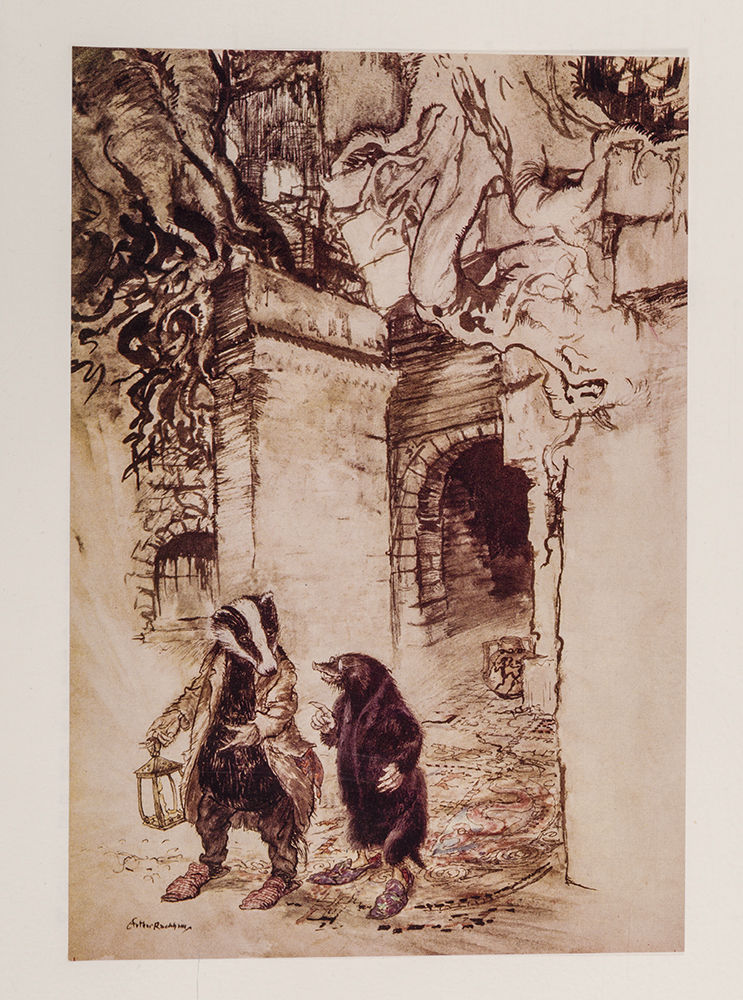
London: Methuen & Co, 1951. First thus. Very Good +. One Hundredth Edition", number 361 of 500 numbered copies, printed on handmade paper. A Very Good+ copy. Large quarto (11 3/4 x 9 1/4 inches; 298 x 235 mm.). [2, blank], xii, 178 pp. Twelve mounted color plates (including frontispiece), twelve black and white vignette chapter headings, and three other black and white drawings. Internally fine and fresh. Publisher's full white calf, smooth spine lettered in gilt. Small repaired split at foot of spine, neat ink inscription dated 1952 on front free end-paper.
Grahame’s famed children’s novel, featuring the beloved Mr. Toad, Rat, Badger, and Mole. Grahame began writing the book in 1908 – in his late 40s -- after leaving his position as Secretary of the Bank of England. Much of the plot of The Wind in the Willows had its origins both in the bedtime stories Grahame had invented to tell his own son, and in Grahame’s childhood experiences in Berkshire county. The book might not have been published if not for the efforts of President Theodore Roosevelt, who lobbied Methuen to release it. While reviews were mixed, the book became a classic. “This book was first issued on October 8th, 1908, since when it has been reprinted in a variety of editions, illustrated and unillustrated, 99 times. This one hundredth edition, published in 1951, is printed on handmade paper and is limited to 500 copies” (p. [iv]). Rackham’s illustrated edition was originally by The Limited Editions Club in 1940 with sixteen color illustrations only, but not published in England until 1950 by Methuen. This is the first deluxe edition to have the twelve black and white vignette chapter headings, and the three other black and white drawings.
Arthur Rackham (1867-1939) is perhaps the most acclaimed and influential illustrator of the Golden Age of Illustration. A prolific artist even from his youth, Rackham got his start as an illustrator working for the Westminster Budget Newspaper (1892). Over the next few years, he took on more and more commissions for children’s books, hitting his career high in the first three decades of the twentieth century. Rackham turned his imaginative pen to every classic—from Shakespeare to Dickens to Poe.
Riall, p. 200. Very Good +.
Grahame’s famed children’s novel, featuring the beloved Mr. Toad, Rat, Badger, and Mole. Grahame began writing the book in 1908 – in his late 40s -- after leaving his position as Secretary of the Bank of England. Much of the plot of The Wind in the Willows had its origins both in the bedtime stories Grahame had invented to tell his own son, and in Grahame’s childhood experiences in Berkshire county. The book might not have been published if not for the efforts of President Theodore Roosevelt, who lobbied Methuen to release it. While reviews were mixed, the book became a classic. “This book was first issued on October 8th, 1908, since when it has been reprinted in a variety of editions, illustrated and unillustrated, 99 times. This one hundredth edition, published in 1951, is printed on handmade paper and is limited to 500 copies” (p. [iv]). Rackham’s illustrated edition was originally by The Limited Editions Club in 1940 with sixteen color illustrations only, but not published in England until 1950 by Methuen. This is the first deluxe edition to have the twelve black and white vignette chapter headings, and the three other black and white drawings.
Arthur Rackham (1867-1939) is perhaps the most acclaimed and influential illustrator of the Golden Age of Illustration. A prolific artist even from his youth, Rackham got his start as an illustrator working for the Westminster Budget Newspaper (1892). Over the next few years, he took on more and more commissions for children’s books, hitting his career high in the first three decades of the twentieth century. Rackham turned his imaginative pen to every classic—from Shakespeare to Dickens to Poe.
Riall, p. 200. Very Good +.