

Everybody's Pepys


- London: Bell and Sons, 1927
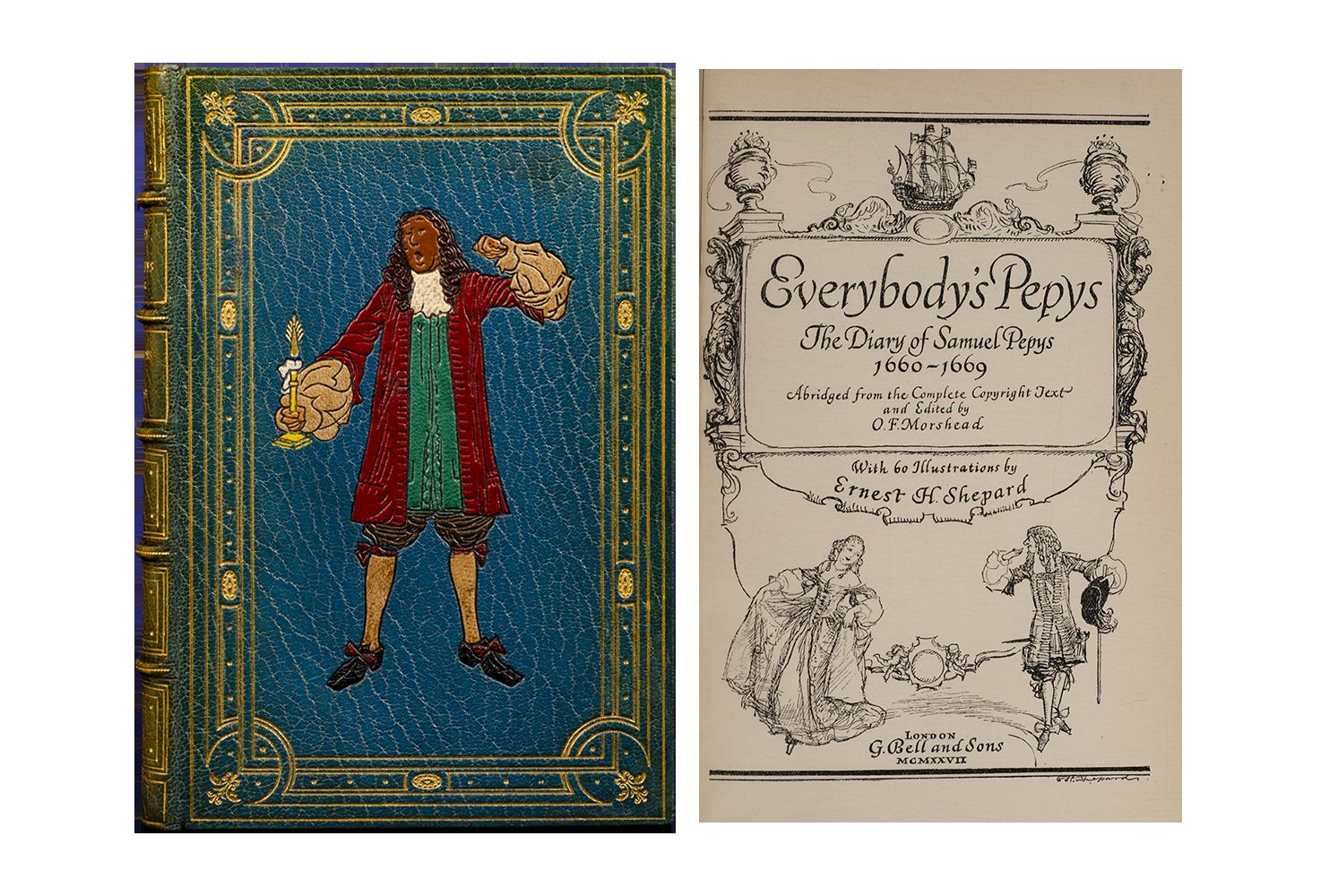
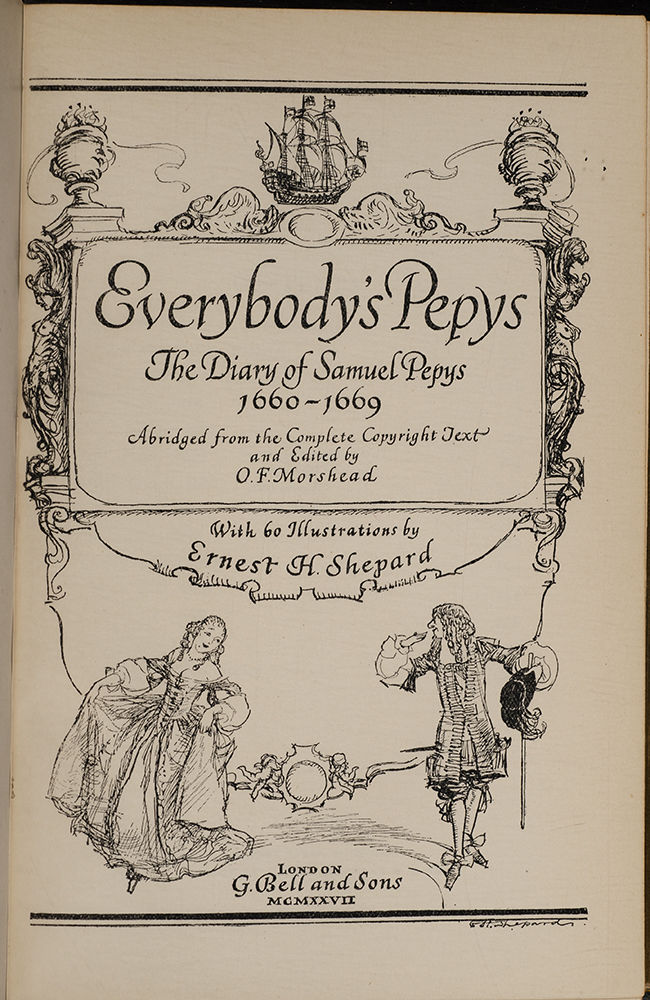
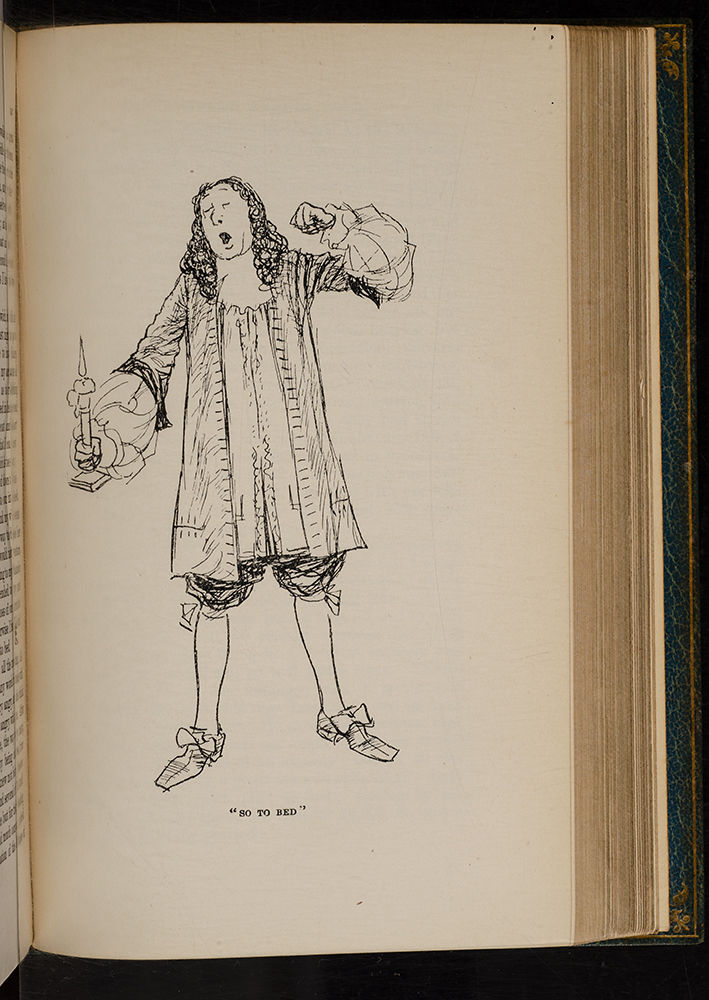
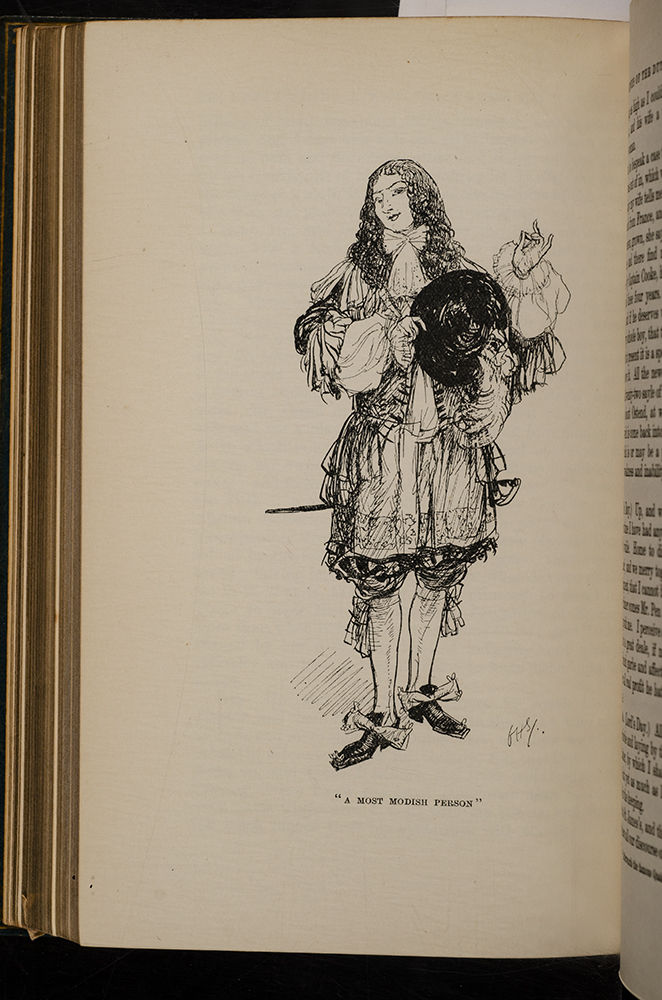
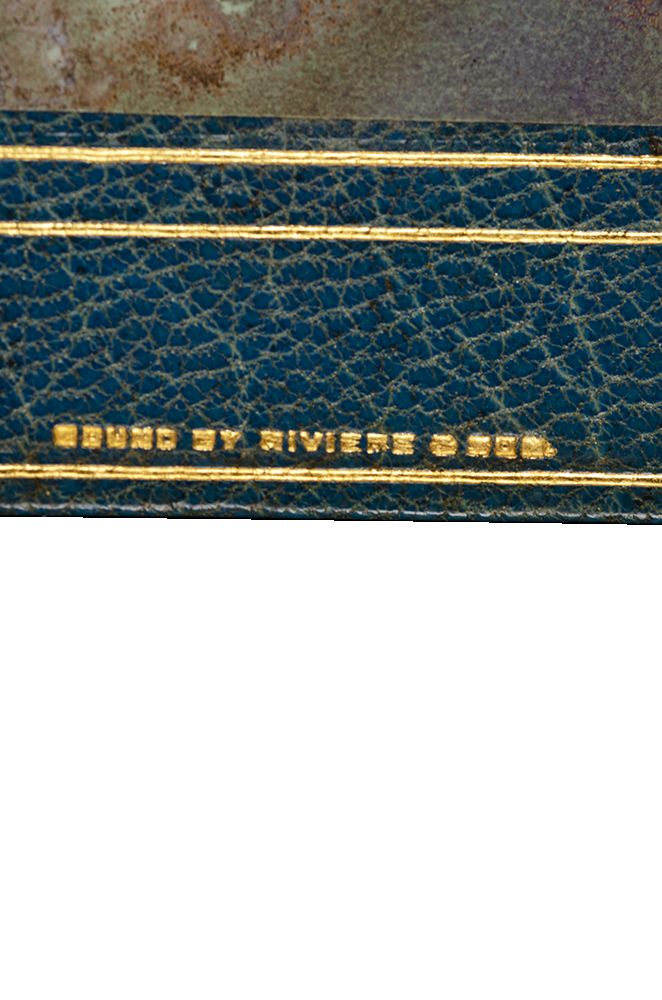
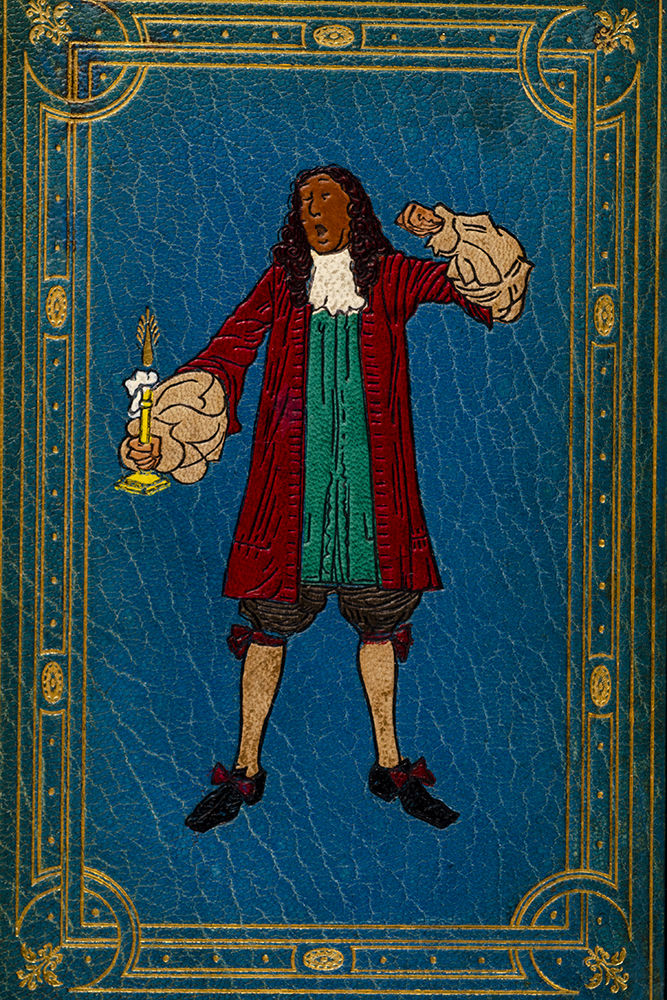
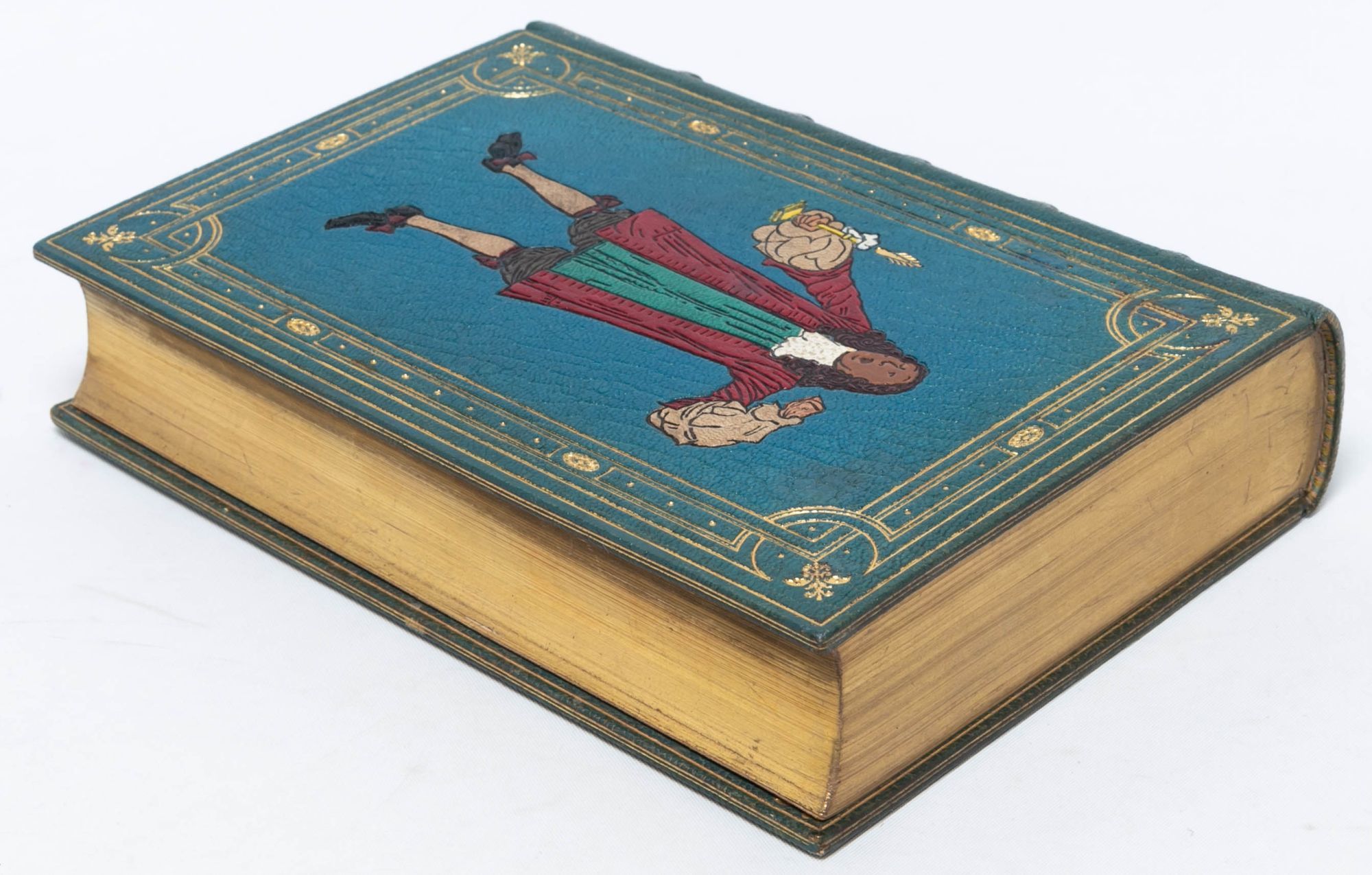
London: Bell and Sons, 1927. Octavo (7 1/2 x 5 inches; 191 x 127 mm.). [xxiv], 570 pp. Fifty-seven full-page black and white plates and three text drawings. Handsomely bound by Rivière & Son ca. 1927 (stamp-signed on front turn-in) in full medium blue morocco with a very ornate multi-fillet gilt frame enclosing a vari-colored morocco onlaid illustration with painted highlights, reproducing the black and white plate in the book "So To Bed" (facing p.400). Gilt ornamented raised bands. Gilt framed compartments with ornate gilt centerpieces. Gilt tooled edges and turn-ins, marbled paste-downs and end-leaves, publisher's pictorial end-papers bound in at end, all edges gilt. Minimal fading to spine, light and almost imperceptible mark on rear cover, otherwise fine.
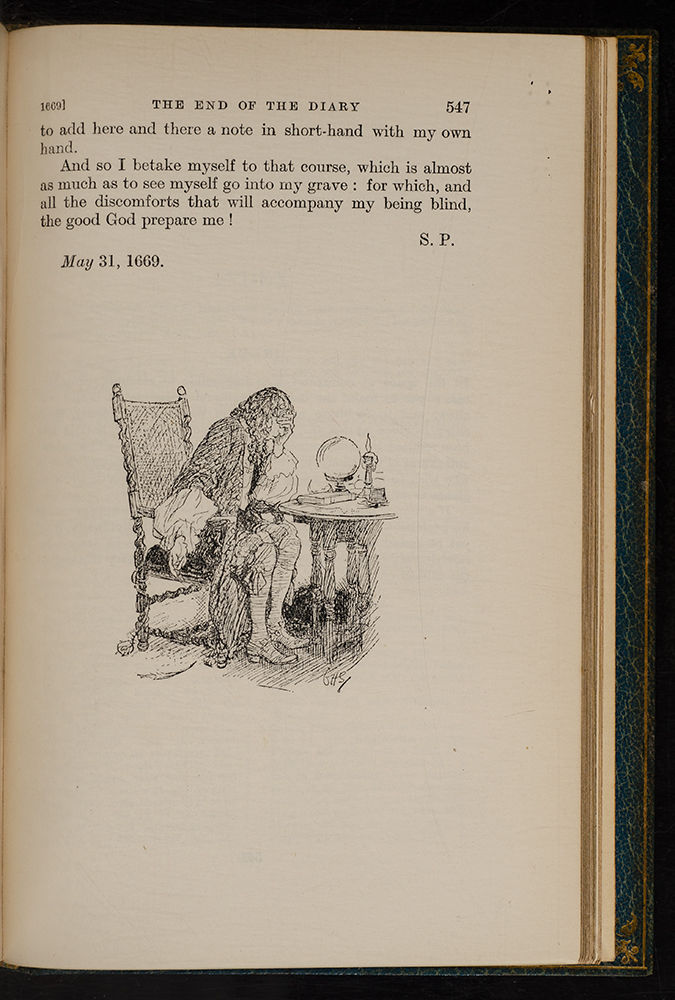
Samuel Pepys (1633–1703) was an English naval bureaucrat and member of Parliament who is now most famous for his diary. Hailed as a significant primary source for Restoration-era England, the diary spans the years 1660-69 as Pepys ages from 27 to 36 years, and was “[w]ritten in Thomas Shelton’s system of shorthand, or tachygraphy, with the names in longhand, it extends to 1,250,000 words, filling six quarto volumes…” (Britannica). Pepys was a highly inquisitive man and filled his pages with lively descriptions of people as well as documented his experiences living through “the Restoration and coronation; the horrors of the Plague; and the Fire of London” (Britannica). In this edition of his dairy, Ernest H. Shepard’s illustrations enliven these first-hand experiences for readers.
“The Riviere Bindery was one of the most notable and prolific shops in London's West End from about 1840 through 1939” (Princeton). Bath-based Bayntun Bindery acquired the firm in 1939, transforming into the “Bayntun-Riviere bindery,” which is still in existence and family owned.
Samuel Pepys (1633–1703) was an English naval bureaucrat and member of Parliament who is now most famous for his diary. Hailed as a significant primary source for Restoration-era England, the diary spans the years 1660-69 as Pepys ages from 27 to 36 years, and was “[w]ritten in Thomas Shelton’s system of shorthand, or tachygraphy, with the names in longhand, it extends to 1,250,000 words, filling six quarto volumes…” (Britannica). Pepys was a highly inquisitive man and filled his pages with lively descriptions of people as well as documented his experiences living through “the Restoration and coronation; the horrors of the Plague; and the Fire of London” (Britannica). In this edition of his dairy, Ernest H. Shepard’s illustrations enliven these first-hand experiences for readers.
“The Riviere Bindery was one of the most notable and prolific shops in London's West End from about 1840 through 1939” (Princeton). Bath-based Bayntun Bindery acquired the firm in 1939, transforming into the “Bayntun-Riviere bindery,” which is still in existence and family owned.