

Comus (Signed limited edition)
- SIGNED
- London & New York: William Heinemann & Doubleday Page & Co, 1921
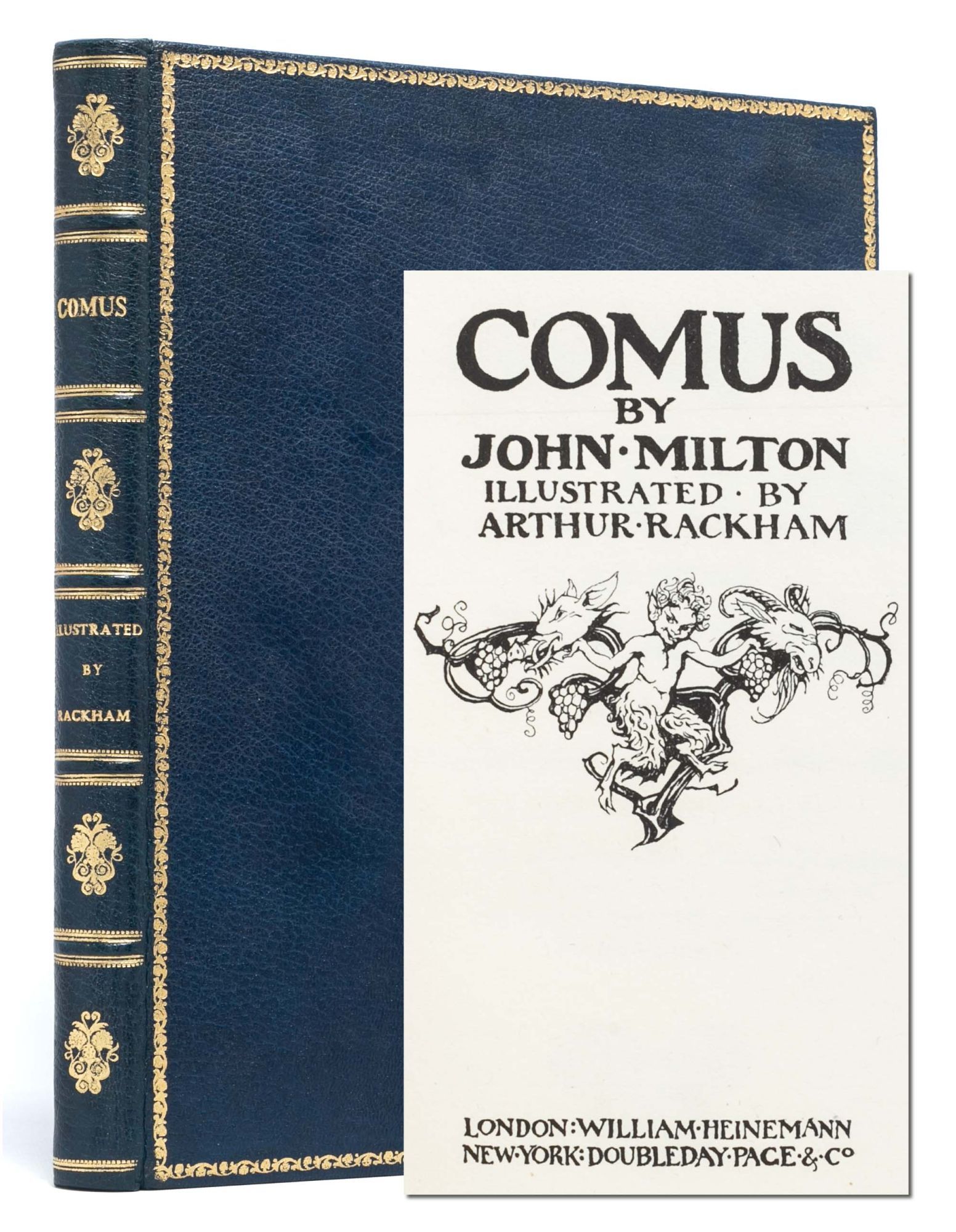
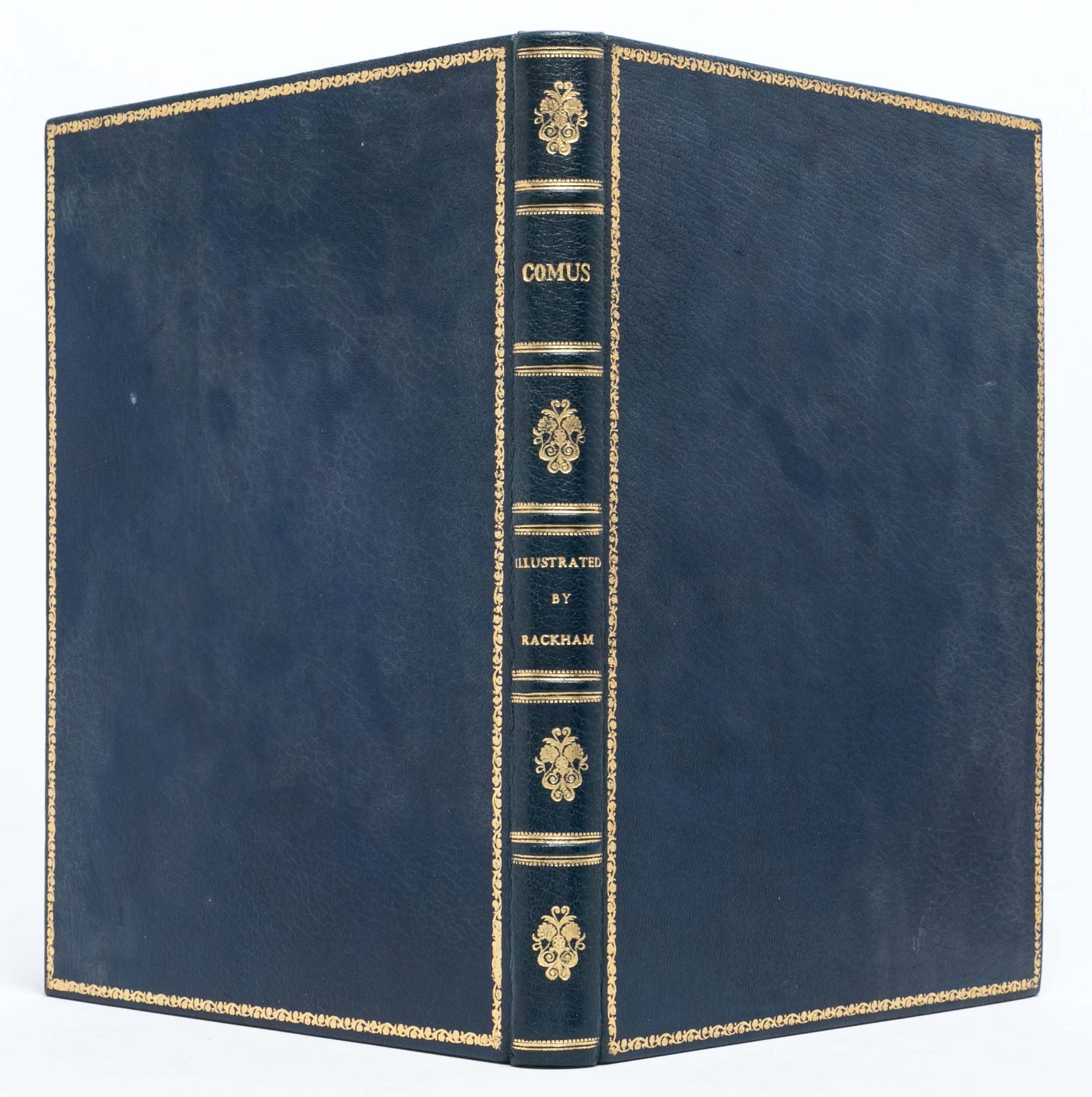
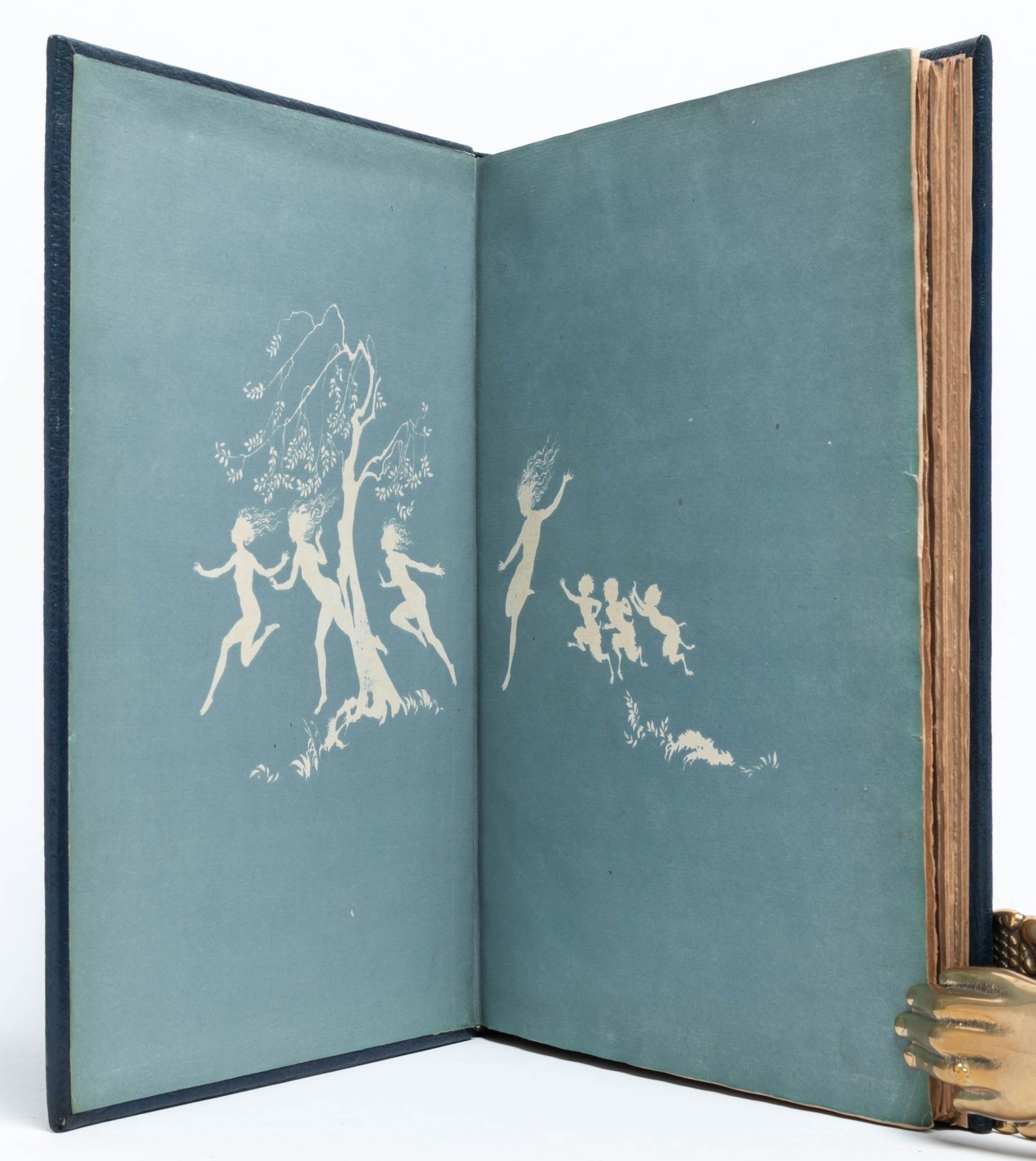
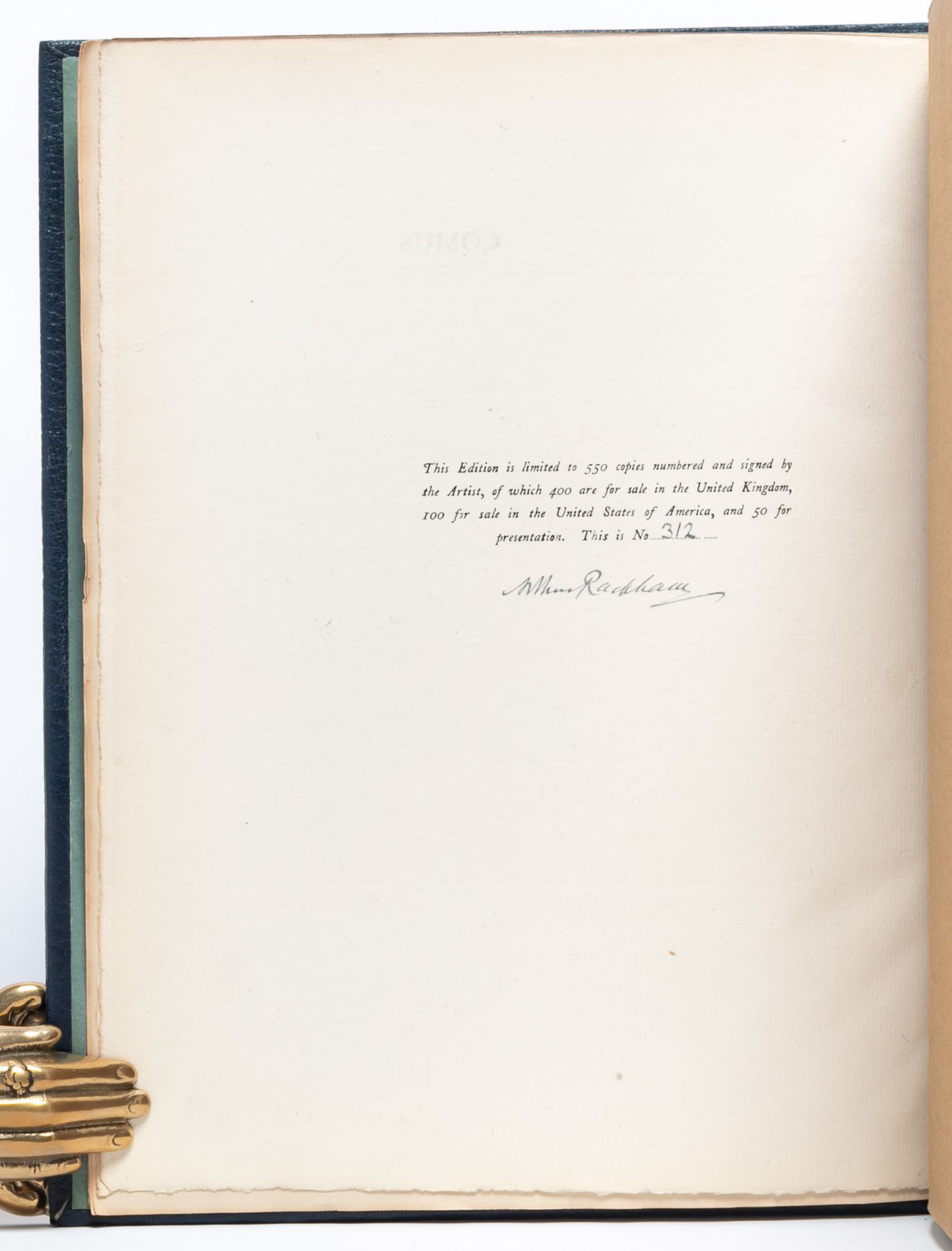
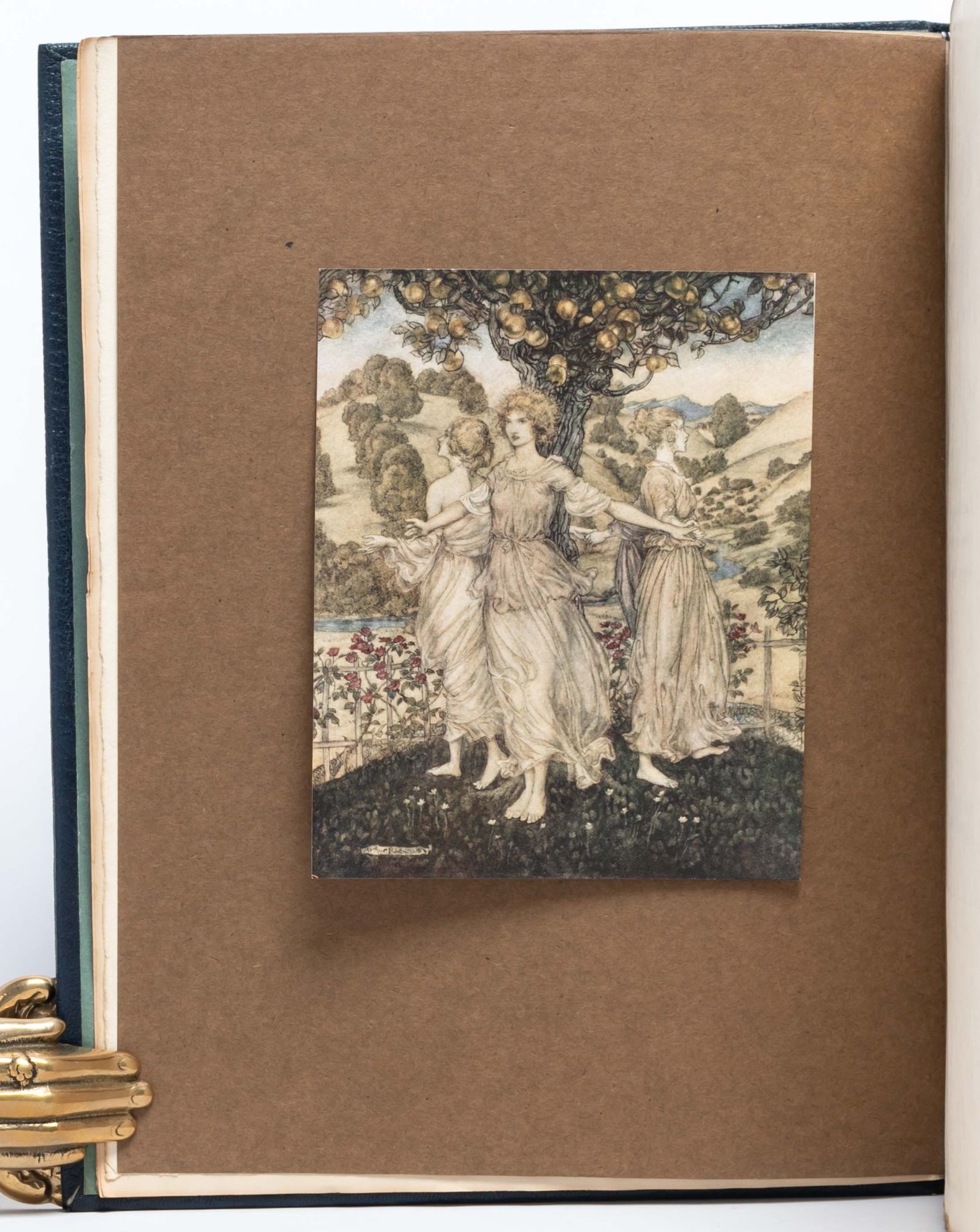
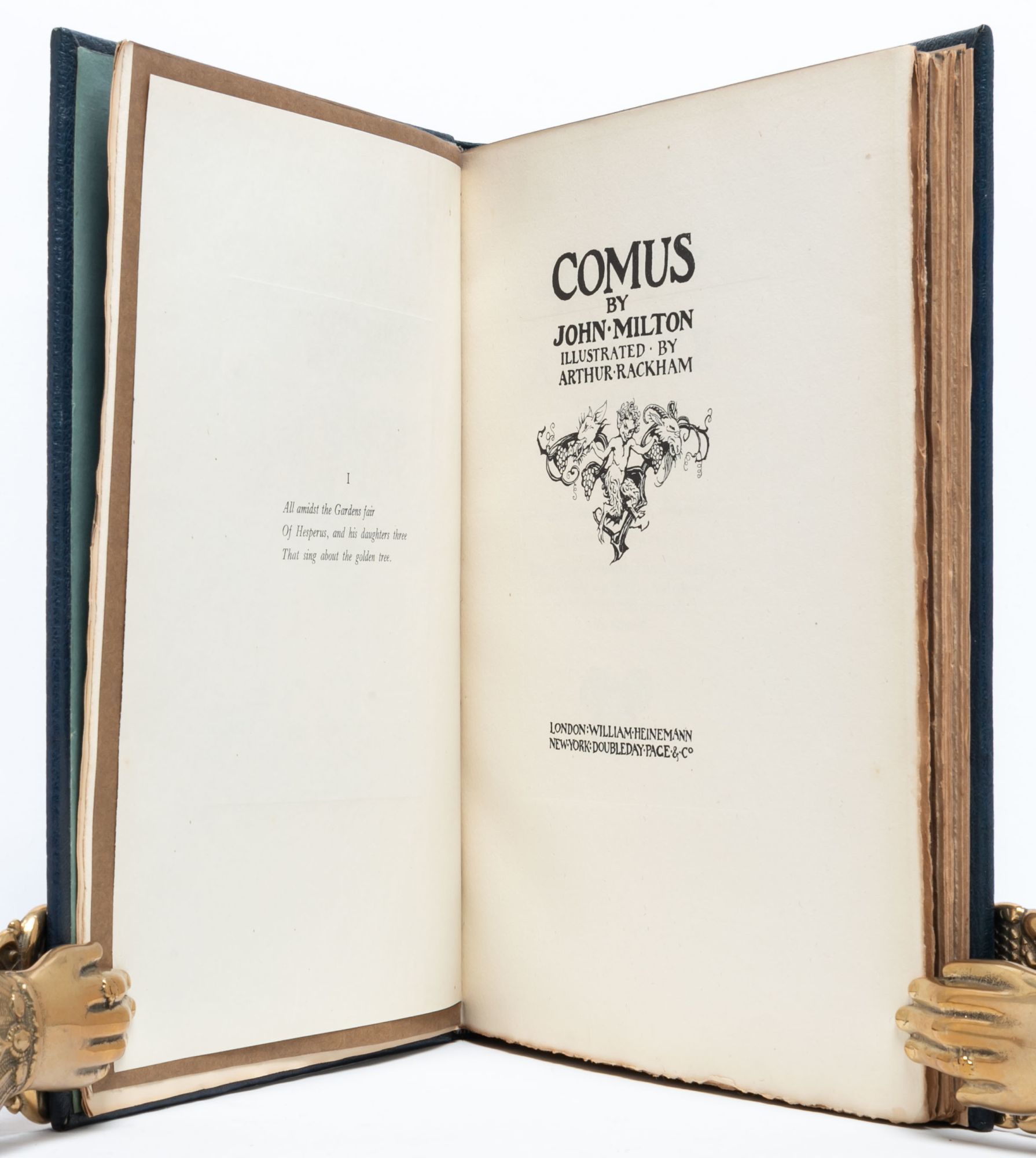
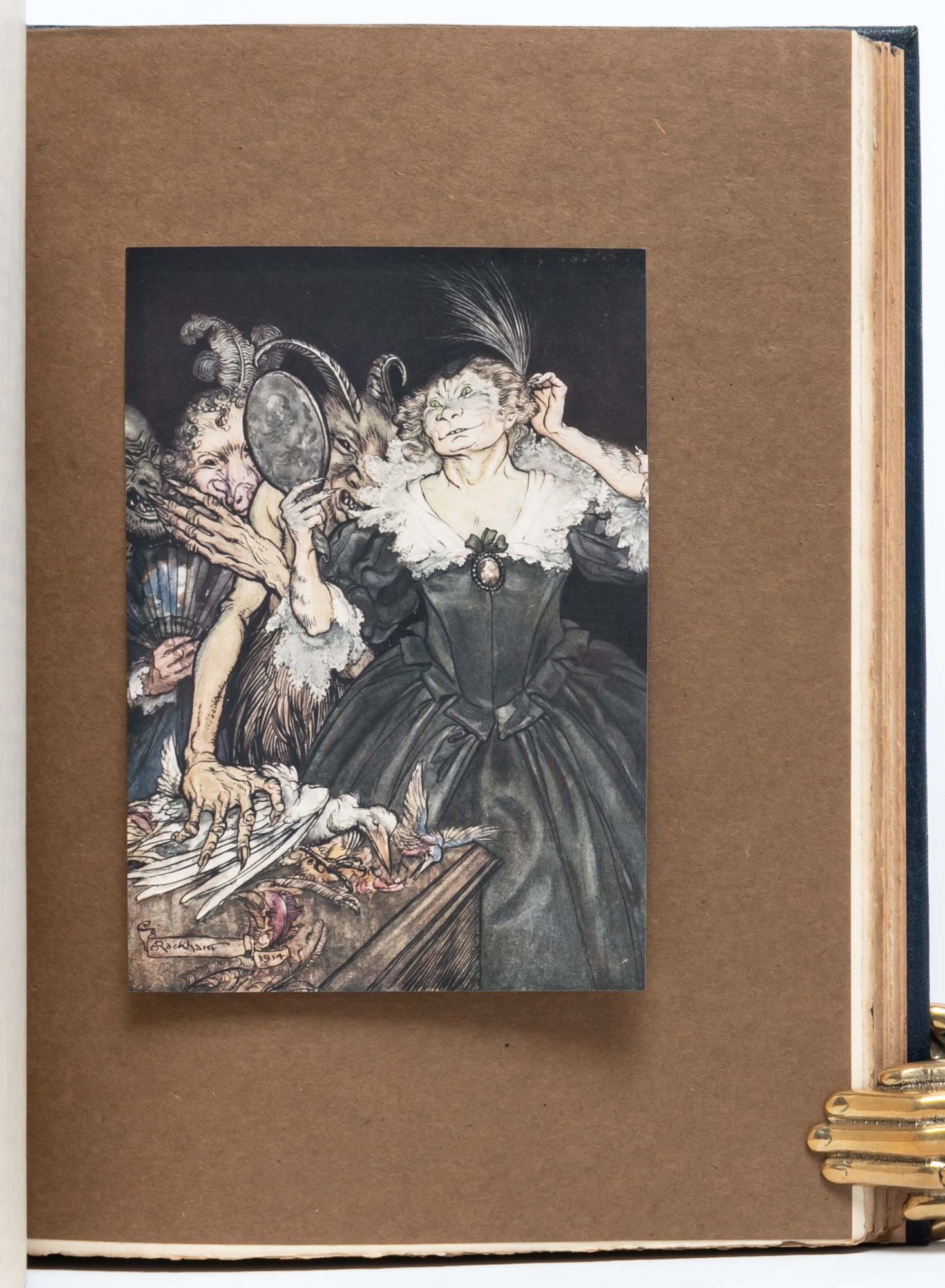
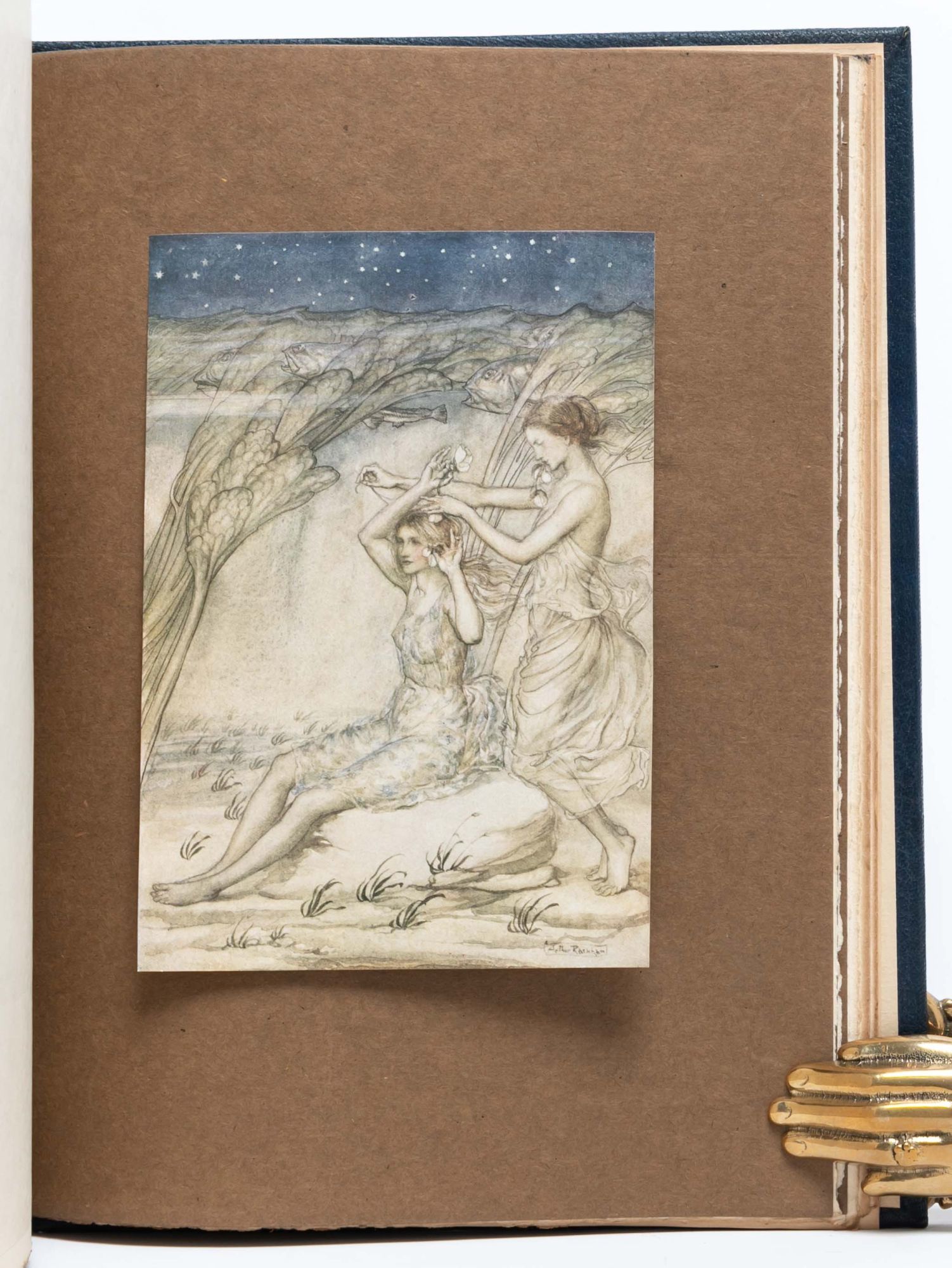
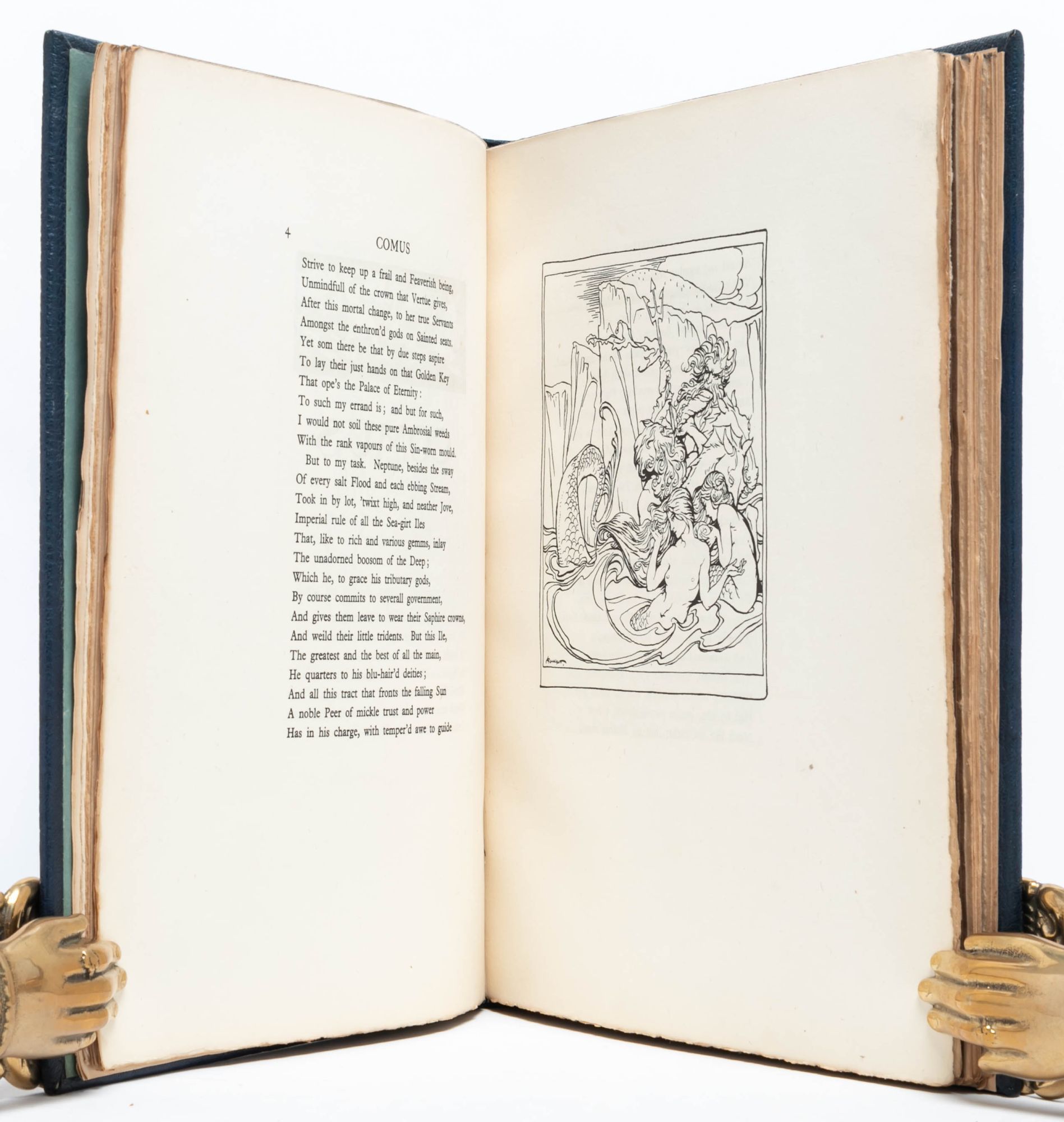
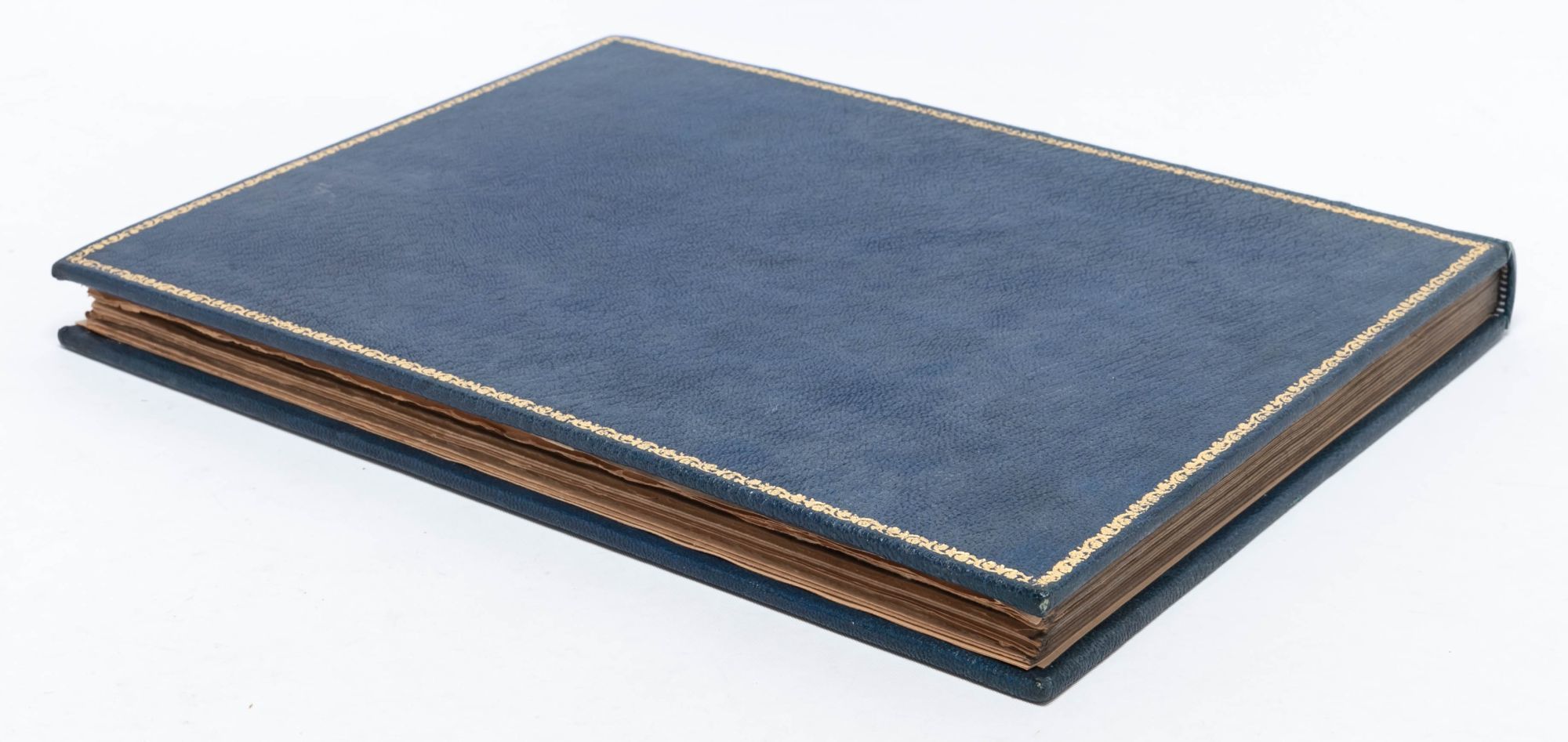
London & New York: William Heinemann & Doubleday Page & Co, 1921. Deluxe edition. Near Fine. Number 312 of 550, signed and numbered by Rackham on the limitation page. Near Fine and retaining all 24 mounted color plates on brown paper with multiple black and white illustrations throughout. Sympathetically rebound maintaining original pictorial endpapers, some offsetting to front flyleaf from pictorial endpaper (before rebinding). Bound in full blue crushed morroco with gilt dentelles, spine with raised bands, decorative tooling in the compartments and gilt title. Minor wear to exterior boards, but interior bright and clean.
"Another, more important, publication of Rackham's in 1921 was a long-delayed edition of Milton's Comus, the drawings for which, begun before the war, deserve to rank with his best work of that earlier period..." (Hudson). Comus (A Mask Presented at Ludlow Castle, 1634) is a masque in honour of chastity, written by John Milton. It was first presented on Michaelmas, 1634, before John Egerton, 1st Earl of Bridgewater at Ludlow Castle in celebration of the Earl's new post as Lord President of Wales. Known colloquially as Comus, the masque's actual full title is A Mask presented at Ludlow Castle, 1634: on Michelmas night, before the Rt Hon. Iohn Earl of Bridgewater, Viscount Brackly, Lord President of Wales, and one of His Maiesties most honorable privie councill. Comus was printed anonymously in 1637, in a quarto issued by bookseller Humphrey Robinson; Milton included the work in his Poems of 1645 and 1673. Milton's text was later used for a highly successful masque by the musician Thomas Arne in 1738, which then ran for more than seventy years in London.
Arthur Rackham (1867-1939) is perhaps the most acclaimed and influential illustrator of the Golden Age of Illustration. A prolific artist even from his youth, Rackham got his start as an illustrator working for the Westminster Budget Newspaper (1892). Over the next few years, he took on more and more commissions for children’s books, hitting his career high in the first three decades of the twentieth century. Rackham turned his imaginative pen to every classic—from Shakespeare to Dickens to Poe.
Rial 143. Near Fine.
"Another, more important, publication of Rackham's in 1921 was a long-delayed edition of Milton's Comus, the drawings for which, begun before the war, deserve to rank with his best work of that earlier period..." (Hudson). Comus (A Mask Presented at Ludlow Castle, 1634) is a masque in honour of chastity, written by John Milton. It was first presented on Michaelmas, 1634, before John Egerton, 1st Earl of Bridgewater at Ludlow Castle in celebration of the Earl's new post as Lord President of Wales. Known colloquially as Comus, the masque's actual full title is A Mask presented at Ludlow Castle, 1634: on Michelmas night, before the Rt Hon. Iohn Earl of Bridgewater, Viscount Brackly, Lord President of Wales, and one of His Maiesties most honorable privie councill. Comus was printed anonymously in 1637, in a quarto issued by bookseller Humphrey Robinson; Milton included the work in his Poems of 1645 and 1673. Milton's text was later used for a highly successful masque by the musician Thomas Arne in 1738, which then ran for more than seventy years in London.
Arthur Rackham (1867-1939) is perhaps the most acclaimed and influential illustrator of the Golden Age of Illustration. A prolific artist even from his youth, Rackham got his start as an illustrator working for the Westminster Budget Newspaper (1892). Over the next few years, he took on more and more commissions for children’s books, hitting his career high in the first three decades of the twentieth century. Rackham turned his imaginative pen to every classic—from Shakespeare to Dickens to Poe.
Rial 143. Near Fine.