

Russian Icons (Presentation from the binder)

- SIGNED
- London: Spring Books, 1963
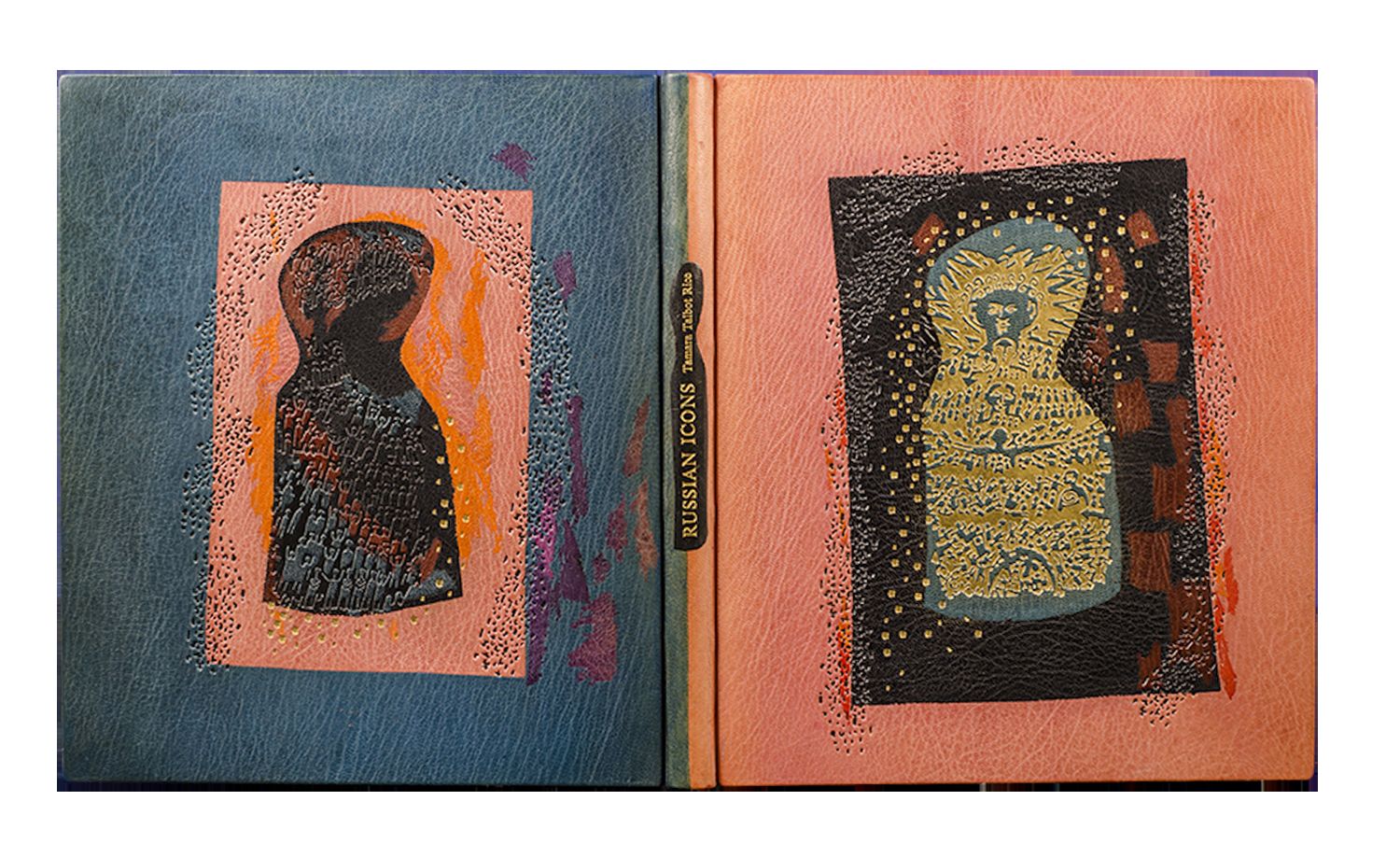
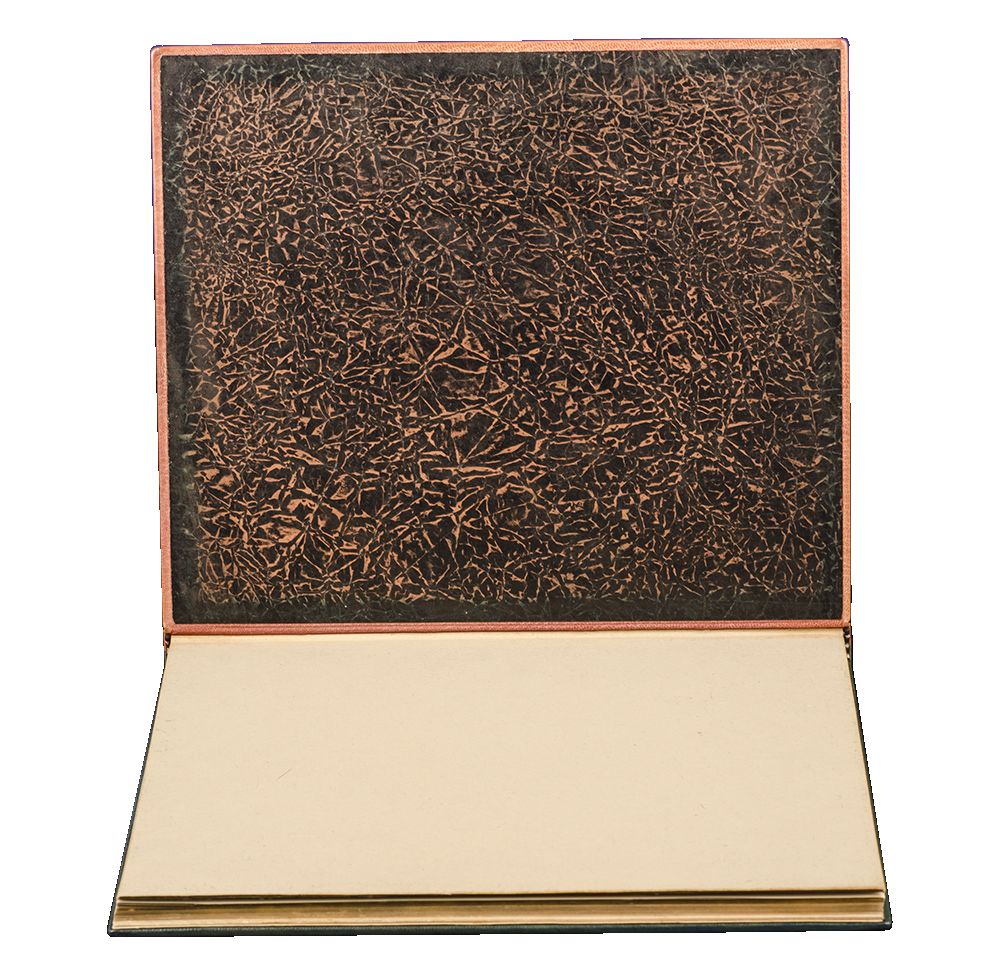
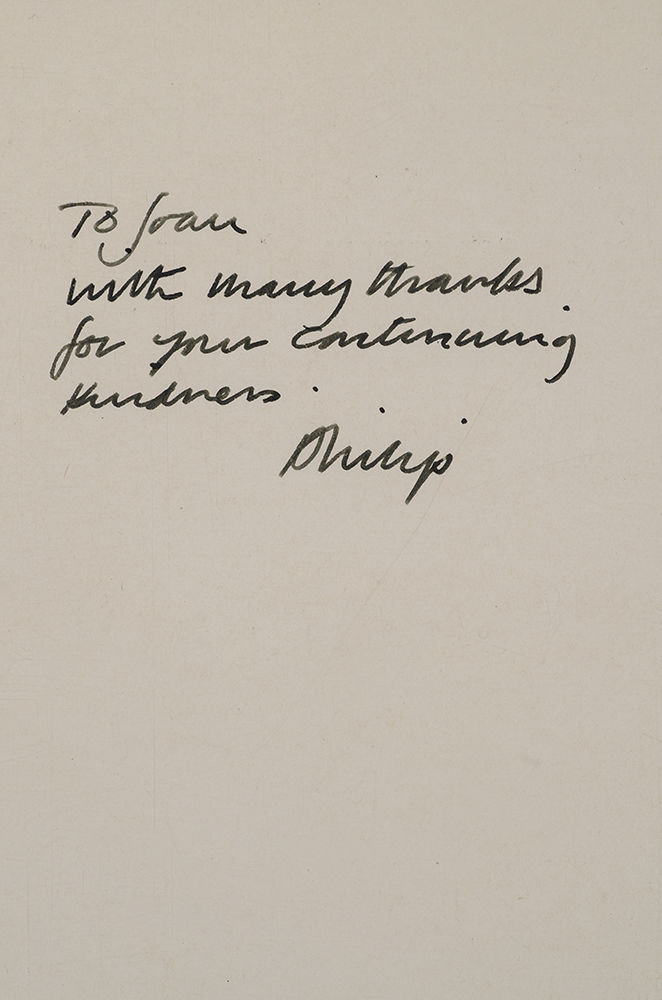
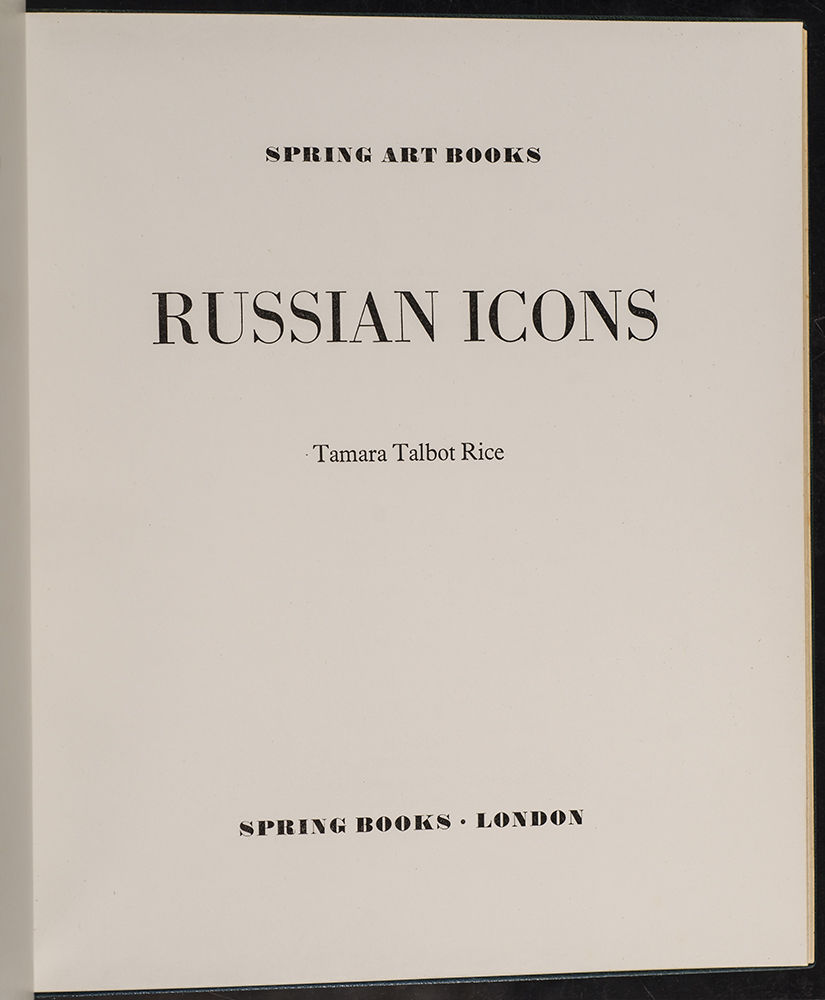
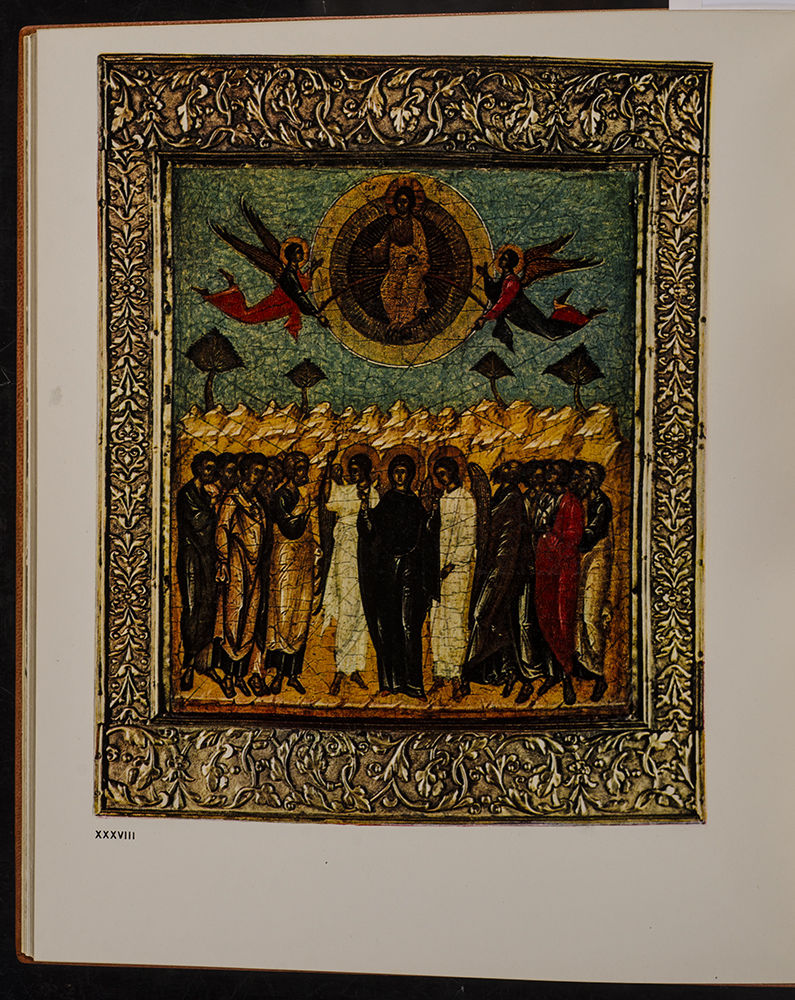
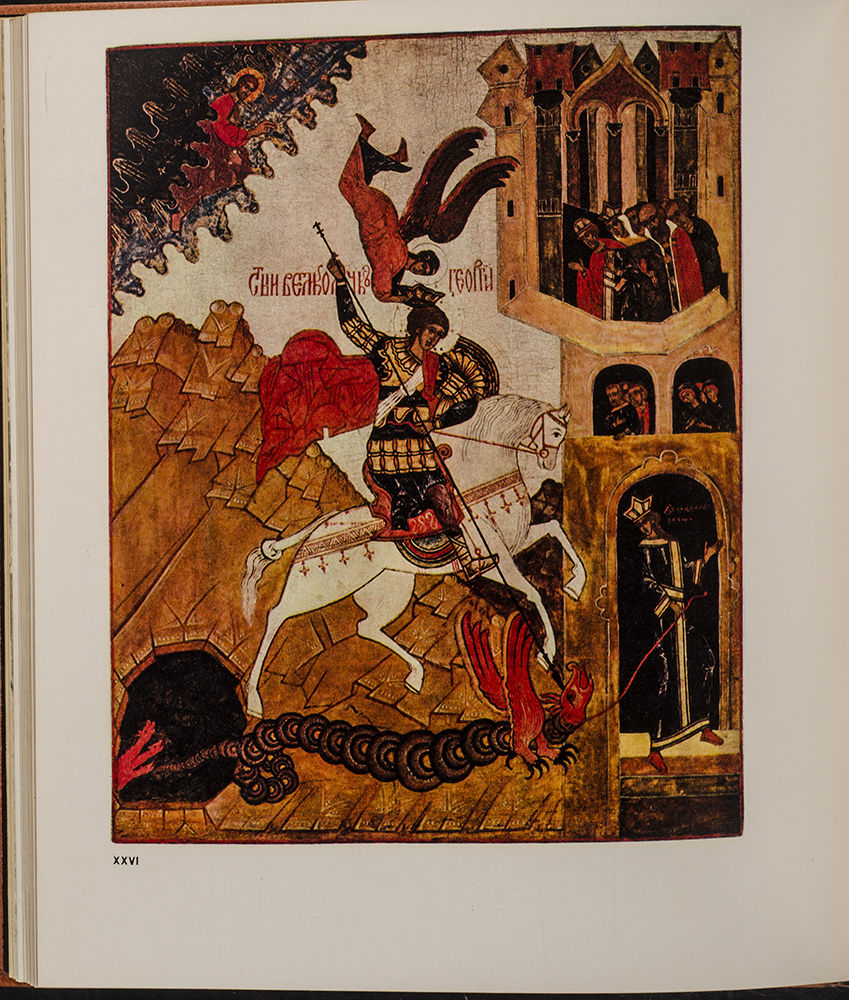
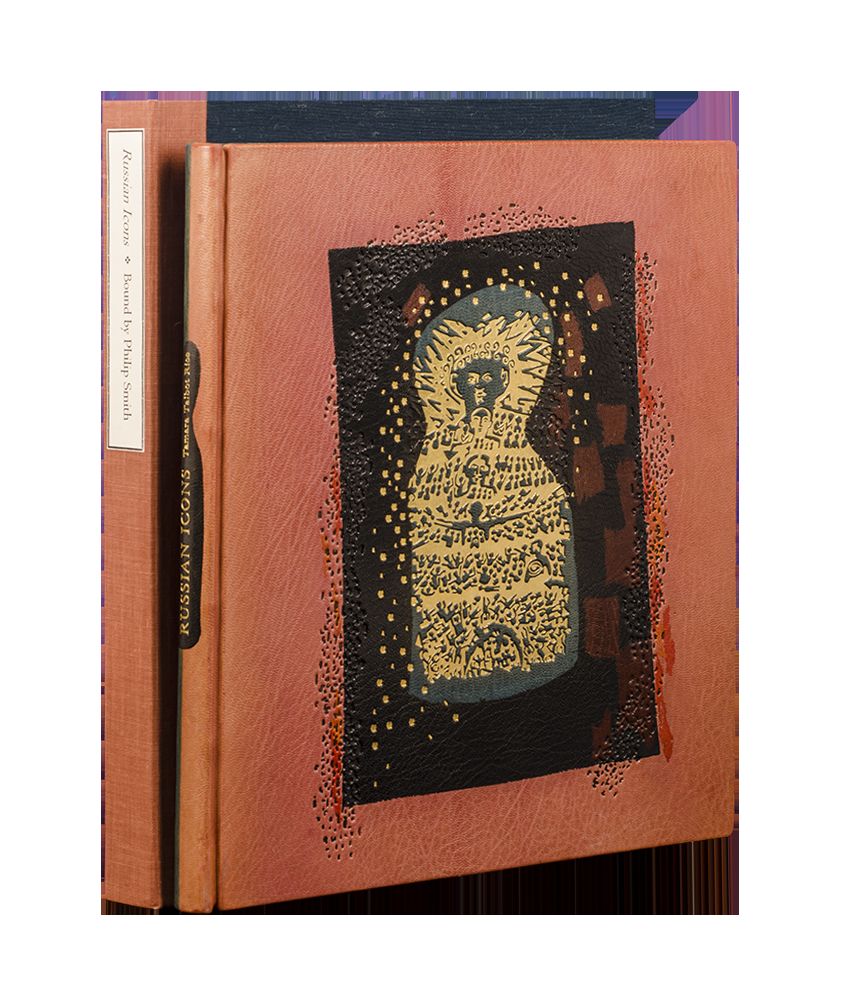
London: Spring Books, 1963. First edition. Fine. Quarto (10 7/16 x 9 1/16 inches; 265 x 230 mm.). [iv], 40 pp. Monotone frontispiece, full-color title and 48 full-color plates on 24 leaves. The verso of the color title is inscribed in ink "To Joan/with many thanks/for your continuing/kindness.../Philip". Bound by Philip Smith in 1964 (stamped in blind on rear turn-in) in full rose (front) and medium blue (rear) crushed levant morocco. Both covers elaborately decorated with Russian Icons in various colored onlaid moroccos finished with elaborate gilt tooling. Smooth spine of half rose and half medium blue lettered in gilt. Wonderful hand-made 'iconesque' patse-downs, speckled ivory paper endleaves, all edges gilt. Housed in a later, specially made, black felt-lined, quarter rose cloth over blue cloth boards clamshell case, spine with white paper label printed in black.
Together with a two-page autograph letter dated 13 July 1970, from Philip Smith to Joan Rix Tebbutt (1910-2005) the much loved artist, bookbinder, calligrapher and teacher who lived all her life in Glasgow. She is perhaps best known for her collaboration with Sydney "Sandy" Morris Cockerell (Duval). The letter states: "What a pity I missed you when you went to see the exhibition at Hatchards… Miss [Elizabeth] Greenhill will be pleased that you like her bindings. I think she is very much like you in her approach to book binding… I did not sell any books at Hachards (not surprising as most people know I'm showing later in the year in London) & I have decided that possibly the one on Russian Icons would be the most acceptable to you so I hope you won't mind receiving this as a gift for your help to us!" A quite wonderful association.
An elaborate binding fit for a regal subject: Here Smith has bound a book by Tamara Talbot Rice (1904-1993), a Russian-born English art historian who specialized in Byzantine and Central Asian art. After fleeing the Russian Revolution in 1917, her family settled in the United Kingdom; Talbot-Rice would complete her education at Oxford. Philip Smith (1928-2018) was a highly original and talented binder whose many innovations brought him acclaim. Selected for the Royal College of Art by the esteemed Roger Powell, he developed an abstract style that would use maril (compressed pieces of leather) with onlays and other techniques. Smith was a leader in the binding world—he published and edited and served as the president of Designer Bookbinders (1977-79)—he was eventually awarded an MBE for his lifelong contributions to the artform. Fine.
Together with a two-page autograph letter dated 13 July 1970, from Philip Smith to Joan Rix Tebbutt (1910-2005) the much loved artist, bookbinder, calligrapher and teacher who lived all her life in Glasgow. She is perhaps best known for her collaboration with Sydney "Sandy" Morris Cockerell (Duval). The letter states: "What a pity I missed you when you went to see the exhibition at Hatchards… Miss [Elizabeth] Greenhill will be pleased that you like her bindings. I think she is very much like you in her approach to book binding… I did not sell any books at Hachards (not surprising as most people know I'm showing later in the year in London) & I have decided that possibly the one on Russian Icons would be the most acceptable to you so I hope you won't mind receiving this as a gift for your help to us!" A quite wonderful association.
An elaborate binding fit for a regal subject: Here Smith has bound a book by Tamara Talbot Rice (1904-1993), a Russian-born English art historian who specialized in Byzantine and Central Asian art. After fleeing the Russian Revolution in 1917, her family settled in the United Kingdom; Talbot-Rice would complete her education at Oxford. Philip Smith (1928-2018) was a highly original and talented binder whose many innovations brought him acclaim. Selected for the Royal College of Art by the esteemed Roger Powell, he developed an abstract style that would use maril (compressed pieces of leather) with onlays and other techniques. Smith was a leader in the binding world—he published and edited and served as the president of Designer Bookbinders (1977-79)—he was eventually awarded an MBE for his lifelong contributions to the artform. Fine.