

The Rubáiyát of Omar Khayyám
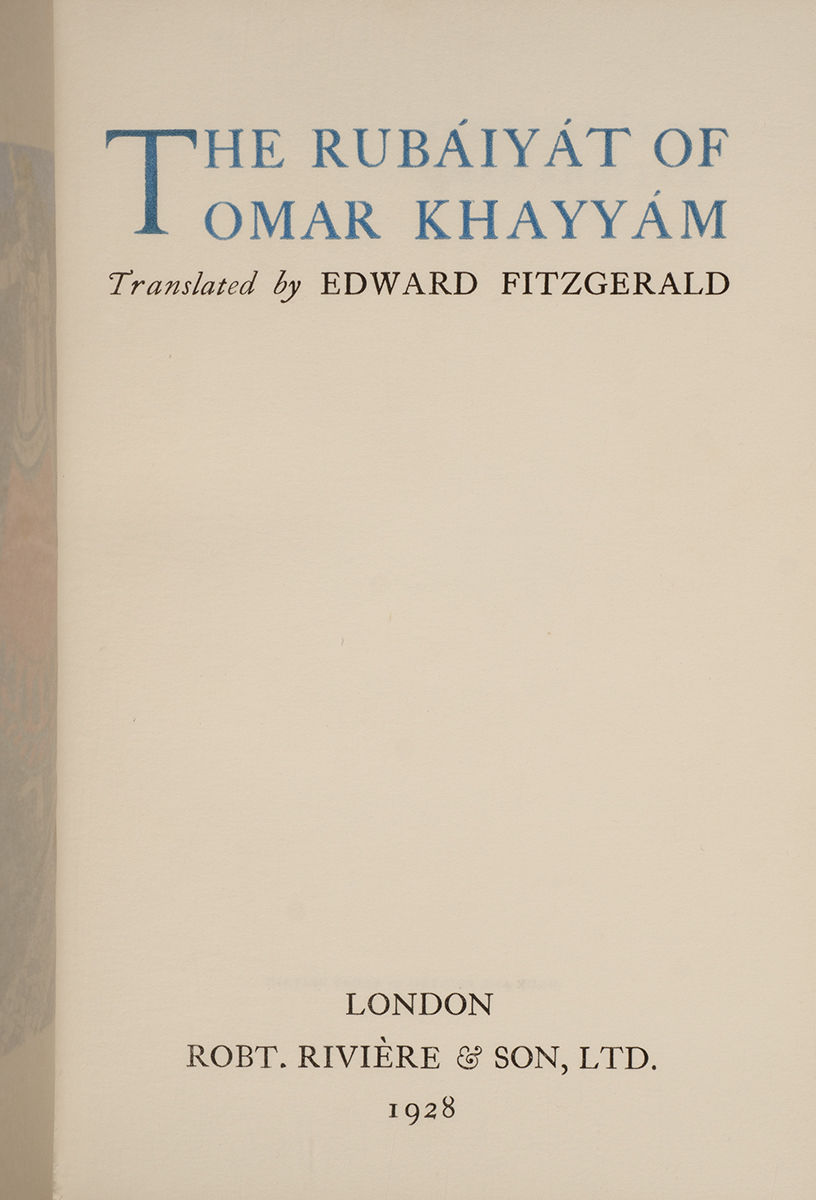
- London: Robt. Riviere & Son, 1928
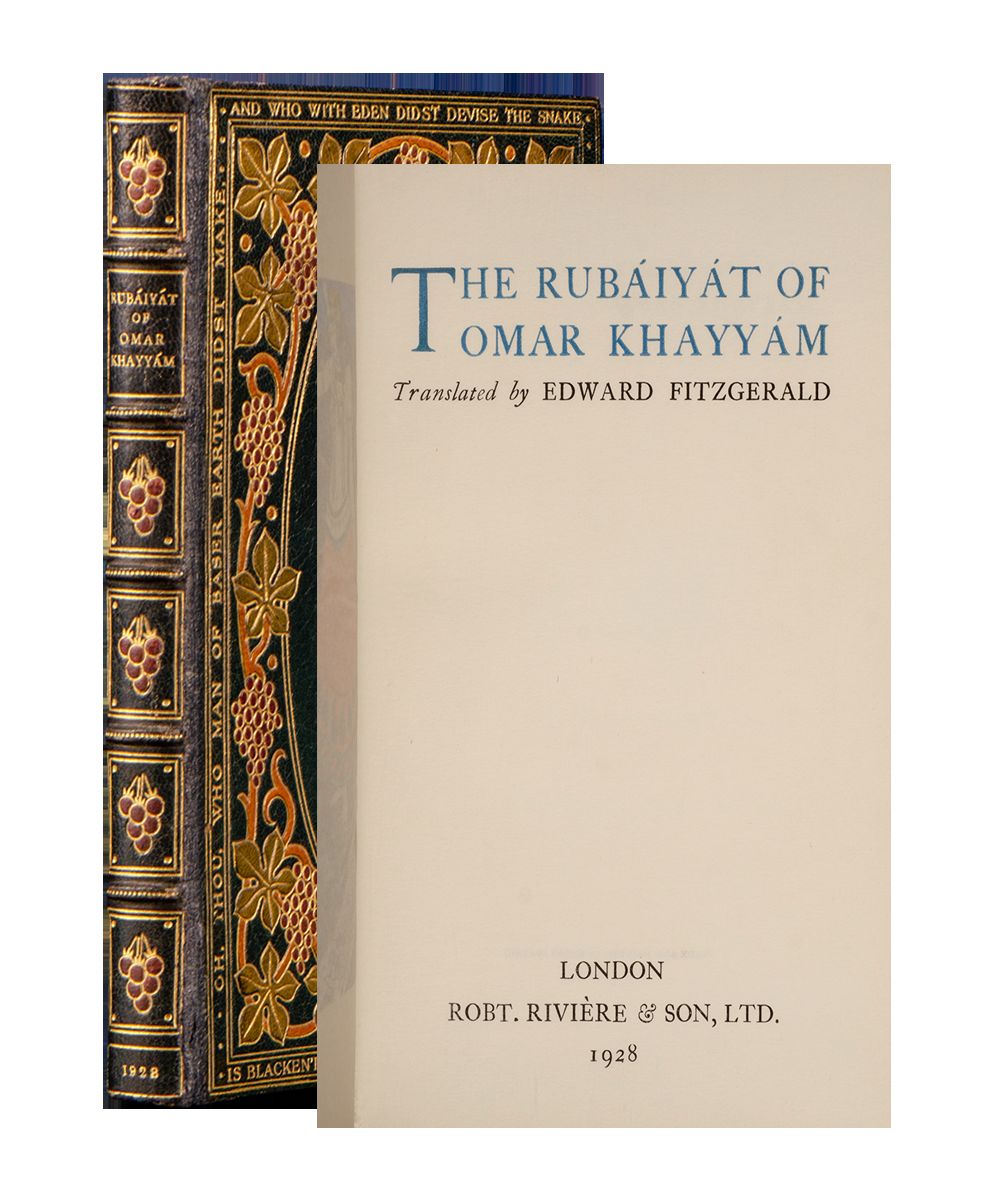
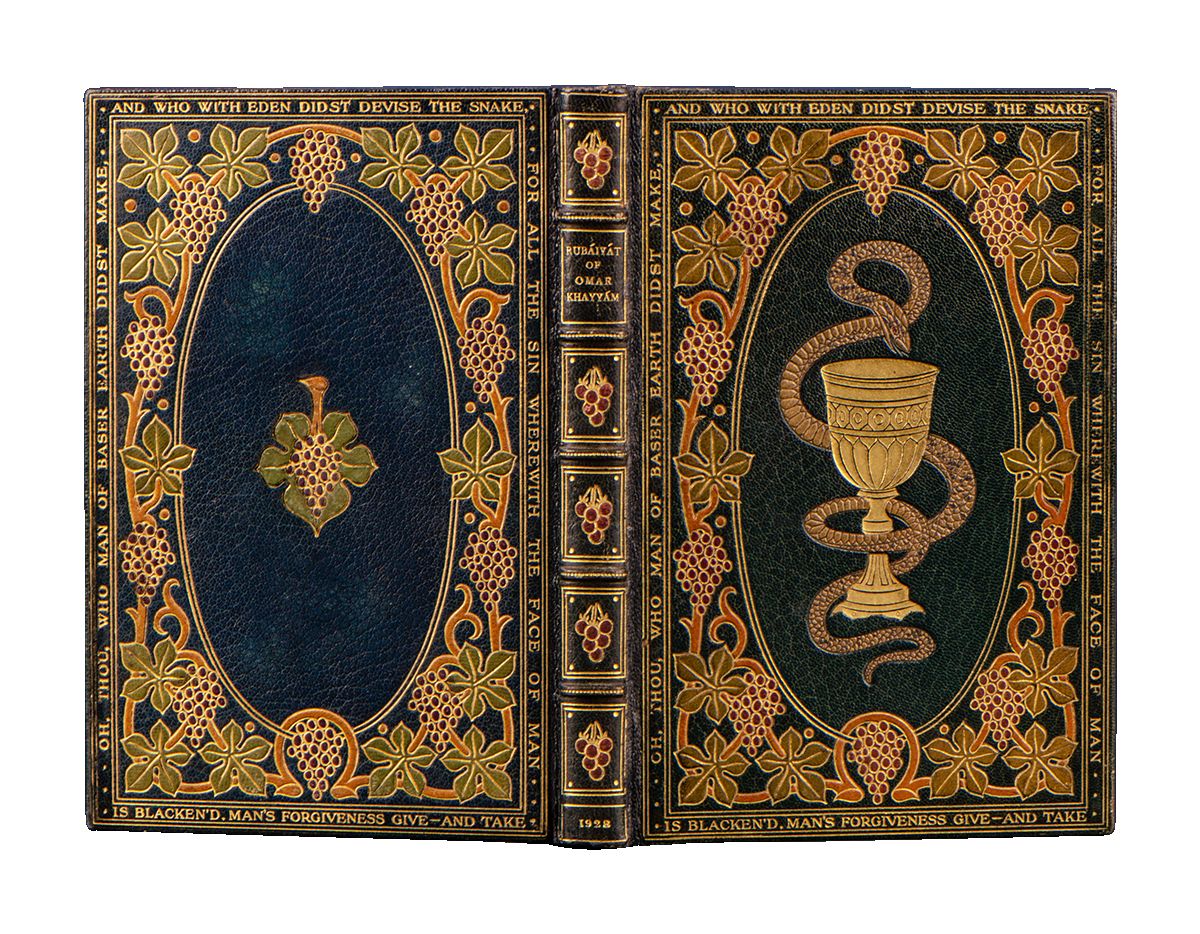
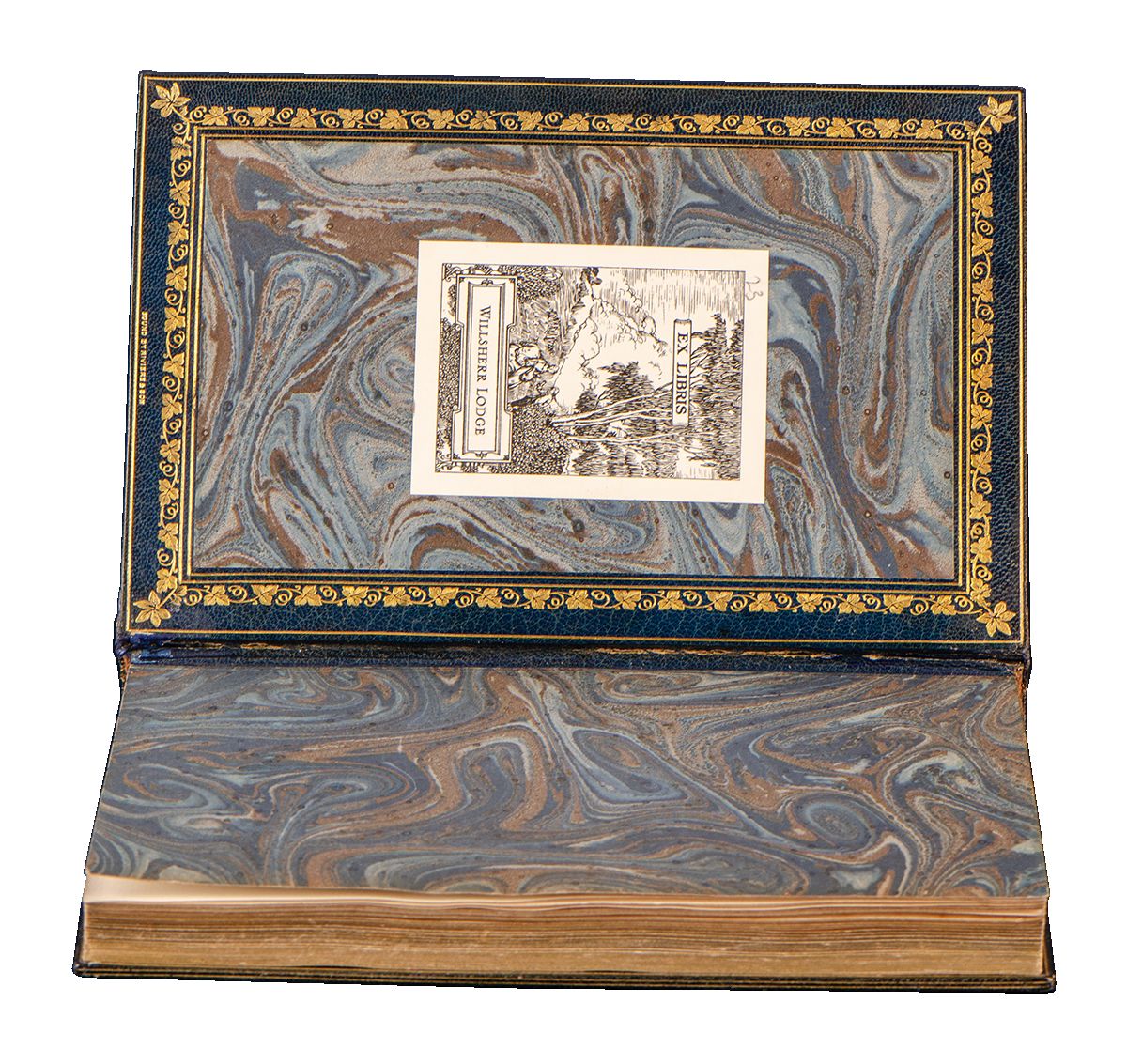
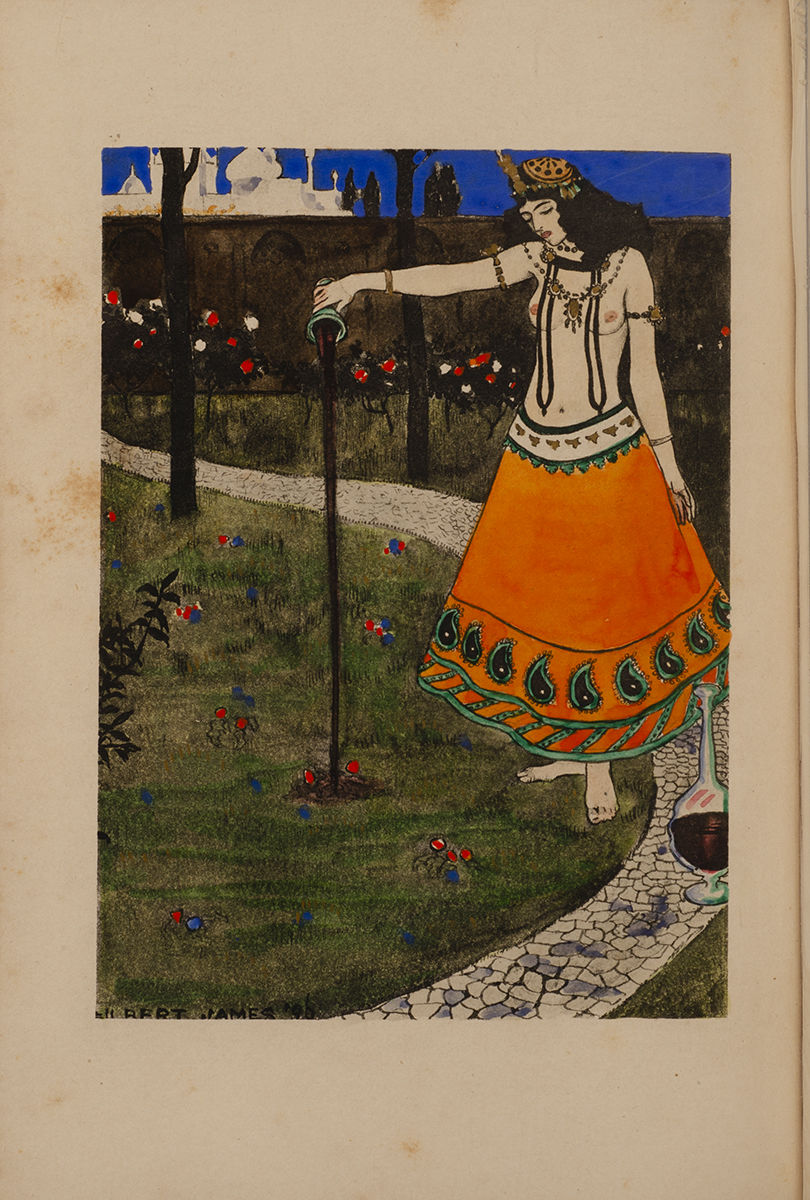
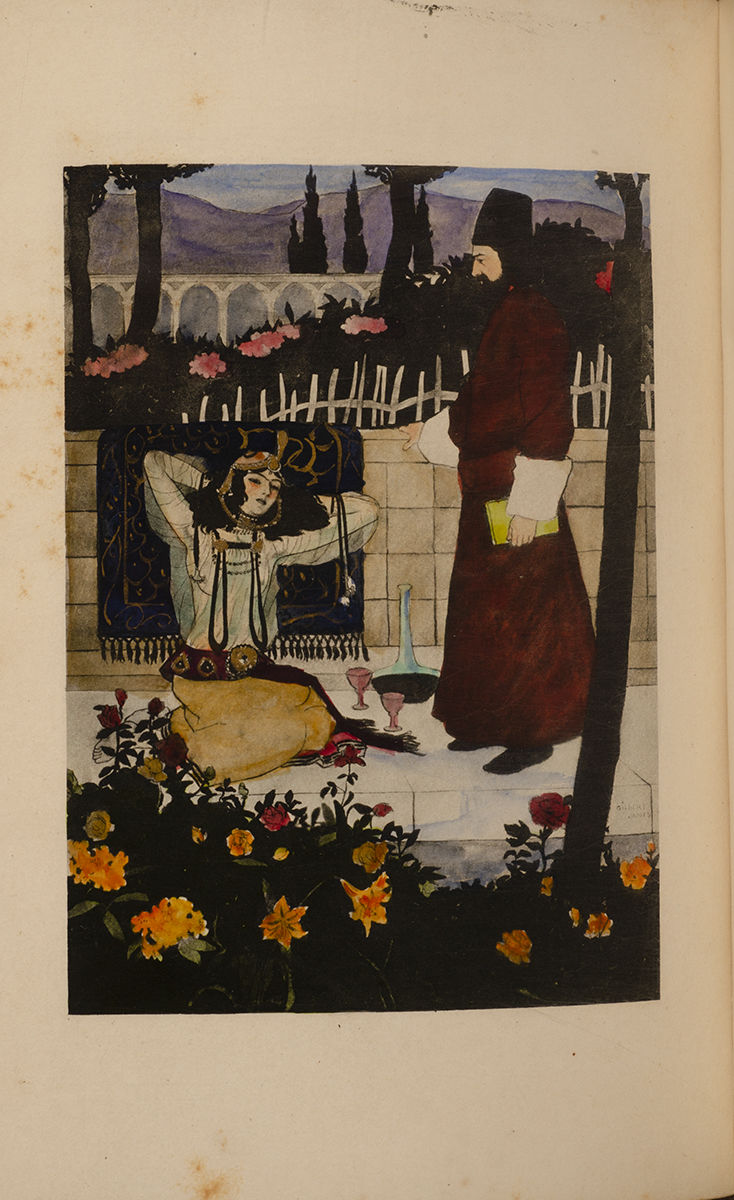
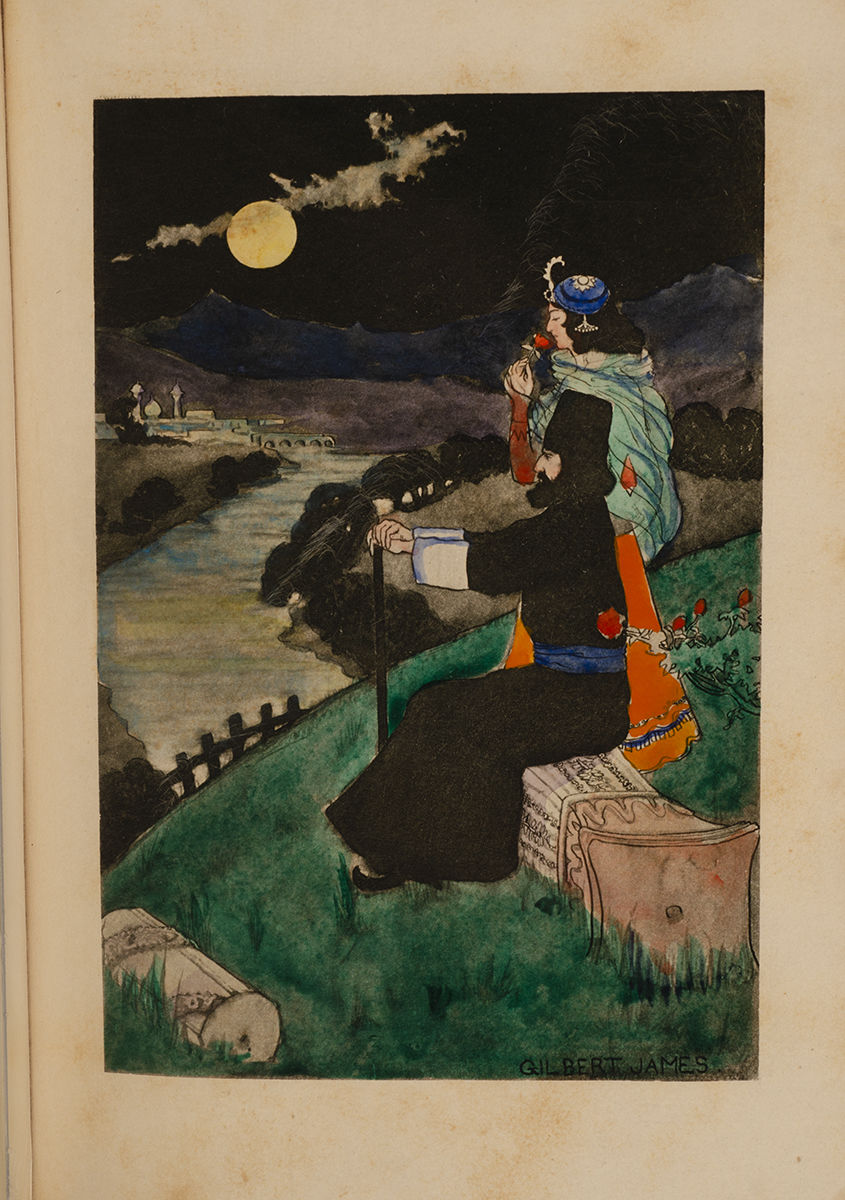
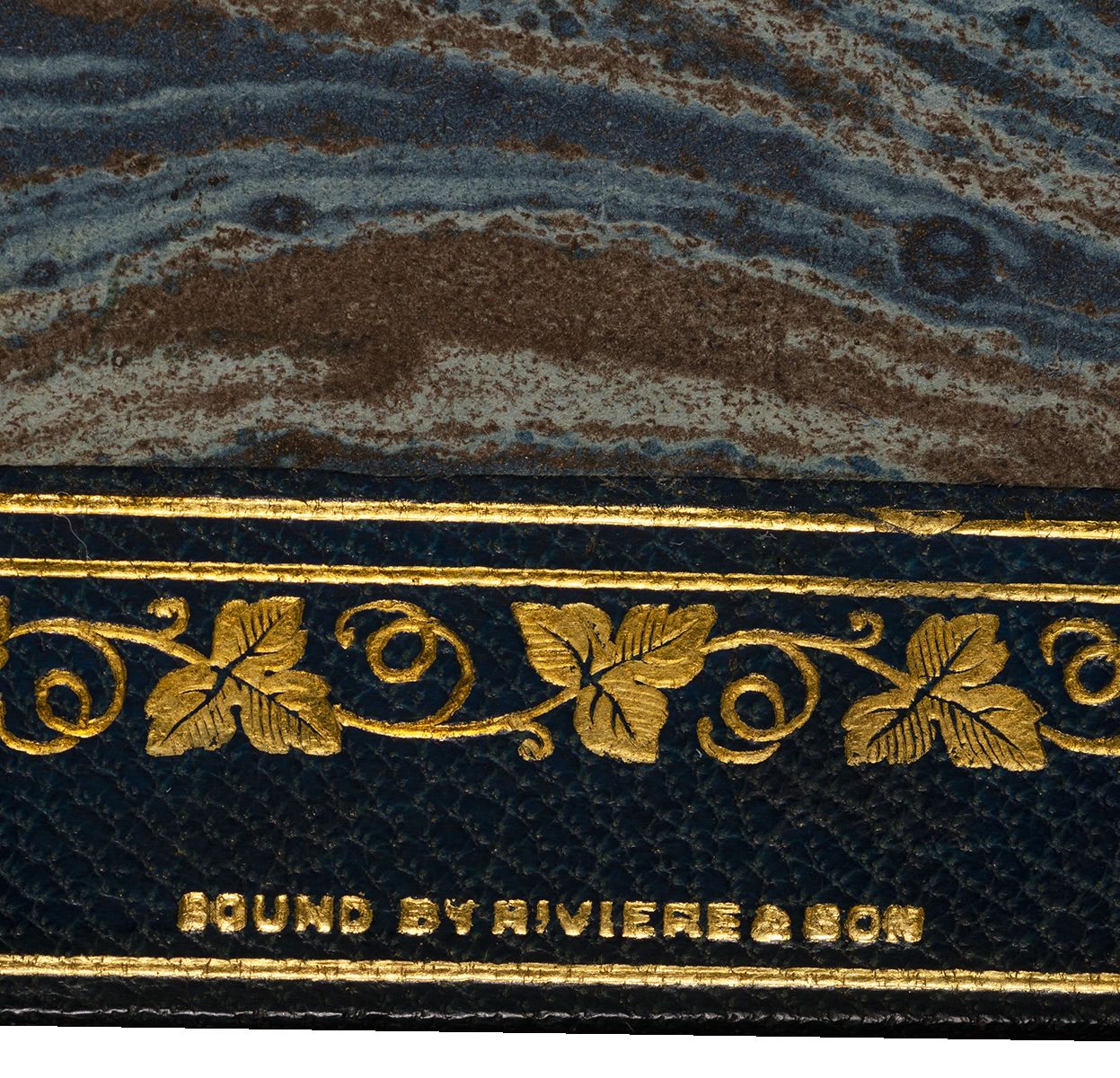
London: Robt. Riviere & Son, 1928. Special edition. Octavo (8 x 5 3/8 inches; 204 x 137 mm.). [ii, blank], [iii-viii], 75, [1, imprint] pp. With twelve illustrations by Gilbert James hand-colored and heightened with gold, and printed with blue initials for each stanza. Caslon Old Face type on Studio hand-made paper, some light marginal foxing to plates, otherwise fine. Bound ca. 1928 by Rivière & Son (stamp-signed on front turn-in) in full blue crushed levant morocco. Front cover with a central oval panel with an onlaid brown-spotted serpent twining around a large gilt chalice. This central panel is surrounded by a floral border of inlaid green flowers on orange stems with bunches of grapes in purple. Inside a double-ruled gilt border on each cover is stanza number fifty-eight "Oh, Thou, who Man of baser Earth didst make, And who with Eden didst devise the Snake: For all the Sin wherewith the Face of Man Is blacken'd, Man's Forgiveness give - and take." Rear cover with a similar oval panel also surrounded by a floral border of inlaid green flowers on orange stems with bunches of grapes in purple, and with a single onlaid green flower and a central inlaid bunch of purple grapes. Spine with five raised bands decoratively bordered in gilt with inlaid purple morocco bunches of grapes in five of the panels and gilt lettered in the other, double gilt ruled board edges, elaborate gilt turn-ins, featuring a vine motif, marbled paper doublures and endleaves, all edges gilt. Upper joint expertly and almost invisibly repaired otherwise a near fine example of a late twenties Rivière 'Inlaid' binding. Engraved bookplate of Willsherr Lodge, the home of Samuel Clay Williams (1884-1949) lawyer and tobacco magnate, on front pastedown.
“The Riviere Bindery was one of the most notable and prolific shops in London's West End from about 1840 through 1939” (Princeton). Bath-based Bayntun Bindery acquired the firm in 1939, transforming into the “Bayntun-Riviere bindery,” which is still in existence and family owned. A similar binding (but without the quotations on the borders of both covers) was sold in the Chevalier sale at Christie's New York, Friday November 9th, 1990, lot 63; it had been previously sold to Paul Chevalier by David Brass and then later to another private collector. Loosely inserted in the Chevalier copy was a pencilled note, identified by a second description as being in the hand of George Napier, an Edinburgh collector who commissioned a number of bindings. Napier explains his purchase of the book from Rivière in 1932 and that he commissioned the special border now decorating the book. He adds that "George" at Rivière's explained that the chalice and serpent motif was designed by Alberto Sangorski, brother of George Sangorski the binder, and concludes with the mention of the "Great Omar", which sank with the Titanic.
Fitzgerald attributed the original work to the famed astronomer and mathematician Omar Khayyum, and this collection of quatrains rapidly became a favored text of the Pre-Raphaelites. "Like the Odyssey or the Vita Nuova [it] was once the most widely known and quoted work of Victorian poetry in the world," and its place in Western culture at the time was secured by Fitzgerald's "epigrammatic, sophisticated, often mordant verses [that] display Fitzgerald's adroitness in handling this stanza form" (Warner). Yet with rise of Modernism, the Rubaiyat fell out of style for a time, its lush and romantic orientalism considered out of step with the concerns of those who were living through a devastating World War. But the beautiful surviving copies in exceptional vellum, silk, and leather, alongside recently released critical editions, have helped draw attention back to the Rubaiyat's beauty and its role in inspiring so many monumental pieces of Victorian art and literature. Here illustrations by Gilbert James (1865-1941) illustrate the dramatic and sensorial prose.
“The Riviere Bindery was one of the most notable and prolific shops in London's West End from about 1840 through 1939” (Princeton). Bath-based Bayntun Bindery acquired the firm in 1939, transforming into the “Bayntun-Riviere bindery,” which is still in existence and family owned. A similar binding (but without the quotations on the borders of both covers) was sold in the Chevalier sale at Christie's New York, Friday November 9th, 1990, lot 63; it had been previously sold to Paul Chevalier by David Brass and then later to another private collector. Loosely inserted in the Chevalier copy was a pencilled note, identified by a second description as being in the hand of George Napier, an Edinburgh collector who commissioned a number of bindings. Napier explains his purchase of the book from Rivière in 1932 and that he commissioned the special border now decorating the book. He adds that "George" at Rivière's explained that the chalice and serpent motif was designed by Alberto Sangorski, brother of George Sangorski the binder, and concludes with the mention of the "Great Omar", which sank with the Titanic.
Fitzgerald attributed the original work to the famed astronomer and mathematician Omar Khayyum, and this collection of quatrains rapidly became a favored text of the Pre-Raphaelites. "Like the Odyssey or the Vita Nuova [it] was once the most widely known and quoted work of Victorian poetry in the world," and its place in Western culture at the time was secured by Fitzgerald's "epigrammatic, sophisticated, often mordant verses [that] display Fitzgerald's adroitness in handling this stanza form" (Warner). Yet with rise of Modernism, the Rubaiyat fell out of style for a time, its lush and romantic orientalism considered out of step with the concerns of those who were living through a devastating World War. But the beautiful surviving copies in exceptional vellum, silk, and leather, alongside recently released critical editions, have helped draw attention back to the Rubaiyat's beauty and its role in inspiring so many monumental pieces of Victorian art and literature. Here illustrations by Gilbert James (1865-1941) illustrate the dramatic and sensorial prose.