

Cranford
- London: Macmillan, 1895
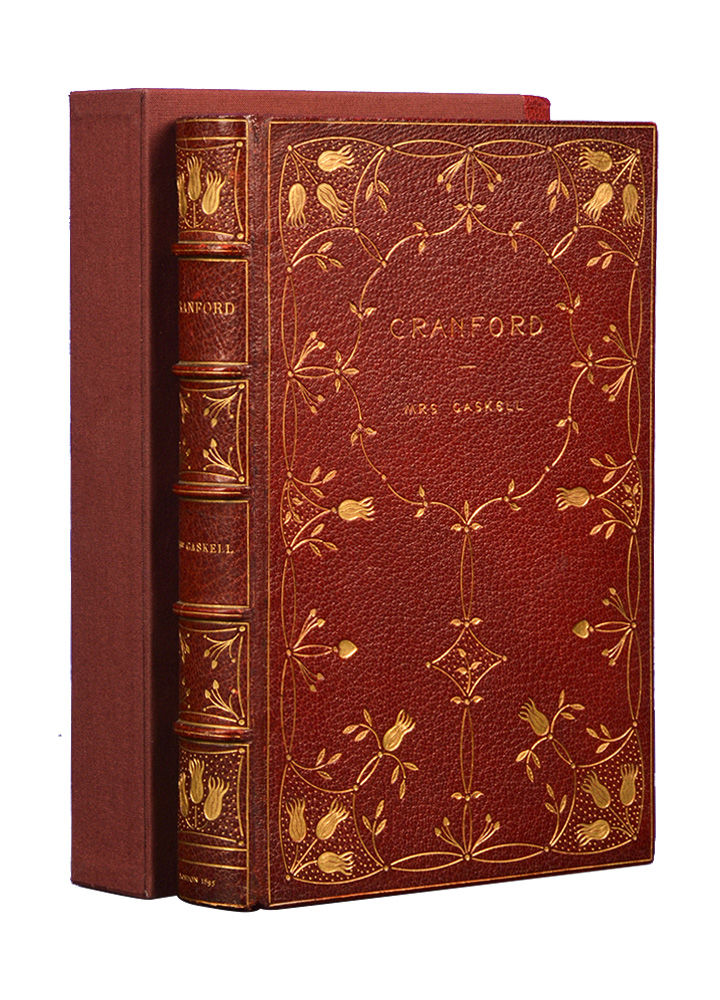
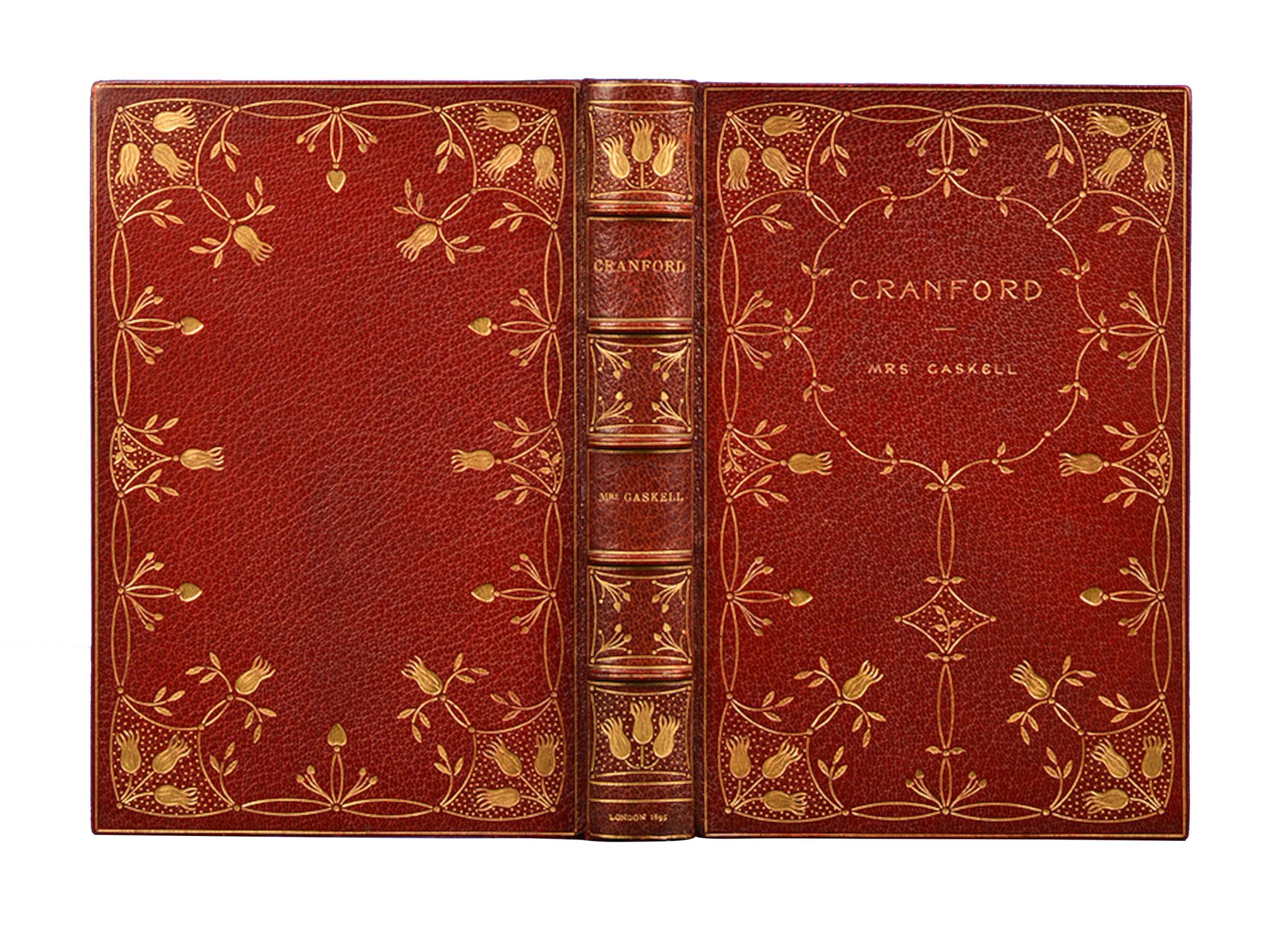
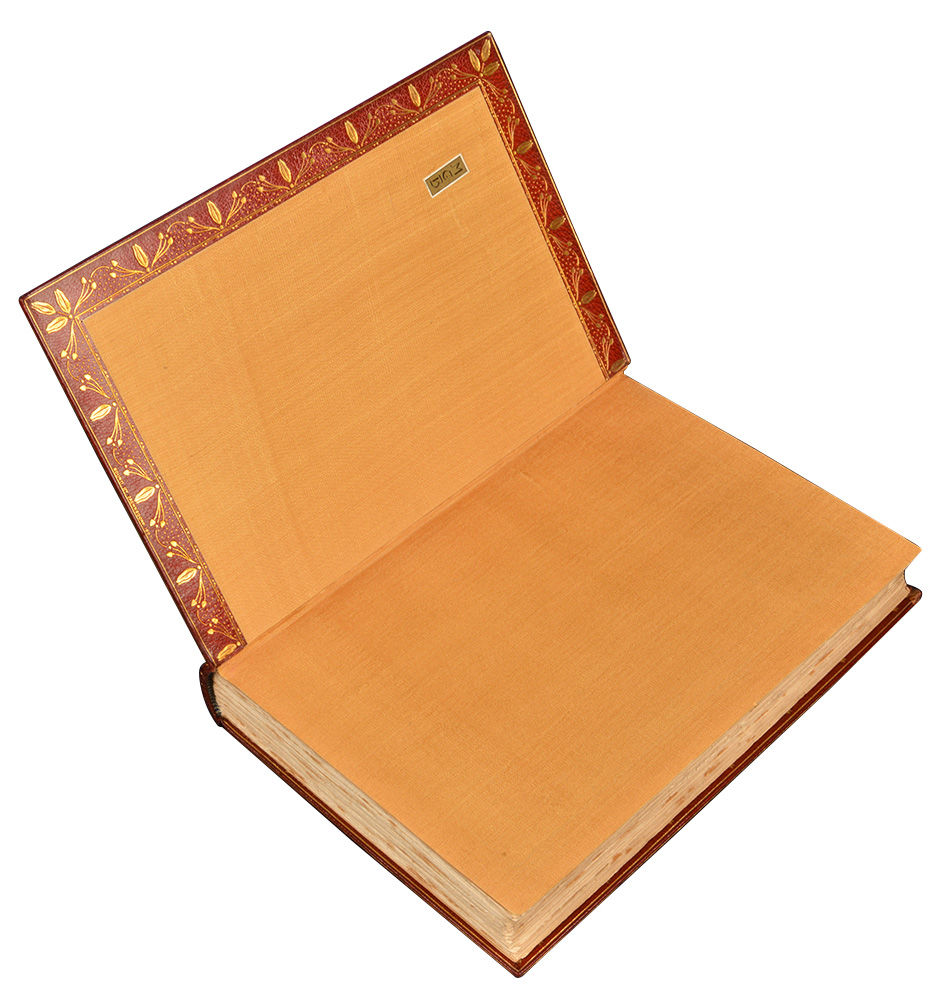
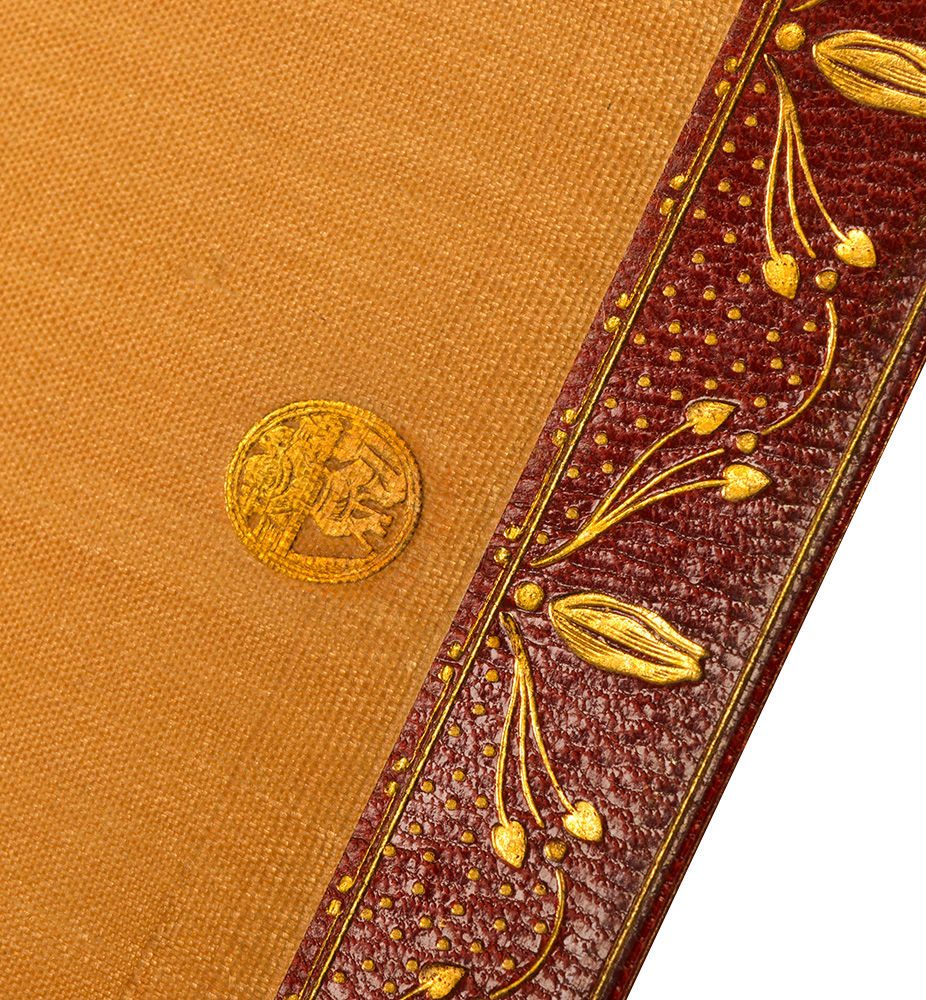
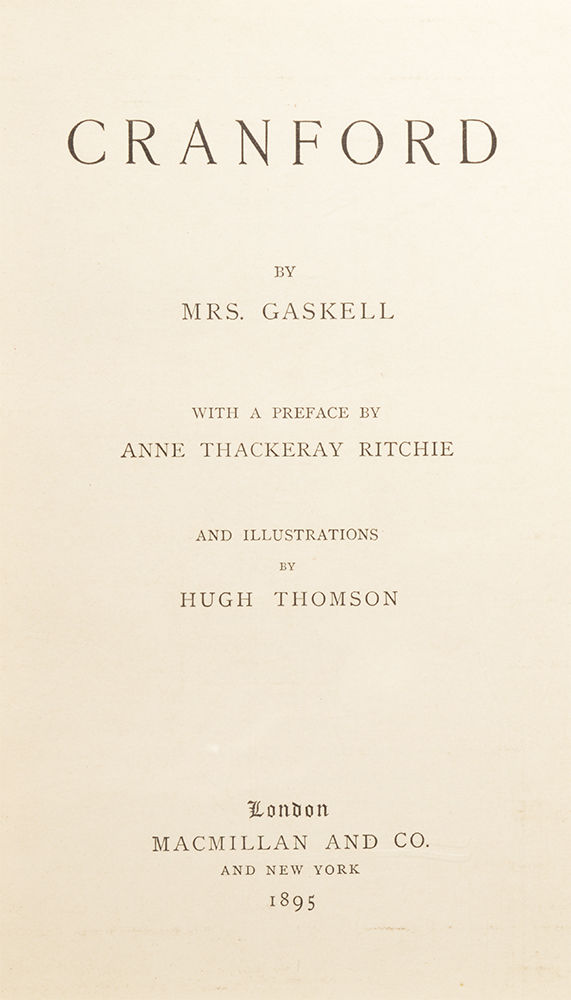
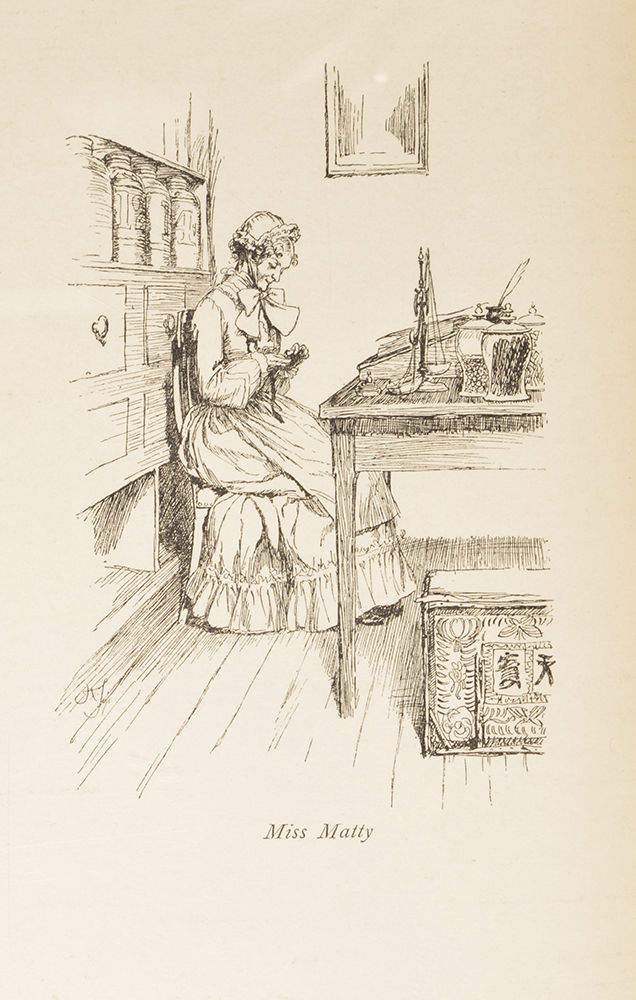
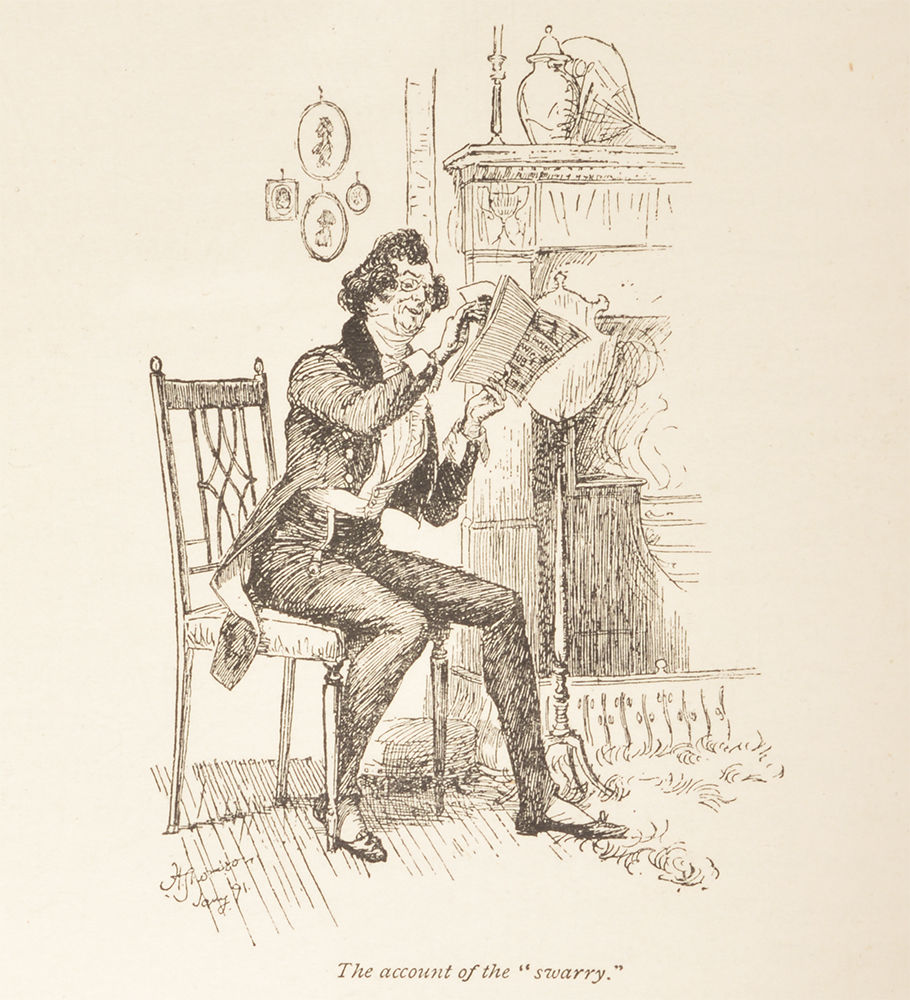
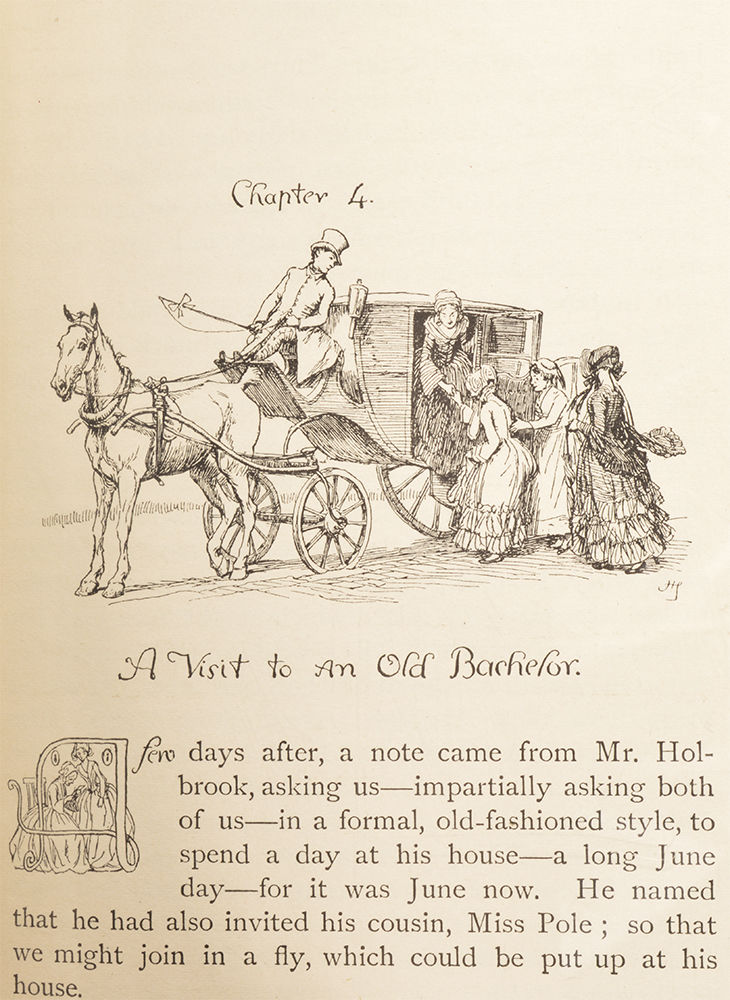
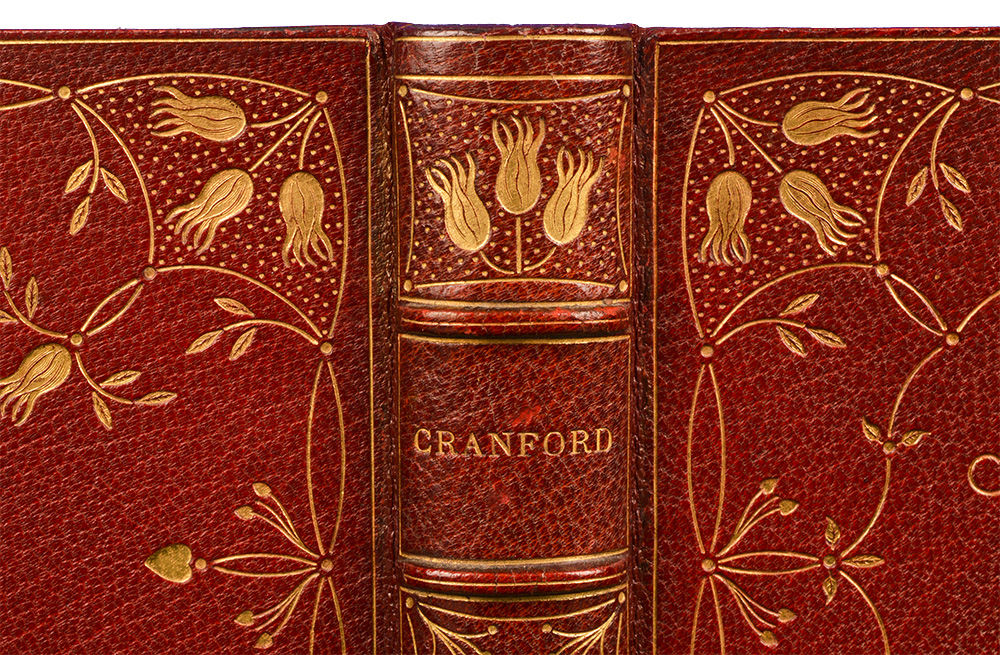
London: Macmillan, 1895. Later printing. Near Fine. Early reprint of the 1891 first Thomson illustrated edition. A Near Fine copy. Octavo (7 1/2 x 5 inches; 191 x 127 mm.). Frontispiece, xxx, 297, [1] pp. With 110 black and white illustrations in the text. Occasional foxing or staining especially on pp. 16/17; 104/105; 144/145, and 270/271. Bound in an 'Exhibition' binding by Zaehnsdorf, executed in 1897 (stamp-signed in gilt on front turn-in). Full crimson crushed levant morocco, covers bordered in gilt and decoratively tooled in gilt and pointille in an elaborate floral design, front cover lettered in gilt. Spine with five raised bands, decoratively tooled and lettered in gilt in compartments, gilt ruled board edges,wide and elaborate gilt decorated turn-ins, ochre silk liners and end-leaves, top edge gilt, others uncut. The rear liner has the Zaehnsdorf 'Exhibition' stamp in gilt. Joints expertly and almost invisibly repaired, one corner a little bumped, still a very early and excellent example of a Zaehnsdorf 'Exhibition' binding, housed in a red morocco edged, felt-lined, red cloth slipcase.
Elizabeth Gaskell (1810-1865) was an important proto-Feminist writer who often tackled unorthodox subjects in her novels. Cranford, for example, is an episodic book concerning a country village community of lower and middle class unmarried older women and the social changes coming to an industrializing Victorian Britain. "The greatest charm of Cranford, which has kept it unfailingly popular, is its amused but loving portrait of the old-fashioned customs and 'elegant economy' of a delicately observed group of middle-aged figures in a landscape" (Oxford Companion to English Literature). “Elizabeth was an active humanitarian; her novels convey many messages about the need for social reconciliation, for better understanding between employers and workers and between the respectable and the outcasts of society. Her writing was carefully researched, and she took particular care in reproducing northern dialects accurately” (Gaskell Society). Gaskell was part of a wide literary circle: she was friends with Charlottee Bronte and John Ruskin, and clashed with Charles Dickens when he edited Cranford for serialization in the magazine Household Words. In this lovely copy, are images by Hugh Thomson (1860-1920), famed at the turn of the century for illustrating works by luminaries including Jane Austen and William Shakespeare.
The Austro-Hungarian-born, Joseph Zaehnsdorf (1816-1886) trained with binders in Stuttgart and in Vienna, before moving to Germany, Switzerland, France, and eventually settling London. He worked for various shops before opening his own bindery in 1842. In the face of industrializing production Zaehnsdorf embraced craft and eventually gained recognition for his talent. He was known for his precise finish and elegant design. The firm would continue in his son John William’s capable hands; it employed binders like Louis Genth, Roger de Coverly, and Sarah Prideaux. Family run until 1947, it was eventually acquired by Asprey of London in 1983 (Gertz). Near Fine.
Elizabeth Gaskell (1810-1865) was an important proto-Feminist writer who often tackled unorthodox subjects in her novels. Cranford, for example, is an episodic book concerning a country village community of lower and middle class unmarried older women and the social changes coming to an industrializing Victorian Britain. "The greatest charm of Cranford, which has kept it unfailingly popular, is its amused but loving portrait of the old-fashioned customs and 'elegant economy' of a delicately observed group of middle-aged figures in a landscape" (Oxford Companion to English Literature). “Elizabeth was an active humanitarian; her novels convey many messages about the need for social reconciliation, for better understanding between employers and workers and between the respectable and the outcasts of society. Her writing was carefully researched, and she took particular care in reproducing northern dialects accurately” (Gaskell Society). Gaskell was part of a wide literary circle: she was friends with Charlottee Bronte and John Ruskin, and clashed with Charles Dickens when he edited Cranford for serialization in the magazine Household Words. In this lovely copy, are images by Hugh Thomson (1860-1920), famed at the turn of the century for illustrating works by luminaries including Jane Austen and William Shakespeare.
The Austro-Hungarian-born, Joseph Zaehnsdorf (1816-1886) trained with binders in Stuttgart and in Vienna, before moving to Germany, Switzerland, France, and eventually settling London. He worked for various shops before opening his own bindery in 1842. In the face of industrializing production Zaehnsdorf embraced craft and eventually gained recognition for his talent. He was known for his precise finish and elegant design. The firm would continue in his son John William’s capable hands; it employed binders like Louis Genth, Roger de Coverly, and Sarah Prideaux. Family run until 1947, it was eventually acquired by Asprey of London in 1983 (Gertz). Near Fine.