

La vera idea delle musicali numeriche segnature diretta al Giovane Studuioso dell' Armonìa

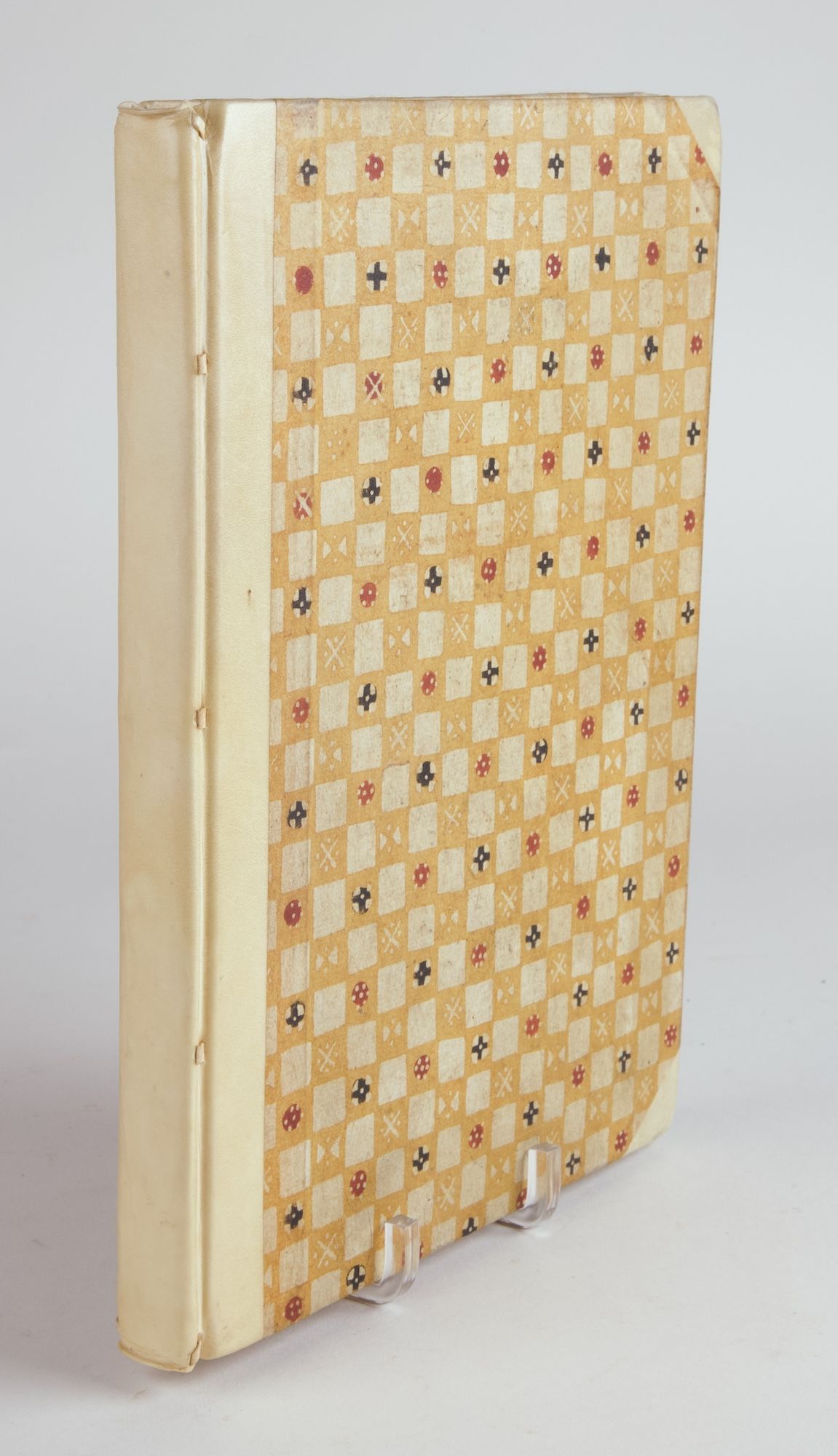
- Venezia: Sebastian Valle, 1799
Venezia: Sebastian Valle, 1799. Quarto. Half ivory vellum with decorative boards. 1f. (recto blank, verso frontispiece by Gio. Ant. Zuliani), iv, clxxiv + [i] (publisher's note) pp.
Binding very slightly worn and bumped. Minor worming to upper inner blank margins of final third of volume; several small brown spots; frontispiece in facsimile.
An exceptionally fresh and attractive copy printed on quality paper overall. First Edition. Cortot p. 175. Eitner p. 374. Fetis VII, p. 358. Gregory-Bartlett I, p. 240. RISM BVI, p. 743.
The frontispiece (here in facsimile and not found in the vast majority of recorded copies) quite possibly represents the honor Sabbatini received following the publication of his treatise, Trattato sopra le fughe musicali. "Musicians in Padua and Venice praised the work, and the governing board of S Antonio awarded Sabbatini a gold medal and named him Vallotti's true successor." TNG II online
In the present treatise, Italian composer and theorist Sabbatini "developed the notion that all chords are derived from the triad ... through processes such as inversion and adding a third above the chordal fifth. His treatment of ninths, elevenths, and thirteenths is extraordinary: the ninth and octave, the eleventh and tenth, or the thirteenth and twelfth are juxtaposed in his models, creating harsh clashes." Damschroder p. 290.
Binding very slightly worn and bumped. Minor worming to upper inner blank margins of final third of volume; several small brown spots; frontispiece in facsimile.
An exceptionally fresh and attractive copy printed on quality paper overall. First Edition. Cortot p. 175. Eitner p. 374. Fetis VII, p. 358. Gregory-Bartlett I, p. 240. RISM BVI, p. 743.
The frontispiece (here in facsimile and not found in the vast majority of recorded copies) quite possibly represents the honor Sabbatini received following the publication of his treatise, Trattato sopra le fughe musicali. "Musicians in Padua and Venice praised the work, and the governing board of S Antonio awarded Sabbatini a gold medal and named him Vallotti's true successor." TNG II online
In the present treatise, Italian composer and theorist Sabbatini "developed the notion that all chords are derived from the triad ... through processes such as inversion and adding a third above the chordal fifth. His treatment of ninths, elevenths, and thirteenths is extraordinary: the ninth and octave, the eleventh and tenth, or the thirteenth and twelfth are juxtaposed in his models, creating harsh clashes." Damschroder p. 290.