

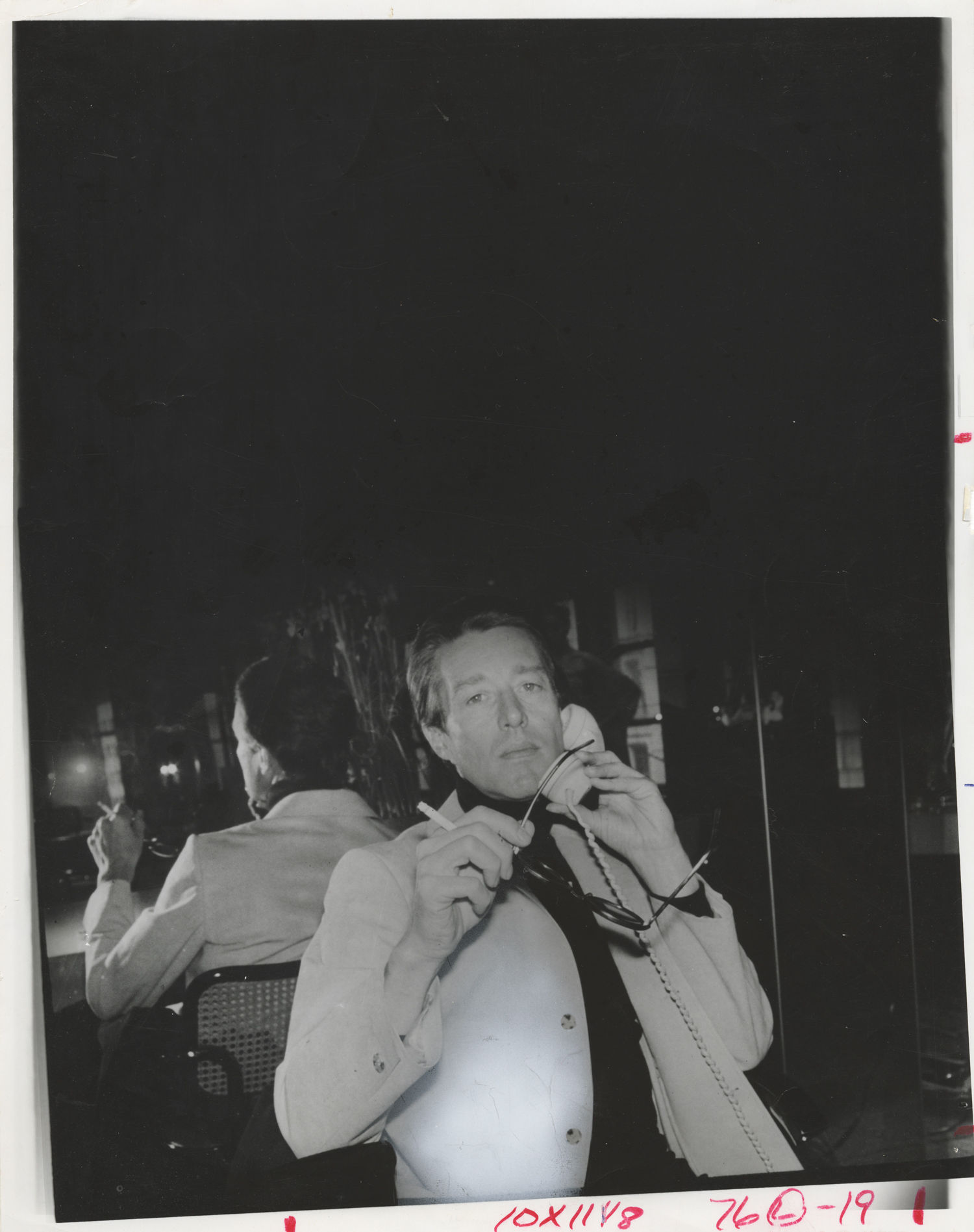
Original oversize portrait photograph of fashion designer Halston, circa 1976
- N.p.: N.p., 1976
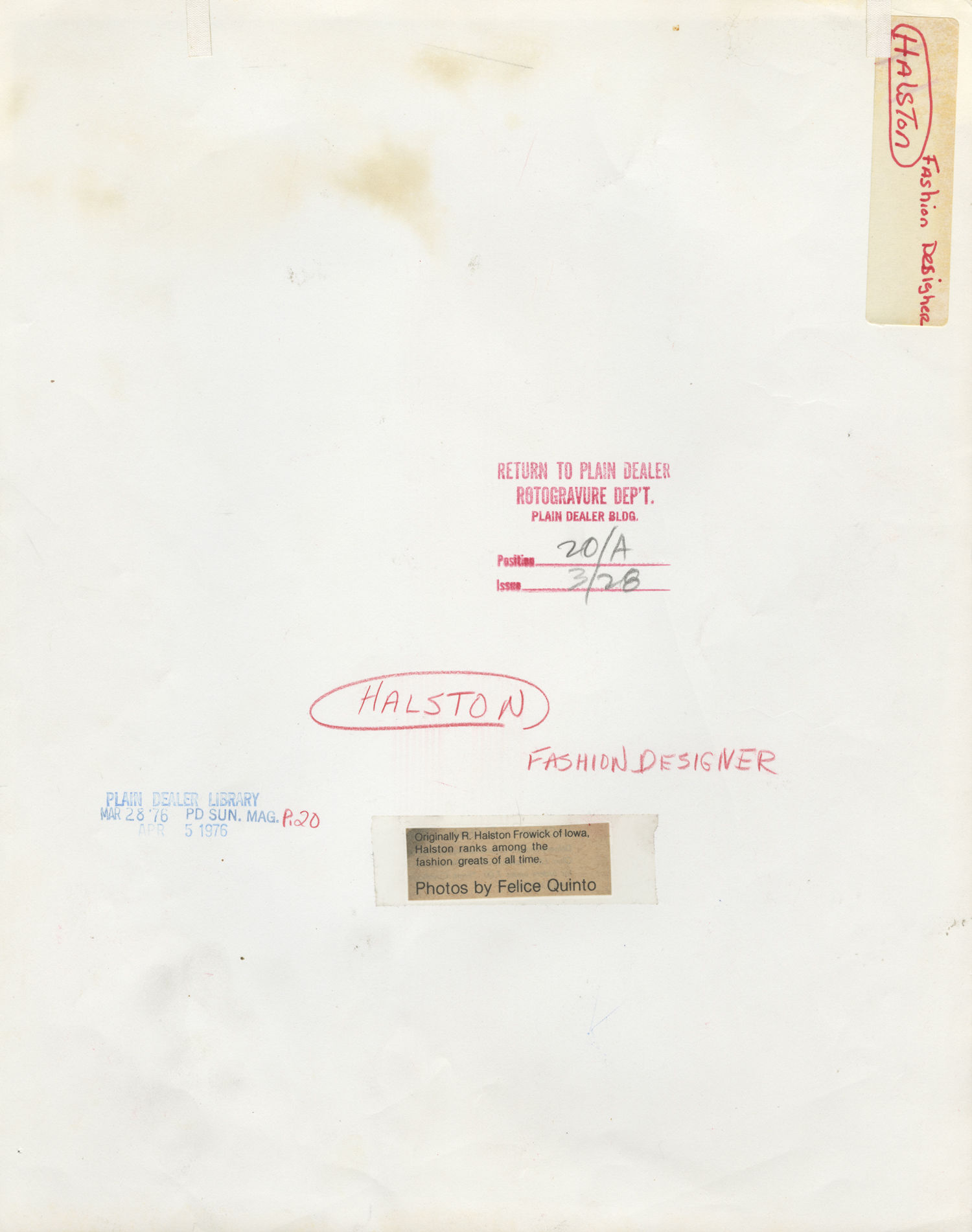
N.p.: N.p., 1976. Vintage oversize portrait photograph of fashion designer Halston, circa 1976. Stamps of the "Plain Dealer" library and a date stamp on the verso.
Born Roy Halston Frowick in Des Moines, Iowa, Halston moved to Chicago in 1952, starting a millinery business the following year, and opening his first shop, the Boulevard Salon, in 1957. He made his first break in 1961, when he designed a pillbox hat worn by Jacqueline Kennedy to her husband's inauguration, and began designing women's clothing as hats fell out of fashion later in the decade. His luxurious, minimal silhouettes, groundbreaking use of multiethnic models in his shows, and commitment to comfort alongside glamor earned him numerous high-profile fans, including Greta Garbo, Gene Tierney, Liza Minnelli, Lauren Bacall, Bianca Jagger, and Elizabeth Taylor, and accordingly, his designs have come to epitomize the 1970s.
From the archive of the PIX Agency, an American photo house that acted as an intermediary between emigre photographers (as well as those still living in Europe) and the American magazine and newspaper market between 1935-1969.
11 x 14 inches, archivally matted in a 14 x 18 inch 8-ply white mat. Very Good plus, with layout annotations in manuscript ink on the recto margins.
Born Roy Halston Frowick in Des Moines, Iowa, Halston moved to Chicago in 1952, starting a millinery business the following year, and opening his first shop, the Boulevard Salon, in 1957. He made his first break in 1961, when he designed a pillbox hat worn by Jacqueline Kennedy to her husband's inauguration, and began designing women's clothing as hats fell out of fashion later in the decade. His luxurious, minimal silhouettes, groundbreaking use of multiethnic models in his shows, and commitment to comfort alongside glamor earned him numerous high-profile fans, including Greta Garbo, Gene Tierney, Liza Minnelli, Lauren Bacall, Bianca Jagger, and Elizabeth Taylor, and accordingly, his designs have come to epitomize the 1970s.
From the archive of the PIX Agency, an American photo house that acted as an intermediary between emigre photographers (as well as those still living in Europe) and the American magazine and newspaper market between 1935-1969.
11 x 14 inches, archivally matted in a 14 x 18 inch 8-ply white mat. Very Good plus, with layout annotations in manuscript ink on the recto margins.