

Principes de Composition. Contemporary manuscript apparently based on Part III of Rameau's Traité de l'Harmonie Réduite à ses Principes Naturales. Together with Principes d'Accompagnement, a contemporary manuscript based on Part IV of the Traité. Ca. 1760
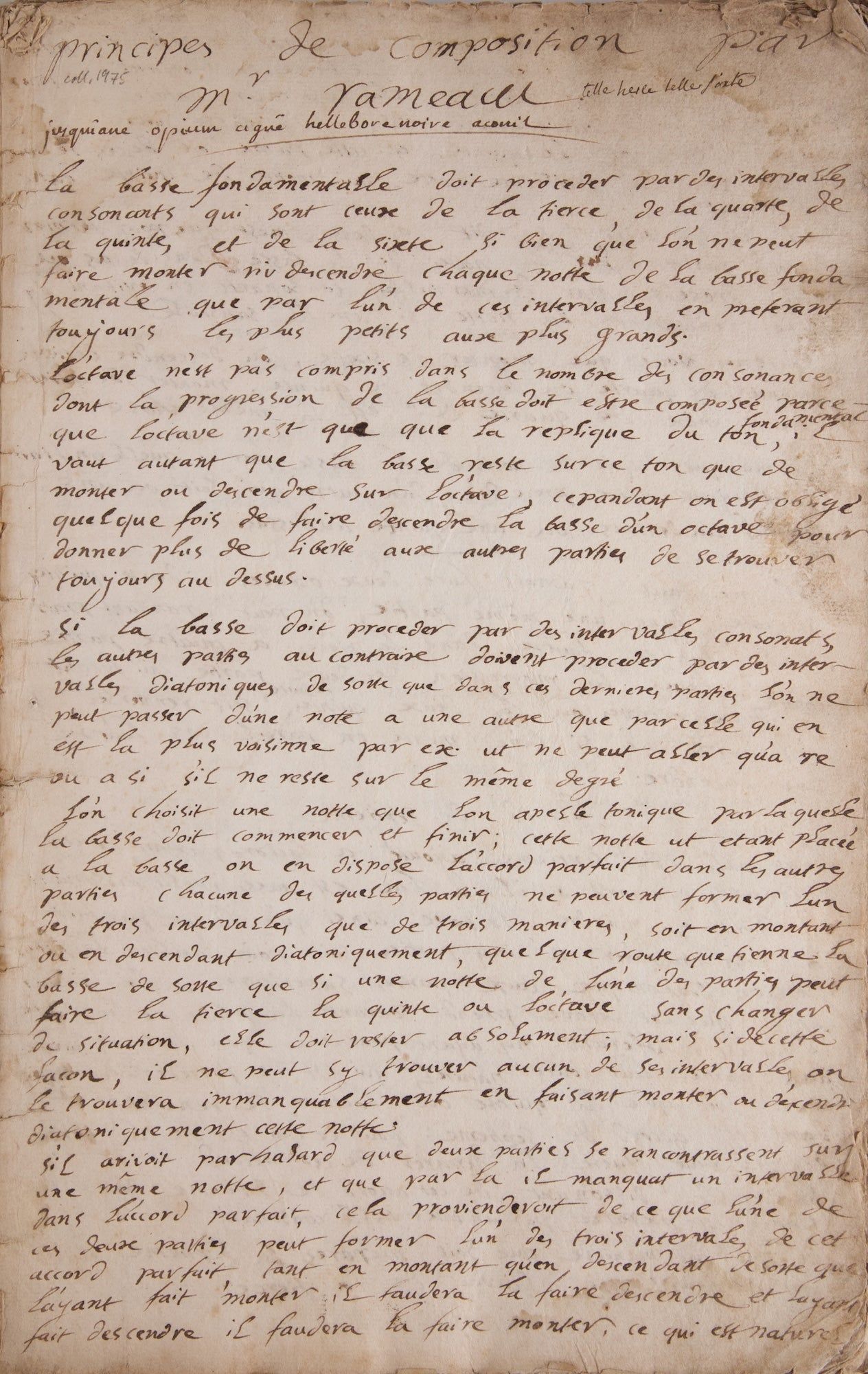
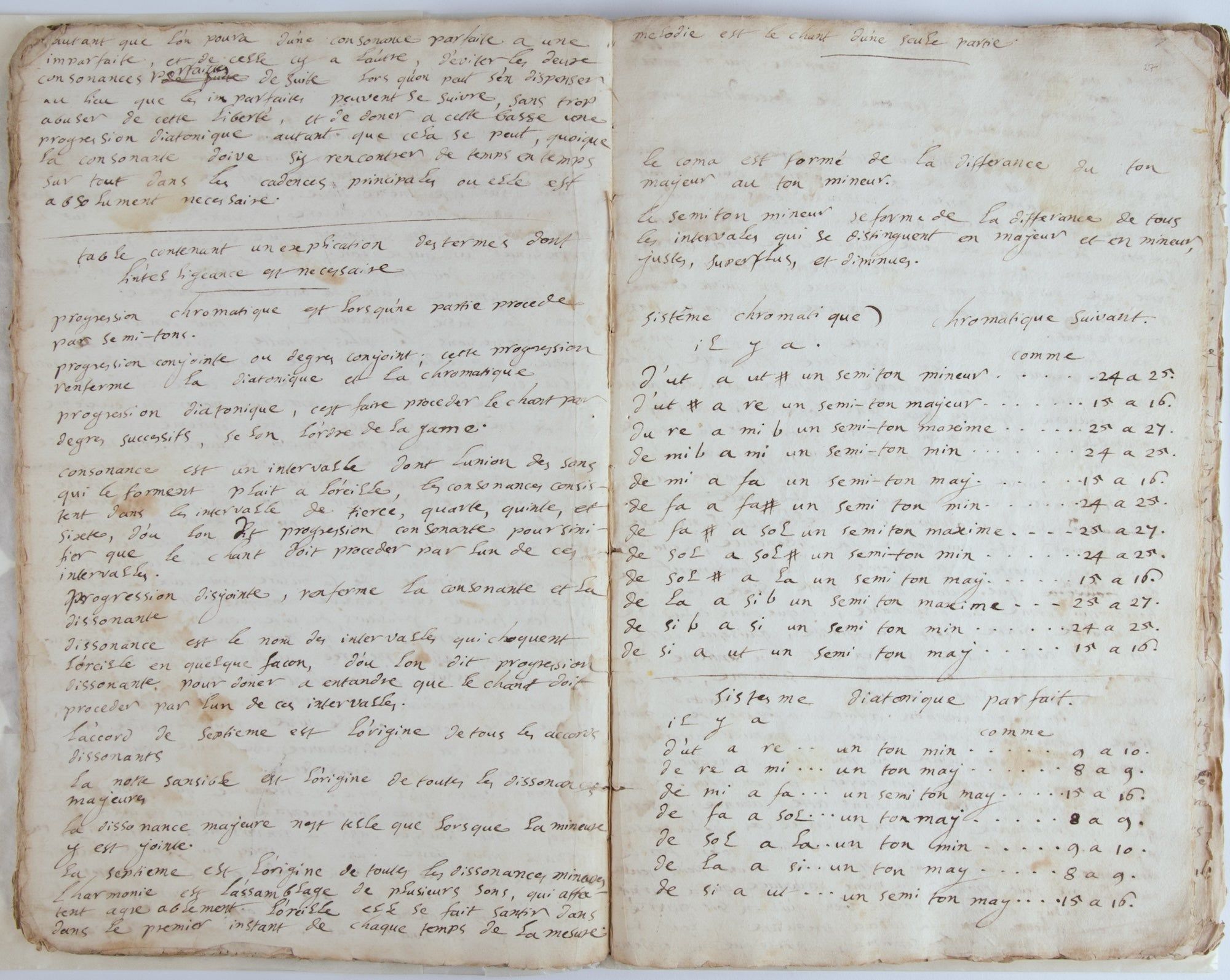
Folio. 34 unnumbered pages + one folding plate "Table des progressions." With several musical examples. Occasional corrections. Worn and soiled, heavier to edges; some edges frayed and corners turned; several tears; dampstaining to inner portions of several leaves; small sewing holes to several inner margins; final leaves partially detached. Seems to follow Part III of the Traité but with textual differences and original elements including tables and diagrams.
Together with:
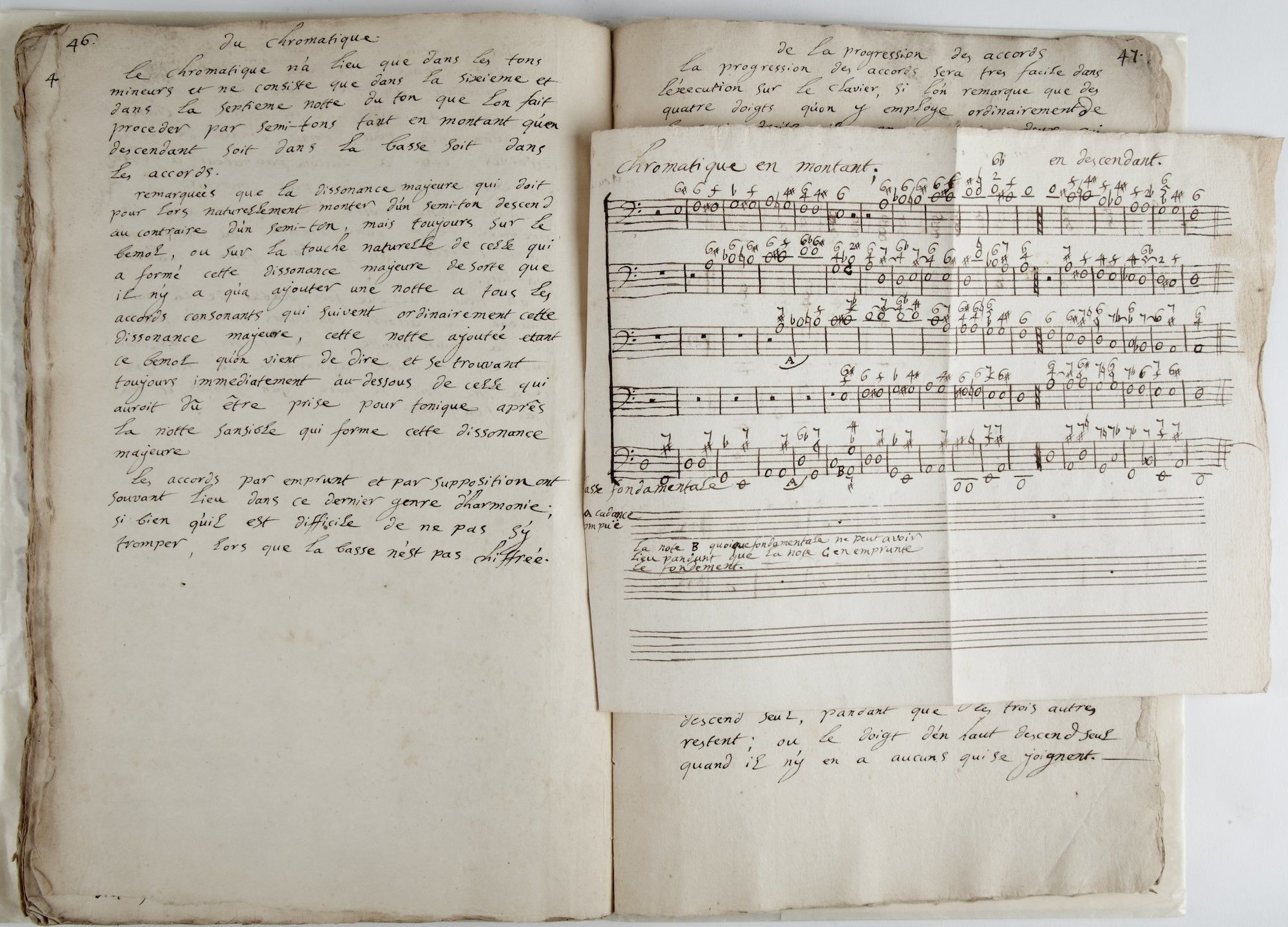
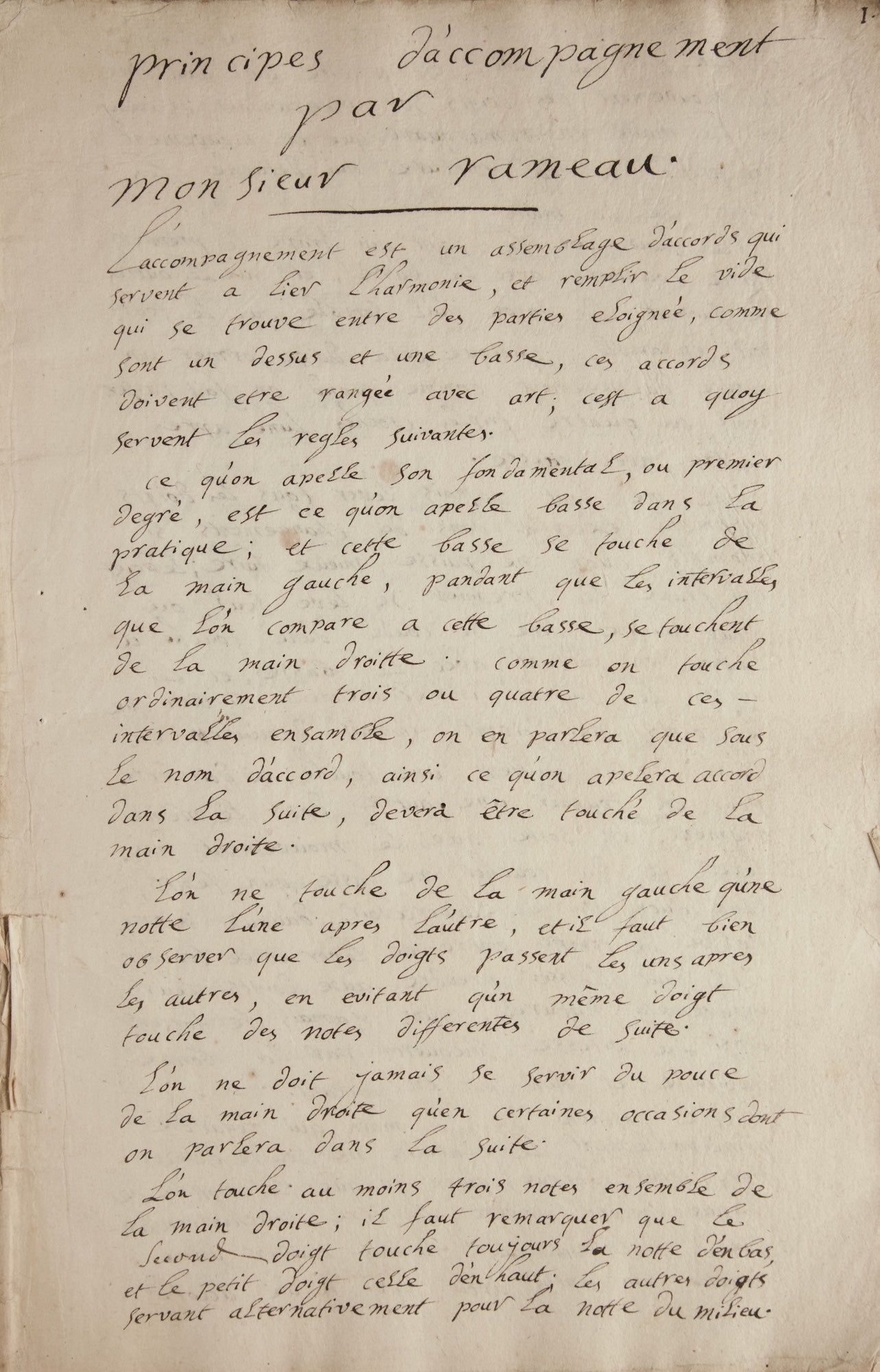
Principes d'accompagnement par Monsieur Rameau. Folio. 1-47, 48-49 (blank), 50 ("explication de quelques termes compris dans le present traite d'accompagnement"), [i] (blank), [i] (headed "Table des chapitres contenus dans le presant[!] traité d'accompagnement" but not completed) pp., 1f. (recto decorative, notational, and textual doodles, verso blank) + 1 folding plate "Chromatique en montant; en descendant" etc. secured with a pin between pp. 46 and 47. Musical example to p. 40. Occasional corrections. Light uniform browning; some edges soiled and slightly frayed; very occasional foxing and small stains; small sewing holes and occasional small tears to blank inner margins. Seems to follow Part IV of the Traité but with textual differences and original elements including tables and diagrams.
Loose in worn contemporary gray wrappers with "Principes de Composition et d'accompagnement par Rameau" in an early hand to upper. Both manuscripts in the same hand. Rameau's highly important first work on music theory, the Traité summarizes the author's efforts to transform the consideration of music from art to science. It was first published in Paris by Jean-Baptiste-Christophe Ballard in 1722, and earned its author a reputation as the most learned musician of his era. The work is divided into four parts:
I. Du rapport des raisons et proportions harmoniques
II. De la nature et de la propriété des accords
III. Principes de composition
IV. Principes d'accompagnement
Unusual, and seemingly worthy of further research.
Together with:
Principes d'accompagnement par Monsieur Rameau. Folio. 1-47, 48-49 (blank), 50 ("explication de quelques termes compris dans le present traite d'accompagnement"), [i] (blank), [i] (headed "Table des chapitres contenus dans le presant[!] traité d'accompagnement" but not completed) pp., 1f. (recto decorative, notational, and textual doodles, verso blank) + 1 folding plate "Chromatique en montant; en descendant" etc. secured with a pin between pp. 46 and 47. Musical example to p. 40. Occasional corrections. Light uniform browning; some edges soiled and slightly frayed; very occasional foxing and small stains; small sewing holes and occasional small tears to blank inner margins. Seems to follow Part IV of the Traité but with textual differences and original elements including tables and diagrams.
Loose in worn contemporary gray wrappers with "Principes de Composition et d'accompagnement par Rameau" in an early hand to upper. Both manuscripts in the same hand. Rameau's highly important first work on music theory, the Traité summarizes the author's efforts to transform the consideration of music from art to science. It was first published in Paris by Jean-Baptiste-Christophe Ballard in 1722, and earned its author a reputation as the most learned musician of his era. The work is divided into four parts:
I. Du rapport des raisons et proportions harmoniques
II. De la nature et de la propriété des accords
III. Principes de composition
IV. Principes d'accompagnement
Unusual, and seemingly worthy of further research.